
Measurement 1 Lesson 1 Essential Question How do
- Slides: 45
Measurement 1
Lesson 1 Essential Question �How do Scientists Investigate the Natural World? � What are the Processes of Science? 2
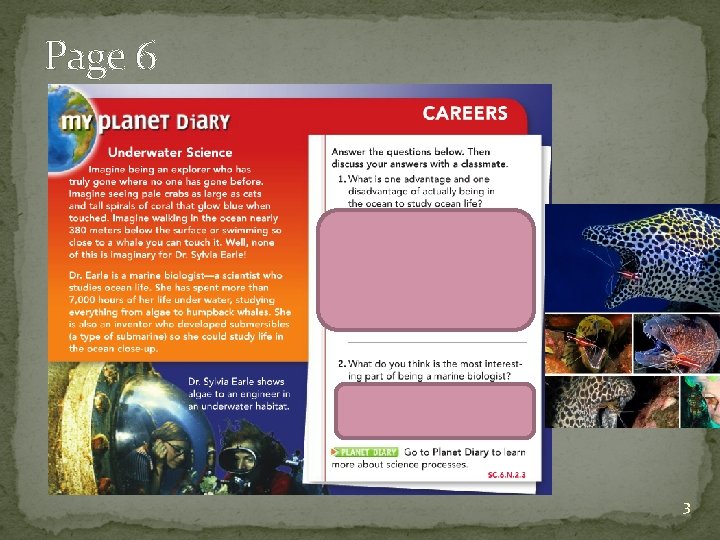
Page 6 3
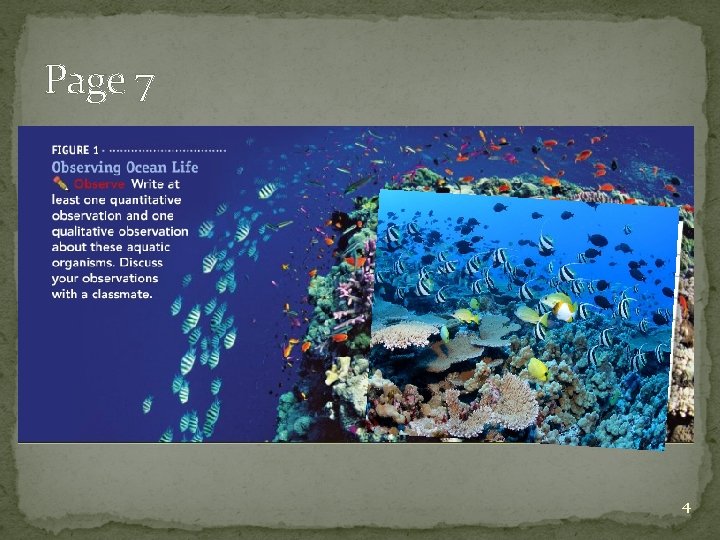
Page 7 4
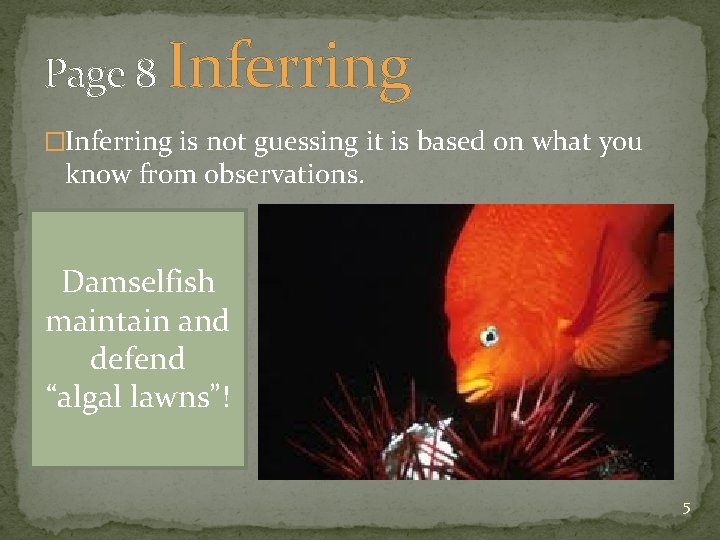
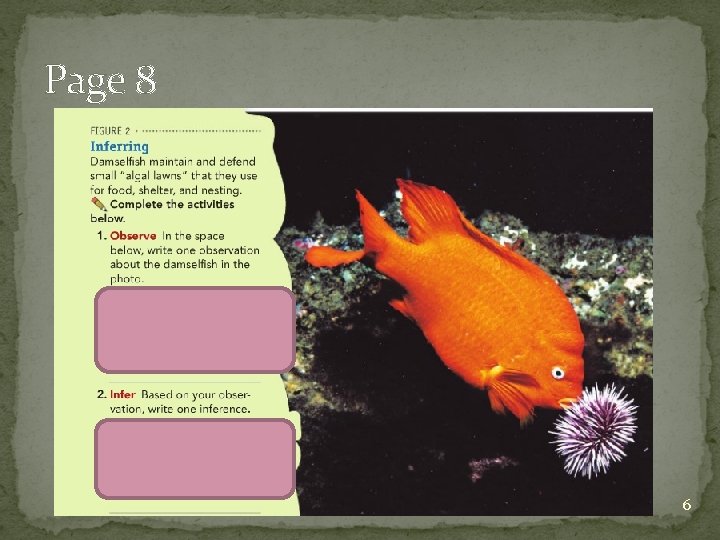
Page 8 Inferring �Inferring is not guessing it is based on what you know from observations. Damselfish maintain and defend “algal lawns”! 5
Page 8 6
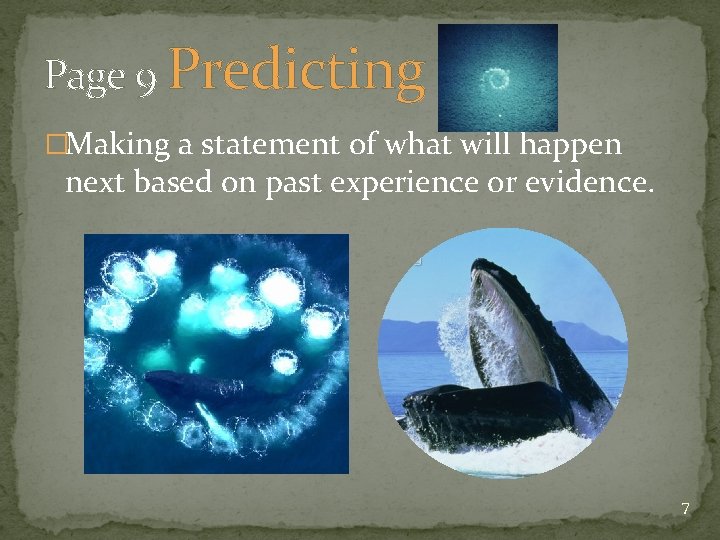
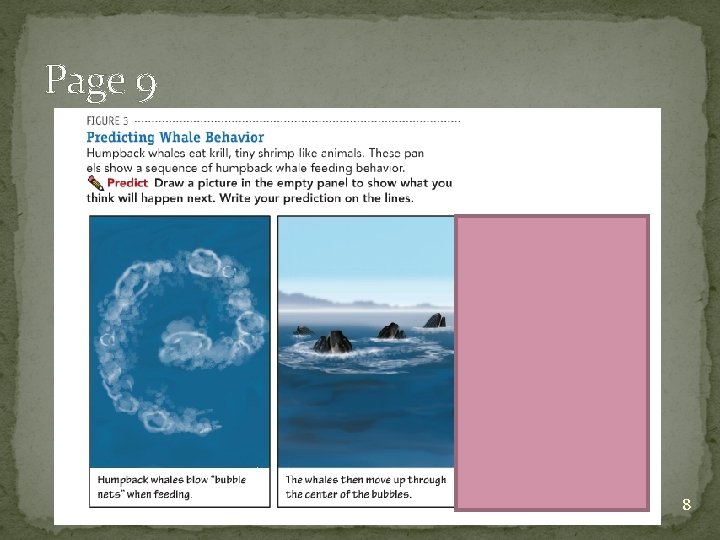
Page 9 Predicting �Making a statement of what will happen next based on past experience or evidence. 7
Page 9 8
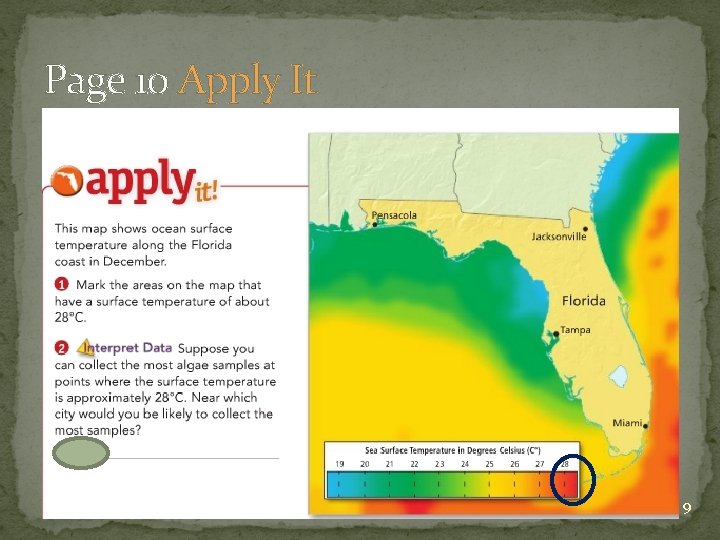
Page 10 Apply It 9
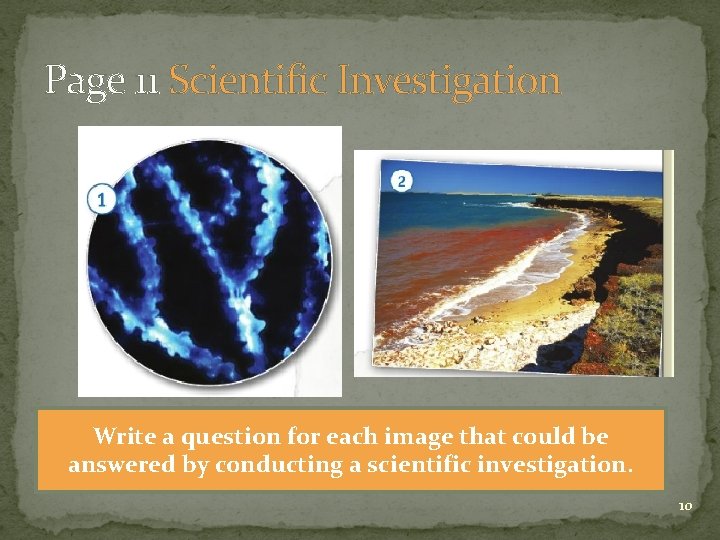
Page 11 Scientific Investigation Write a question for each image that could be answered by conducting a scientific investigation. 10
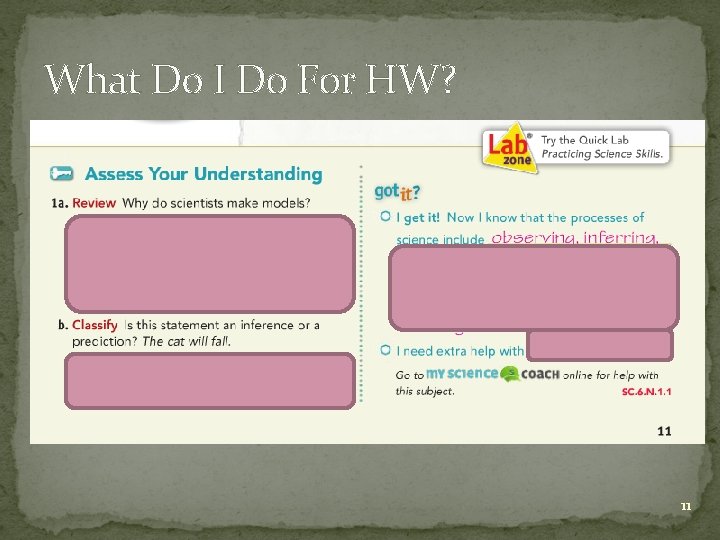
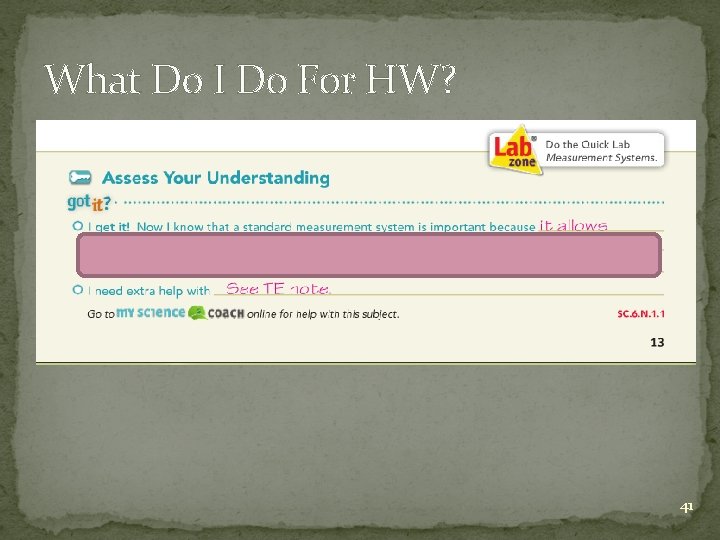
What Do I Do For HW? 11
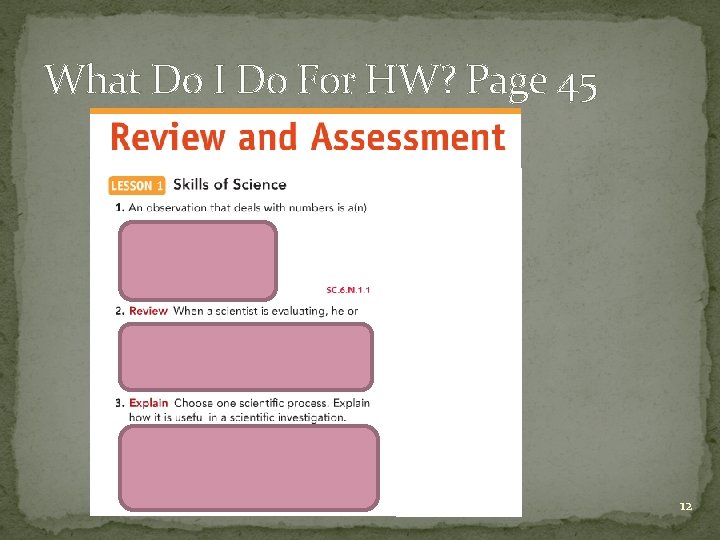
What Do I Do For HW? Page 45 12
Homework Patrol! Watch out! Every homework will be patrolled if its not complete you will receive a citation! � 1 citation = B � 2 citations = C & CALL TO THE JUDGES! � 3 citations = D & CALL TO THE JUDGES! � 4 citations = F & CALL TO THE JUDGES! 13
Home Learning �Complete Lesson 1 Assess Your Understanding pg 11 �Review & Assessment #1 -3 Page 45 �Lab Fee $10 �Vocabulary Study Sheet 9/9 �Back to School Night 9/21 14
Lesson 2 Essential Question �How do Scientists Investigate the Natural World? �Why is a standard measurement system important? �What are some SI units? 15
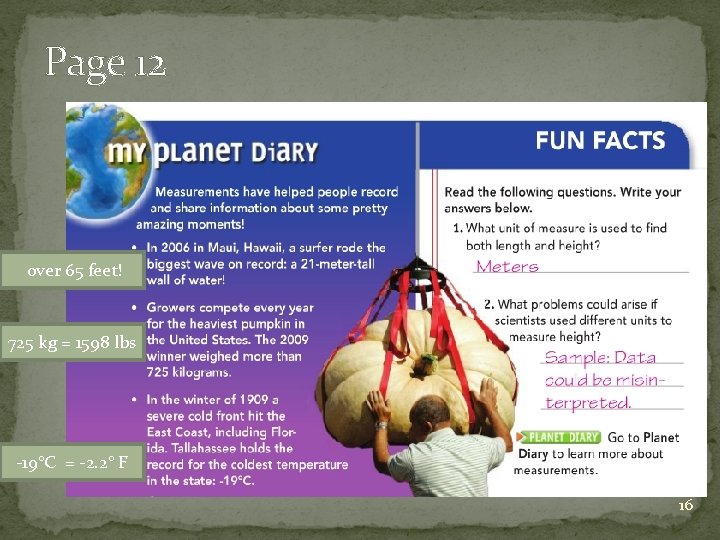
Page 12 over 65 feet! 725 kg = 1598 lbs -19°C = -2. 2° F 16
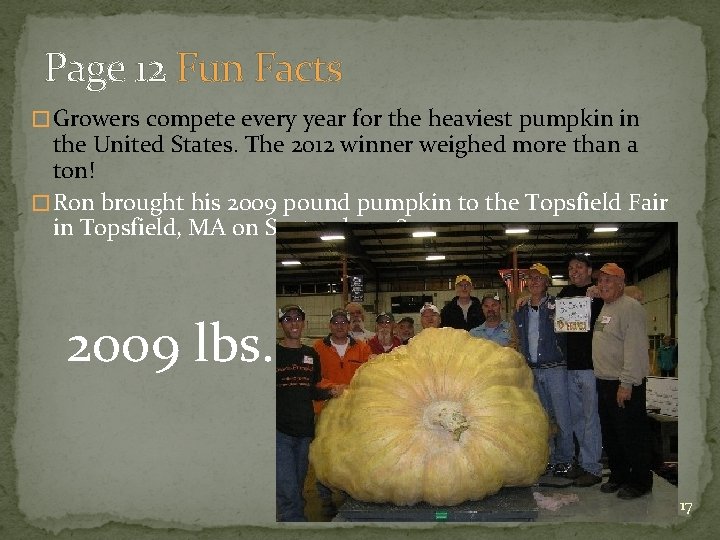
Page 12 Fun Facts � Growers compete every year for the heaviest pumpkin in the United States. The 2012 winner weighed more than a ton! � Ron brought his 2009 pound pumpkin to the Topsfield Fair in Topsfield, MA on September 28, 2012. 2009 lbs. 17
The International System of Units (SI). �The metric system is a system of measurement based on the number 10. �Modern scientists use a version of the metric system called the International System of Units, or SI. �Using SI allows scientists to repeat experiments, compare data and communicate with each other about their results. 18
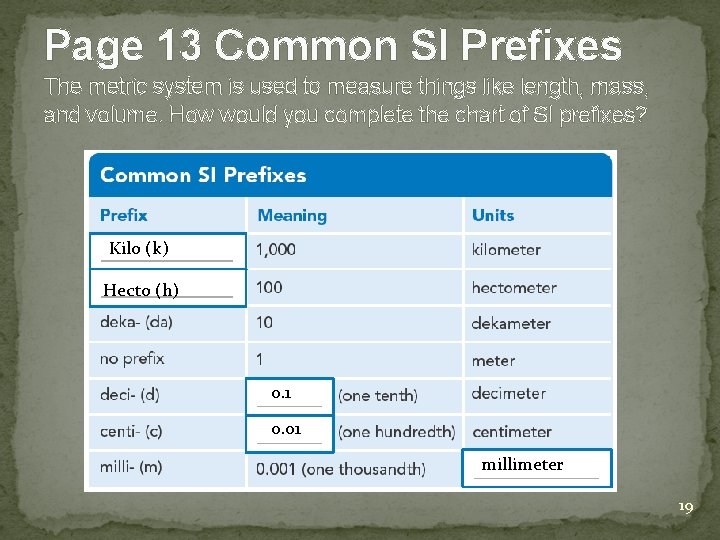
Page 13 Common SI Prefixes The metric system is used to measure things like length, mass, and volume. How would you complete the chart of SI prefixes? Kilo (k) Hecto (h) 0. 1 0. 01 millimeter 19
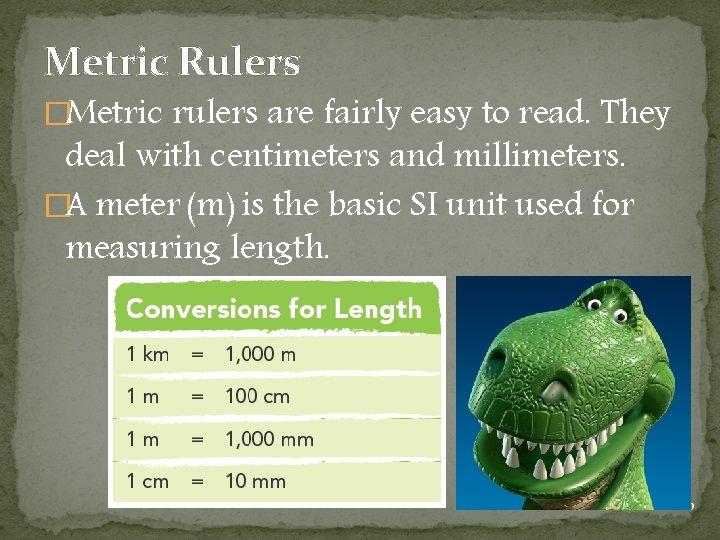
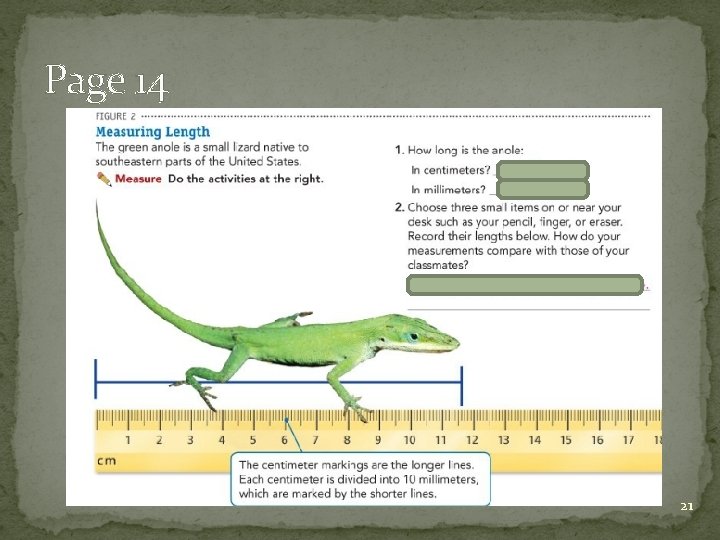
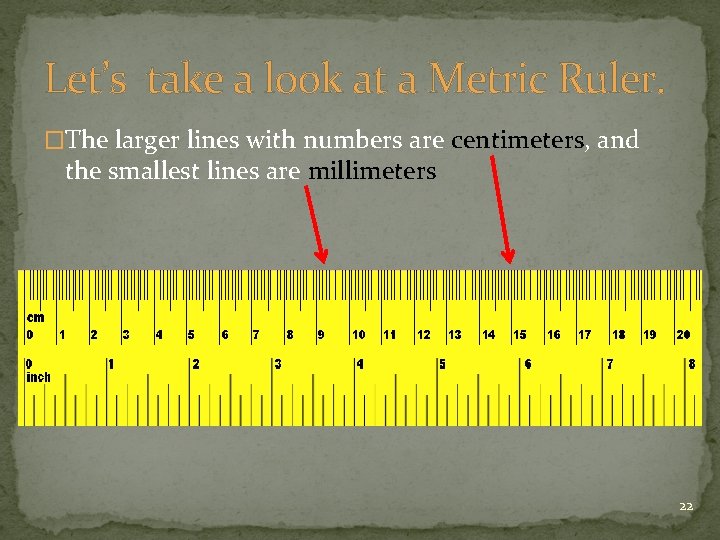
Metric Rulers �Metric rulers are fairly easy to read. They deal with centimeters and millimeters. �A meter (m) is the basic SI unit used for measuring length. 20
Page 14 21
Let’s take a look at a Metric Ruler. �The larger lines with numbers are centimeters, and the smallest lines are millimeters 22
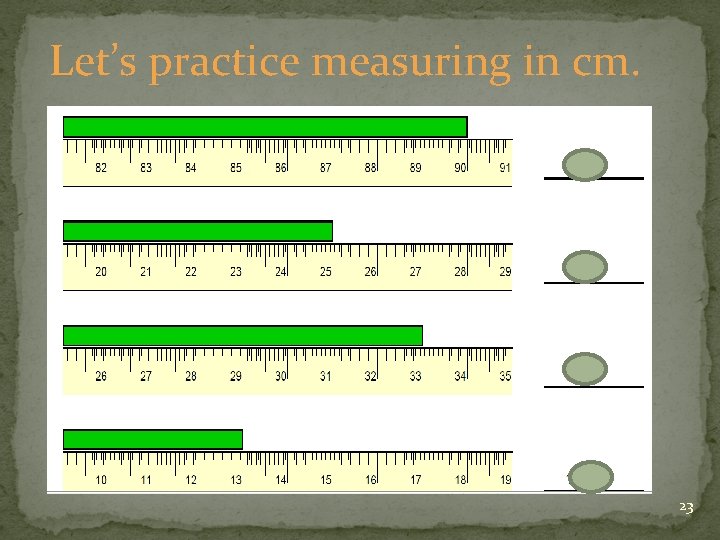
Let’s practice measuring in cm. 23
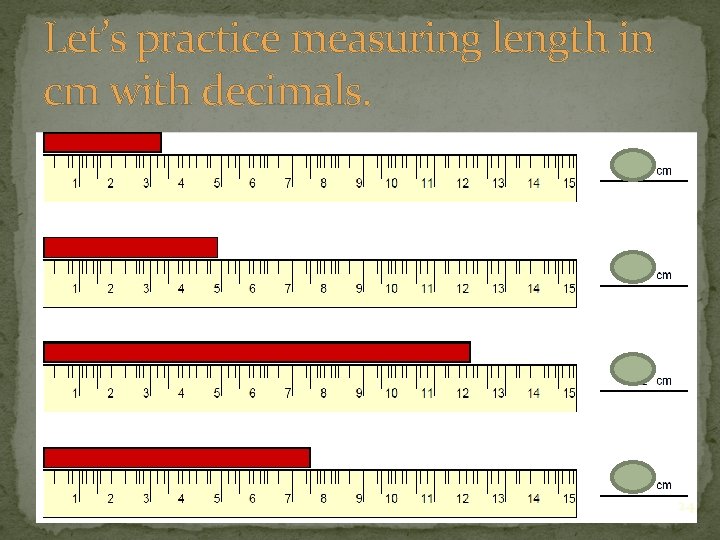
Let’s practice measuring length in cm with decimals. 24
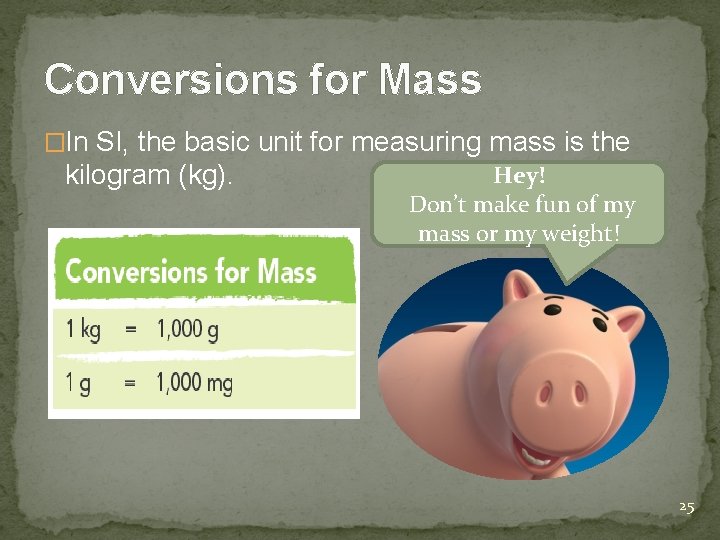
Conversions for Mass �In SI, the basic unit for measuring mass is the Hey! kilogram (kg). Don’t make fun of my mass or my weight! 25
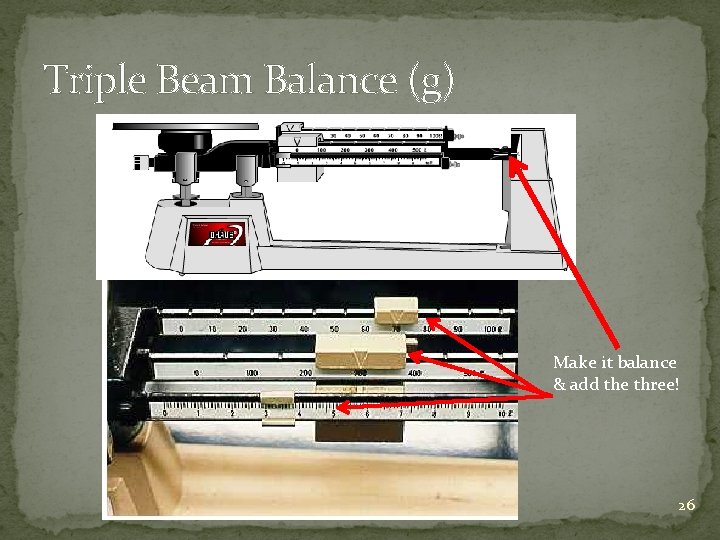
Triple Beam Balance (g) Make it balance & add the three! 26
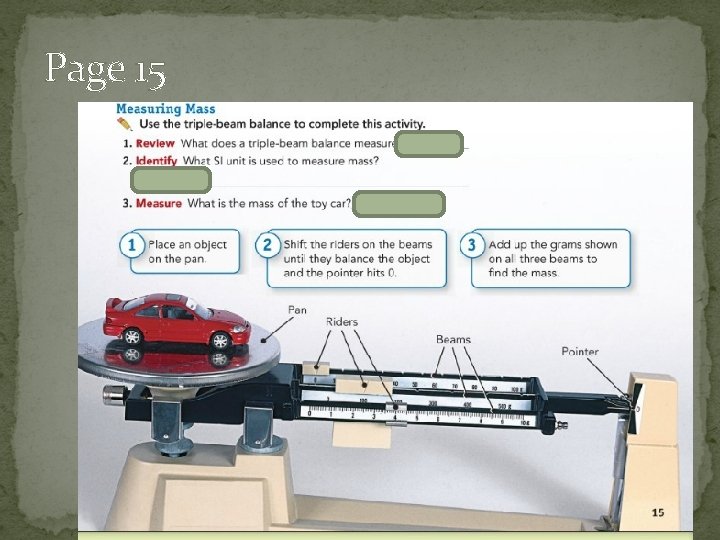
Page 15 27
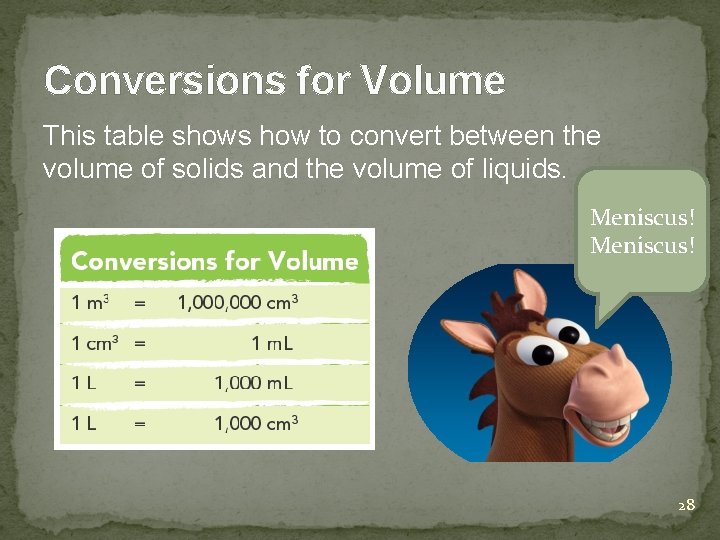
Conversions for Volume This table shows how to convert between the volume of solids and the volume of liquids. Meniscus! 28
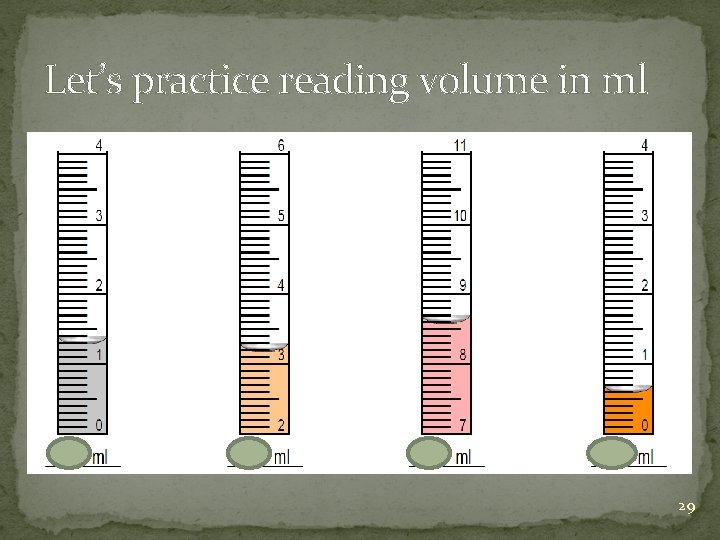
Let’s practice reading volume in ml 29
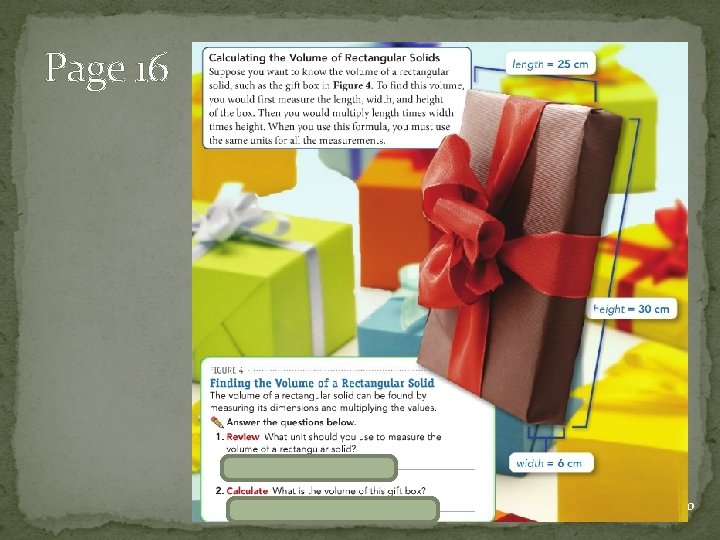
Page 16 30
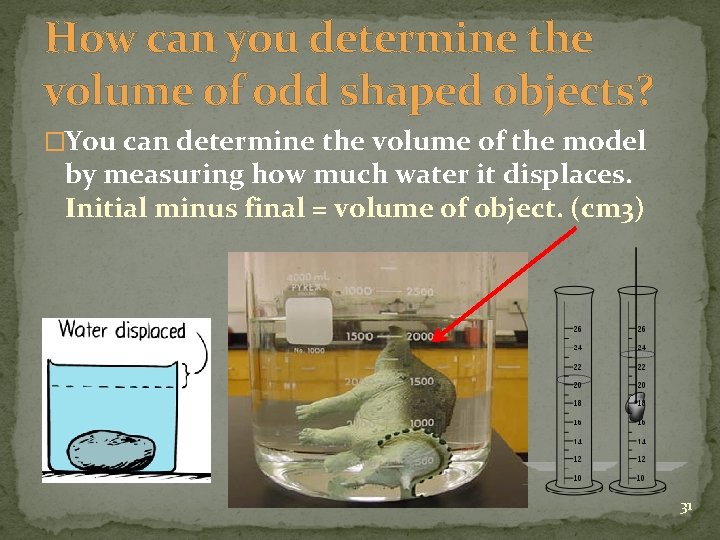
How can you determine the volume of odd shaped objects? �You can determine the volume of the model by measuring how much water it displaces. Initial minus final = volume of object. (cm 3) 31
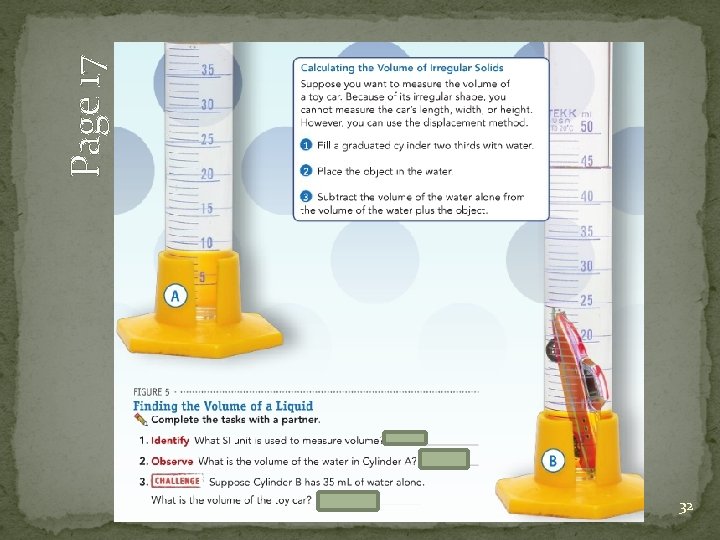
32 Page 17
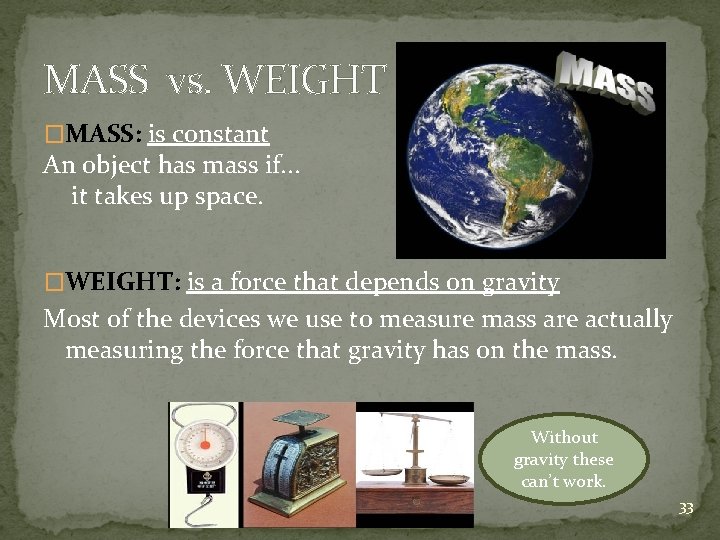
MASS vs. WEIGHT �MASS: is constant An object has mass if. . . it takes up space. �WEIGHT: is a force that depends on gravity Most of the devices we use to measure mass are actually measuring the force that gravity has on the mass. Without gravity these can’t work. 33
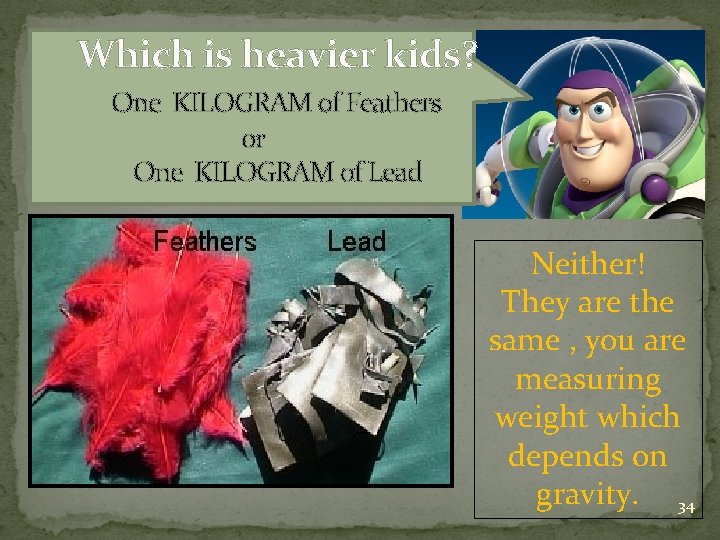
Which is heavier kids? One KILOGRAM of Feathers or One KILOGRAM of Lead Neither! They are the same , you are measuring weight which depends on gravity. 34
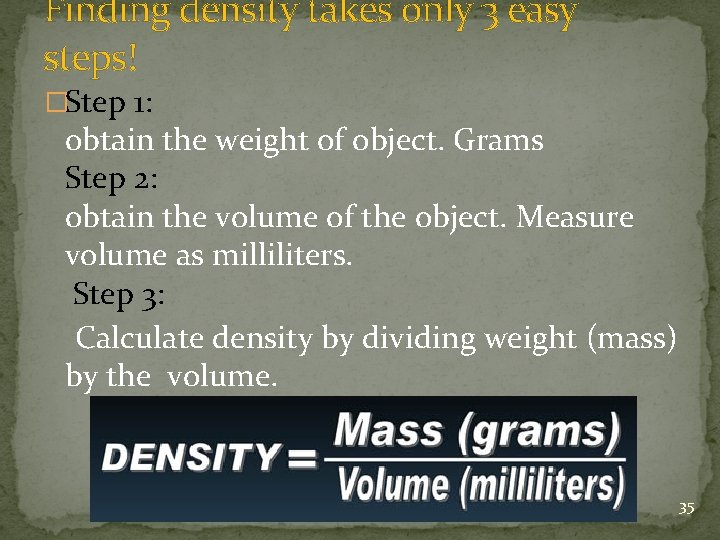
Finding density takes only 3 easy steps! �Step 1: obtain the weight of object. Grams Step 2: obtain the volume of the object. Measure volume as milliliters. Step 3: Calculate density by dividing weight (mass) by the volume. 35
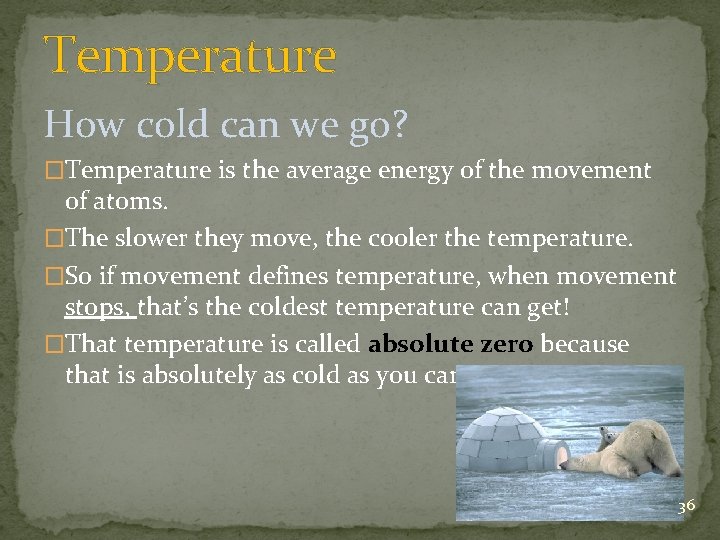
Temperature How cold can we go? �Temperature is the average energy of the movement of atoms. �The slower they move, the cooler the temperature. �So if movement defines temperature, when movement stops, that’s the coldest temperature can get! �That temperature is called absolute zero because that is absolutely as cold as you can go. 36
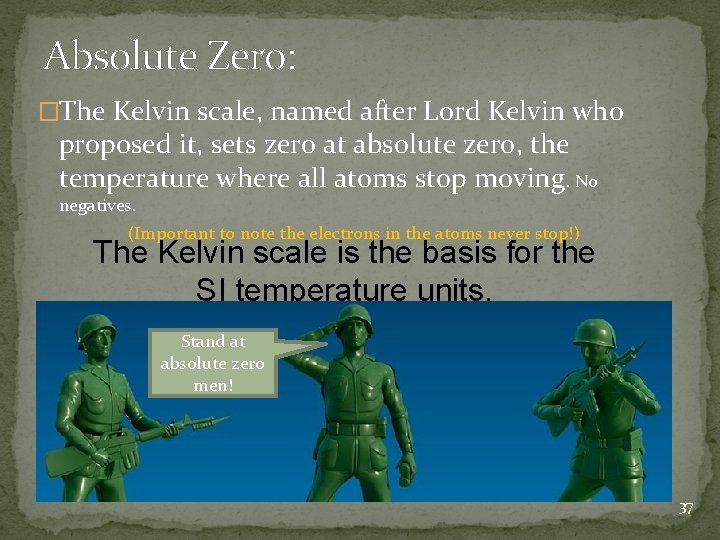
Absolute Zero: �The Kelvin scale, named after Lord Kelvin who proposed it, sets zero at absolute zero, the temperature where all atoms stop moving. No negatives. (Important to note the electrons in the atoms never stop!) The Kelvin scale is the basis for the SI temperature units. Stand at absolute zero men! 37
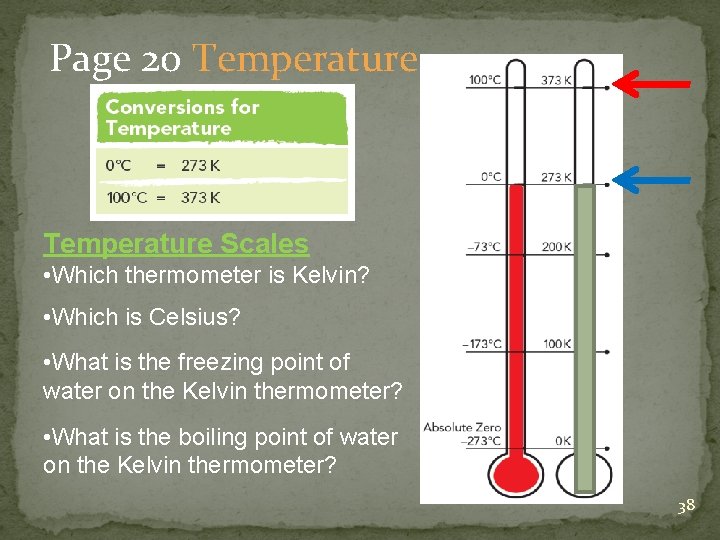
Page 20 Temperature Scales • Which thermometer is Kelvin? • Which is Celsius? • What is the freezing point of water on the Kelvin thermometer? • What is the boiling point of water on the Kelvin thermometer? 38
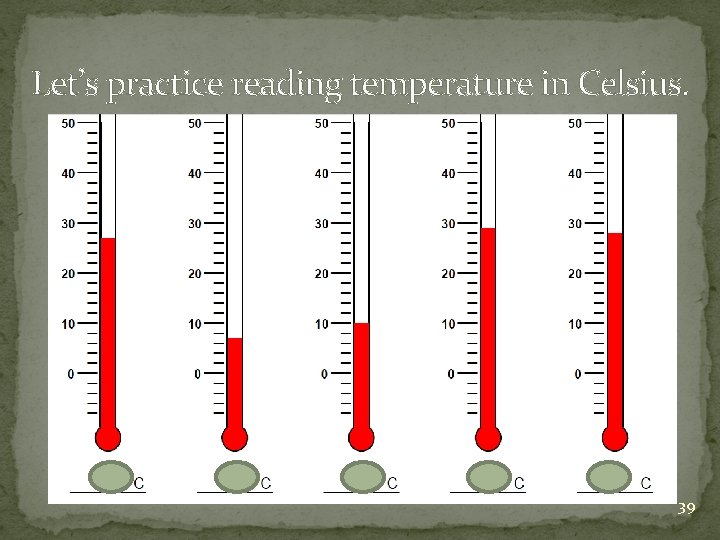
Let’s practice reading temperature in Celsius. 39
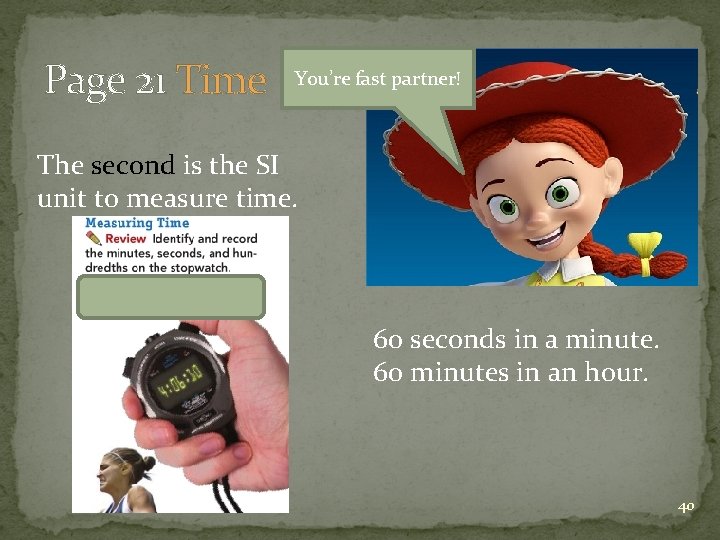
Page 21 Time You’re fast partner! The second is the SI unit to measure time. 60 seconds in a minute. 60 minutes in an hour. 40
What Do I Do For HW? 41
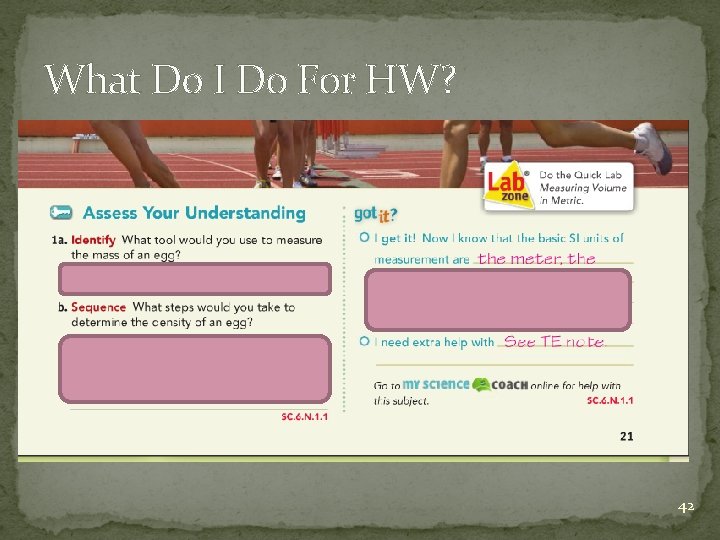
What Do I Do For HW? 42
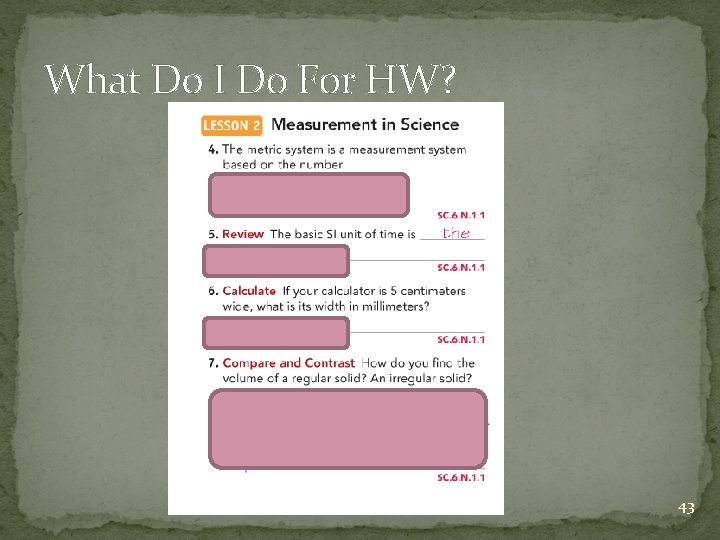
What Do I Do For HW? 43
Let’s Play! Oooo measure the TOYS!! Oooo Calculate the volume and density of the TOYS!! Oooo Treat the toys with RESPECT!!! 44
Home Learning �Complete Lesson 2 Assess Your Understanding pg 13& 21 �Review & Assessment #4 -7 Page 45 �Lab Fee $10 �Vocabulary Study Sheet 9/9 �Back to School Night 9/21 45