
Measure of kinetic energy of molecules Thermometer Fahrenheit
- Slides: 16
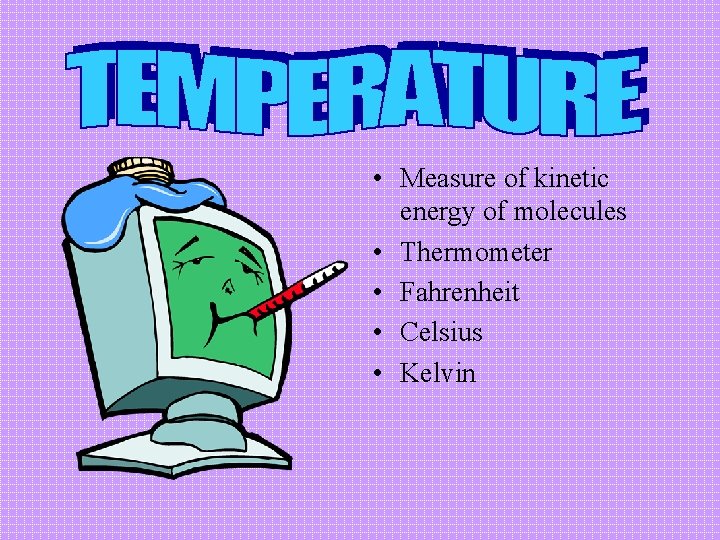
• Measure of kinetic energy of molecules • Thermometer • Fahrenheit • Celsius • Kelvin
• Measurement related to the quantity of molecules.
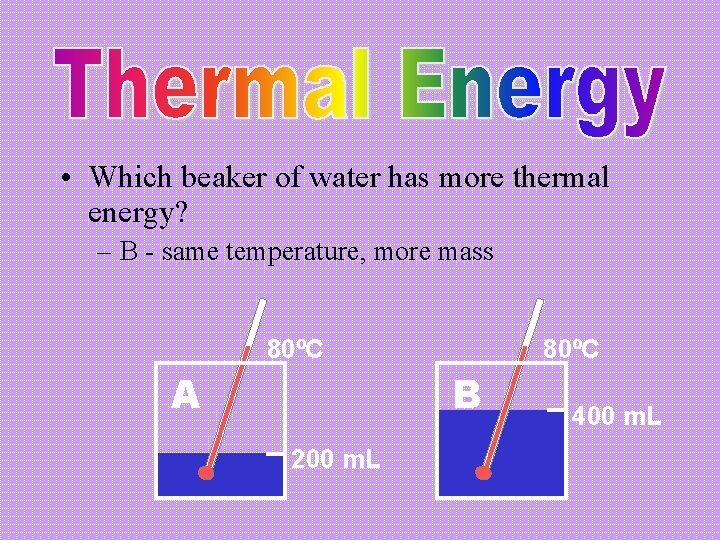
• Which beaker of water has more thermal energy? – B - same temperature, more mass 80ºC A 80ºC B 200 m. L 400 m. L
• Thermal energy always moves from warmer to cooler objects. • Heat is the result of molecules vibrating quickly. • Heat is moving energy.
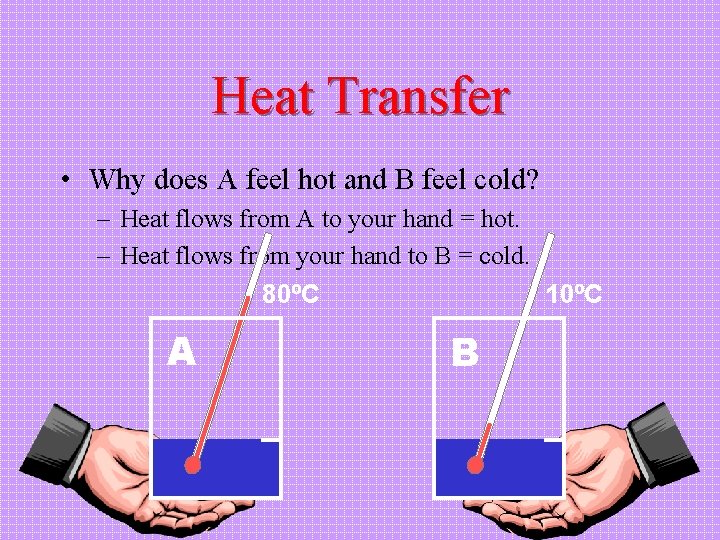
Heat Transfer • Why does A feel hot and B feel cold? – Heat flows from A to your hand = hot. – Heat flows from your hand to B = cold. 80ºC 10ºC A B
Heat Transfer • Heat is always transferred from hot to cold. • Insulators slow the transfer of heat due to air pockets. • Conductors easily allow the transfer of heat, like metals. • Heat is transferred by conduction, convection, and radiation.
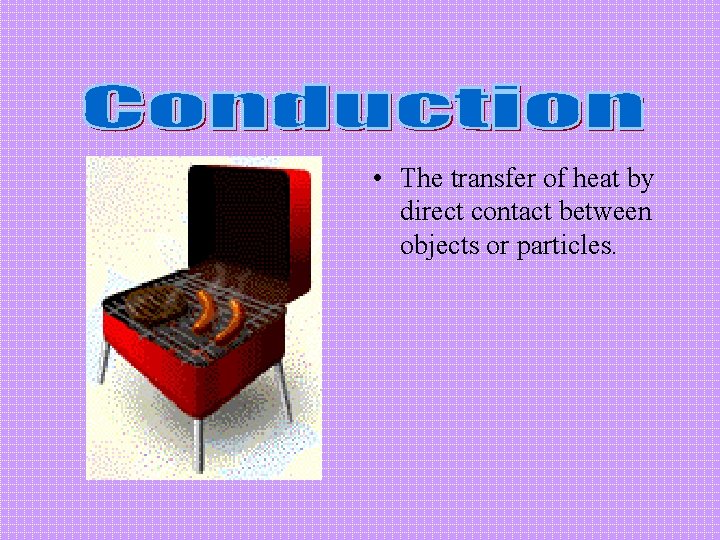
• The transfer of heat by direct contact between objects or particles.
• Heat is transferred due to objects touching each other or through collisions. • Occurs best in solids. • Heat continues to be transferred until both objects reach the same temperature, called a thermal equilibrium.
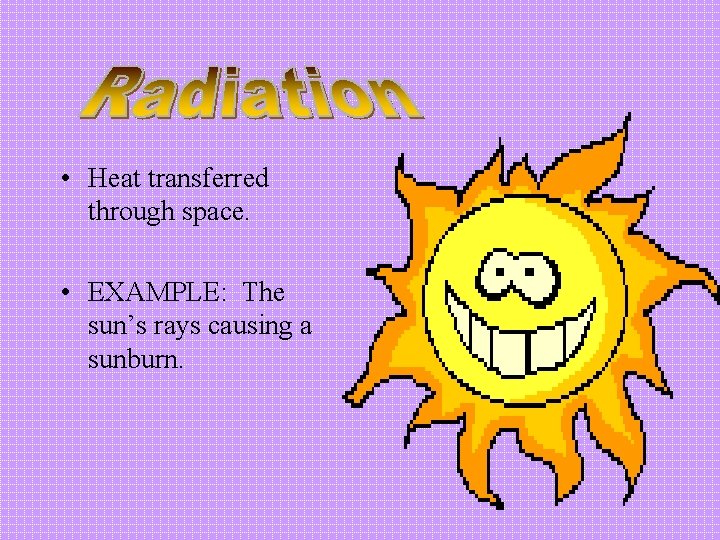
• Heat transferred through space. • EXAMPLE: The sun’s rays causing a sunburn.
• Transfer of heat through electromagnetic radiation (light from stars or light bulbs). • Transferred in all directions. • No contact required! • Dark or dull objects absorb more than light or shiny objects do.
• Heat transferred by the movement of molecules within a substance. • Movement occurs from warmer areas to cooler areas.
• Transfer of heat through a liquid or gas through moving currents, called convection currents. • The cause of wind and weather.
• The movement of a substance that is caused by differences in temperature and density. • EXAMPLES: wind boiling water • NATURE WANTS EVERYTHING TO BALANCE ! !
• Conductors are materials that transfer heat easily. • Examples: metals like copper and gold
• An insulator is a material that does not transfer heat easily. • Examples: • liquids and gases • A jacket
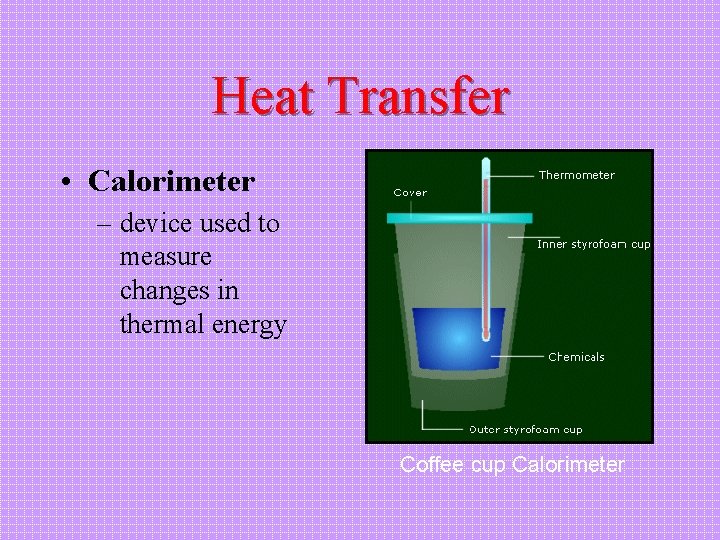
Heat Transfer • Calorimeter – device used to measure changes in thermal energy Coffee cup Calorimeter