
MEARNS CASTLE HIGH SCHOOL S 3 CURRICULUM EVENING



- Slides: 59
MEARNS CASTLE HIGH SCHOOL S 3 CURRICULUM EVENING TUESDAY 31 OCTOBER 2017
Programme Progression from the Broad General Education to the Senior Phase Next steps in learning – Design of national courses Pathways Assessment Subject specific information Study techniques – Learning styles Advice for parents and carers – study environment and useful websites
This evening’s presentation will be uploaded onto the school website https: //blogs. glowscotland. org. uk/er/Mearns. Castle/
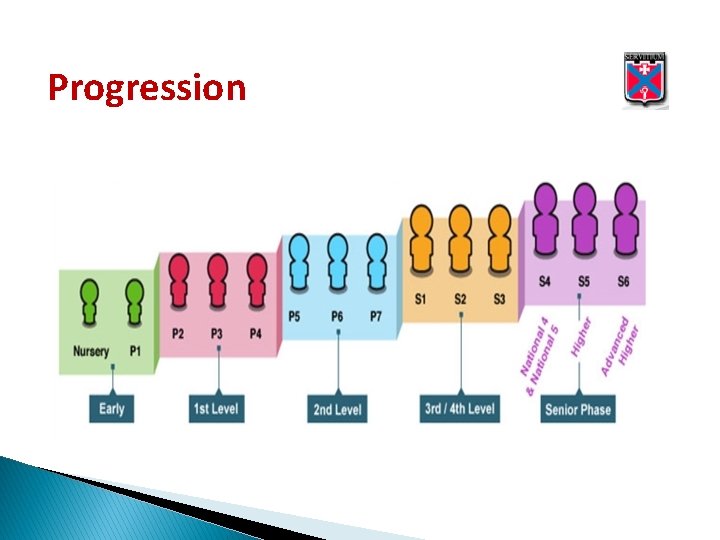
Progression
Broad General Education � Key entitlement for learners from early years to the end of S 3. � Is designed to provide strong foundations for choosing and specialising in a range of subjects in the Senior Phase. � All staff have a responsibility to develop Literacy, Numeracy and Health and Wellbeing. � Engages learners in Interdisciplinary Learning � Provides opportunities for developing skills for learning, life and work � Personal support to enable young people to access learning
THE NATIONAL PICTURE • • 53, 000 young people in Scotland not in work or education Youth unemployment rate is 18. 8% - almost 3 times the all-age rate and double that of the best performing European countries More than 50% of school leavers do not go on to Higher Education Very few gain relevant vocational qualifications while at school.
Curriculum Model at Mearns Castle � S 1 & 2 – 13 subjects covering all aspects of the Broad General Education � S 3 – the Transition Year from the Broad General Education to the Senior Phase. Pupils are studying the eight subjects that they have selected to take forward to presentation for National Qualifications in May 2019 � Throughout the BGE, pupils continue to have one period of Personal and Social Education, one period of Citizenship and one period of RME. PE has been maintained at the recommended statutory levels. � Health and Wellbeing, Literacy and Numeracy are Responsibilities of All and have been highlighted and assessed across all areas of the BGE.
Learning Differently – Cf. E represents a different approach to learning in schools intended to help learners develop skills, knowledge and understanding in more depth. � Examples of how they will learn differently are: ◦ Using technologies in learning – to find material, communicate, create and present ◦ Active learning – being actively engaged, whether mentally or physically, using real life and imaginary situations ◦ Cooperative learning – encouraging thinking and talking together, to discuss ideas and solve problems
Learning Differently – Cf. E ◦ Interdisciplinary learning – using links between different areas of learning to develop, reinforce and deepen understanding (Dedicated PT) ◦ Outdoor learning – making use of the outdoor environment for learning ◦ Personalisation and choice – being given choices and being involved in planning how and what they learn. Not ‘one size fits all’ ◦ Skills – Cf. E emphasises the development of skills for learning, life and work. These include higher order skills – thinking about complex issues, problem solving, analysis and evaluation; creativity; and critical thinking skills – making judgements and decisions, developing arguments and solving complex problems
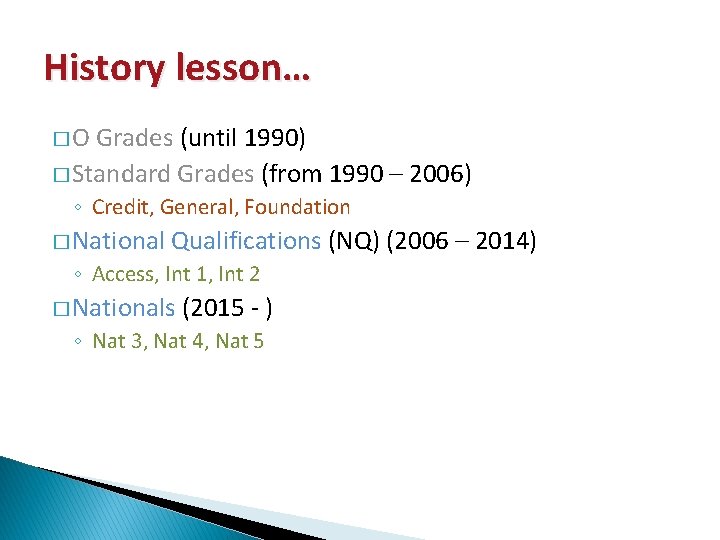
History lesson… �O Grades (until 1990) � Standard Grades (from 1990 – 2006) ◦ Credit, General, Foundation � National Qualifications (NQ) (2006 – 2014) ◦ Access, Int 1, Int 2 � Nationals (2015 - ) ◦ Nat 3, Nat 4, Nat 5
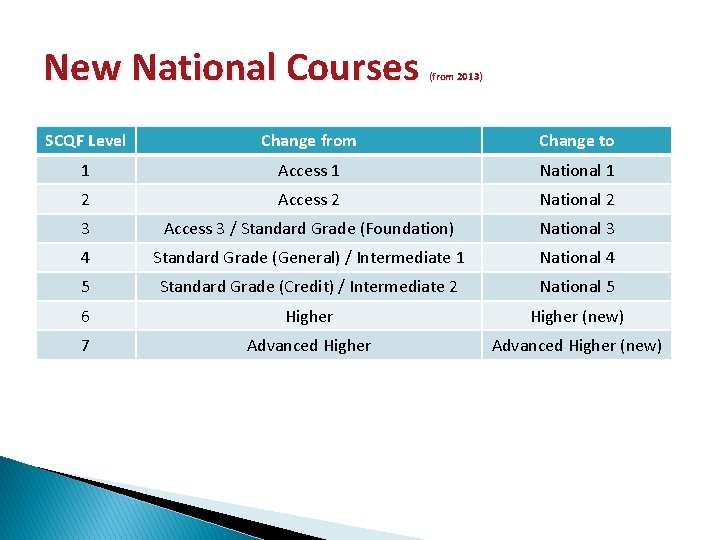
New National Courses (from 2013) SCQF Level Change from Change to 1 Access 1 National 1 2 Access 2 National 2 3 Access 3 / Standard Grade (Foundation) National 3 4 Standard Grade (General) / Intermediate 1 National 4 5 Standard Grade (Credit) / Intermediate 2 National 5 6 Higher (new) 7 Advanced Higher (new)
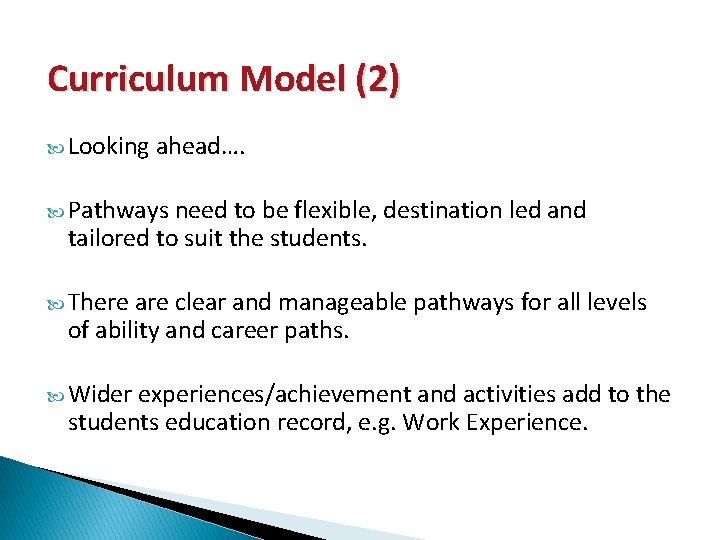
Curriculum Model (2) Looking ahead…. Pathways need to be flexible, destination led and tailored to suit the students. There are clear and manageable pathways for all levels of ability and career paths. Wider experiences/achievement and activities add to the students education record, e. g. Work Experience.
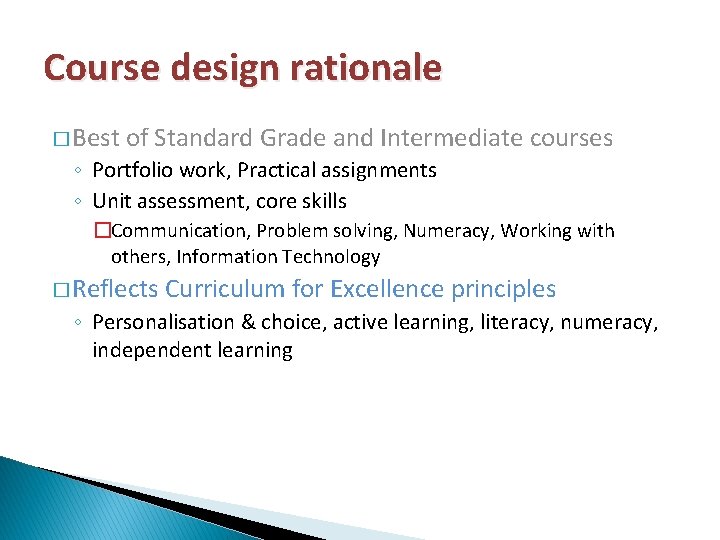
Course design rationale � Best of Standard Grade and Intermediate courses ◦ Portfolio work, Practical assignments ◦ Unit assessment, core skills �Communication, Problem solving, Numeracy, Working with others, Information Technology � Reflects Curriculum for Excellence principles ◦ Personalisation & choice, active learning, literacy, numeracy, independent learning
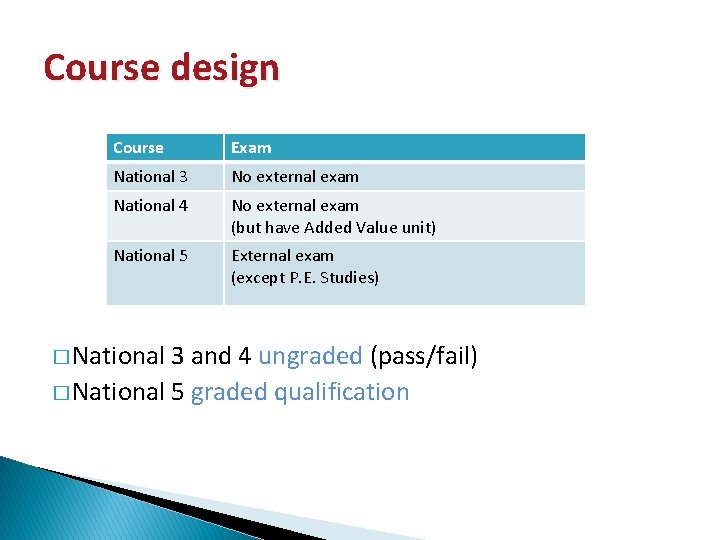
Course design Course Exam National 3 No external exam National 4 No external exam (but have Added Value unit) National 5 External exam (except P. E. Studies) � National 3 and 4 ungraded (pass/fail) � National 5 graded qualification
Scottish Credit and Qualification Framework http: //www. scqf. org. uk/framework-diagram/Framework. htm
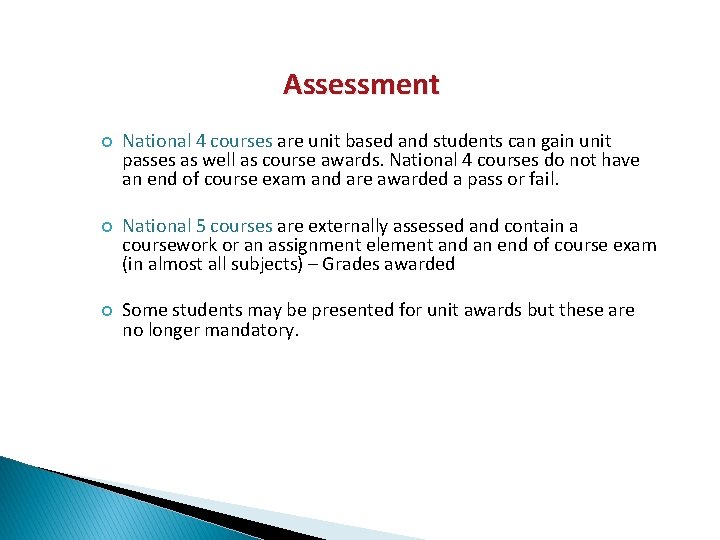
Assessment National 4 courses are unit based and students can gain unit passes as well as course awards. National 4 courses do not have an end of course exam and are awarded a pass or fail. National 5 courses are externally assessed and contain a coursework or an assignment element and an end of course exam (in almost all subjects) – Grades awarded Some students may be presented for unit awards but these are no longer mandatory.
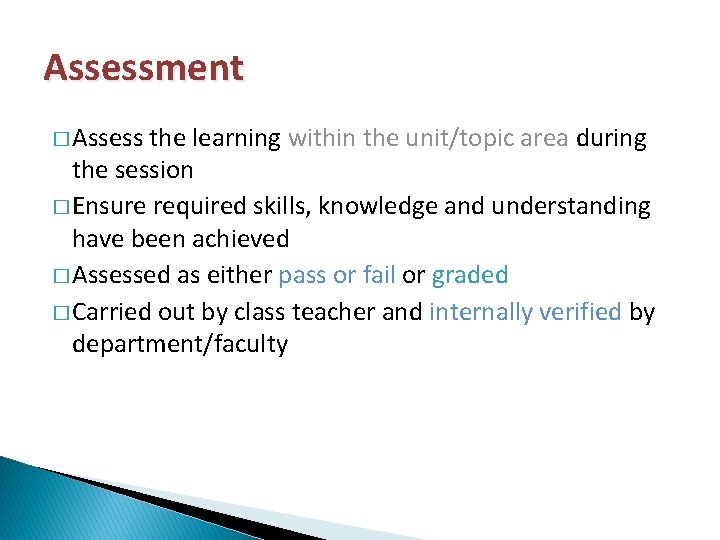
Assessment � Assess the learning within the unit/topic area during the session � Ensure required skills, knowledge and understanding have been achieved � Assessed as either pass or fail or graded � Carried out by class teacher and internally verified by department/faculty
Assessment (Nat 4) � Assess the application of learning across the course ◦ Pass or fail ◦ Ensure required skills, knowledge and understanding have been achieved ◦ Added Value Unit Assessments are set by the SQA ◦ Carried out by class teacher and internally verified by department/faculty
Course Assessment � Course Assessments form part of National 5 qualifications and assess the application of learning across the course. � Most courses have an Assignment and a final exam which are marked by the SQA. � For practical reasons, other courses have components which are assessed by external examiners, e. g. music
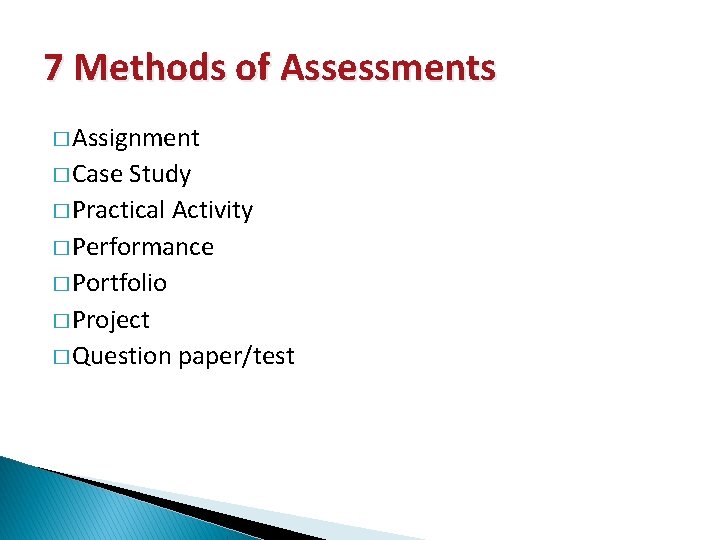
7 Methods of Assessments � Assignment � Case Study � Practical Activity � Performance � Portfolio � Project � Question paper/test
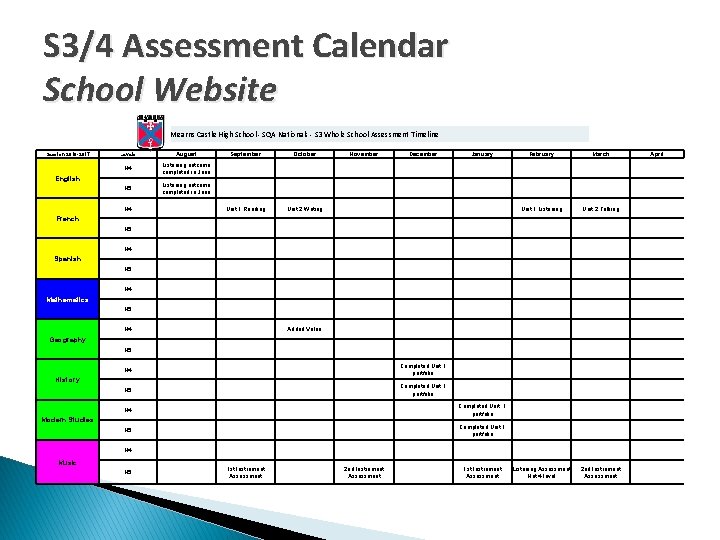
S 3/4 Assessment Calendar School Website Mearns Castle High School - SQA Nationals - S 3 Whole School Assessment Timeline Session 2016 -2017 Levels August September October November December January February March April N 4 Listening outcome completed in June N 5 Listening outcome completed in June N 4 Unit 1 Reading Unit 2 Writing Unit 1 Listening Unit 2 Talking N 5 N 4 N 5 N 4 Added Value N 5 N 4 Completed Unit 1 portfolio N 5 Completed Unit 1 portfolio N 4 Completed Unit 1 portfolio N 5 Completed Unit 1 portfolio N 4 N 5 1 st Instrument Assessment 2 nd Instrument Assessment 1 st Instrument Assessment Listening Assessment Nat 4 level 2 nd Instrument Assessment English French Spanish Mathematics Geography History Modern Studies Music
Assessment Department Examples
Mathematics �Unlike almost all other N 5 courses – there is no internal component to the Maths course. �The Course Assessment consists of two Question Papers – calculator and noncalculator presented in the final exam and marked by the SQA
Biology � End of topic and unit assessments will test pupil’s knowledge and demonstrate that learners can apply their knowledge & understanding and scientific skills to an experiment or practical investigation and report on the investigation. � The Course Assessment will be a two-section final exam and an Assignment which will require learners to research a topical issue. � The Course Assessment and Assignment will be marked by the SQA.
Modern Languages � The Course Assessment will be a Final Exam in listening, reading and writing and there will be a Written Assignment and a Talking Exam. � The Course Assessment and Assignment will be marked by the SQA.
Art & Design � The Course Assessment consists of two folios – an Expressive Portfolio and a Design Portfolio. Through investigation, development and evaluation the pupil produces one final piece of expressive art work and a further investigation, development and evaluation leads to one final design solution. � There is also a final written exam � All work is externally marked by the SQA.
Music � The Course Assessment consists of a Performance Exam, Composition Assignment and a Listening Question Paper � Pupils perform an 8 minute programme of music on two chosen instruments or instrument and voice. � All elements are externally marked by the SQA
Drama � The Course Assessment consists of a Production Exam with a Preparation for Performance written submission and a Question Paper � Pupils choose to be assessed in an Acting or Production Role (Costume, Make Up, Lighting, Sound) � All elements are externally marked by the SQA
Physical Education � The Course Assessment consists of Performance and the Portfolio: � Each candidate will perform in two different activities, each worth 30 marks. School staff will carry out the assessment but are subject to external moderation from SQA. � The portfolio is worth 40 marks and is completed in school and marked according externally by SQA guidance and instructions. � No final exam
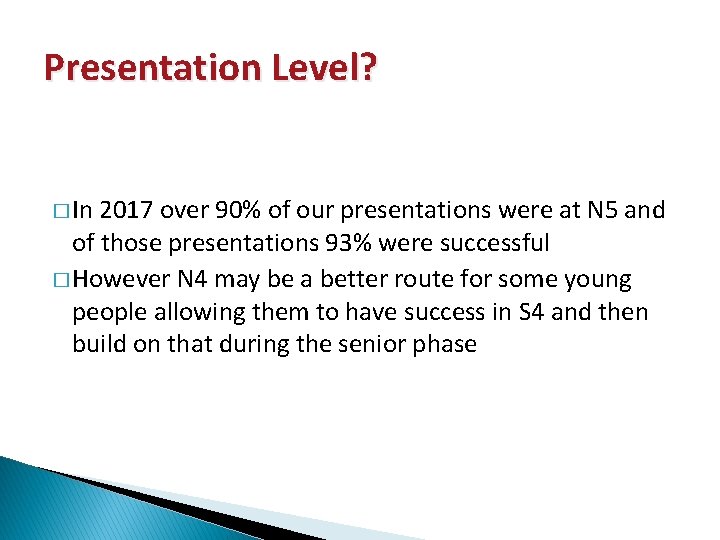
Presentation Level? � In 2017 over 90% of our presentations were at N 5 and of those presentations 93% were successful � However N 4 may be a better route for some young people allowing them to have success in S 4 and then build on that during the senior phase
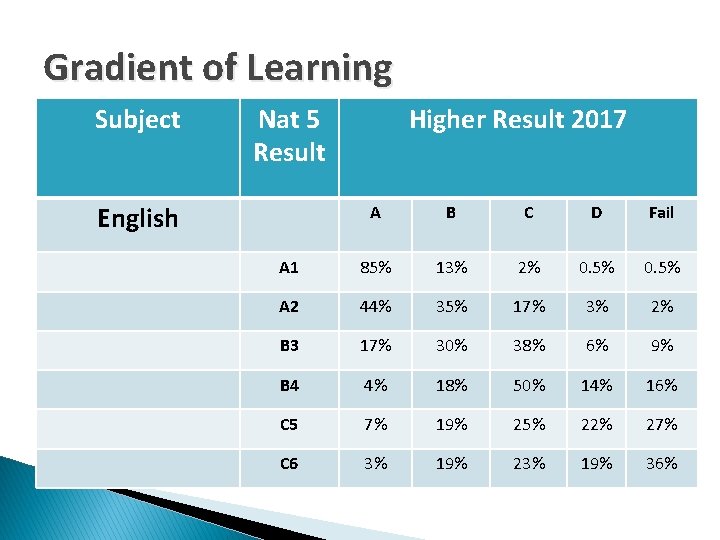
Gradient of Learning Subject Nat 5 Result English Higher Result 2017 A B C D Fail A 1 85% 13% 2% 0. 5% A 2 44% 35% 17% 3% 2% B 3 17% 30% 38% 6% 9% B 4 4% 18% 50% 14% 16% C 5 7% 19% 25% 22% 27% C 6 3% 19% 23% 19% 36%
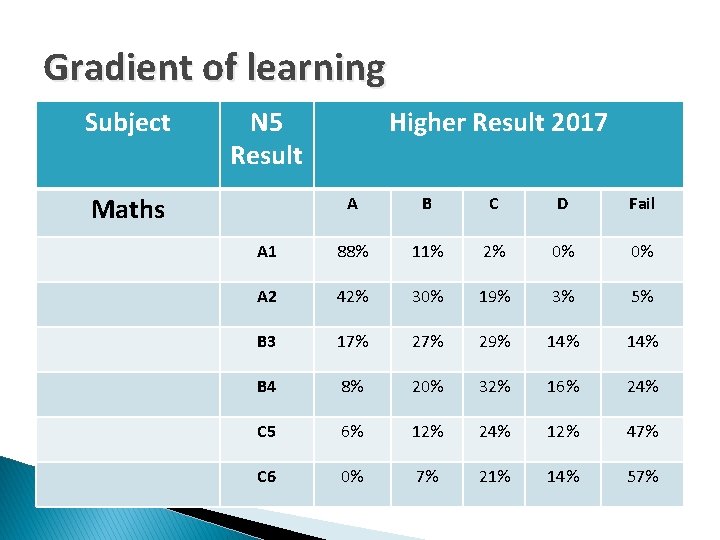
Gradient of learning Subject N 5 Result Maths Higher Result 2017 A B C D Fail A 1 88% 11% 2% 0% 0% A 2 42% 30% 19% 3% 5% B 3 17% 29% 14% B 4 8% 20% 32% 16% 24% C 5 6% 12% 24% 12% 47% C 6 0% 7% 21% 14% 57%
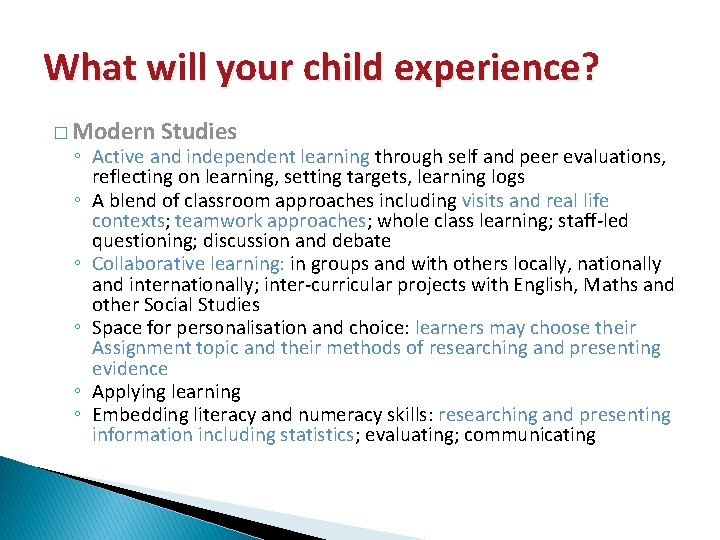
What will your child experience? � Modern Studies ◦ Active and independent learning through self and peer evaluations, reflecting on learning, setting targets, learning logs ◦ A blend of classroom approaches including visits and real life contexts; teamwork approaches; whole class learning; staff-led questioning; discussion and debate ◦ Collaborative learning: in groups and with others locally, nationally and internationally; inter-curricular projects with English, Maths and other Social Studies ◦ Space for personalisation and choice: learners may choose their Assignment topic and their methods of researching and presenting evidence ◦ Applying learning ◦ Embedding literacy and numeracy skills: researching and presenting information including statistics; evaluating; communicating
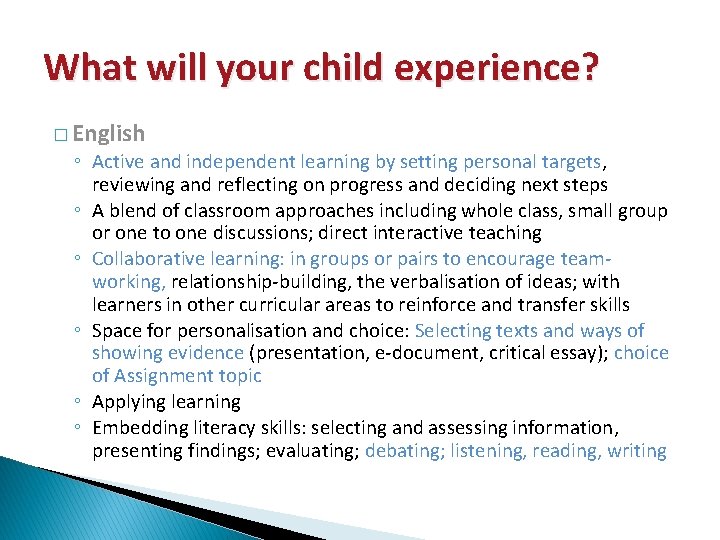
What will your child experience? � English ◦ Active and independent learning by setting personal targets, reviewing and reflecting on progress and deciding next steps ◦ A blend of classroom approaches including whole class, small group or one to one discussions; direct interactive teaching ◦ Collaborative learning: in groups or pairs to encourage teamworking, relationship-building, the verbalisation of ideas; with learners in other curricular areas to reinforce and transfer skills ◦ Space for personalisation and choice: Selecting texts and ways of showing evidence (presentation, e-document, critical essay); choice of Assignment topic ◦ Applying learning ◦ Embedding literacy skills: selecting and assessing information, presenting findings; evaluating; debating; listening, reading, writing
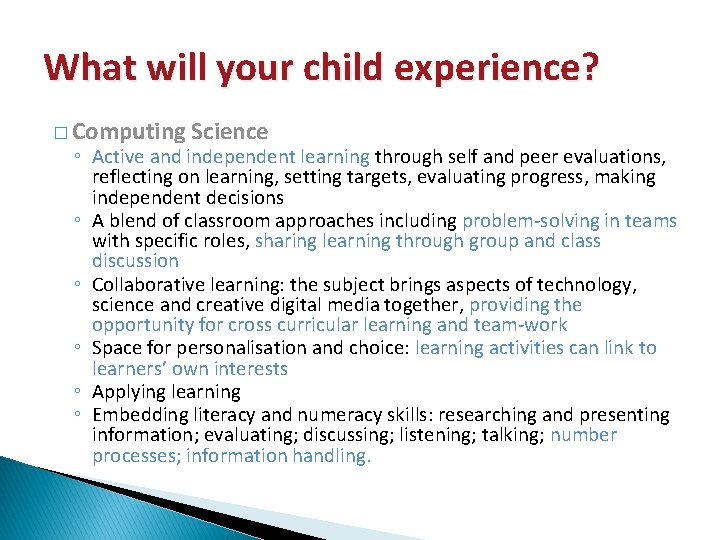
What will your child experience? � Computing Science ◦ Active and independent learning through self and peer evaluations, reflecting on learning, setting targets, evaluating progress, making independent decisions ◦ A blend of classroom approaches including problem-solving in teams with specific roles, sharing learning through group and class discussion ◦ Collaborative learning: the subject brings aspects of technology, science and creative digital media together, providing the opportunity for cross curricular learning and team-work ◦ Space for personalisation and choice: learning activities can link to learners’ own interests ◦ Applying learning ◦ Embedding literacy and numeracy skills: researching and presenting information; evaluating; discussing; listening; talking; number processes; information handling.
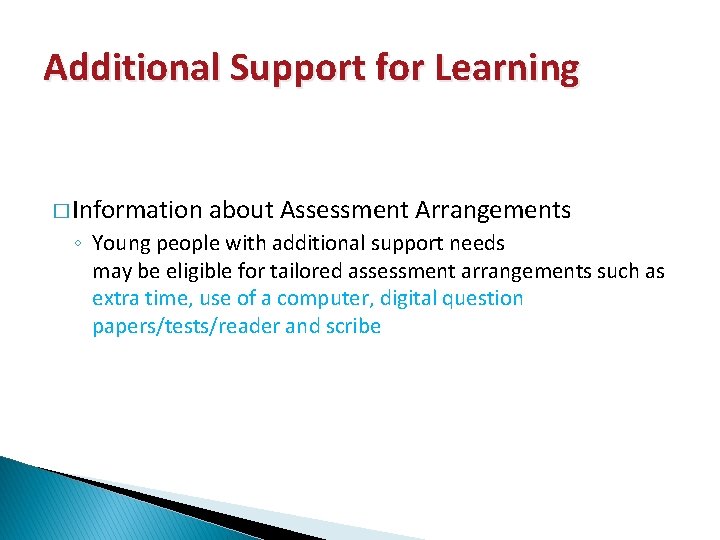
Additional Support for Learning � Information about Assessment Arrangements ◦ Young people with additional support needs may be eligible for tailored assessment arrangements such as extra time, use of a computer, digital question papers/tests/reader and scribe
Scottish Qualifications Authority http: //www. sqa. org. uk/sqa/70972. html � BBC Bitesize � https: //www. bbc. co. uk/education
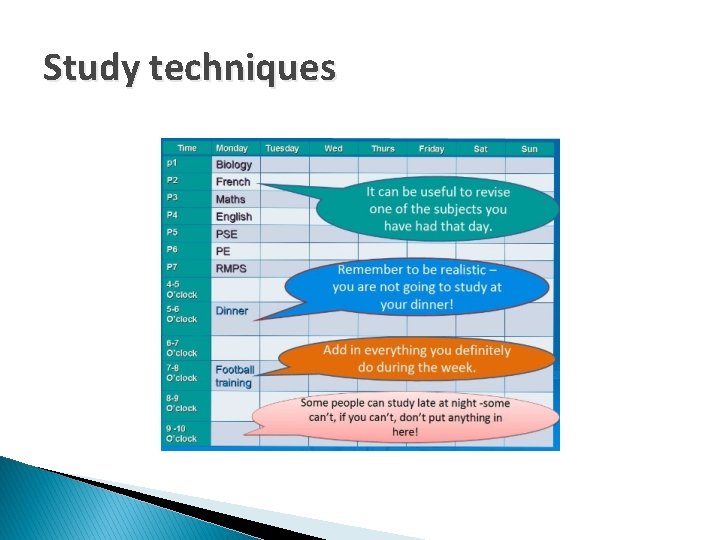
Study techniques
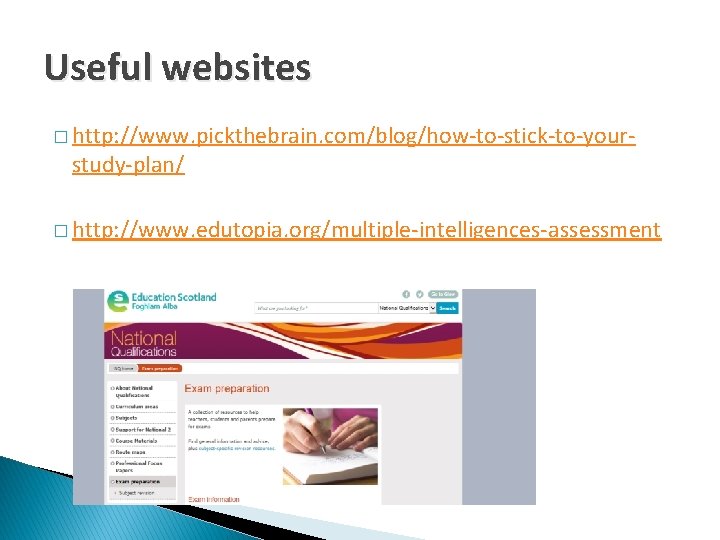
Useful websites � http: //www. pickthebrain. com/blog/how-to-stick-to-your- study-plan/ � http: //www. edutopia. org/multiple-intelligences-assessment
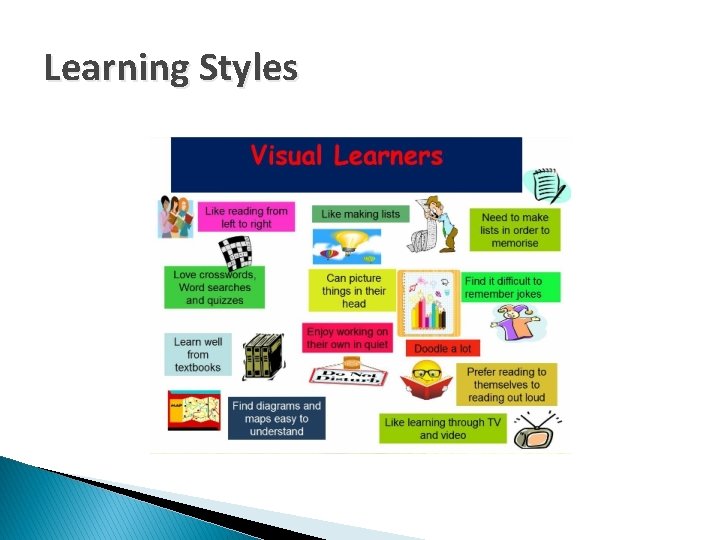
Learning Styles
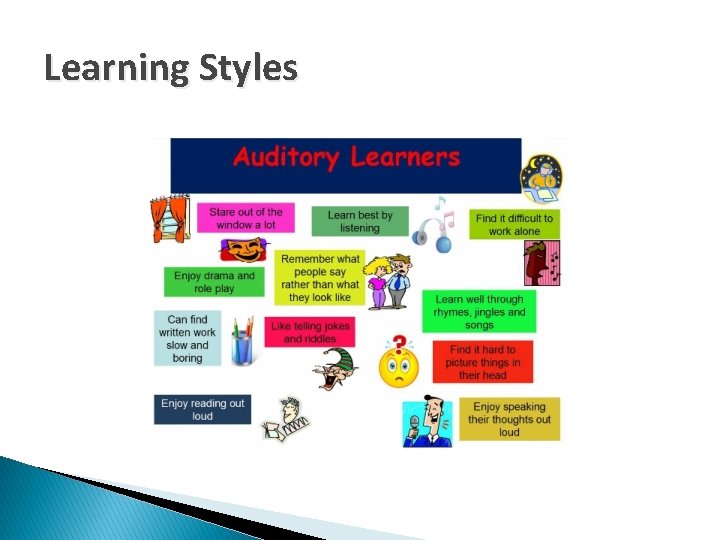
Learning Styles
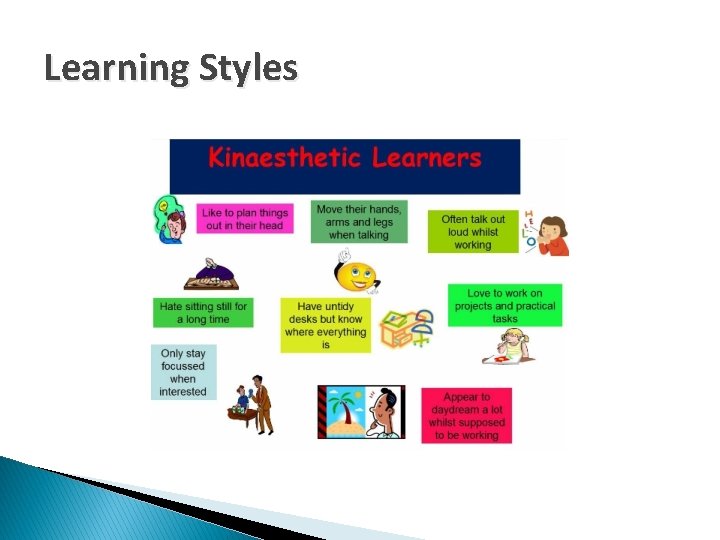
Learning Styles
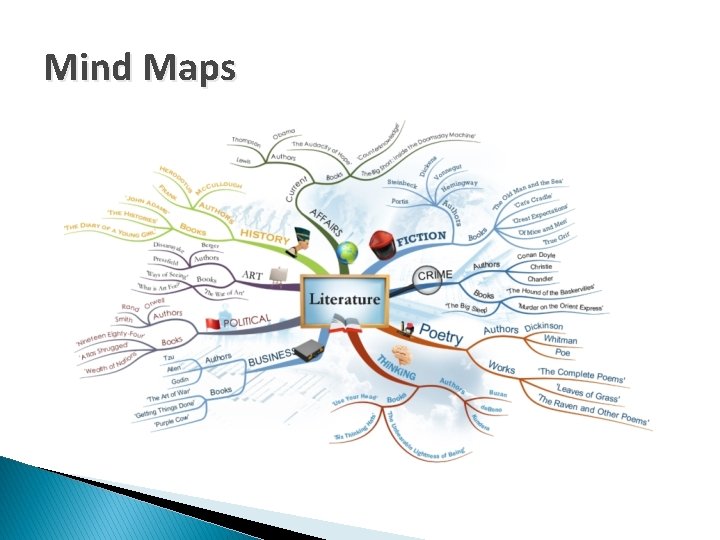
Mind Maps
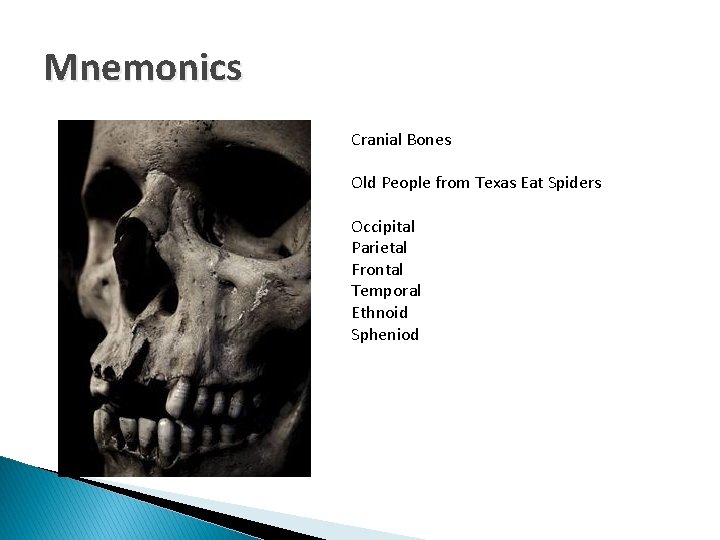
Mnemonics Cranial Bones Old People from Texas Eat Spiders Occipital Parietal Frontal Temporal Ethnoid Spheniod
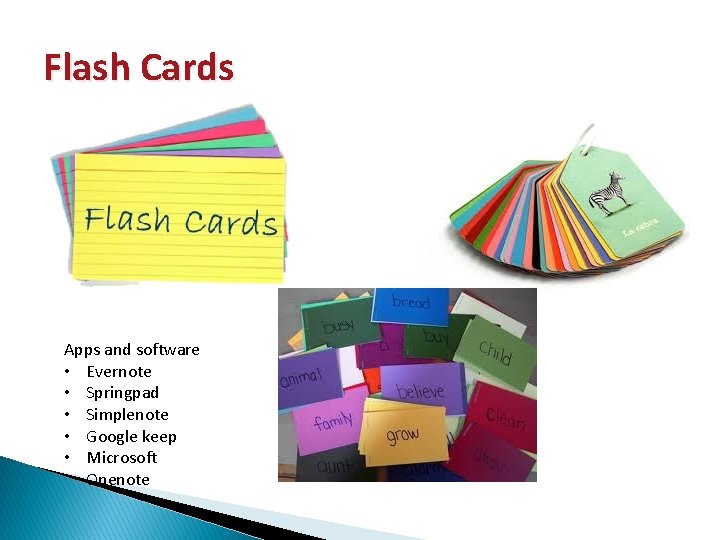
Flash Cards Apps and software • Evernote • Springpad • Simplenote • Google keep • Microsoft Onenote
Recording Notes
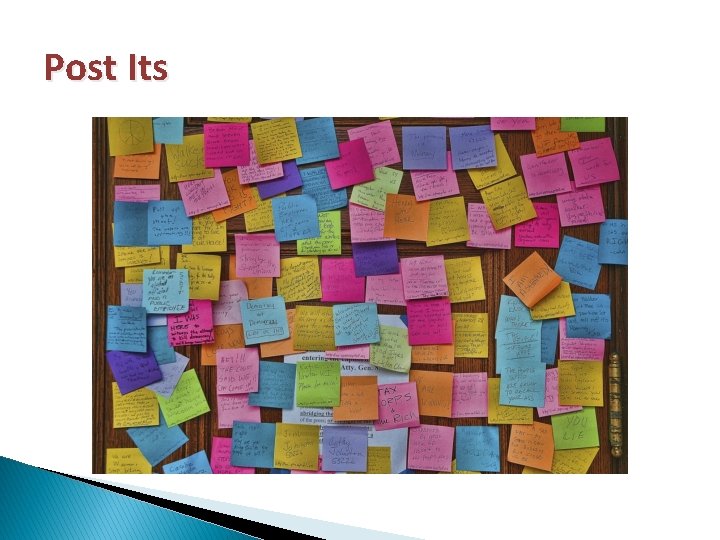
Post Its
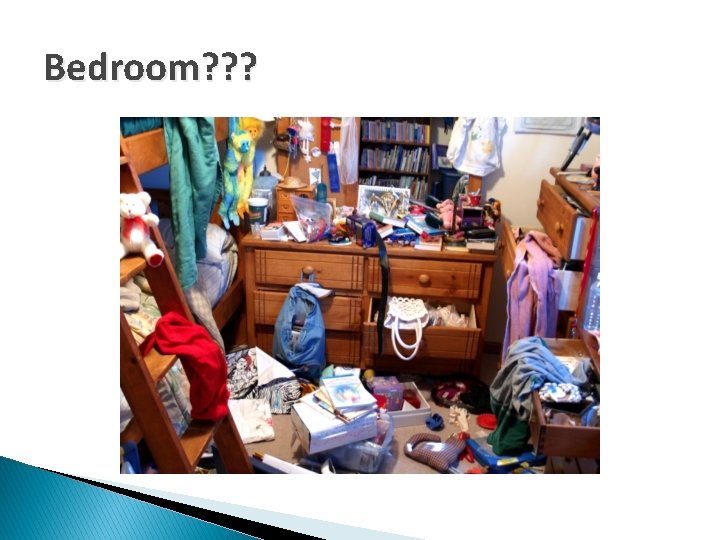
Bedroom? ? ?
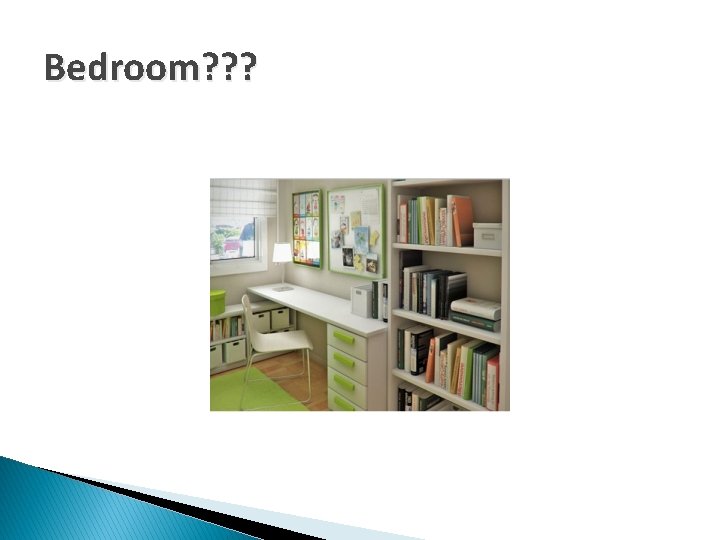
Bedroom? ? ?
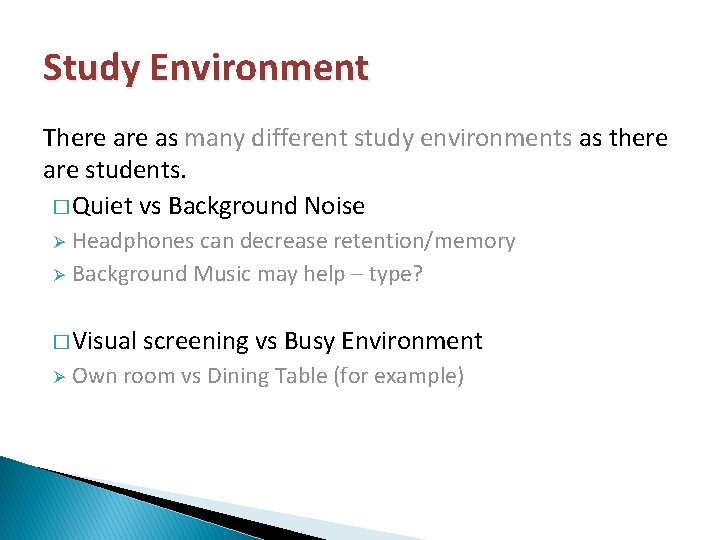
Study Environment There as many different study environments as there are students. � Quiet vs Background Noise Headphones can decrease retention/memory Ø Background Music may help – type? Ø � Visual Ø screening vs Busy Environment Own room vs Dining Table (for example)
Study Environment � Organised area – resources at hand � Working Space � Access to IT – managing this…. � Length of revision slot Ø 10 -15 minutes every 50 -70 minutes
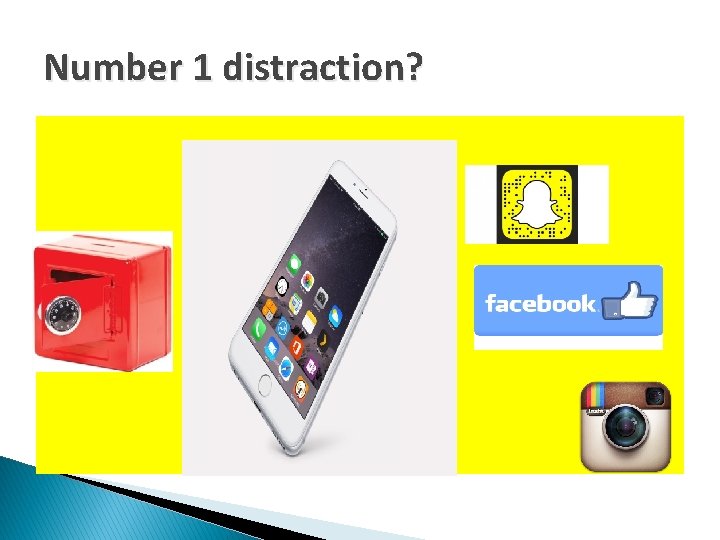
Number 1 distraction?
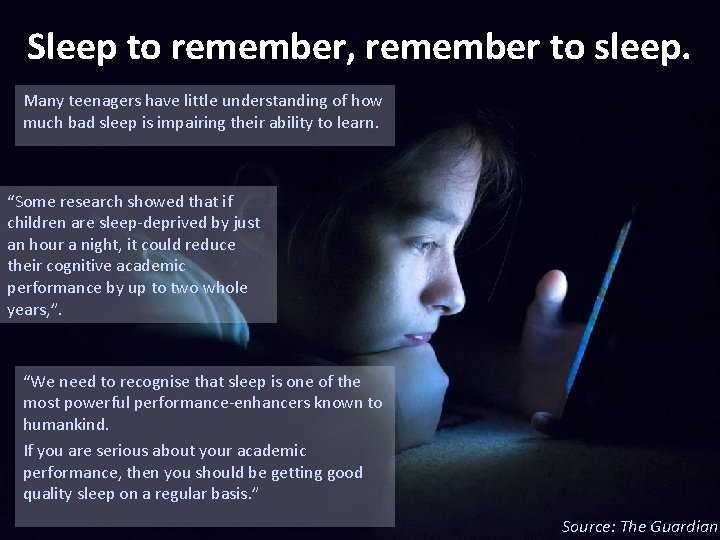
Sleep to remember, remember to sleep. Many teenagers have little understanding of how much bad sleep is impairing their ability to learn. “Some research showed that if children are sleep-deprived by just an hour a night, it could reduce their cognitive academic performance by up to two whole years, ”. “We need to recognise that sleep is one of the most powerful performance-enhancers known to humankind. If you are serious about your academic performance, then you should be getting good quality sleep on a regular basis. ” Source: The Guardian
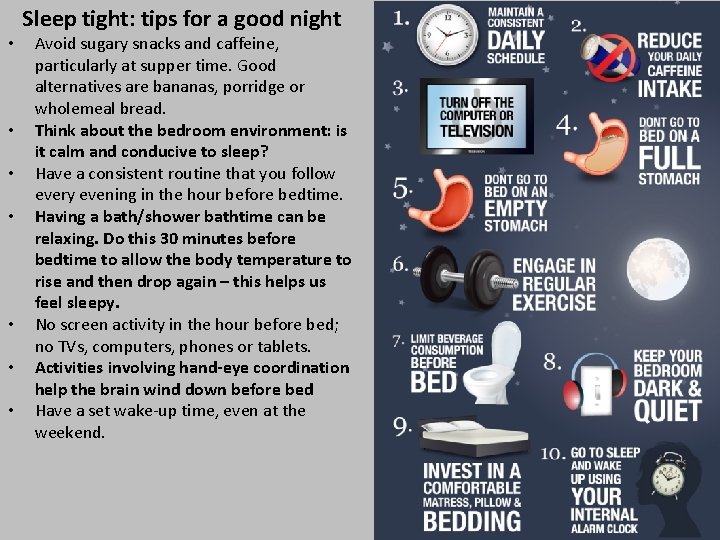
Sleep tight: tips for a good night • • Avoid sugary snacks and caffeine, particularly at supper time. Good alternatives are bananas, porridge or wholemeal bread. Think about the bedroom environment: is it calm and conducive to sleep? Have a consistent routine that you follow every evening in the hour before bedtime. Having a bath/shower bathtime can be relaxing. Do this 30 minutes before bedtime to allow the body temperature to rise and then drop again – this helps us feel sleepy. No screen activity in the hour before bed; no TVs, computers, phones or tablets. Activities involving hand-eye coordination help the brain wind down before bed Have a set wake-up time, even at the weekend.
GLOW & MCHS Website � Increasingly we are putting revision materials, study advice and homework on GLOW and the school website. � We have an updated S 3/S 4 Assessment calendar on the school website to help support pupils to prepare and organise their time management.
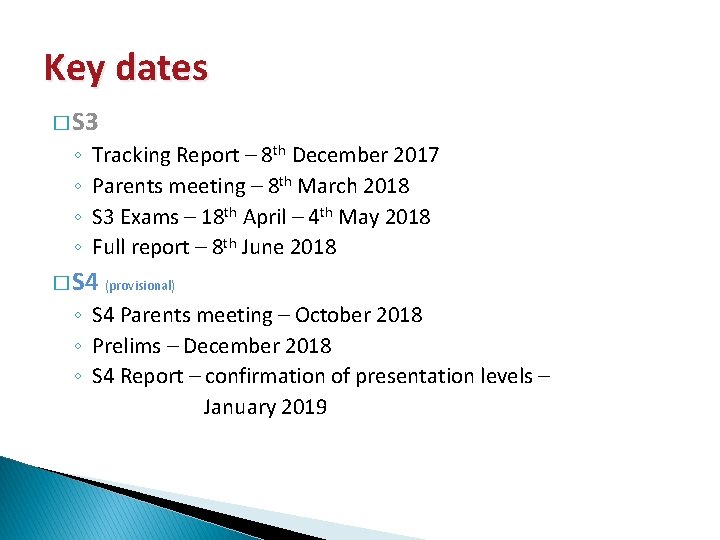
Key dates � S 3 ◦ ◦ Tracking Report – 8 th December 2017 Parents meeting – 8 th March 2018 S 3 Exams – 18 th April – 4 th May 2018 Full report – 8 th June 2018 � S 4 (provisional) ◦ S 4 Parents meeting – October 2018 ◦ Prelims – December 2018 ◦ S 4 Report – confirmation of presentation levels – January 2019
We welcome your feedback � An online evaluation is available from 8. 00 pm Tuesday 31 October until 8. 00 pm Friday 3 November https: //forms. office. com/Pages/Response. Page. aspx? id=oyz. Tz M 4 Wj 0 KVQTctaw. UZKb. LNAn. NUARNJr. Umdm. ASaq. VZUNj. ZGUU 8 5 REsz. NTU 2 UVky. Wl. JZR 1 JYS 1 p. ZMC 4 u
Any questions?