
Means and Methods Is it the Engineers Domain

- Slides: 36
Means and Methods – Is it the Engineer’s Domain? prepared for 9 th Annual Breakthroughs in Tunneling Annual Short Course University of Colorado - Boulder, Colorado September 12 -15, 2016 by Don Del Nero, P. E. , C. D. T. Vice President/Tunneling and Trenchless Practice Leader Stantec, Atlanta, Georgia, USA don. delnero@stantec. com
Agenda 1 Executive Summary 2 Means and Methods Overview 3 Underground Technical Specifications 4 Bases for Contractor Derived Means & Methods 5 Bases for Engineer Derived Means & Methods 6 Highlighted Risks of Engineer Derived Means & Methods 7 Tunnel Contractor Survey Results 8 Conclusions
1 Executive Summary
Means & Methods - Industry Profile Traditionally, contractors were assigned the responsibility for construction means and methods Why? “The Contractor has the skill and experience to devise the means and methods of construction; he or she is in control of the construction work, and his or her competence in performing that role provides the contractor with the best prospect to control the risks of construction and the opportunity to win bids and reap profits. ” Hatem, et. al. 1998
Means & Methods - Industry Profile Lines of responsibility between engineering design and tunnel construction means and methods have been blurred Why? Construction Cost Overruns Differing Site Condition Claims Protracted Litigation Legacy Issues Project Success Relates Predominantly to Means & Methods
Potential Risks of Designer Over. Encroachment into Means & Methods • • • High bid scatter Reduced bidder pool Diminishment of contractor innovation Dulling of a contractor’s competitive edge Implied warranty issues Increase in total project cost
So to answer the question… Only in a limited fashion where the strategic interests of the project outweigh the potential legal implications, biddability risks, and fiscal risks.
2 Means and Methods Overview
Means & Methods Formally Defined Construction means and methods are the techniques and procedures that will be used to construct the project and the “how to” aspects of performing the work. Means and methods involve planning and sequencing of activities, assignment of labor, use of the site, logistics of materials, coordinating with other activities, and executing the work. CSI, 2005
Means and Methods - Simply Stated Means – Instruments or equipment used to accomplish an end Methods – Techniques or procedures used to accomplish an end
Why is so much attention paid to means and methods? • The tunnel industry is a “down to earth” business • 75% of the tunnel bid cost is in the means and methods of construction • Means and methods are where the project is won or lost relative to fiscal and schedule success and constructability
3 Underground Technical Specifications
How are means and methods communicated? Technical specifications in tender documents include the requirements that govern the means and methods employed
Types of Specifications • Proprietary Specifications • Reference Standards • Prescriptive Specifications • Performance Specifications
Prescriptive Specifications A prescriptive specification is a detailed description of the characteristics, physical properties, and workmanship required for the installation of a product or material. It generally requires extensive technical knowledge and field experience of the tunnel engineer
Performance Specifications Specifies the required results, the criteria by which the performance will be judged, and the method by which it can be verified
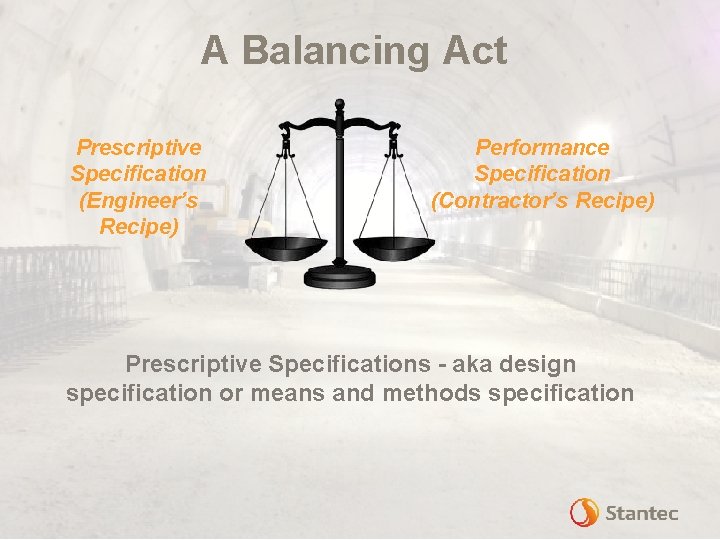
A Balancing Act Prescriptive Specification (Engineer’s Recipe) Performance Specification (Contractor’s Recipe) Prescriptive Specifications - aka design specification or means and methods specification
Specification “Ground Truth” Often more than one specifying method used…. a hybrid between prescriptive and performance is typically used in the tunnel industry
Potential Specification Items (EPBM in Cobbles and Boulders) Potential Prescriptive Items Potential Performance Items • • • • Cutterhead Disk Cutters and Torque Capacity Face Pressure Specified Size of Auger Screw Specified Grizzly Bars Over Openings Cutterhead Opening Size & Ratio Armoring of Cutterhead and Screw Auger Foaming Additives Specified Laser Survey of Muck Belt Width and Maximum Speed of Tail Conveyor Specified Thrust Capacity of Steering Cylinders Specified Capacity and Stroke of Thrust Cylinders Specified Tunnel Construction from A to B Meet Line and Grade Tolerance Meet Settlement Limits Survey of Settlement Markers Mine in the “GBR” Ground
4 Bases for Contractor Derived Means & Methods
Bases for Contractor Derived Means and Methods • Prequalification of Contractors • Qualifications with Bid • Promotes Contractor Innovation • General Conditions Assign Means and Methods Responsibility to the Contractor • Lean Design Budgets • Assign Risk to Party Base Able to Address it
Bases for Contractor Derived Means and Methods (continued) • Mechanized Tunneling Highly Sophisticated • Engineers Lack Experience Operating Equipment • Construction Constraints Closely Tied to Means and Methods • Means and Methods are a Contractor’s Competitive Edge
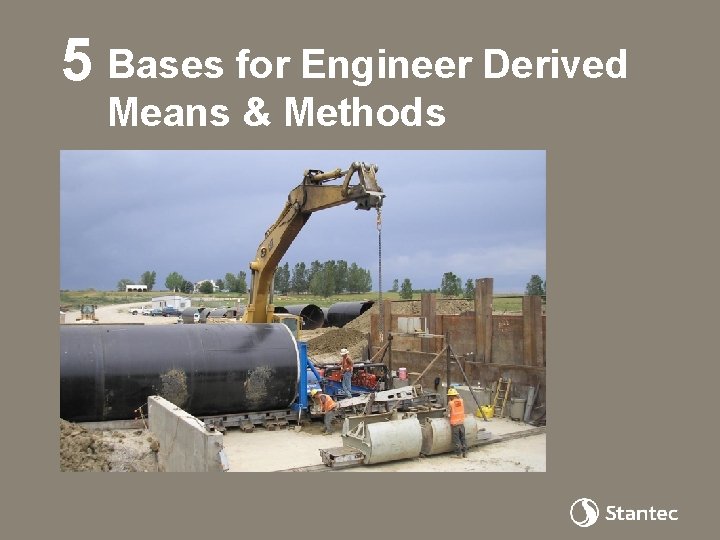
5 Bases for Engineer Derived Means & Methods
Bases for Engineer Derived Means and Methods • An Engineer of Record Studies the Ground the Longest • Ground Risk is Carried by the Owner • Contractor Inclined to use On-hand Equipment • Overly Optimistic Assumptions • Bid Comparisons are Facilitated • TBM Manufacturing Schedule • Applications of Lessons Learned to Similar Ground • The Money is in the Means and Methods • Economy of Scale for Multiple TBM’s Purchased • Bid Prices Reduced by Reducing TBM Contingencies
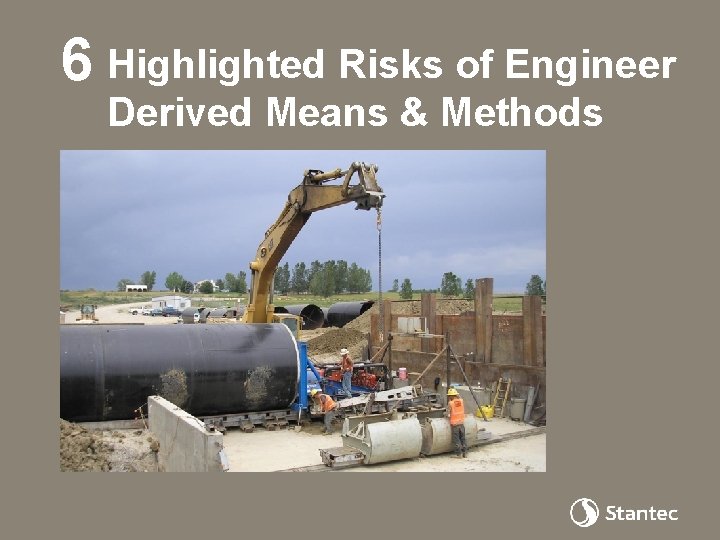
6 Highlighted Risks of Engineer Derived Means & Methods
Implied Warranty Principle • Case of United States vs. Spearin, 1918 • Responsibility for a Sewer Break after Installation • Seminal renderings… “But if the Contractor is bound to build according to the plans and specifications prepared by the Owner, the Contractor will not be responsible for the consequences of defects in the plans and specifications. ” “the insertion of the articles (in the subject contract) prescribing the character, dimensions and location of the sewer imported a warranty, that if the specifications were complied with, the sewer would be adequate. ”
Tunnel Proverb “He who directs contractor means and methods may inherit significant responsibility for them. ”
EJCDC General Conditions Paragraph 6. 01 A “Contractor shall be solely responsible for the means, methods, techniques, sequences, and procedures of construction. Contractor shall not be responsible for the negligence of Owner or Engineer in the design or specification of a specific means, method, technique, sequence, or procedure of construction which is shown or indicated in and expressly required by the Contract Documents. ” Paragraph 8. 09 A “The Owner shall not supervise, direct, or have control or authority over, nor be responsible for, Contractor’s means, methods, techniques, sequences, or procedures of construction, or the safety precautions and programs incident thereto, or for any failure of Contractor to comply with Laws and Regulations applicable to the performance of the Work. ” EJCDC 2002
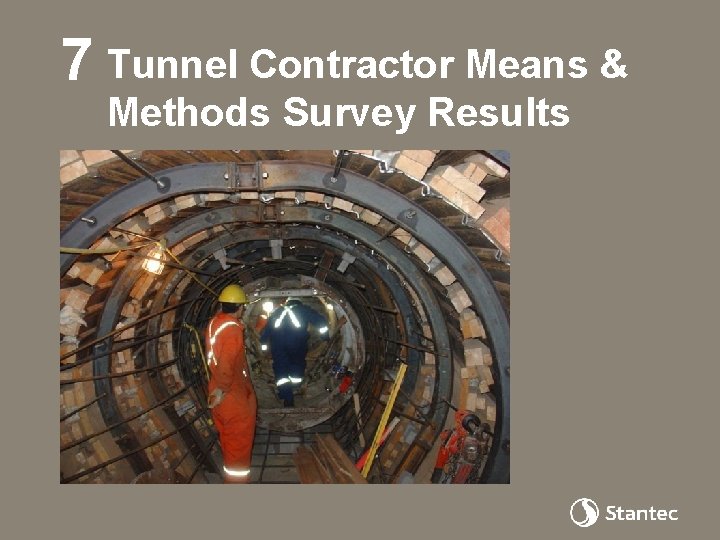
7 Tunnel Contractor Means & Methods Survey Results
Tunnel Contractor Survey Results • Specification of EPBM over Slurry TBM • Specification of EPBM in Fairly Good Rock • Specification of Laundry List of Machine Spare Parts • Specification of Cutterhead Interventions, Inspection and Maintenance • Specification of where Screw Auger Should be Placed in Plenum • Specification of New TBM • Engineer Defaults too often to Proven Techniques
Tunnel Contractor Survey Results (continued) • Specification of an “All Ground” TBM • Geotechnical Baselines Not Field Measureable • Excessive Number of Baselines • Mandatory Use of Owner Procured and Supplied Machines • Heavy Designer Involvement in Precast Concrete Segment Design • Specification of “Potentially Gassy” Ground and “Permissible” Diesel Equipment
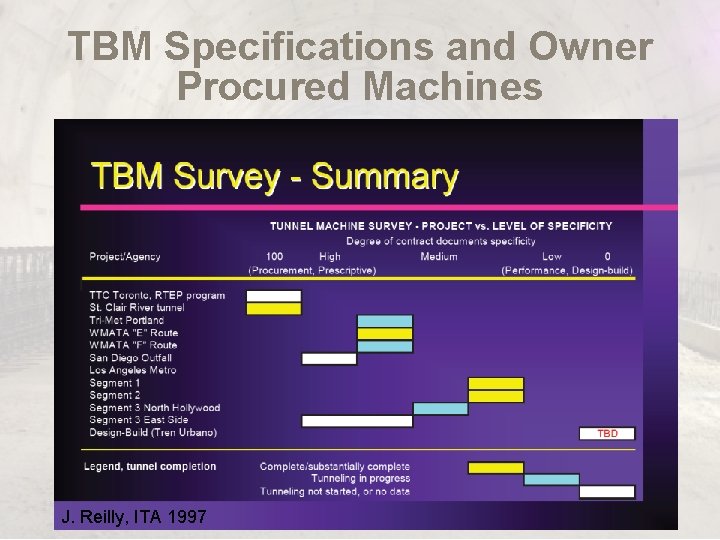
TBM Specifications and Owner Procured Machines J. Reilly, ITA 1997
TBM Specifications and Owner Procured Machines Recent Paper on Advanced Procurement of TBM’s … -30 out of 42 machines procured by owners were of the EPBM type (G. J. Urschitz, 2013) -4 out of 5 listed for Canada were for TTC (G. J. Urschitz, 2013) -About 50% of projects listed are for rail/subway/metro (G. J. Urschitz, 2013) -One public agency owns and operates their own TBM’s (and bids tunnel projects outside their jurisdiction)
8 Conclusions and Recommendations
Conclusions and Recommendations • Conventional Means and Methods Wisdom Appropriate • Project Success Highly Dependent on Means and Methods • Communicate Prescriptive Requirement Risk/Reward Scenario • Engage Owner’s Legal Advisor • Engage Design Staff with Tunnel Construction Experience • Use ECI if Owner will Purchase Machine • Critically Review Front-end Documents • Prescriptive Specifications are an Implied Warranty
9 Questions & Answers