
Meaningful Elearning in Practice Gyan Bahan The Knowledge
Meaningful E-learning in Practice Gyan. Bahan, The Knowledge Carrier Badrul Huda Khan Badrul. Khan. com Hebron, November 20, 2019 1
In the digital world, we are blessed with the capabilities of Information and Communication Technologies (ICTs) as medium for delivering education and training if they are utilized appropriately and meaningfully. 4
Many countries are developing specific digital strategies in reaction to the massive shift towards using new technology. Staying relevant in the digital age requires a strategic vision for the whole country. Countries that are not equipping themselves to adapt to this new digital era will be left behind. . 5
We Need E-Learning It seems that it is important, instead of investing on building new brick-and-mortar educational institutions, we should consider building meaningful digital infrastructure as quickly as possible to take advantage of ICTs for education. Equipping Iraqi educational system with efficient and effective 8 low-cost learning
What is E-learning https: //youtu. be/Qhc. Jg 5 Dl 9 c 0 18
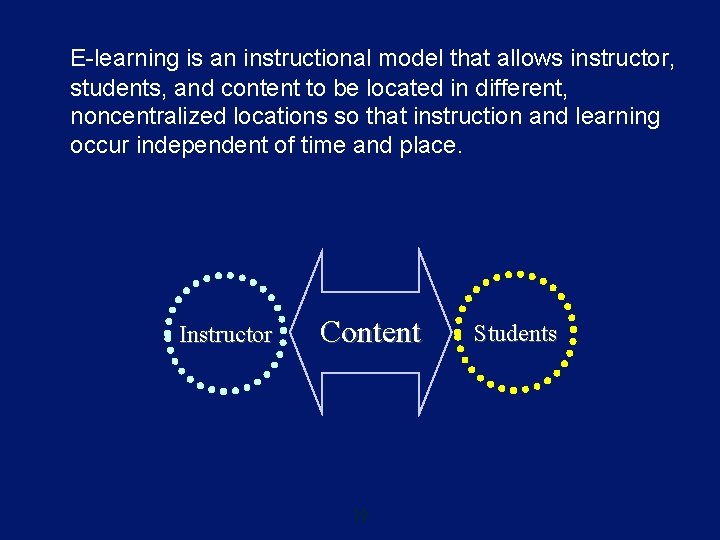
E-learning is an instructional model that allows instructor, students, and content to be located in different, noncentralized locations so that instruction and learning occur independent of time and place. Instructor Content 19 Students
Stakeholders’ Expectations 20
A high quality e-learning system must be meaningful to all stakeholders groups: • Learners • Instructors • Technical & Support Staff • Organization 21
An e-learning system is more likely to be meaningful to learners when it is • easily accessible • clearly organized • well written • authoritatively presented • learner‑centered • affordable • efficient • flexible, and has a • facilitated learning environment. 22
When learners display a high level of participation and success in meeting a course's goals and objectives, this can make e-learning meaningful to instructors. 23
When learners enjoy all available support services provided in the course without any interruptions, it makes support services staff happy as they strive to provide easy -to-use, reliable services. 24
Finally, e-learning is meaningful to an organization when it has a sound return-on-investment (ROI), a moderate to high level of learners' satisfaction with both the quality of instruction and all support services, and a low dropout rate. 25
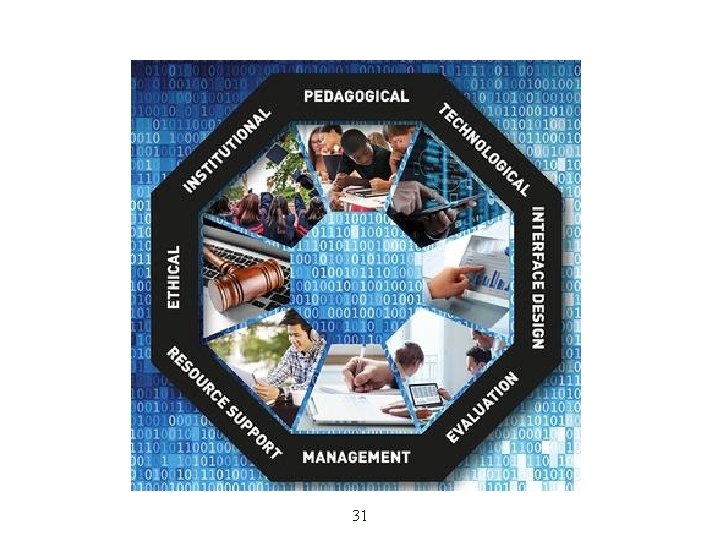
Today, I would like to introduce a Framework which I believe will help us identify important criteria for quality e-learning and blendedlearning. 26
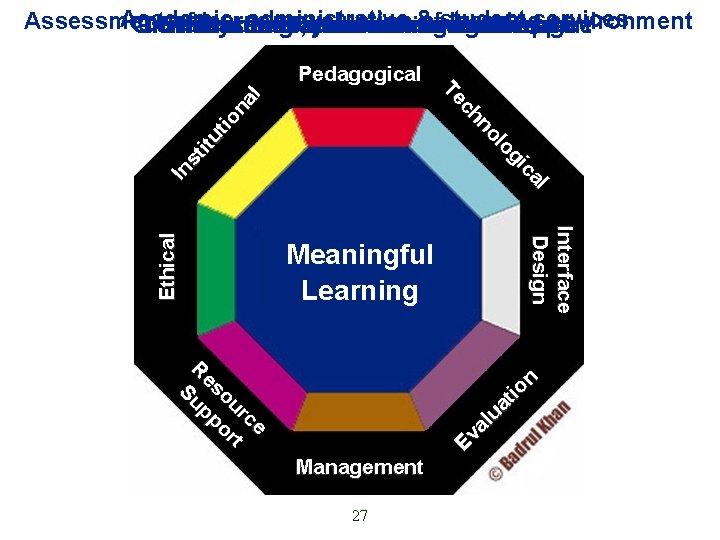
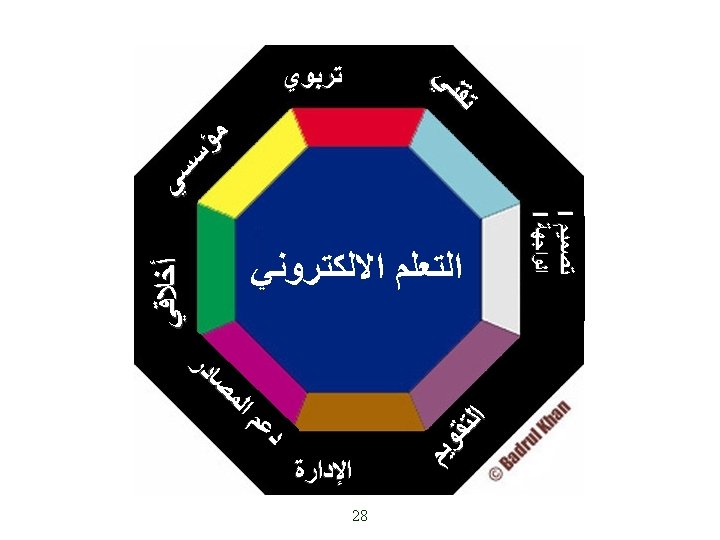
Academic, administrative & student services Assessment of. Physical learner, evaluation of learning environment On-line Content Infrastructure, Ethical Learning and development considerations off-line layout and hardware teaching resources and navigation in and maintenance e-learning issues software & support Pedagogical R e Su so pp urc or e t Management 27 Interface Design Ethical In st itu tio na l l ca gi lo no ch Te Meaningful Learning n it o ua l a v E
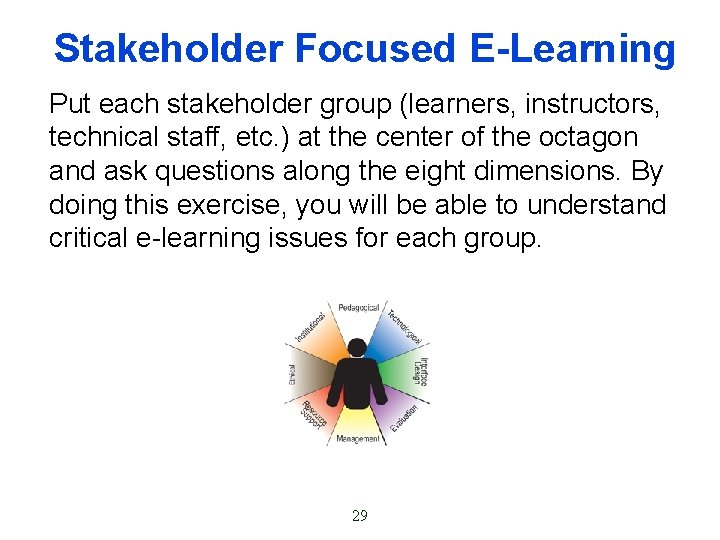
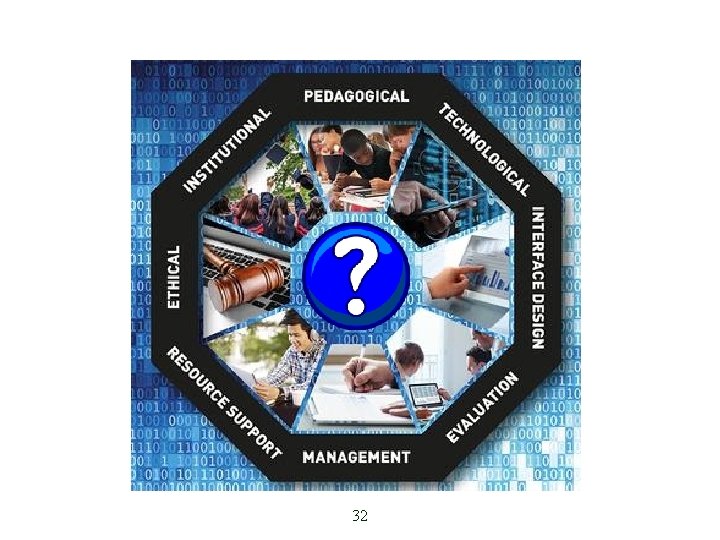
Stakeholder Focused E-Learning Put each stakeholder group (learners, instructors, technical staff, etc. ) at the center of the octagon and ask questions along the eight dimensions. By doing this exercise, you will be able to understand critical e-learning issues for each group. 29
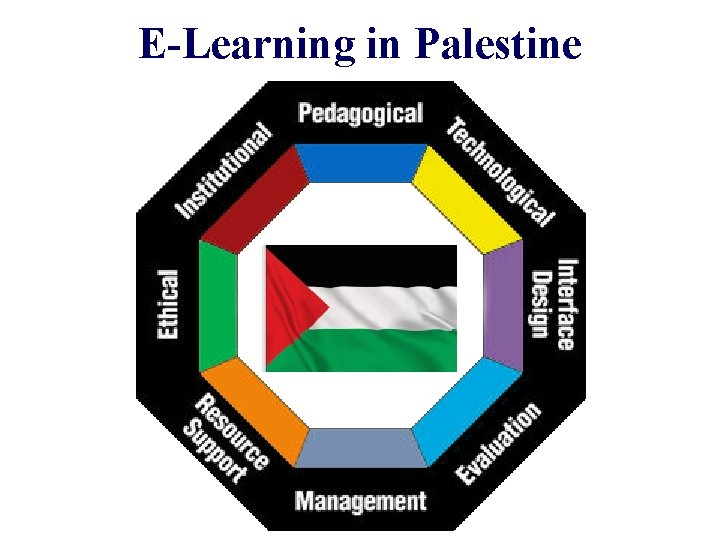
E-Learning in Palestine 30
31
32
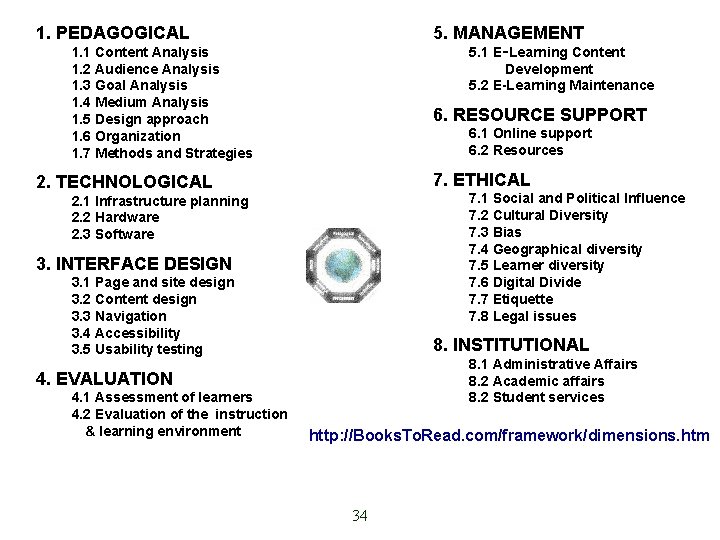
1. PEDAGOGICAL 5. MANAGEMENT 1. 1 Content Analysis 1. 2 Audience Analysis 1. 3 Goal Analysis 1. 4 Medium Analysis 1. 5 Design approach 1. 6 Organization 1. 7 Methods and Strategies 5. 1 E‑Learning Content Development 5. 2 E-Learning Maintenance 6. RESOURCE SUPPORT 6. 1 Online support 6. 2 Resources 7. ETHICAL 2. TECHNOLOGICAL 7. 1 Social and Political Influence 7. 2 Cultural Diversity 7. 3 Bias 7. 4 Geographical diversity 7. 5 Learner diversity 7. 6 Digital Divide 7. 7 Etiquette 7. 8 Legal issues 2. 1 Infrastructure planning 2. 2 Hardware 2. 3 Software 3. INTERFACE DESIGN 3. 1 Page and site design 3. 2 Content design 3. 3 Navigation 3. 4 Accessibility 3. 5 Usability testing 8. INSTITUTIONAL 8. 1 Administrative Affairs 8. 2 Academic affairs 8. 2 Student services 4. EVALUATION 4. 1 Assessment of learners 4. 2 Evaluation of the instruction & learning environment http: //Books. To. Read. com/framework/dimensions. htm 34
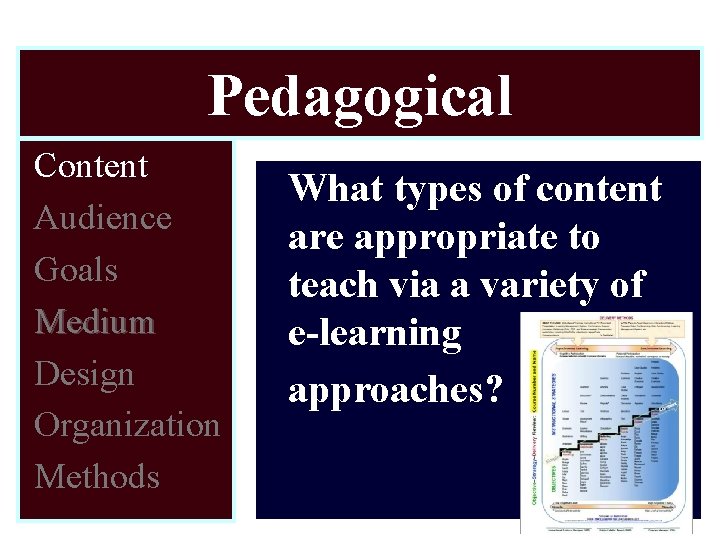
Pedagogical Content Audience Goals Medium Design Organization Methods What types of content are appropriate to teach via a variety of e-learning approaches? 35 35
Pedagogical Content Audience Goals Medium Design Organization Methods Content Suitability Testing STABLE Content DYNAMIC Content 36 36
Pedagogical Content Audience Goals Medium Design Organization Methods • Who are the learners? Does the institution have adequate information about the learners at a distance? 37
Pedagogical Content Audience Goals Medium Design Organization Methods Does the course utilize multimedia attributes of the Internet and digital technologies? - text - audio - video - graphics - other (specify) 38
Pedagogical Content Audience Goals Medium Design Organization Methods • What is the instructor’s role? - more facilitative than didactic - more didactic than facilitative - a combination of both 39
Pedagogical Content Audience Goals Medium Design Organization Methods • Does the course provide a sense of continuity? (e. g. , each unit of the lesson builds on the previous unit, etc. ) 40
Pedagogical Content Audience Goals Medium Design Organization Methods • Does the course promote Inside Collaboration by providing a supportive environment for asking questions, clarifying directions, suggesting or contributing resources and working on joint projects with class members? 41
Technological Infrastructure Planning Hardware Software Does the course have personnel who can assist learners to set up for starting the course? 42
Technological Infrastructure Planning Hardware Software Are the hardware requirements for the course clearly stated? 43
Technological Infrastructure Planning Hardware Software Does the course provide links to resources where all necessary software can be downloaded? 44
Interface Design Page and Site Design Content Design Navigation Accessibility Usability Testing Do Web pages look good in a variety of Web browsers and devices--in text-based browsers, all recent versions of Internet Explorer and Chrome, and so on. ? 45
Interface Design Page and Site Design Content Design Navigation Accessibility Usability Testing Does the course follow “one idea per paragraph” rule? 46
Interface Design Page and Site Design Content Design Navigation Accessibility Usability Testing Does the course provide structural aids or site map to guide learner’s navigation? 47
Interface Design Page and Site Design Content Design Navigation Accessibility Usability Testing Is the course Website designed to be accessible by a wider user population? (Is the course Section 508 compliant? ) 48
Interface Design Page and Site Design Content Design Navigation Accessibility Usability Testing How quickly users find answers to the most frequently asked questions on the course site? 49
Evaluation Assessment of Learners Evaluation of Instruction & Learning Environment Does the course have a mechanism in which a learner can be truly measured and not cheat? 50
Evaluation Assessment of Learners Evaluation of Instruction & Learning Environment Does the course have a system to accept students’ online evaluation of the following? - content - instructor - learning environment - learning resources - course design - technical support 51
Management Content Development Maintenance Is there a project support site for e‑learning production team? 52
Management Content Development Maintenance Does the course notify students about any changes in due dates or other course relevant matters (e. g. , server down) via following means? - e-mail - announcement page - alert boxes - running footer added to a page - phone call - mail 53
Resource Support Online Support Resources Does the course provide troubleshooting (or expert technical support from specialized staff) assistance or a help line? 54
Resource Support Online Support Resources Does the course provide examples of previous student's work on the Web? 55
Ethical Social/Political Influence Cultural Diversity Bias Geographical Diversity Learner Diversity Digital Divide Etiquette Legal Issues Does the institution have to get approval from any external entities (who can serve as political barriers) to implement e-learning? 56
Ethical Social/Political Influence Cultural Diversity Bias Geographical Diversity Learner Diversity Digital Divide Etiquette Legal Issues To improve cross-cultural verbal communication and avoid misunderstanding, does the course make an effort to reduce or avoid the use of jargon, idioms, ambiguous or cute humor, and acronyms? 57

The “thumbs up” gesture meaning well done in the US, represents an obscenity meaning in Iraq, Iran, and Thailand. In Bangladesh it is a derogatory term. 58
Ethical Social/Political Influence Cultural Diversity Bias Geographical Diversity Learner Diversity Digital Divide Etiquette Legal Issues Does the course present more than one viewpoint on controversial issues? 59
Ethical Social/Political Influence Cultural Diversity Bias Geographical Diversity Learner Diversity Digital Divide Etiquette Legal Issues Is the course offered to geographically diverse population? If yes. . . Is the course sensitive about students from different timezones (e. g. synchronous communications are scheduled at reasonable times for all time zones represented)? 60
Ethical Social/Political Influence Cultural Diversity Bias Geographical Diversity Learner Diversity Digital Divide Etiquette Legal Issues Is the course designed to have patience for learners who adapt to individualized distributed learning environment slower than others? 61
Ethical Social/Political Influence Cultural Diversity Bias Geographical Diversity Learner Diversity Digital Divide Etiquette Legal Issues Information accessibility issue must be expressed in terms of digital “haves” and “have nots, ” a gap expressed in the term “digital divide. ” Is the digital divide issue considered in designing the e‑learning content? 62
Ethical Social/Political Influence Cultural Diversity Bias Geographical Diversity Learner Diversity Digital Divide Etiquette Legal Issues • Does the course provide any guidance to learners on how to behave and post messages in online discussions so that their postings do not hurt others’ feelings? 63
Ethical Social/Political Influence Cultural Diversity Bias Geographical Diversity Learner Diversity Digital Divide Etiquette Legal Issues Does the course get students’ permission to post any of the following on the Web? - students’ photographs - students’ projects 64
Institutional Administrative Affairs Academic Affairs Student Services Is the institution ready to offer online courses? 65
Institutional Administrative Affairs Academic Affairs Student Services Does the course provide academic quality such as one would expect in a traditional course? 66
Institutional Administrative Affairs Academic Affairs Student Services Are instructor/tutor and technical staff available during online orientation? 67
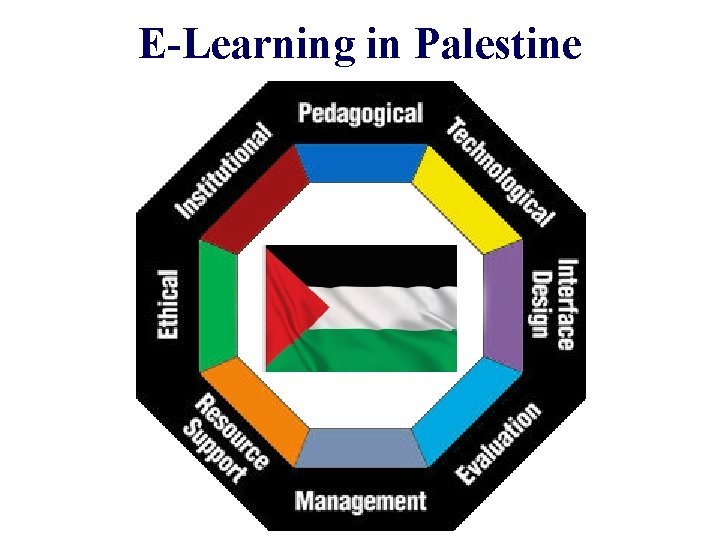
E-Learning in Palestine 69
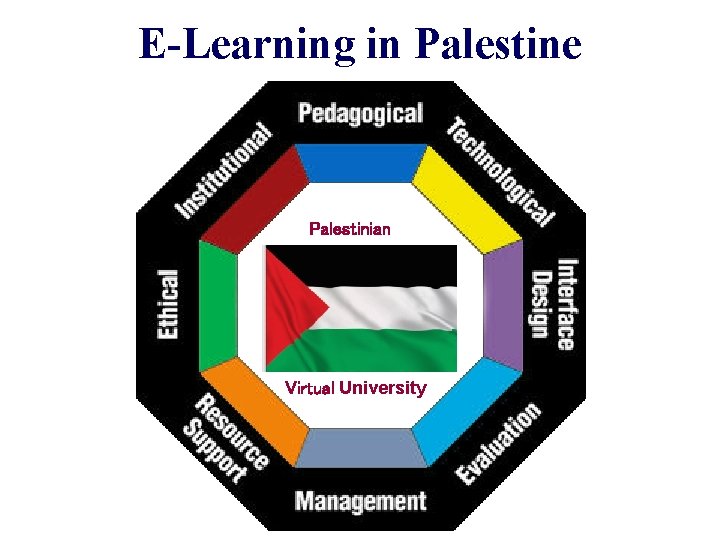
E-Learning in Palestine Palestinian Virtual University 70
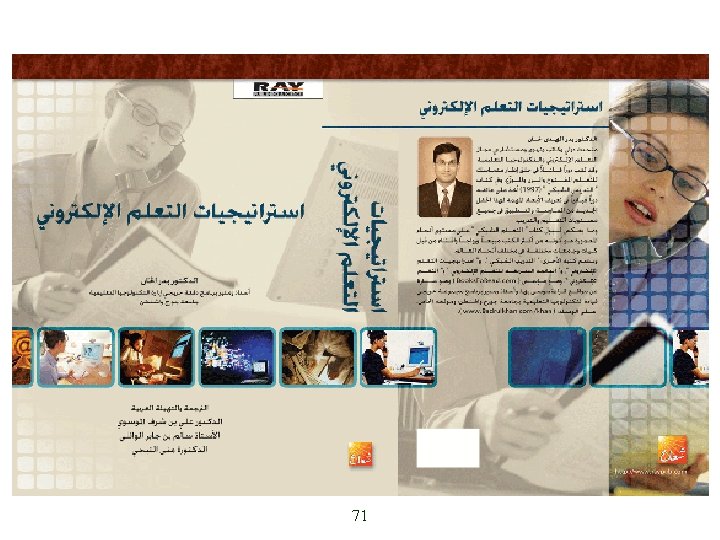
71
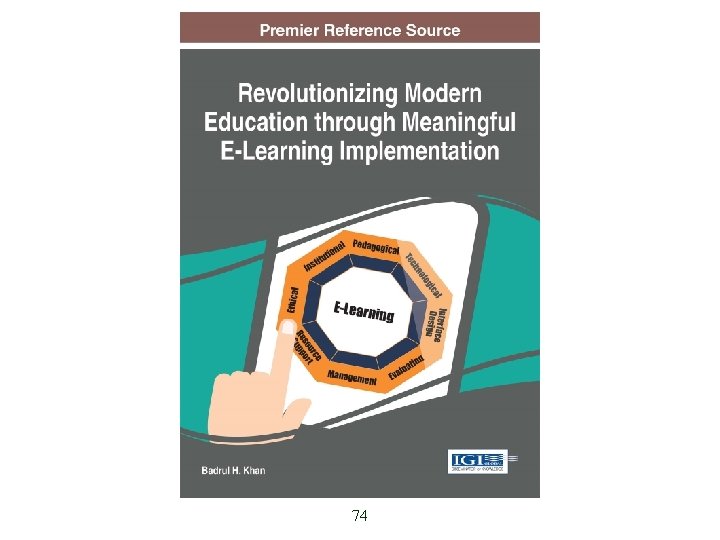
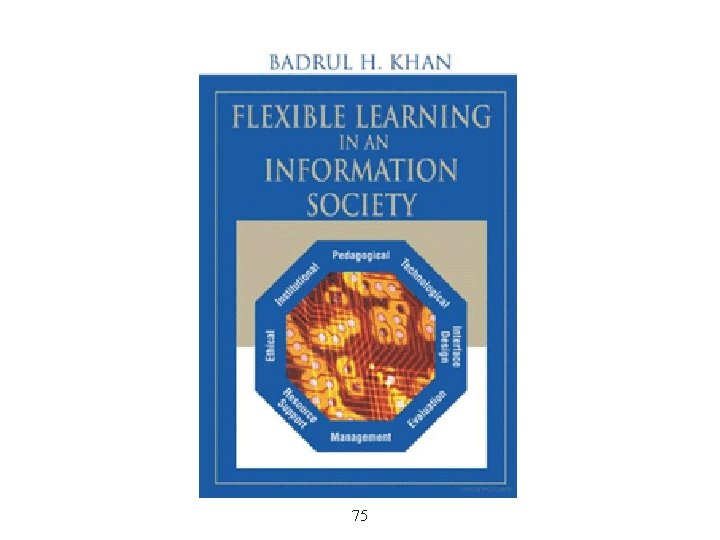
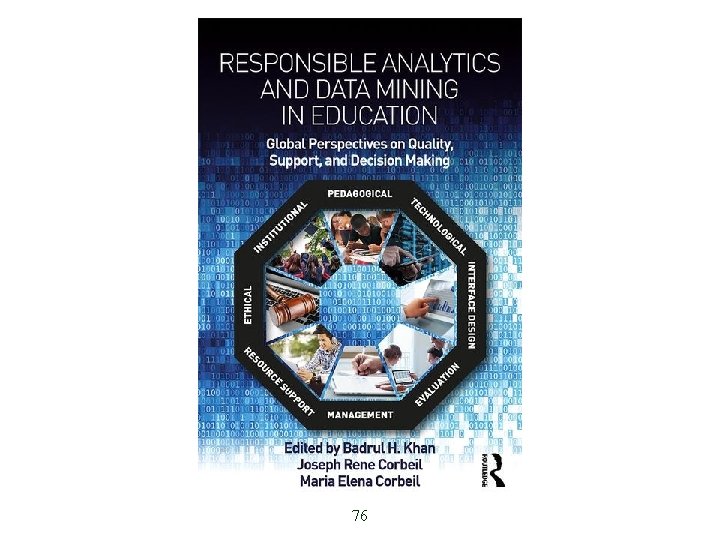
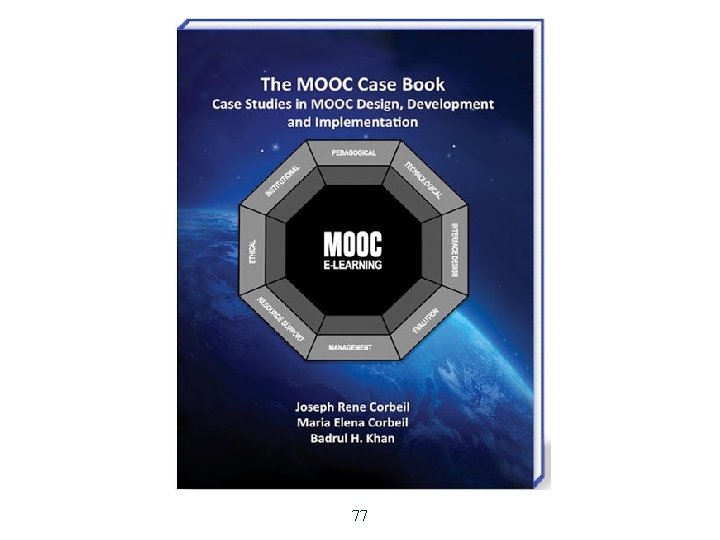
Some of my books based on my e-learning framework 73
74
75
76
77
Questions and comments? 79
Email: badrulkhan 2003@yahoo. com www. Badrul. Khan. com My Contact Information 80
Meaningful E-learning in Practice Gyan. Bahan, The Knowledge Carrier Badrul Huda Khan Badrul. Khan. com Hebron, November 20, 2019 82
- Slides: 66