
ME 260 Mechanical Engineering Design II Instructor notes
- Slides: 14
ME 260 Mechanical Engineering Design II Instructor notes
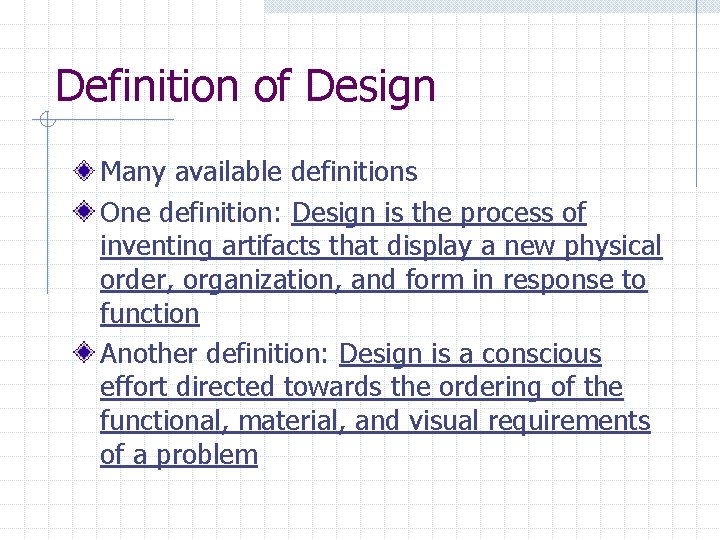
Definition of Design Many available definitions One definition: Design is the process of inventing artifacts that display a new physical order, organization, and form in response to function Another definition: Design is a conscious effort directed towards the ordering of the functional, material, and visual requirements of a problem
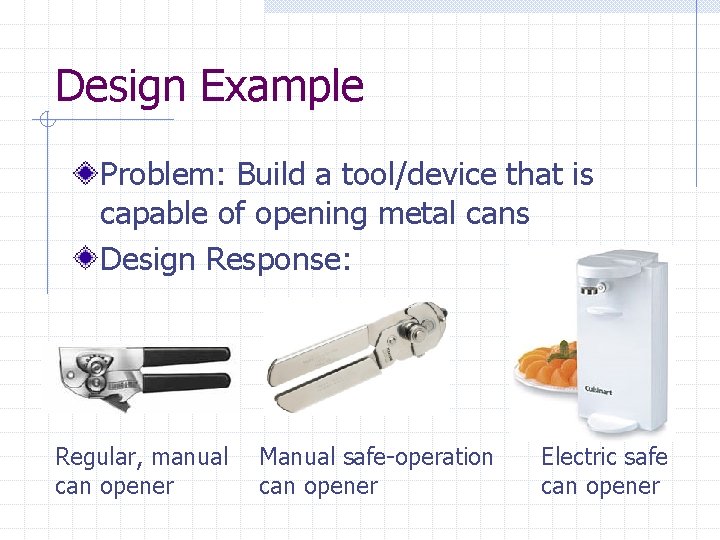
Design Example Problem: Build a tool/device that is capable of opening metal cans Design Response: Regular, manual can opener Manual safe-operation can opener Electric safe can opener
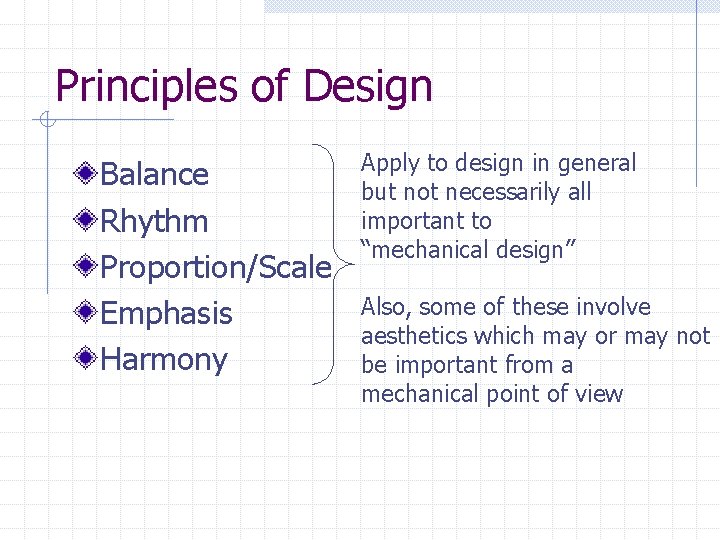
Principles of Design Balance Rhythm Proportion/Scale Emphasis Harmony Apply to design in general but not necessarily all important to “mechanical design” Also, some of these involve aesthetics which may or may not be important from a mechanical point of view
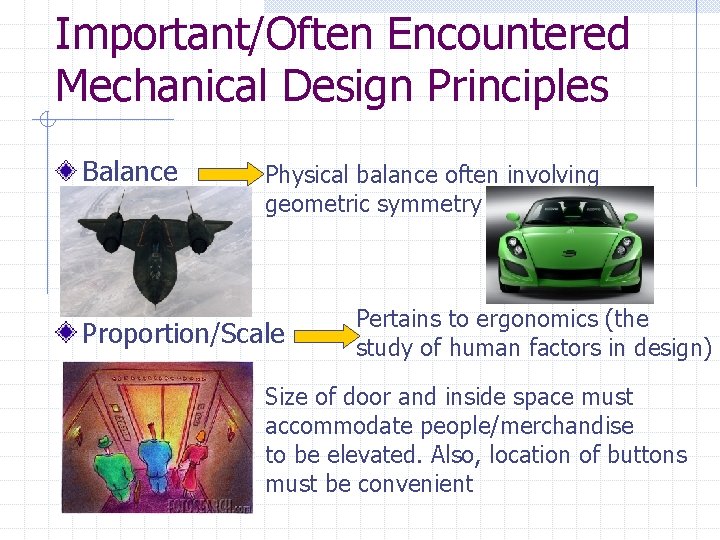
Important/Often Encountered Mechanical Design Principles Balance Physical balance often involving geometric symmetry Proportion/Scale Pertains to ergonomics (the study of human factors in design) Size of door and inside space must accommodate people/merchandise to be elevated. Also, location of buttons must be convenient
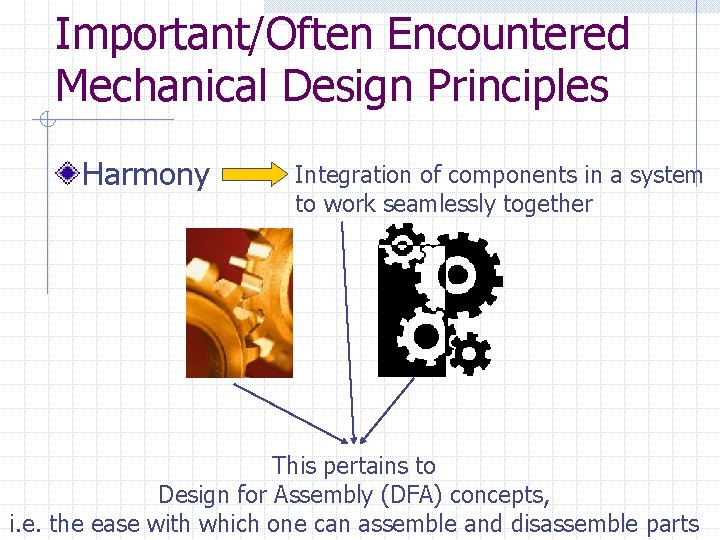
Important/Often Encountered Mechanical Design Principles Harmony Integration of components in a system to work seamlessly together This pertains to Design for Assembly (DFA) concepts, i. e. the ease with which one can assemble and disassemble parts
Design Guidelines Functional Requirements Material/Manufacturing/Cost Requirements Visual Requirements
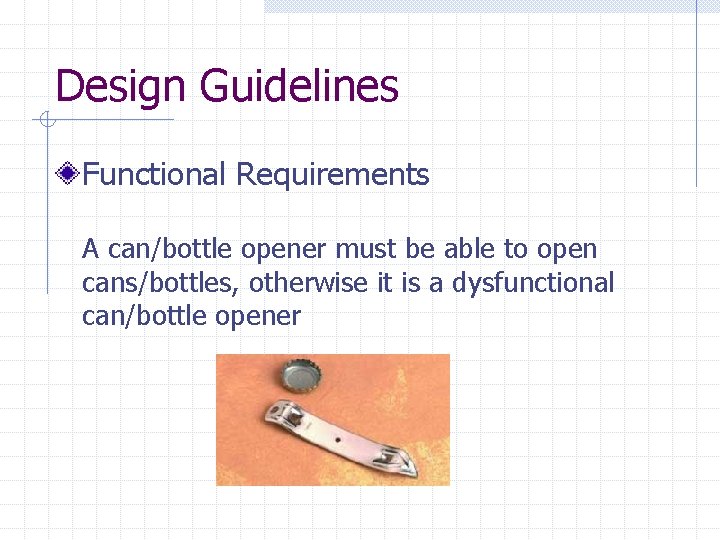
Design Guidelines Functional Requirements A can/bottle opener must be able to open cans/bottles, otherwise it is a dysfunctional can/bottle opener
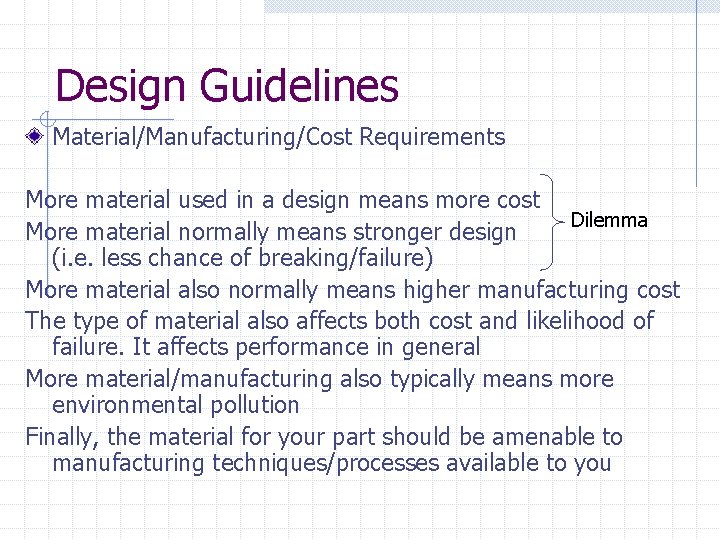
Design Guidelines Material/Manufacturing/Cost Requirements More material used in a design means more cost Dilemma More material normally means stronger design (i. e. less chance of breaking/failure) More material also normally means higher manufacturing cost The type of material also affects both cost and likelihood of failure. It affects performance in general More material/manufacturing also typically means more environmental pollution Finally, the material for your part should be amenable to manufacturing techniques/processes available to you
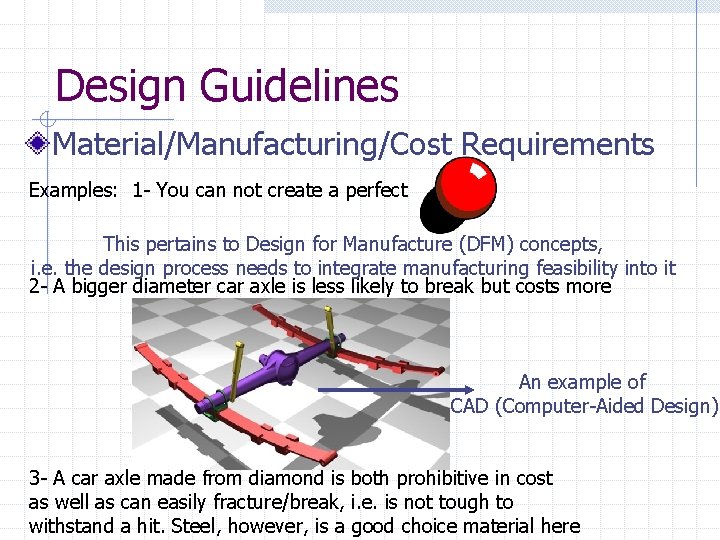
Design Guidelines Material/Manufacturing/Cost Requirements Examples: 1 - You can not create a perfect This pertains to Design for Manufacture (DFM) concepts, i. e. the design process needs to integrate manufacturing feasibility into it 2 - A bigger diameter car axle is less likely to break but costs more An example of CAD (Computer-Aided Design) 3 - A car axle made from diamond is both prohibitive in cost as well as can easily fracture/break, i. e. is not tough to withstand a hit. Steel, however, is a good choice material here
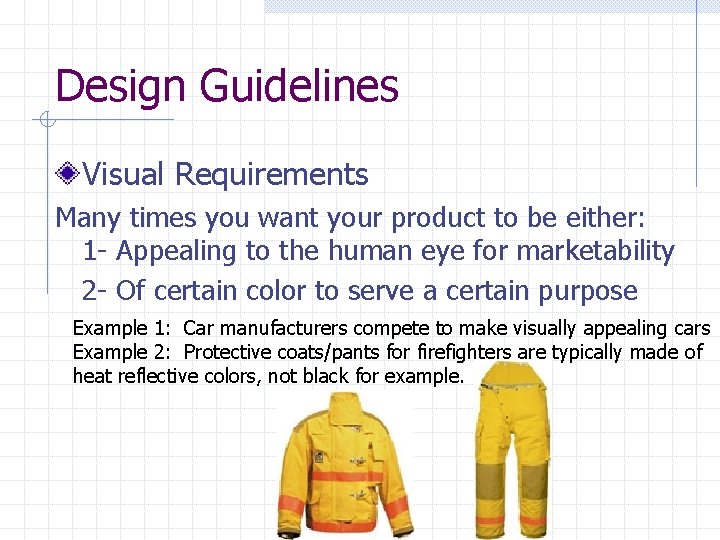
Design Guidelines Visual Requirements Many times you want your product to be either: 1 - Appealing to the human eye for marketability 2 - Of certain color to serve a certain purpose Example 1: Car manufacturers compete to make visually appealing cars Example 2: Protective coats/pants for firefighters are typically made of heat reflective colors, not black for example.
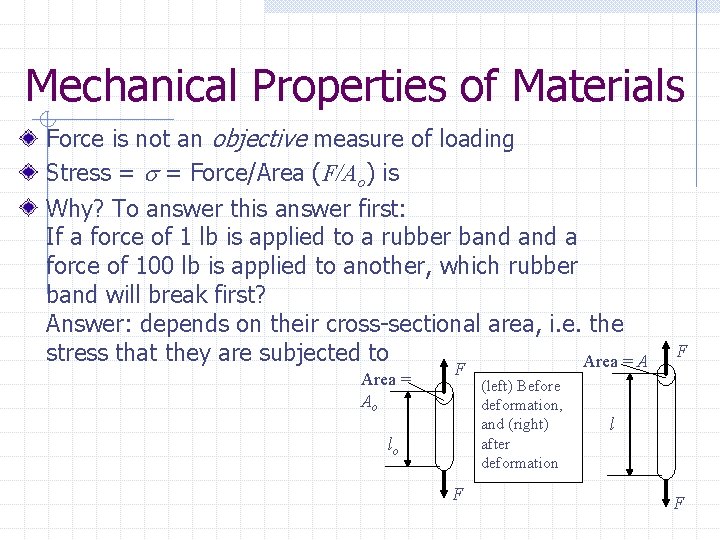
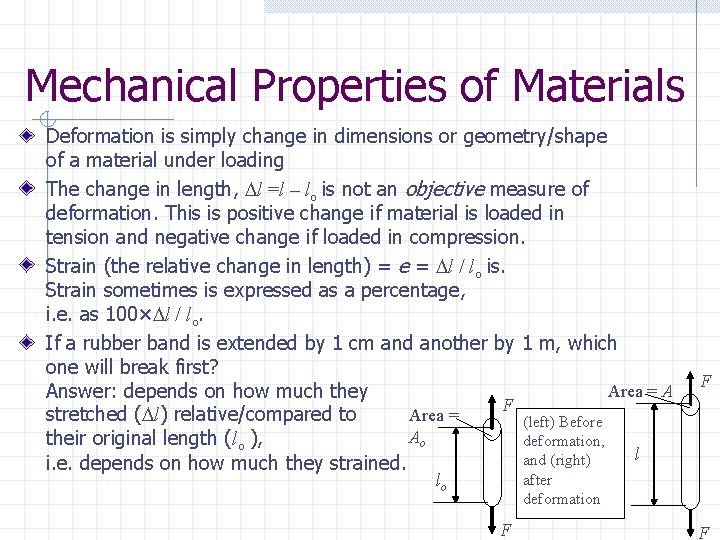
Mechanical Properties of Materials Force is not an objective measure of loading Stress = Force/Area (F/Ao) is Why? To answer this answer first: If a force of 1 lb is applied to a rubber band a force of 100 lb is applied to another, which rubber band will break first? Answer: depends on their cross-sectional area, i. e. the stress that they are subjected to Area = Ao F lo F (left) Before deformation, and (right) after deformation F l F
Mechanical Properties of Materials Deformation is simply change in dimensions or geometry/shape of a material under loading The change in length, Dl =l – lo is not an objective measure of deformation. This is positive change if material is loaded in tension and negative change if loaded in compression. Strain (the relative change in length) = e = Dl / lo is. Strain sometimes is expressed as a percentage, i. e. as 100×Dl / lo. If a rubber band is extended by 1 cm and another by 1 m, which one will break first? Area = A Answer: depends on how much they F Area = stretched (Dl) relative/compared to (left) Before Ao their original length (lo ), deformation, l and (right) i. e. depends on how much they strained. lo F after deformation F F
Mechanical Properties of Materials