
MDOT Presentation 2017 Michigan Public Transportation Annual Meeting
MDOT Presentation – 2017 Michigan Public Transportation Annual Meeting Sharon Edgar, Jean Ruestman and Kim Johnson Office of Passenger Transportation
Jean Ruestman, Section Manager Financial Update Vehicle Updates
Financial Update
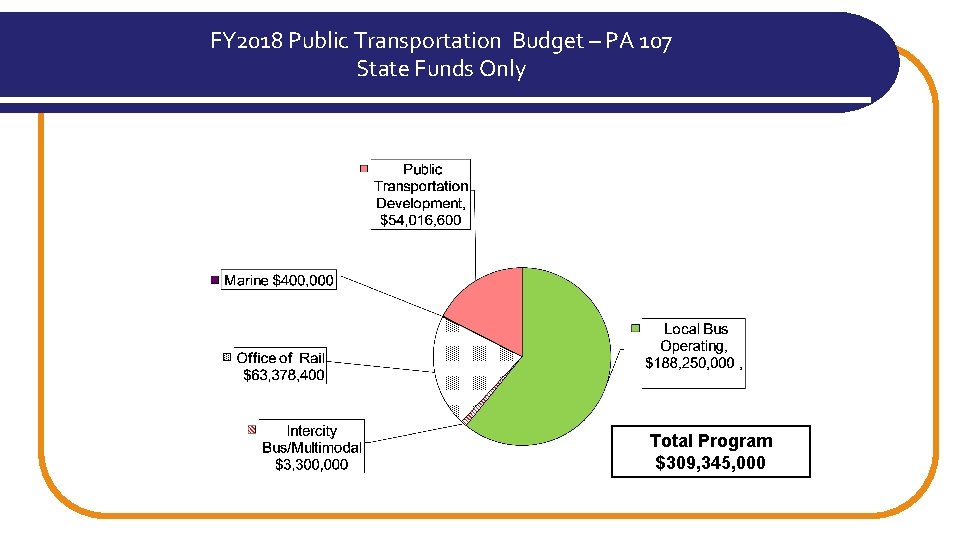
FY 2018 Public Transportation Budget – PA 107 State Funds Only Total Program $309, 345, 000
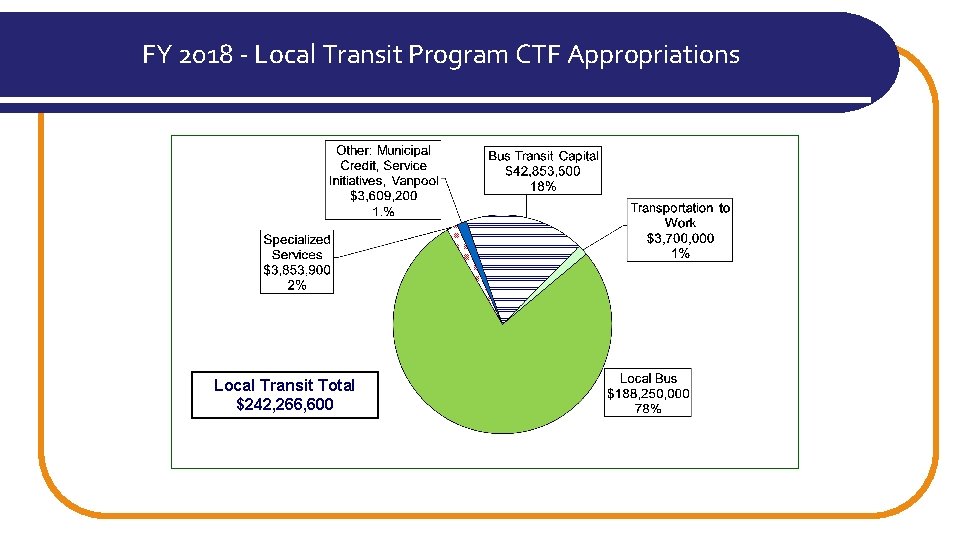
FY 2018 - Local Transit Program CTF Appropriations Local Transit Total $242, 266, 600
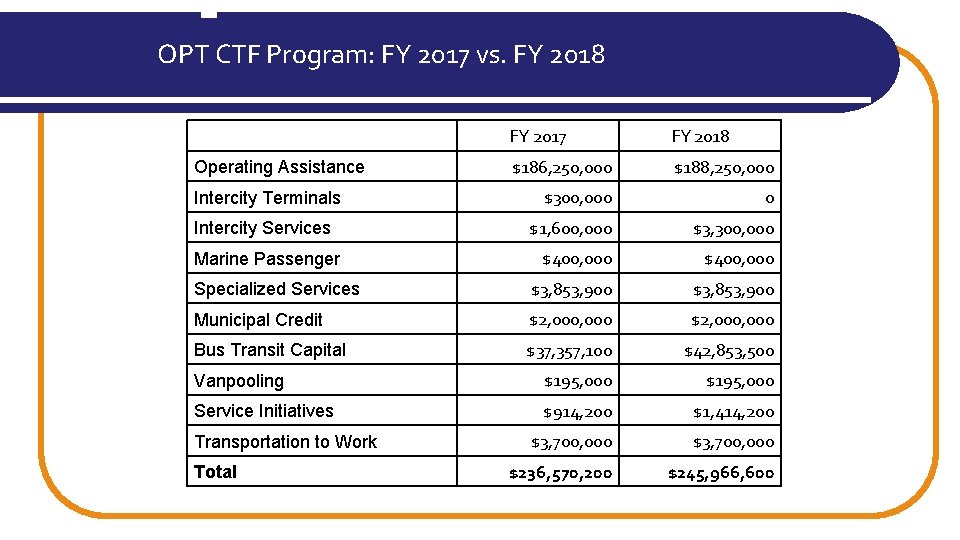
OPT CTF Program: FY 2017 vs. FY 2018 FY 2017 FY 2018 $186, 250, 000 $188, 250, 000 $300, 000 0 $1, 600, 000 $3, 300, 000 $400, 000 Specialized Services $3, 853, 900 Municipal Credit $2, 000, 000 Bus Transit Capital $37, 357, 100 $42, 853, 500 Vanpooling $195, 000 Service Initiatives $914, 200 $1, 414, 200 $3, 700, 000 $236, 570, 200 $245, 966, 600 Operating Assistance Intercity Terminals Intercity Services Marine Passenger Transportation to Work Total
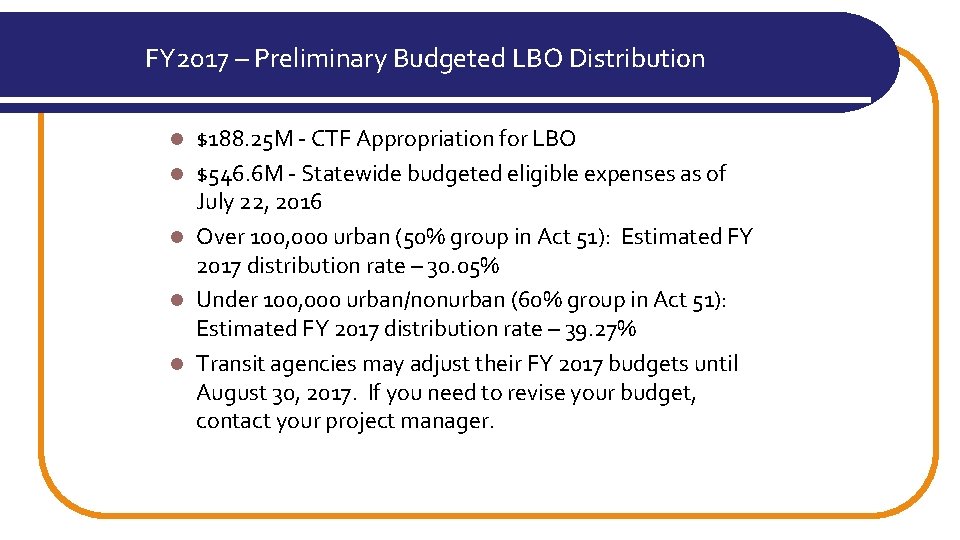
FY 2017 – Preliminary Budgeted LBO Distribution l l l $188. 25 M - CTF Appropriation for LBO $546. 6 M - Statewide budgeted eligible expenses as of July 22, 2016 Over 100, 000 urban (50% group in Act 51): Estimated FY 2017 distribution rate – 30. 05% Under 100, 000 urban/nonurban (60% group in Act 51): Estimated FY 2017 distribution rate – 39. 27% Transit agencies may adjust their FY 2017 budgets until August 30, 2017. If you need to revise your budget, contact your project manager.
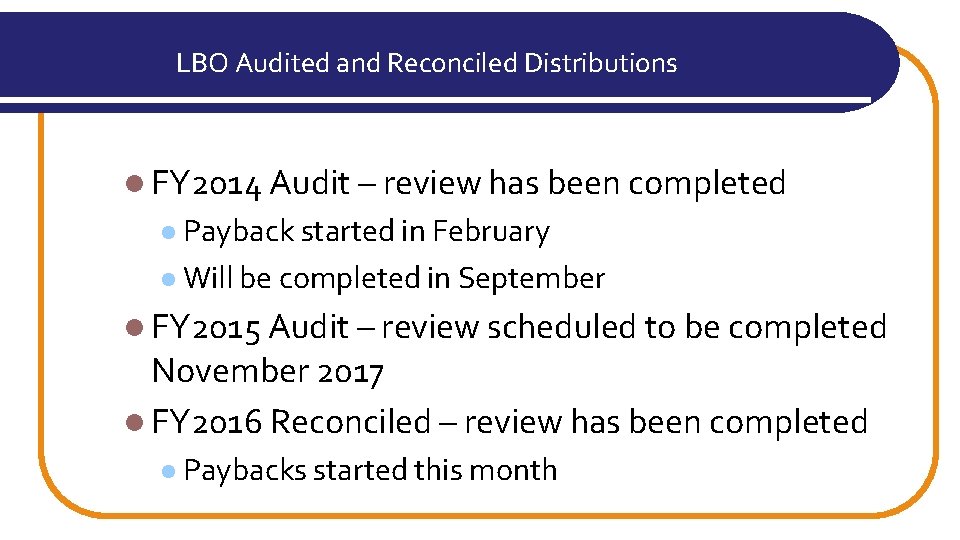
LBO Audited and Reconciled Distributions l FY 2014 Audit – review has been completed l Payback started in February l Will be completed in September l FY 2015 Audit – review scheduled to be completed November 2017 l FY 2016 Reconciled – review has been completed l Paybacks started this month
SIGMA l New State accounting system – Statewide Integrated Governmental Management Application l Change to new system on October 1 st l Register via Vendor Self Service l Vendor Self Service help: (888) 734 -9749 or SIGMA-Vendor@Michigan. gov
Payables July 26 – agencies received letter about fiscal year end l Agencies should submit all invoices/payment requests immediately – cut off is 9/8 to avoid payables l Payables must be set up for all costs incurred between 9/8 and 9/30: l l l Delay accepting delivery until October 1 if possible Authorizations expiring on or before 9/30 must have payable if funds remain Not establishing payable could delay or lose payment Payable only holds funds for limited time!
Project. Wise l Electronic submittal and data storage system l Will allow for quicker, more transparent payment processing l Plan to have two testing phases, then will roll out to all Tas l Is used successfully in many areas of MDOT
Vehicle Updates
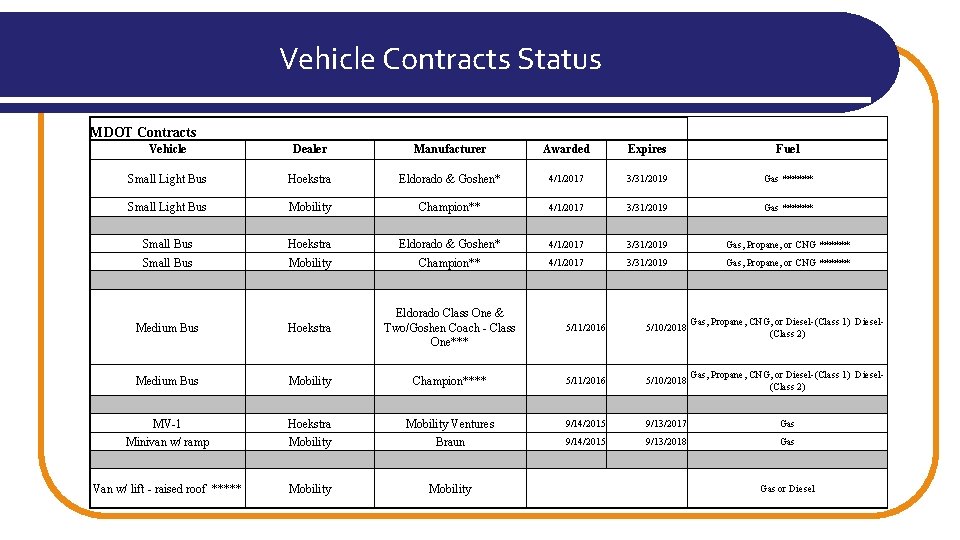
Vehicle Contracts Status MDOT Contracts Vehicle Dealer Manufacturer Awarded Expires Fuel Small Light Bus Hoekstra Eldorado & Goshen* 4/1/2017 3/31/2019 Gas ****** Small Light Bus Mobility Champion** 4/1/2017 3/31/2019 Gas ****** Small Bus Hoekstra Eldorado & Goshen* 4/1/2017 3/31/2019 Gas, Propane, or CNG ****** Small Bus Mobility Champion** 4/1/2017 3/31/2019 Gas, Propane, or CNG ****** Medium Bus Hoekstra Eldorado Class One & Two/Goshen Coach - Class One*** 5/11/2016 5/10/2018 Gas, Propane, CNG, or Diesel-(Class 1) Diesel(Class 2) Medium Bus Mobility Champion**** 5/11/2016 5/10/2018 Gas, Propane, CNG, or Diesel-(Class 1) Diesel(Class 2) MV-1 Hoekstra Mobility Ventures 9/14/2015 9/13/2017 Gas Minivan w/ ramp Mobility Braun 9/14/2015 9/13/2018 Gas Van w/ lift - raised roof ***** Mobility Gas or Diesel
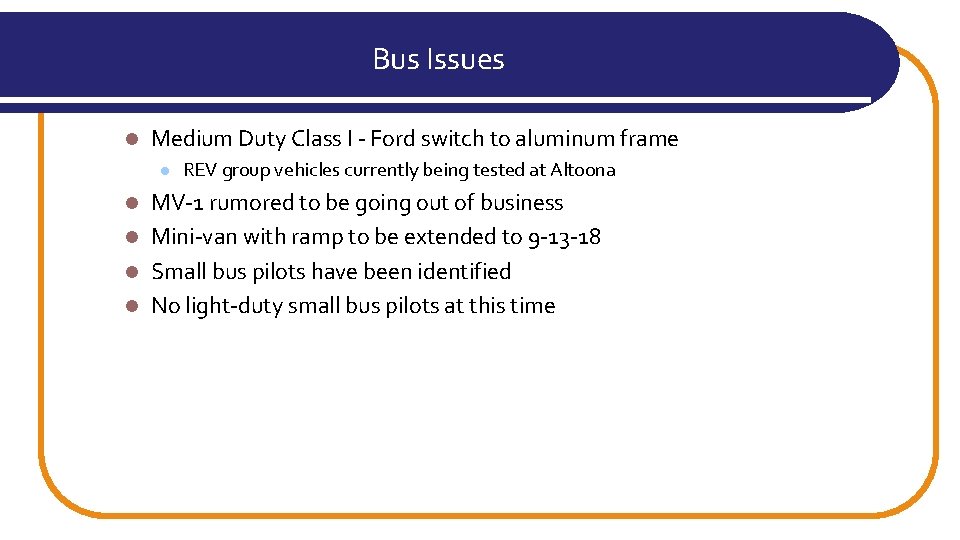
Bus Issues l Medium Duty Class I - Ford switch to aluminum frame l REV group vehicles currently being tested at Altoona MV-1 rumored to be going out of business l Mini-van with ramp to be extended to 9 -13 -18 l Small bus pilots have been identified l No light-duty small bus pilots at this time l
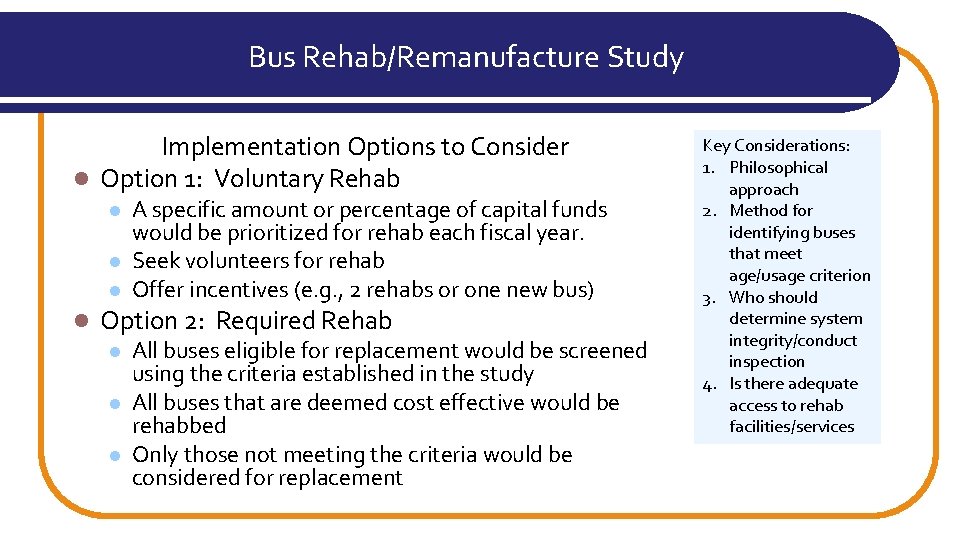
Bus Rehab/Remanufacture Study Implementation Options to Consider l Option 1: Voluntary Rehab l l A specific amount or percentage of capital funds would be prioritized for rehab each fiscal year. Seek volunteers for rehab Offer incentives (e. g. , 2 rehabs or one new bus) Option 2: Required Rehab l l l All buses eligible for replacement would be screened using the criteria established in the study All buses that are deemed cost effective would be rehabbed Only those not meeting the criteria would be considered for replacement Key Considerations: 1. Philosophical approach 2. Method for identifying buses that meet age/usage criterion 3. Who should determine system integrity/conduct inspection 4. Is there adequate access to rehab facilities/services
Kim Johnson, Section Manager Capital Match Federal Grants Federal Reviews
CAPITAL MATCH
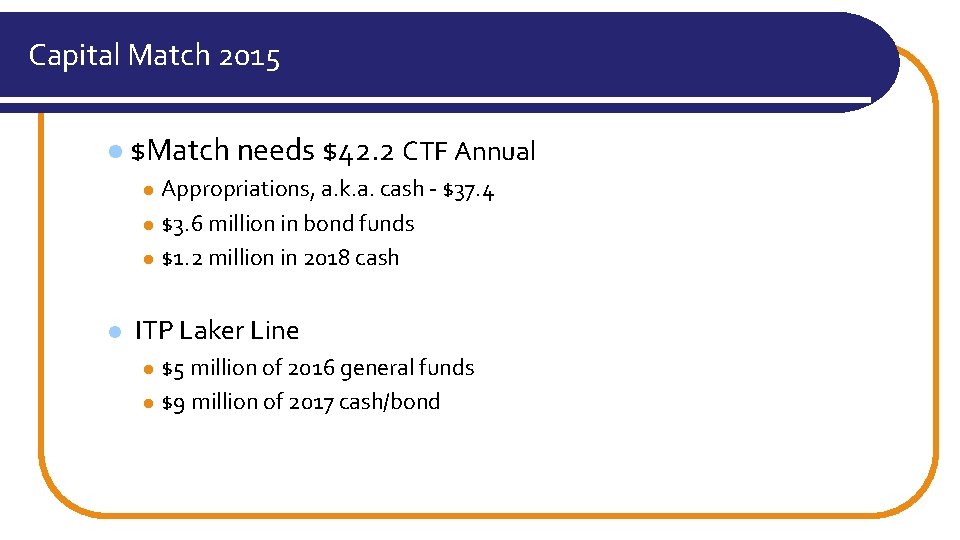
Capital Match 2015 l $Match needs $42. 2 CTF Annual Appropriations, a. k. a. cash - $37. 4 l $3. 6 million in bond funds l $1. 2 million in 2018 cash l l ITP Laker Line $5 million of 2016 general funds l $9 million of 2017 cash/bond l
FEDERAL GRANTS
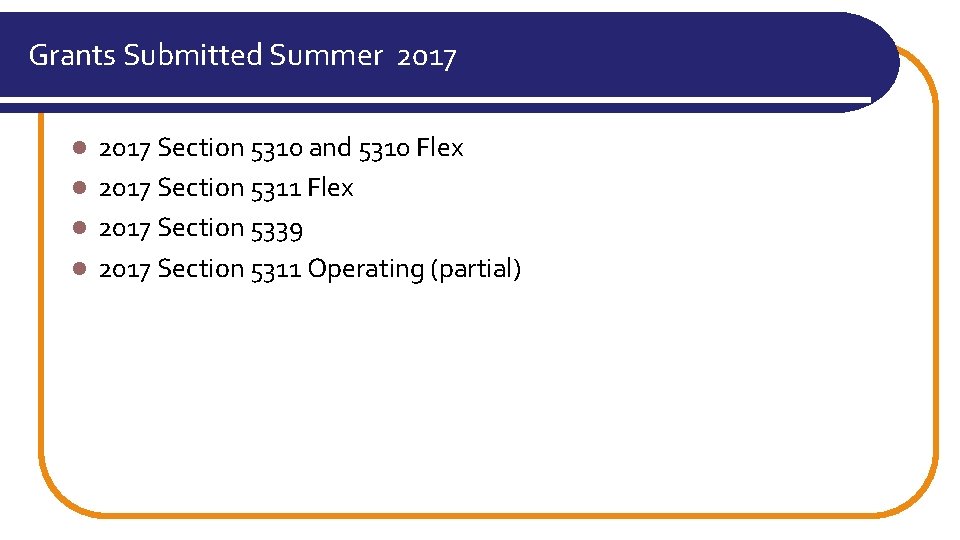
Grants Submitted Summer 2017 Section 5310 and 5310 Flex l 2017 Section 5311 Flex l 2017 Section 5339 l 2017 Section 5311 Operating (partial) l
Section 5310 l l l Received $2. 0 million RU and $1. 8 million SU Were able to fund all requests in small urban and rural areas Used about $3. 4 million RU and $2. 2 million of SU for both traditional projects and NF projects Have to use at least 55% of the funds for traditional 5310 projects Funded 18 rural transit buses and 8 small urban paratransit buses
Section 5311 Capital flex – included $3. 75 million of federal funds and $942, 000 of state for 36 agencies l 5311 Operating – 2017 – providing 18. 5 of operating costs - $18. 1 million l 5311 Operating – 2018 – will provide 18. 5% of operating costs l 5311 – 2019 – will allow agency to choose to use the percent provided for operating or capital – select during annual application process l
Section 5339 l Small urban funds $1. 3 million l l l Allocated to each agency based on percentage share of 5307 funds Agencies applied for funds directly Rural funds - $1. 75 million l l Were distributed based on % of fleet eligible for replacement 8 agencies and 21 buses
Job Access/Reverse Commute FY 2018 Continuation of 2017 Level l Rural – will fund with 5311 funding - $1. 4 million federal/$1. 2 million state l Small urban – will fund operating and mobility management with 100% state Transportation to Work funds - $2. 2 million l Also provide match to any large urban agencies that uses 5307 funds for JARC activities
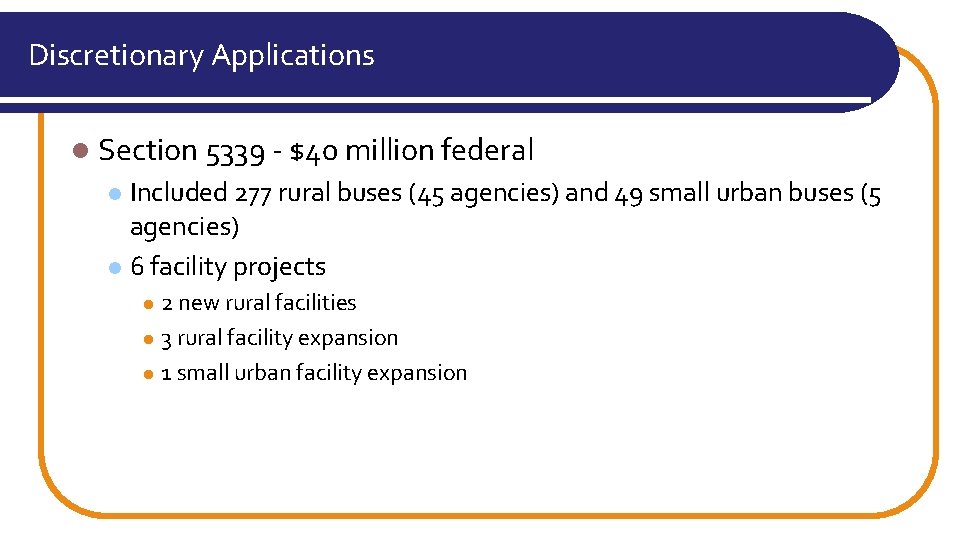
Discretionary Applications l Section 5339 - $40 million federal Included 277 rural buses (45 agencies) and 49 small urban buses (5 agencies) l 6 facility projects l 2 new rural facilities l 3 rural facility expansion l 1 small urban facility expansion l
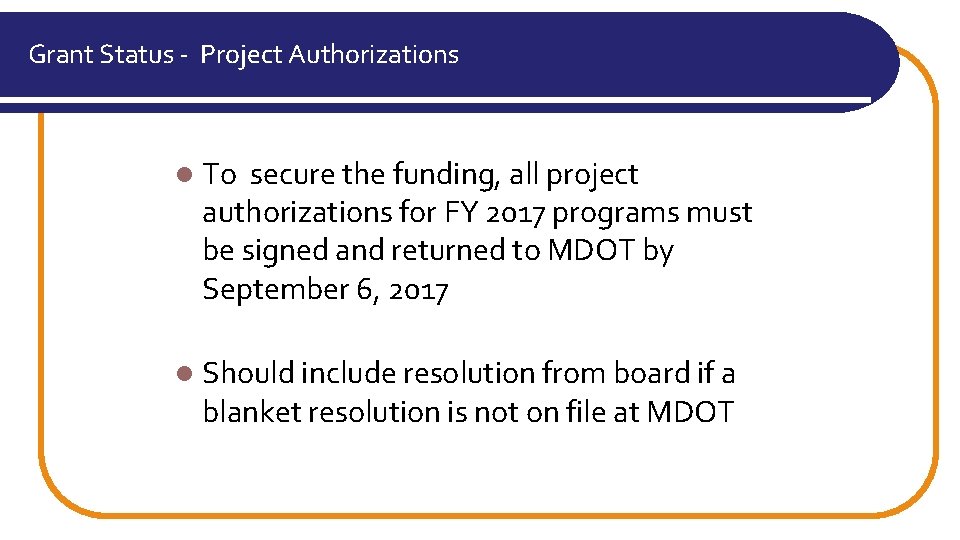
Grant Status - Project Authorizations l To secure the funding, all project authorizations for FY 2017 programs must be signed and returned to MDOT by September 6, 2017 l Should include resolution from board if a blanket resolution is not on file at MDOT
FEDERAL REVIEWS
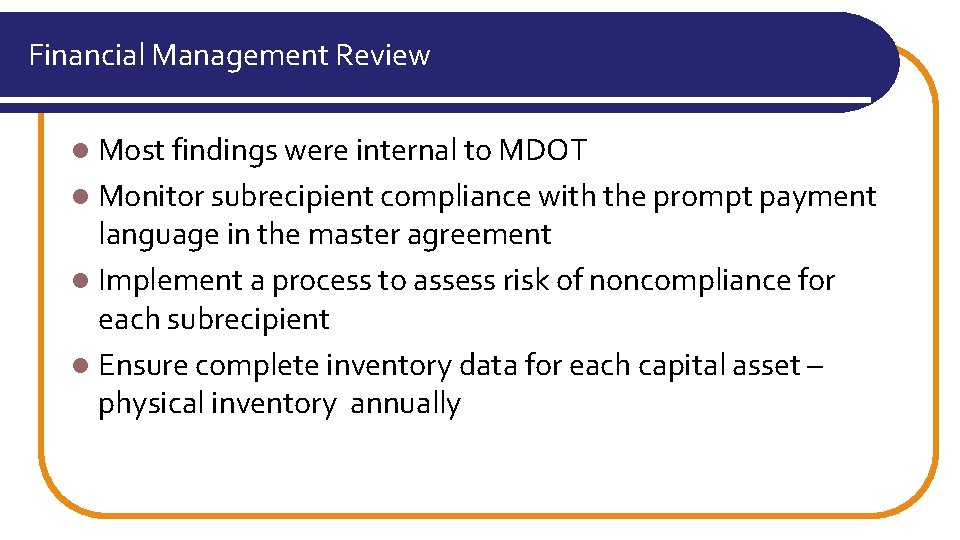
Financial Management Review l Most findings were internal to MDOT l Monitor subrecipient compliance with the prompt payment language in the master agreement l Implement a process to assess risk of noncompliance for each subrecipient l Ensure complete inventory data for each capital asset – physical inventory annually
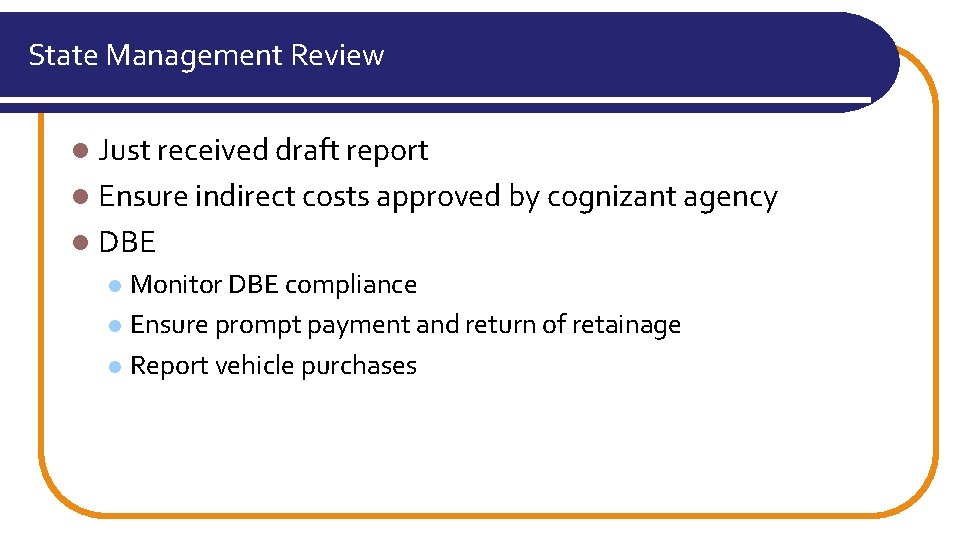
State Management Review l Just received draft report l Ensure indirect costs approved by cognizant agency l DBE Monitor DBE compliance l Ensure prompt payment and return of retainage l Report vehicle purchases l
Sharon Edgar, Administrator Universal Reduced‐Fare Card Pilot Project Transit Asset Management/Facility Condition Assessment Governor’s Aging Message Future of Mobility State Long Range Transportation Plan
Universal Reduced Fare Card
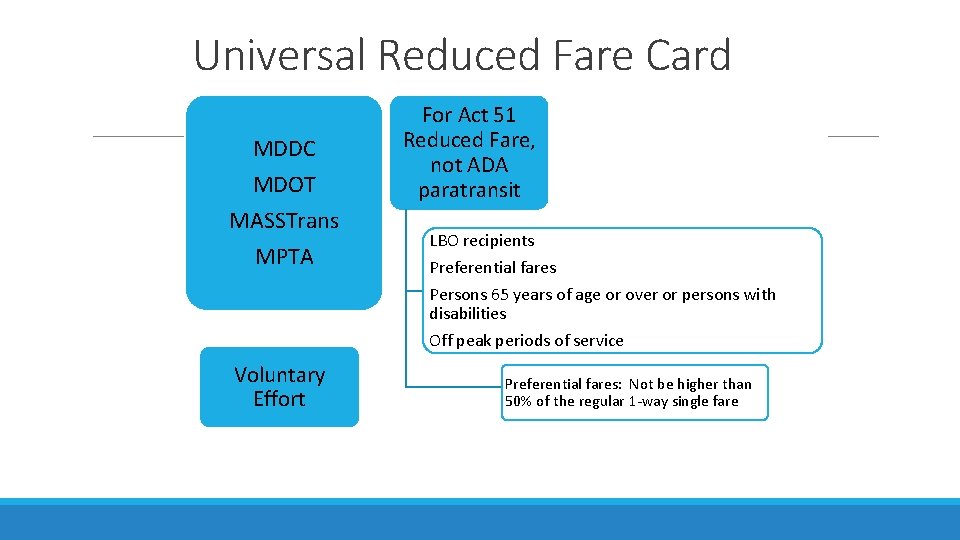
Universal Reduced Fare Card MDDC MDOT MASSTrans MPTA Voluntary Effort For Act 51 Reduced Fare, not ADA paratransit LBO recipients Preferential fares Persons 65 years of age or over or persons with disabilities Off peak periods of service Preferential fares: Not be higher than 50% of the regular 1‐way single fare
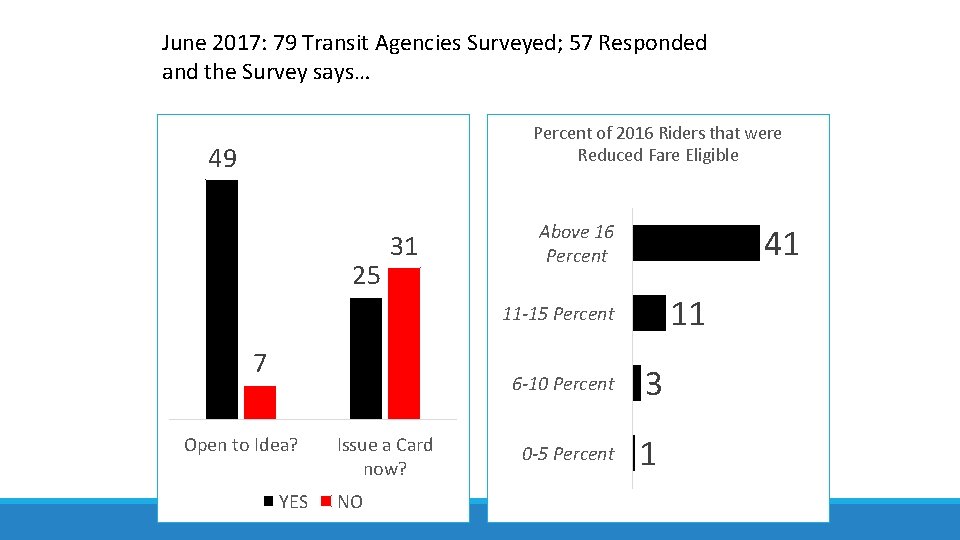
June 2017: 79 Transit Agencies Surveyed; 57 Responded and the Survey says… Percent of 2016 Riders that were Reduced Fare Eligible 49 25 31 Above 16 Percent 41 11 11 -15 Percent 7 6 -10 Percent Open to Idea? YES Issue a Card now? NO 0 -5 Percent 3 1
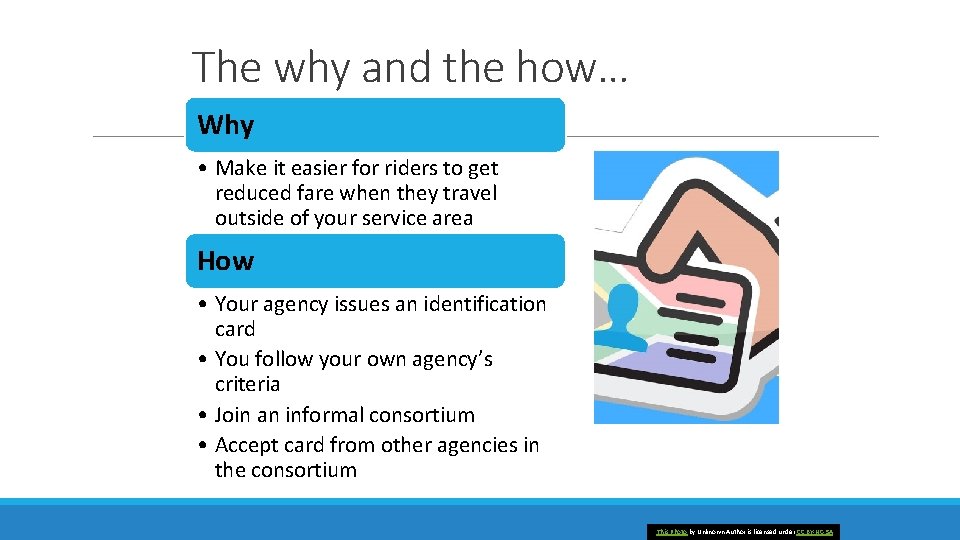
The why and the how… Why • Make it easier for riders to get reduced fare when they travel outside of your service area How • Your agency issues an identification card • You follow your own agency’s criteria • Join an informal consortium • Accept card from other agencies in the consortium This Photo by Unknown Author is licensed under CC BY‐NC‐SA
A little bit more on how… MDOT funds card making equipment You inform riders of this new option and issue cards You train your drivers and dispatchers MDOT maintains a list of participating agencies You work with MDOT and other agencies in the consortium to resolve problems ASK QUESTIONS HELP FINAL THE DRAFT ACTION PLAN (handout) CONFERENCE CALL: SEPTEMBER 26, 2: 30 – 4: 00 PM
ADA Paratransit and Visitors FTA C 4710. 1 ‐ AMERICANS WITH DISABILITIES ACT (ADA): GUIDANCE November 4, 2015 v You are required to provide complementary paratransit service to visitors v A visitor is an individual with disabilities who does not reside in your service area v You treat as eligible all visitors who present documentation that they are eligible in the jurisdiction in which they reside v For visitors who do not present such documentation, you may require documentation of place of residence and, if the individual’s disability is not apparent, of disability v Service to a visitor is required for any combination of 21 days during any 365‐day period beginning with the visitor’s first use of the service v In no case shall the public entity require a visitor to apply for or receive eligibility certification from your agency Are you complying with these requirements? How easy is it for visitors to find this information on your website and to meet these requirements?
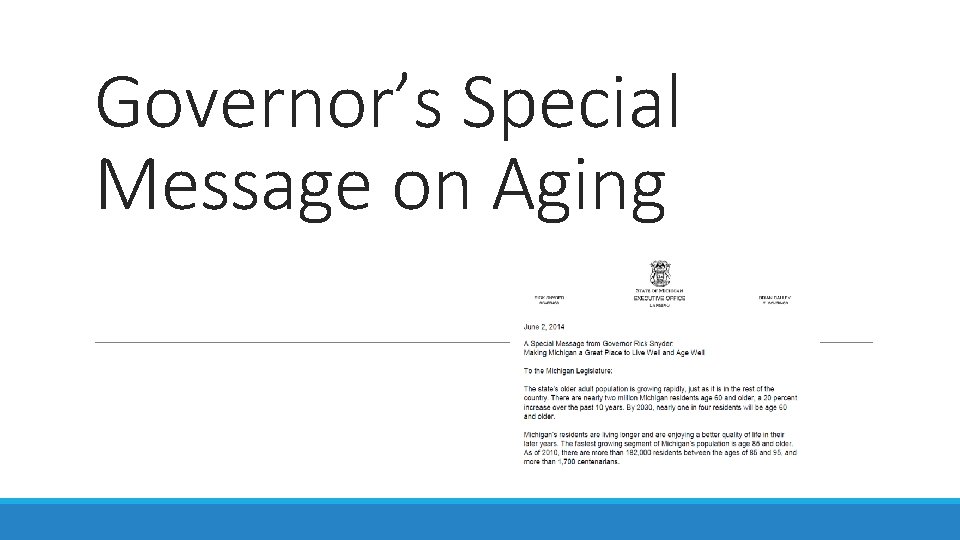
Governor’s Special Message on Aging
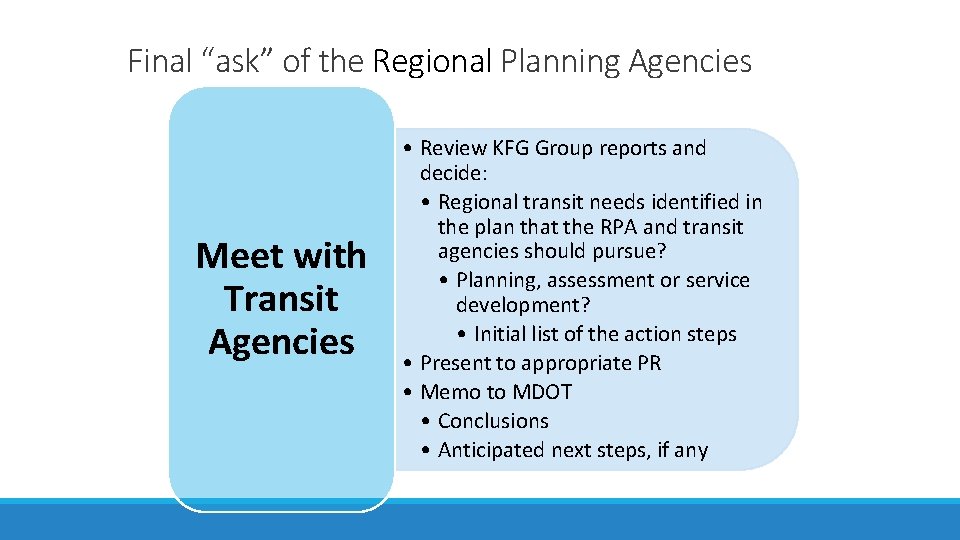
Final “ask” of the Regional Planning Agencies Meet with Transit Agencies • Review KFG Group reports and decide: • Regional transit needs identified in the plan that the RPA and transit agencies should pursue? • Planning, assessment or service development? • Initial list of the action steps • Present to appropriate PR • Memo to MDOT • Conclusions • Anticipated next steps, if any
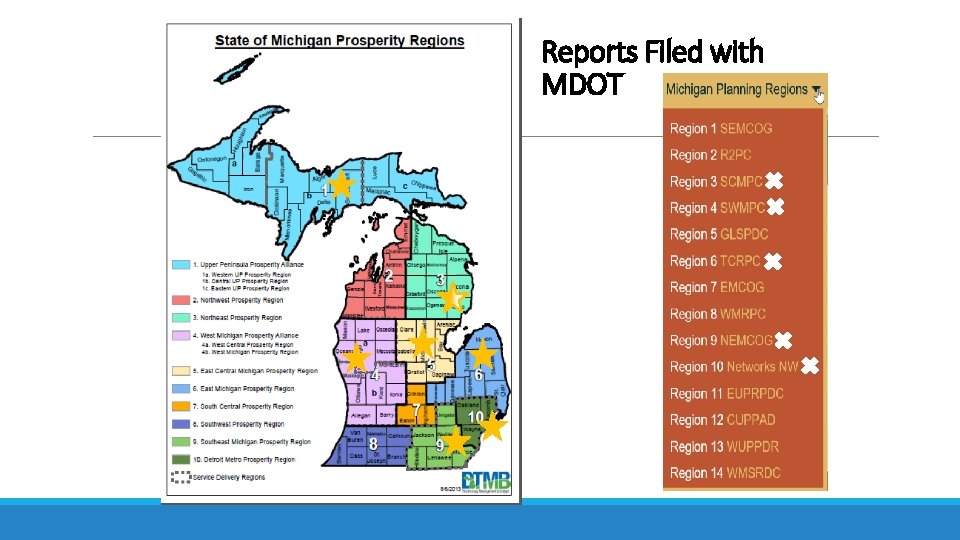
Reports Filed with MDOT
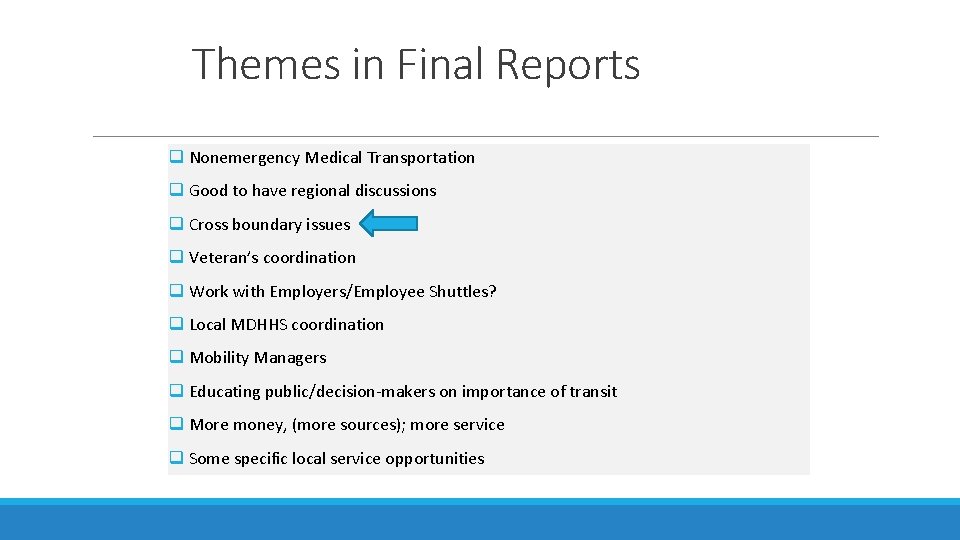
Themes in Final Reports q Nonemergency Medical Transportation q Good to have regional discussions q Cross boundary issues q Veteran’s coordination q Work with Employers/Employee Shuttles? q Local MDHHS coordination q Mobility Managers q Educating public/decision‐makers on importance of transit q More money, (more sources); more service q Some specific local service opportunities
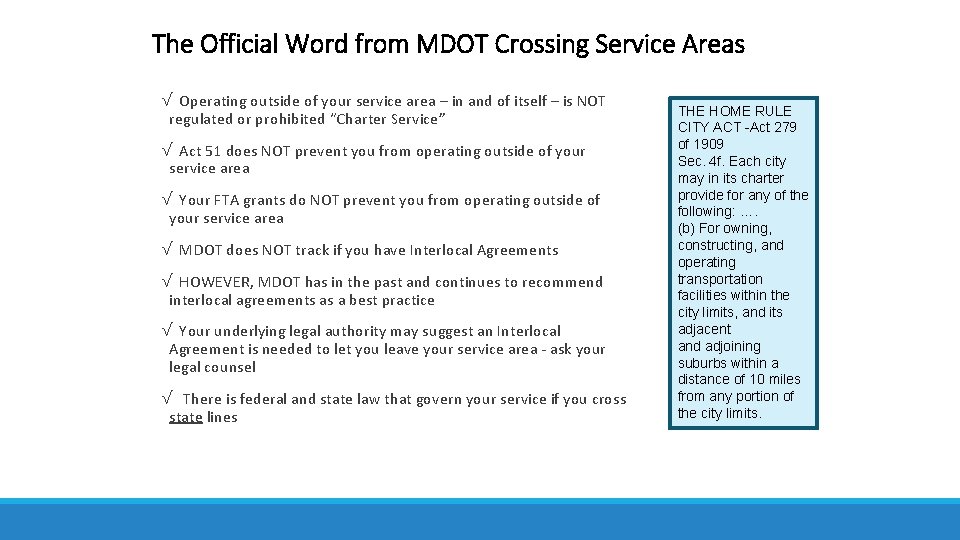
The Official Word from MDOT Crossing Service Areas √ Operating outside of your service area – in and of itself – is NOT regulated or prohibited “Charter Service” √ Act 51 does NOT prevent you from operating outside of your service area √ Your FTA grants do NOT prevent you from operating outside of your service area √ MDOT does NOT track if you have Interlocal Agreements √ HOWEVER, MDOT has in the past and continues to recommend interlocal agreements as a best practice √ Your underlying legal authority may suggest an Interlocal Agreement is needed to let you leave your service area ‐ ask your legal counsel √ There is federal and state law that govern your service if you cross state lines THE HOME RULE CITY ACT -Act 279 of 1909 Sec. 4 f. Each city may in its charter provide for any of the following: …. (b) For owning, constructing, and operating transportation facilities within the city limits, and its adjacent and adjoining suburbs within a distance of 10 miles from any portion of the city limits.
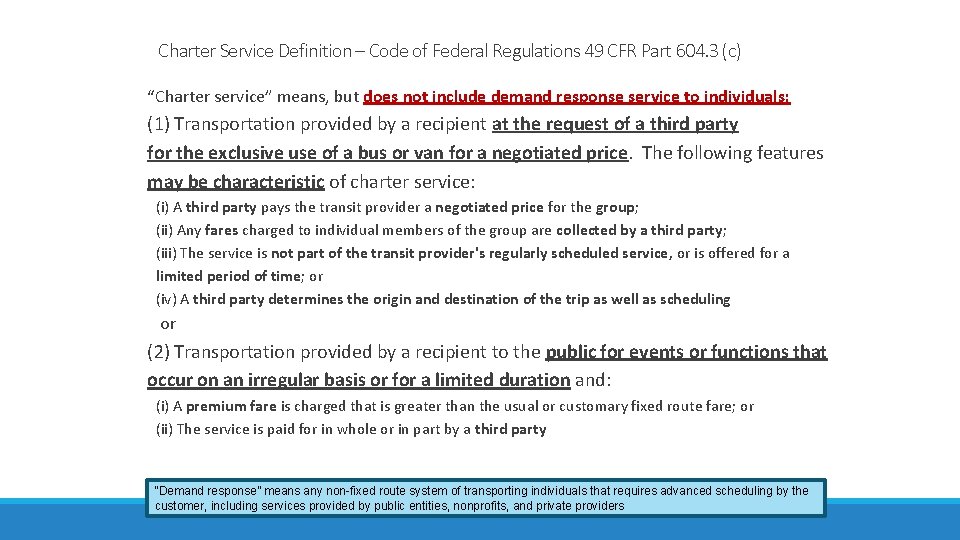
Charter Service Definition – Code of Federal Regulations 49 CFR Part 604. 3 (c) “Charter service” means, but does not include demand response service to individuals: (1) Transportation provided by a recipient at the request of a third party for the exclusive use of a bus or van for a negotiated price. The following features may be characteristic of charter service: (i) A third party pays the transit provider a negotiated price for the group; (ii) Any fares charged to individual members of the group are collected by a third party; (iii) The service is not part of the transit provider's regularly scheduled service, or is offered for a limited period of time; or (iv) A third party determines the origin and destination of the trip as well as scheduling or (2) Transportation provided by a recipient to the public for events or functions that occur on an irregular basis or for a limited duration and: (i) A premium fare is charged that is greater than the usual or customary fixed route fare; or (ii) The service is paid for in whole or in part by a third party “Demand response” means any non-fixed route system of transporting individuals that requires advanced scheduling by the customer, including services provided by public entities, nonprofits, and private providers
Transit Asset Management
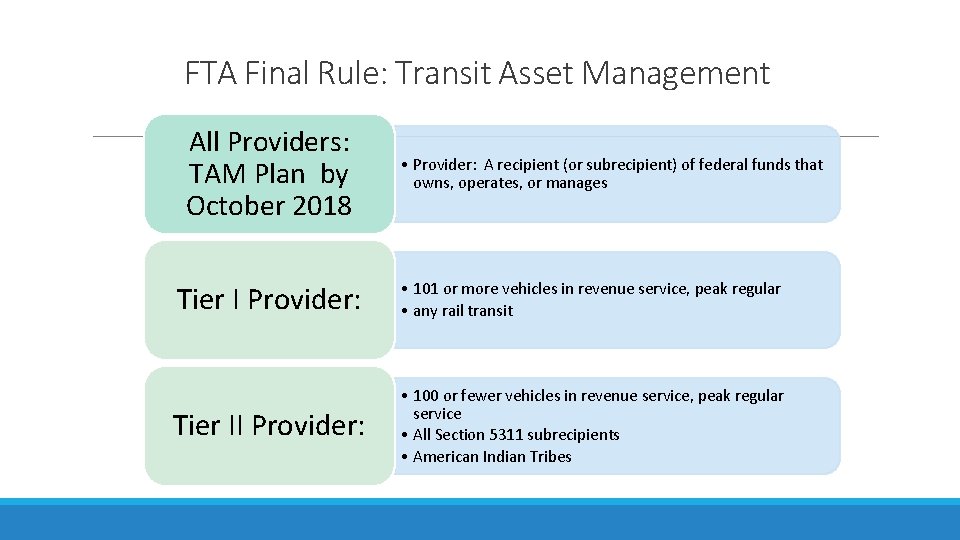
FTA Final Rule: Transit Asset Management All Providers: TAM Plan by October 2018 • Provider: A recipient (or subrecipient) of federal funds that owns, operates, or manages Tier I Provider: • 101 or more vehicles in revenue service, peak regular • any rail transit Tier II Provider: • 100 or fewer vehicles in revenue service, peak regular service • All Section 5311 subrecipients • American Indian Tribes
Group Plan to be prepared by MDOT for: Section 5311 and 5310 funds from MDOT Not also a direct recipient of Section 5307 funds from FTA Four Required Elements for MDOT’s Group TAM Plan • • Inventory of capital assets Condition assessment of each capital asset sufficient to monitor and predict performance of each capital asset A list of the provider’s analytical processes or decision‐support tools A project‐based prioritization of investments
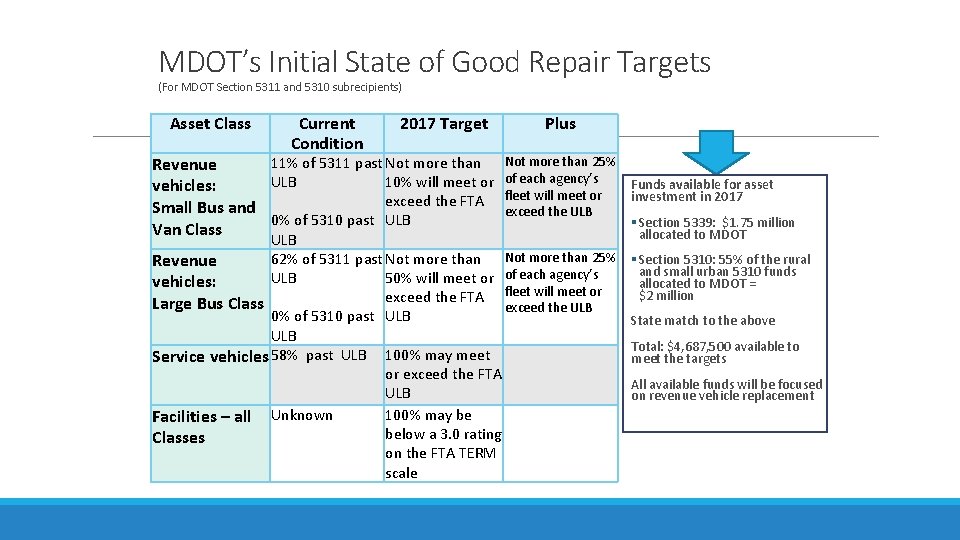
MDOT’s Initial State of Good Repair Targets (For MDOT Section 5311 and 5310 subrecipients) Asset Class Current Condition 2017 Target 11% of 5311 past Not more than Revenue ULB 10% will meet or vehicles: exceed the FTA Small Bus and 0% of 5310 past ULB Van Class Plus Not more than 25% of each agency’s fleet will meet or exceed the ULB 62% of 5311 past Not more than 25% Revenue ULB 50% will meet or of each agency’s vehicles: fleet will meet or exceed the FTA Large Bus Class exceed the ULB 0% of 5310 past ULB Service vehicles 58% past ULB 100% may meet or exceed the FTA ULB 100% may be Facilities – all Unknown below a 3. 0 rating Classes on the FTA TERM scale Funds available for asset investment in 2017 § Section 5339: $1. 75 million allocated to MDOT § Section 5310: 55% of the rural and small urban 5310 funds allocated to MDOT = $2 million State match to the above Total: $4, 687, 500 available to meet the targets All available funds will be focused on revenue vehicle replacement
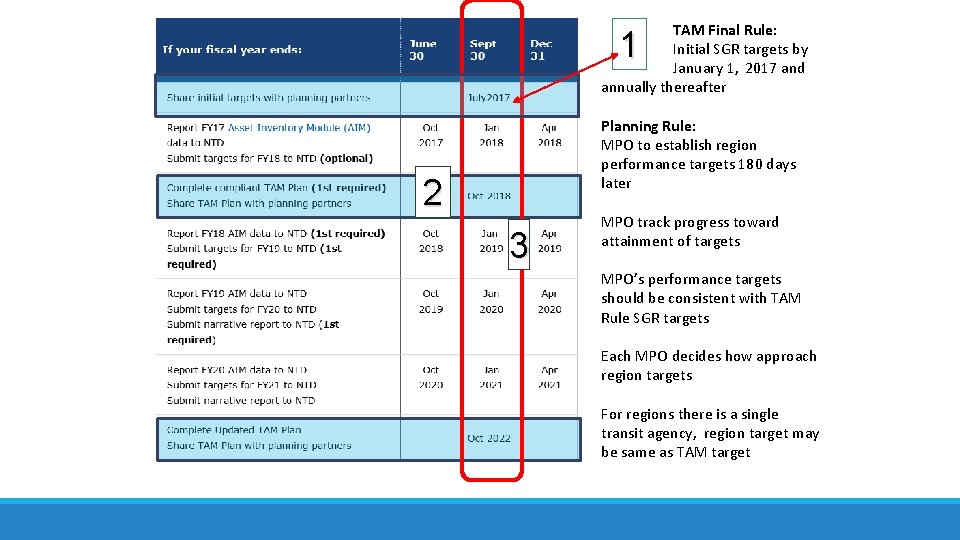
TAM Final Rule: Initial SGR targets by January 1, 2017 and annually thereafter 1 Planning Rule: MPO to establish region performance targets 180 days later 2 3 MPO track progress toward attainment of targets MPO’s performance targets should be consistent with TAM Rule SGR targets Each MPO decides how approach region targets For regions there is a single transit agency, region target may be same as TAM target
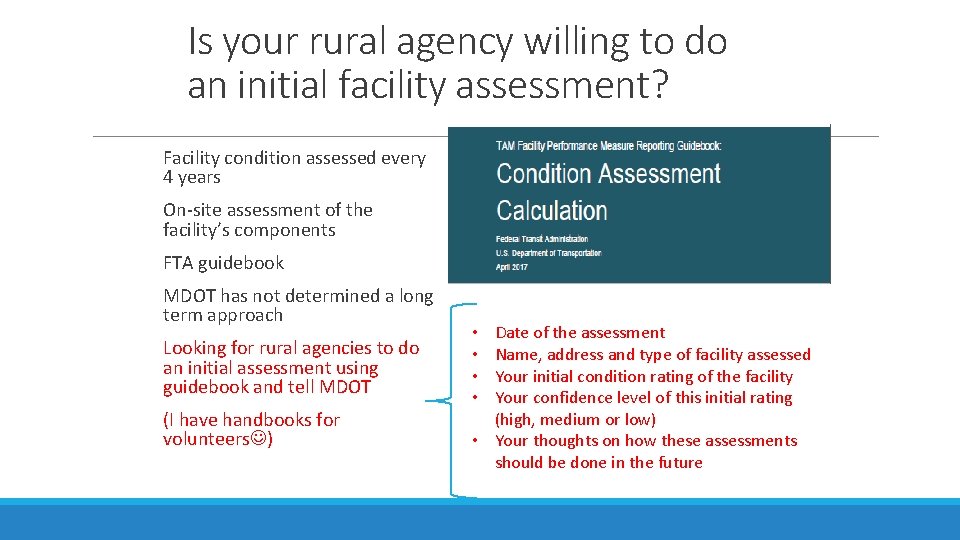
Is your rural agency willing to do an initial facility assessment? Facility condition assessed every 4 years On‐site assessment of the facility’s components FTA guidebook MDOT has not determined a long term approach Looking for rural agencies to do an initial assessment using guidebook and tell MDOT (I have handbooks for volunteers ) Date of the assessment Name, address and type of facility assessed Your initial condition rating of the facility Your confidence level of this initial rating (high, medium or low) • Your thoughts on how these assessments should be done in the future • •
Transit Safety
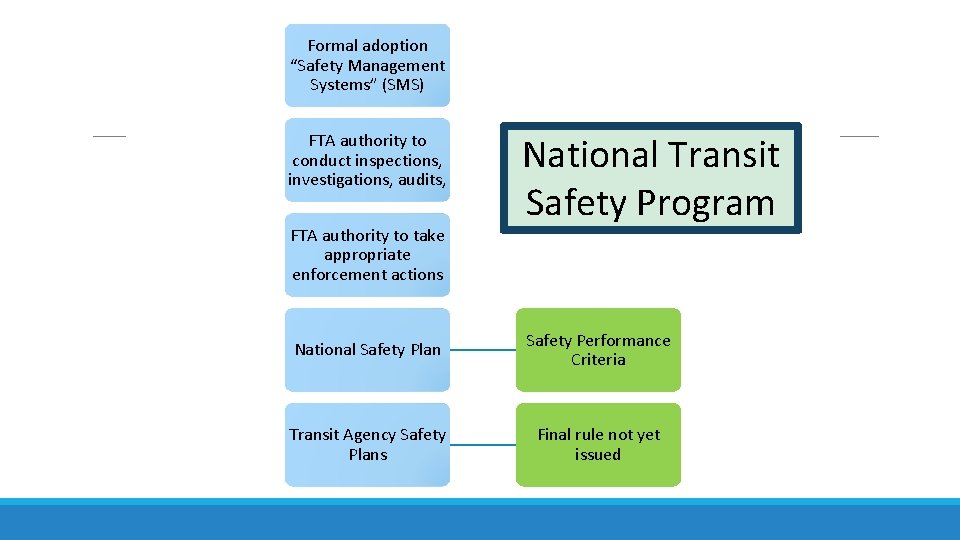
Formal adoption “Safety Management Systems” (SMS) FTA authority to conduct inspections, investigations, audits, FTA authority to take appropriate enforcement actions National Transit Safety Program National Safety Plan Safety Performance Criteria Transit Agency Safety Plans Final rule not yet issued
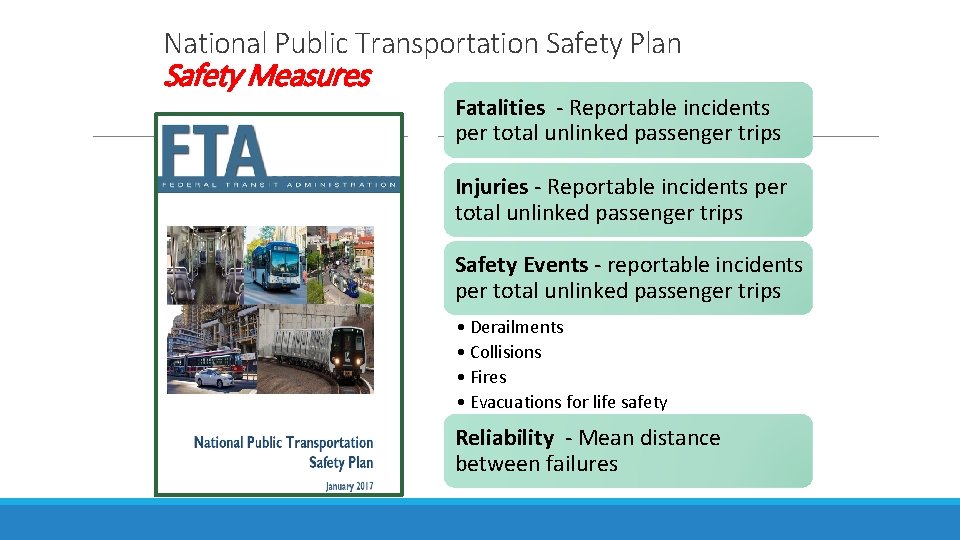
National Public Transportation Safety Plan Safety Measures Fatalities ‐ Reportable incidents per total unlinked passenger trips Injuries ‐ Reportable incidents per total unlinked passenger trips Safety Events ‐ reportable incidents per total unlinked passenger trips • Derailments • Collisions • Fires • Evacuations for life safety Reliability ‐ Mean distance between failures

Future of Mobility
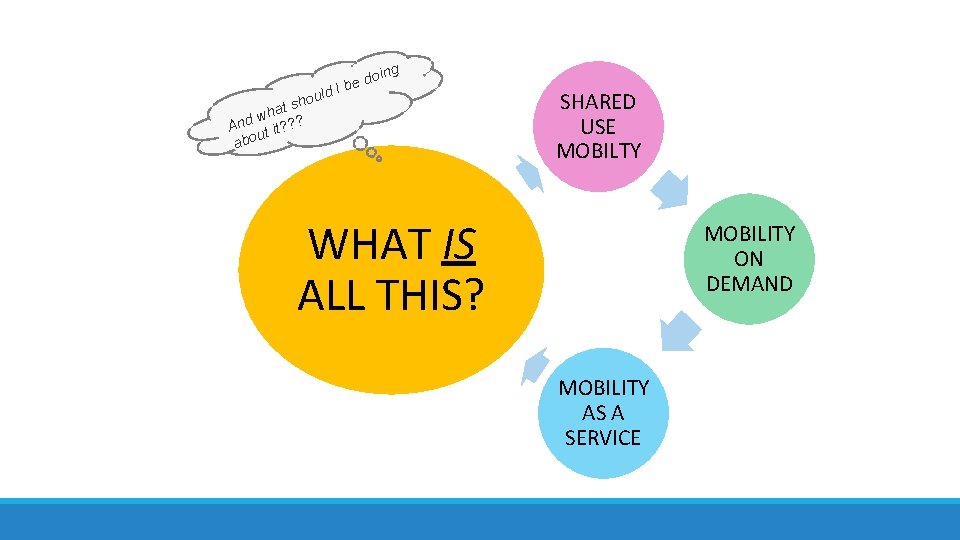
u sho t a wh And t it? ? ? u abo ld I oin be d g SHARED USE MOBILTY WHAT IS ALL THIS? MOBILITY ON DEMAND MOBILITY AS A SERVICE
Shared Use Mobility OR JUST “SHARED MOBILITY”
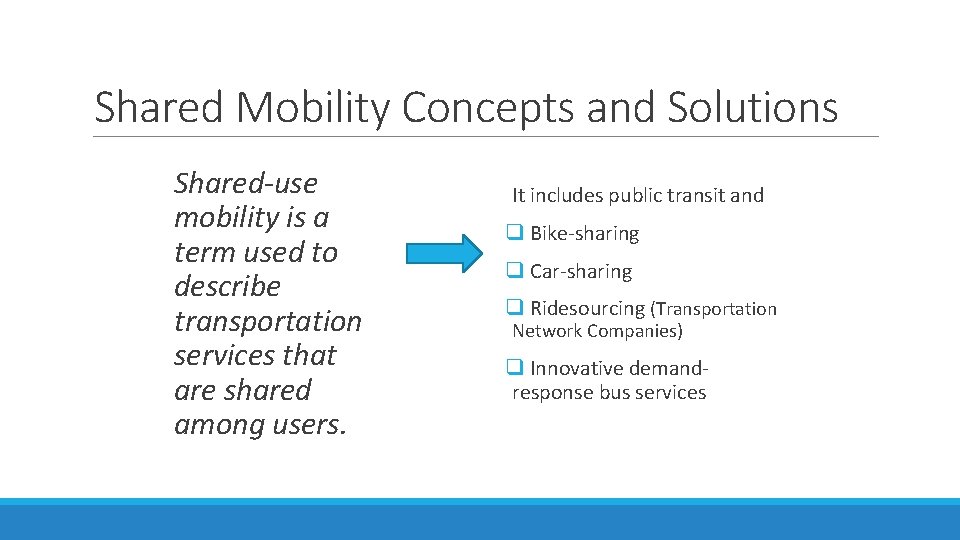
Shared Mobility Concepts and Solutions Shared-use mobility is a term used to describe transportation services that are shared among users. It includes public transit and q Bike‐sharing q Car‐sharing q Ridesourcing (Transportation Network Companies) q Innovative demand‐ response bus services
Mobility on Demand
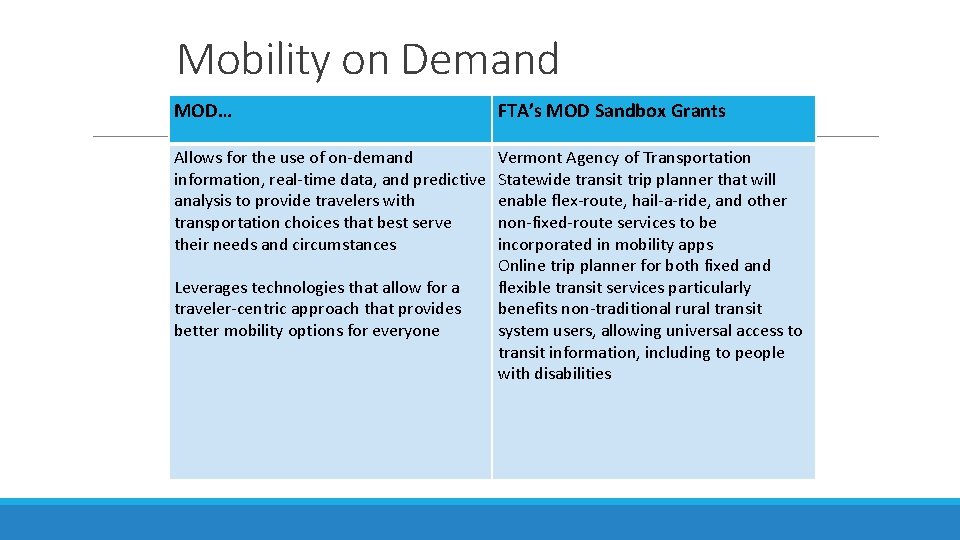
Mobility on Demand MOD… FTA’s MOD Sandbox Grants Allows for the use of on‐demand information, real‐time data, and predictive analysis to provide travelers with transportation choices that best serve their needs and circumstances Vermont Agency of Transportation Statewide transit trip planner that will enable flex‐route, hail‐a‐ride, and other non‐fixed‐route services to be incorporated in mobility apps Online trip planner for both fixed and flexible transit services particularly benefits non‐traditional rural transit system users, allowing universal access to transit information, including to people with disabilities Leverages technologies that allow for a traveler‐centric approach that provides better mobility options for everyone
Mobility as a Service
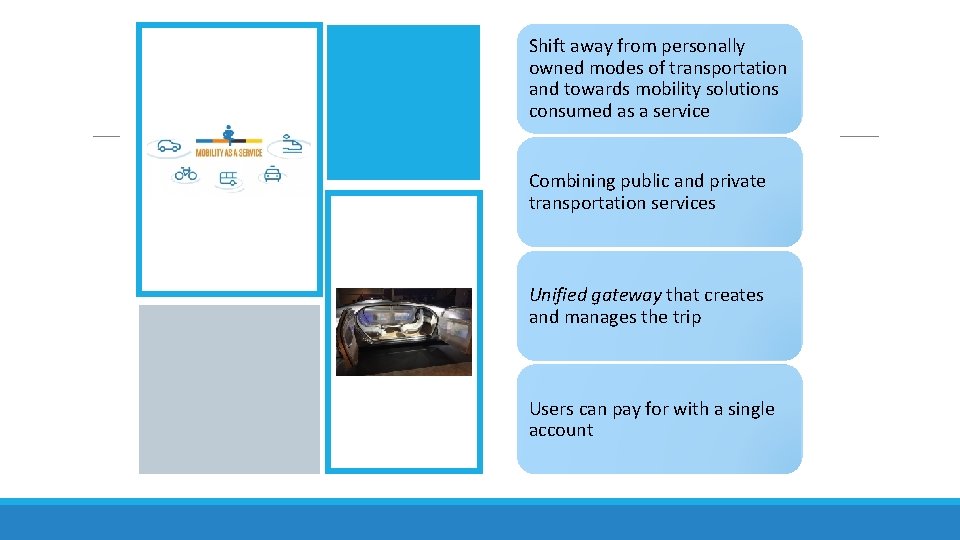
Shift away from personally owned modes of transportation and towards mobility solutions consumed as a service Combining public and private transportation services Unified gateway that creates and manages the trip Users can pay for with a single account
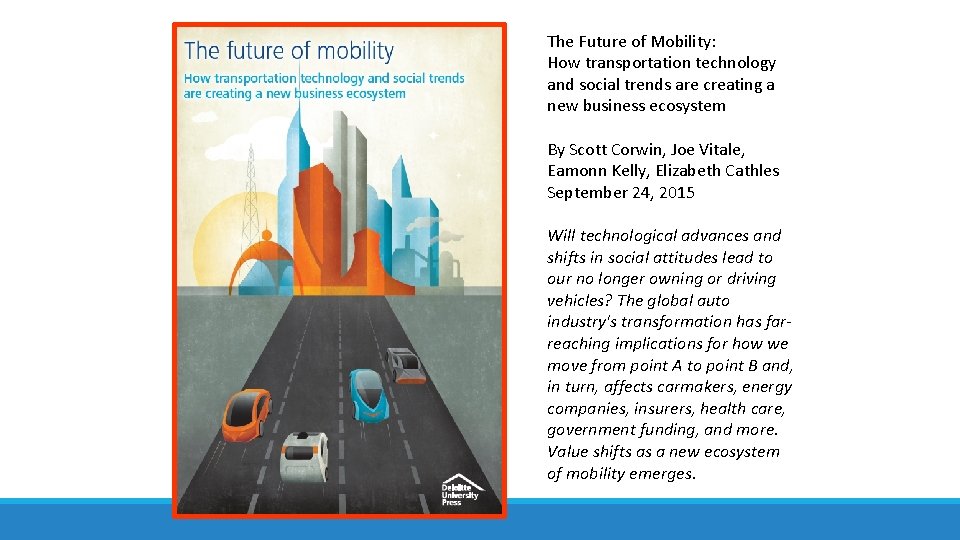
The Future of Mobility: How transportation technology and social trends are creating a new business ecosystem By Scott Corwin, Joe Vitale, Eamonn Kelly, Elizabeth Cathles September 24, 2015 Will technological advances and shifts in social attitudes lead to our no longer owning or driving vehicles? The global auto industry's transformation has farreaching implications for how we move from point A to point B and, in turn, affects carmakers, energy companies, insurers, health care, government funding, and more. Value shifts as a new ecosystem of mobility emerges.
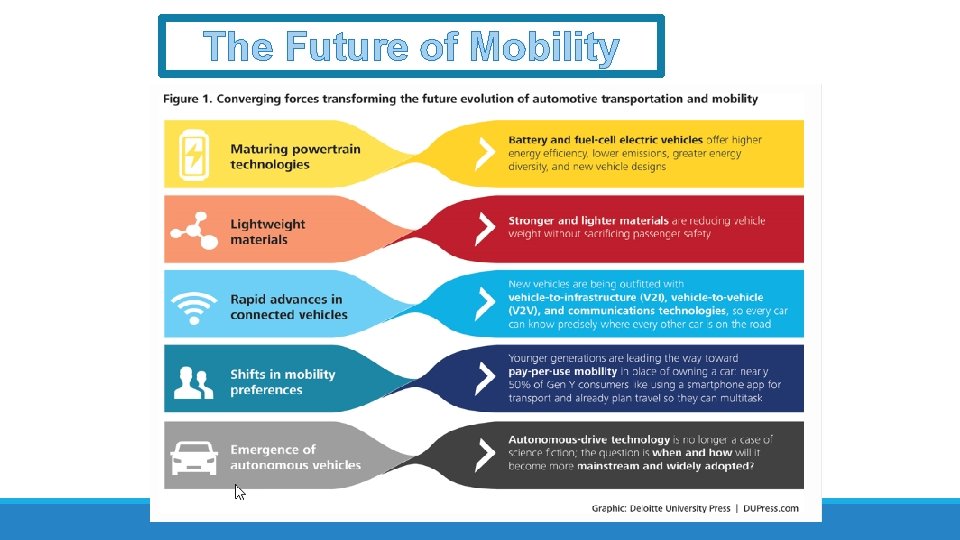
The Future of Mobility
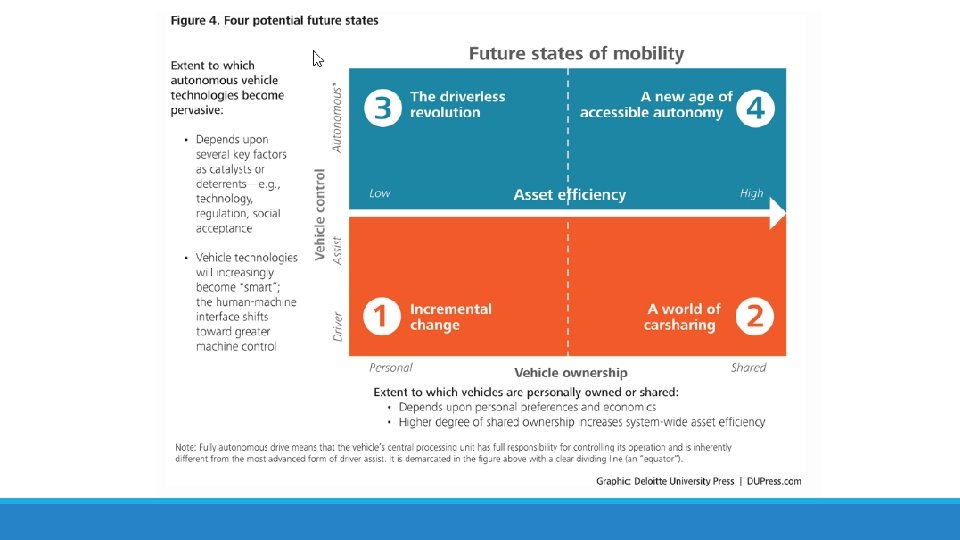
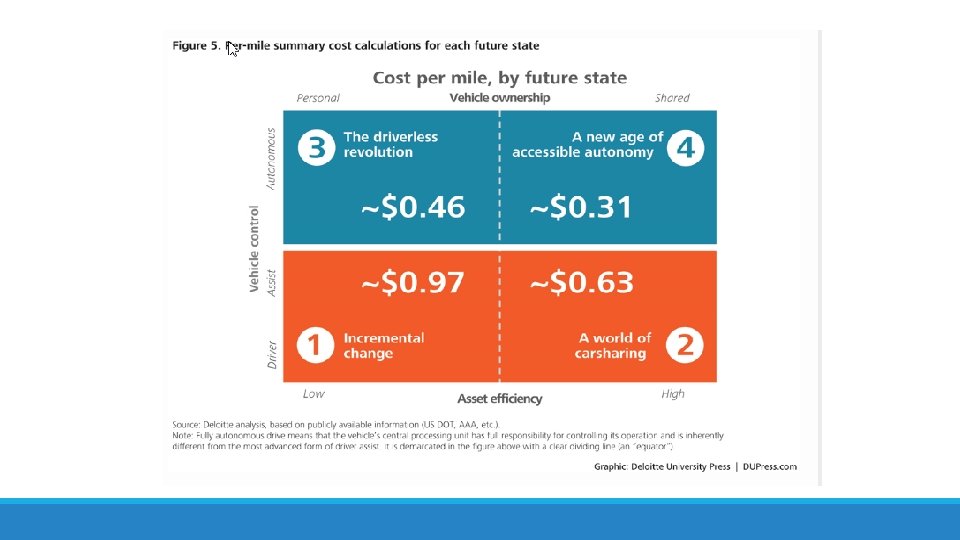
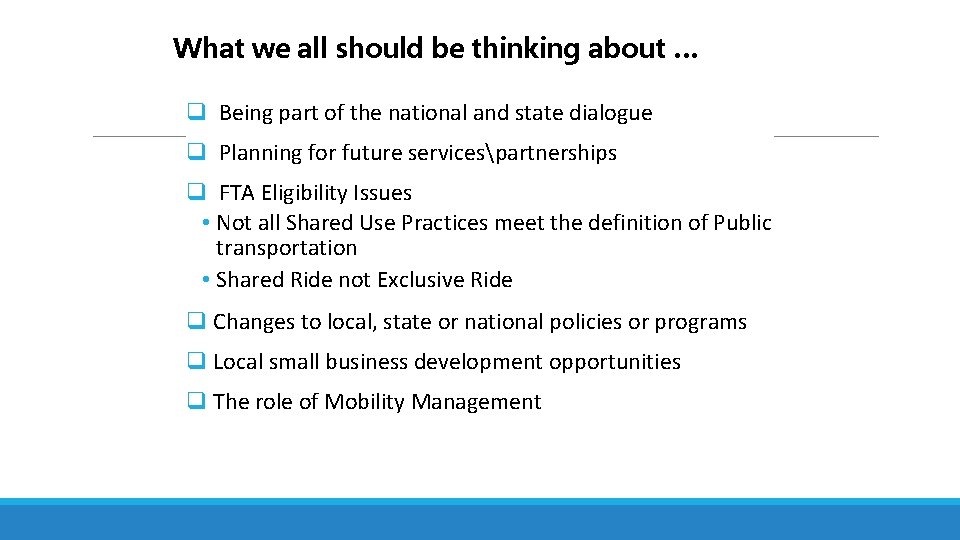
What we all should be thinking about … q Being part of the national and state dialogue q Planning for future servicespartnerships q FTA Eligibility Issues • Not all Shared Use Practices meet the definition of Public transportation • Shared Ride not Exclusive Ride q Changes to local, state or national policies or programs q Local small business development opportunities q The role of Mobility Management
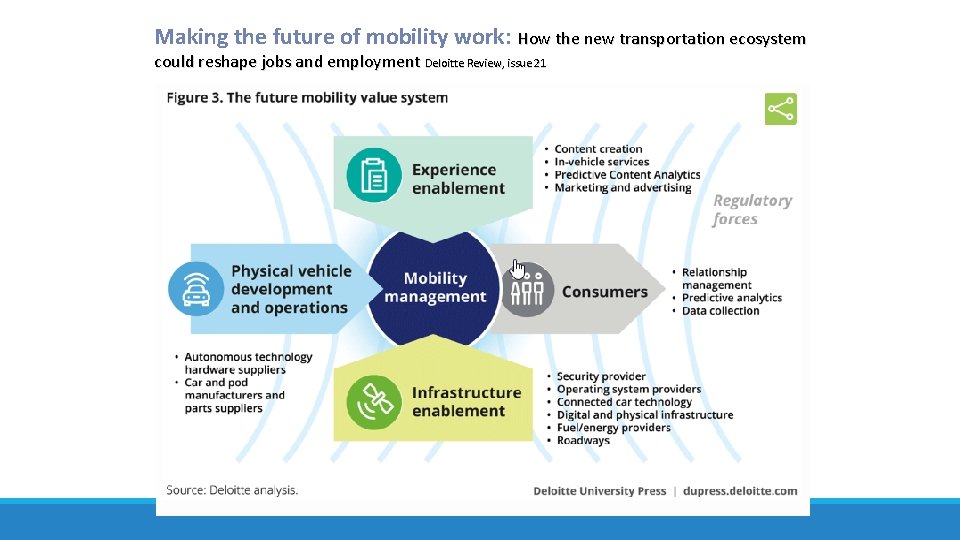
Making the future of mobility work: How the new transportation ecosystem could reshape jobs and employment Deloitte Review, issue 21
State Long Range Transportation Plan
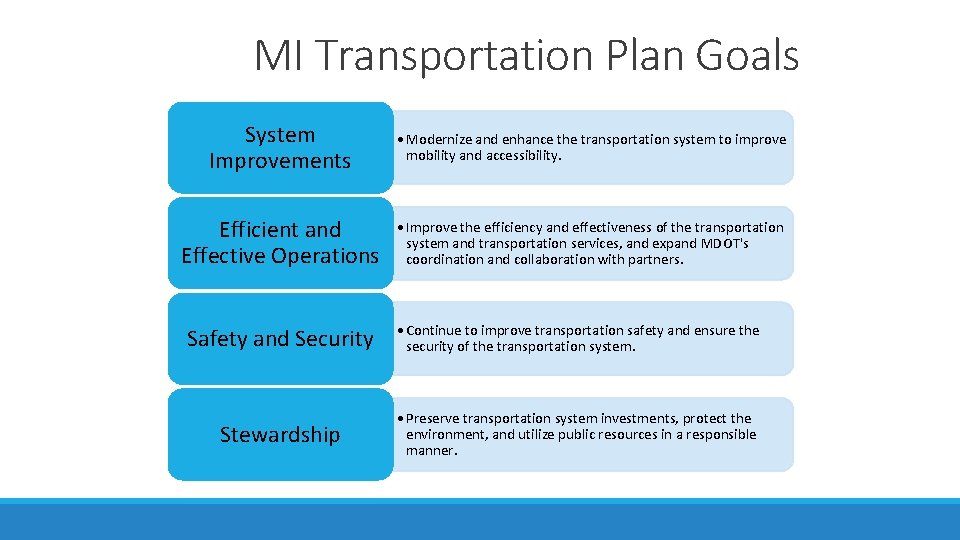
MI Transportation Plan Goals System Improvements • Modernize and enhance the transportation system to improve mobility and accessibility. Efficient and Effective Operations • Improve the efficiency and effectiveness of the transportation system and transportation services, and expand MDOT's coordination and collaboration with partners. Safety and Security • Continue to improve transportation safety and ensure the security of the transportation system. Stewardship • Preserve transportation system investments, protect the environment, and utilize public resources in a responsible manner.
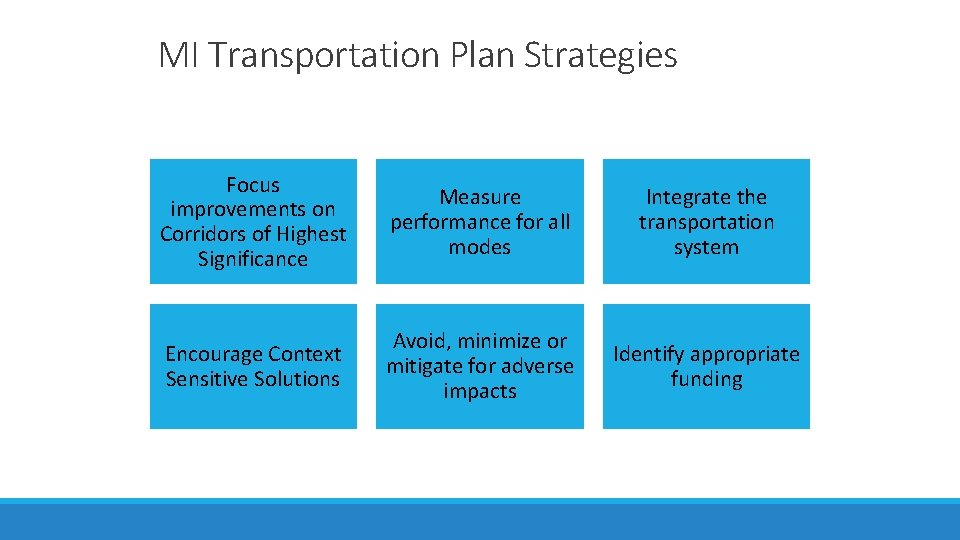
MI Transportation Plan Strategies Focus improvements on Corridors of Highest Significance Measure performance for all modes Integrate the transportation system Encourage Context Sensitive Solutions Avoid, minimize or mitigate for adverse impacts Identify appropriate funding
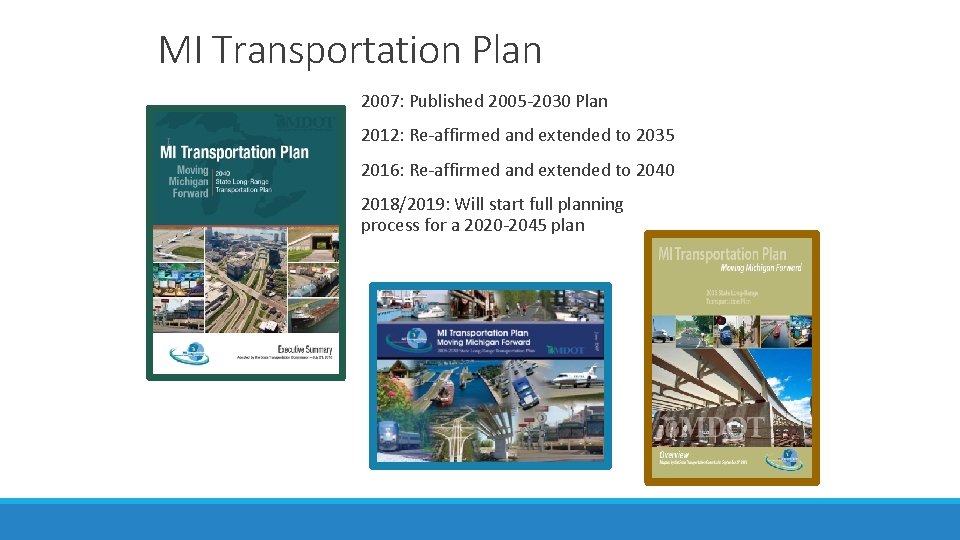
MI Transportation Plan 2007: Published 2005‐ 2030 Plan 2012: Re‐affirmed and extended to 2035 2016: Re‐affirmed and extended to 2040 2018/2019: Will start full planning process for a 2020‐ 2045 plan
- Slides: 69