
Mc GrawHillIrwin Copyright 2013 by The Mc GrawHill
Mc. Graw-Hill/Irwin Copyright © 2013 by The Mc. Graw-Hill Companies, Inc. All rights reserved.
Part 5 DELIVERING AND PERFORMING SERVICE 11 -2
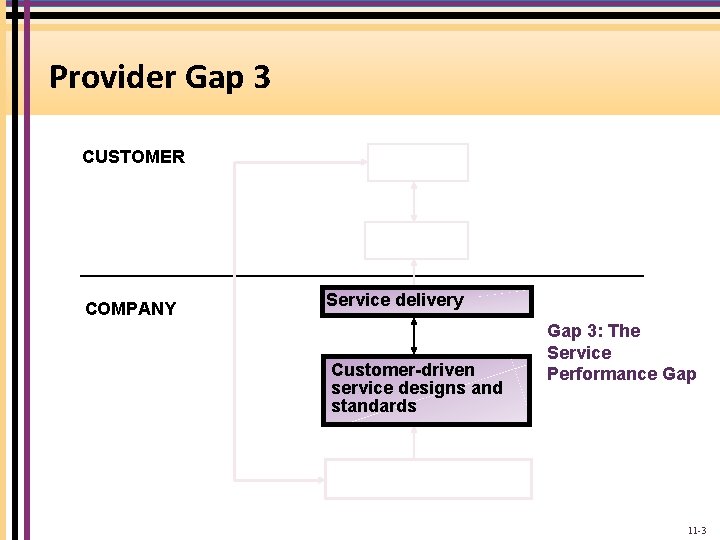
Provider Gap 3 CUSTOMER COMPANY Service delivery Customer-driven service designs and standards Gap 3: The Service Performance Gap 11 -3
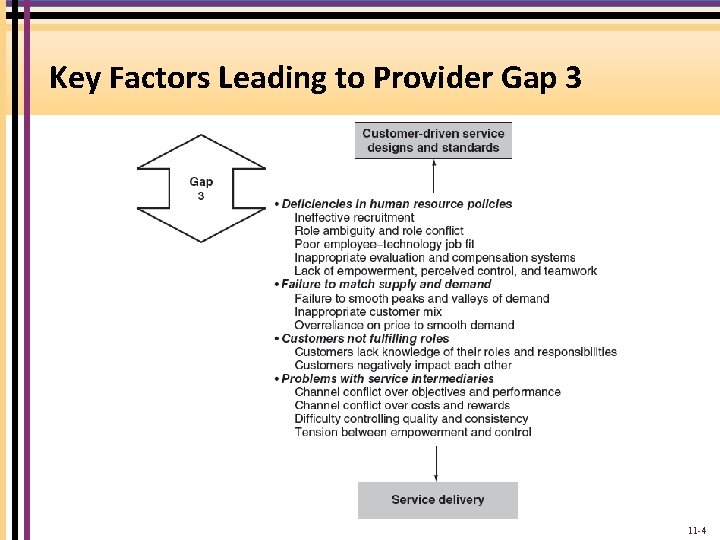
Key Factors Leading to Provider Gap 3 11 -4
Employees’ Roles in Service Delivery Chapter 11 § Service Culture § The Critical Importance of Service Employees § Boundary-Spanning Roles § Strategies for Delivering Service Quality Through People § Customer-Oriented Service Delivery 11 -5
Objectives for Chapter 11: Employees’ Roles in Service Delivery § Demonstrate the importance of creating a service culture in which providing excellent service to both internal and external customers is a way of life. § Illustrate the pivotal role of service employees in creating customer satisfaction and service quality. § Identify the challenges inherent in boundary-spanning roles. § Provide examples of strategies for creating customer-oriented service delivery through hiring the right people, developing employees to deliver service quality, providing needed support systems, and retaining the best service employees. 11 -6
Service Culture “A culture where an appreciation for good service exists, and where giving good service to internal as well as ultimate, external customers, is considered a natural way of life and one of the most important norms by everyone in the organization. ” - Christian Grönroos 11 -7
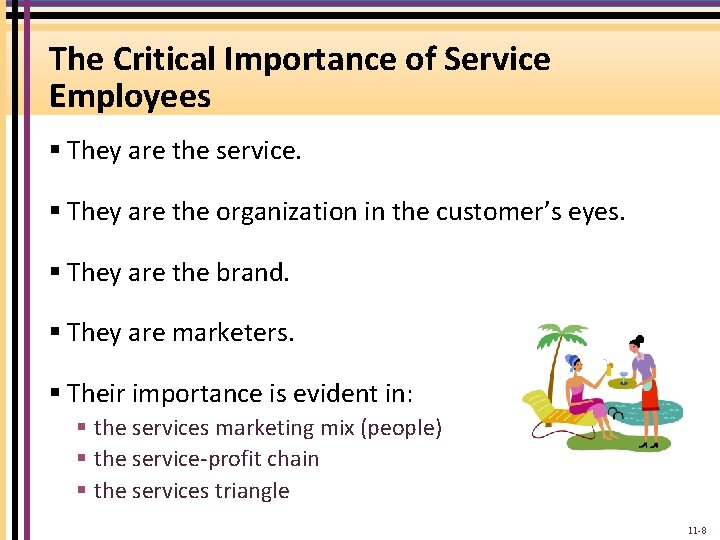
The Critical Importance of Service Employees § They are the service. § They are the organization in the customer’s eyes. § They are the brand. § They are marketers. § Their importance is evident in: § the services marketing mix (people) § the service-profit chain § the services triangle 11 -8
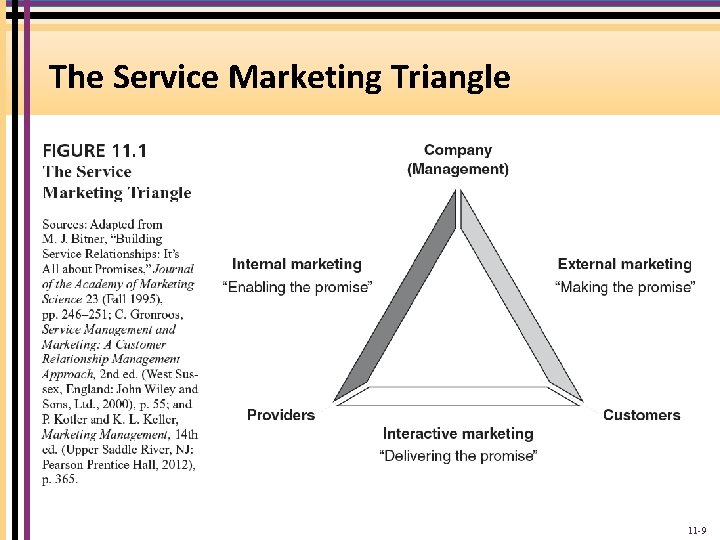
The Service Marketing Triangle 11 -9
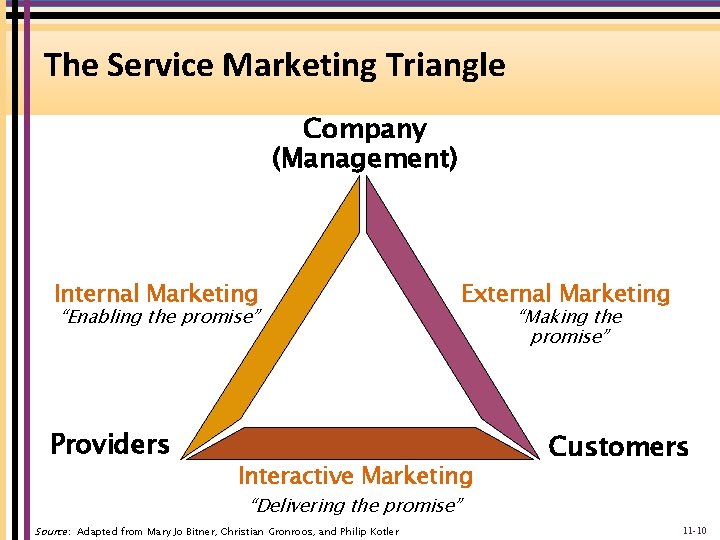
The Service Marketing Triangle Company (Management) Internal Marketing “Enabling the promise” Providers External Marketing Interactive Marketing “Making the promise” Customers “Delivering the promise” Source: Adapted from Mary Jo Bitner, Christian Gronroos, and Philip Kotler 11 -10
Aligning the Triangle § Organizations that seek to provide consistently high levels of service excellence will continuously work to align the three sides of the triangle. § Aligning the sides of the triangle is an ongoing process. 11 -11
Services Marketing Triangle Applications Exercise § Focus on a service organization. In the context you are focusing on, who occupies each of the three points of the triangle? § How is each type of marketing being carried out currently? § Are three sides of the triangle well aligned? § Are there specific challenges or barriers in any of the three areas? 11 -12
Making Promises § Understanding customer needs § Managing expectations § Traditional marketing communications § Sales and promotion § Advertising § Internet and web site communication 11 -13
Keeping Promises § Service delivery § Reliability, responsiveness, empathy, assurance, tangibles, recovery, flexibility § Face-to-face, telephone & online interactions § The Customer Experience § Customer interactions with sub-contractors or business partners § The “moment of truth” 11 -14
Enabling Promises § Hiring the right people § Training and developing people to deliver service § Employee empowerment § Support systems § Appropriate technology and equipment § Rewards and incentives 11 -15
Ways to Use the Services Marketing Triangle § Overall Strategic Assessment § How is the service organization doing on all three sides of the triangle? § Where are the weaknesses? § What are the strengths? § Specific Service Implementation § What is being promoted and by whom? § How will it be delivered and by whom? § Are the supporting systems in place to deliver the promised service? 11 -16
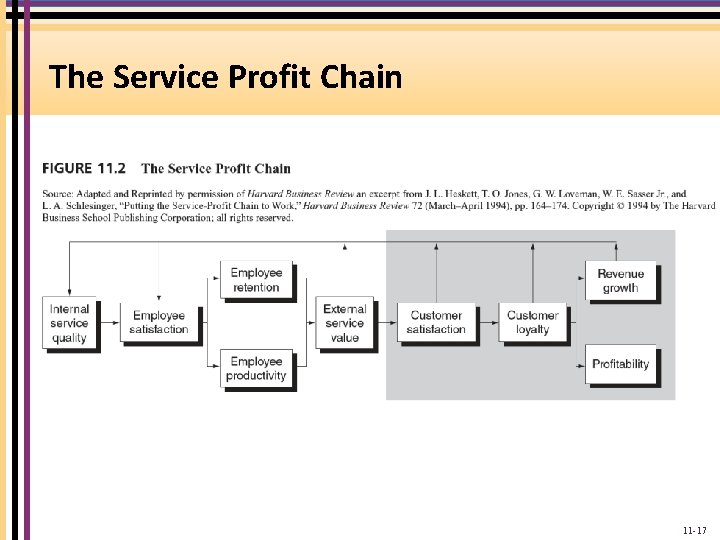
The Service Profit Chain 11 -17
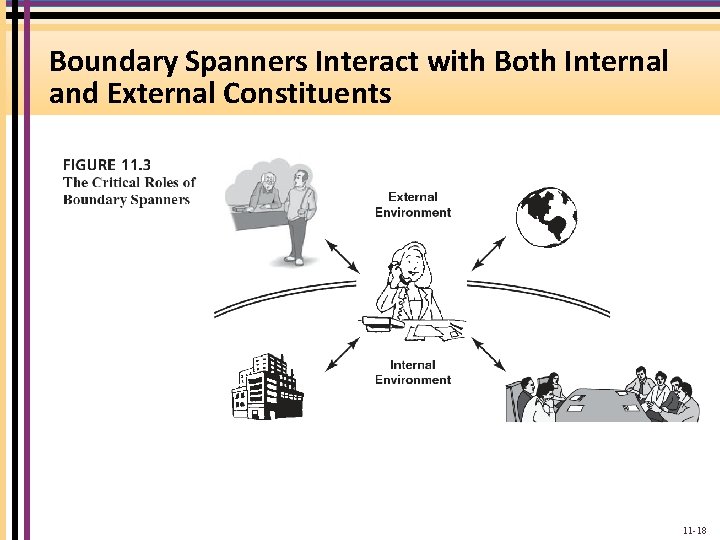
Boundary Spanners Interact with Both Internal and External Constituents 11 -18
Boundary-spanning Roles § Boundary spanners: § Provide a critical link between the external customer environment and the internal operations of the organization § Serve a critical function in understanding, filtering, interpreting information and resources to and from the organization and its external constituencies § High stress!!! 11 -19
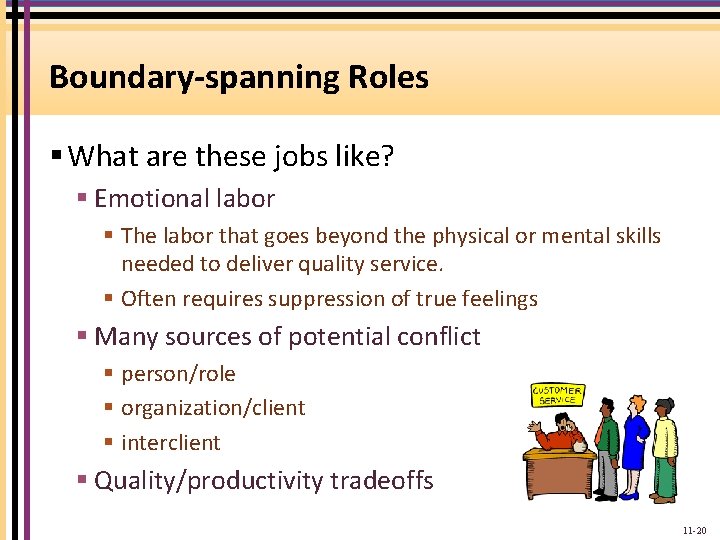
Boundary-spanning Roles § What are these jobs like? § Emotional labor § The labor that goes beyond the physical or mental skills needed to deliver quality service. § Often requires suppression of true feelings § Many sources of potential conflict § person/role § organization/client § interclient § Quality/productivity tradeoffs 11 -20
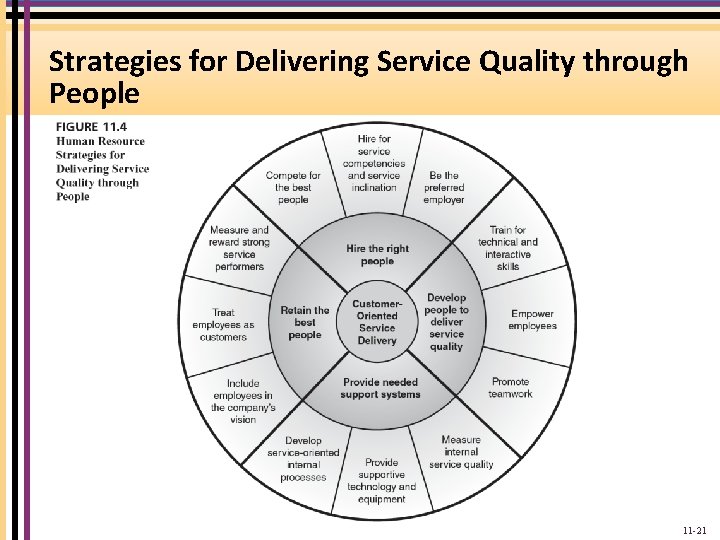
Strategies for Delivering Service Quality through People 11 -21
Strategies for Delivering Service Quality through People § Hire the right people § Compete for the best people § Hire for service competencies and service inclination § Be the preferred employer § Develop people to deliver service quality § Train for technical and interactive skills § Empower employees § Promote teamwork 11 -22
Benefits and Costs of Empowerment § Benefits: § Quicker responses to customer needs during service delivery § Quicker responses to dissatisfied customers during service recovery § Employees feel better about their jobs and themselves § Employees tend to interact with warmth/enthusiasm § Empowered employees are a great source of ideas § Great word-of-mouth advertising from customers § Costs: § Potentially greater dollar investment in selection and training § Higher labor costs § Potentially slower or inconsistent service delivery § May violate customers’ perceptions of fair play § Employees may “give away the store” or make bad decisions 11 -23
Strategies for Delivering Service Quality through People (continued) § Provide needed support systems § Measure internal service quality § Provide supportive technology and equipment § Develop service-oriented internal processes § Retain the best people § Include employees in the company’s vision § Treat employees as customers § Measure and reward strong service performers 11 -24
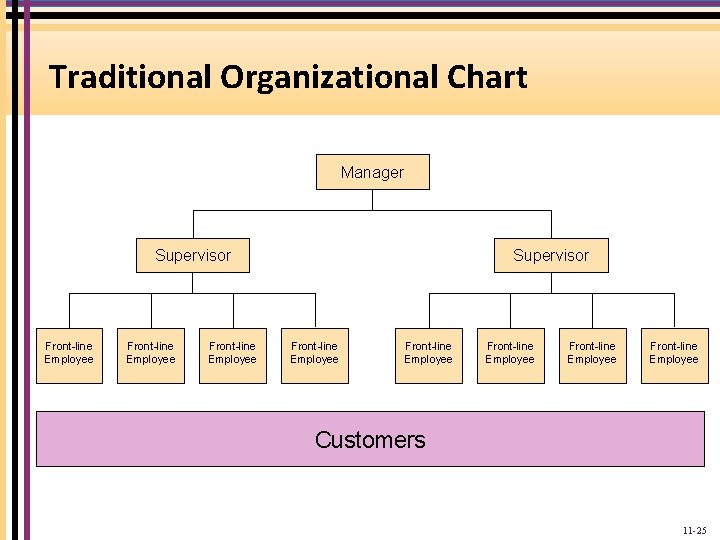
Traditional Organizational Chart Manager Supervisor Front-line Employee Front-line Employee Customers 11 -25
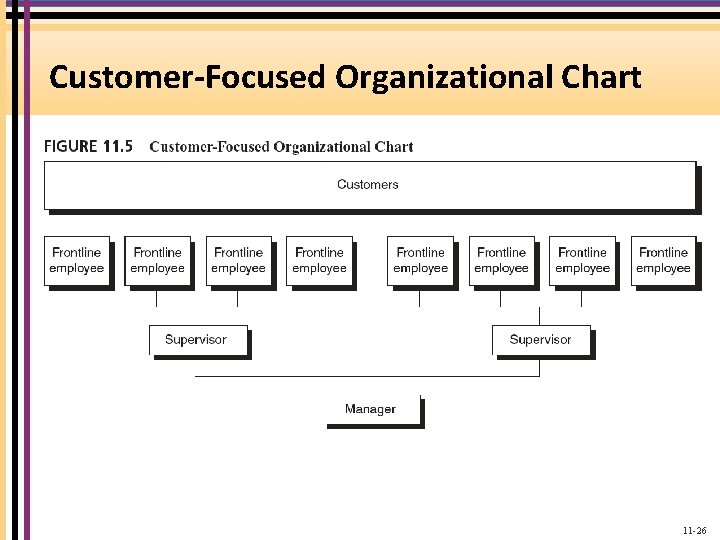
Customer-Focused Organizational Chart 11 -26
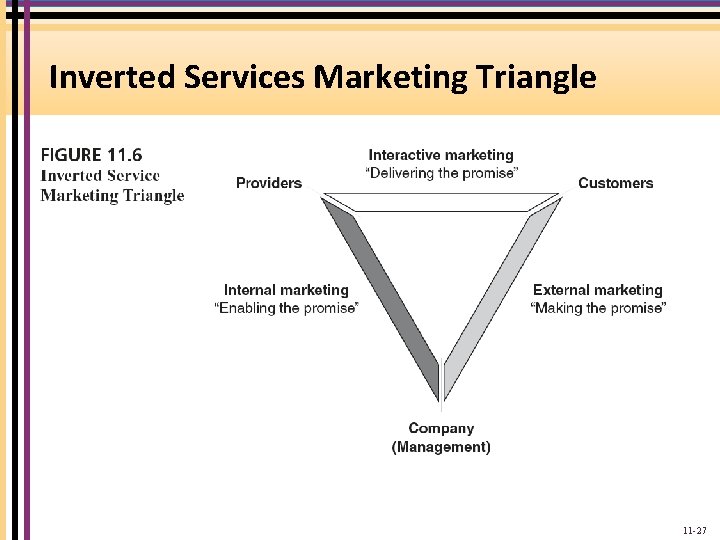
Inverted Services Marketing Triangle 11 -27
- Slides: 27