
Mc Carthyism Background Communism in America During the

Mc. Carthyism
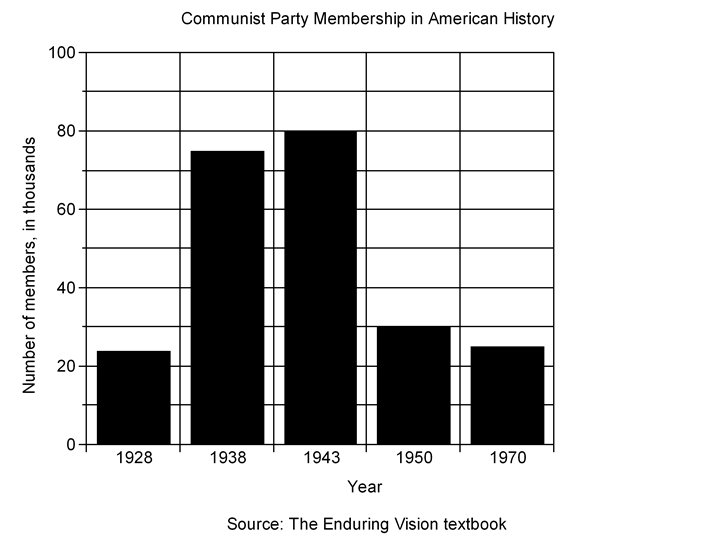
Background: Communism in America �During the Great Depression, tens of thousands of Americans had joined the Communist Party �After WWII, membership declined
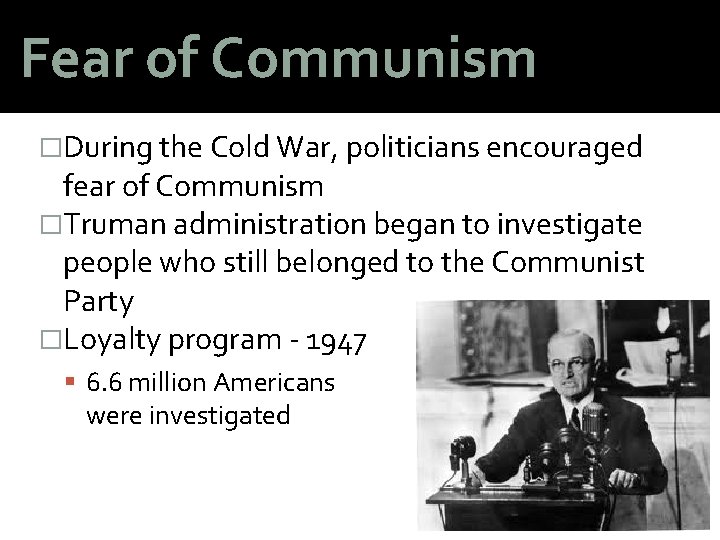
Fear of Communism �During the Cold War, politicians encouraged fear of Communism �Truman administration began to investigate people who still belonged to the Communist Party �Loyalty program - 1947 6. 6 million Americans were investigated
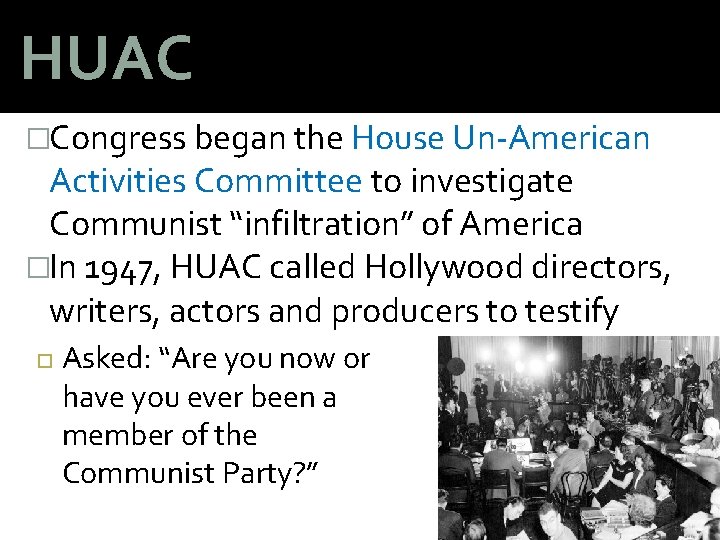
HUAC �Congress began the House Un-American Activities Committee to investigate Communist “infiltration” of America �In 1947, HUAC called Hollywood directors, writers, actors and producers to testify Asked: “Are you now or have you ever been a member of the Communist Party? ”
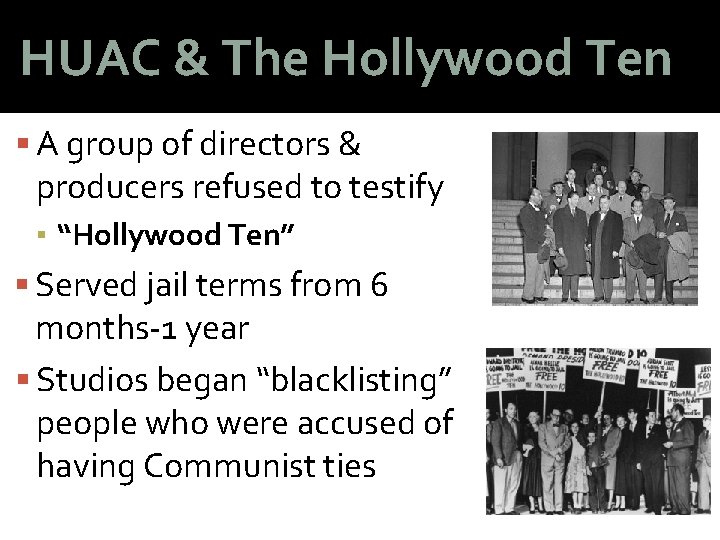
HUAC & The Hollywood Ten A group of directors & producers refused to testify ▪ “Hollywood Ten” Served jail terms from 6 months-1 year Studios began “blacklisting” people who were accused of having Communist ties
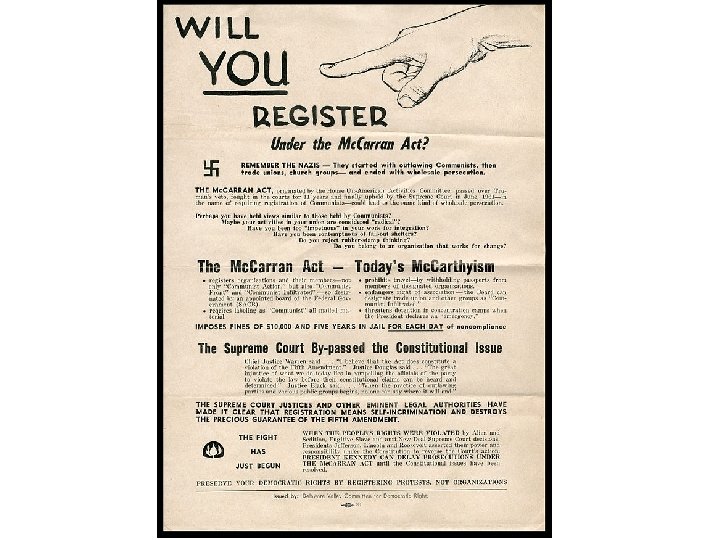
Mc. Carran Act (1950) �Unlawful to promote any action that would lead to a totalitarian dictatorship Immigrants deported if they were suspected Internment camps for “dangerous or disloyal” people �Truman vetoed it… “One of the most un-American acts I have ever witnessed in my political career” �But Congress passed it over his veto
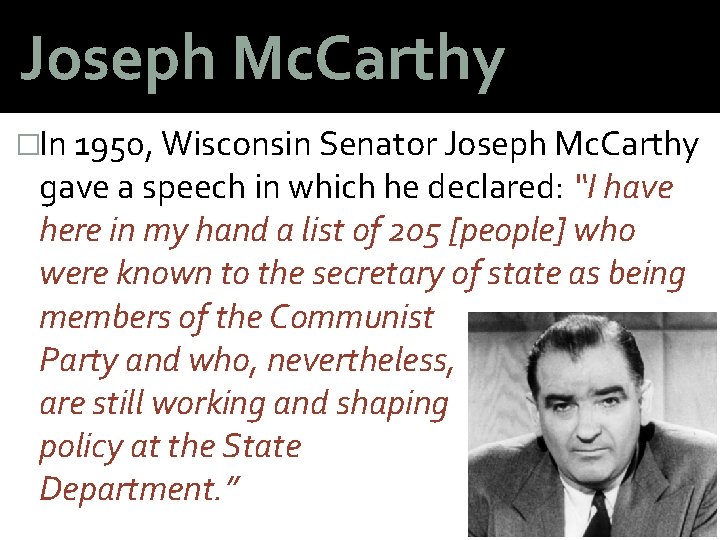
Joseph Mc. Carthy �In 1950, Wisconsin Senator Joseph Mc. Carthy gave a speech in which he declared: “I have here in my hand a list of 205 [people] who were known to the secretary of state as being members of the Communist Party and who, nevertheless, are still working and shaping policy at the State Department. ”
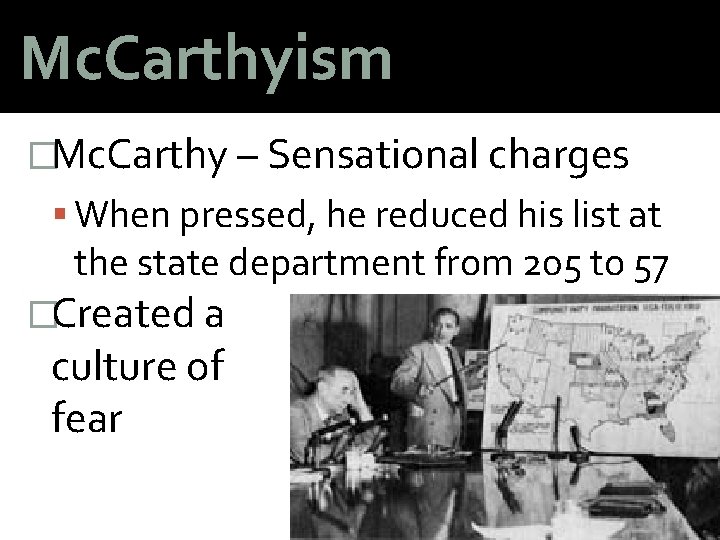
Mc. Carthyism �Mc. Carthy – Sensational charges When pressed, he reduced his list at the state department from 205 to 57 �Created a culture of fear
How to spot a communist �https: //www. youtube. com/watch? v=DCR 9 v. E 0 c. M-U
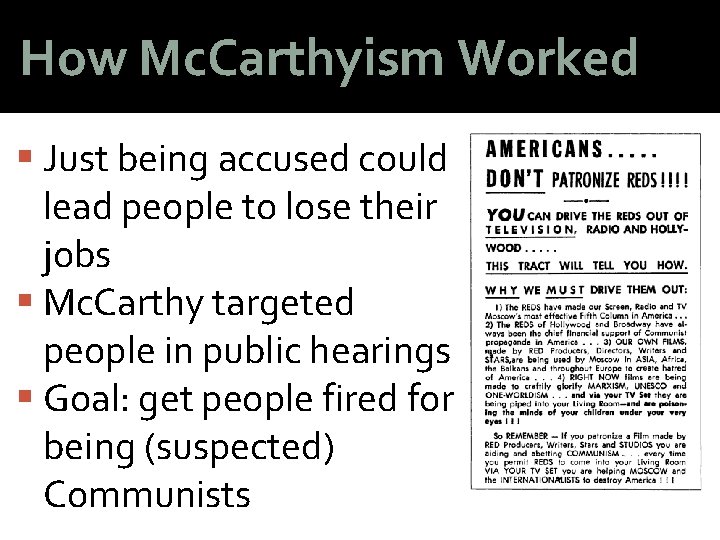
How Mc. Carthyism Worked Just being accused could lead people to lose their jobs Mc. Carthy targeted people in public hearings Goal: get people fired for being (suspected) Communists
Why did people go along with it? clip � What might be the risk of speaking out against him? � What is wrong with these actions? � Why might some argue that HUAC itself was un-American?
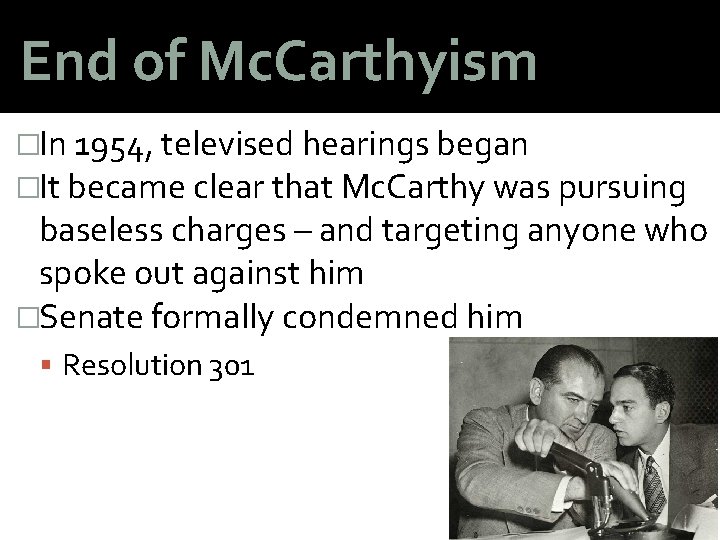
End of Mc. Carthyism �In 1954, televised hearings began �It became clear that Mc. Carthy was pursuing baseless charges – and targeting anyone who spoke out against him �Senate formally condemned him Resolution 301
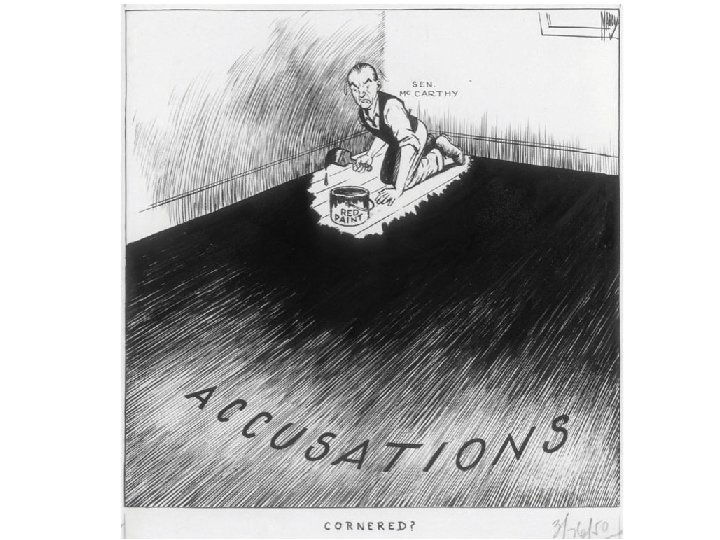
Mc. Carthyism Today �Mc. Carthyism is a term now used for witch hunts, typically those that are politically motivated.
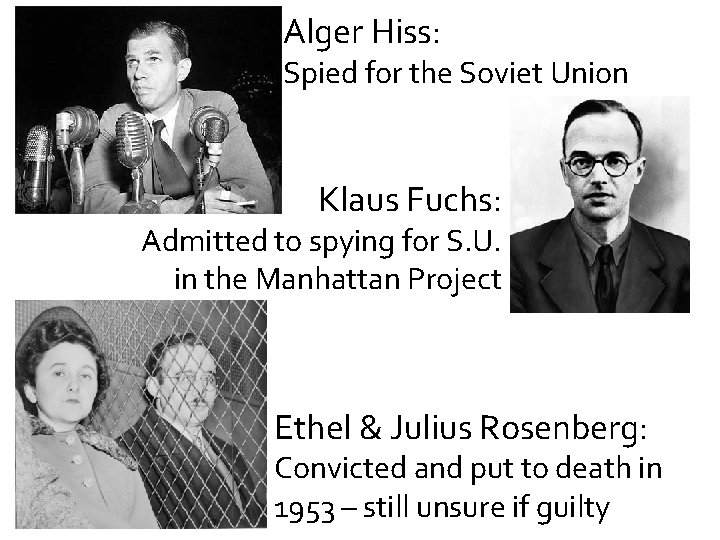
Alger Hiss: Spied for the Soviet Union Klaus Fuchs: Admitted to spying for S. U. in the Manhattan Project Ethel & Julius Rosenberg: Convicted and put to death in 1953 – still unsure if guilty
- Slides: 17