
MBE Growth of Graded Structures for Polarized Electron
MBE Growth of Graded Structures for Polarized Electron Emitters Aaron Moy SVT Associates, Eden Prairie, Minnesota in collaboration with SLAC Polarized Photocathode Research Collaboration (PPRC): T. Maruyama, F. Zhou and A. Brachmann Acknowledgements: US Dept. of Energy SBIR contract #DE-FG 02 -07 ER 86329 (Phase I) contract #DE-FG 02 -07 ER 86330 (Phase I and II)
Outline • Introduction to Molecular Beam Epitaxy • Ga. As. P Photocathode • Al. Ga. As. Sb Photocathode • Al. Ga. As/Ga. As Internal Gradient Photocathode • Conclusion

Epitaxy Growth of thin film crystalline material where crystallinity is preserved, “single crystal” Atomic Flux Bare (100) III-V surface, such as Ga. As Deposition of crystal source material (e. g. Ga, As atoms)
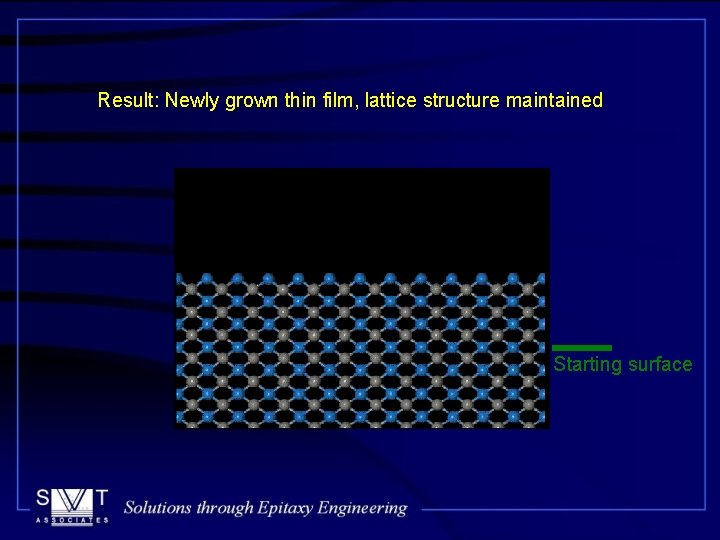
Result: Newly grown thin film, lattice structure maintained Starting surface
Molecular Beam Epitaxy (MBE) • Growth in high vacuum chamber • Ultimate vacuum < 10 -10 torr • Pressure during growth < 10 -6 torr • Elemental source material • High purity Ga, In, Al, As, P, Sb (99. 9999%) • Sources individually evaporated in high temperature cells • In situ monitoring, calibration • Probing of surface structure during growth • Real time feedback of growth rate

Molecular Beam Epitaxy Growth Apparatus:
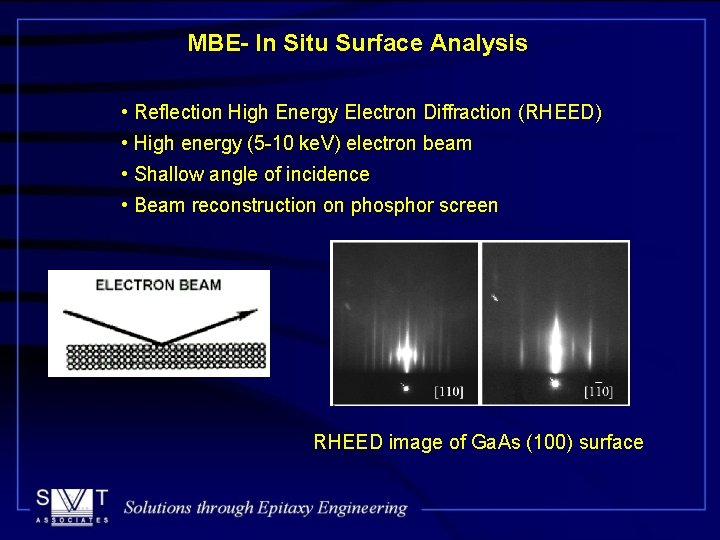
MBE- In Situ Surface Analysis • Reflection High Energy Electron Diffraction (RHEED) • High energy (5 -10 ke. V) electron beam • Shallow angle of incidence • Beam reconstruction on phosphor screen RHEED image of Ga. As (100) surface
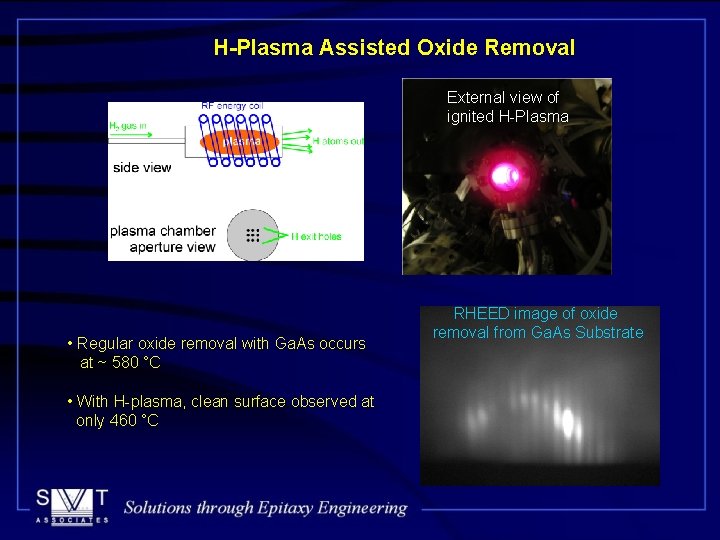
H-Plasma Assisted Oxide Removal External view of ignited H-Plasma • Regular oxide removal with Ga. As occurs at ~ 580 °C • With H-plasma, clean surface observed at only 460 °C RHEED image of oxide removal from Ga. As Substrate
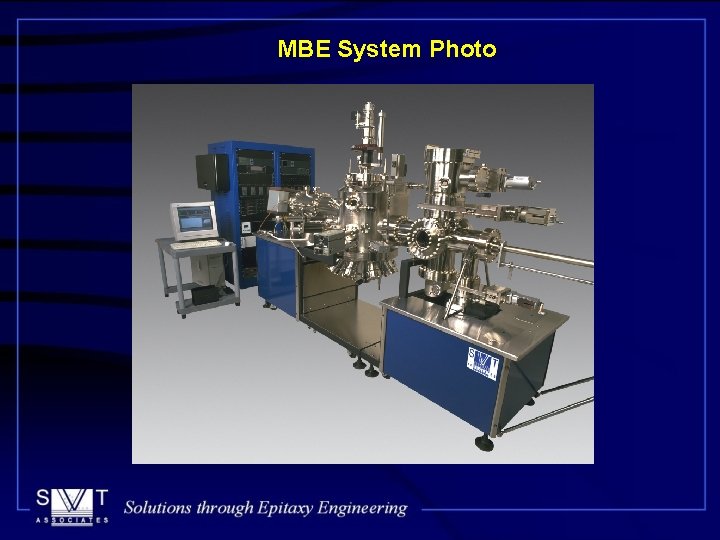
MBE System Photo
MBE- Summary • Ultra high vacuum, high purity layers • No chemical byproducts created at growth surface • High lateral uniformity (< 1% deviation) • Growth rates 0. 1 -10 micron/hr • High control of composition and thickness • Lower growth temperatures than MOCVD • In situ monitoring and feedback • Mature production technology
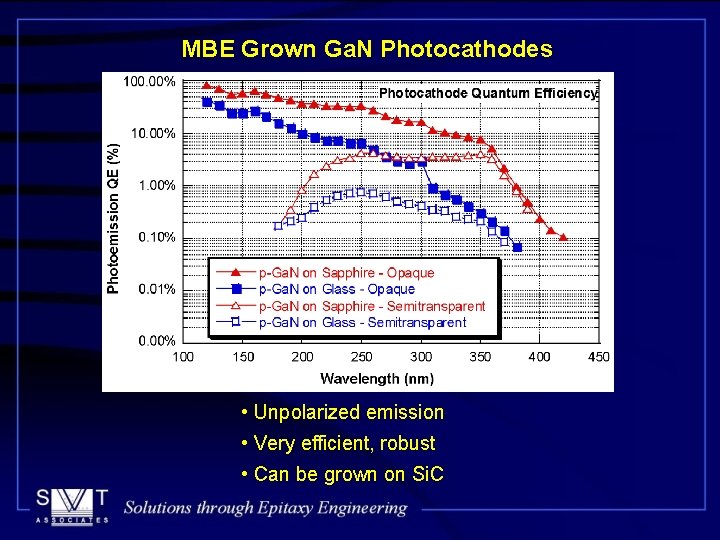
MBE Grown Ga. N Photocathodes • Unpolarized emission • Very efficient, robust • Can be grown on Si. C
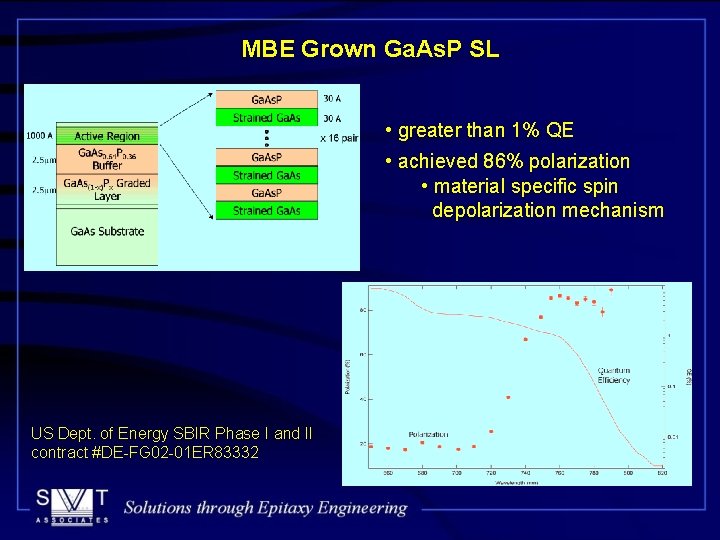
MBE Grown Ga. As. P SL • greater than 1% QE • achieved 86% polarization • material specific spin depolarization mechanism US Dept. of Energy SBIR Phase I and II contract #DE-FG 02 -01 ER 83332
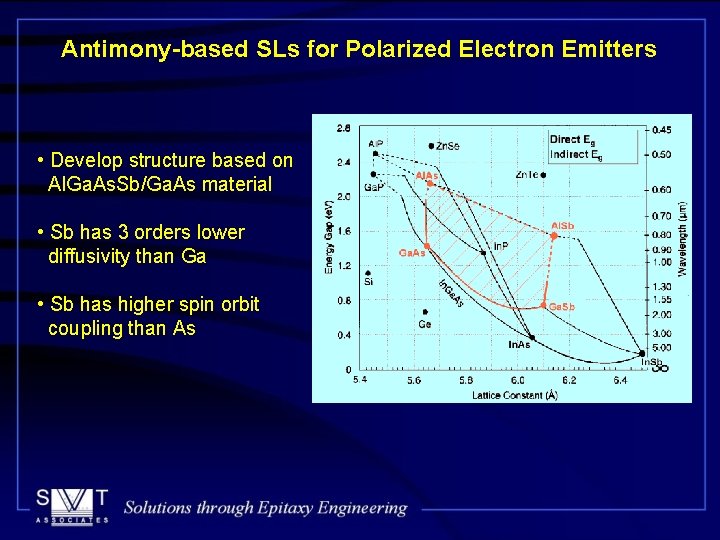
Antimony-based SLs for Polarized Electron Emitters • Develop structure based on Al. Ga. As. Sb/Ga. As material • Sb has 3 orders lower diffusivity than Ga • Sb has higher spin orbit coupling than As
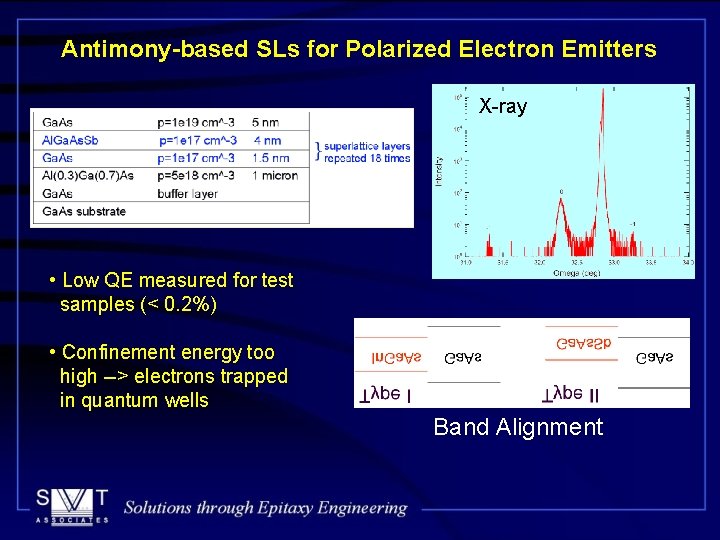
Antimony-based SLs for Polarized Electron Emitters X-ray • Low QE measured for test samples (< 0. 2%) • Confinement energy too high --> electrons trapped in quantum wells Band Alignment
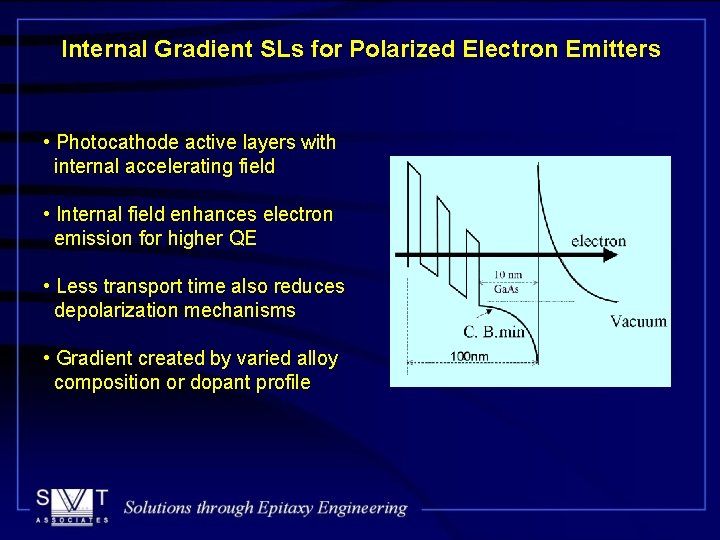
Internal Gradient SLs for Polarized Electron Emitters • Photocathode active layers with internal accelerating field • Internal field enhances electron emission for higher QE • Less transport time also reduces depolarization mechanisms • Gradient created by varied alloy composition or dopant profile
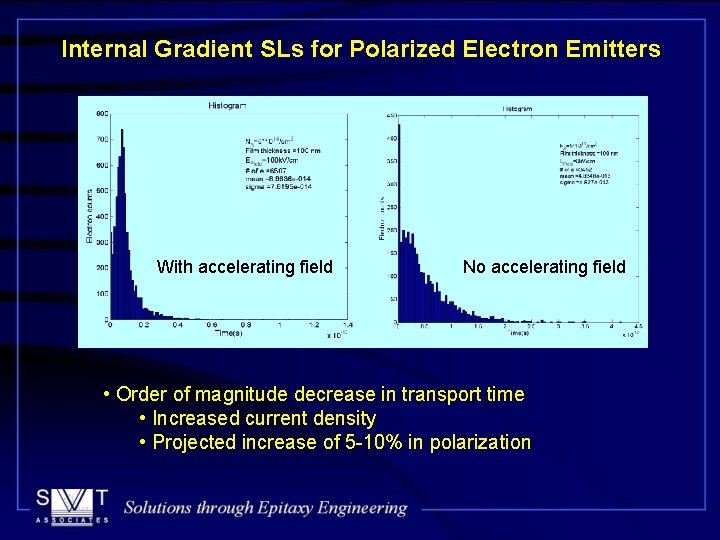
Internal Gradient SLs for Polarized Electron Emitters With accelerating field No accelerating field • Order of magnitude decrease in transport time • Increased current density • Projected increase of 5 -10% in polarization
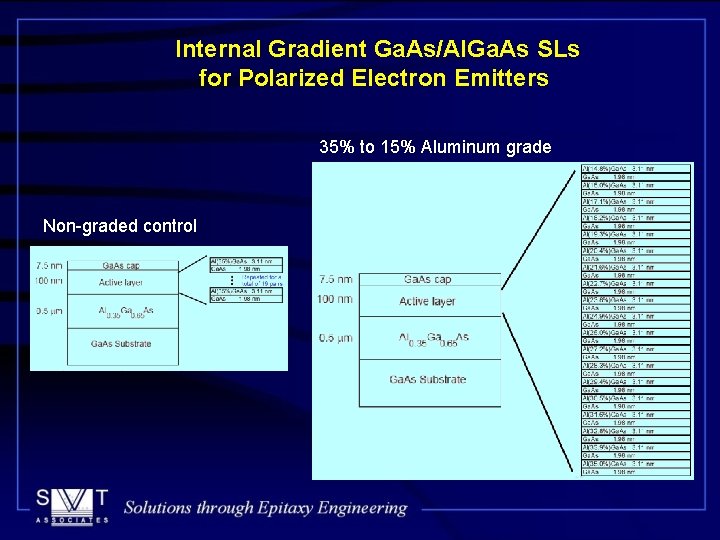
Internal Gradient Ga. As/Al. Ga. As SLs for Polarized Electron Emitters 35% to 15% Aluminum grade Non-graded control
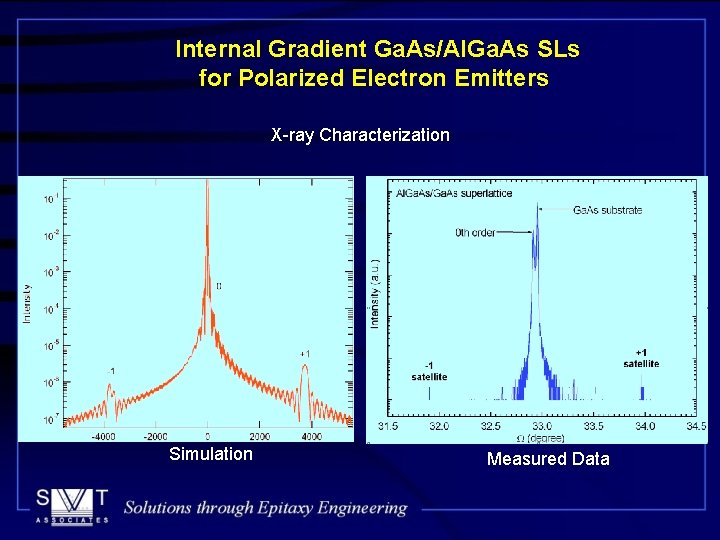
Internal Gradient Ga. As/Al. Ga. As SLs for Polarized Electron Emitters X-ray Characterization Simulation Measured Data
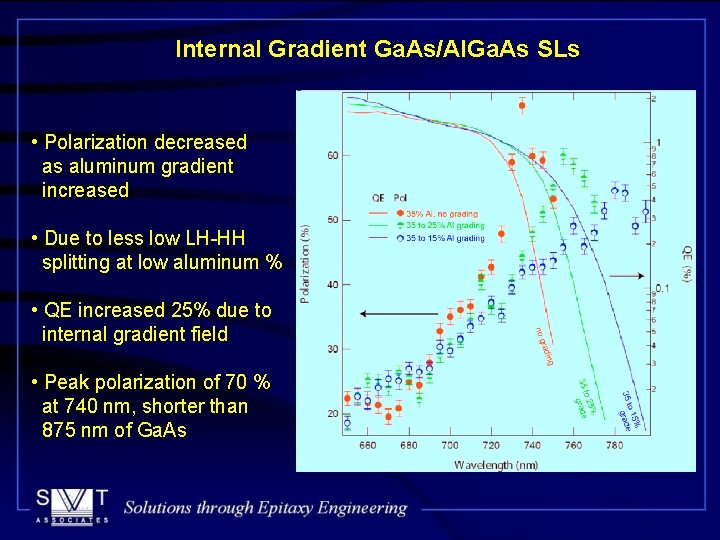
Internal Gradient Ga. As/Al. Ga. As SLs • Polarization decreased as aluminum gradient increased • Due to less low LH-HH splitting at low aluminum % • QE increased 25% due to internal gradient field • Peak polarization of 70 % at 740 nm, shorter than 875 nm of Ga. As
SBIR Phase II Internal Gradient SLs Next Steps: • Further graded Al. Ga. As/Ga. As photocathodes • Linear grading versus step grading • Doping gradient • Vary the doping level throughout the active region to generate the accelerating field • Doping gradient applied to Ga. As. P SL structure
Conclusion • Applying capabilities of MBE to polarized photocathode emitters • Al. Ga. As. Sb photocathodes • SBIR Phase II for internal gradient photocathodes • Increase current extraction • Increase polarization
- Slides: 21