
MB 6025 MB 7226 TECHNOLOGY COMMERCIALIZATION Stages and
MB 6025 -MB 7226 TECHNOLOGY COMMERCIALIZATION Stages and Models of Technology Commercialization

OVERVIEW
Konsep Penting • Technology: stock of relevant knowledge that allows new techniques to be derived = proper set of knowledge • Technology classification: product, process and management • Technology commercialization: moving technology to a profitable position

STAGES OF TECHNOLOGY COMMERCIALIZATION
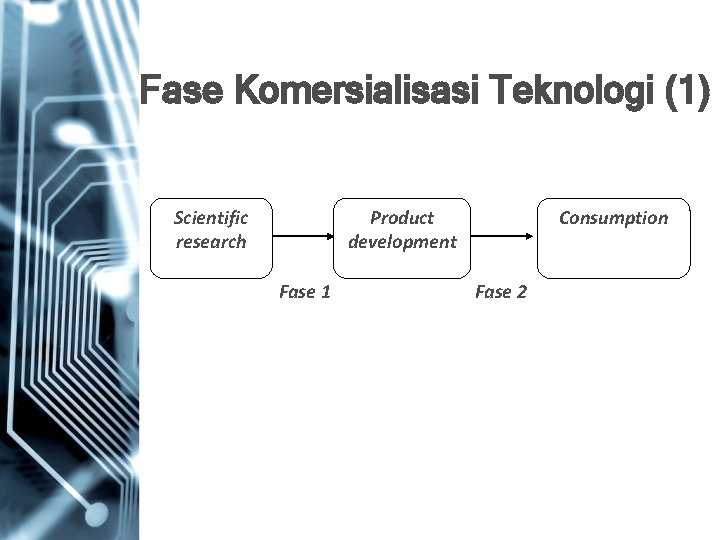
Fase Komersialisasi Teknologi (1) Scientific research Product development Fase 1 Consumption Fase 2
Fase Komersialisasi Teknologi (2) 1. 2. 3. 4. 5. Fase imagining Fase incubating Fase demonstrating Fase promoting Fase sustaining
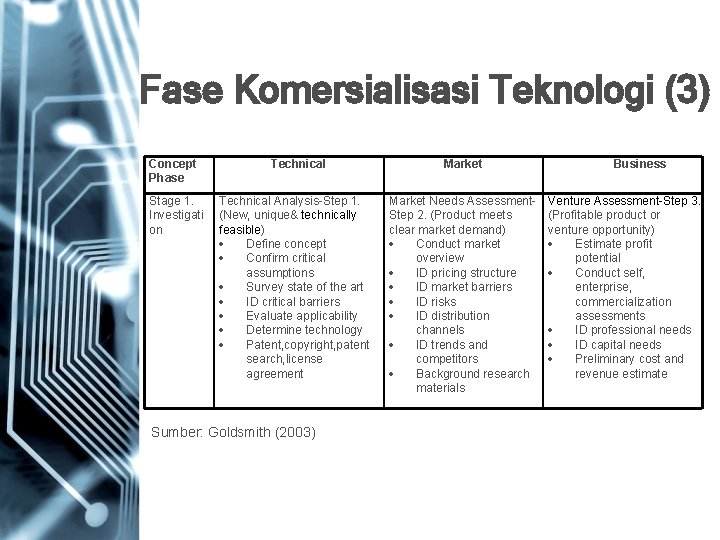
Fase Komersialisasi Teknologi (3) Concept Phase Technical Market Stage 1. Investigati on Technical Analysis-Step 1. (New, unique& technically feasible) Define concept Confirm critical assumptions Survey state of the art ID critical barriers Evaluate applicability Determine technology Patent, copyright, patent search, license agreement Market Needs Assessment. Step 2. (Product meets clear market demand) Conduct market overview ID pricing structure ID market barriers ID risks ID distribution channels ID trends and competitors Background research materials Sumber: Goldsmith (2003) Business Venture Assessment-Step 3. (Profitable product or venture opportunity) Estimate profit potential Conduct self, enterprise, commercialization assessments ID professional needs ID capital needs Preliminary cost and revenue estimate
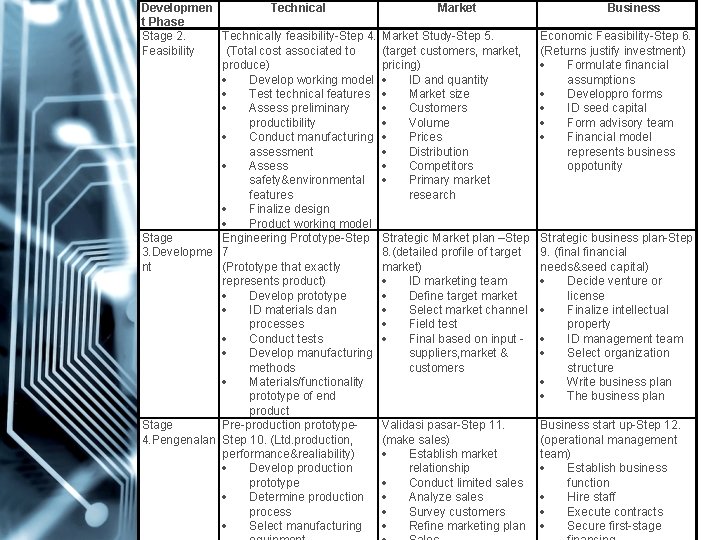
Developmen Technical Market t Phase Stage 2. Technically feasibility-Step 4. Market Study-Step 5. Feasibility (Total cost associated to (target customers, market, produce) pricing) Develop working model ID and quantity Test technical features Market size Assess preliminary Customers productibility Volume Conduct manufacturing Prices assessment Distribution Assess Competitors safety&environmental Primary market features research Finalize design Product working model Stage Engineering Prototype-Step Strategic Market plan –Step 3. Developme 7 8. (detailed profile of target nt (Prototype that exactly market) represents product) ID marketing team Develop prototype Define target market ID materials dan Select market channel processes Field test Conduct tests Final based on input - Develop manufacturing suppliers, market & methods customers Materials/functionality prototype of end product Stage Pre-production prototype. Validasi pasar-Step 11. 4. Pengenalan Step 10. (Ltd. production, (make sales) performance&realiability) Establish market Develop production relationship prototype Conduct limited sales Determine production Analyze sales process Survey customers Select manufacturing Refine marketing plan Business Economic Feasibility-Step 6. (Returns justify investment) Formulate financial assumptions Developpro forms ID seed capital Form advisory team Financial model represents business oppotunity Strategic business plan-Step 9. (final financial needs&seed capital) Decide venture or license Finalize intellectual property ID management team Select organization structure Write business plan The business plan Business start up-Step 12. (operational management team) Establish business function Hire staff Execute contracts Secure first-stage
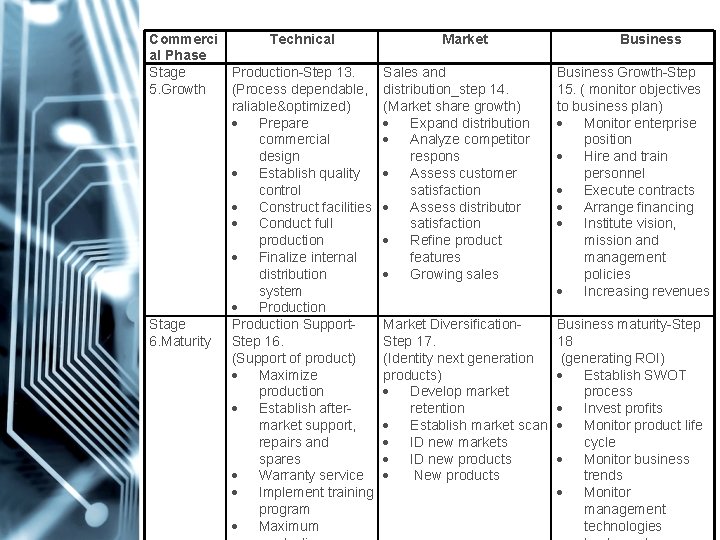
Commerci Technical al Phase Stage Production-Step 13. 5. Growth (Process dependable, raliable&optimized) Prepare commercial design Establish quality control Construct facilities Conduct full production Finalize internal distribution system Production Stage Production Support 6. Maturity Step 16. (Support of product) Maximize production Establish aftermarket support, repairs and spares Warranty service Implement training program Maximum Market Business Sales and distribution_step 14. (Market share growth) Expand distribution Analyze competitor respons Assess customer satisfaction Assess distributor satisfaction Refine product features Growing sales Business Growth-Step 15. ( monitor objectives to business plan) Monitor enterprise position Hire and train personnel Execute contracts Arrange financing Institute vision, mission and management policies Increasing revenues Market Diversification. Step 17. (Identity next generation products) Develop market retention Establish market scan ID new markets ID new products New products Business maturity-Step 18 (generating ROI) Establish SWOT process Invest profits Monitor product life cycle Monitor business trends Monitor management technologies
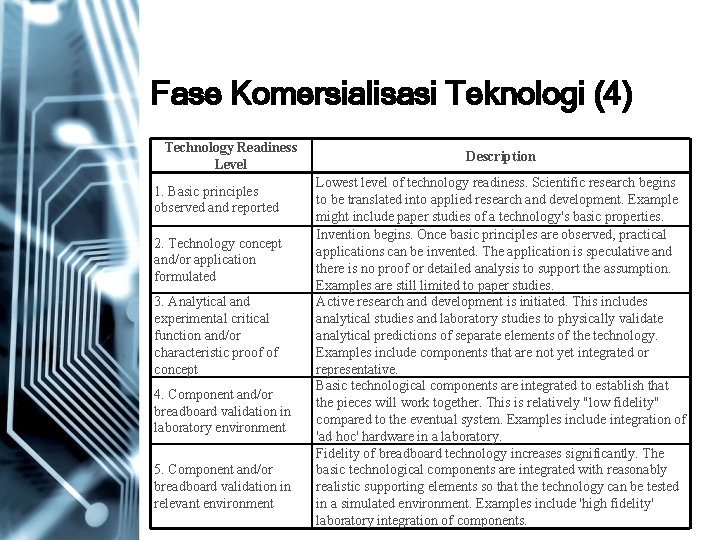
Fase Komersialisasi Teknologi (4) Technology Readiness Level 1. Basic principles observed and reported 2. Technology concept and/or application formulated 3. Analytical and experimental critical function and/or characteristic proof of concept 4. Component and/or breadboard validation in laboratory environment 5. Component and/or breadboard validation in relevant environment Description Lowest level of technology readiness. Scientific research begins to be translated into applied research and development. Example might include paper studies of a technology's basic properties. Invention begins. Once basic principles are observed, practical applications can be invented. The application is speculative and there is no proof or detailed analysis to support the assumption. Examples are still limited to paper studies. Active research and development is initiated. This includes analytical studies and laboratory studies to physically validate analytical predictions of separate elements of the technology. Examples include components that are not yet integrated or representative. Basic technological components are integrated to establish that the pieces will work together. This is relatively "low fidelity" compared to the eventual system. Examples include integration of 'ad hoc' hardware in a laboratory. Fidelity of breadboard technology increases significantly. The basic technological components are integrated with reasonably realistic supporting elements so that the technology can be tested in a simulated environment. Examples include 'high fidelity' laboratory integration of components.
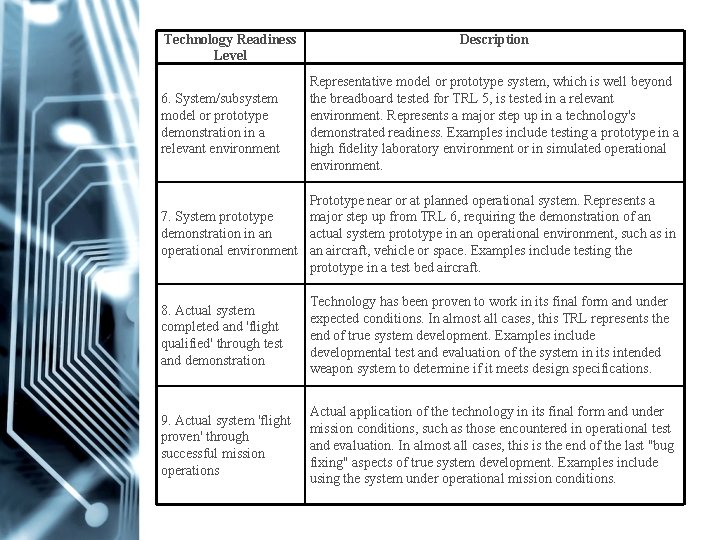
Technology Readiness Level 6. System/subsystem model or prototype demonstration in a relevant environment Description Representative model or prototype system, which is well beyond the breadboard tested for TRL 5, is tested in a relevant environment. Represents a major step up in a technology's demonstrated readiness. Examples include testing a prototype in a high fidelity laboratory environment or in simulated operational environment. Prototype near or at planned operational system. Represents a 7. System prototype major step up from TRL 6, requiring the demonstration of an demonstration in an actual system prototype in an operational environment, such as in operational environment an aircraft, vehicle or space. Examples include testing the prototype in a test bed aircraft. 8. Actual system completed and 'flight qualified' through test and demonstration Technology has been proven to work in its final form and under expected conditions. In almost all cases, this TRL represents the end of true system development. Examples include developmental test and evaluation of the system in its intended weapon system to determine if it meets design specifications. 9. Actual system 'flight proven' through successful mission operations Actual application of the technology in its final form and under mission conditions, such as those encountered in operational test and evaluation. In almost all cases, this is the end of the last "bug fixing" aspects of true system development. Examples include using the system under operational mission conditions.
MODELS OF TECHNOLOGY COMMERCIALIZATION
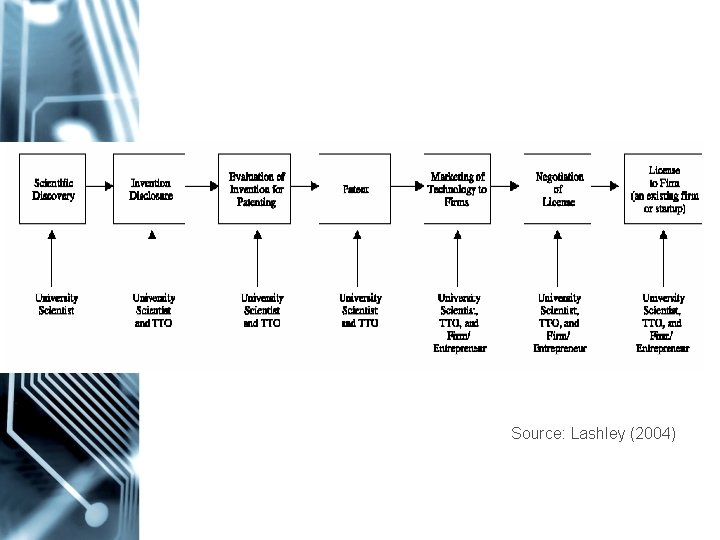
Source: Lashley (2004)
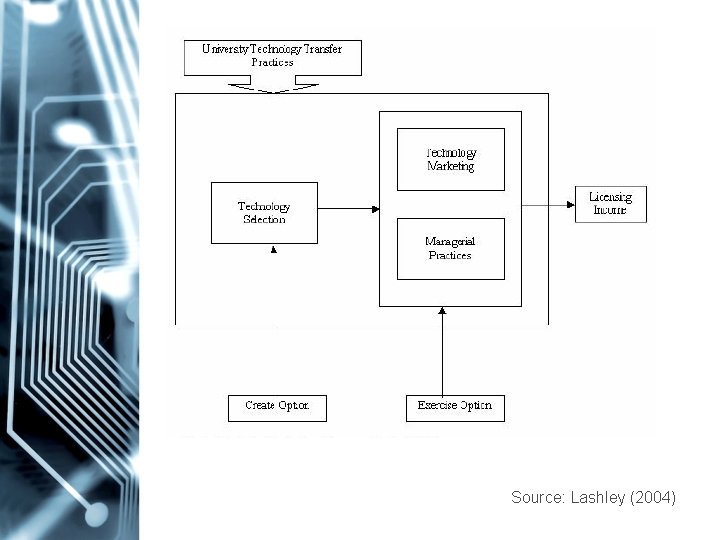
Source: Lashley (2004)
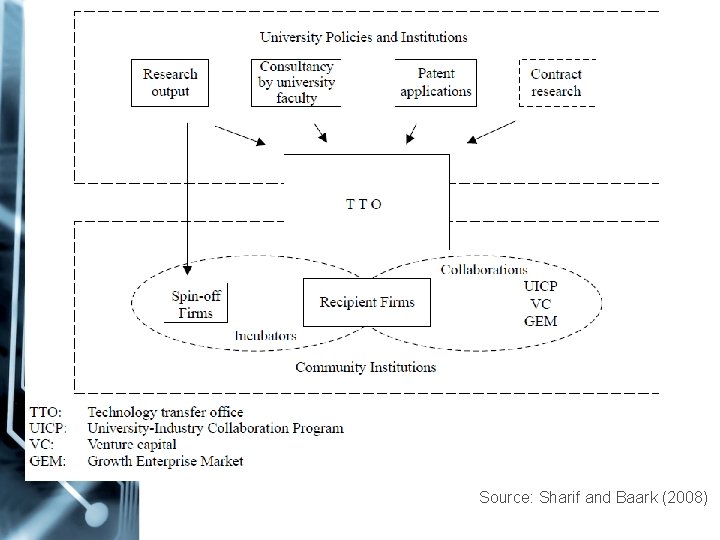
Source: Sharif and Baark (2008)
Case: IIE Mexico
Overview of IIE • Established in 1975 in Mexico • Mission: to promote and support applied research and technological development with high added value to increase the competitiveness of electrical industry and other industries having the same needs Source: Aldape (2009)
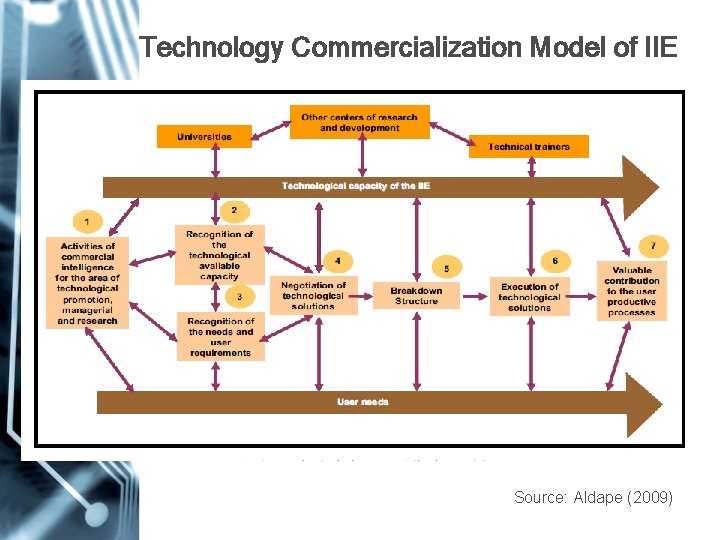
Technology Commercialization Model of IIE Source: Aldape (2009)
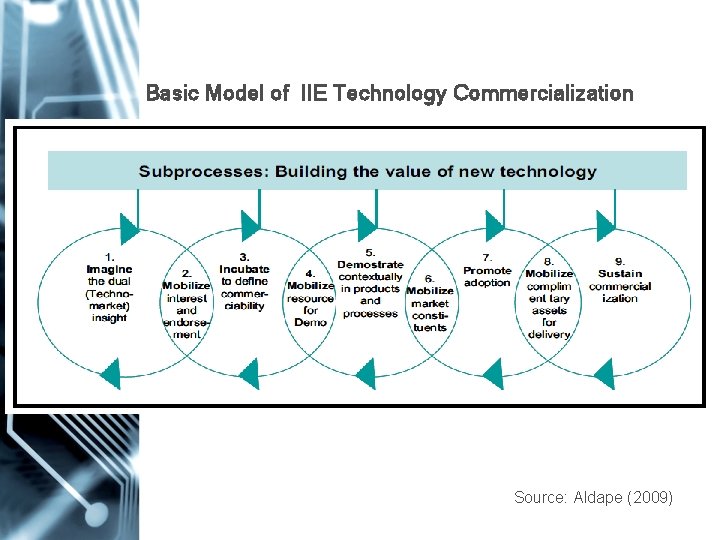
Basic Model of IIE Technology Commercialization Source: Aldape (2009)
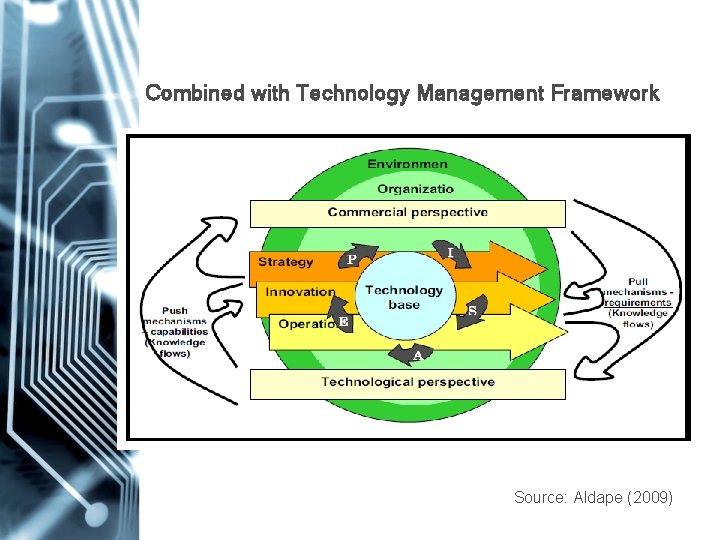
Combined with Technology Management Framework Source: Aldape (2009)
- Slides: 20