
Mayans On the Yucatan Peninsula the highly sophisticated
- Slides: 25
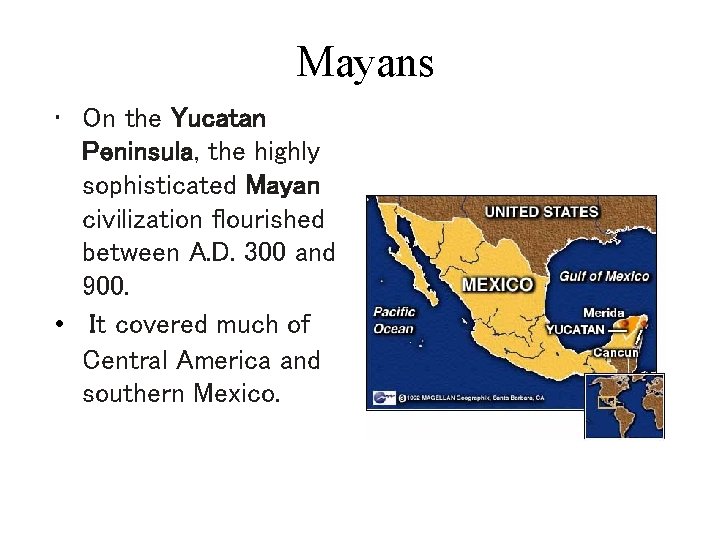
Mayans • On the Yucatan Peninsula, the highly sophisticated Mayan civilization flourished between A. D. 300 and 900. • It covered much of Central America and southern Mexico.
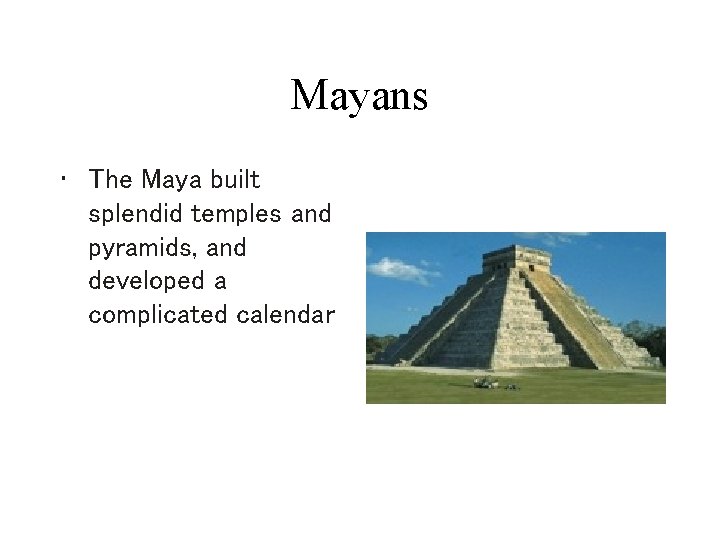
Mayans • The Maya built splendid temples and pyramids, and developed a complicated calendar
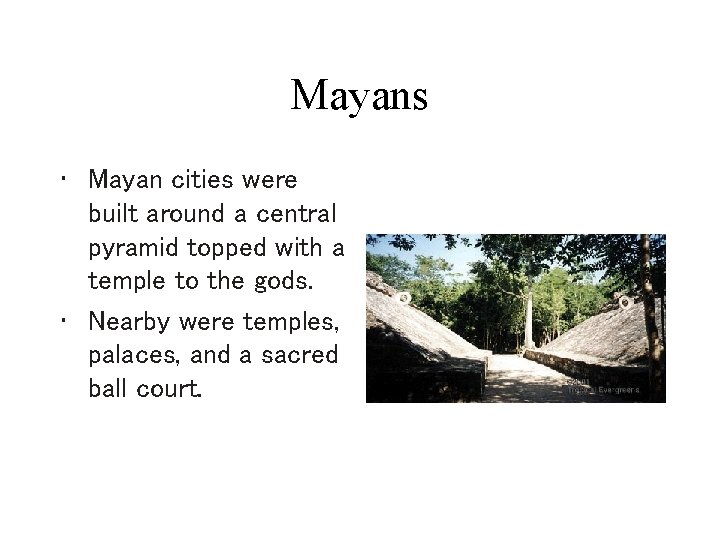
Mayans • Mayan cities were built around a central pyramid topped with a temple to the gods. • Nearby were temples, palaces, and a sacred ball court.
Mayans • Mayan civilization was composed of citystates governed by a hereditary ruling class. • The states warred on each other. • Captured nobles and war leaders were used for human sacrifice. • Other war captives were enslaved.
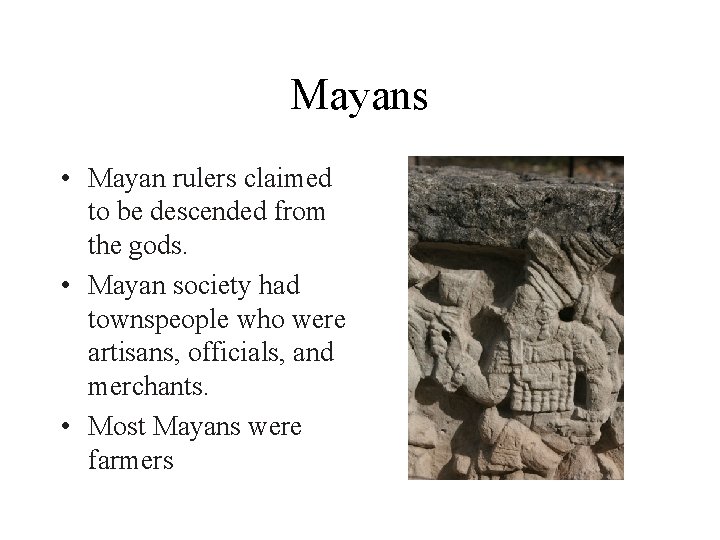
Mayans • Mayan rulers claimed to be descended from the gods. • Mayan society had townspeople who were artisans, officials, and merchants. • Most Mayans were farmers
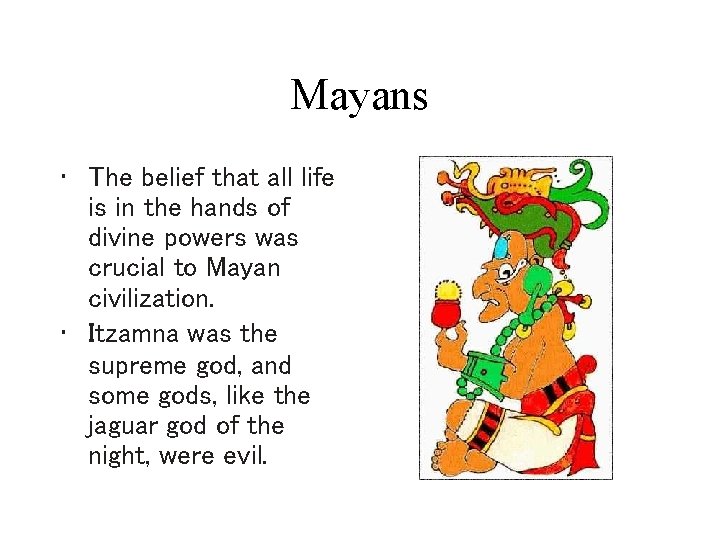
Mayans • The belief that all life is in the hands of divine powers was crucial to Mayan civilization. • Itzamna was the supreme god, and some gods, like the jaguar god of the night, were evil.
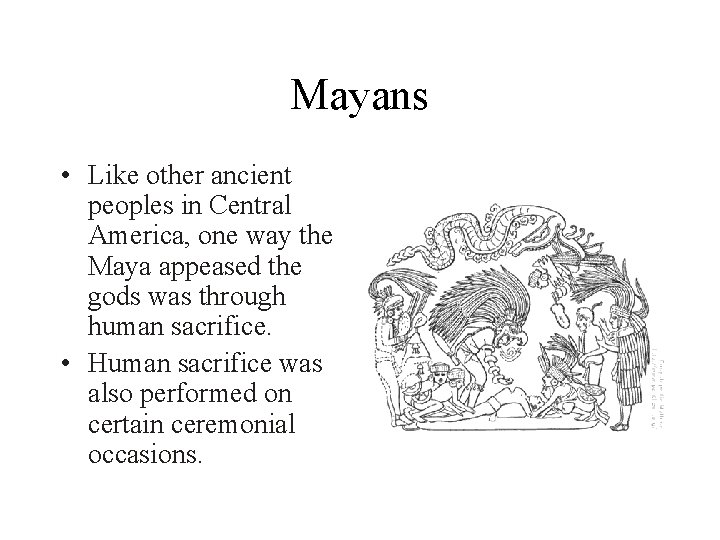
Mayans • Like other ancient peoples in Central America, one way the Maya appeased the gods was through human sacrifice. • Human sacrifice was also performed on certain ceremonial occasions.
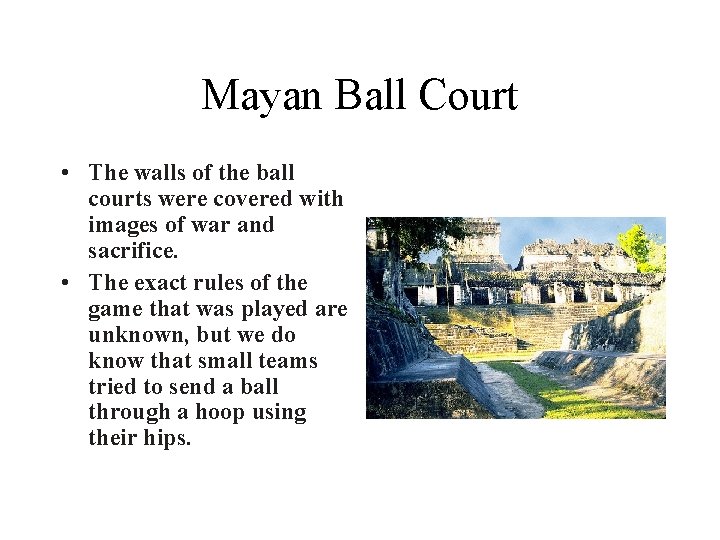
Mayan Ball Court • The walls of the ball courts were covered with images of war and sacrifice. • The exact rules of the game that was played are unknown, but we do know that small teams tried to send a ball through a hoop using their hips.
Mayan Ball Court • The game had a religious meaning • The court symbolized the world, and the ball represented the sun and the moon. • The defeated team was sacrificed.
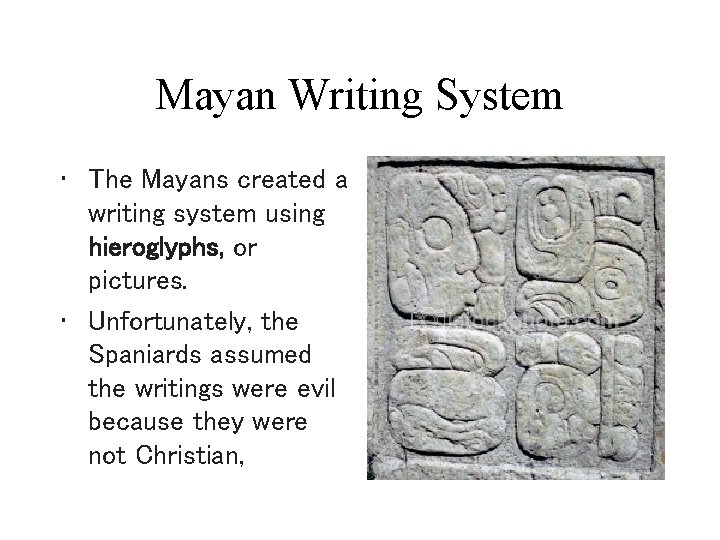
Mayan Writing System • The Mayans created a writing system using hieroglyphs, or pictures. • Unfortunately, the Spaniards assumed the writings were evil because they were not Christian,
Mayan Writing System • The Spaniards destroyed many Mayan books, a pattern the Spanish would repeat throughout their conquest in the Americas. • Many of the writings recorded dates in the Mayan calendar called the Long Count. • The Long Count was based on a belief in cycles of creation and destruction. • The Maya believed our present world was created in 3114 B. C. and would end on December 23, A. D. 2012.
Aztec
Aztec • Sometime during the twelfth century A. D. , the Aztec began a long migration to the Valley of Mexico. • They established their capital at Tenochtitlan on an island in the middle of Lake Texcoco, where Mexico City is now located.
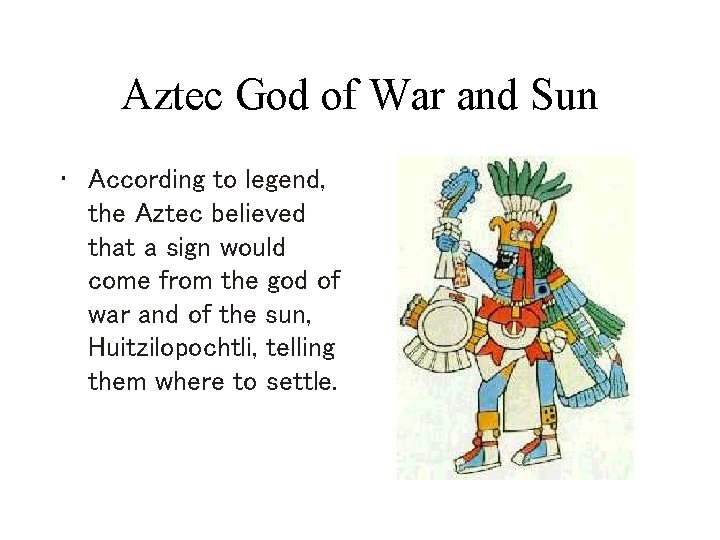
Aztec God of War and Sun • According to legend, the Aztec believed that a sign would come from the god of war and of the sun, Huitzilopochtli, telling them where to settle.
Aztec • In 1325 they were driven into the swamps and islands of Lake Texcoco, where they saw an eagle standing on a cactus growing out of a rock, the sign that had been foretold. • They built a magnificent city of temples, other public buildings, and roadways linking the islands and mainland. • They also consolidated their rule over much of what is modern Mexico. • The kingdom was a collection of semiindependent territories governed by lords.
Aztec • They built a magnificent city of temples, other public buildings, and roadways linking the islands and mainland. • They also consolidated their rule over much of what is modern Mexico. • The kingdom was a collection of semiindependent territories governed by lords.
Aztec Gender Roles • Boys and girls had different roles from birth. • The midwife said to a newborn boy, “You must understand that your home is not here where you have been born, for you are a warrior. ” • She said to the newborn girl, “As the heart stays in the body, so you must stay in the house. ”
Aztec Gender Roles • Women were not equal to men, but could inherit property and enter into contracts, something not often allowed in other world cultures of the time. • They were also allowed to be priestesses.
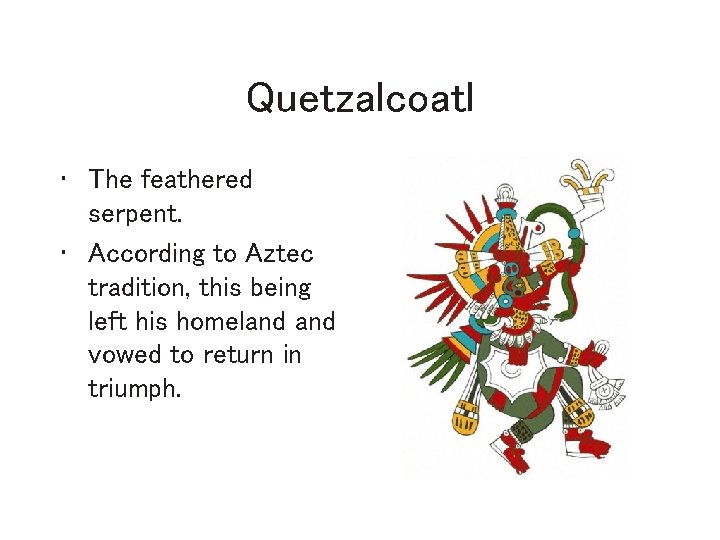
Quetzalcoatl • The feathered serpent. • According to Aztec tradition, this being left his homeland vowed to return in triumph.
Quetzalcoatl • This became part of a legend about a prince whose return from exile would be preceded by a sign of an arrow through a sapling. • When the Aztec saw the Spanish with a cross on their breastplates, they mistook the Spanish for Quetzalcoatl’s representatives because the cross looked like the sign they awaited.
Quetzalcoatl • Aztec religion was based on the belief in an unending struggle between the forces of good and evil, which led to the creation and destruction of a series of worlds. • The Aztec practiced human sacrifice to postpone the day of destruction of their world.
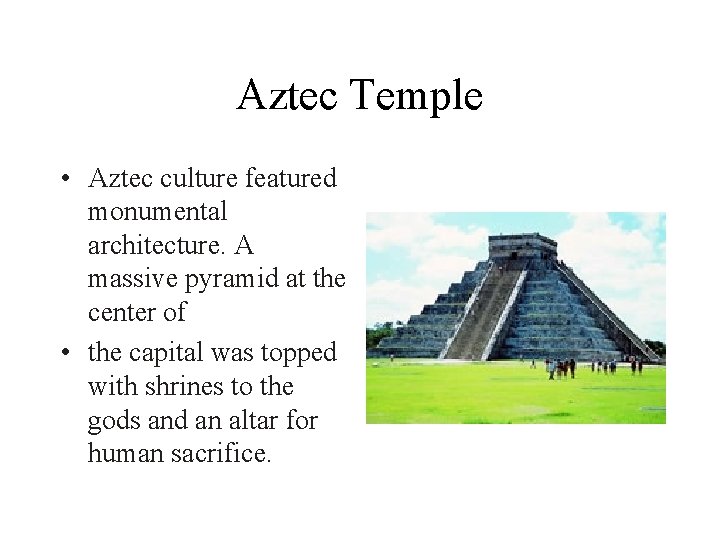
Aztec Temple • Aztec culture featured monumental architecture. A massive pyramid at the center of • the capital was topped with shrines to the gods and an altar for human sacrifice.
Spanish Invasion • In 1519 a Spanish force under the command of Hernan Cortes marched to Tenochtitlan. • He had only 550 soldiers and 16 horses, but he made allies with the city-states that had tired of Aztec rule. • Cortes was greeted warmly by the Aztec king, Montezuma, who believed his visitor represented Quetzalcoatl. Montezuma offered gifts of gold and a palace to use.
Spanish Invasion • Tensions arose between the Aztec and Spanish. • In 1520 the local population revolted and drove the Spaniards from the city, killing many. • Many Aztec also soon died from European diseases. They had no immunity to them. • Cortes received troops from his local allies, and in four months the city surrendered to his forces.
Spanish Invasion • The use of gunpowder also aided the Spanish considerably in their battles with the Aztec. • They leveled the Aztec buildings and used the stones to construct government buildings and churches.