
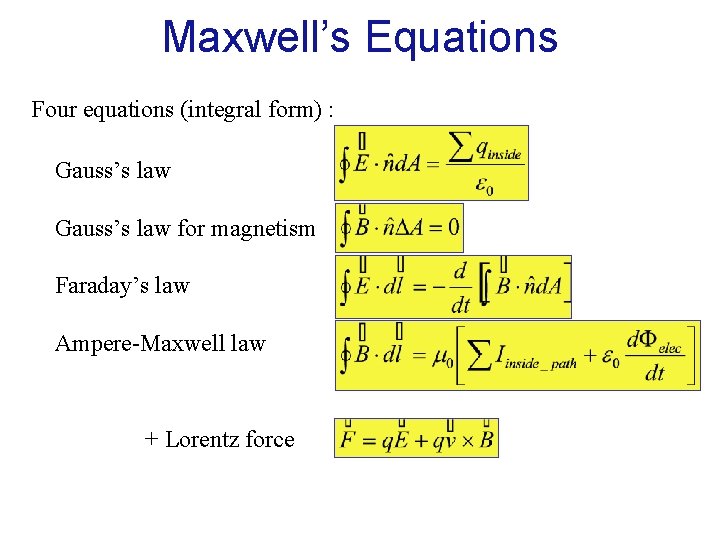
Maxwells Equations Four equations integral form Gausss law
- Slides: 19
Maxwell’s Equations Four equations (integral form) : Gauss’s law for magnetism Faraday’s law Ampere-Maxwell law + Lorentz force
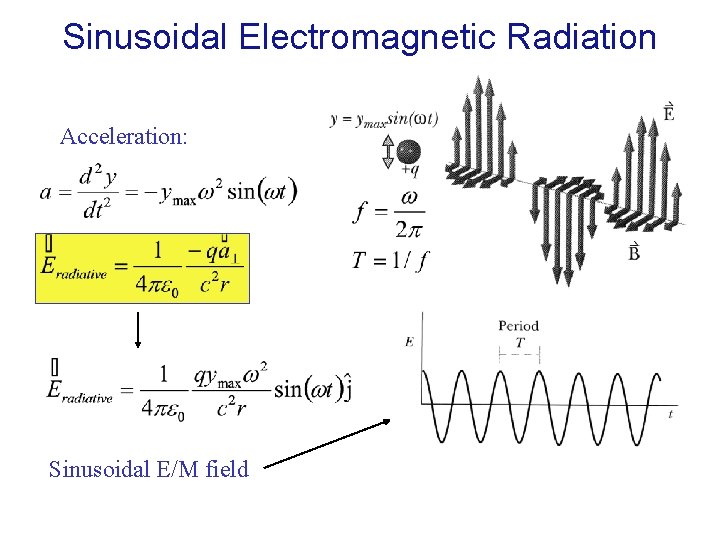
Sinusoidal Electromagnetic Radiation Acceleration: Sinusoidal E/M field
Energy and Momentum of E/M Radiation According to particle theory of light: photons have energy and momentum Classical E/M model of light: E/M radiation must carry energy and momentum
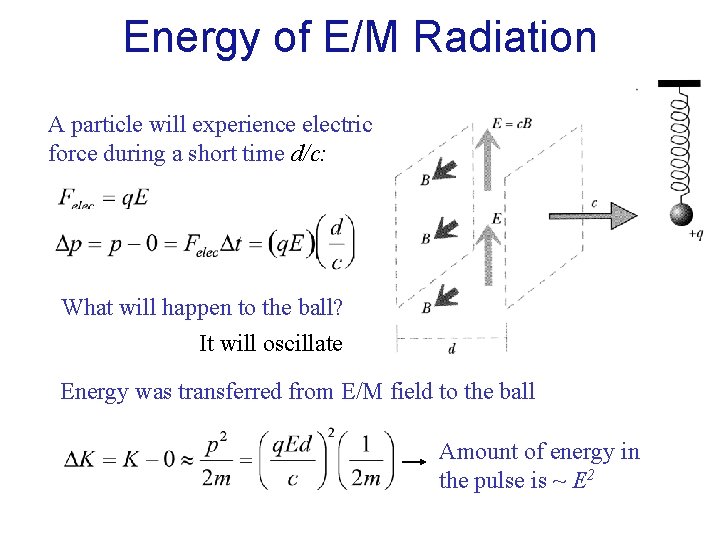
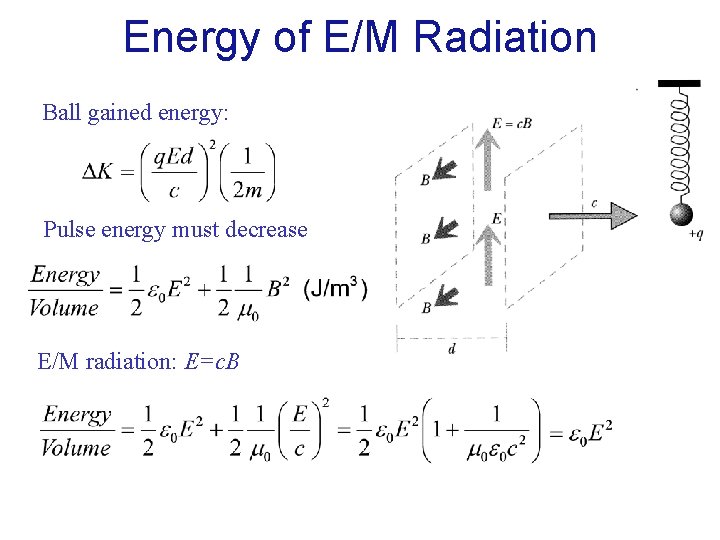
Energy of E/M Radiation A particle will experience electric force during a short time d/c: What will happen to the ball? It will oscillate Energy was transferred from E/M field to the ball Amount of energy in the pulse is ~ E 2
Energy of E/M Radiation Ball gained energy: Pulse energy must decrease E/M radiation: E=c. B
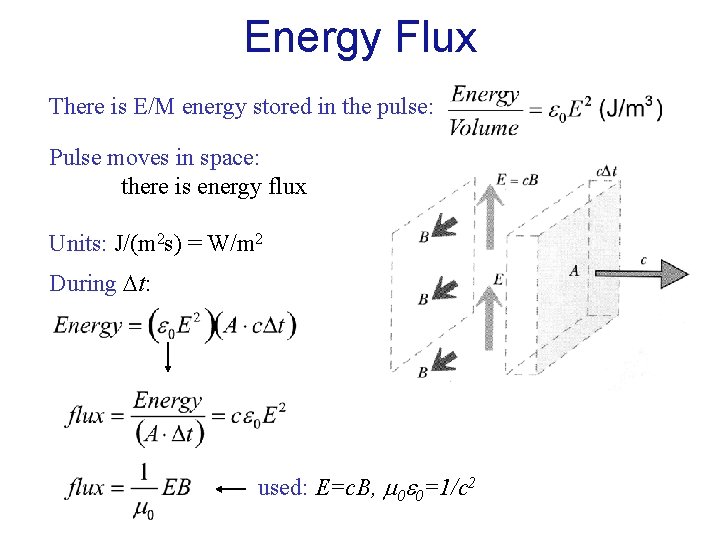
Energy Flux There is E/M energy stored in the pulse: Pulse moves in space: there is energy flux Units: J/(m 2 s) = W/m 2 During t: used: E=c. B, 0 0=1/c 2
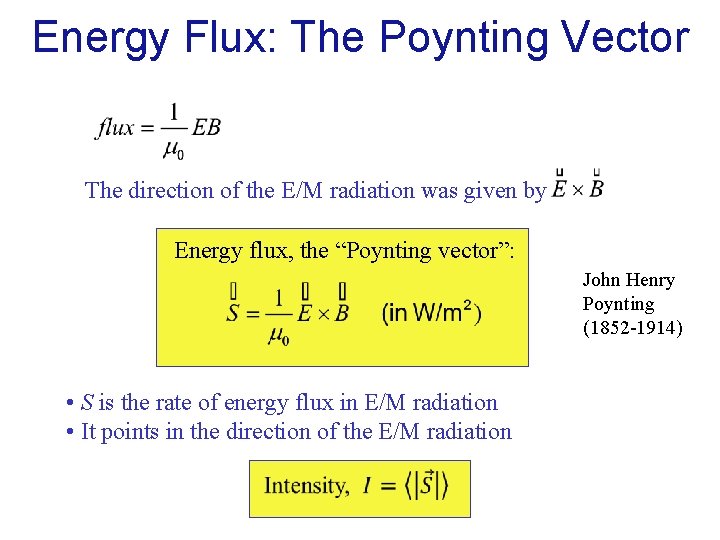
Energy Flux: The Poynting Vector The direction of the E/M radiation was given by Energy flux, the “Poynting vector”: John Henry Poynting (1852 -1914) • S is the rate of energy flux in E/M radiation • It points in the direction of the E/M radiation
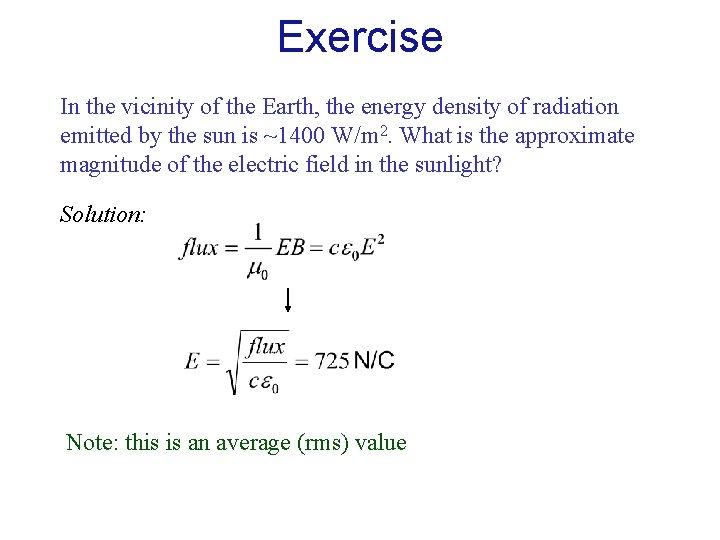
Exercise In the vicinity of the Earth, the energy density of radiation emitted by the sun is ~1400 W/m 2. What is the approximate magnitude of the electric field in the sunlight? Solution: Note: this is an average (rms) value
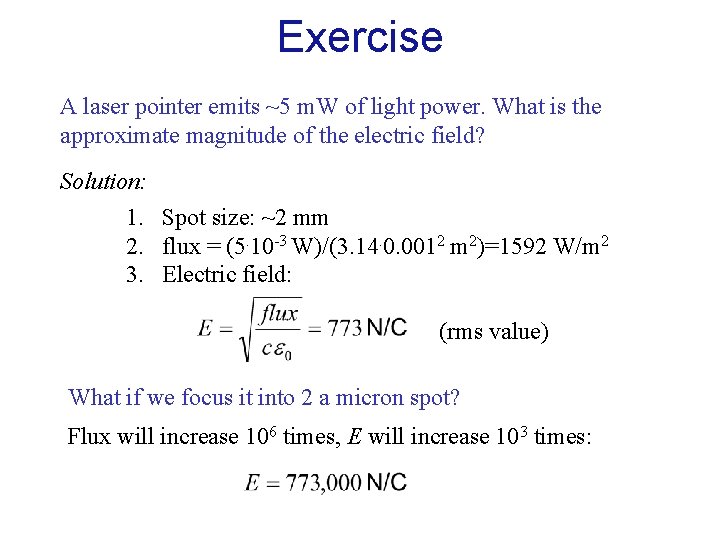
Exercise A laser pointer emits ~5 m. W of light power. What is the approximate magnitude of the electric field? Solution: 1. Spot size: ~2 mm 2. flux = (5. 10 -3 W)/(3. 14. 0. 0012 m 2)=1592 W/m 2 3. Electric field: (rms value) What if we focus it into 2 a micron spot? Flux will increase 106 times, E will increase 103 times:
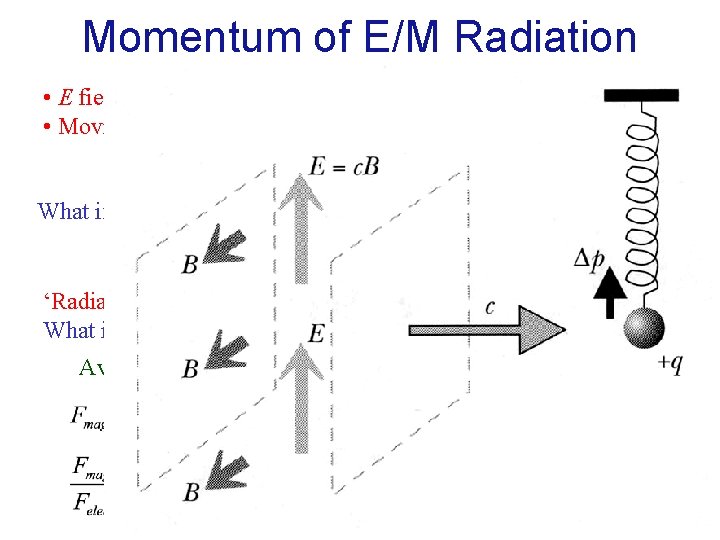
Momentum of E/M Radiation • E field starts motion • Moving charge in magnetic field: Fmag What if there is negative charge? ‘Radiation pressure’: What is its magnitude? Average speed: v/2 Fmag
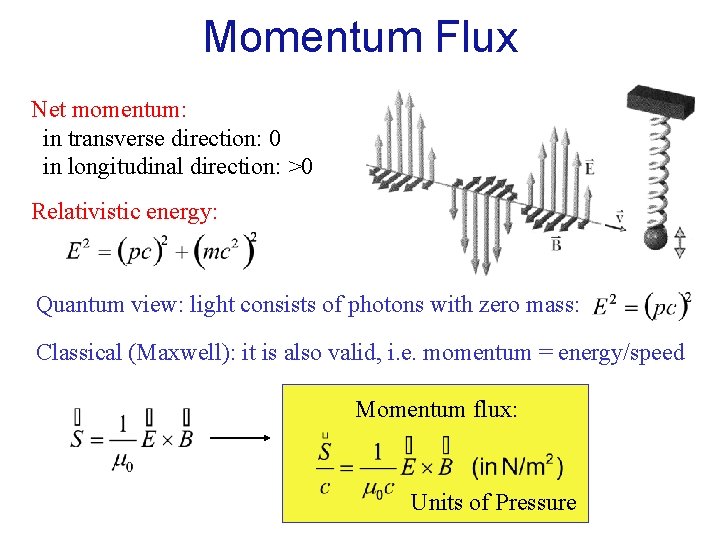
Momentum Flux Net momentum: in transverse direction: 0 in longitudinal direction: >0 Relativistic energy: Quantum view: light consists of photons with zero mass: Classical (Maxwell): it is also valid, i. e. momentum = energy/speed Momentum flux: Units of Pressure
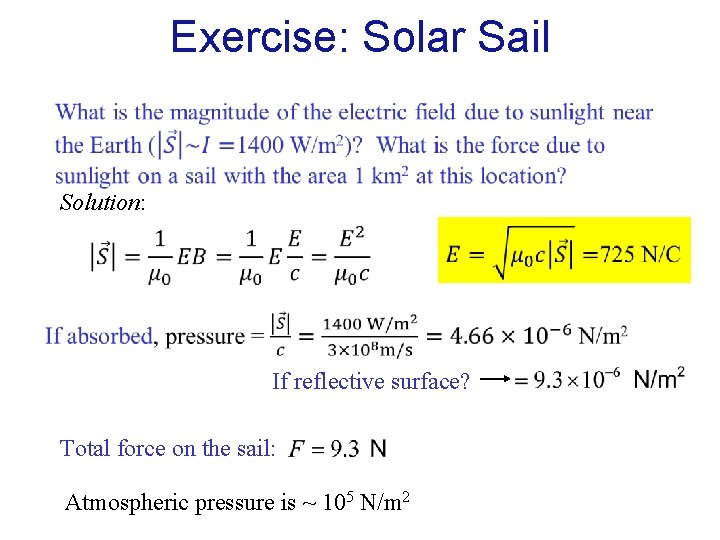
Exercise: Solar Sail Solution: If reflective surface? Total force on the sail: Atmospheric pressure is ~ 105 N/m 2
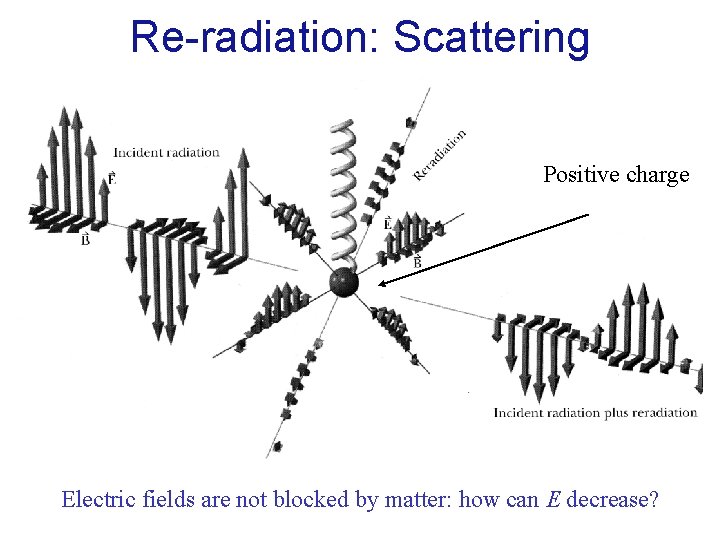
Re-radiation: Scattering Positive charge Electric fields are not blocked by matter: how can E decrease?
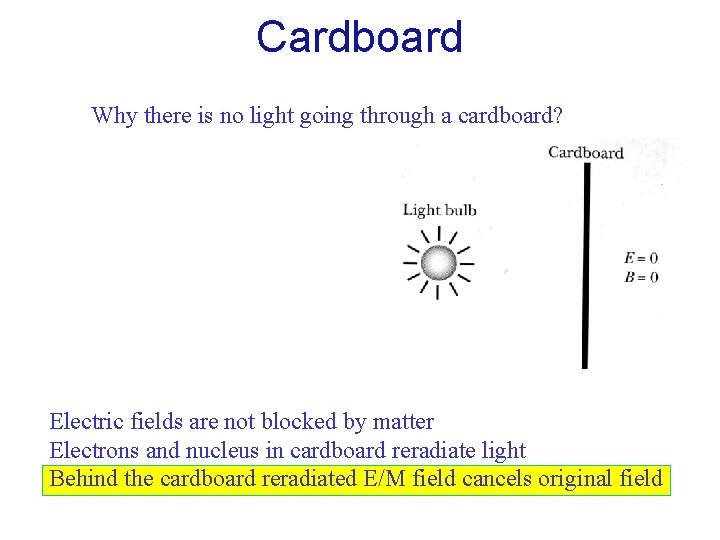
Cardboard Why there is no light going through a cardboard? Electric fields are not blocked by matter Electrons and nucleus in cardboard reradiate light Behind the cardboard reradiated E/M field cancels original field
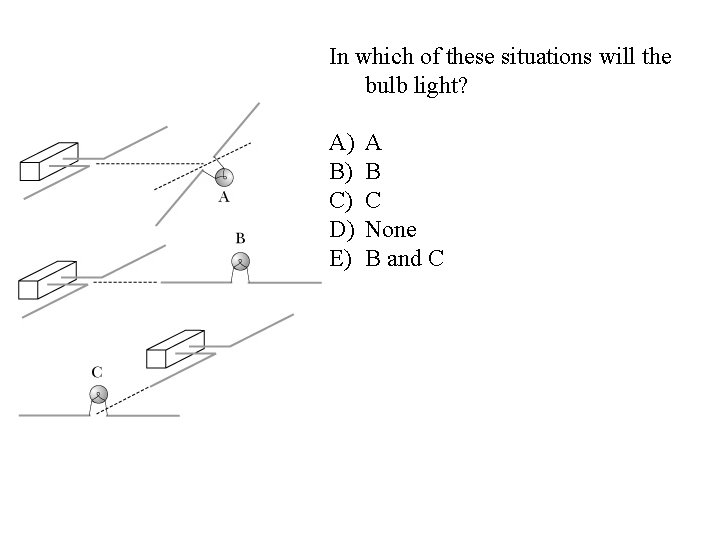
In which of these situations will the bulb light? A) B) C) D) E) A B C None B and C
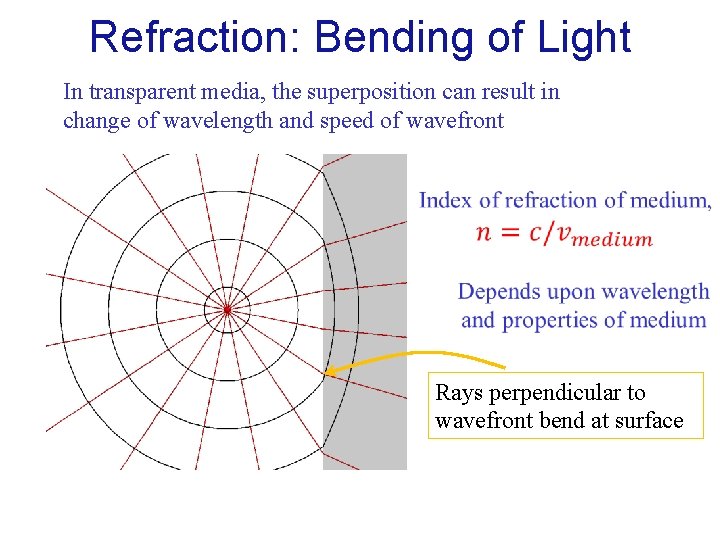
Refraction: Bending of Light In transparent media, the superposition can result in change of wavelength and speed of wavefront Rays perpendicular to wavefront bend at surface
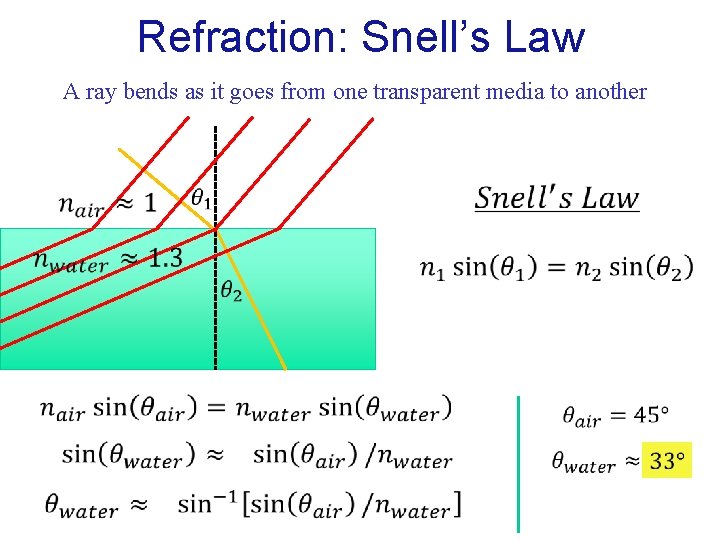
Refraction: Snell’s Law A ray bends as it goes from one transparent media to another
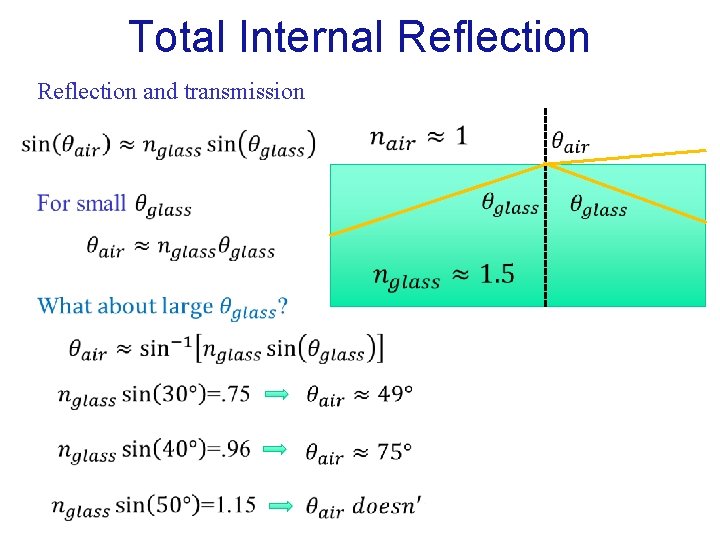
Total Internal Reflection and transmission