
Maximizing Speedup through Self Tuning of Processor Allocation


- Slides: 46
Maximizing Speedup through Self Tuning of Processor Allocation T. D. Nguyen, R. Vaswani and J. Zahorjan Proceedings of International Conference on Parallel Processing ‘ 96 Presenter: Joonsung Yook and Minwook Kim 2020. 11. 26.
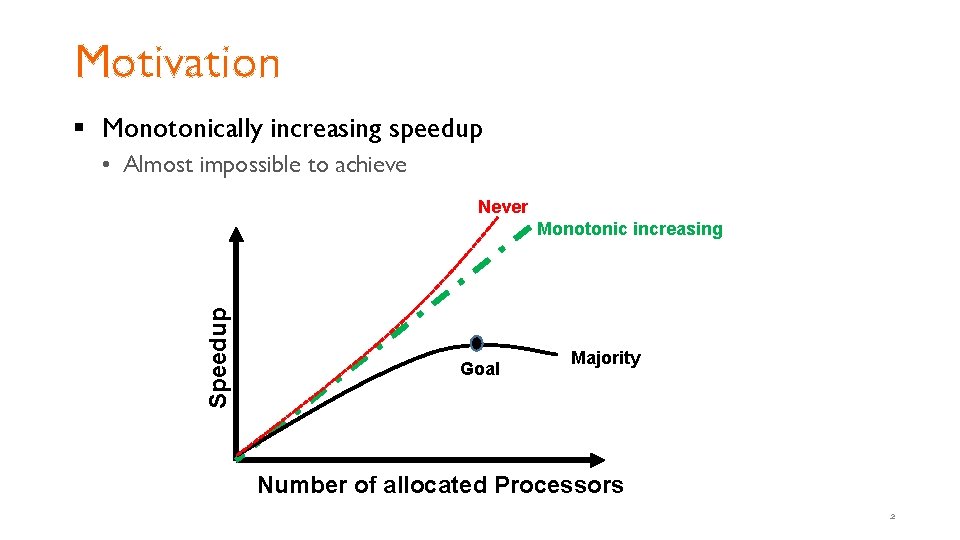
Motivation § Monotonically increasing speedup • Almost impossible to achieve Never Speedup Monotonic increasing Goal Majority Number of allocated Processors 2
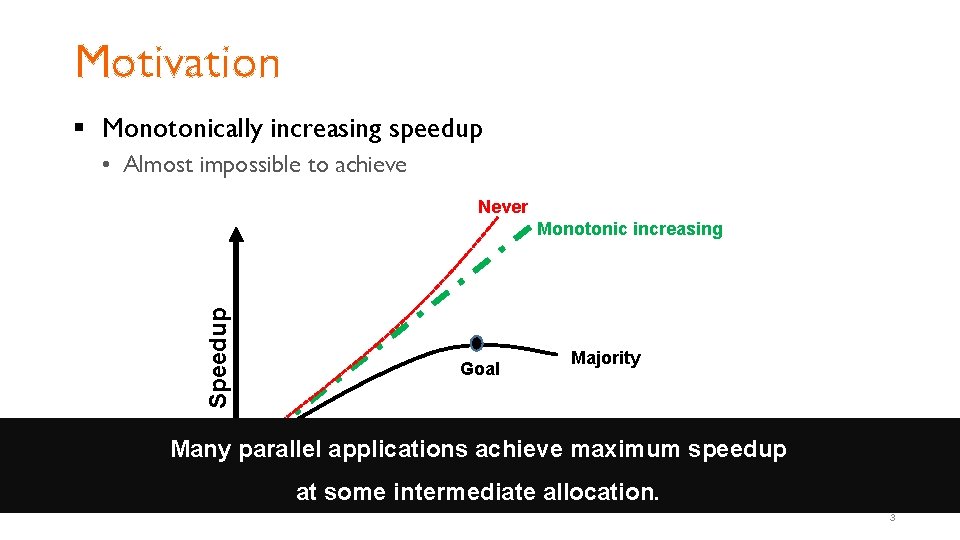
Motivation § Monotonically increasing speedup • Almost impossible to achieve Never Speedup Monotonic increasing Goal Majority Many parallel applications achieve maximum speedup Number of allocated Processors at some intermediate allocation. 3
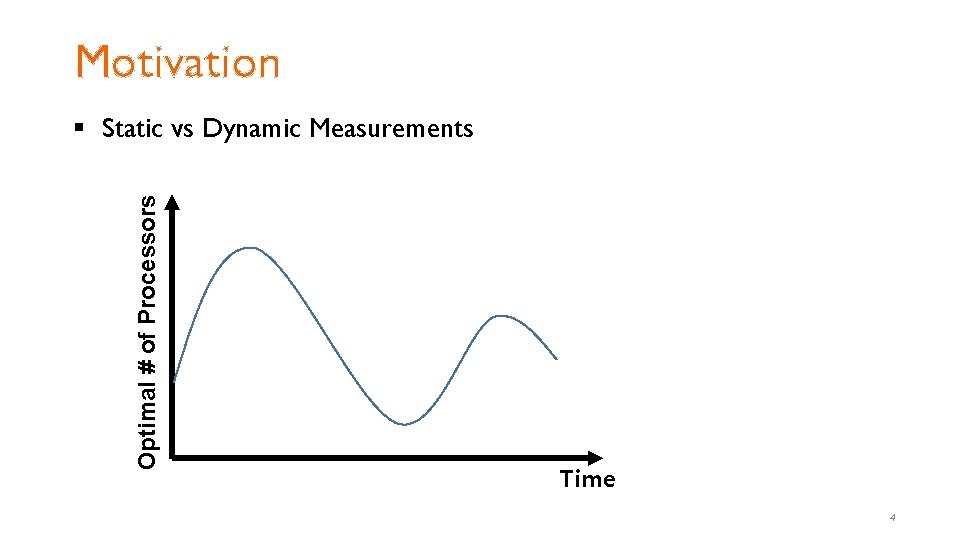
Motivation Optimal # of Processors § Static vs Dynamic Measurements Time 4
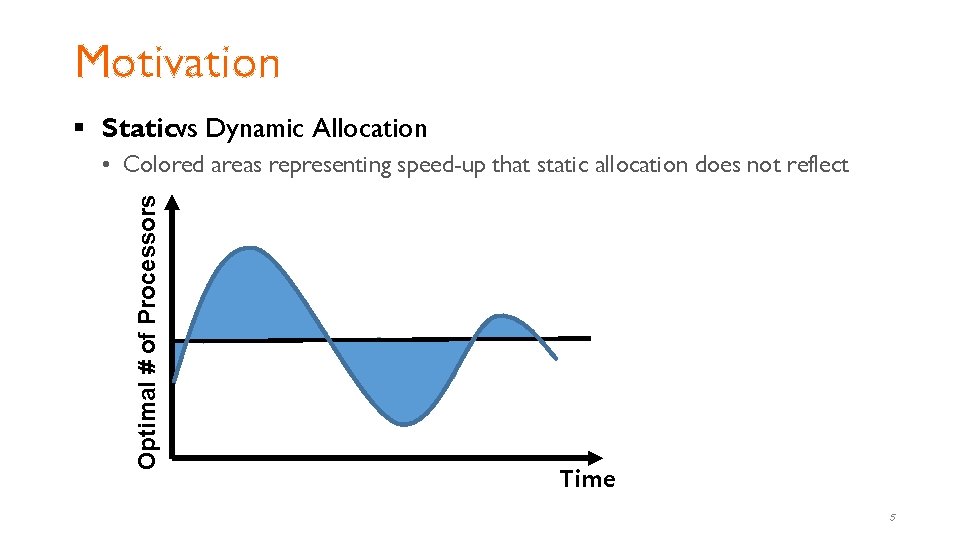
Motivation § Staticvs Dynamic Allocation Optimal # of Processors • Colored areas representing speed-up that static allocation does not reflect Time 5
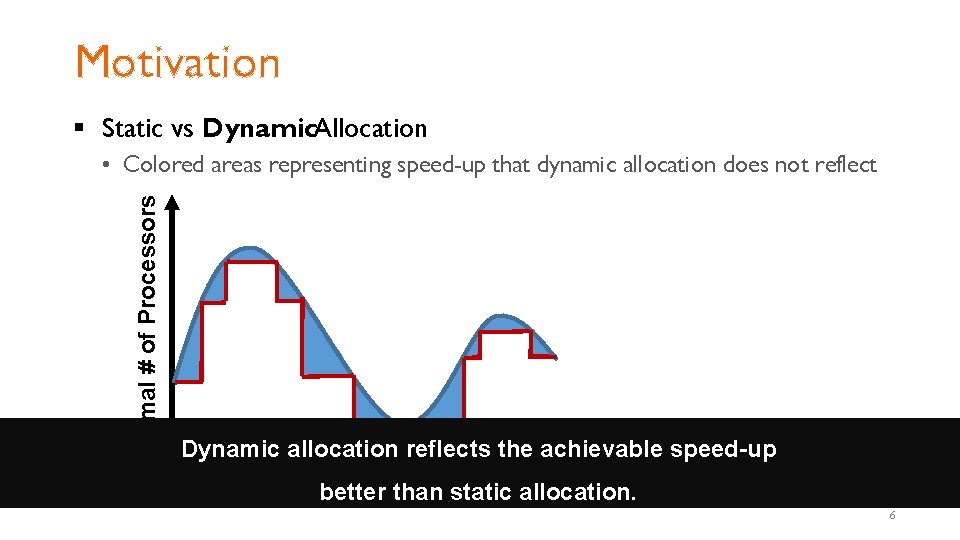
Motivation § Static vs Dynamic. Allocation Optimal # of Processors • Colored areas representing speed-up that dynamic allocation does not reflect Dynamic allocation reflects the achievable speed-up Time better than static allocation. 6
Motivation § Many parallel applications achieve maximum speedup at some intermediate allocation. § Dynamic allocation using dynamic measurement can achieve better speed-up than static allocation. § It may not be possible a priori to determine the best allocation. § No static allocation may be optimal for the entire execution lifetime of a job. 7
Principles § Dynamically measures job efficiencies at different allocations § Uses these measurements to calculate speedups § Automatically adjusts a job’s processor allocation to maximize its speedup 8
Principles § Dynamically measures job efficiencies at different allocations • Appropriate hardware support to dynamically measure application efficiencies. § Uses these measurements to calculate speedups § Automatically adjusts a job’s processor allocation to maximize its speedup 9
Principles § Dynamically measures job efficiencies at different allocations • Appropriate hardware support to dynamically measure application efficiencies. § Uses these measurements to calculate speedups • The method of golden sections (MGS) [IO] to find the best allocation § Automatically adjusts a job’s processor allocation to maximize its speedup 10
Measurements Intervals § Existing problems with time-based intervals • Instantaneous speedup measurement – Reflection of the characteristic of only a small section • Relatively long intervals of time – Difficult to determine what constitutes a sufficiently long period of time – limiting its effectiveness due to a long time for each step of the search 11
Measurements Intervals § Focusing on only iterative parallel applications • A characteristic shared by a large variety of scientific parallel • Empirical evidence showing that successive iterations tend to behave similarly Equate a measurement interval to an application iteration. 12
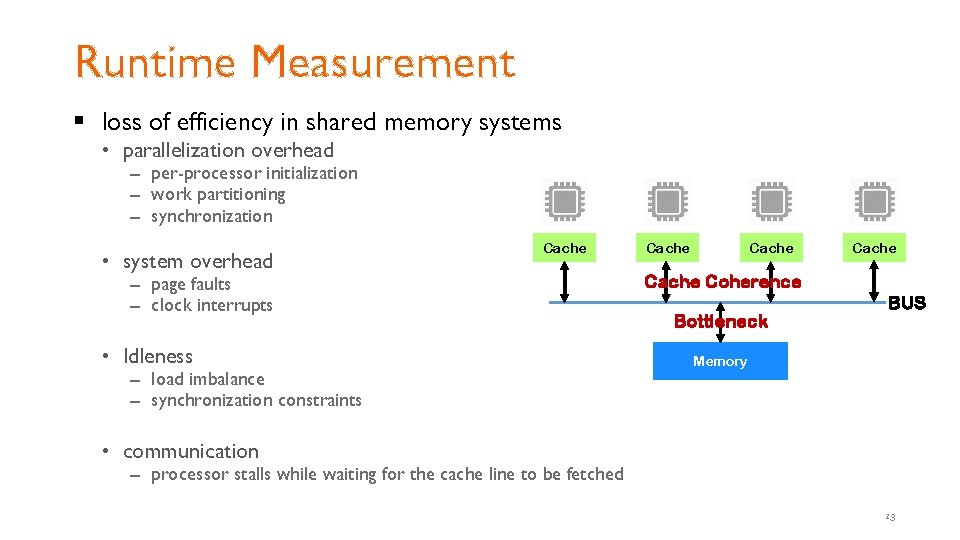
Runtime Measurement § loss of efficiency in shared memory systems • parallelization overhead – per-processor initialization – work partitioning – synchronization • system overhead Cache – page faults – clock interrupts • Idleness – load imbalance – synchronization constraints Cache Coherence Bottleneck BUS Memory • communication – processor stalls while waiting for the cache line to be fetched 13
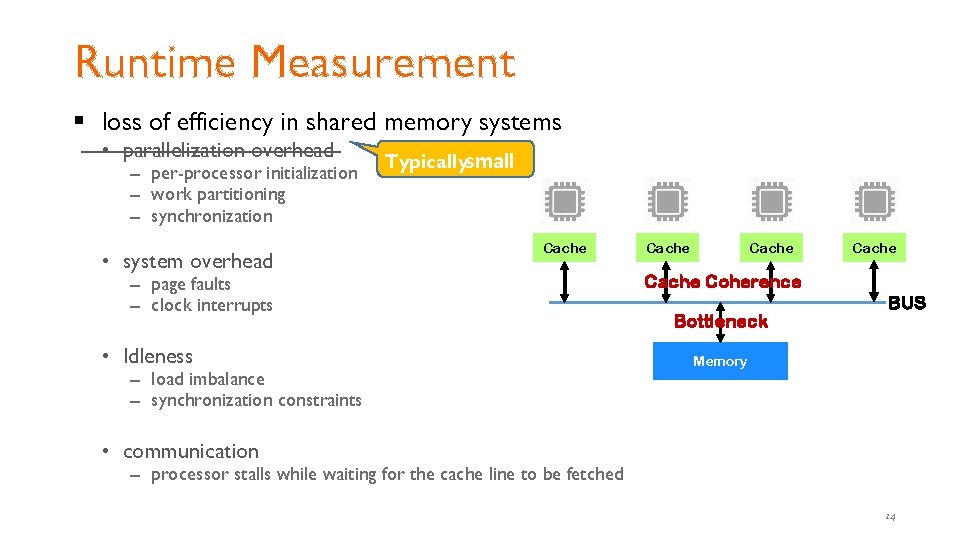
Runtime Measurement § loss of efficiency in shared memory systems • parallelization overhead – per-processor initialization – work partitioning – synchronization • system overhead Typicallysmall Cache – page faults – clock interrupts • Idleness – load imbalance – synchronization constraints Cache Coherence Bottleneck BUS Memory • communication – processor stalls while waiting for the cache line to be fetched 14
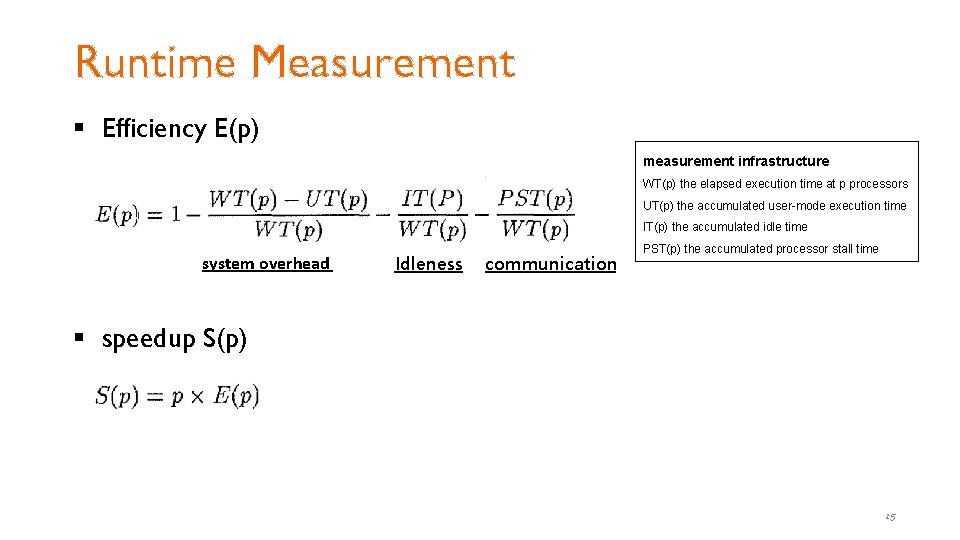
Runtime Measurement § Efficiency E(p) measurement infrastructure WT(p) the elapsed execution time at p processors UT(p) the accumulated user-mode execution time IT(p) the accumulated idle time system overhead Idleness communication PST(p) the accumulated processor stall time § speedup S(p) 15
Runtime Measurement § Collecting critical HW counters for system overhead and communication • Elapsed wall-clock time • Elapsed user-mode execution time • Accumulated processor stall time § Using Instrumentation for idle time • PRESTO and CThreads synchronization code to track elapsed idle time • Using the wall-clock hardware counter 16
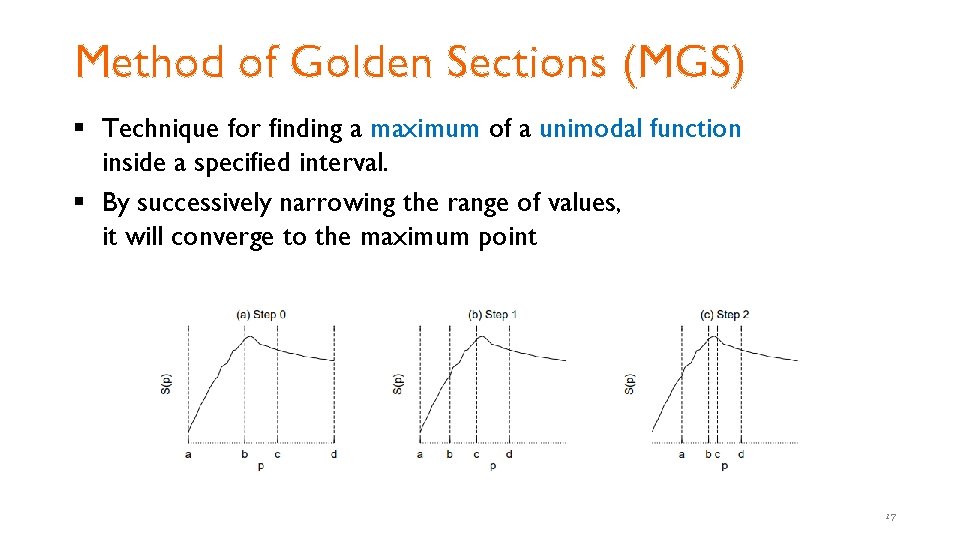
Method of Golden Sections (MGS) § Technique for finding a maximum of a unimodal function inside a specified interval. § By successively narrowing the range of values, it will converge to the maximum point 17
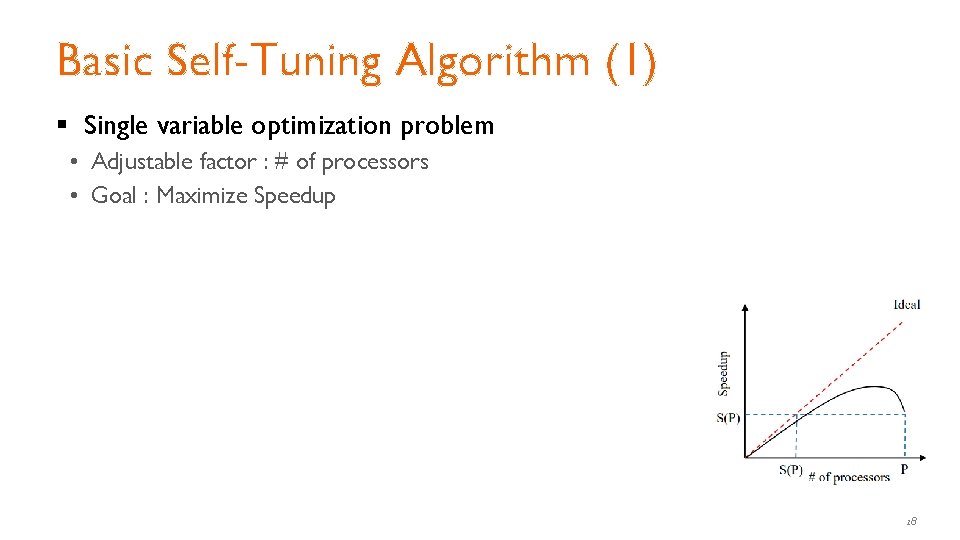
Basic Self-Tuning Algorithm (1) § Single variable optimization problem • Adjustable factor : # of processors • Goal : Maximize Speedup 18
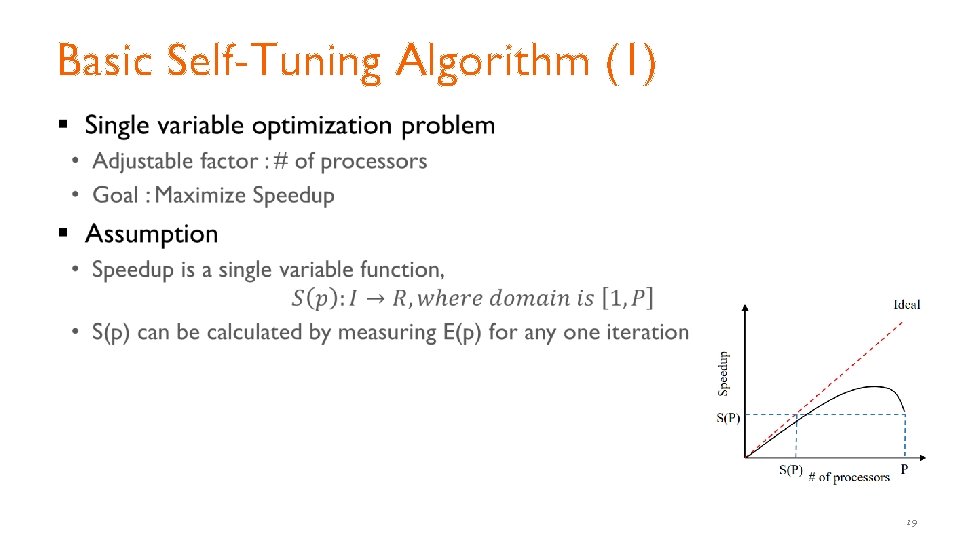
Basic Self-Tuning Algorithm (1) § 19
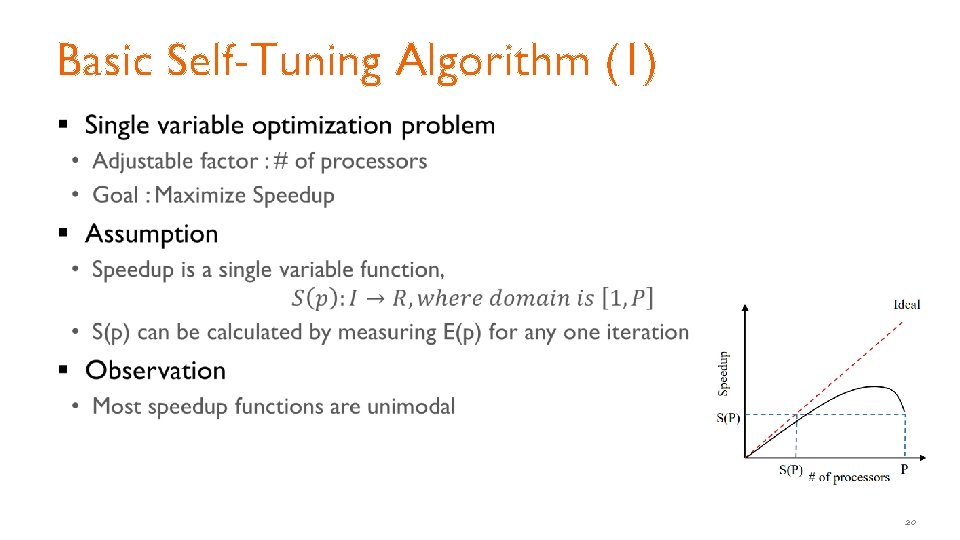
Basic Self-Tuning Algorithm (1) § 20
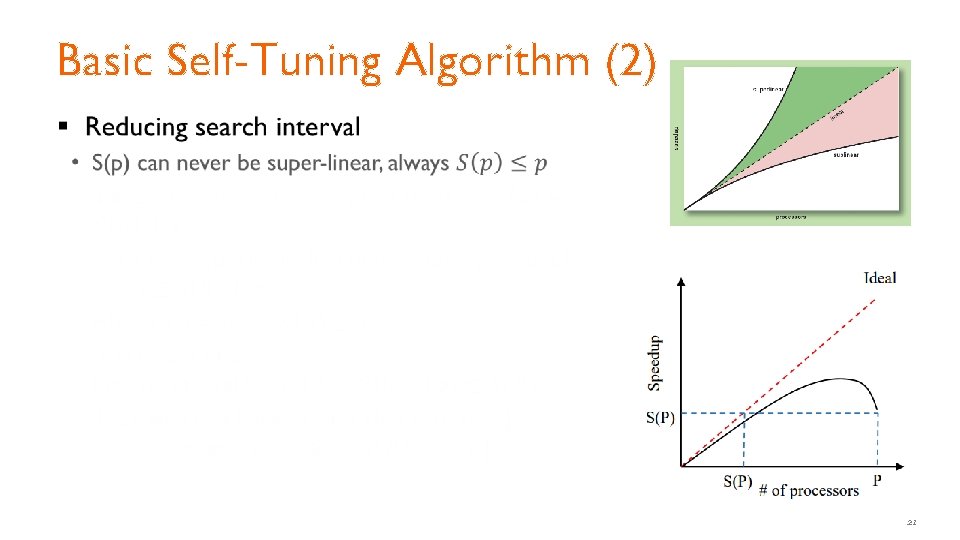
Basic Self-Tuning Algorithm (2) § 21
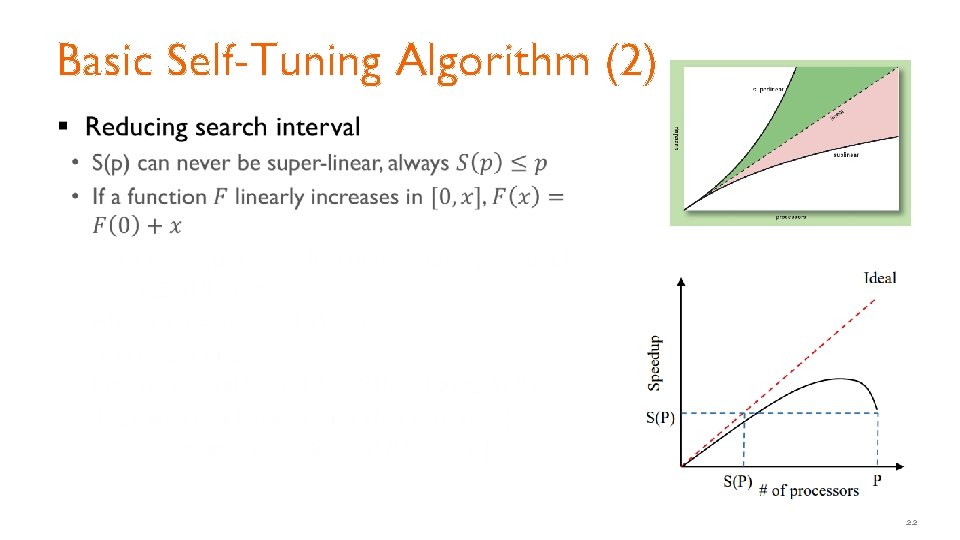
Basic Self-Tuning Algorithm (2) § 22
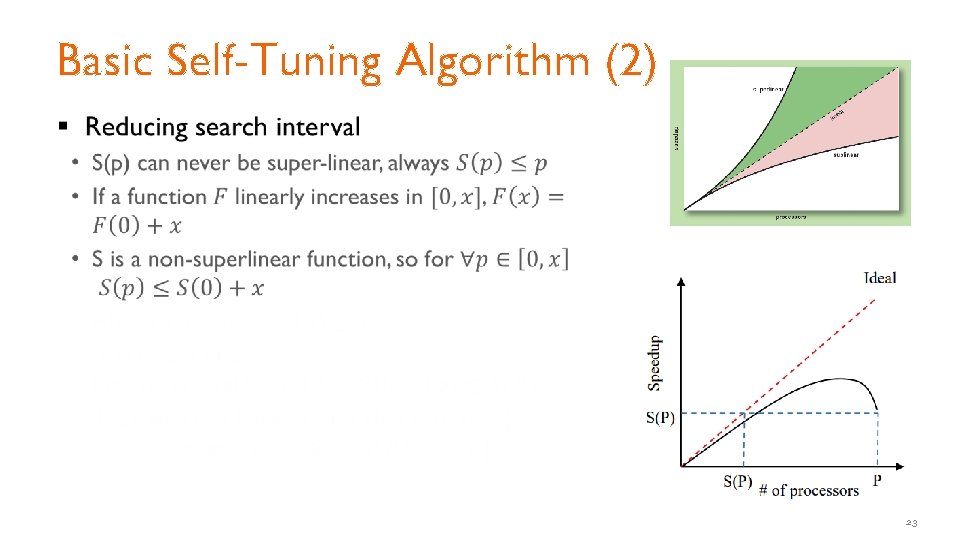
Basic Self-Tuning Algorithm (2) § 23
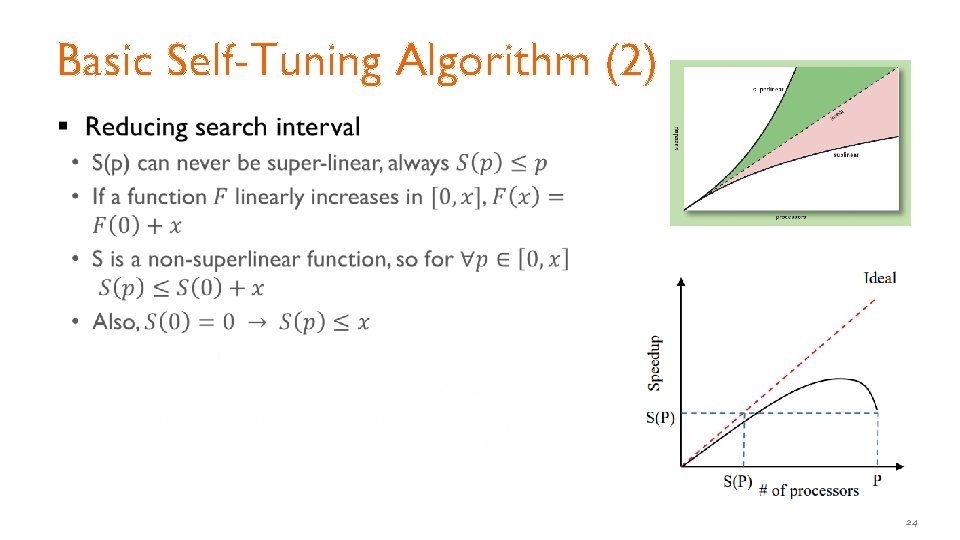
Basic Self-Tuning Algorithm (2) § 24
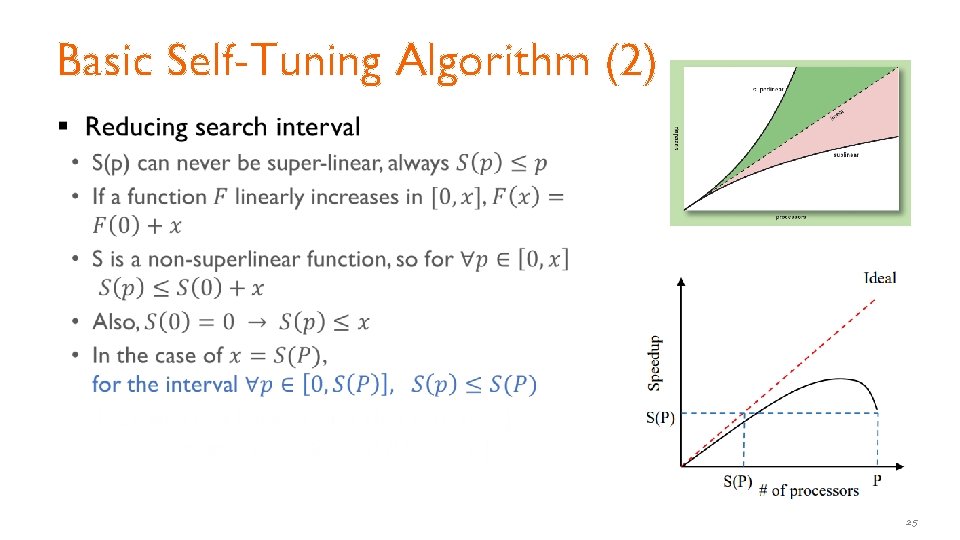
Basic Self-Tuning Algorithm (2) § 25
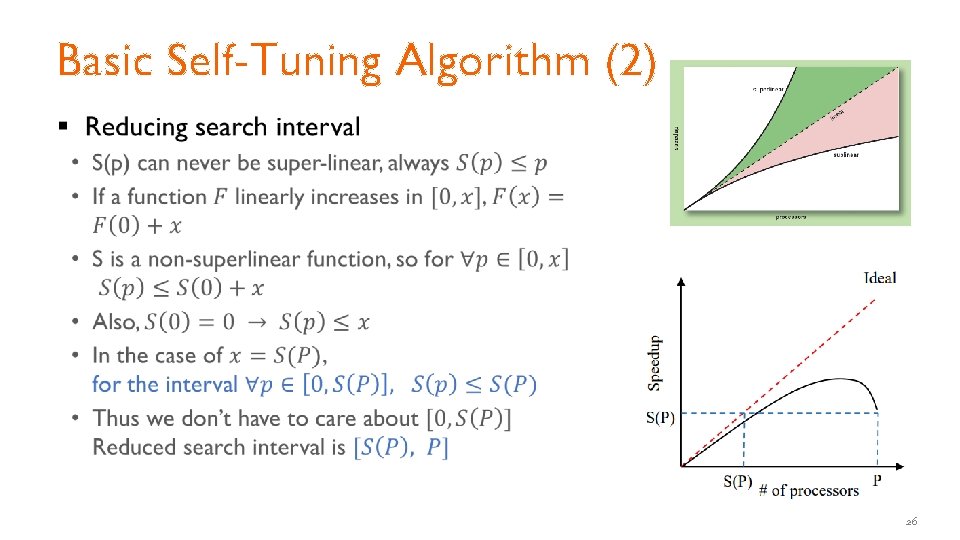
Basic Self-Tuning Algorithm (2) § 26
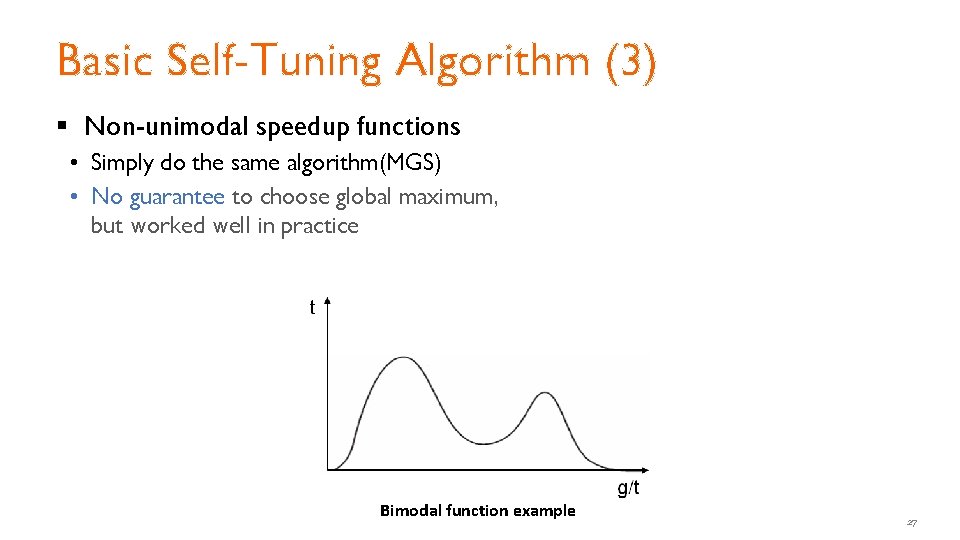
Basic Self-Tuning Algorithm (3) § Non-unimodal speedup functions • Simply do the same algorithm(MGS) • No guarantee to choose global maximum, but worked well in practice Bimodal function example 27
False Assumptions of Basic Self-tuning § Speedup is not a function of time • Problem: Job’s speedup function changes over time – Allocation found at the beginning of execution can be inappropriate later § The speedup values of successive iterations are directly comparable • Problem: Speedup is likely to vary from iteration to iteration – Such variations can cause basic self-tuning to converge to a sub-optimal allocation 28
False Assumptions of Basic Self-tuning § Speedup is not a function of time • Problem: Job’s speedup function changes over time – Allocation found at the beginning of execution can be inappropriate later § The speedup values of successive iterations are directly comparable • Problem: Speedup is likely to vary from iteration to iteration – Such variations can cause basic self-tuning to converge to a sub-optimal allocation 29
False Assumptions of Basic Self-tuning § Speedup is not a function of time • Problem: Job’s speedup function changes over time – Allocation found at the beginning of execution can be inappropriate later § The speedup values of successive iterations are directly comparable • Problem: Speedup is likely to vary from iteration to iteration – Such variations can cause basic self-tuning to converge to a sub-optimal allocation 30
False Assumptions of Basic Self-tuning § Speedup is not a function of time • Problem: Job’s speedup function changes over time – Allocation found at the beginning of execution can be inappropriate later § The speedup values of successive iterations are directly comparable • Problem: Speedup is likely to vary from iteration to iteration – Such variations can cause basic self-tuning to converge to a sub-optimal allocation 31
False Assumptions of Basic Self-tuning § Speedup is not a function of time • Problem: Job’s speedup function changes over time – Allocation found at the beginning of execution can be inappropriate later § The speedup values of successive iterations are directly comparable • Problem: Speedup is likely to vary from iteration to iteration – Such variations can cause basic self-tuning to converge to a sub-optimal allocation 32
Refining the basic Self-Tuning approach § Change-driven self-tuning algorithm (CST) • Monitor job efficiency and rerun the search procedure, whenever a significant change in efficiency occurs 33
Refining the basic Self-Tuning approach § Change-driven self-tuning algorithm (CST) • Monitor job efficiency and rerun the search procedure, whenever a significant change in efficiency occurs § Time-driven self-tuning algorithm (TST) • Job efficiency can change in the middle of CST search • Includes change-driven self-tuning, also rerun the search procedure periodically regardless of change in job efficiency 34
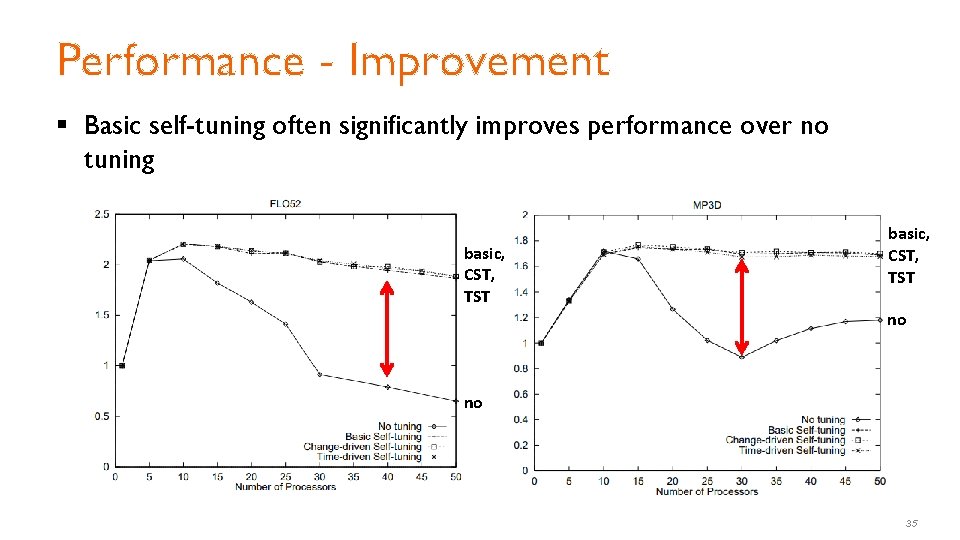
Performance - Improvement § Basic self-tuning often significantly improves performance over no tuning basic, CST, TST no no 35
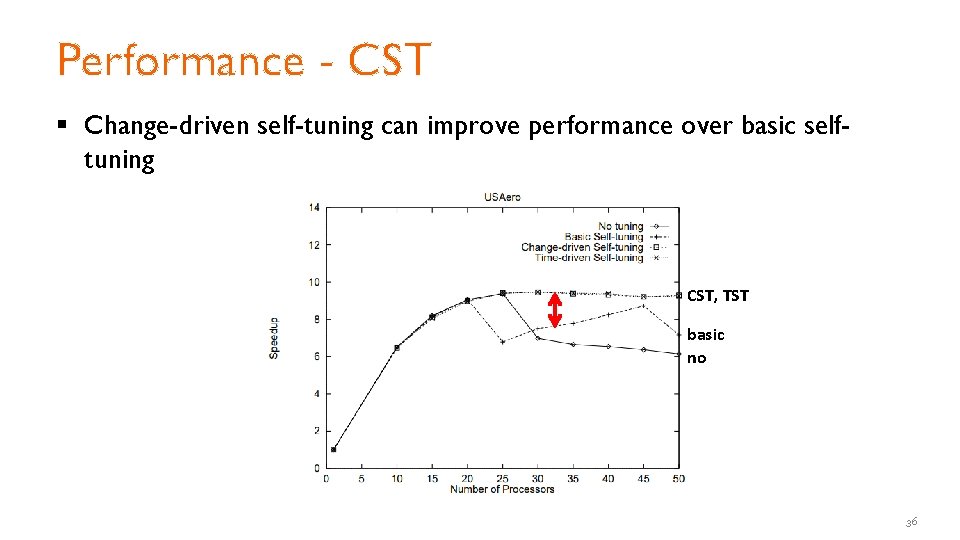
Performance - CST § Change-driven self-tuning can improve performance over basic selftuning CST, TST basic no 36
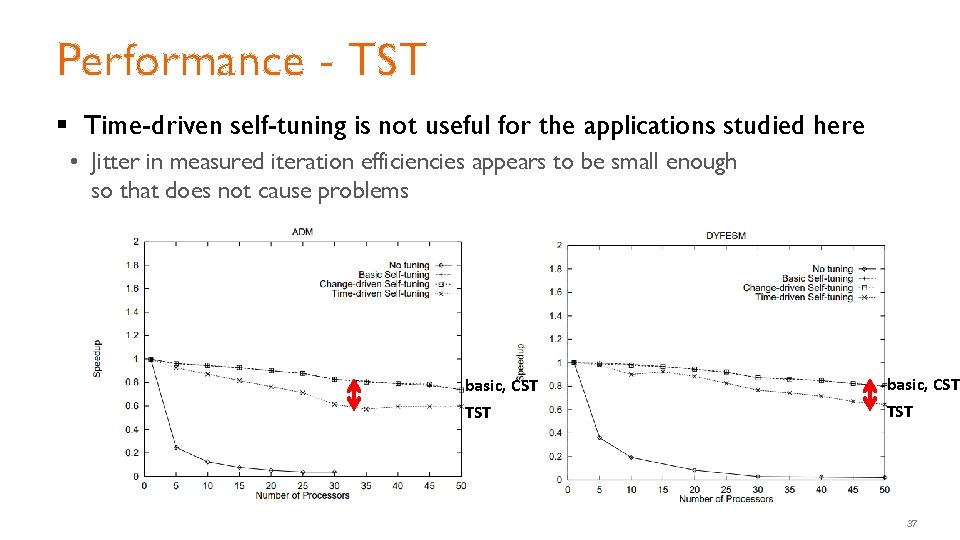
Performance - TST § Time-driven self-tuning is not useful for the applications studied here • Jitter in measured iteration efficiencies appears to be small enough so that does not cause problems basic, CST TST 37
Multi-phase Self-tuning § Each phase may have a distinct ideal number of processors • Phase: components of an iteration – A parallel loop in a compiler-parallelized program – A subroutine in a hand-coded parallel program § Goal • Find a processor allocation vector (p 1, p 2, . . . , p. N) that maximizes performance when there are N phases in an iteration § Assume • On each entry to and exit from a phase, the runtime system is provided with the unique ID of the phase 38
Multi-phase Self-tuning § Independent multi-phase self-tuning • Apply self-tuning to each phase independently, using the same search technique as before • Problem – Performance of each phase also depends on the allocations for other phases 39
Multi-phase Self-tuning § Inter-dependent multi-phase self-tuning • Simulated annealing and a heuristic-based approach • Randomized search technique 1. 2. 3. 4. Choosing an initial candidate allocation vector (same as independent MPST) Selecting a new candidate vector (apply random multiplier to initial vector) Evaluating and accepting new candidate vectors until steady state Terminating the search Details on: https: //dada. cs. washington. edu/research/tr/1995/09/UW-CSE-95 -09 -02. pdf 40
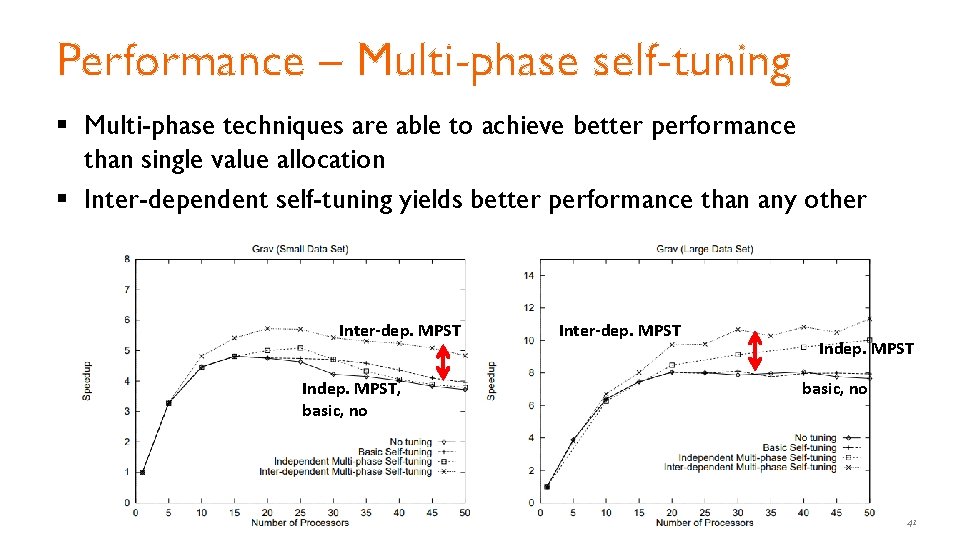
Performance – Multi-phase self-tuning § Multi-phase techniques are able to achieve better performance than single value allocation § Inter-dependent self-tuning yields better performance than any other Inter-dep. MPST Indep. MPST, basic, no Inter-dep. MPST Indep. MPST basic, no 41
Conclusion § Many parallel applications achieve maximum speedup at some intermediate allocation § Dynamic measurement for program inefficiencies § Basic self-tuning finds optimal point by using MGS § CST and TST can handle the change in speedup over time § MPST is capable of fine-grained allocation in phase units 42
Thank you 43
Backups 44
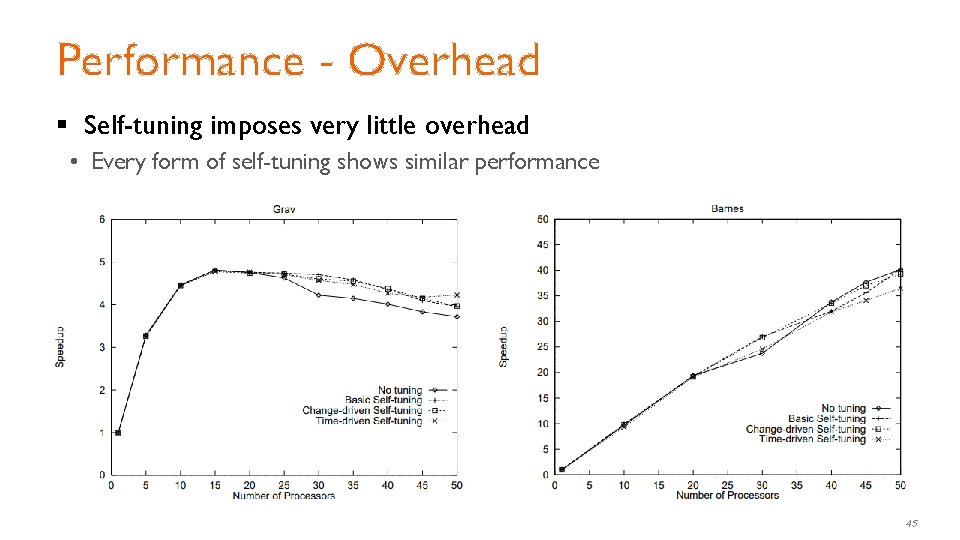
Performance - Overhead § Self-tuning imposes very little overhead • Every form of self-tuning shows similar performance 45
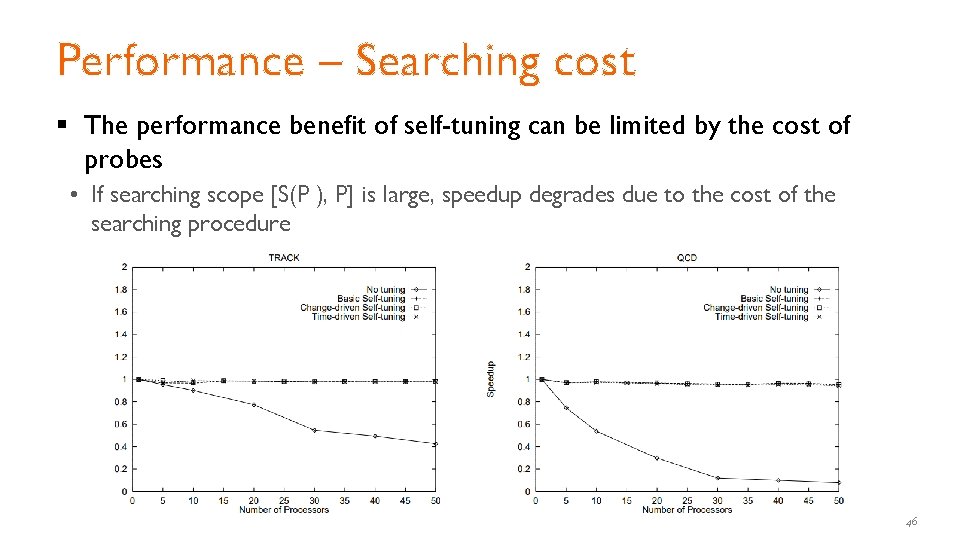
Performance – Searching cost § The performance benefit of self-tuning can be limited by the cost of probes • If searching scope [S(P ), P] is large, speedup degrades due to the cost of the searching procedure 46