
Maximising the Impact of Teaching Assistants The evidence
- Slides: 20
Maximising the Impact of Teaching Assistants The evidence and how to act on it Rob Webster | @maximising. TAs 16 th June 2017
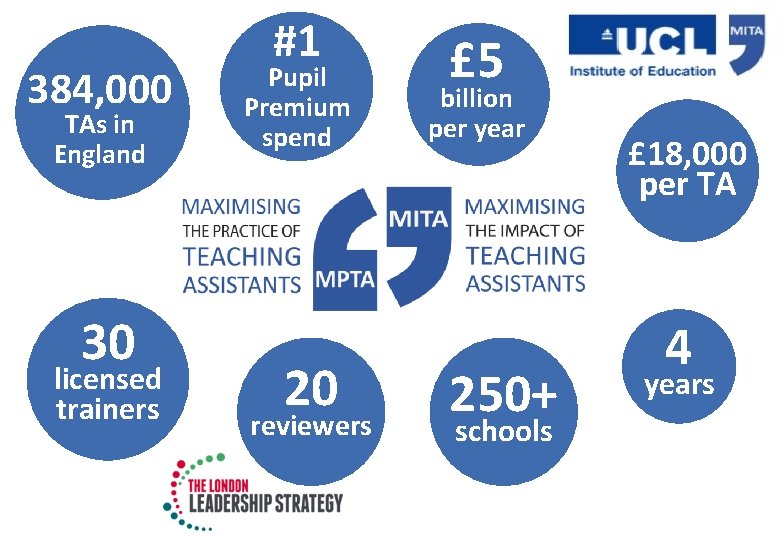
384, 000 TAs in England 30 licensed trainers #1 Pupil Premium spend 20 reviewers £ 5 billion per year 250+ schools £ 18, 000 per TA 4 years
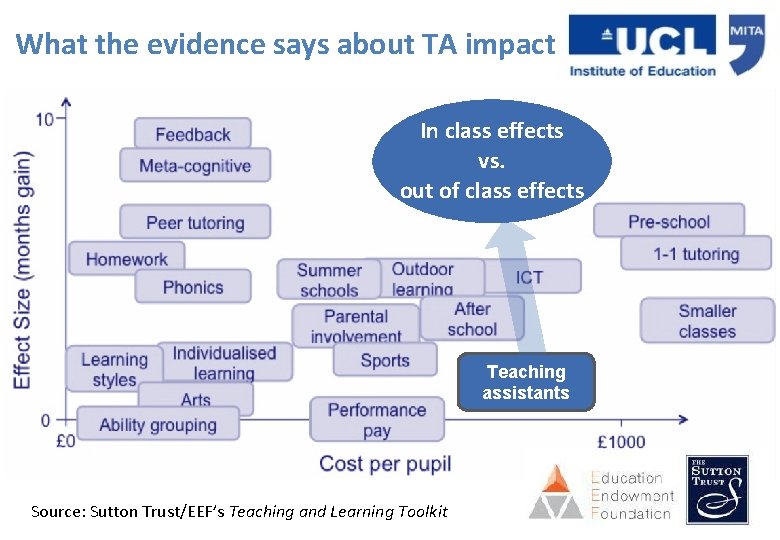
What the evidence says about TA impact In class effects vs. out of class effects Teaching assistants Source: Sutton Trust/EEF’s Teaching and Learning Toolkit
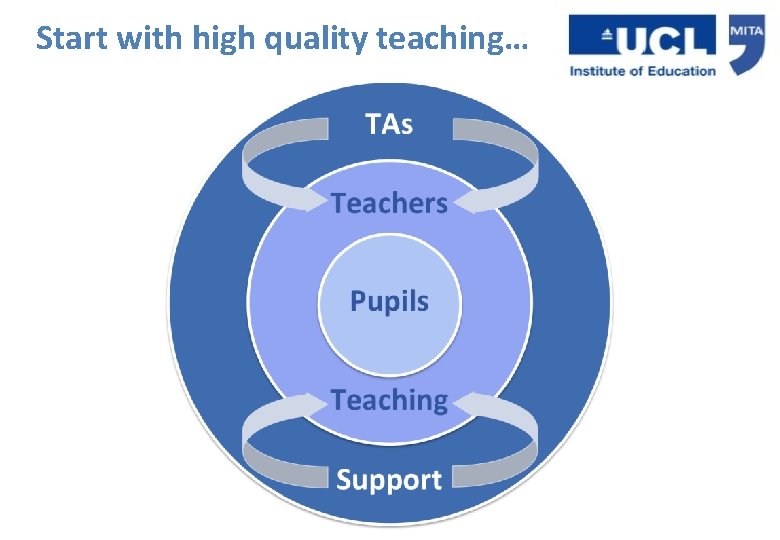
Start with high quality teaching…
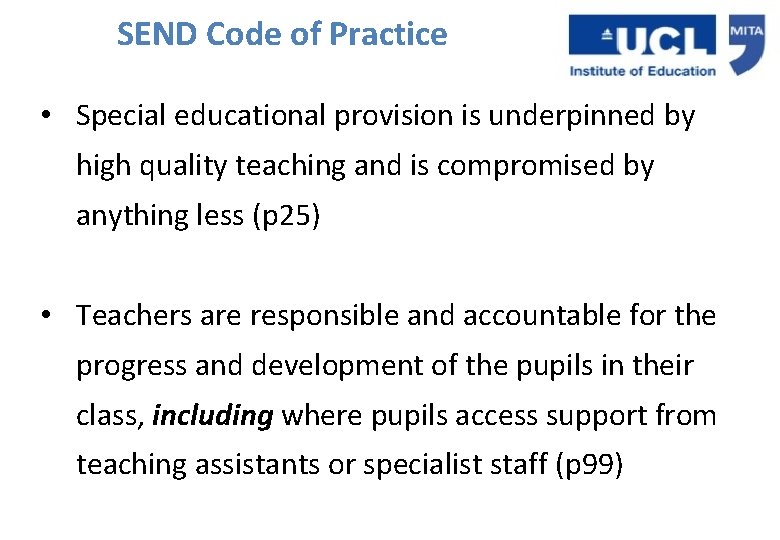
SEND Code of Practice • Special educational provision is underpinned by high quality teaching and is compromised by anything less (p 25) • Teachers are responsible and accountable for the progress and development of the pupils in their class, including where pupils access support from teaching assistants or specialist staff (p 99)
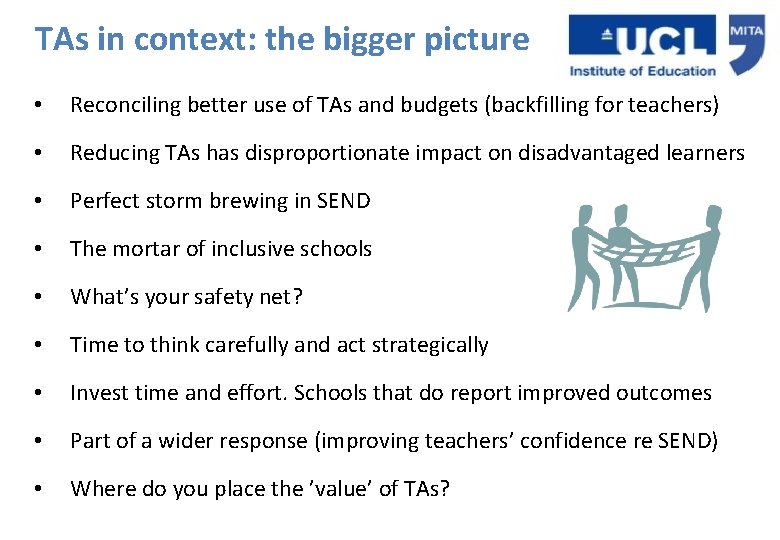
TAs in context: the bigger picture • Reconciling better use of TAs and budgets (backfilling for teachers) • Reducing TAs has disproportionate impact on disadvantaged learners • Perfect storm brewing in SEND • The mortar of inclusive schools • What’s your safety net? • Time to think carefully and act strategically • Invest time and effort. Schools that do report improved outcomes • Part of a wider response (improving teachers’ confidence re SEND) • Where do you place the ’value’ of TAs?
Making better use of TAs • 4 areas for action: Ø 1 key principle Ø 4 steps to doing things better • Key issues and practical steps – according to the evidence • Putting it all together • Supplementary resources
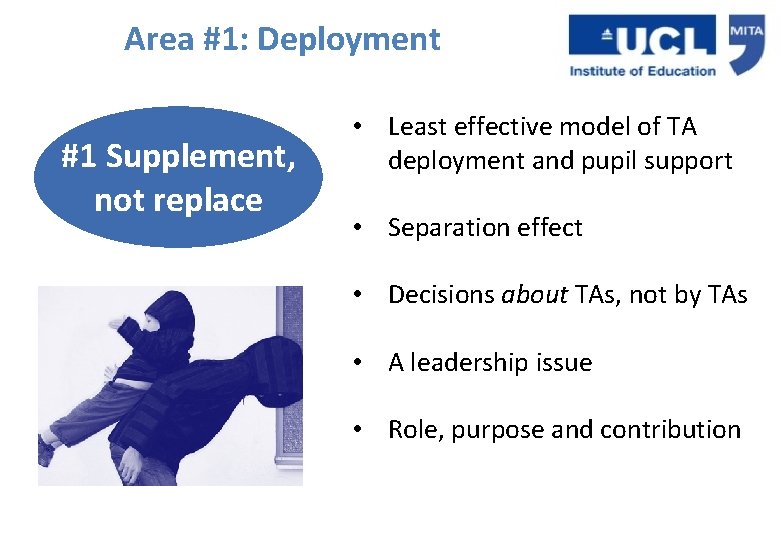
Area #1: Deployment #1 Supplement, not replace • Least effective model of TA deployment and pupil support • Separation effect • Decisions about TAs, not by TAs • A leadership issue • Role, purpose and contribution
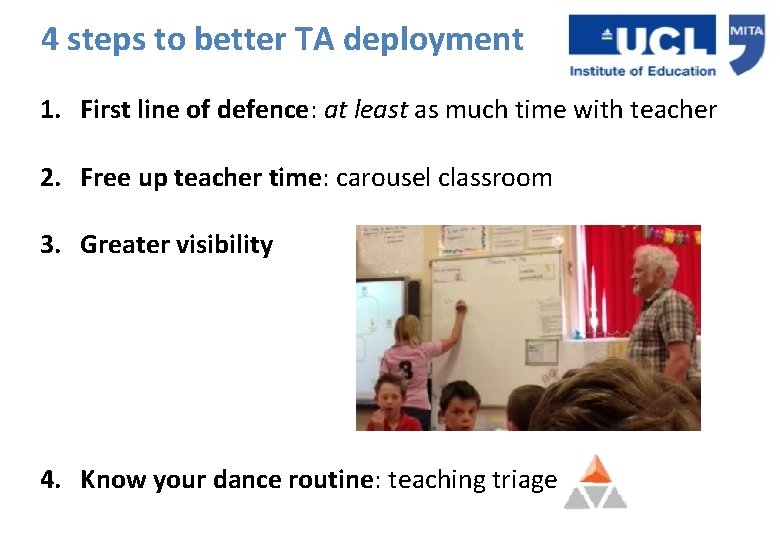
4 steps to better TA deployment 1. First line of defence: at least as much time with teacher 2. Free up teacher time: carousel classroom 3. Greater visibility 4. Know your dance routine: teaching triage
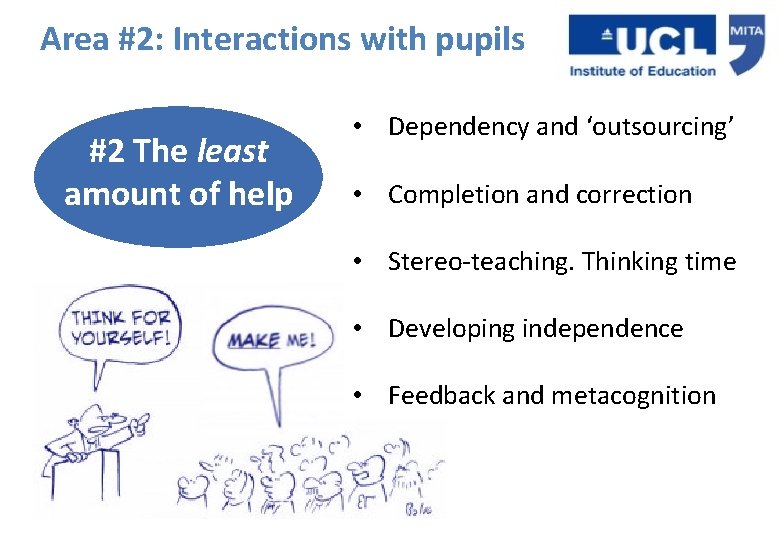
Area #2: Interactions with pupils #2 The least amount of help • Dependency and ‘outsourcing’ • Completion and correction • Stereo-teaching. Thinking time • Developing independence • Feedback and metacognition
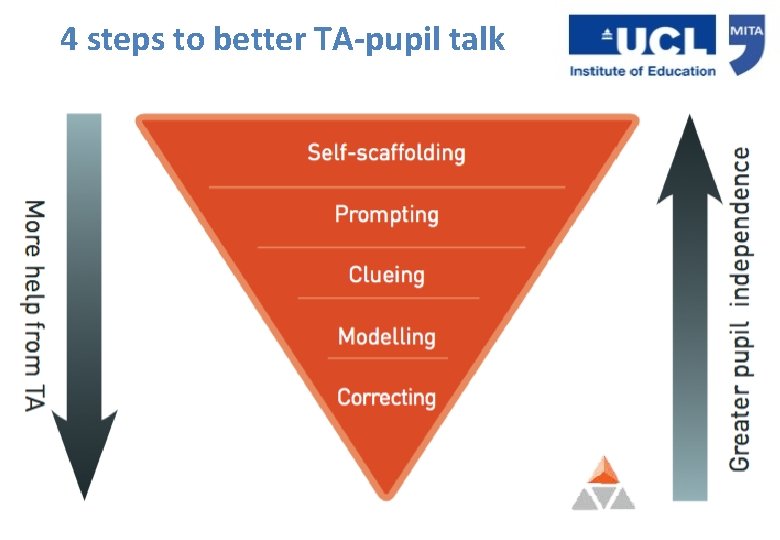
4 steps to better TA-pupil talk
Area #3: Preparedness #3 Maximise the 95% “There is an assumption you should just know. You come into a classroom, you listen to the 20 minutes of teaching, and from that – if you didn’t know, you should know now. And then you’re to feed it to the children. It’s scary”.
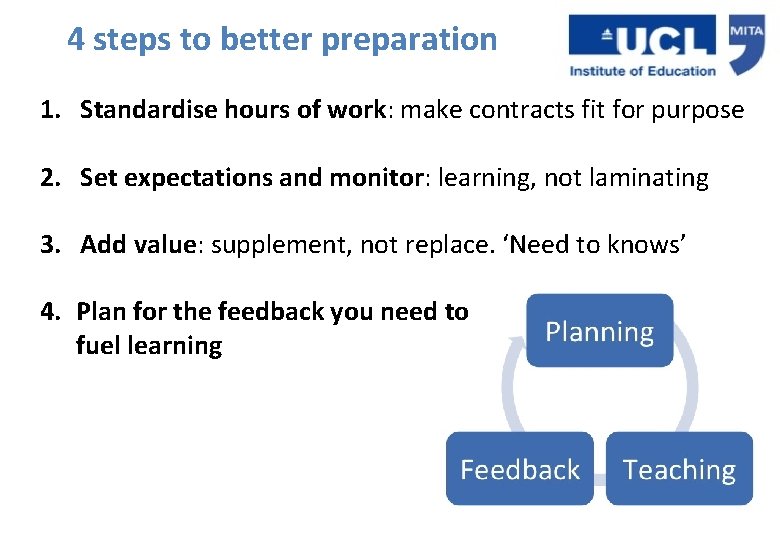
4 steps to better preparation 1. Standardise hours of work: make contracts fit for purpose 2. Set expectations and monitor: learning, not laminating 3. Add value: supplement, not replace. ‘Need to knows’ 4. Plan for the feedback you need to fuel learning
Area #4: Structure interventions #4 Not whether, but how • Compelling evidence of impact • Quality materials • Training and coaching • Organisation and environment
7 steps to better TA-led interventions 1. Keep up, not catch up: at least compensate for time out 2. Review, reject…: conduct a health-check 3. …and replace: slim menu, judiciously used. EEF 7 4. Be faithful: bake, don’t busk 5. Stick to the script: familiarise first, then adapt 6. Co-ordinate, cohere and complement: bridge the learning 7. Location, location
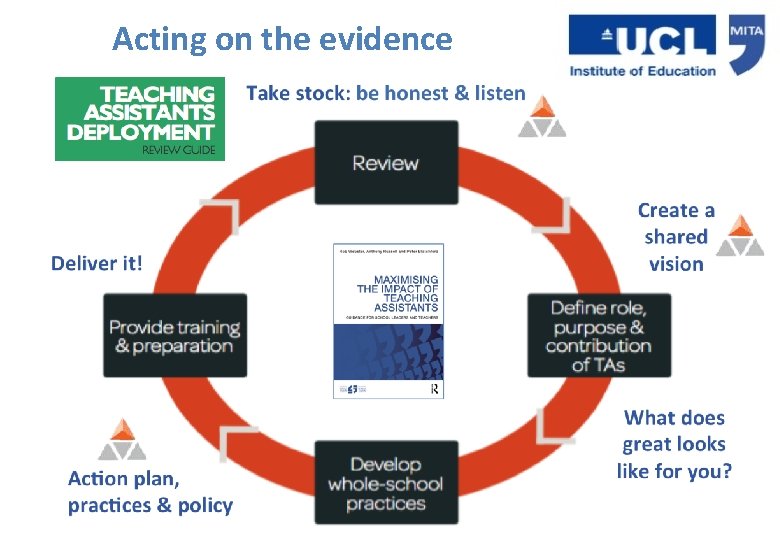
Acting on the evidence
Some guiding principles • Not a cover for SEND provision: www. thesendreview. com • What works 90% of the time for 90% of the school • Lens for judgment is SLT and teacher decision-making • Introduce sensitively and proceed with caution • Form a development team, led by headteacher • Dedicated strategy time • Gradual rollout wins support (2 -3 terms)
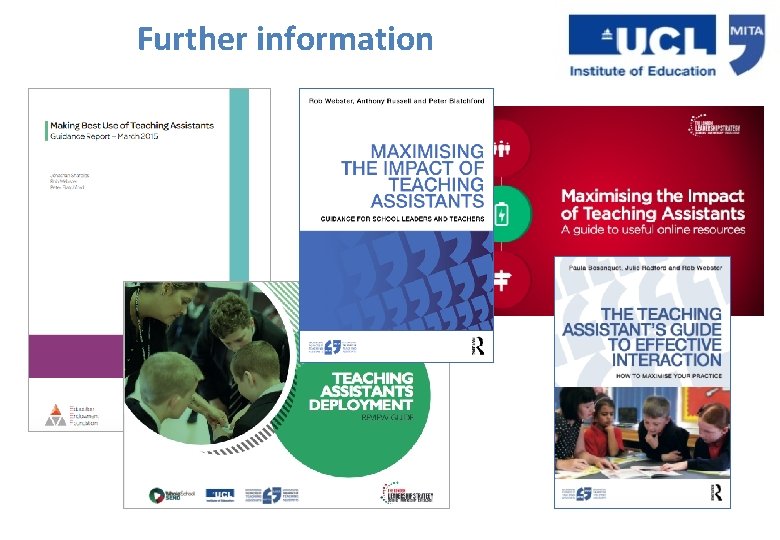
Further information
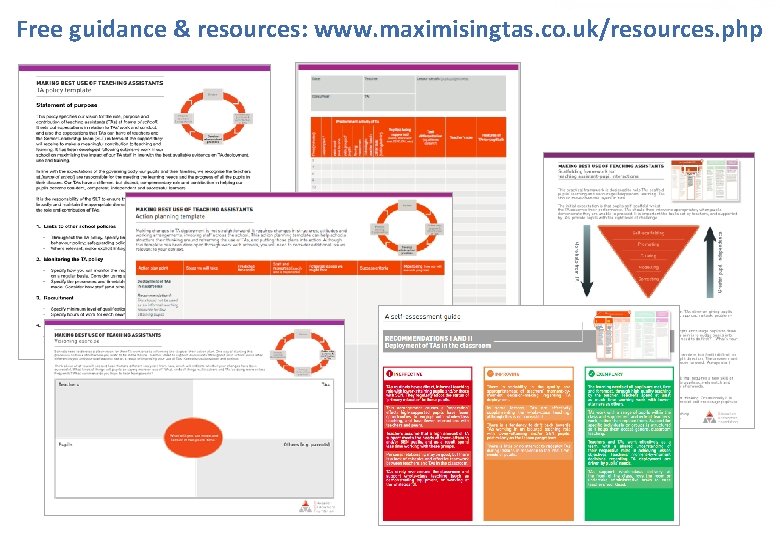
Free guidance & resources: www. maximisingtas. co. uk/resources. php
For courses, CPD, resources, research… www. maximisingtas. co. uk www. mobilise. kyrateachingschool. com rob. webster@ucl. ac. uk @maximising. TAs