
Maxillofacial Trauma and Its Emergency Management Presenter Dr

- Slides: 56
Maxillofacial Trauma and Its Emergency Management Presenter; Dr Fredrick Maeda Moderator; Dr Albert Mnyanzilu
OUTLINE ●Introduction ●Causes of trauma ●Types of trauma ●Signs and Symptoms ●Emergency Management related to Trauma ●References 2
Maxillofacial Trauma: Definition: Any injury (such as wound) to a living tissue cause by an extrinsic agent 3
Maxillofacial Emergency: Situation that requires early management and may complicate affected patient’s life by affecting his face, brain, cervical spine and airway. 4
TRAUMA/INJURY: Facial Trauma is one of the main reason of maxillofacial emergencies. Proportionally male are more prone to trauma than the female(2: 1). Facial trauma may be associated with traumatic brain injury in 15 -48%. 5
Causes of Trauma : It may result from 1. 2. 3. 4. 5. RTA /MTA Interpersonal Violence Sport injury Fall Industrial And Home accident 6
Types of Injury: Maxillofacial injuries are of two types: 1. Hard Tissue Injury 2. Soft Tissue Injury
Hard Tissue injury 1. Fractures ● Upper Third Fracture ● Mid-face fracture ● Lower third fracture/Mandibular Fracture 2. Displacement 3. Dislocations 4. Dento-Alveolar Injury(Tooth Fracture , Tooth Avulsion) 8
Fracture ● Definition: Complte/incomplete break in continuty of bone resulting from execessive application of force 9
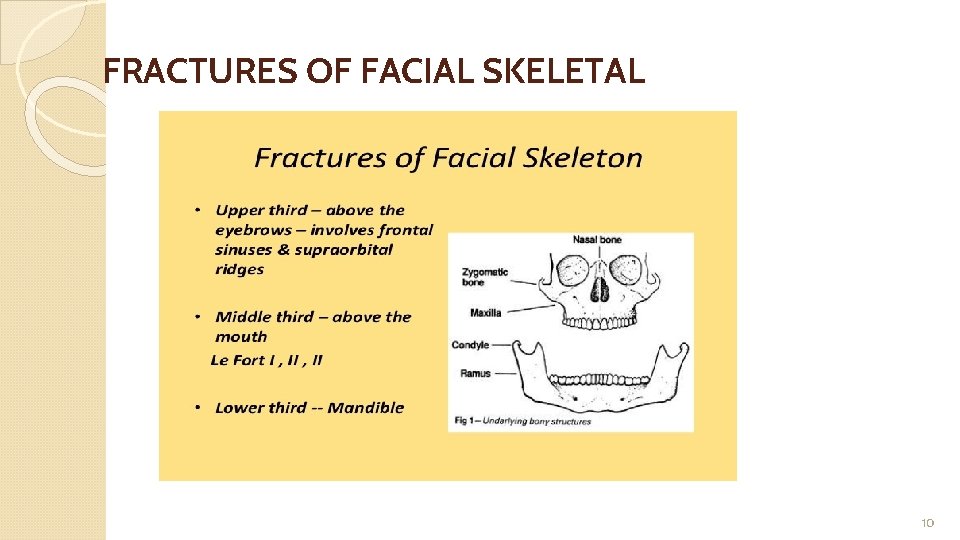
FRACTURES OF FACIAL SKELETAL 10
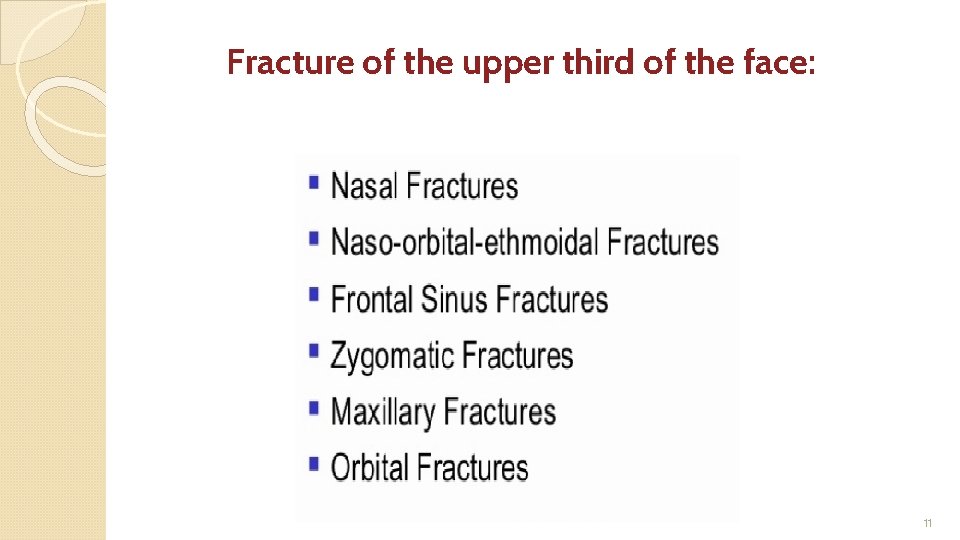
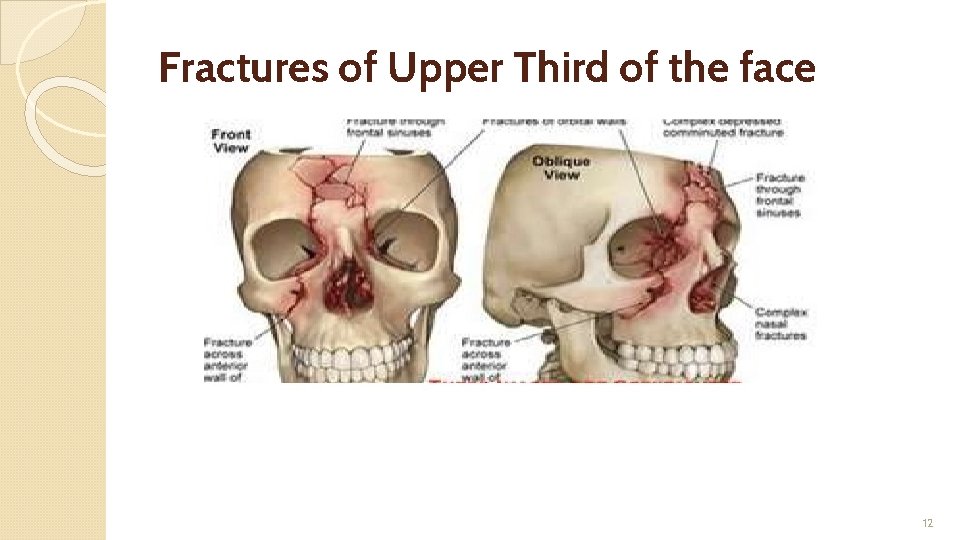
Fracture of the upper third of the face: 11
Fractures of Upper Third of the face 12
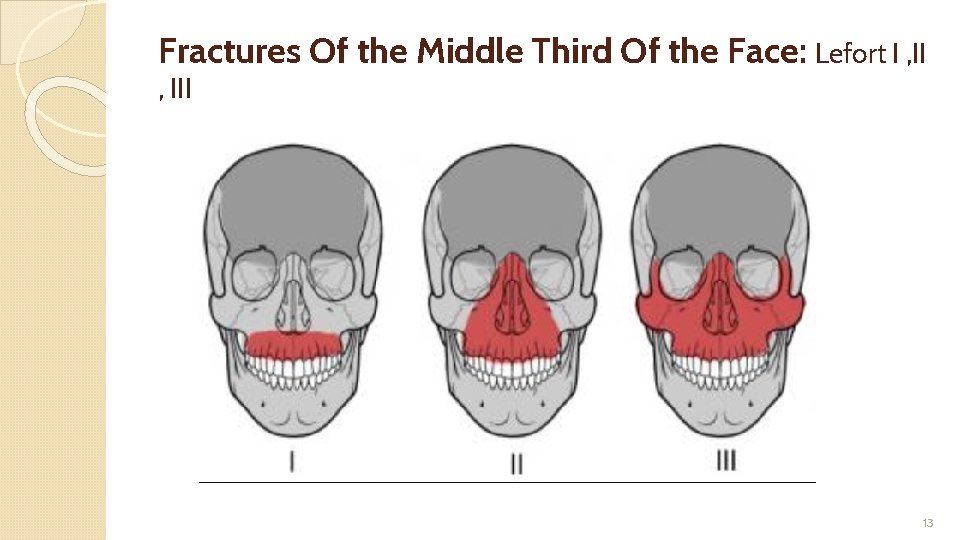
Fractures Of the Middle Third Of the Face: Lefort I , III 13
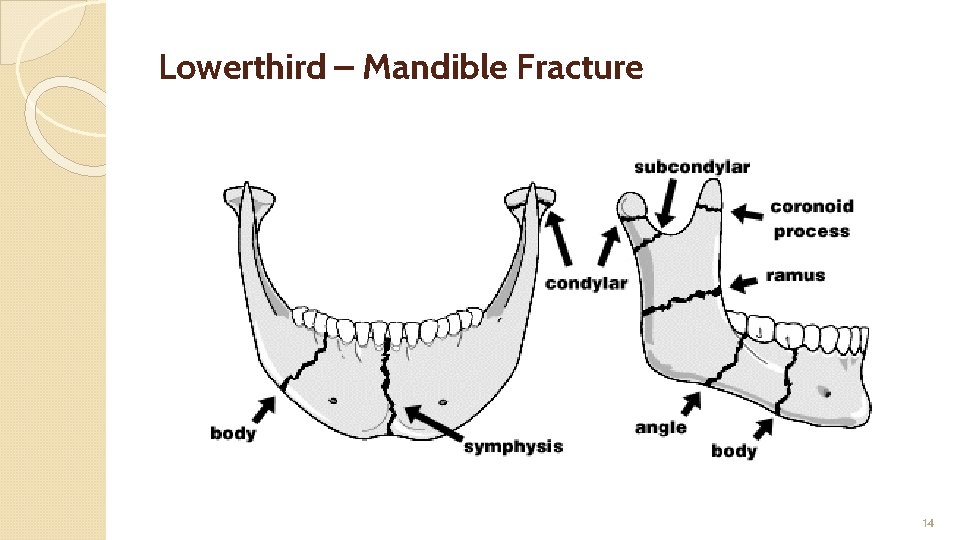
Lowerthird – Mandible Fracture 14
15
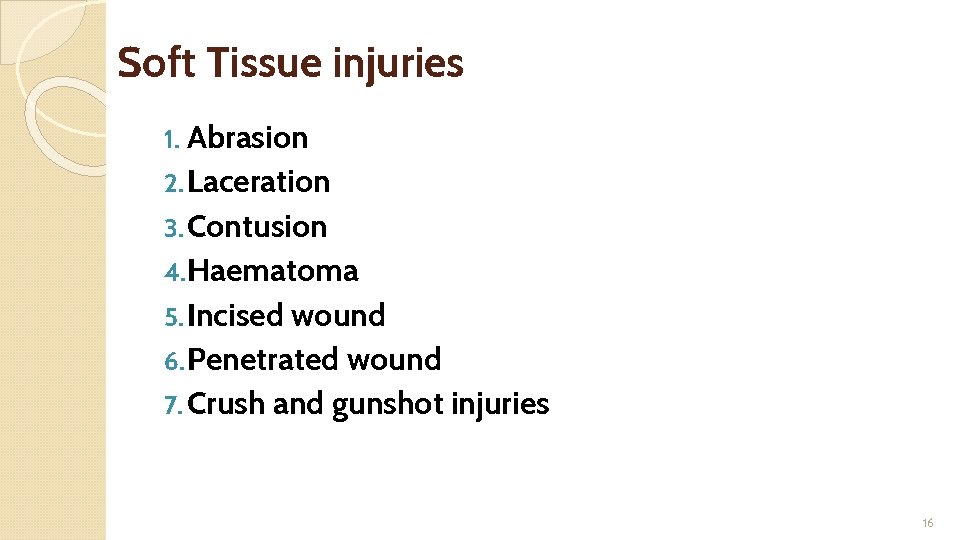
Soft Tissue injuries 1. Abrasion 2. Laceration 3. Contusion 4. Haematoma 5. Incised wound 6. Penetrated wound 7. Crush and gunshot injuries 16
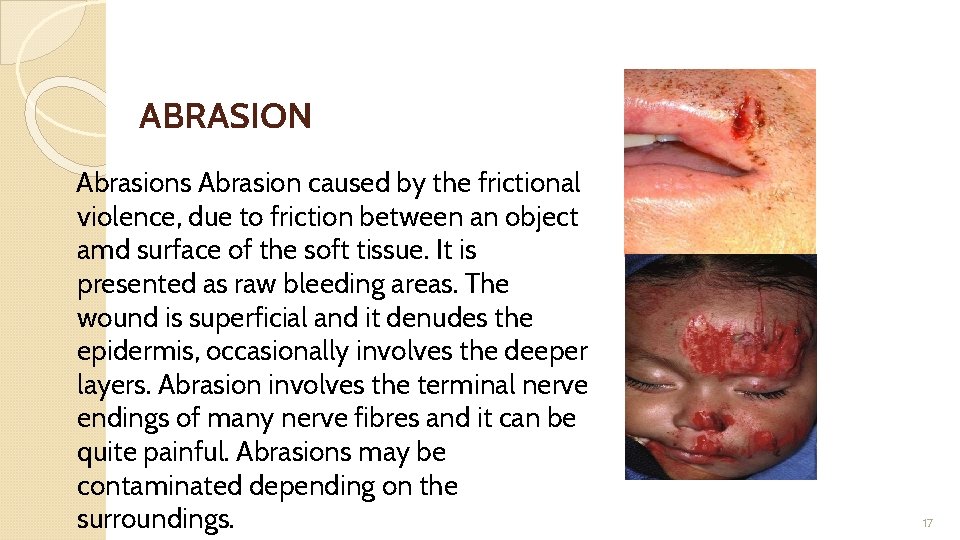
ABRASION Abrasions Abrasion caused by the frictional violence, due to friction between an object amd surface of the soft tissue. It is presented as raw bleeding areas. The wound is superficial and it denudes the epidermis, occasionally involves the deeper layers. Abrasion involves the terminal nerve endings of many nerve fibres and it can be quite painful. Abrasions may be contaminated depending on the surroundings. 17
ABRASION(TREATMENT) ● ● ● 1. Through cleaning with profuse saline irrigation 2. Removal of the foreign material 3. Gentle scrubbing with the soft brush to remove sticky material to prevent tattooing 4. Use of surgical soap is required to be done prior to dressing 5. Topical application of antibiotic ointment with compression dressing promotes good healing. 6. Superficial abrasions can be covered with topical antibiotic application and left open. Slowly the crust of dried blood and serum will form a scab and it will fall off as the healing takes place. 18
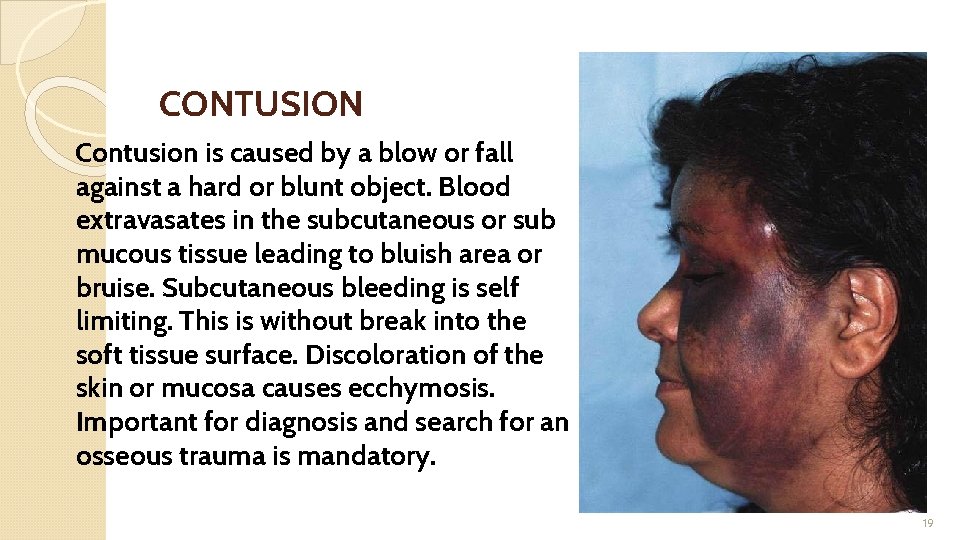
CONTUSION Contusion is caused by a blow or fall against a hard or blunt object. Blood extravasates in the subcutaneous or sub mucous tissue leading to bluish area or bruise. Subcutaneous bleeding is self limiting. This is without break into the soft tissue surface. Discoloration of the skin or mucosa causes ecchymosis. Important for diagnosis and search for an osseous trauma is mandatory. 19
CONTUSION(TREATMENT) ● 1. Application of ice pack will help to stop further extravasation of blood. ● 2. An elastic bandage may be wrapped around a bruised muscle to support the area and decrease swelling 20
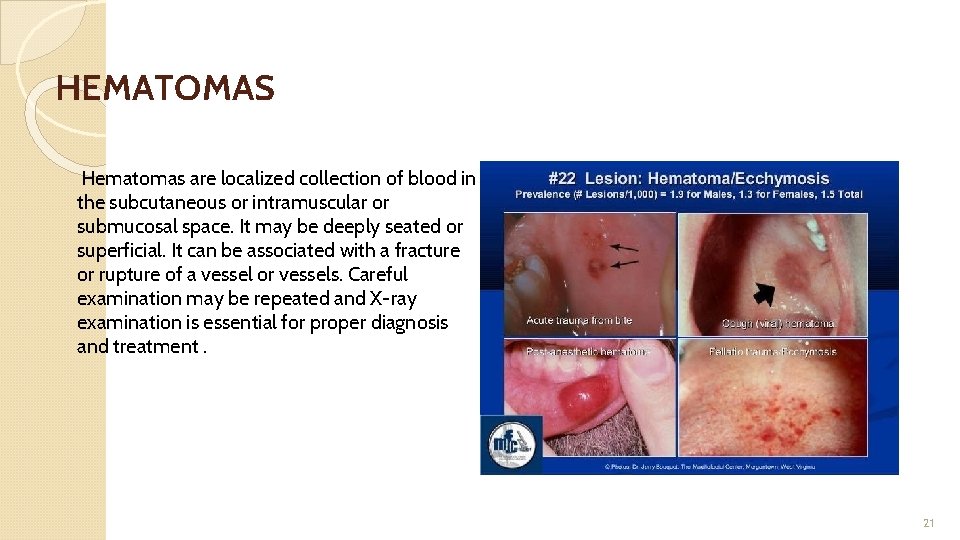
HEMATOMAS Hematomas are localized collection of blood in the subcutaneous or intramuscular or submucosal space. It may be deeply seated or superficial. It can be associated with a fracture or rupture of a vessel or vessels. Careful examination may be repeated and X-ray examination is essential for proper diagnosis and treatment. 21
HEMATOMA(TREATMENT) ● 1. Most hematomas are reabsorbed ● 2. Persistent hematoma may require incision and drainage. It can not be aspirated as blood is partially clotted ● 3. Antibiotic cover should be given to prevent hematoma from getting infection. 22
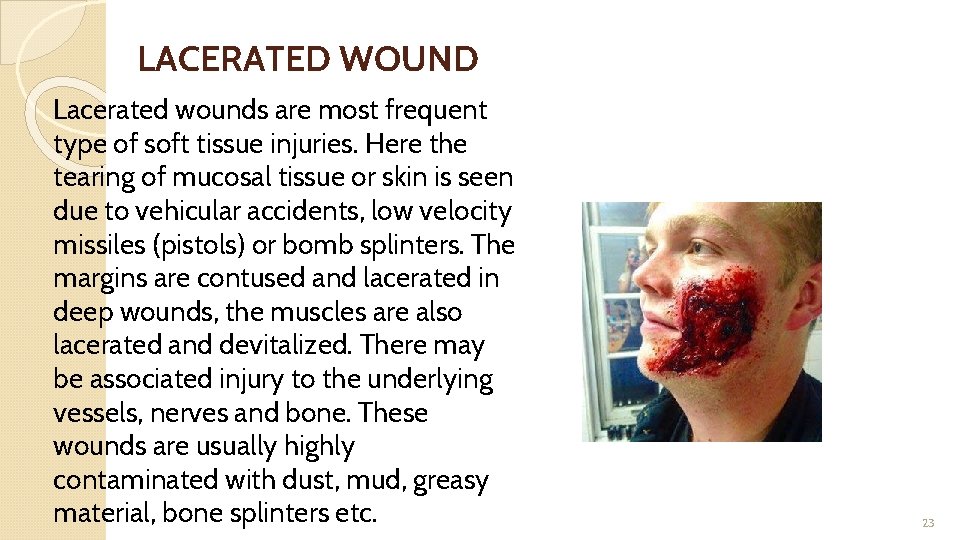
LACERATED WOUND Lacerated wounds are most frequent type of soft tissue injuries. Here the tearing of mucosal tissue or skin is seen due to vehicular accidents, low velocity missiles (pistols) or bomb splinters. The margins are contused and lacerated in deep wounds, the muscles are also lacerated and devitalized. There may be associated injury to the underlying vessels, nerves and bone. These wounds are usually highly contaminated with dust, mud, greasy material, bone splinters etc. 23
LACERATED WOUND(TREATMENT) ● 1. Through cleaning, minimum debridement, removal of foreign bodies and proper suturing as early as possible should be done ● 2. Closure should be done in multiple layers (muscle, dermis, epidermis, submucosa and mucosal closure). 24
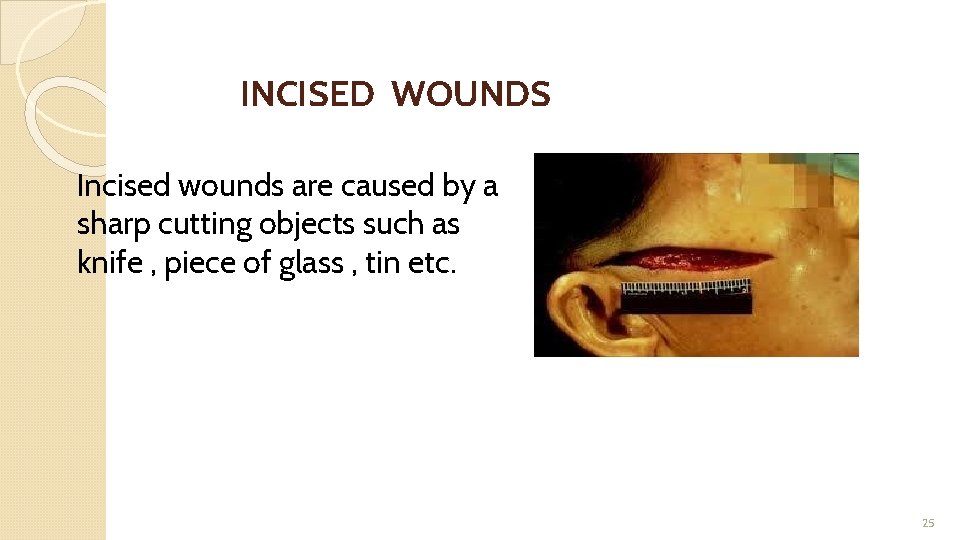
INCISED WOUNDS Incised wounds are caused by a sharp cutting objects such as knife , piece of glass , tin etc. 25
INCISED WOUND (TREATMENT) 1. Cleaning, exploring , and the bleeding should be stopped. 2. Wound closed by primary intension 26
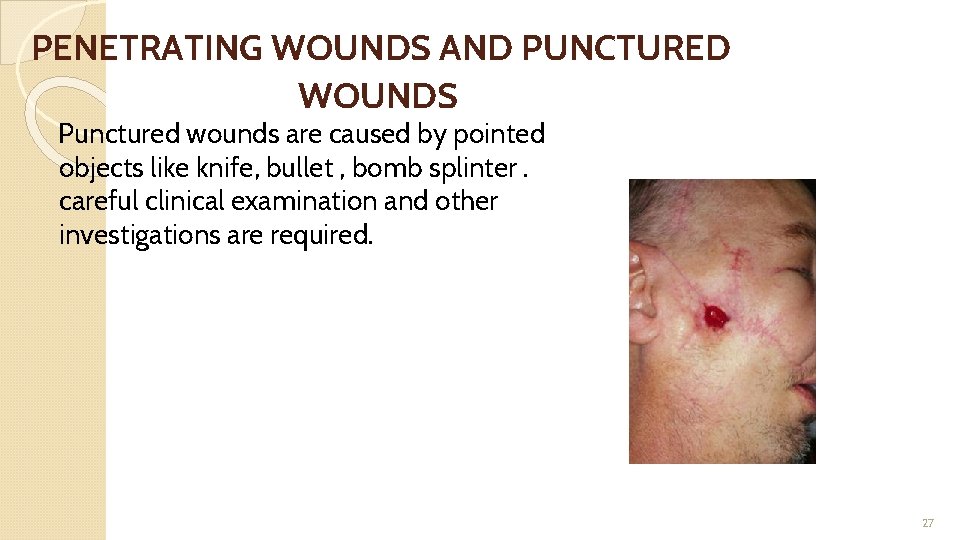
PENETRATING WOUNDS AND PUNCTURED WOUNDS Punctured wounds are caused by pointed objects like knife, bullet , bomb splinter. careful clinical examination and other investigations are required. 27
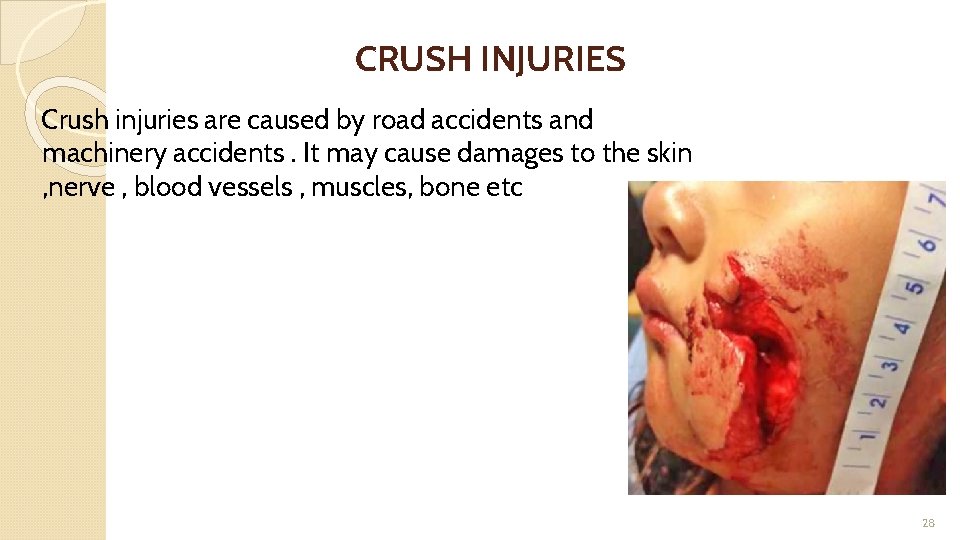
CRUSH INJURIES Crush injuries are caused by road accidents and machinery accidents. It may cause damages to the skin , nerve , blood vessels , muscles, bone etc 28
CRUSH INJURIES(TREATMENT) ● Tetanus shot will be necessary as well antibiotics ● Immediate medical attention is required. ● In serious crush injuries, in which compartment syndrome has already set in or is inevitable. Immediate surgery will be required to eliminate the pressure on the muscles and nerves 29
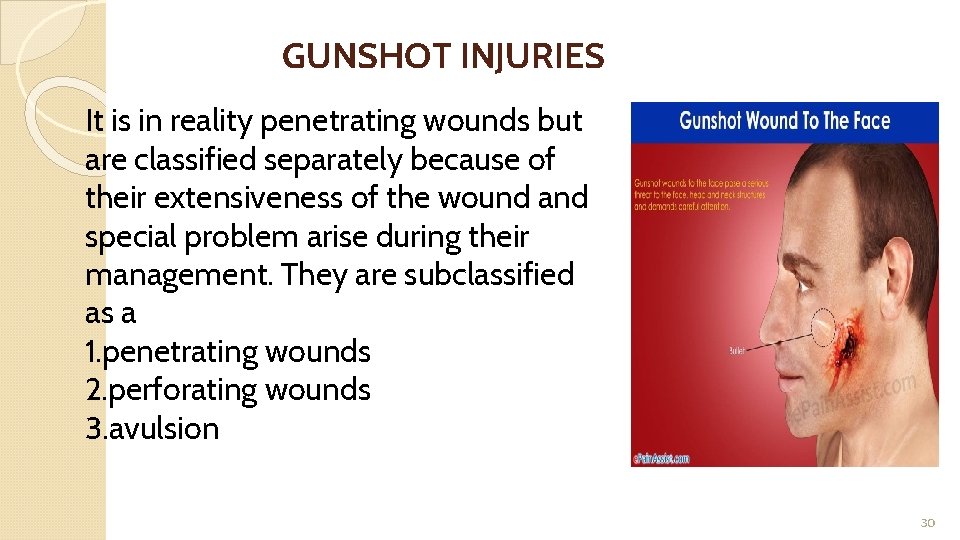
GUNSHOT INJURIES It is in reality penetrating wounds but are classified separately because of their extensiveness of the wound and special problem arise during their management. They are subclassified as a 1. penetrating wounds 2. perforating wounds 3. avulsion 30
31
Emergency Management of a Trauma patient: Advanced trauma life support(commonly abbreviated ATLS) is a training program for medical providers in the management of acute trauma cases. 32
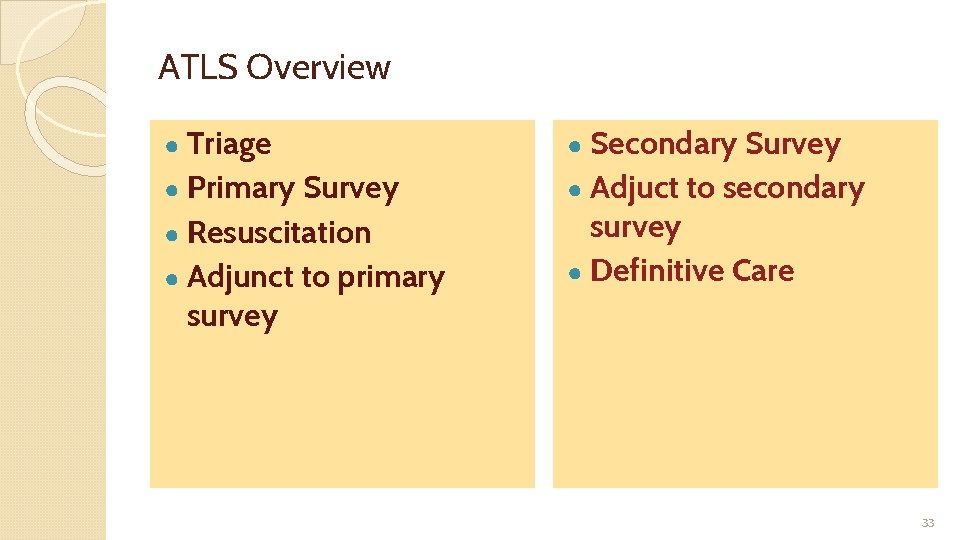
ATLS Overview ● Triage ● Secondary Survey ● Resuscitation survey ● Definitive Care ● Primary Survey ● Adjunct to primary survey ● Adjuct to secondary 33
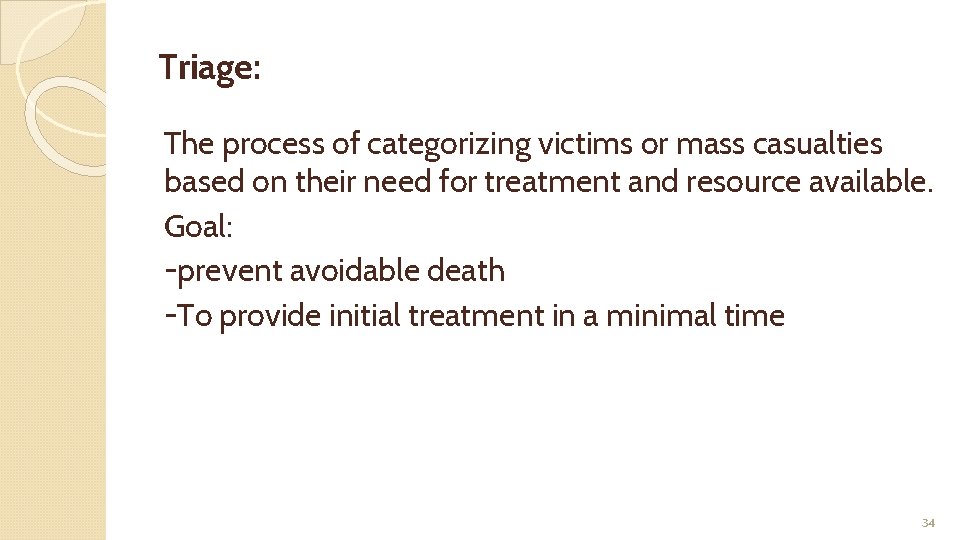
Triage: The process of categorizing victims or mass casualties based on their need for treatment and resource available. Goal: -prevent avoidable death -To provide initial treatment in a minimal time 34
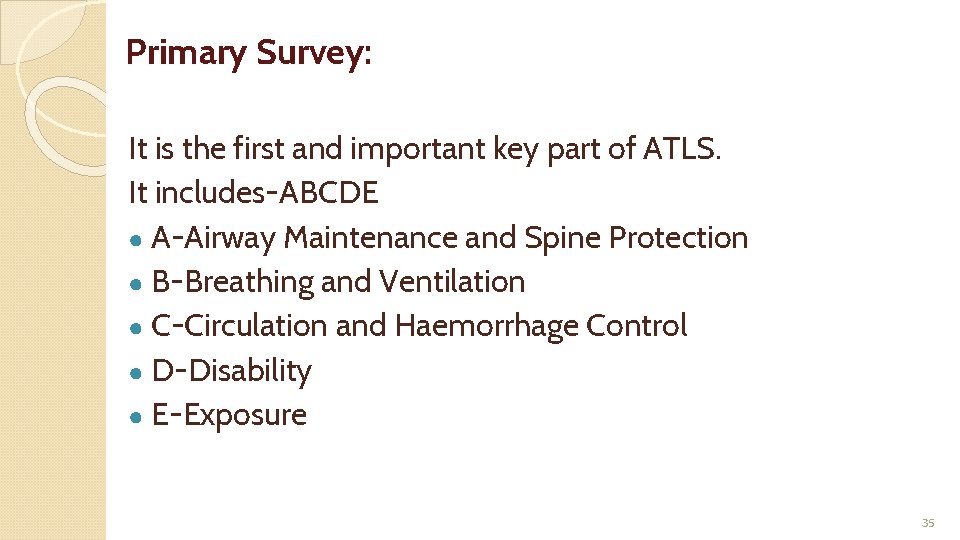
Primary Survey: It is the first and important key part of ATLS. It includes-ABCDE ● A-Airway Maintenance and Spine Protection ● B-Breathing and Ventilation ● C-Circulation and Haemorrhage Control ● D-Disability ● E-Exposure 35
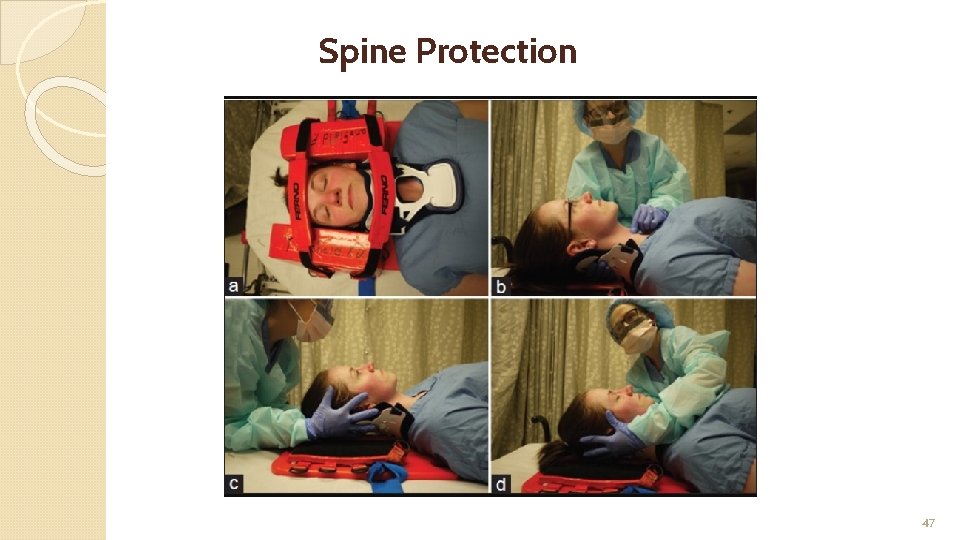
Airway Maintenance and Spine Protection 36
Factors That May Compromise the Airway: According to Hutchison et al. , there are six specific situations associated with maxillofacial trauma, which can adversely affect the airway. 37
NO. 1 Posterior inferior displacement of a fractured maxilla parallel to the inclined plane of the base of the skull may block the nasopharyngeal airway 38
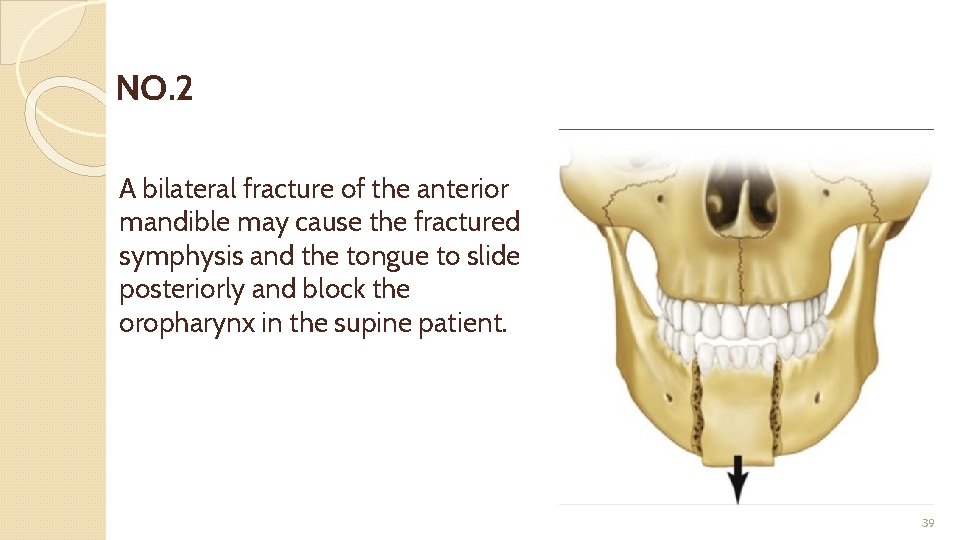
NO. 2 A bilateral fracture of the anterior mandible may cause the fractured symphysis and the tongue to slide posteriorly and block the oropharynx in the supine patient. 39
NO. 3 Fractured or exfoliated teeth, bone fragments, vomitus, blood, and secretions as well as foreign bodies, such as dentures, debris, and shrapnel, may block the airway anywhere along the oropharynx and larynx. 40
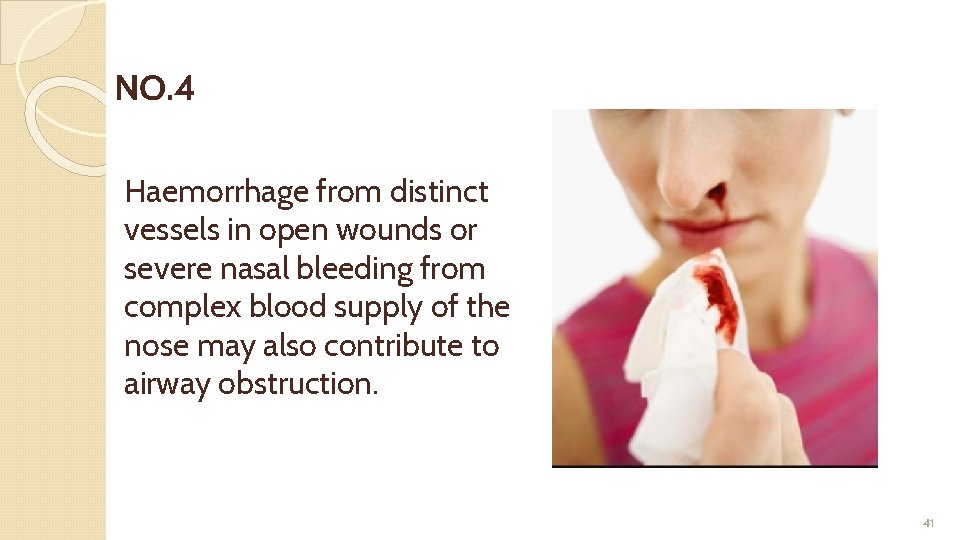
NO. 4 Haemorrhage from distinct vessels in open wounds or severe nasal bleeding from complex blood supply of the nose may also contribute to airway obstruction. 41
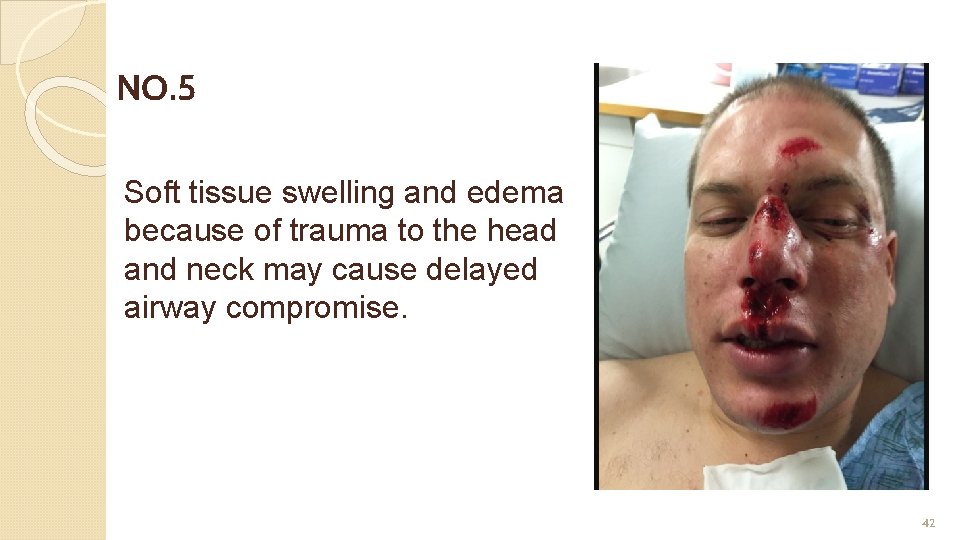
NO. 5 Soft tissue swelling and edema because of trauma to the head and neck may cause delayed airway compromise. 42
NO. 6 Trauma of the larynx and trachea may cause swelling and displacement of structures, such as the epiglottis, arytenoid cartilages, and vocal cords, thereby increasing the risk of cervical airway obstruction. 43
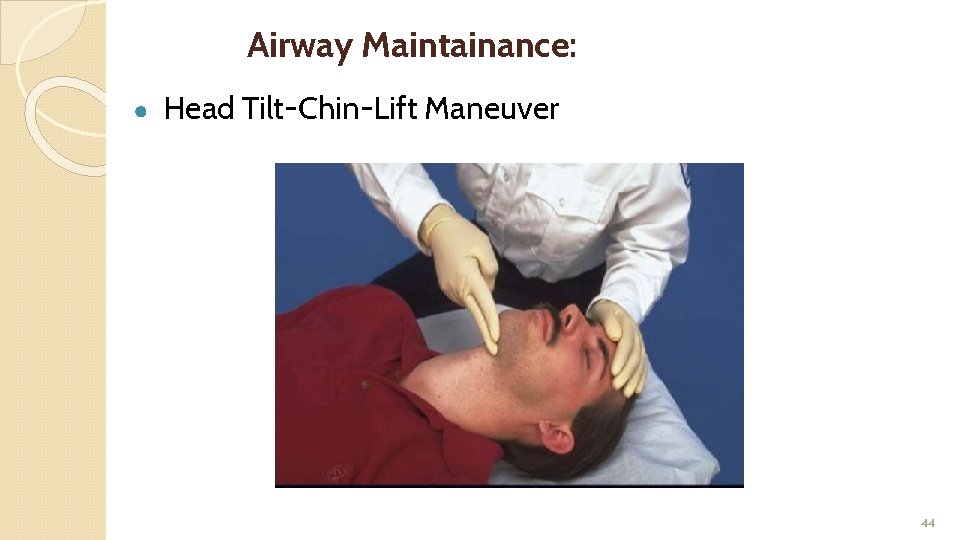
Airway Maintainance: ● Head Tilt-Chin-Lift Maneuver 44
Airway Maintainance ● Oropharyngeal Toileting: By digital exploration or using cotton swabs ● Suction Nasal Cavity, Oral Cavity and Throat ● Control the tongue by Tongue suturing ● Temporary stabilization of fracture ● Mouth to mouth breathing ● Endotracheal intubation 45
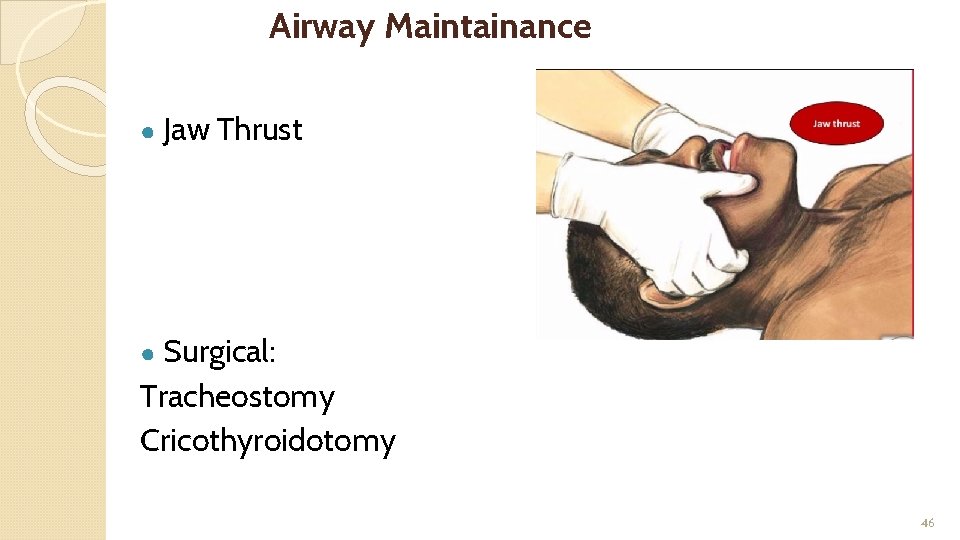
Airway Maintainance ● Jaw Thrust ● Surgical: Tracheostomy Cricothyroidotomy 46
Spine Protection 47
Breathing and Ventillation 48
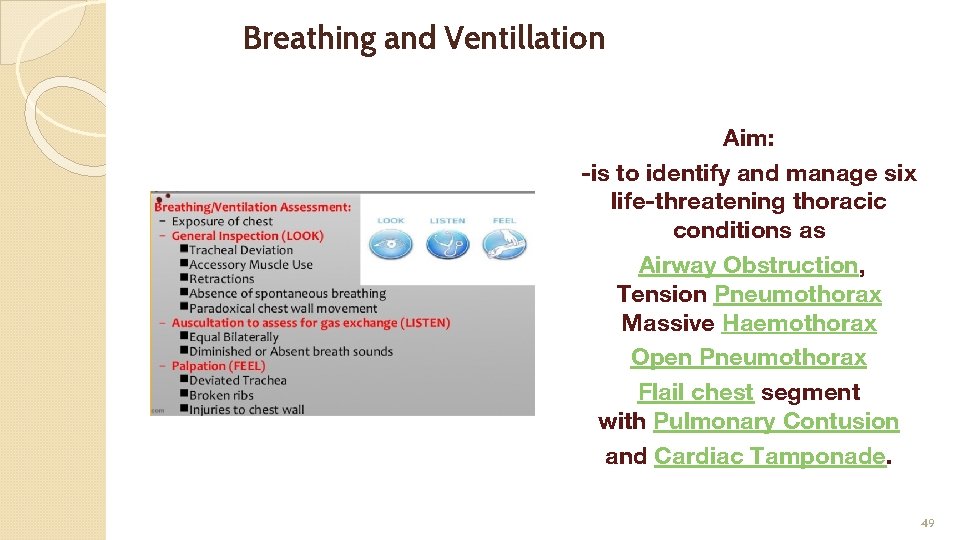
Breathing and Ventillation Aim: -is to identify and manage six life-threatening thoracic conditions as Airway Obstruction, Tension Pneumothorax Massive Haemothorax Open Pneumothorax Flail chest segment with Pulmonary Contusion and Cardiac Tamponade. 49
Circulation and Haemorrhage Control 50
Circulation and Heamorrhage Control ● ● ● ● If evacuation time is <1 hr, surgical intervention should be done after establishing airway and breathing. If evacuation time is > 1 hr, a Fluid line to be established first Usually Crystalloid solution are preferrable Blood is drawn and sent for grouping and crossmatching As soon as possible blood trasfusion is started Vital parameters are monitored Antibiotics and Analgesics Anti tetanous protection 51
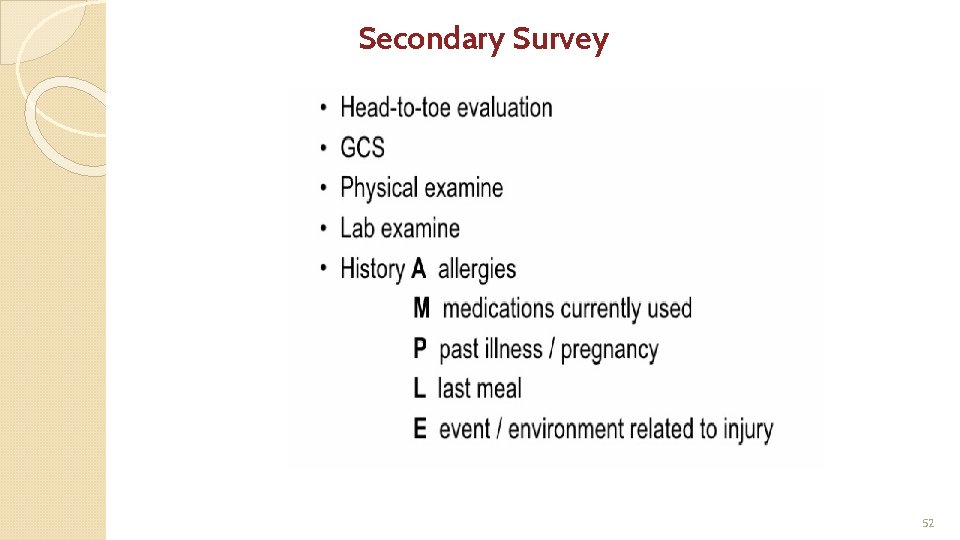
Secondary Survey 52
-Definitive Care This is the one which the patient will be able continue and complete all other forms of management planned for after stabilizing. 53
For speedy Recovery: ● High calorie, High protein diet ● Nasogastric feeding in severe case ● Vitamin supplement 54
References ●Fragiskos D. Fragiskos. Oral Surgery. 2007 Springer- Verlag Berlin Heidelberg ●Larry J Peterson, et al. Contemporary Oral and Maxillofacial Surgery, 4 th Edition, 2003. Mosby Elsevier. St Louis, USA. ●Lars Andersson et al. Oral and Maxillofacial Surgery. 2010 Blackwell Publishing Ltd, UK ●Internet material. 55
Thank YOU 56