
Mauryan Empire 323 BCE 185 BCE Chandragupta Maurya

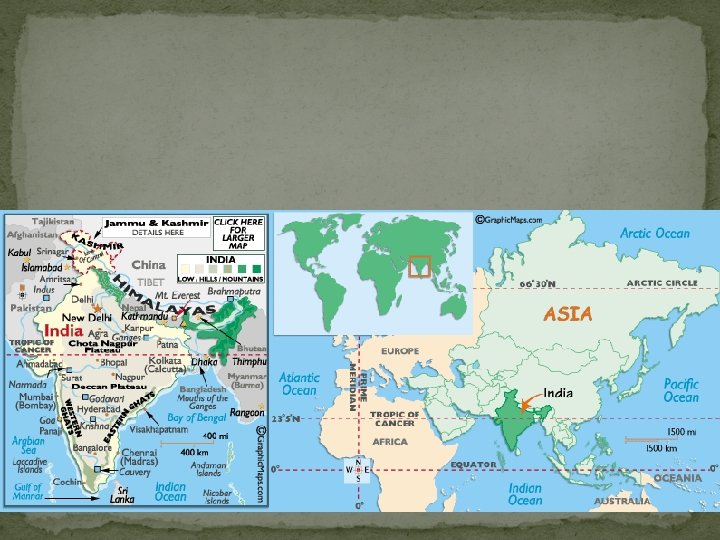




Mauryan Empire � 323 BCE – 185 BCE �Chandragupta Maurya – founder � 1 st Unification of the Subcontinent � Secular ruler � Renounces it all to become a monk, starves to death �NE India along the Ganges river � 320 s BCE – rapid expansion due to the power vacuum left by Alexander �Centralized w/ strong bureaucracy � Influenced by the Persian bureaucracy
Mauryan Economy �Largely Agriculture � Iron plow invented while Aryans ruled � Sharecropping; Landless Peasants �High Rent �Weather �Famine � Wheat, barley, millet, (some rice) � Vegetables, cotton, spice (pepper, ginger, cinnamon, saffron)
Economy �Trade � Rim of Pacific, Middle East, Mediterranean Sea � Traded spices, wood, perfumes, jewels, textiles, precious stones, ivory, wild animals � Traded for gold, tin, lead, wine � Money economy developed around 200 BCE when metals were introduced
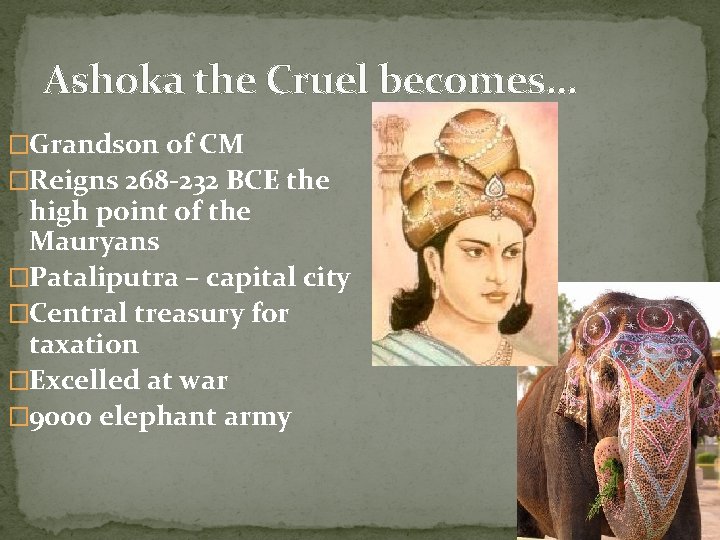
Ashoka the Cruel becomes… �Grandson of CM �Reigns 268 -232 BCE the high point of the Mauryans �Pataliputra – capital city �Central treasury for taxation �Excelled at war � 9000 elephant army
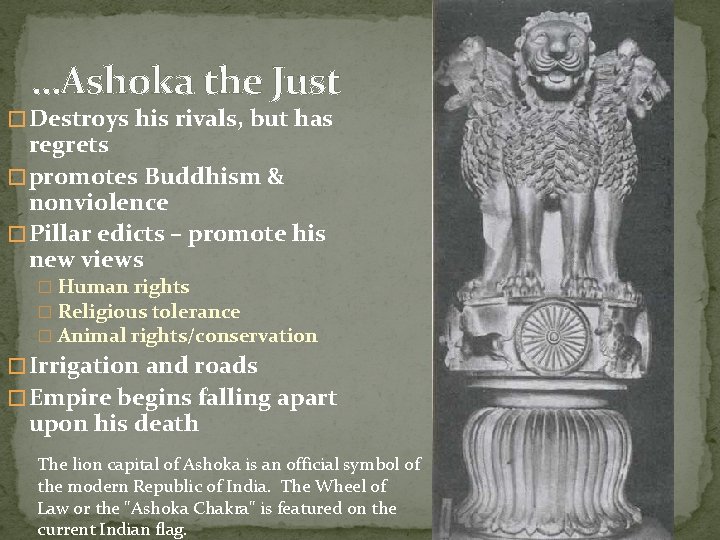
…Ashoka the Just � Destroys his rivals, but has regrets � promotes Buddhism & nonviolence � Pillar edicts – promote his new views � Human rights � Religious tolerance � Animal rights/conservation � Irrigation and roads � Empire begins falling apart upon his death The lion capital of Ashoka is an official symbol of the modern Republic of India. The Wheel of Law or the "Ashoka Chakra" is featured on the current Indian flag.
Downfall �After Ashoka died in 232 BCE: decline � 183 BCE: last Mauryan ruler overthrown by military � Disunity �Several kingdoms vied for power �Why? �“Rule of the Fishes” �Unity will not come again for 500 years
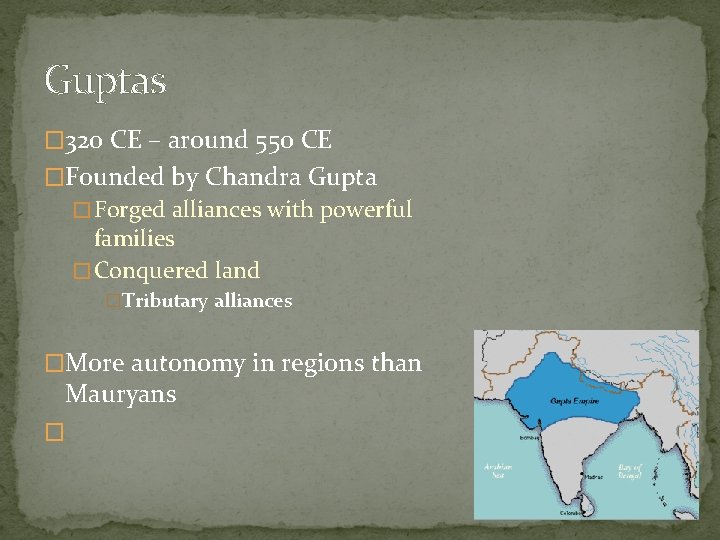
Guptas � 320 CE – around 550 CE �Founded by Chandra Gupta � Forged alliances with powerful families � Conquered land �Tributary alliances �More autonomy in regions than Mauryans �

Religion �Hindu, but tolerant
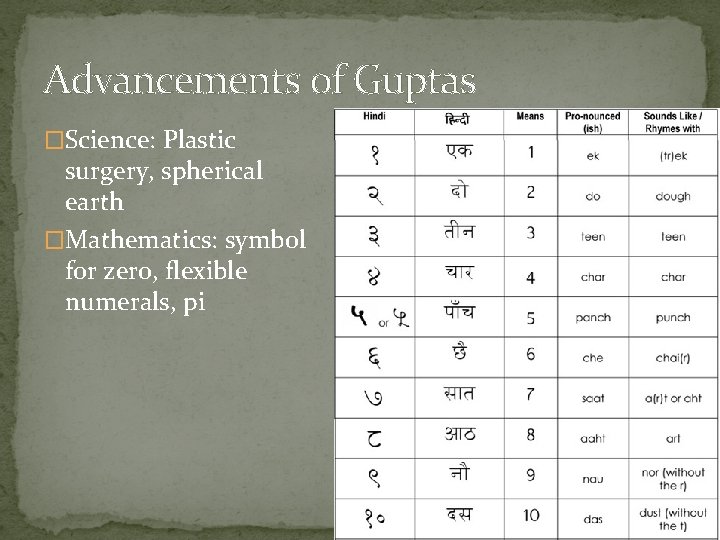
Advancements of Guptas �Science: Plastic surgery, spherical earth �Mathematics: symbol for zero, flexible numerals, pi
Decline of Guptas �Huns invaded during fifth century CE � Guptas successful at first �Defense was expensive, weakened state � Eventually, Gupta Empire broke apart �Local rule
Buddhism Split �Theravada � Closest to teachings of Buddha � Strict adherence to personal behavior �Not a salvationist creed �Mahayana � Nirvana could be achieved through devotion � Buddhism as religion over philosophy �Buddhism declined in India � Rejection of caste system � Hinduism became less elitist (more/better ways to achieve karma
- Slides: 16