
Matter Elements and Properties Matter Anything that takes
- Slides: 16
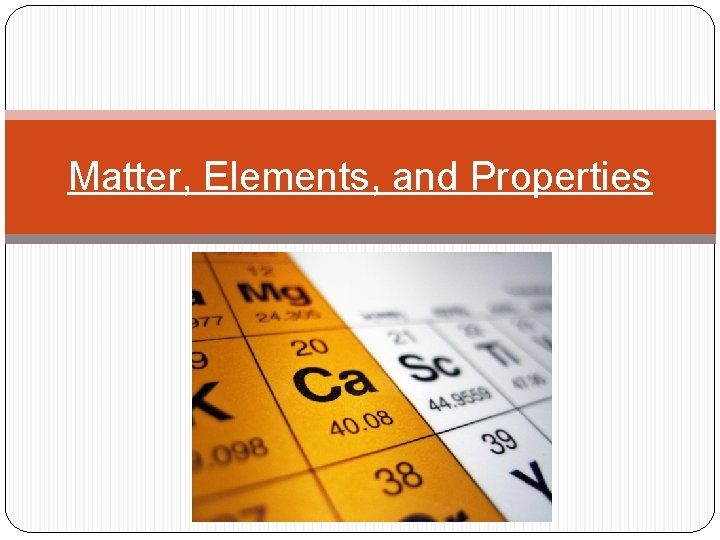
Matter, Elements, and Properties
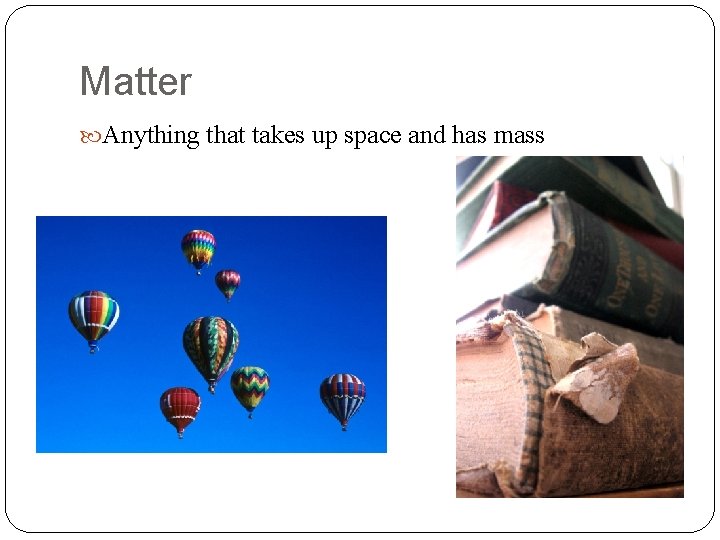
Matter Anything that takes up space and has mass
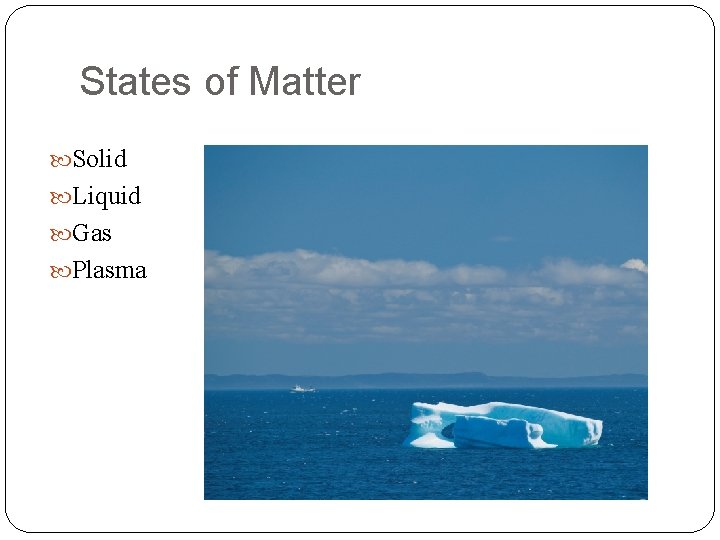
States of Matter Solid Liquid Gas Plasma
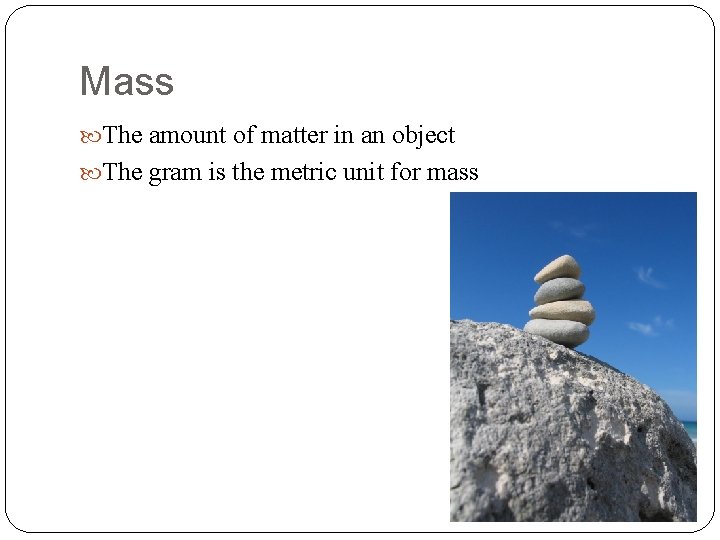
Mass The amount of matter in an object The gram is the metric unit for mass
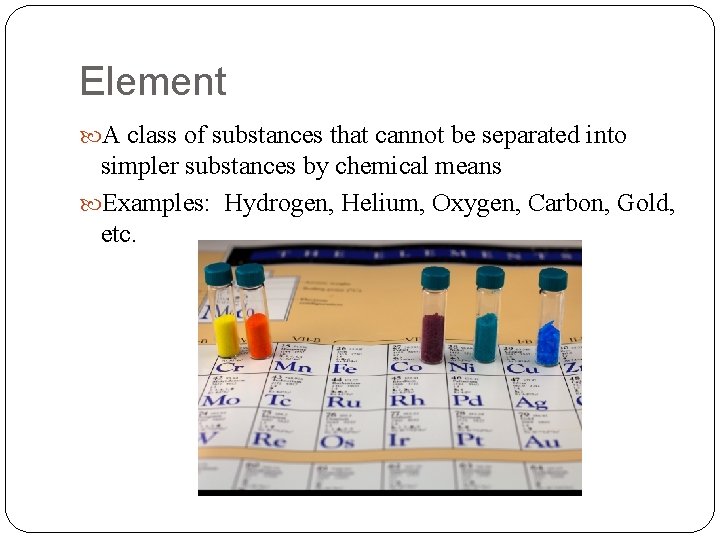
Element A class of substances that cannot be separated into simpler substances by chemical means Examples: Hydrogen, Helium, Oxygen, Carbon, Gold, etc.
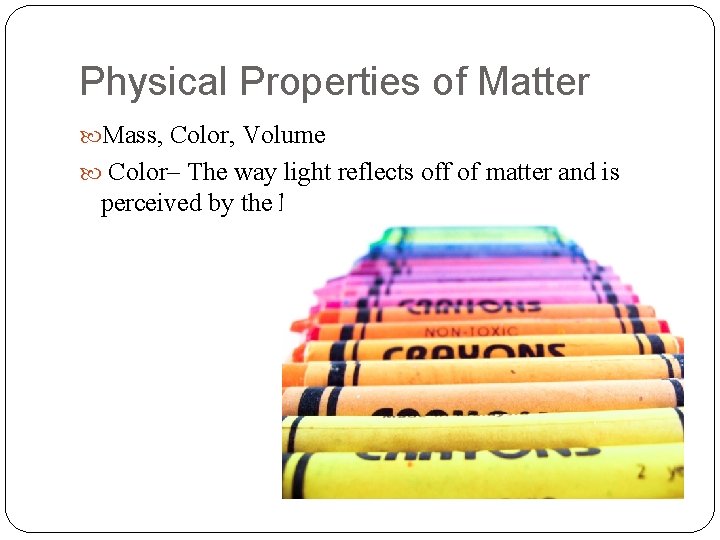
Physical Properties of Matter Mass, Color, Volume Color– The way light reflects off of matter and is perceived by the human eye
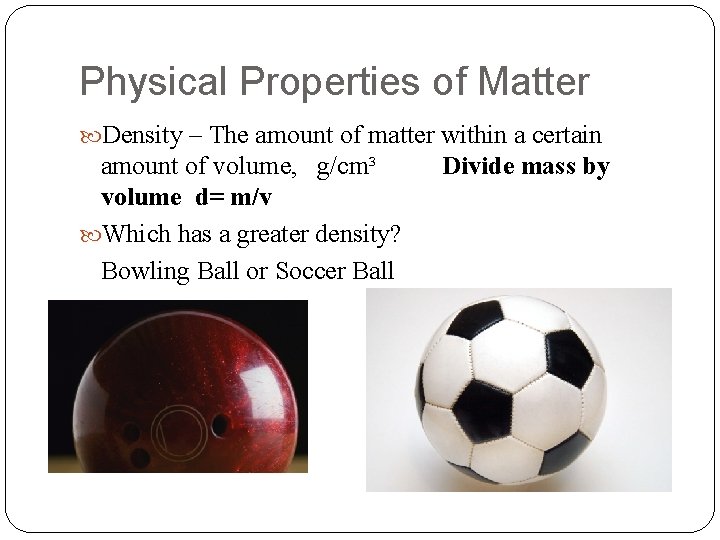
Physical Properties of Matter Density – The amount of matter within a certain amount of volume, g/cm³ volume d= m/v Which has a greater density? Bowling Ball or Soccer Ball Divide mass by
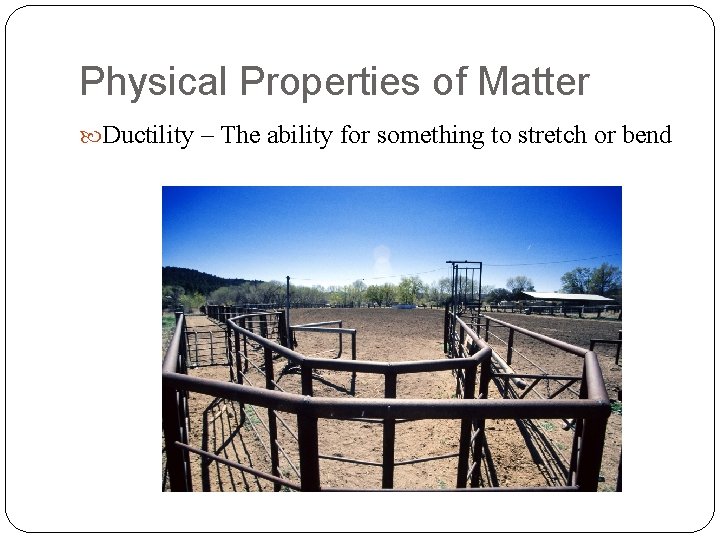
Physical Properties of Matter Ductility – The ability for something to stretch or bend
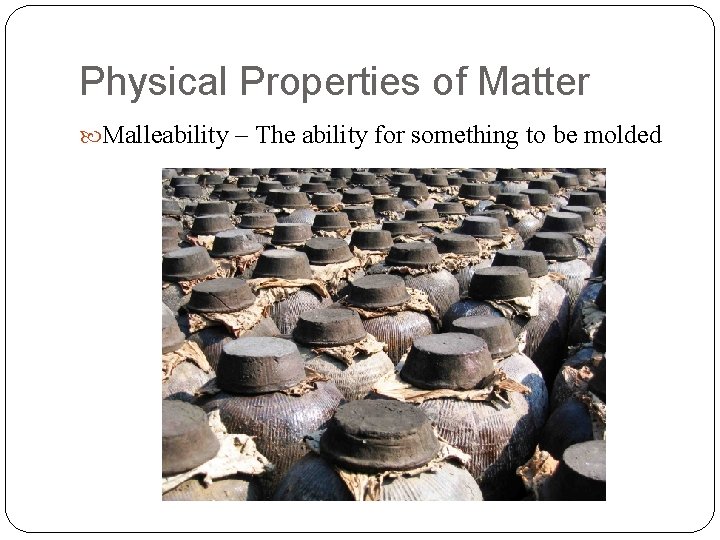
Physical Properties of Matter Malleability – The ability for something to be molded
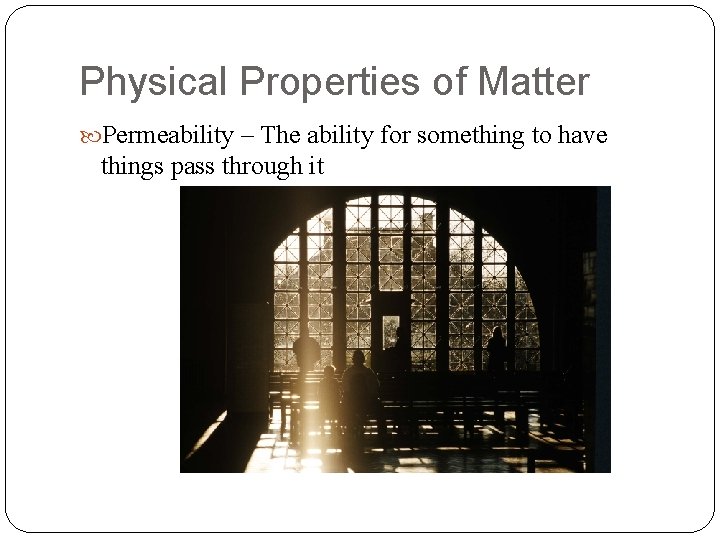
Physical Properties of Matter Permeability – The ability for something to have things pass through it
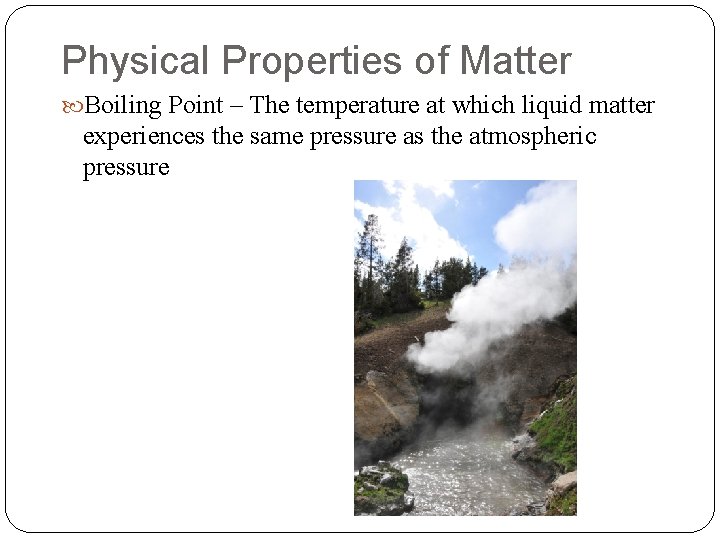
Physical Properties of Matter Boiling Point – The temperature at which liquid matter experiences the same pressure as the atmospheric pressure
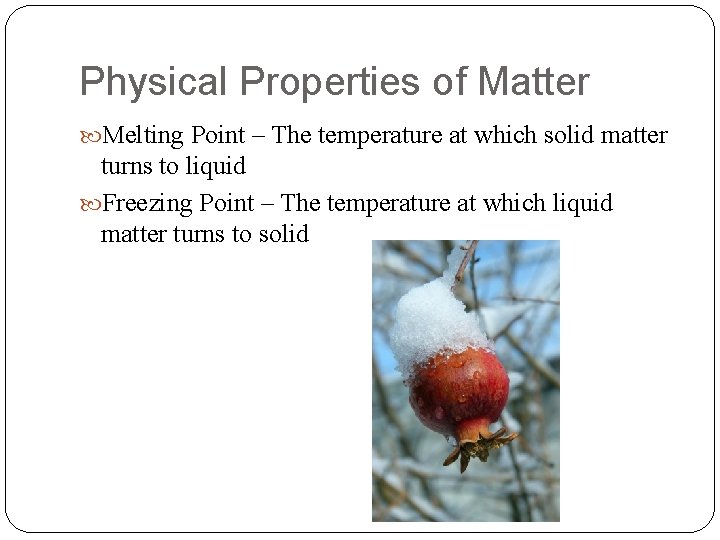
Physical Properties of Matter Melting Point – The temperature at which solid matter turns to liquid Freezing Point – The temperature at which liquid matter turns to solid
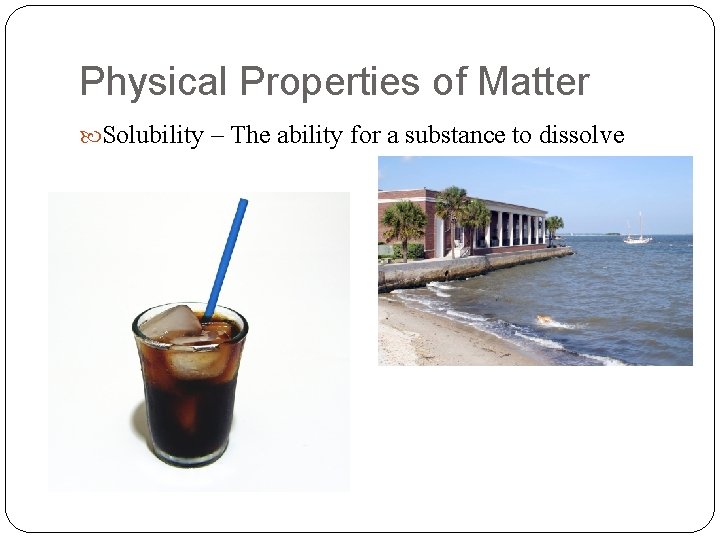
Physical Properties of Matter Solubility – The ability for a substance to dissolve
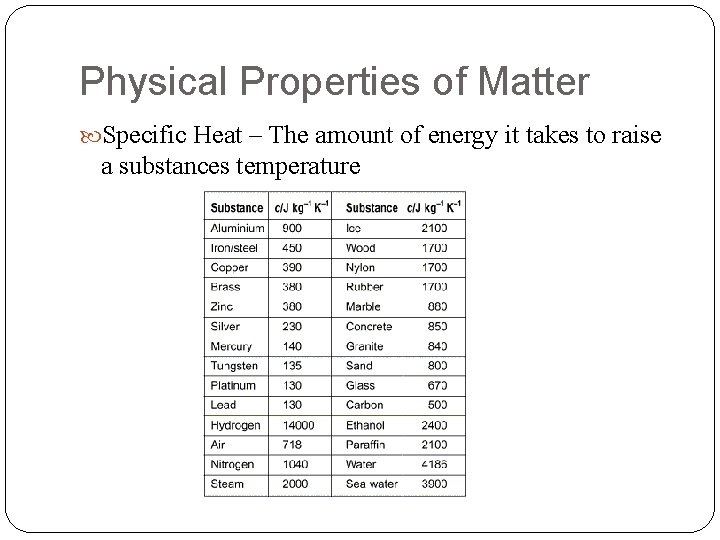
Physical Properties of Matter Specific Heat – The amount of energy it takes to raise a substances temperature
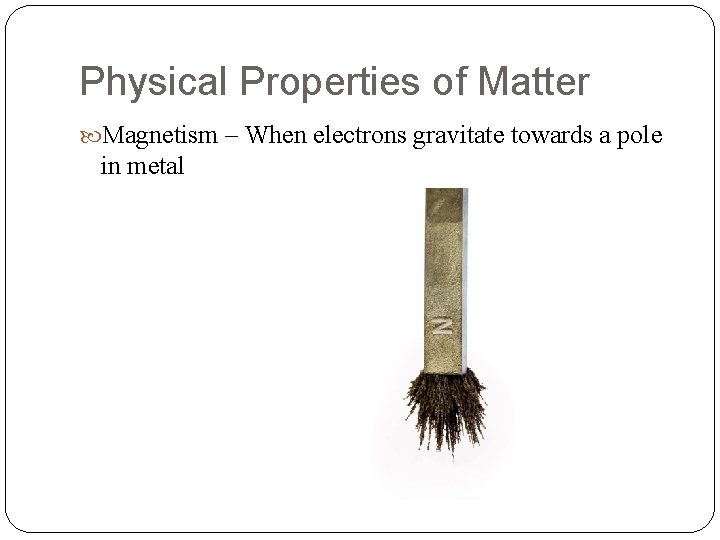
Physical Properties of Matter Magnetism – When electrons gravitate towards a pole in metal
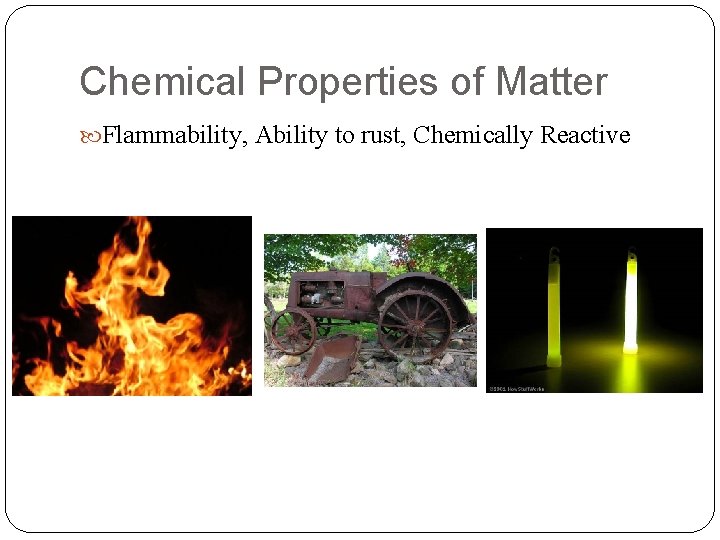
Chemical Properties of Matter Flammability, Ability to rust, Chemically Reactive