
Matter cycles through ecosystems All ecosystems need certain
- Slides: 8
Matter cycles through ecosystems All ecosystems need certain materials. Living things need water and certain chemicals – such as oxygen, carbon, and nitrogen, to meet their needs. These items constantly cycle through an ecosystem and are exchanged between the air, water, soil, plants, and animals. • Cycle: a series of events or operations that repeat themselves regularly in the same order.
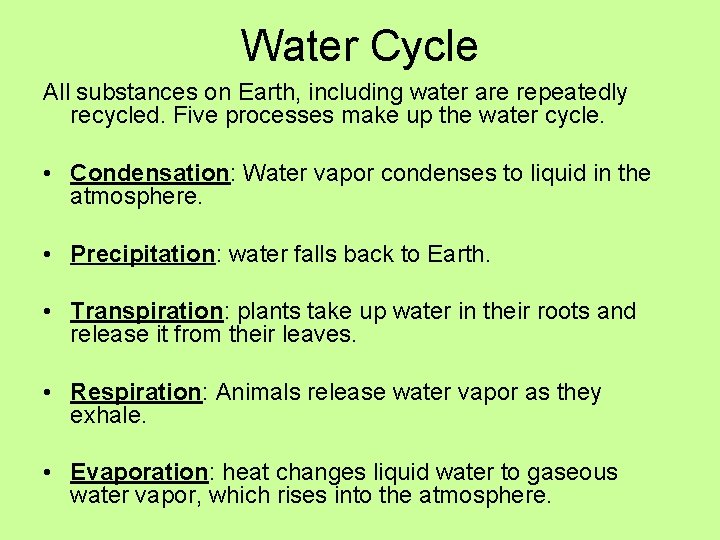
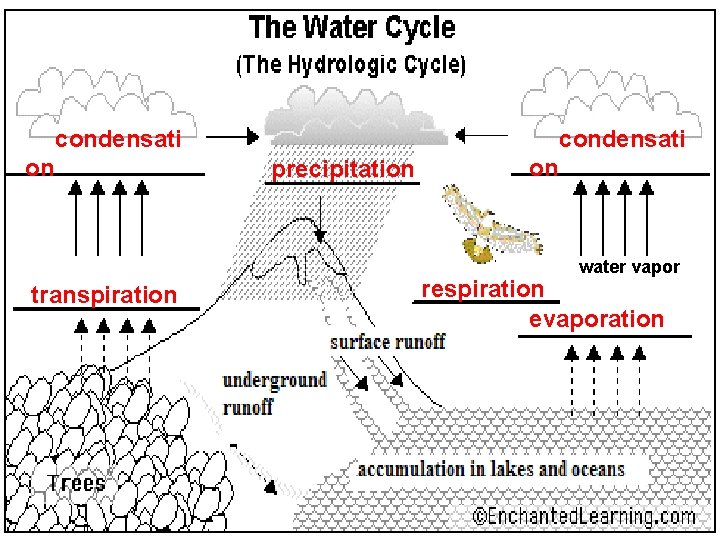
Water Cycle All substances on Earth, including water are repeatedly recycled. Five processes make up the water cycle. • Condensation: Water vapor condenses to liquid in the atmosphere. • Precipitation: water falls back to Earth. • Transpiration: plants take up water in their roots and release it from their leaves. • Respiration: Animals release water vapor as they exhale. • Evaporation: heat changes liquid water to gaseous water vapor, which rises into the atmosphere.
condensati on condensati precipitation on water vapor transpiration respiration evaporation
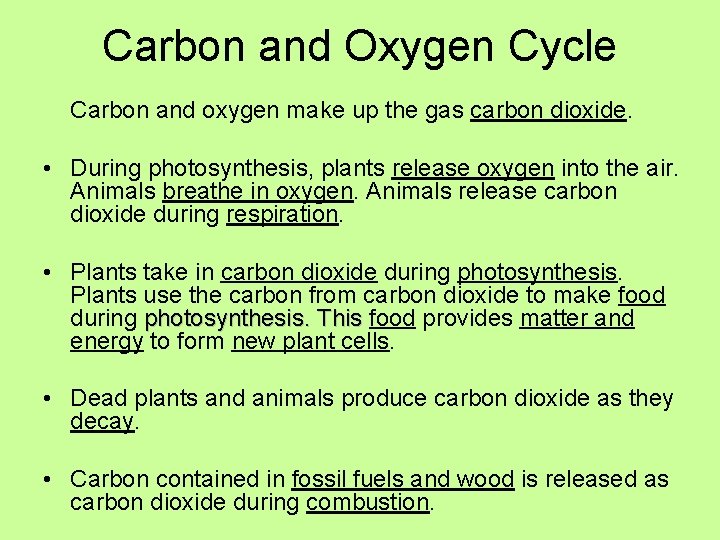
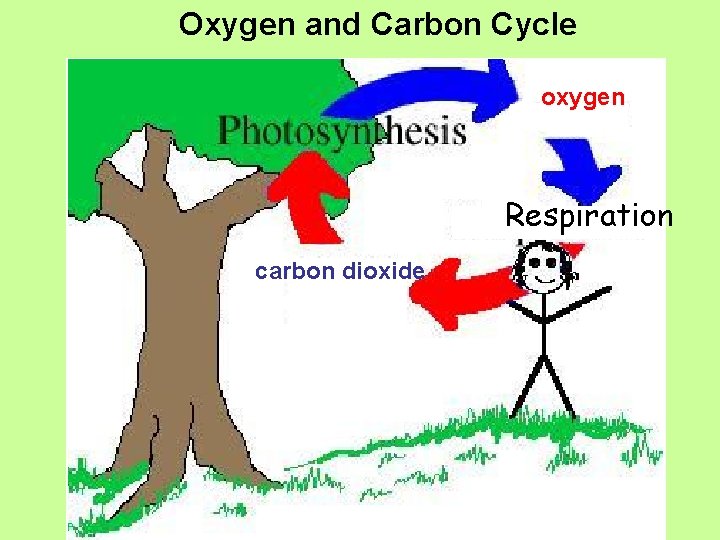
Carbon and Oxygen Cycle Carbon and oxygen make up the gas carbon dioxide. • During photosynthesis, plants release oxygen into the air. Animals breathe in oxygen. Animals release carbon dioxide during respiration. • Plants take in carbon dioxide during photosynthesis. Plants use the carbon from carbon dioxide to make food during photosynthesis. This food provides matter and energy to form new plant cells. • Dead plants and animals produce carbon dioxide as they decay. • Carbon contained in fossil fuels and wood is released as carbon dioxide during combustion.
Oxygen and Carbon Cycle oxygen Respiration carbon dioxide
Nitrogen Cycle Living things need nitrogen to make protein. Proteins are required for growth and repair of body parts. Your muscles, skin and organs are made mostly of protein. Nitrogen is required for all life. Almost 78 percent of the air is nitrogen. Yet, plants and animals can not use the gaseous form of nitrogen found in the air or decaying materials to make protein. Therefore it has to be converted into nitrates, nitrites, and ammonia. These substances can be used by plants. As the plants become food, the nitrogen can be used by animals.
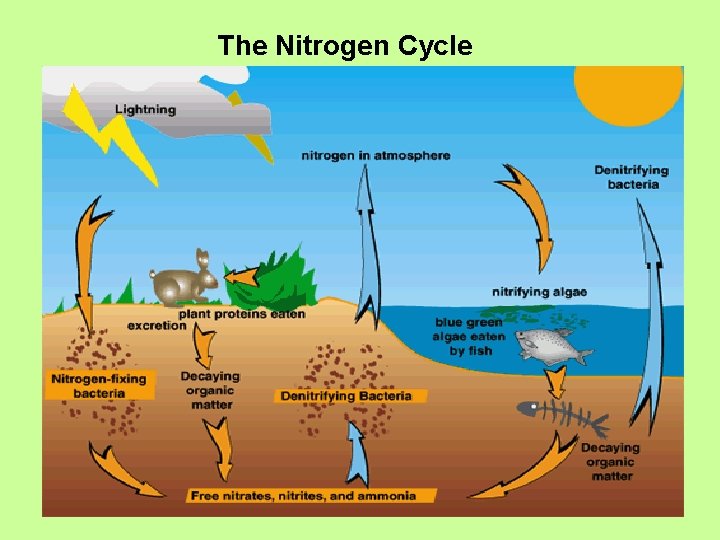
In the nitrogen cycle, certain bacteria in soil and plant roots, are able to take nitrogen gas from the air and change it into a form of nitrogen that plant roots can take up and use. This process is called nitrogen fixation. Lightning can also cause some of the nitrogen and oxygen atoms in the air to combine, "fixing" nitrogen, and forming a compound which then mixes with rain and other precipitation and falls to earth in a form plants can use. Some tissue in dead plants and animals, and even some animal wastes, contains nitrogen. Several kinds of soil bacteria break down the nitrogen-containing tissues and change them into nitrates, which plants absorb through their roots. The cycle is complete when other soil bacteria take in nitrates and release nitrogen gas back into the air starting the cycle over again.
The Nitrogen Cycle