
Matter Anything which has mass and takes up





- Slides: 24
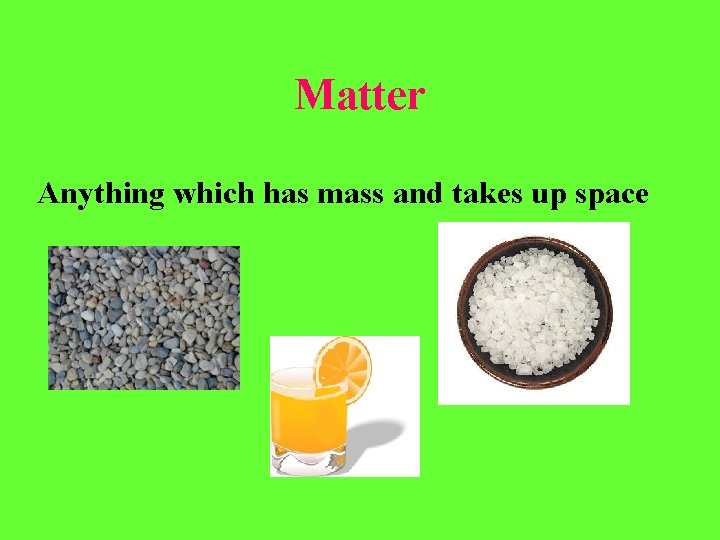
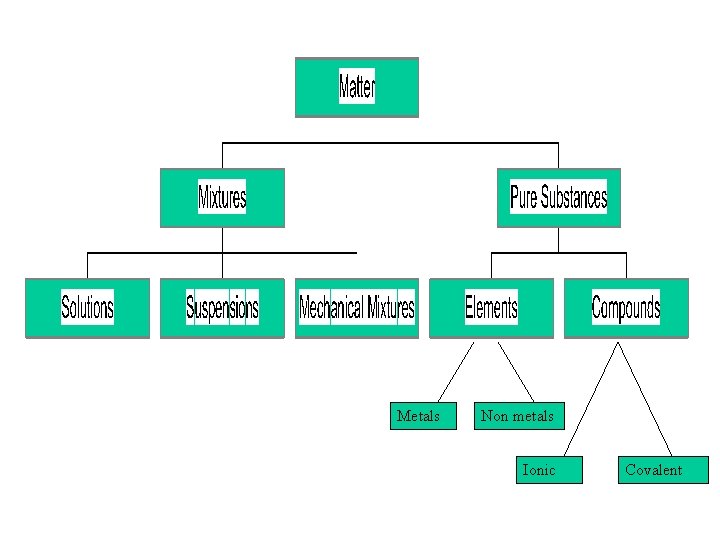
Matter Anything which has mass and takes up space
Properties Characteristics or ways of describing things
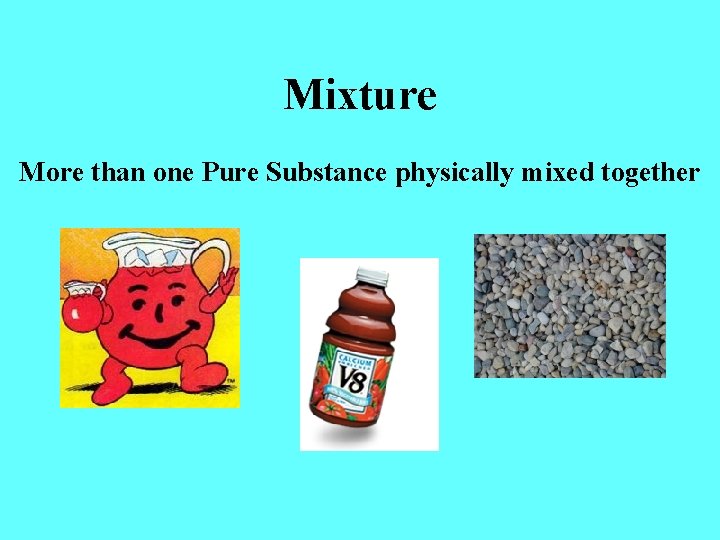
Mixture More than one Pure Substance physically mixed together
Pure Substances Matter with a unique set of properties Can be an element or a compound
Metals Non metals Ionic Covalent
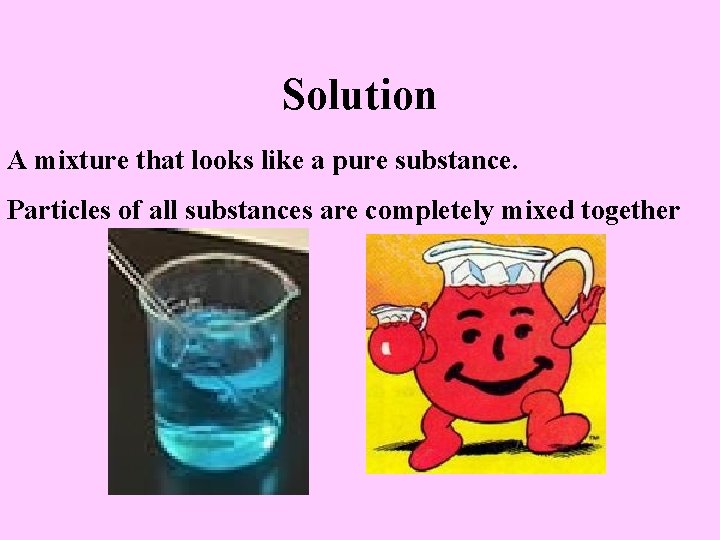
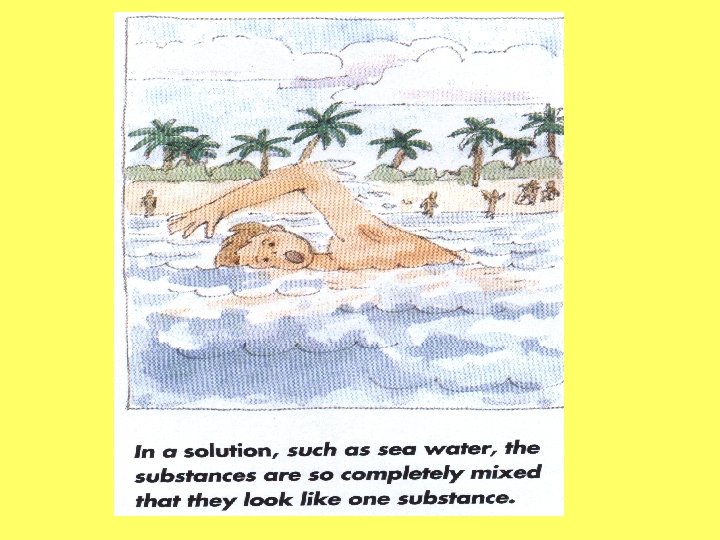
Solution A mixture that looks like a pure substance. Particles of all substances are completely mixed together
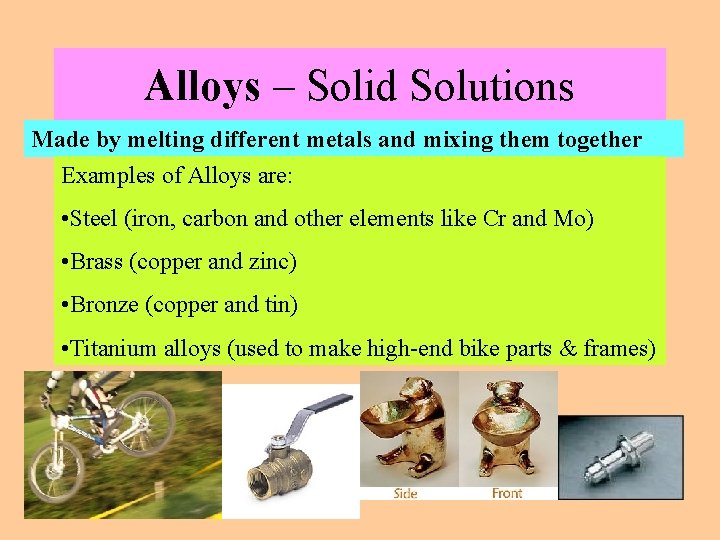
Alloys – Solid Solutions Made by melting different metals and mixing them together Examples of Alloys are: • Steel (iron, carbon and other elements like Cr and Mo) • Brass (copper and zinc) • Bronze (copper and tin) • Titanium alloys (used to make high-end bike parts & frames)
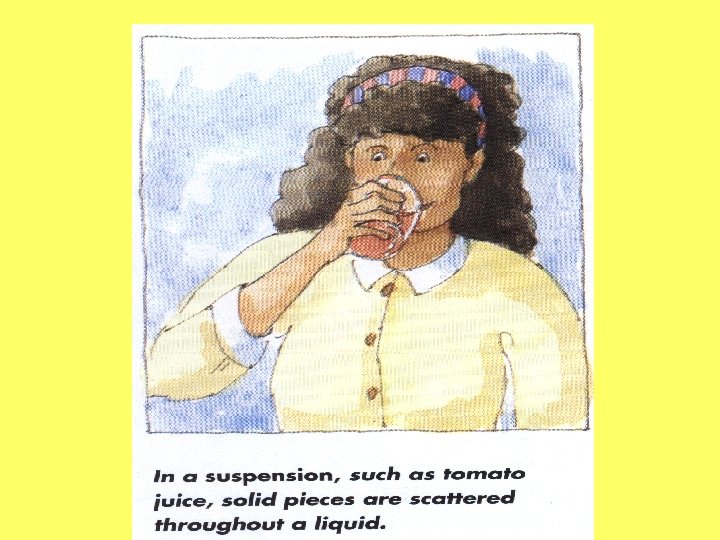
Suspension Particles are large enough to make it cloudy.
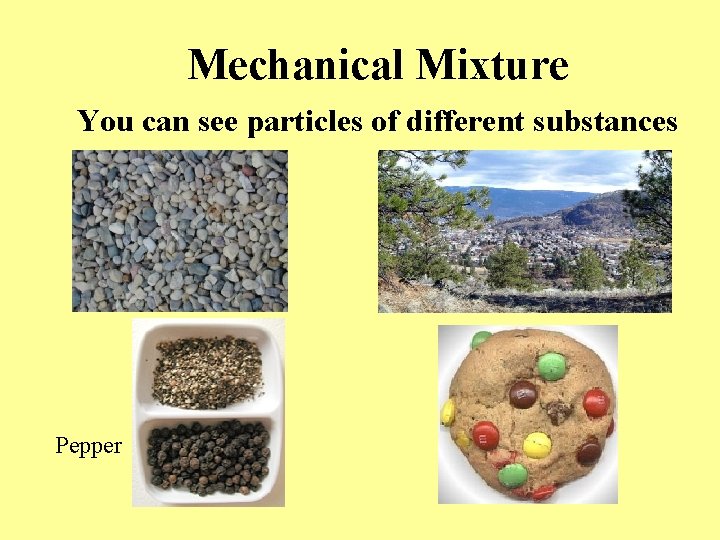
Mechanical Mixture You can see particles of different substances Pepper
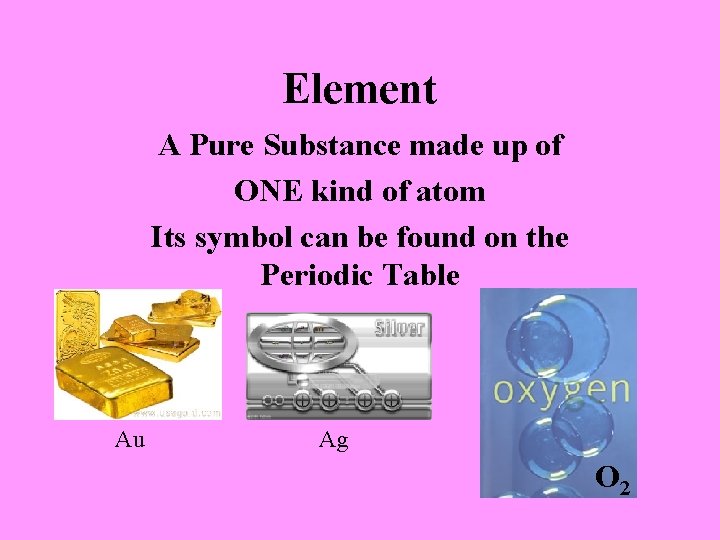
Element A Pure Substance made up of ONE kind of atom Its symbol can be found on the Periodic Table Au Ag O 2
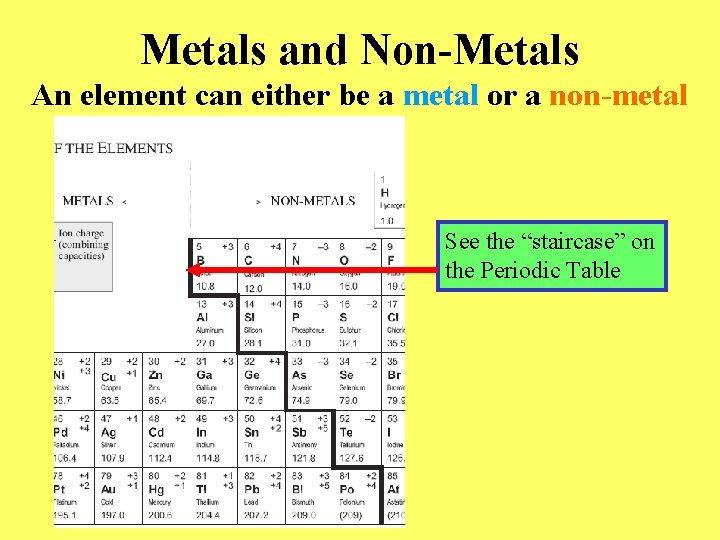
Metals and Non-Metals An element can either be a metal or a non-metal See the “staircase” on the Periodic Table
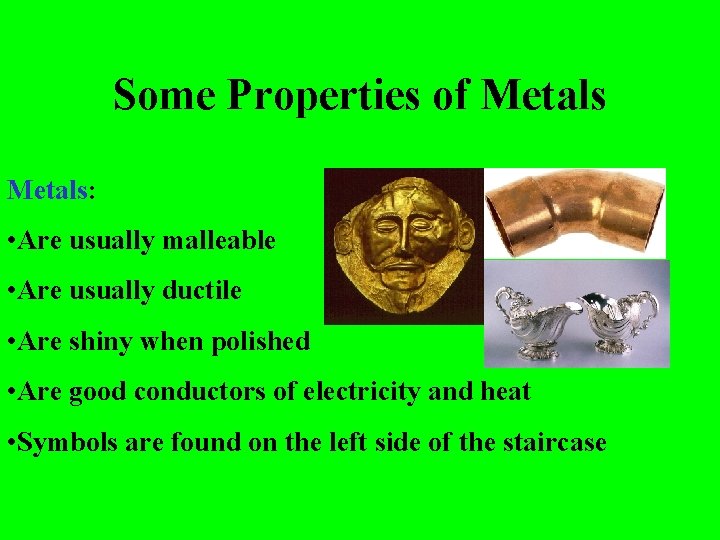
Some Properties of Metals: • Are usually malleable • Are usually ductile • Are shiny when polished • Are good conductors of electricity and heat • Symbols are found on the left side of the staircase
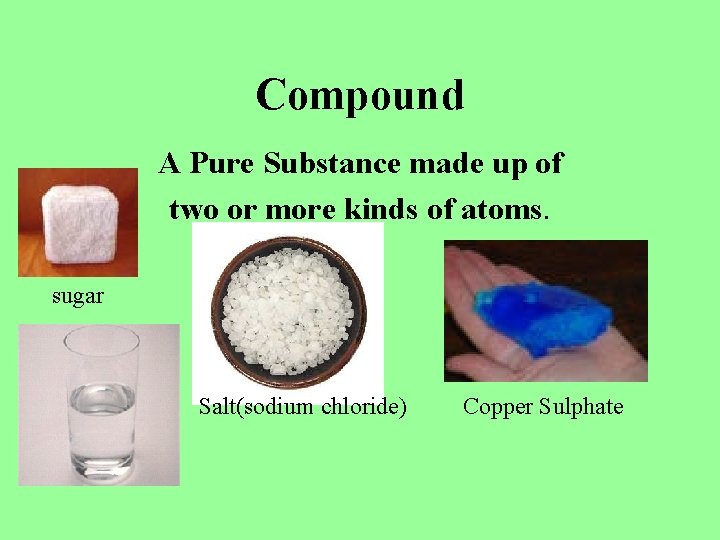
Compound A Pure Substance made up of two or more kinds of atoms. sugar Salt(sodium chloride) Copper Sulphate
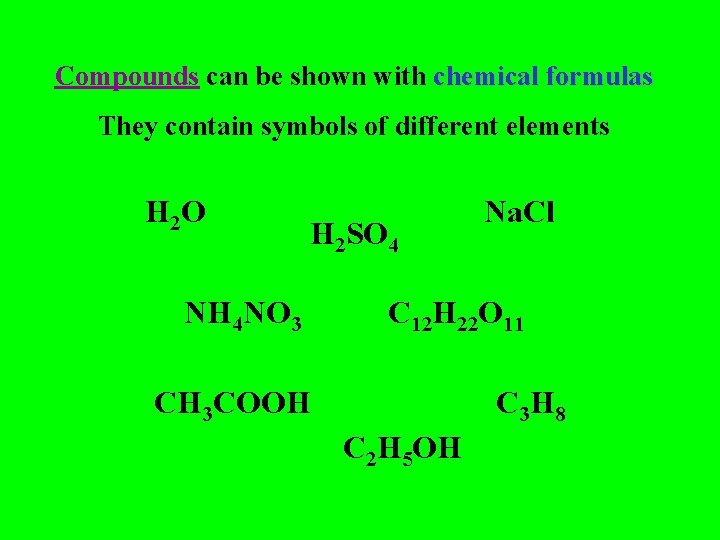
Compounds can be shown with chemical formulas They contain symbols of different elements H 2 O H 2 SO 4 NH 4 NO 3 Na. Cl C 12 H 22 O 11 CH 3 COOH C 3 H 8 C 2 H 5 OH
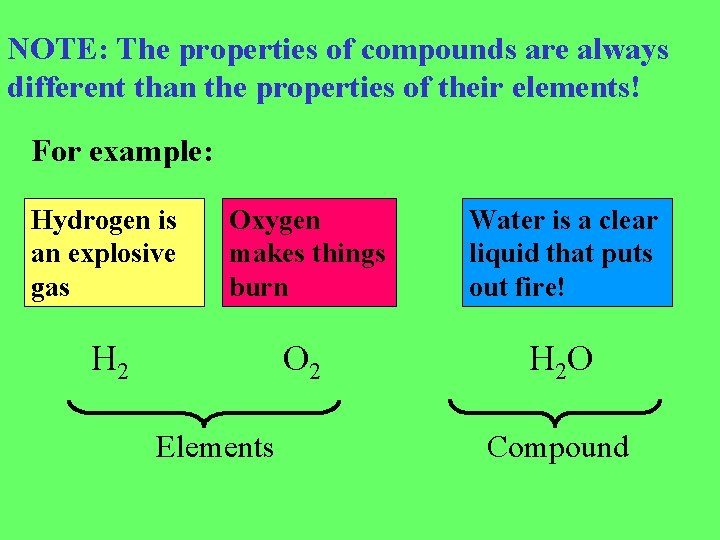
NOTE: The properties of compounds are always different than the properties of their elements! For example: Hydrogen is an explosive gas Oxygen makes things burn Water is a clear liquid that puts out fire! H 2 O 2 H 2 O Elements Compound
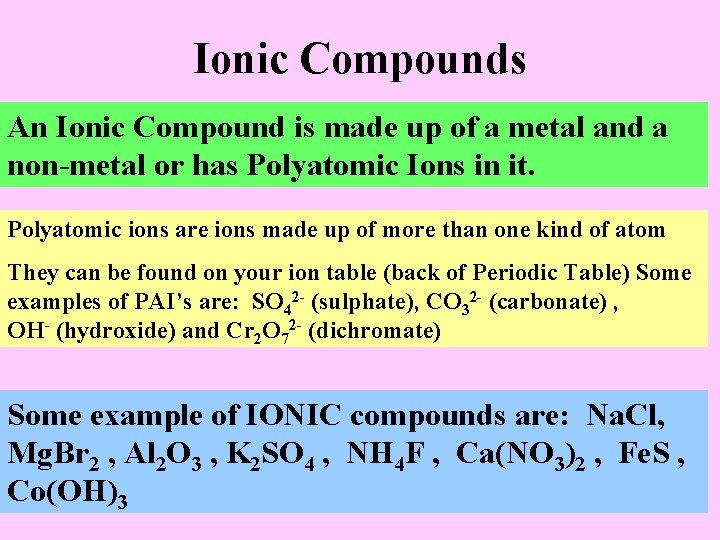
Ionic Compounds An Ionic Compound is made up of a metal and a non-metal or has Polyatomic Ions in it. Polyatomic ions are ions made up of more than one kind of atom They can be found on your ion table (back of Periodic Table) Some examples of PAI’s are: SO 42 - (sulphate), CO 32 - (carbonate) , OH- (hydroxide) and Cr 2 O 72 - (dichromate) Some example of IONIC compounds are: Na. Cl, Mg. Br 2 , Al 2 O 3 , K 2 SO 4 , NH 4 F , Ca(NO 3)2 , Fe. S , Co(OH)3
Covalent Compounds A Covalent Compound is made up of a two non-metals or is a hydrocarbon Some example of COVALENT compounds are: CO 2 , PBr 3 , CCl 4 , C 8 H 18 , Xe. F 6 , C 4 H 9 OH