
Matter and Material Properties of Material Grade 10
- Slides: 11
Matter and Material Properties of Material Grade 10 Physical Science Mrs K Faling
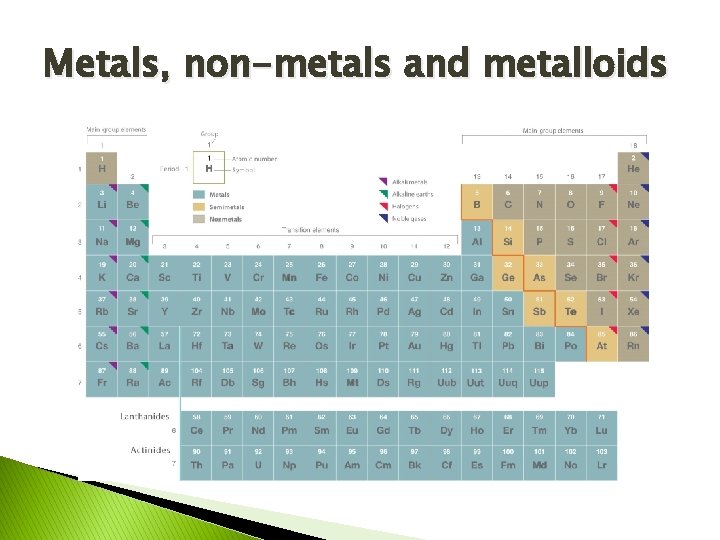
Metals, non-metals and metalloids
To test whether a material is an electrical conductor or an insulator � Experiment 1 – Text book � CONCLUSION? Non-metals do not conduct electricity The exception is Carbon which is a conductor Non-metals are therefore insulators Metals are good conductors The reason for this is the metallic bonding found in metals ◦ Metalloids like Si and Ge are bad conductors, if their temp is raised their conducting ability increases ◦ ◦ ◦
Uses in our everyday lives � Conductors: All electrical equipment is connected to a power source with a conductor � Semi-metals: Used in computers and other electronic equipment � Insulators: Wires are covered with plastic insulation to prevent people getting shocked or short circuiting the device
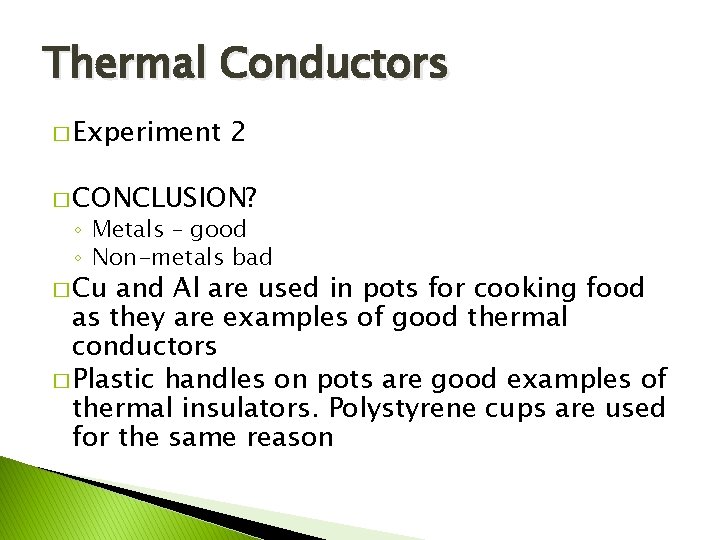
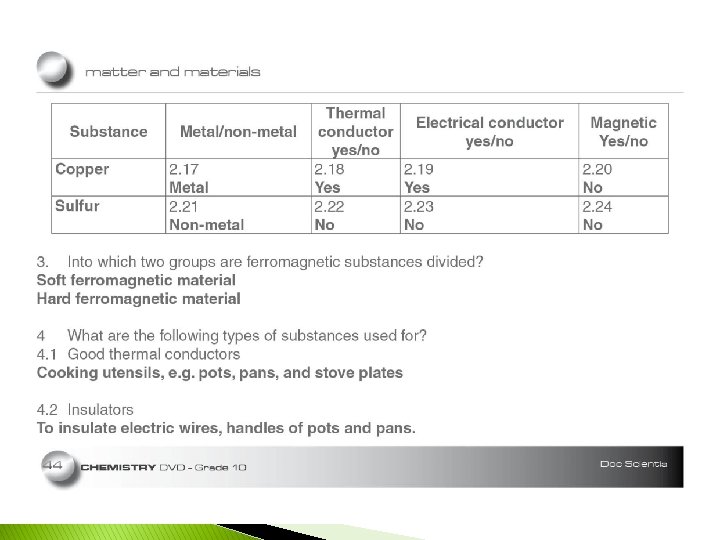
Thermal Conductors � Experiment 2 � CONCLUSION? ◦ Metals – good ◦ Non-metals bad � Cu and Al are used in pots for cooking food as they are examples of good thermal conductors � Plastic handles on pots are good examples of thermal insulators. Polystyrene cups are used for the same reason
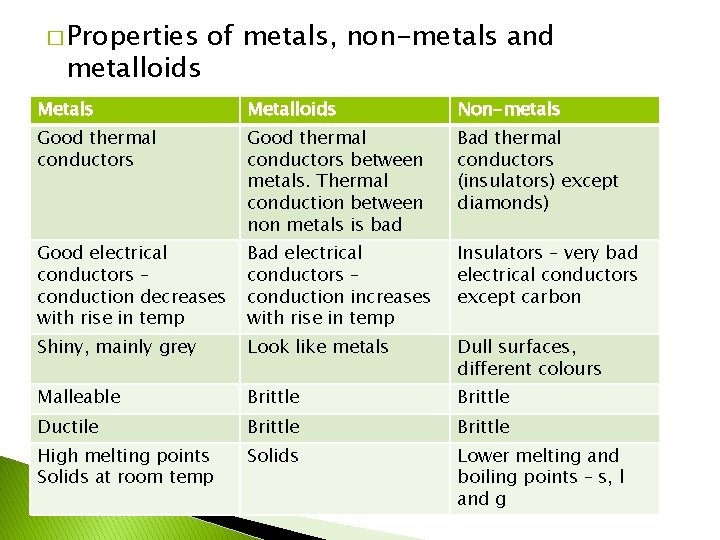
� Properties metalloids of metals, non-metals and Metals Metalloids Non-metals Good thermal conductors between metals. Thermal conduction between non metals is bad Bad thermal conductors (insulators) except diamonds) Good electrical conductors – conduction decreases with rise in temp Bad electrical conductors – conduction increases with rise in temp Insulators – very bad electrical conductors except carbon Shiny, mainly grey Look like metals Dull surfaces, different colours Malleable Brittle Ductile Brittle High melting points Solids at room temp Solids Lower melting and boiling points – s, l and g
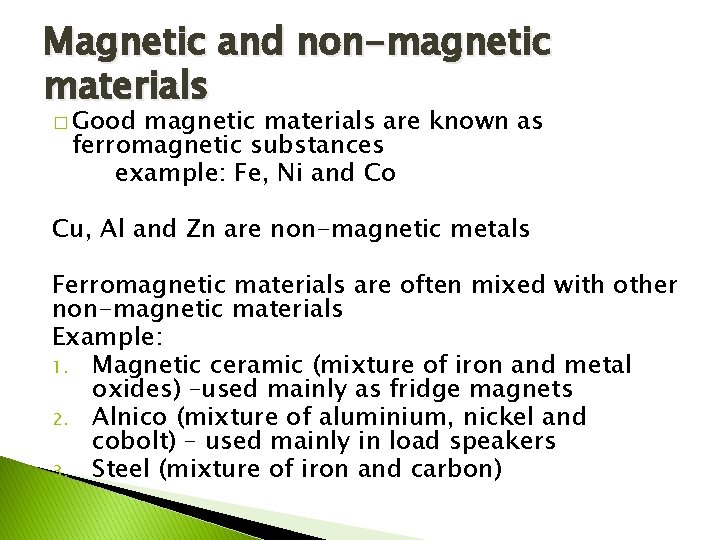
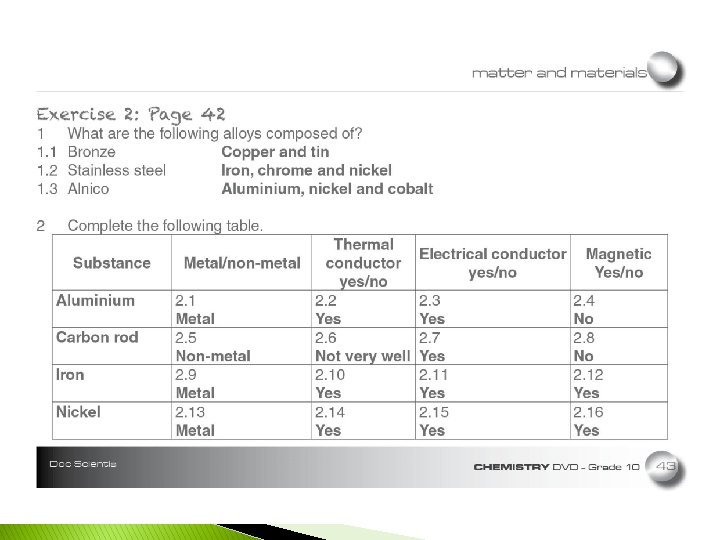
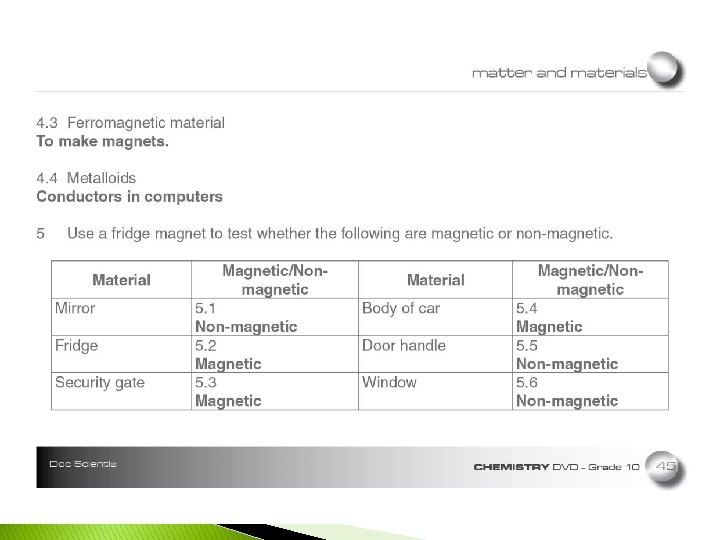
Magnetic and non-magnetic materials � Good magnetic materials are known as ferromagnetic substances example: Fe, Ni and Co Cu, Al and Zn are non-magnetic metals Ferromagnetic materials are often mixed with other non-magnetic materials Example: 1. Magnetic ceramic (mixture of iron and metal oxides) –used mainly as fridge magnets 2. Alnico (mixture of aluminium, nickel and cobolt) – used mainly in load speakers 3. Steel (mixture of iron and carbon)
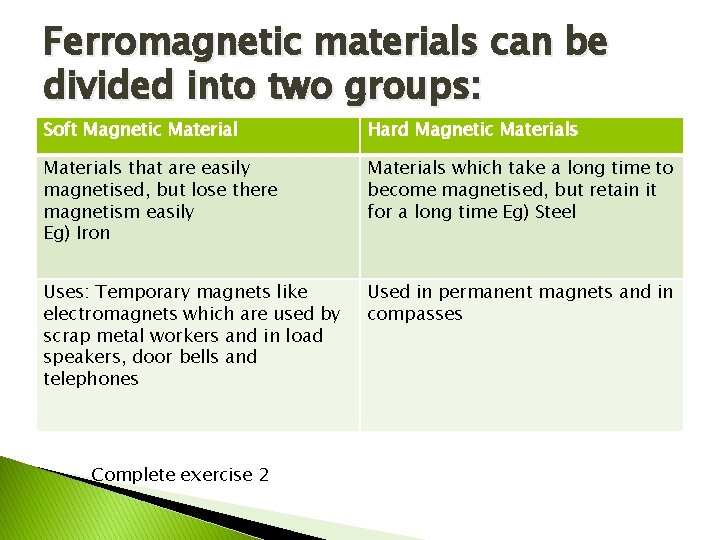
Ferromagnetic materials can be divided into two groups: Soft Magnetic Material Hard Magnetic Materials that are easily magnetised, but lose there magnetism easily Eg) Iron Materials which take a long time to become magnetised, but retain it for a long time Eg) Steel Uses: Temporary magnets like electromagnets which are used by scrap metal workers and in load speakers, door bells and telephones Used in permanent magnets and in compasses Complete exercise 2