
Matter and all that matters Chapter 2 What


- Slides: 25
Matter, and all that matters. Chapter 2
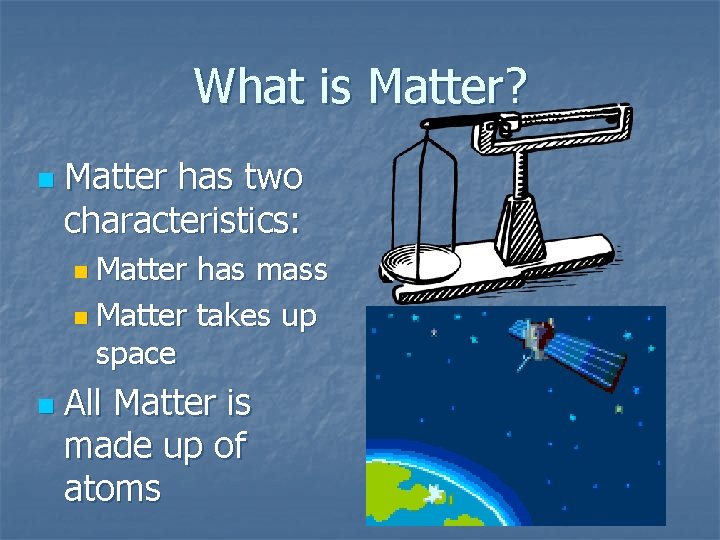
What is Matter? n Matter has two characteristics: n Matter has mass n Matter takes up space n All Matter is made up of atoms
Law of Conservation of Mass n The law of conservation of mass states:
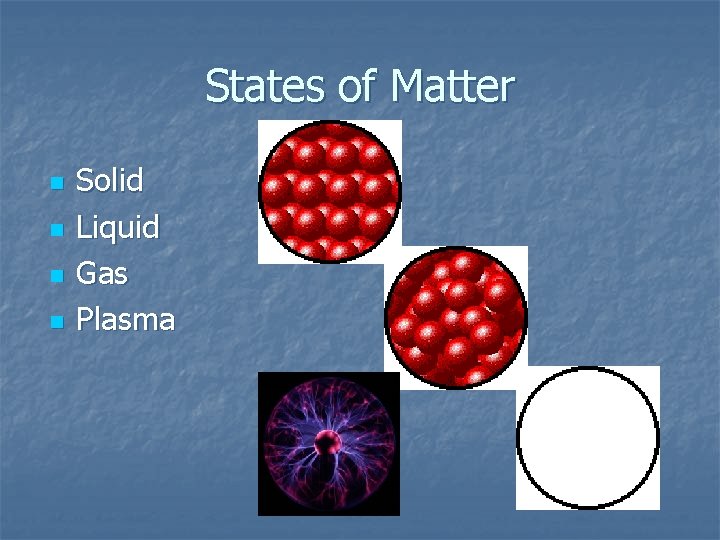
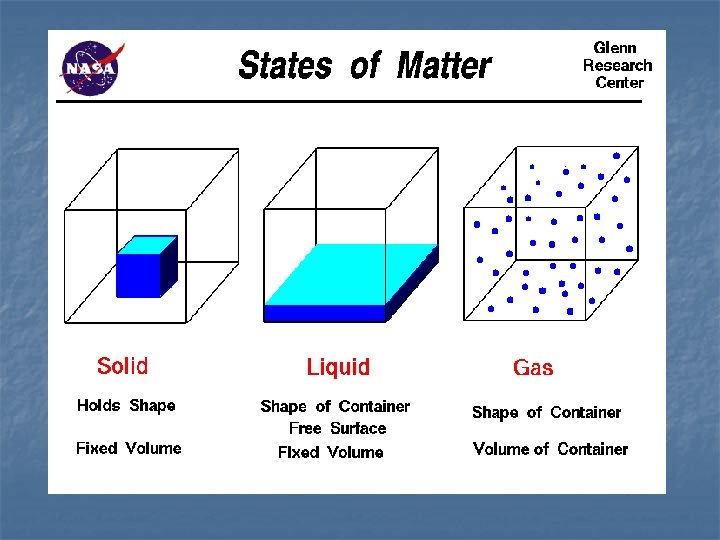
States of Matter n n Solid Liquid Gas Plasma
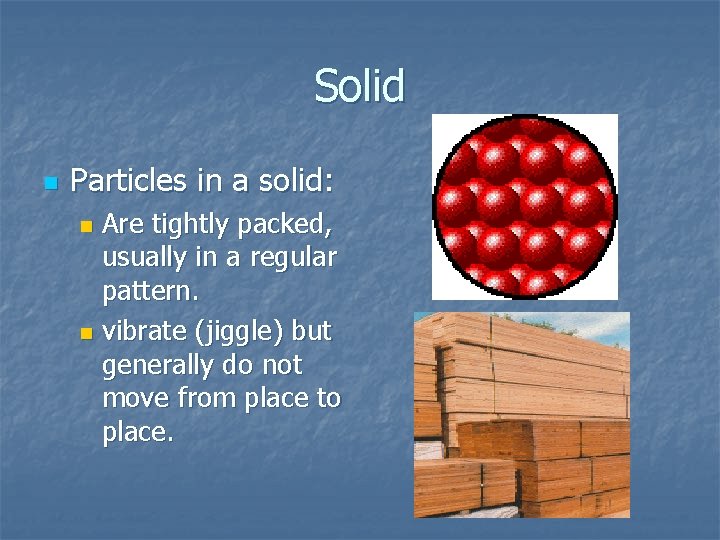
Solid n Particles in a solid: Are tightly packed, usually in a regular pattern. n vibrate (jiggle) but generally do not move from place to place. n
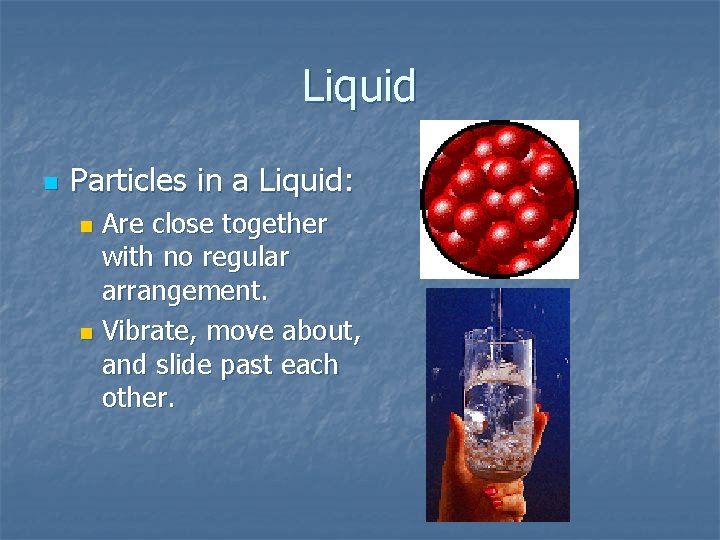
Liquid n Particles in a Liquid: Are close together with no regular arrangement. n Vibrate, move about, and slide past each other. n
Gas n Particles in a Gas: Are well separated with no regular arrangement. n Vibrate and move freely at high speeds. n
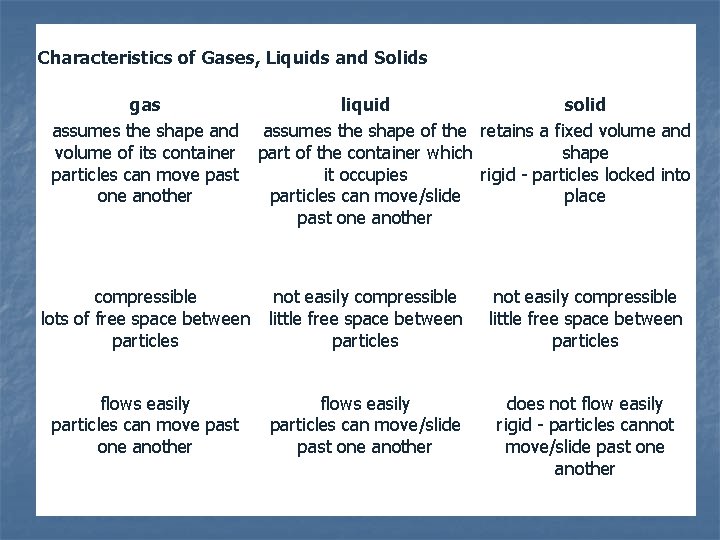
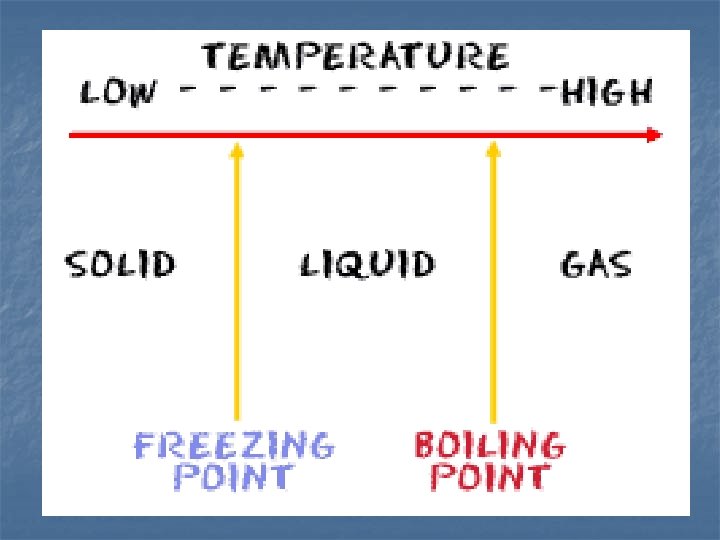
Characteristics of Gases, Liquids and Solids gas assumes the shape and volume of its container particles can move past one another liquid solid assumes the shape of the retains a fixed volume and part of the container which shape it occupies rigid - particles locked into particles can move/slide place past one another compressible not easily compressible lots of free space between little free space between particles flows easily particles can move past one another flows easily particles can move/slide past one another not easily compressible little free space between particles does not flow easily rigid - particles cannot move/slide past one another
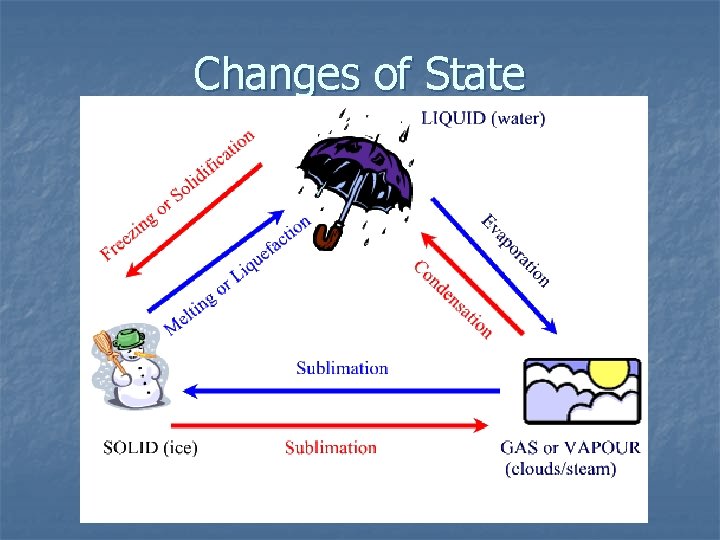
Changes of State
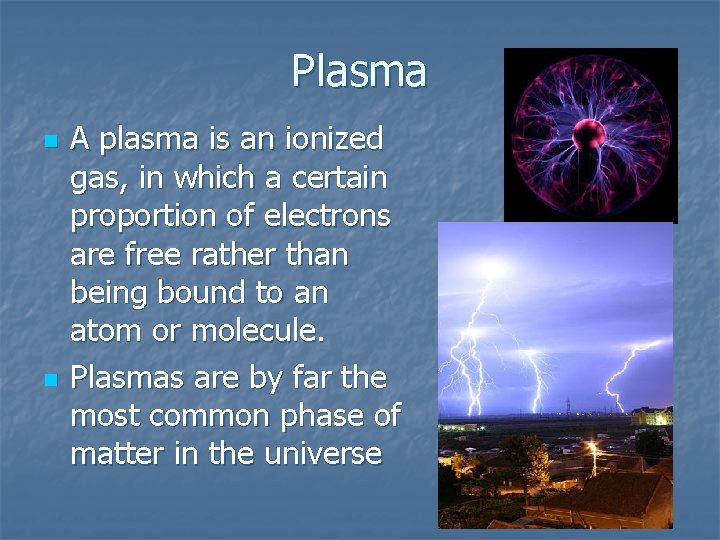
Plasma n n A plasma is an ionized gas, in which a certain proportion of electrons are free rather than being bound to an atom or molecule. Plasmas are by far the most common phase of matter in the universe
Physical Properties n n n Describing the state or form of matter. density = mass/volume viscosity – measurement of the thickness a solution has solubility – measurement of how well a solute can dissolve into solution Malleability –measurement of how well matter can be shaped and formed (steel forging)
Physical Change n Changing the state or form of matter without changing its chemical properties.
Chemical Properties/Change n n n Associated with a substance’s reactivity and chemical changes Chemical Change = Chemical Reactions with halogens, water, acid, base, and oxygen
Extensive Properties n n n Change with the size of the sample Examples: Volume, mass, length
Intensive Properties n n n Do not change with sample size. Examples: Density, melting point, boiling point
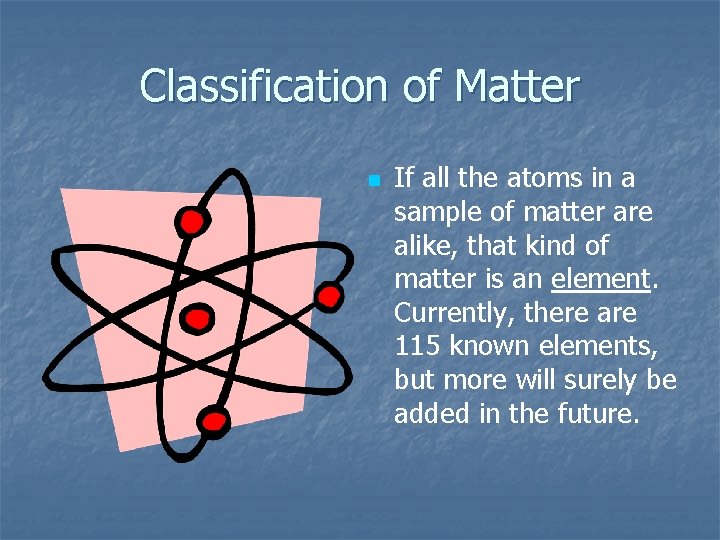
Classification of Matter n If all the atoms in a sample of matter are alike, that kind of matter is an element. Currently, there are 115 known elements, but more will surely be added in the future.
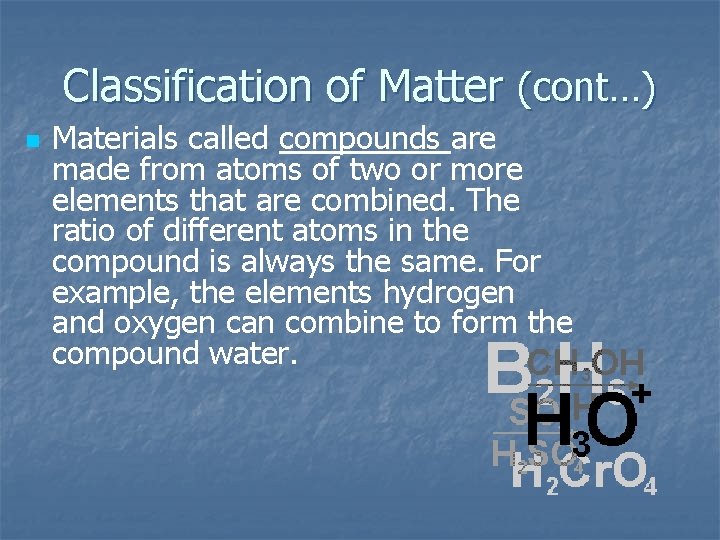
Classification of Matter (cont…) n Materials called compounds are made from atoms of two or more elements that are combined. The ratio of different atoms in the compound is always the same. For example, the elements hydrogen and oxygen can combine to form the compound water.
Classification of Matter (cont…) n The atoms of elements in water always have the same ratio of two hydrogen atoms to one oxygen atom. Since elements and compounds are similar in some respects, they can be lumped together as substances. A substance is defined as either an element or compound.
What if you combine two or more compounds or elements together? n n A mixture is a material made up of two or more substances. Unlike compounds, mixtures do not always contain the same amounts of different substances. For example: n Salt water contains the compounds salt (Na. Cl) and water (H 2 O). n However, the various concentrations or ratios of the salt to water can change. Therefore, salt water is a mixture and not a compound.
Mixtures n There are two types of mixtures: homogeneous and heterogeneous. A homogeneous mixture contains two or more substances that are uniformly spread out. In other words, you cannot tell what is making up the mixture by just looking at it.
Mixtures (cont…) n Heterogeneous mixtures have different materials that are easy to distinguish. For example, pizza would be a heterogeneous mixture, while vinegar would be a homogeneous mixture.
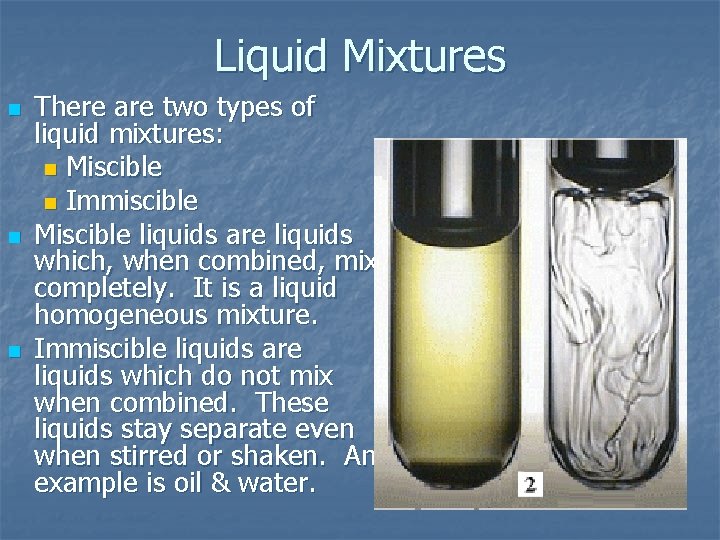
Liquid Mixtures n n n There are two types of liquid mixtures: n Miscible n Immiscible Miscible liquids are liquids which, when combined, mix completely. It is a liquid homogeneous mixture. Immiscible liquids are liquids which do not mix when combined. These liquids stay separate even when stirred or shaken. An example is oil & water.
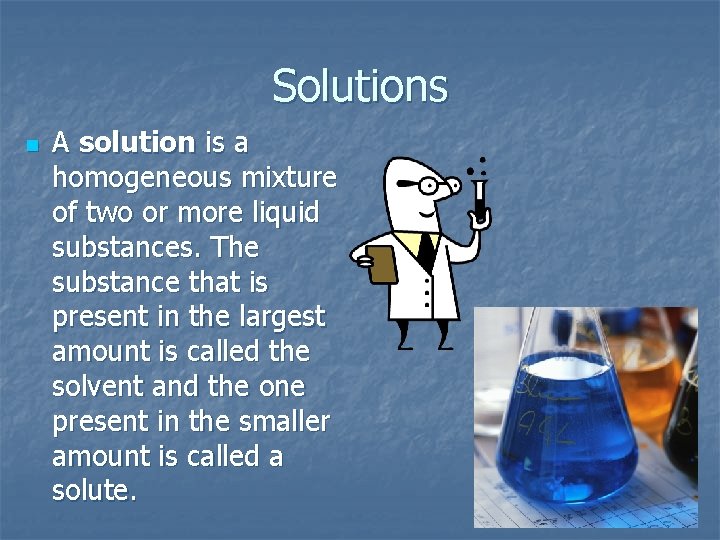
Solutions n A solution is a homogeneous mixture of two or more liquid substances. The substance that is present in the largest amount is called the solvent and the one present in the smaller amount is called a solute.