
MATRIX INTENSIVE OUTPATIENT TREATMENT WITH ADOLESCENTS Martin Moskowitz
- Slides: 18
MATRIX INTENSIVE OUTPATIENT TREATMENT WITH ADOLESCENTS Martin Moskowitz, LCSW, CASAC Seamus Mc. Entee, LMSW
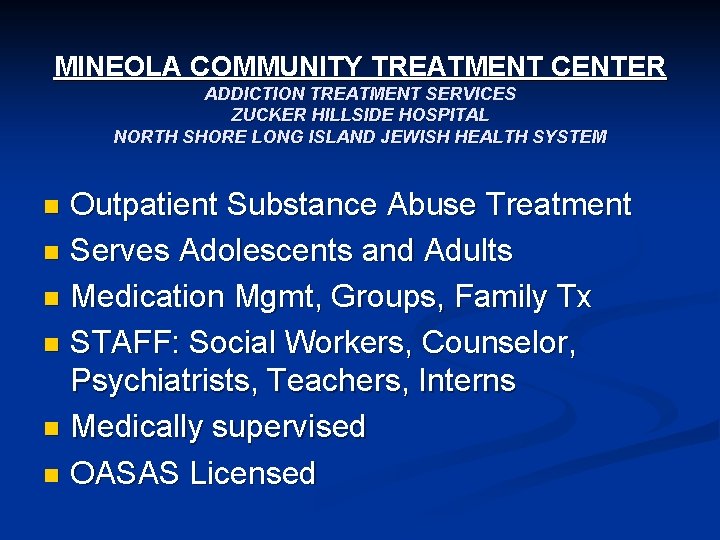
MINEOLA COMMUNITY TREATMENT CENTER ADDICTION TREATMENT SERVICES ZUCKER HILLSIDE HOSPITAL NORTH SHORE LONG ISLAND JEWISH HEALTH SYSTEM Outpatient Substance Abuse Treatment n Serves Adolescents and Adults n Medication Mgmt, Groups, Family Tx n STAFF: Social Workers, Counselor, Psychiatrists, Teachers, Interns n Medically supervised n OASAS Licensed n
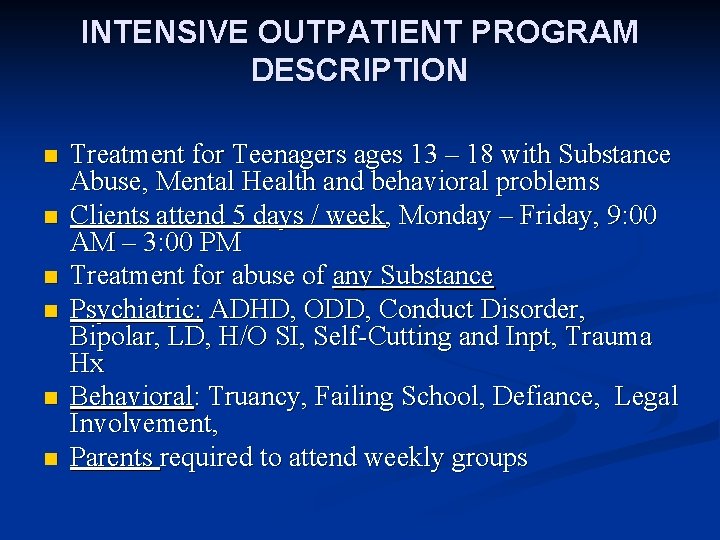
INTENSIVE OUTPATIENT PROGRAM DESCRIPTION n n n Treatment for Teenagers ages 13 – 18 with Substance Abuse, Mental Health and behavioral problems Clients attend 5 days / week, Monday – Friday, 9: 00 AM – 3: 00 PM Treatment for abuse of any Substance Psychiatric: ADHD, ODD, Conduct Disorder, Bipolar, LD, H/O SI, Self-Cutting and Inpt, Trauma Hx Behavioral: Truancy, Failing School, Defiance, Legal Involvement, Parents required to attend weekly groups
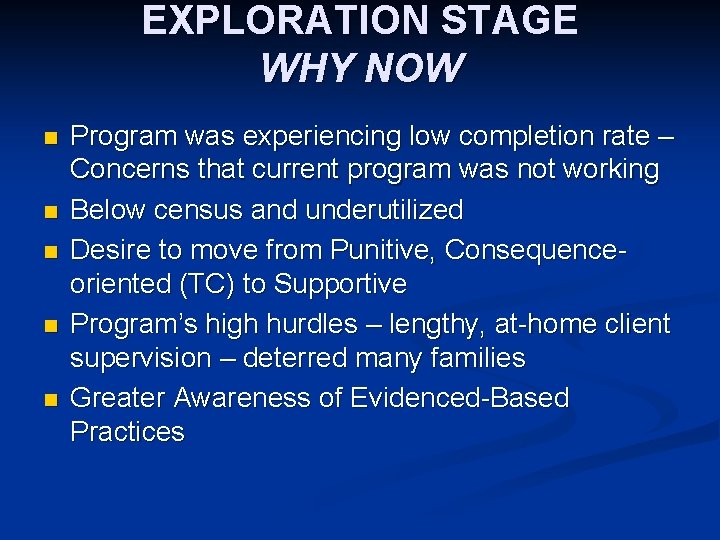
EXPLORATION STAGE WHY NOW n n n Program was experiencing low completion rate – Concerns that current program was not working Below census and underutilized Desire to move from Punitive, Consequenceoriented (TC) to Supportive Program’s high hurdles – lengthy, at-home client supervision – deterred many families Greater Awareness of Evidenced-Based Practices
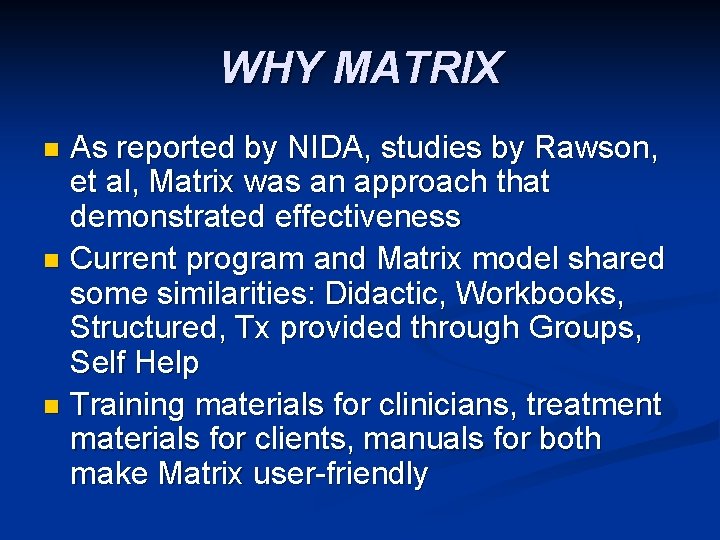
WHY MATRIX As reported by NIDA, studies by Rawson, et al, Matrix was an approach that demonstrated effectiveness n Current program and Matrix model shared some similarities: Didactic, Workbooks, Structured, Tx provided through Groups, Self Help n Training materials for clinicians, treatment materials for clients, manuals for both make Matrix user-friendly n
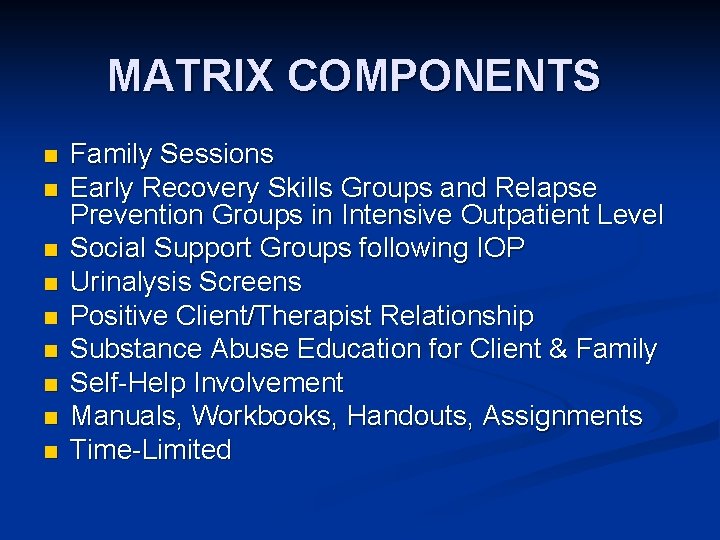
MATRIX COMPONENTS n n n n n Family Sessions Early Recovery Skills Groups and Relapse Prevention Groups in Intensive Outpatient Level Social Support Groups following IOP Urinalysis Screens Positive Client/Therapist Relationship Substance Abuse Education for Client & Family Self-Help Involvement Manuals, Workbooks, Handouts, Assignments Time-Limited
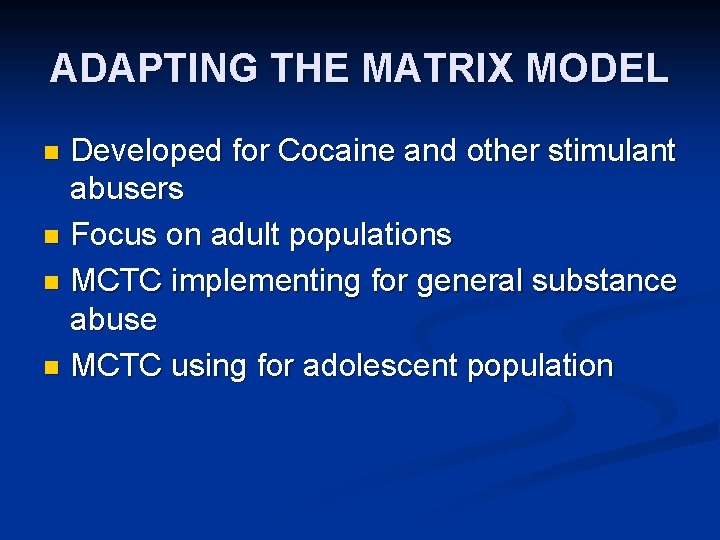
ADAPTING THE MATRIX MODEL Developed for Cocaine and other stimulant abusers n Focus on adult populations n MCTC implementing for general substance abuse n MCTC using for adolescent population n
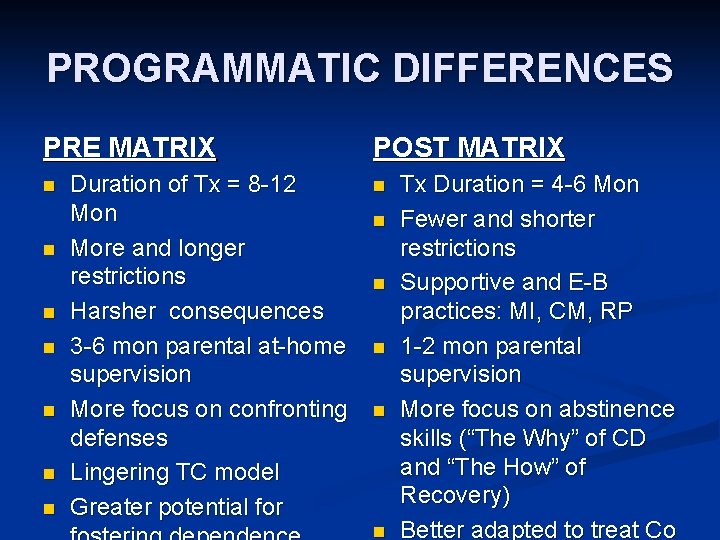
PROGRAMMATIC DIFFERENCES PRE MATRIX n n n n Duration of Tx = 8 -12 Mon More and longer restrictions Harsher consequences 3 -6 mon parental at-home supervision More focus on confronting defenses Lingering TC model Greater potential for POST MATRIX n n n Tx Duration = 4 -6 Mon Fewer and shorter restrictions Supportive and E-B practices: MI, CM, RP 1 -2 mon parental supervision More focus on abstinence skills (“The Why” of CD and “The How” of Recovery) Better adapted to treat Co
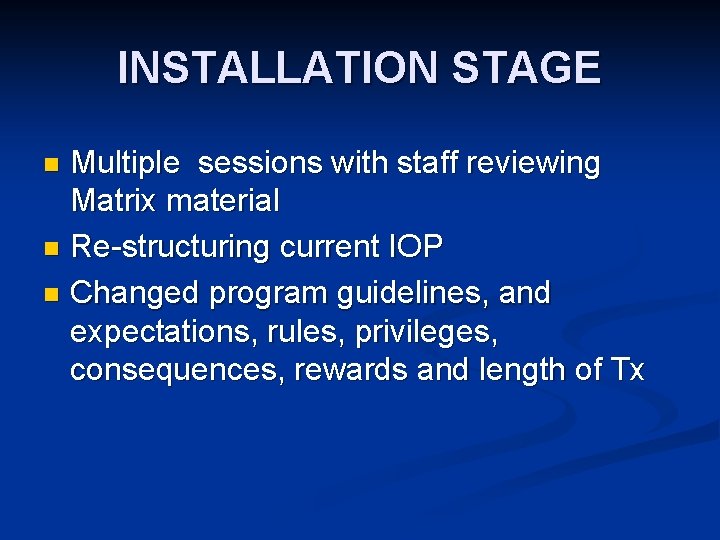
INSTALLATION STAGE Multiple sessions with staff reviewing Matrix material n Re-structuring current IOP n Changed program guidelines, and expectations, rules, privileges, consequences, rewards and length of Tx n
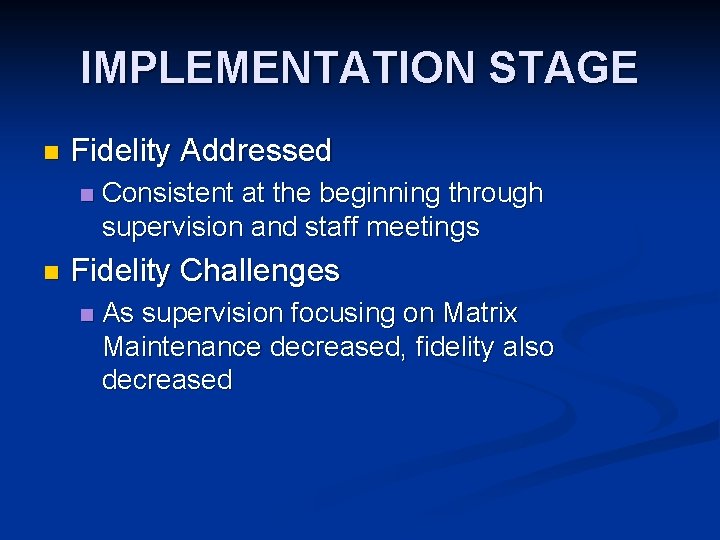
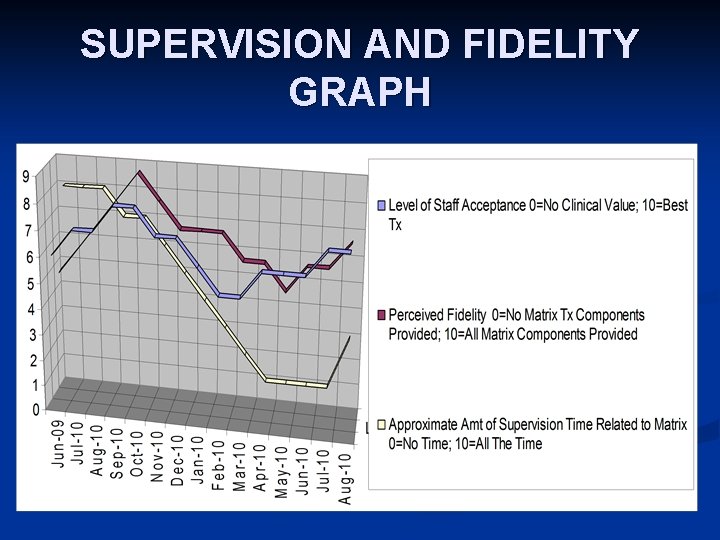
IMPLEMENTATION STAGE n Fidelity Addressed n n Consistent at the beginning through supervision and staff meetings Fidelity Challenges n As supervision focusing on Matrix Maintenance decreased, fidelity also decreased
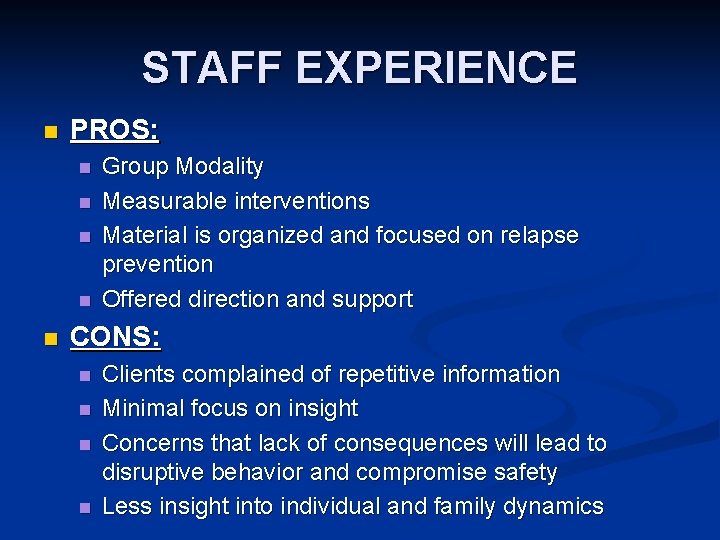
STAFF EXPERIENCE n PROS: n n n Group Modality Measurable interventions Material is organized and focused on relapse prevention Offered direction and support CONS: n n Clients complained of repetitive information Minimal focus on insight Concerns that lack of consequences will lead to disruptive behavior and compromise safety Less insight into individual and family dynamics
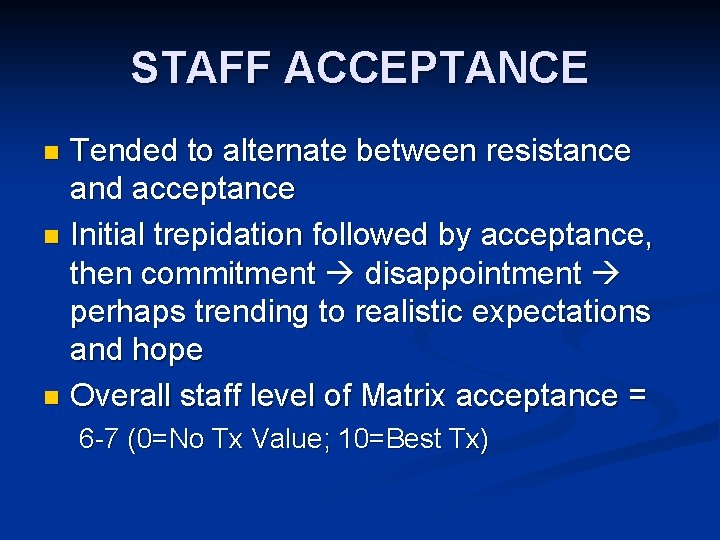
STAFF ACCEPTANCE Tended to alternate between resistance and acceptance n Initial trepidation followed by acceptance, then commitment disappointment perhaps trending to realistic expectations and hope n Overall staff level of Matrix acceptance = n 6 -7 (0=No Tx Value; 10=Best Tx)
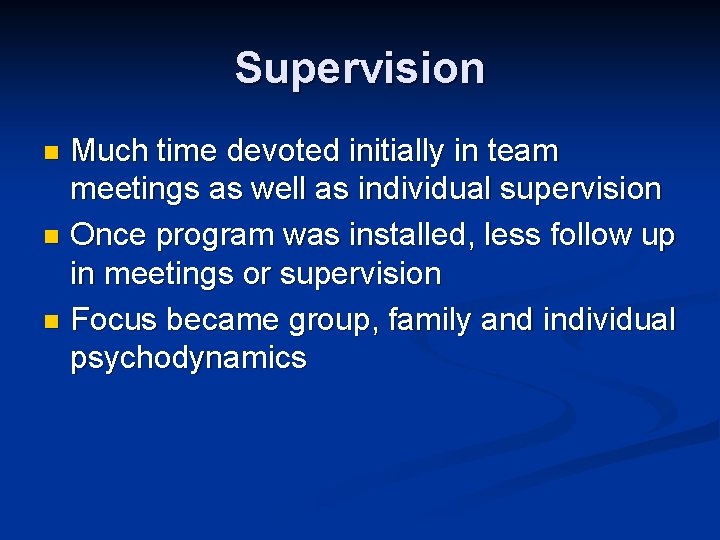
Supervision Much time devoted initially in team meetings as well as individual supervision n Once program was installed, less follow up in meetings or supervision n Focus became group, family and individual psychodynamics n
SUPERVISION AND FIDELITY GRAPH
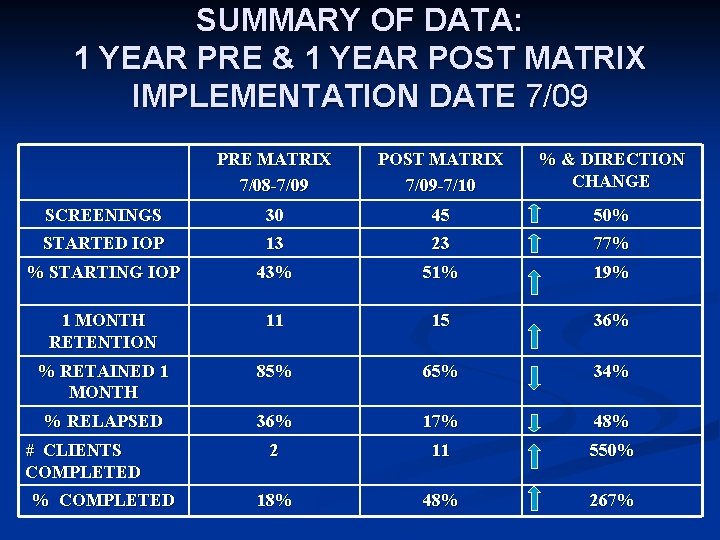
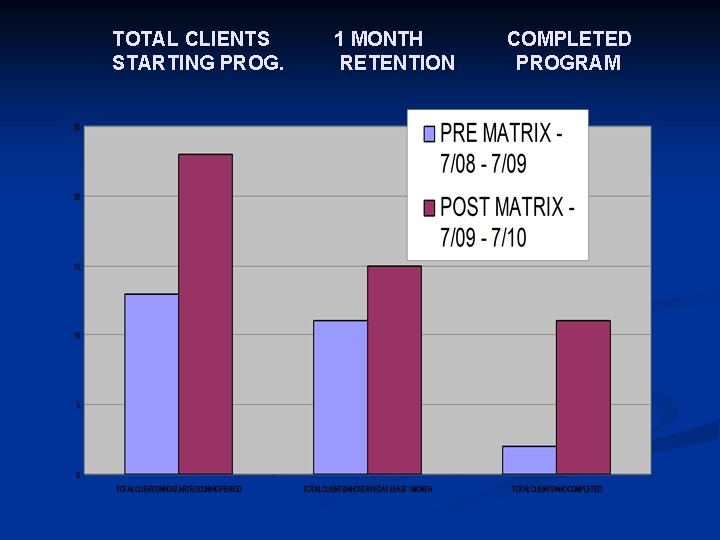
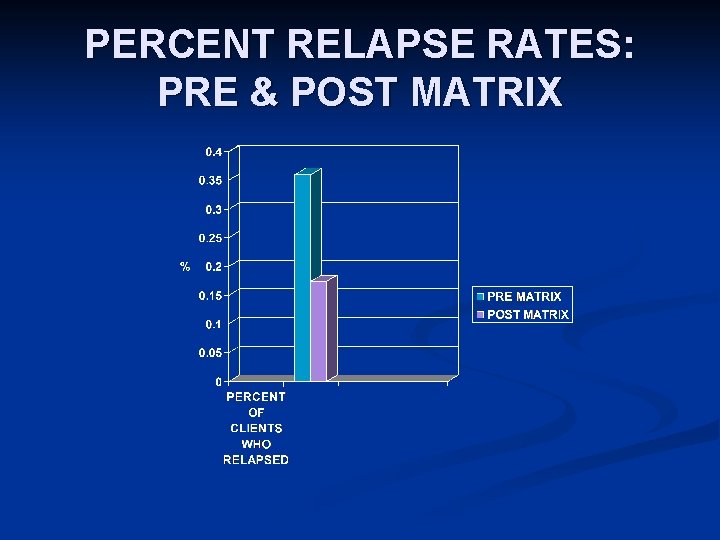
SUMMARY OF DATA: 1 YEAR PRE & 1 YEAR POST MATRIX IMPLEMENTATION DATE 7/09 PRE MATRIX 7/08 -7/09 POST MATRIX 7/09 -7/10 % & DIRECTION CHANGE SCREENINGS 30 45 50% STARTED IOP 13 23 77% % STARTING IOP 43% 51% 19% 1 MONTH RETENTION 11 15 36% % RETAINED 1 MONTH 85% 65% 34% % RELAPSED 36% 17% 48% 2 11 550% 18% 48% 267% # CLIENTS COMPLETED % COMPLETED
TOTAL CLIENTS STARTING PROG. 1 MONTH RETENTION COMPLETED PROGRAM
PERCENT RELAPSE RATES: PRE & POST MATRIX
Lessons Learned n n n Include consistent Matrix Model review in individual and group supervision sessions Develop tool to measure Matrix fidelity Design survey for follow up with clients post treatment Continue to collect and analyze data on rates of abstinence, retention, completion, improved grades, decreased psychiatric sx’s, decrease in family conflicts Insight-oriented therapy also needs to be provided as it relates to psychological obstacles