
Maths Year 3 Multiplication and division Times tables

Maths Year 3 Multiplication and division
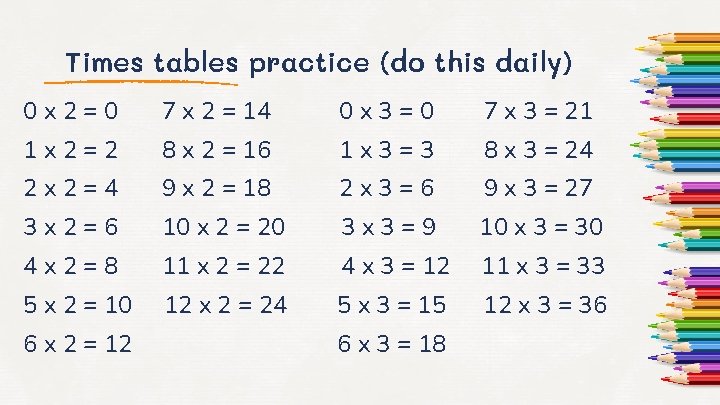
Times tables practice (do this daily) 0 x 2=0 7 x 2 = 14 0 x 3=0 7 x 3 = 21 1 x 2=2 8 x 2 = 16 1 x 3=3 8 x 3 = 24 2 x 2=4 9 x 2 = 18 2 x 3=6 9 x 3 = 27 3 x 2=6 10 x 2 = 20 3 x 3=9 10 x 3 = 30 4 x 2=8 11 x 2 = 22 4 x 3 = 12 11 x 3 = 33 5 x 2 = 10 12 x 2 = 24 5 x 3 = 15 12 x 3 = 36 6 x 2 = 12 6 x 3 = 18
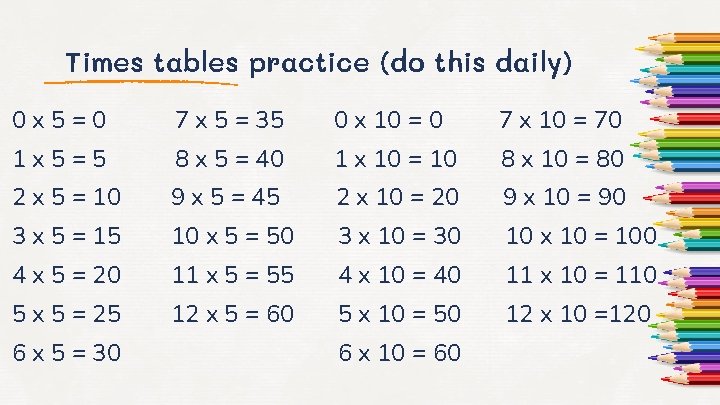
Times tables practice (do this daily) 0 x 5=0 7 x 5 = 35 0 x 10 = 0 7 x 10 = 70 1 x 5=5 8 x 5 = 40 1 x 10 = 10 8 x 10 = 80 2 x 5 = 10 9 x 5 = 45 2 x 10 = 20 9 x 10 = 90 3 x 5 = 15 10 x 5 = 50 3 x 10 = 30 10 x 10 = 100 4 x 5 = 20 11 x 5 = 55 4 x 10 = 40 11 x 10 = 110 5 x 5 = 25 12 x 5 = 60 5 x 10 = 50 12 x 10 =120 6 x 5 = 30 6 x 10 = 60
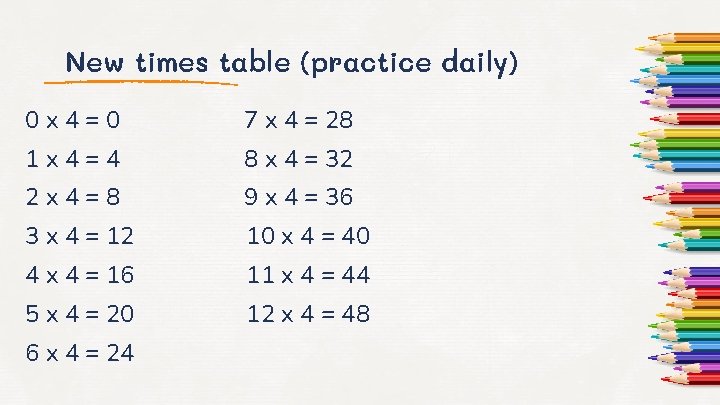
New times table (practice daily) 0 x 4=0 7 x 4 = 28 1 x 4=4 8 x 4 = 32 2 x 4=8 9 x 4 = 36 3 x 4 = 12 10 x 4 = 40 4 x 4 = 16 11 x 4 = 44 5 x 4 = 20 12 x 4 = 48 6 x 4 = 24
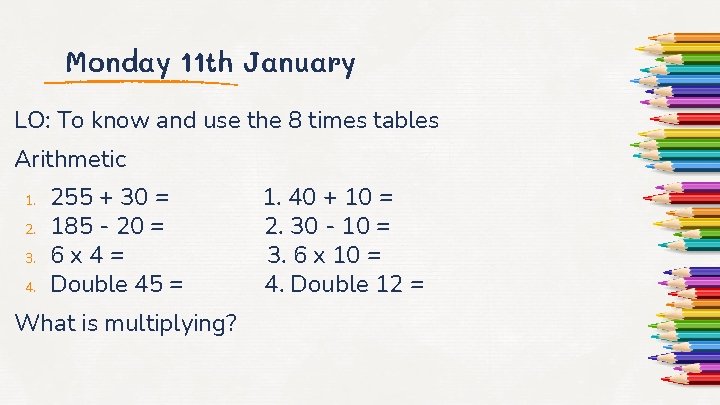
Monday 11 th January LO: To know and use the 8 times tables Arithmetic 1. 2. 3. 4. 255 + 30 = 185 - 20 = 6 x 4= Double 45 = What is multiplying? 1. 40 + 10 = 2. 30 - 10 = 3. 6 x 10 = 4. Double 12 =
Multiplication When we multiply we are thinking about LOTS OF. How many LOTS OF what do we need for the number problem below? 5 x 8=
Answer We need 5 LOTS OF 8. 5 x 8 = 40 8 + 8 + 8 = 40 - (5 lots of 8 is 40)
Multiplying What is the difference between 5 lots of 8 and 8 lots of 5? Draw an array for each to help you with this.
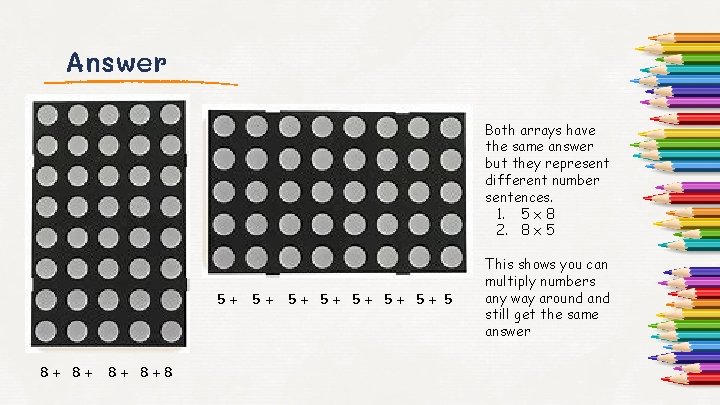
Answer Both arrays have the same answer but they represent different number sentences. 1. 5 x 8 2. 8 x 5 5+ 8+ 8+8 5+ 5+ 5+ 5 This shows you can multiply numbers any way around and still get the same answer
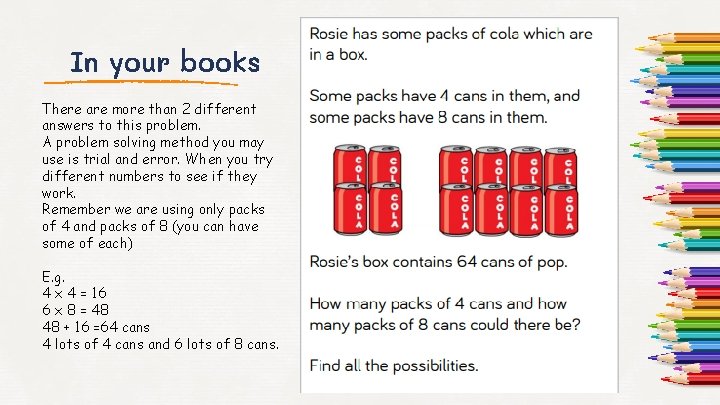
In your books There are more than 2 different answers to this problem. A problem solving method you may use is trial and error. When you try different numbers to see if they work. Remember we are using only packs of 4 and packs of 8 (you can have some of each) E. g. 4 x 4 = 16 6 x 8 = 48 48 + 16 =64 cans 4 lots of 4 cans and 6 lots of 8 cans.
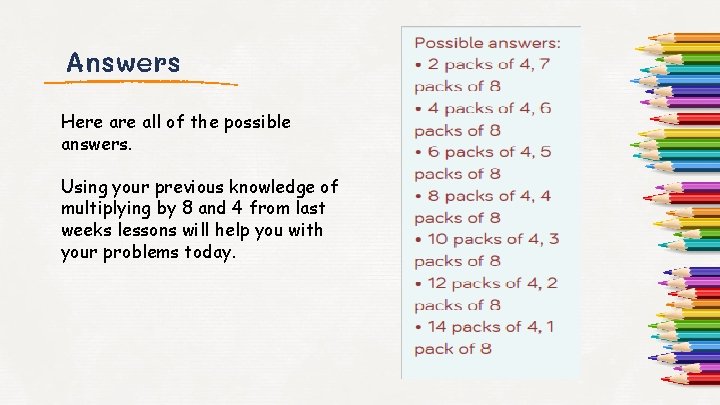
Answers Here all of the possible answers. Using your previous knowledge of multiplying by 8 and 4 from last weeks lessons will help you with your problems today.
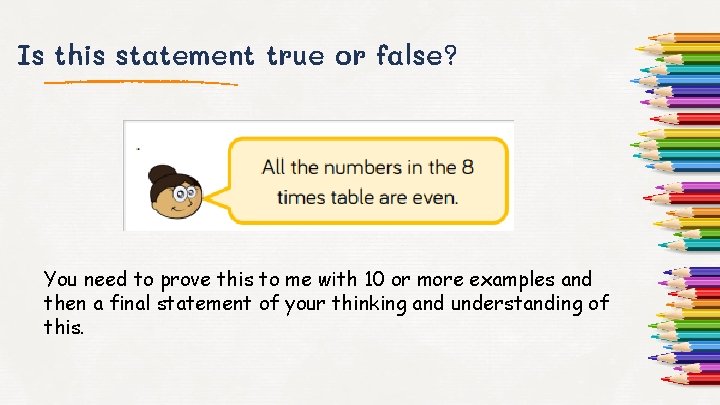
Is this statement true or false? You need to prove this to me with 10 or more examples and then a final statement of your thinking and understanding of this.
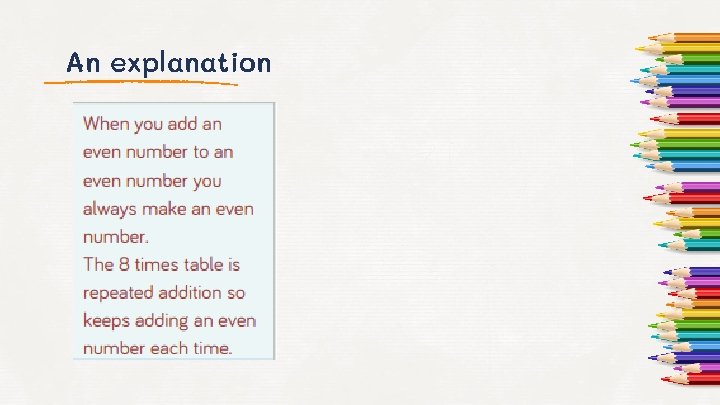
An explanation
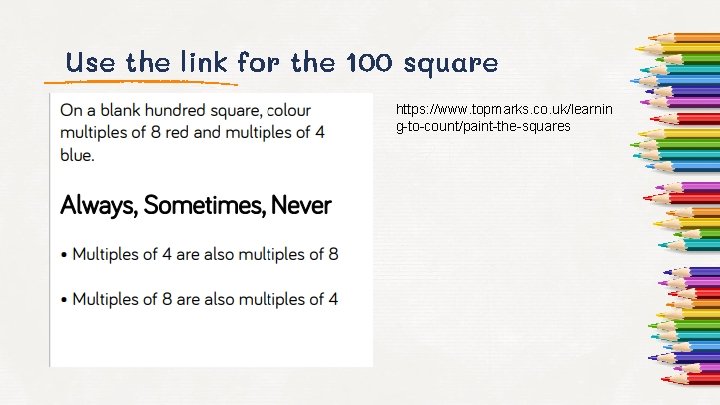
Use the link for the 100 square https: //www. topmarks. co. uk/learnin g-to-count/paint-the-squares
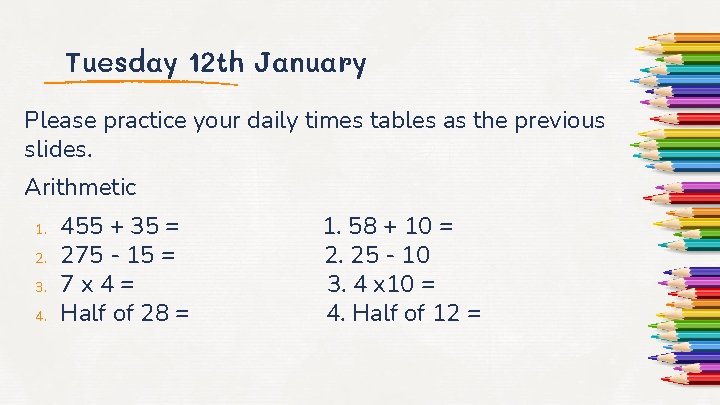
Tuesday 12 th January Please practice your daily times tables as the previous slides. Arithmetic 1. 2. 3. 4. 455 + 35 = 275 - 15 = 7 x 4= Half of 28 = 1. 58 + 10 = 2. 25 - 10 3. 4 x 10 = 4. Half of 12 =
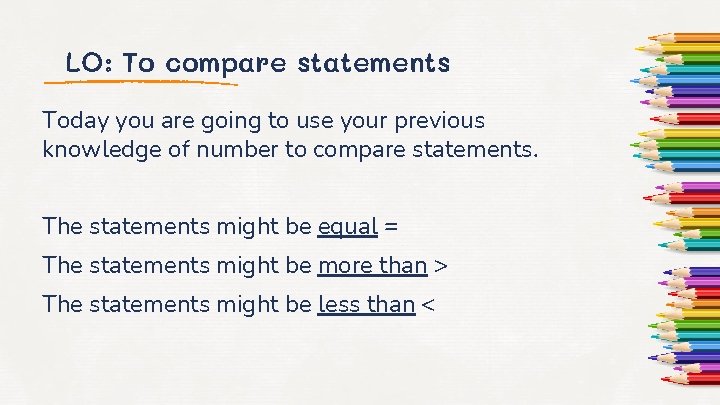
LO: To compare statements Today you are going to use your previous knowledge of number to compare statements. The statements might be equal = The statements might be more than > The statements might be less than <
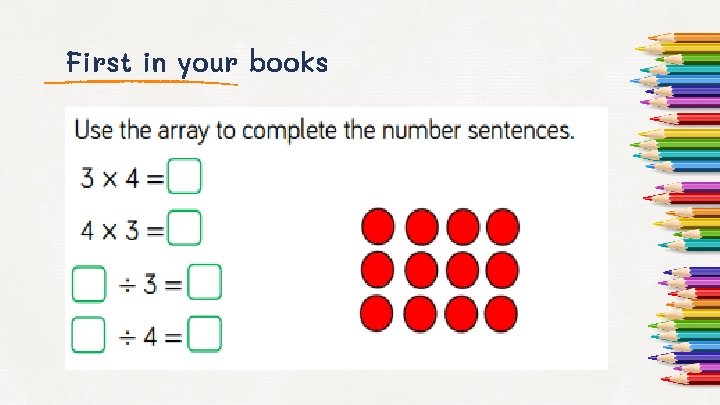
First in your books
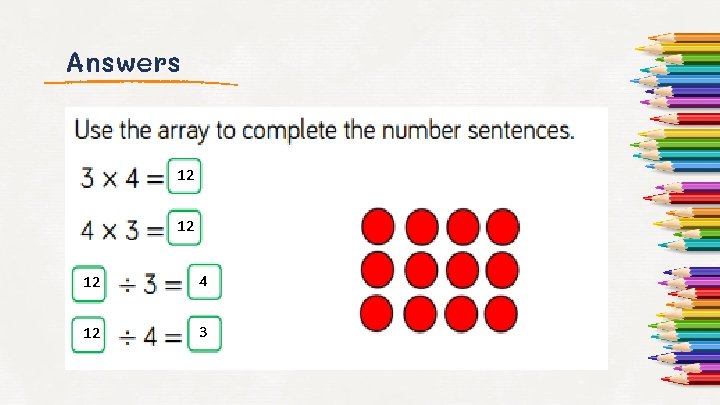
Answers 12 12 12 4 12 3
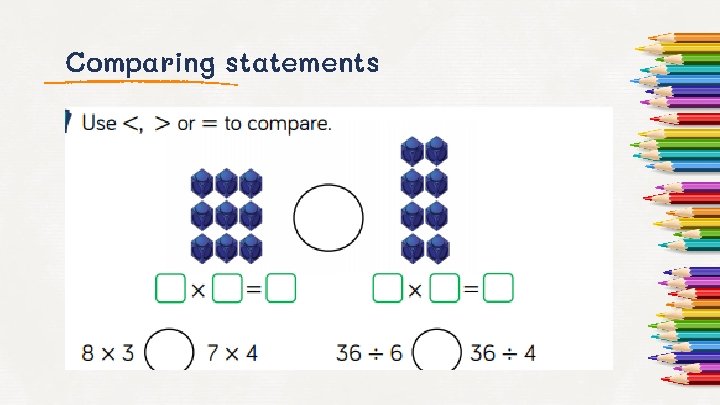
Comparing statements
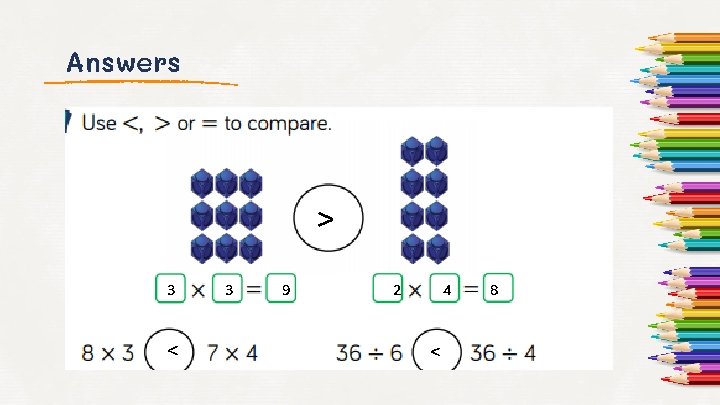
Answers > 3 < 3 9 2 4 < 8
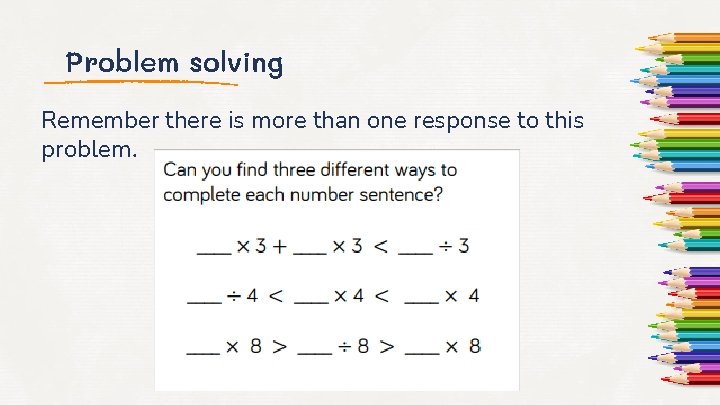
Problem solving Remember there is more than one response to this problem.
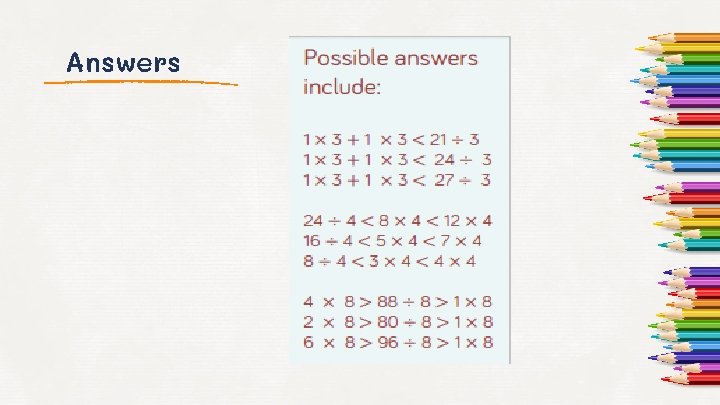
Answers
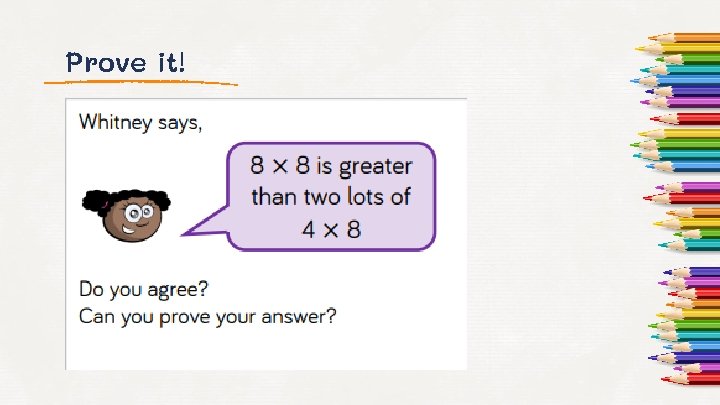
Prove it!
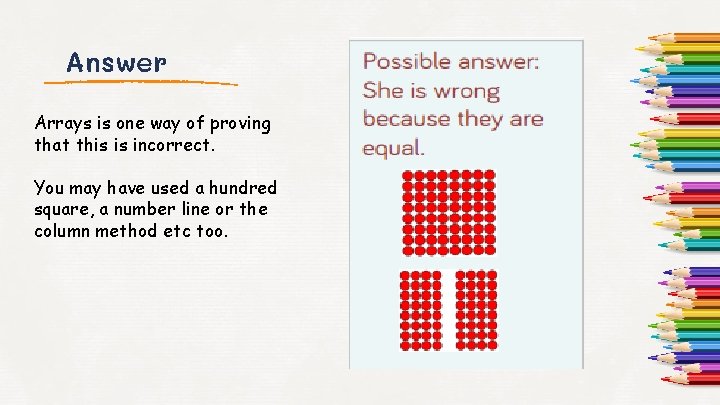
Answer Arrays is one way of proving that this is incorrect. You may have used a hundred square, a number line or the column method etc too.
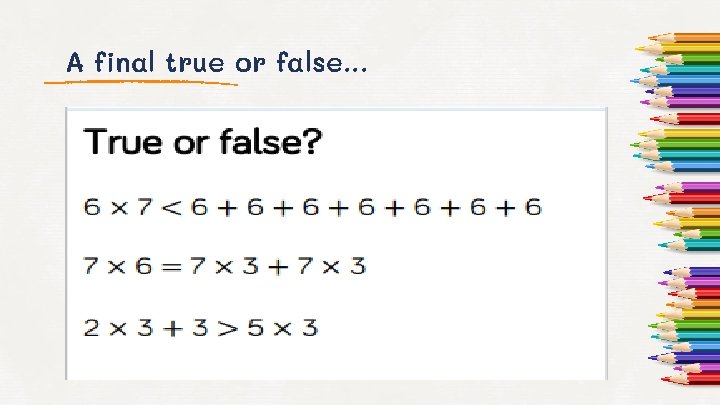
A final true or false. . .
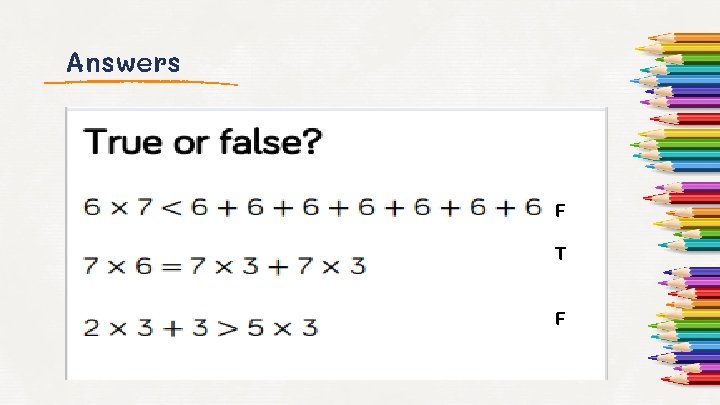
Answers F T F
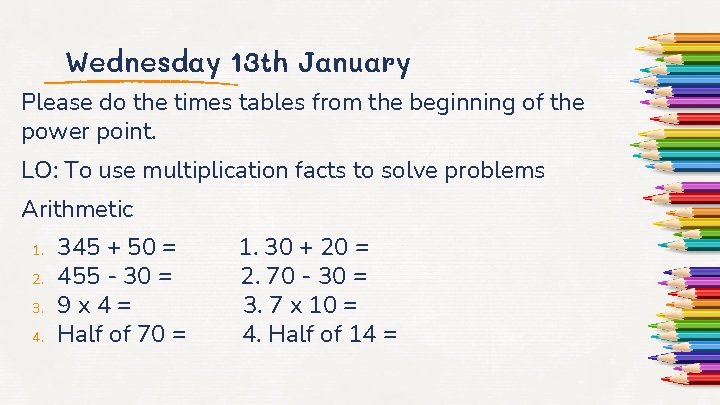
Wednesday 13 th January Please do the times tables from the beginning of the power point. LO: To use multiplication facts to solve problems Arithmetic 1. 2. 3. 4. 345 + 50 = 455 - 30 = 9 x 4= Half of 70 = 1. 30 + 20 = 2. 70 - 30 = 3. 7 x 10 = 4. Half of 14 =
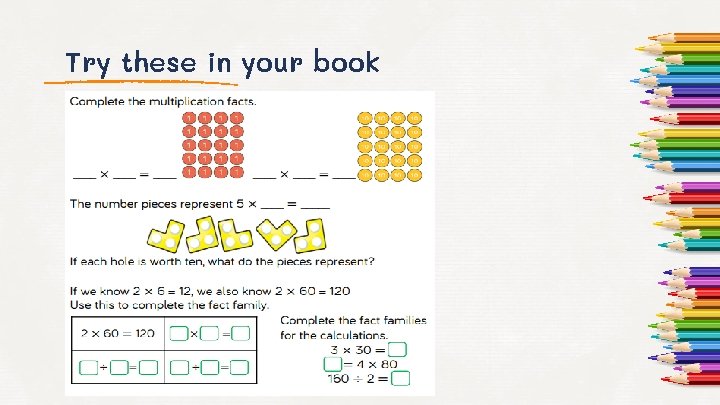
Try these in your book
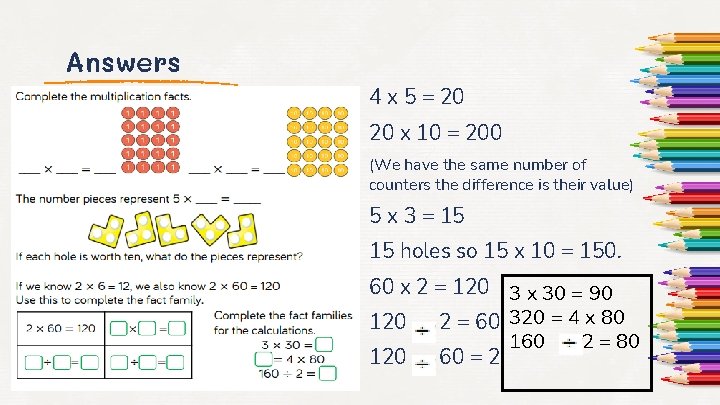
Answers 4 x 5 = 20 20 x 10 = 200 (We have the same number of counters the difference is their value) 5 x 3 = 15 15 holes so 15 x 10 = 150. 60 x 2 = 120 3 x 30 = 90 120 2 = 60 320 = 4 x 80 160 2 = 80 120 60 = 2
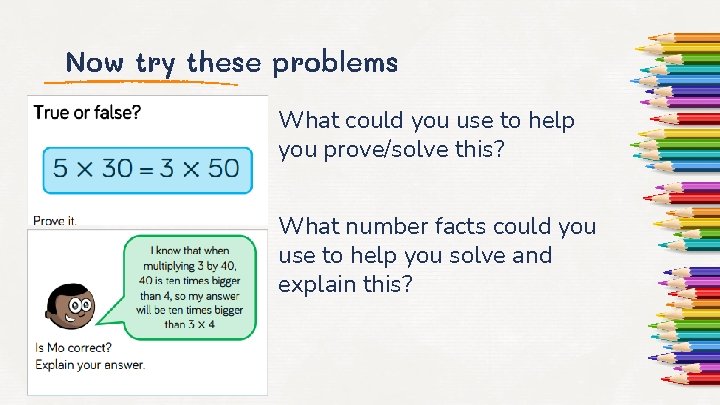
Now try these problems What could you use to help you prove/solve this? What number facts could you use to help you solve and explain this?
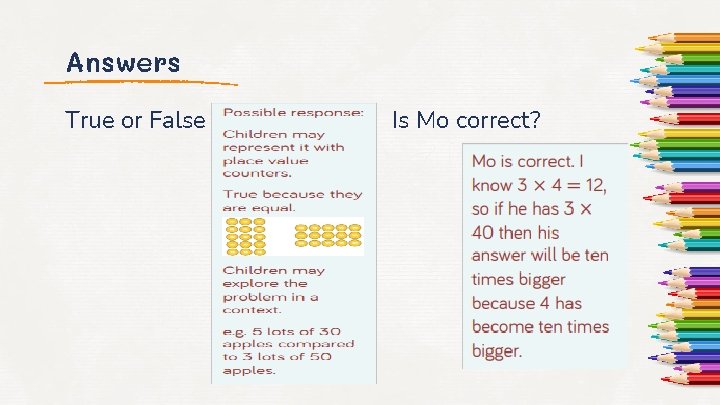
Answers True or False Is Mo correct?
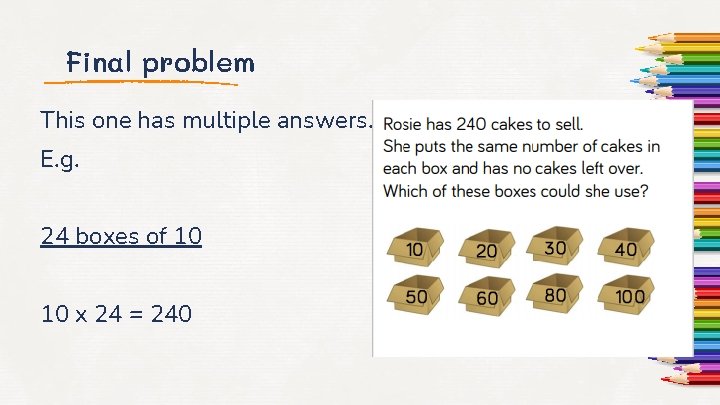
Final problem This one has multiple answers. E. g. 24 boxes of 10 10 x 24 = 240
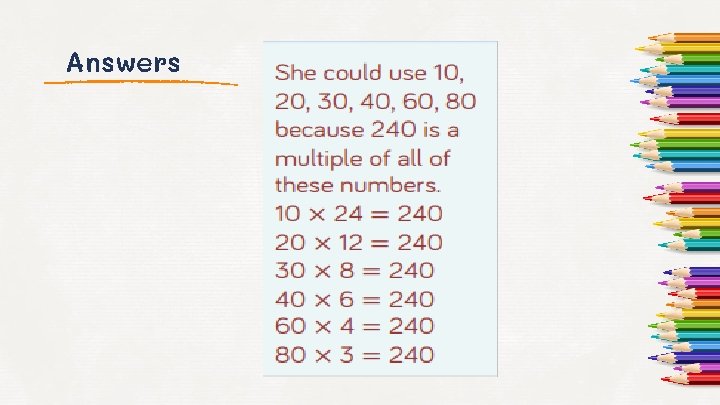
Answers
- Slides: 33