
Maths Week 1 Doubling When we are doubling
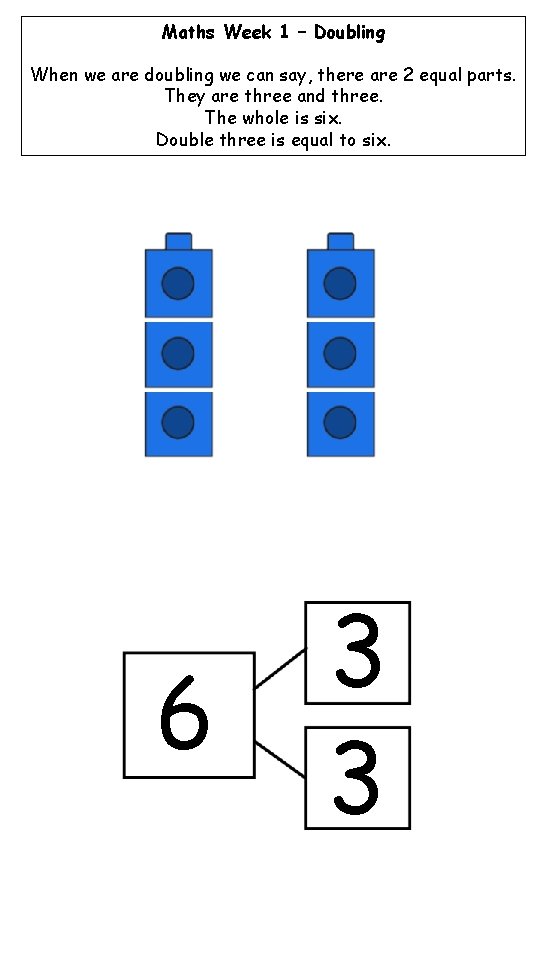
Maths Week 1 – Doubling When we are doubling we can say, there are 2 equal parts. They are three and three. The whole is six. Double three is equal to six. 6 3 3
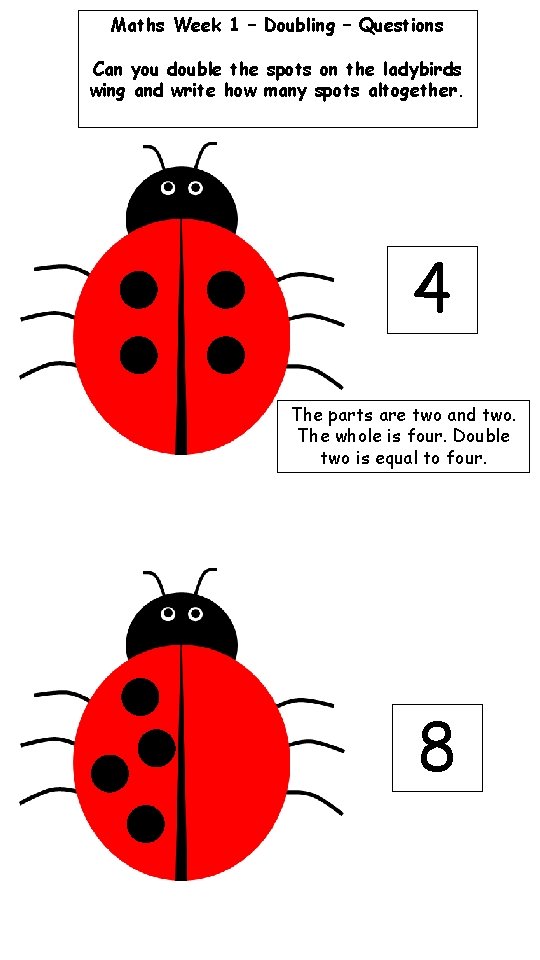
Maths Week 1 – Doubling – Questions Can you double the spots on the ladybirds wing and write how many spots altogether. 4 The parts are two and two. The whole is four. Double two is equal to four. 8
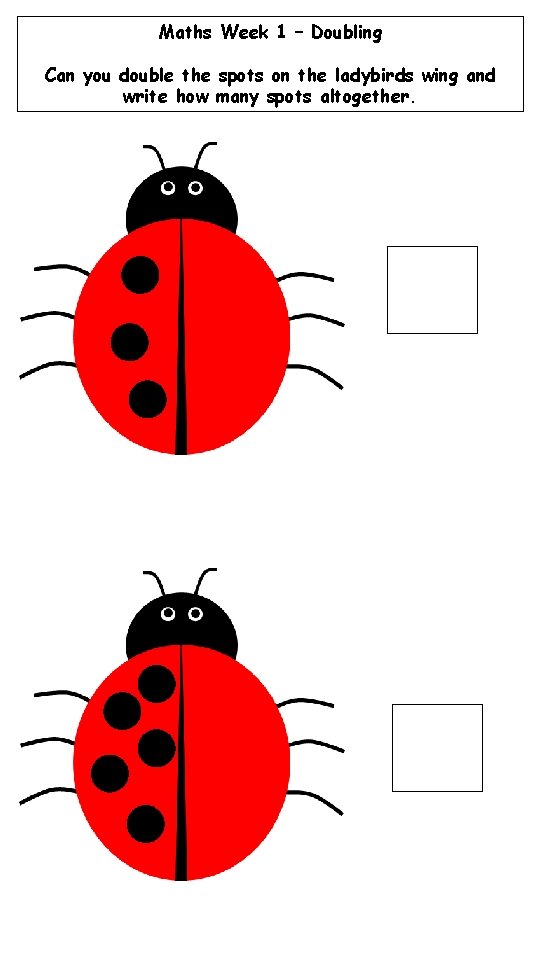
Maths Week 1 – Doubling Can you double the spots on the ladybirds wing and write how many spots altogether.
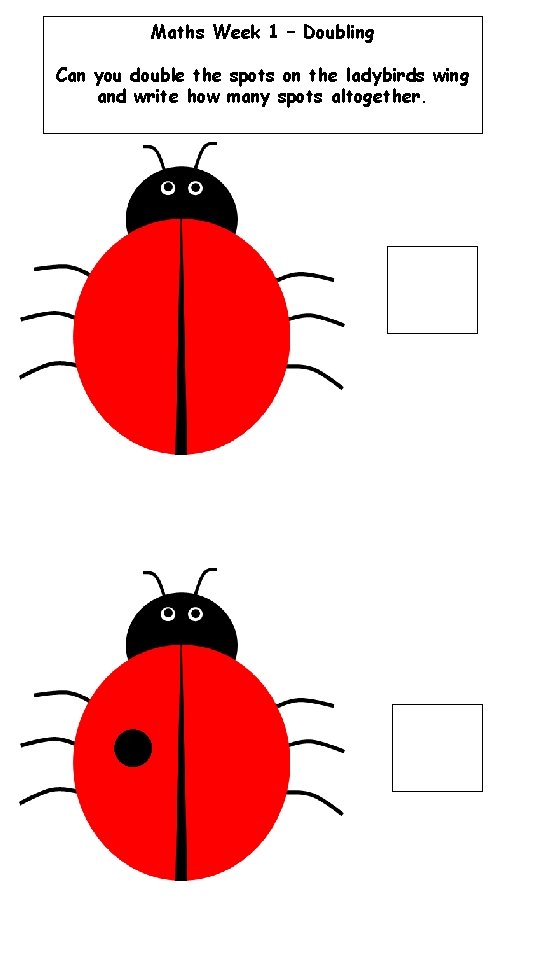
Maths Week 1 – Doubling Can you double the spots on the ladybirds wing and write how many spots altogether.
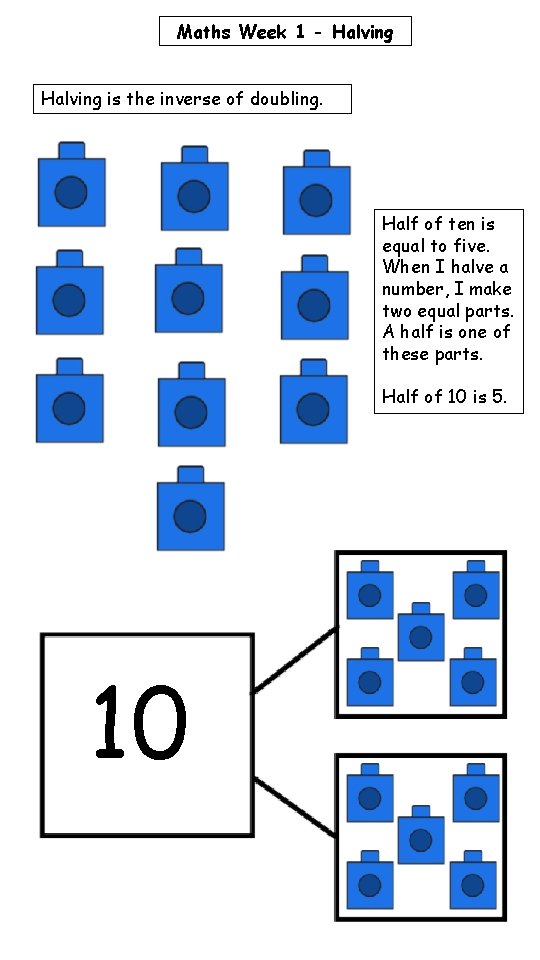
Maths Week 1 - Halving is the inverse of doubling. Half of ten is equal to five. When I halve a number, I make two equal parts. A half is one of these parts. Half of 10 is 5. 10
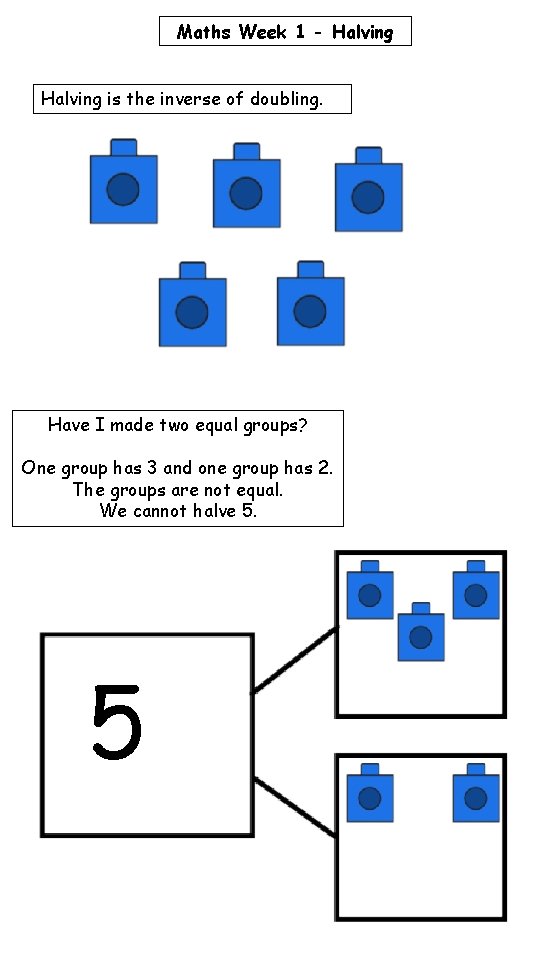
Maths Week 1 - Halving is the inverse of doubling. Have I made two equal groups? One group has 3 and one group has 2. The groups are not equal. We cannot halve 5. 5
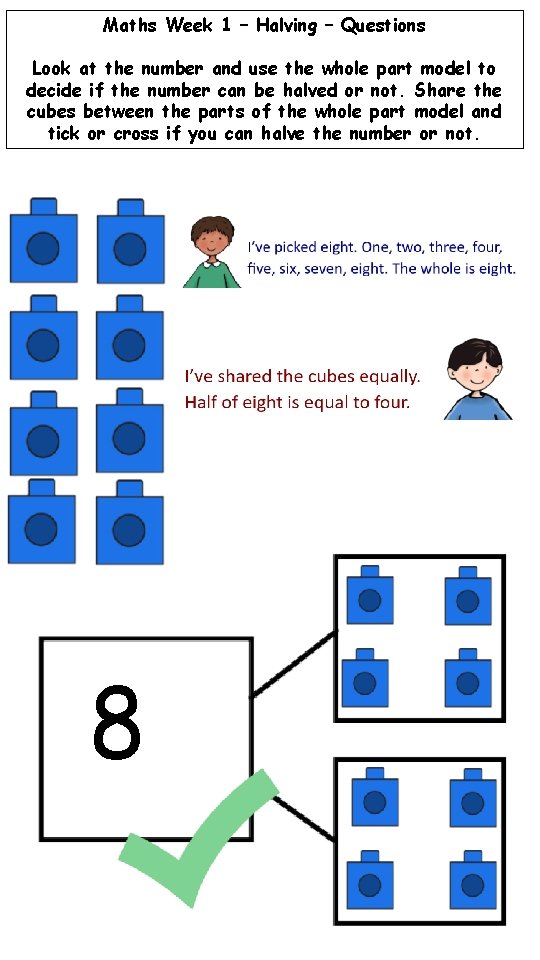
Maths Week 1 – Halving – Questions Look at the number and use the whole part model to decide if the number can be halved or not. Share the cubes between the parts of the whole part model and tick or cross if you can halve the number or not. 8
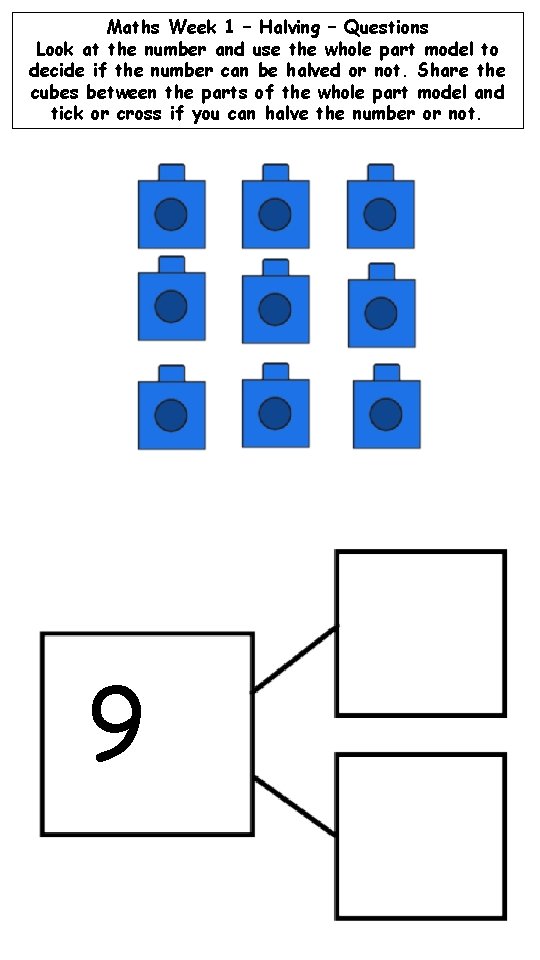
Maths Week 1 – Halving – Questions Look at the number and use the whole part model to decide if the number can be halved or not. Share the cubes between the parts of the whole part model and tick or cross if you can halve the number or not. 9
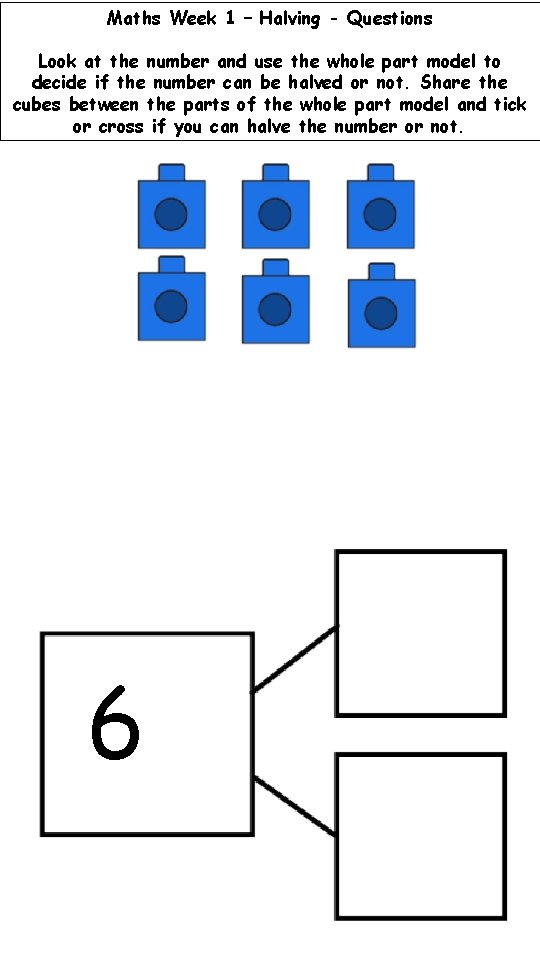
Maths Week 1 – Halving - Questions Look at the number and use the whole part model to decide if the number can be halved or not. Share the cubes between the parts of the whole part model and tick or cross if you can halve the number or not. 6
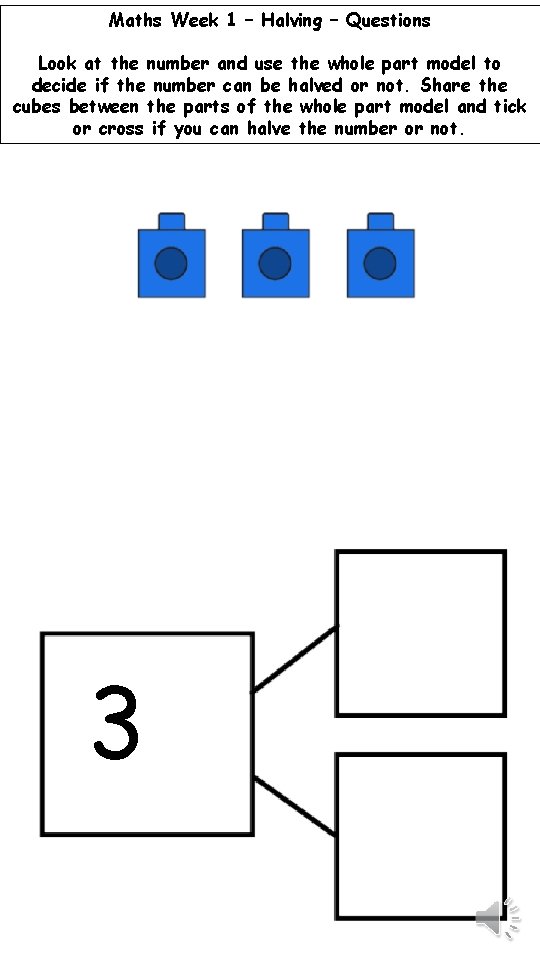
Maths Week 1 – Halving – Questions Look at the number and use the whole part model to decide if the number can be halved or not. Share the cubes between the parts of the whole part model and tick or cross if you can halve the number or not. 3
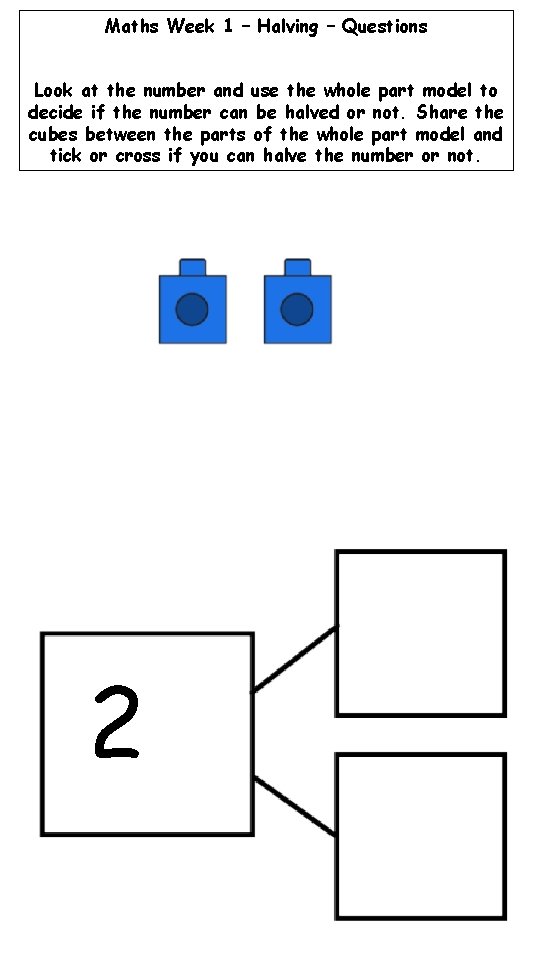
Maths Week 1 – Halving – Questions Look at the number and use the whole part model to decide if the number can be halved or not. Share the cubes between the parts of the whole part model and tick or cross if you can halve the number or not. 2
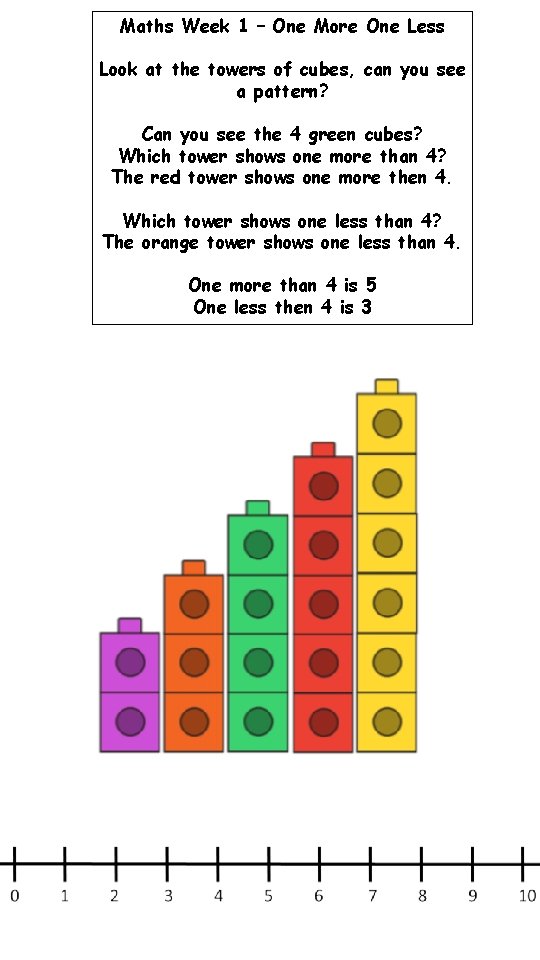
Maths Week 1 – One More One Less Look at the towers of cubes, can you see a pattern? Can you see the 4 green cubes? Which tower shows one more than 4? The red tower shows one more then 4. Which tower shows one less than 4? The orange tower shows one less than 4. One more than 4 is 5 One less then 4 is 3
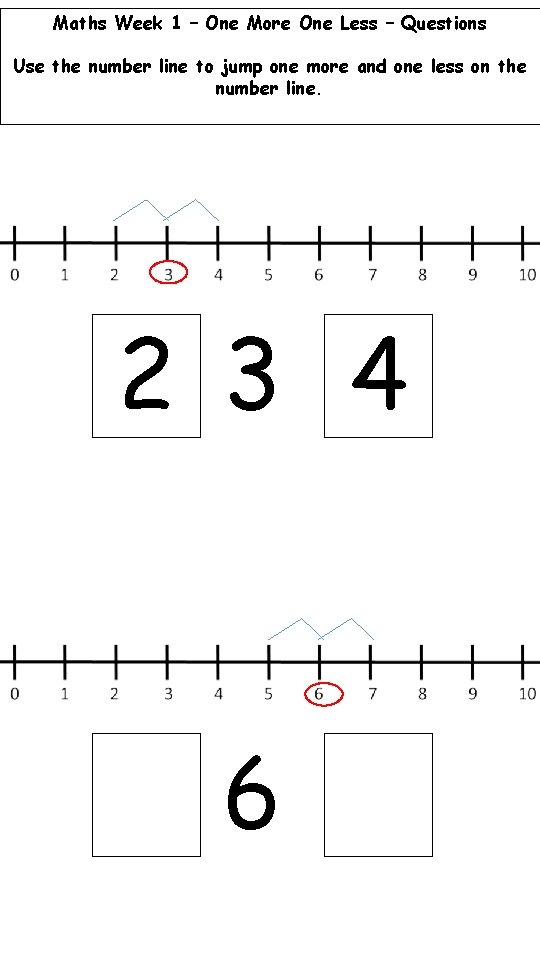
Maths Week 1 – One More One Less – Questions Use the number line to jump one more and one less on the number line. 2 3 4 6

Maths Week 1 – One More One Less – Questions Use the number line to jump one more and one less on the number line. 5
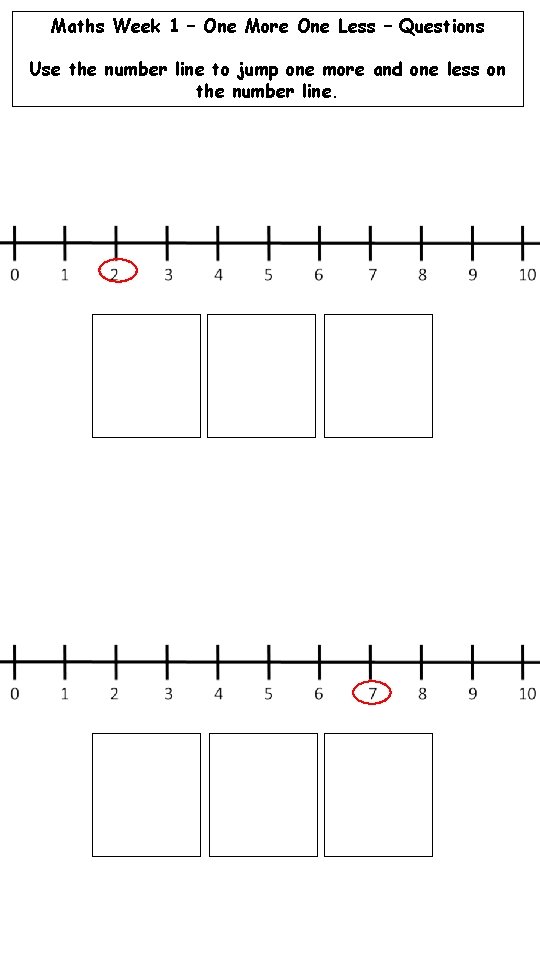
Maths Week 1 – One More One Less – Questions Use the number line to jump one more and one less on the number line.
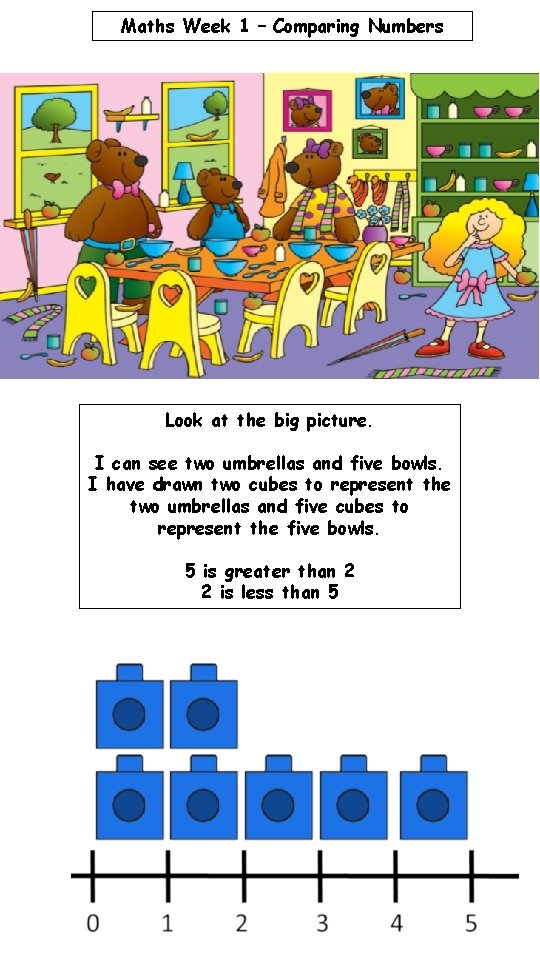
Maths Week 1 – Comparing Numbers Look at the big picture. I can see two umbrellas and five bowls. I have drawn two cubes to represent the two umbrellas and five cubes to represent the five bowls. 5 is greater than 2 2 is less than 5
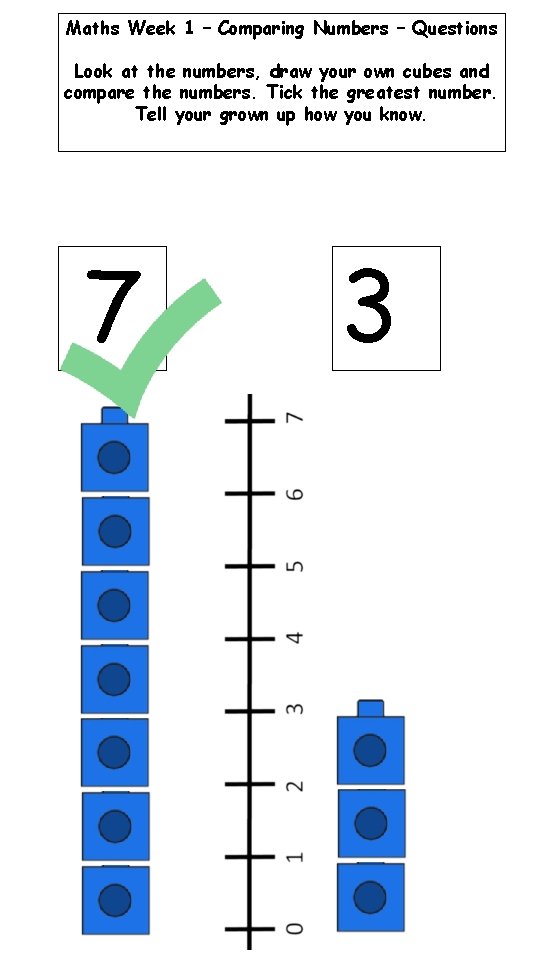
Maths Week 1 – Comparing Numbers – Questions Look at the numbers, draw your own cubes and compare the numbers. Tick the greatest number. Tell your grown up how you know. 7 3
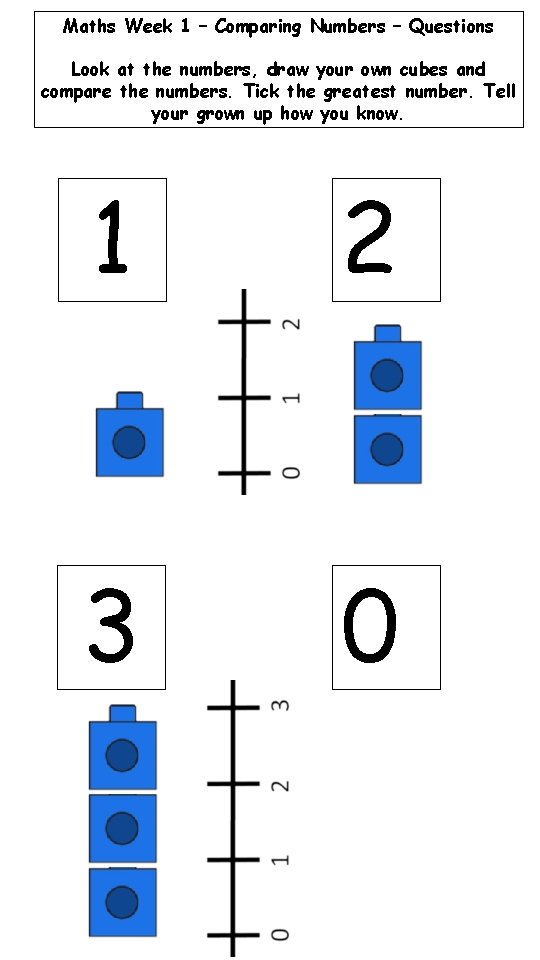
Maths Week 1 – Comparing Numbers – Questions Look at the numbers, draw your own cubes and compare the numbers. Tick the greatest number. Tell your grown up how you know. 1 2 3 0
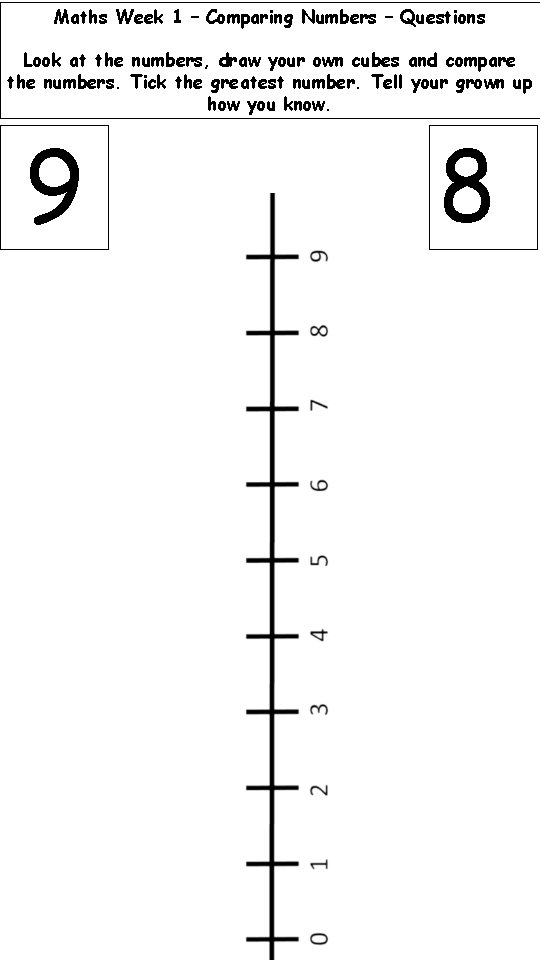
Maths Week 1 – Comparing Numbers – Questions Look at the numbers, draw your own cubes and compare the numbers. Tick the greatest number. Tell your grown up how you know. 9 8
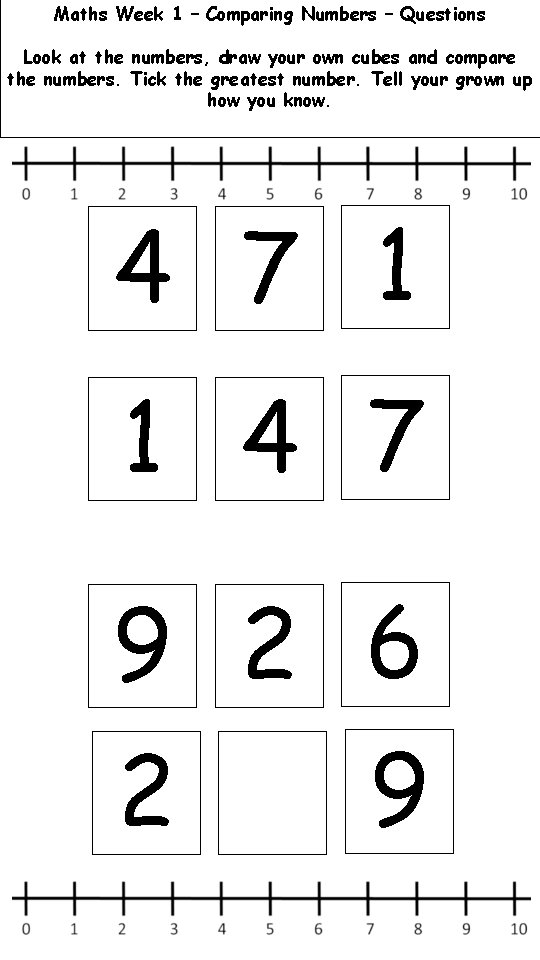
Maths Week 1 – Comparing Numbers – Questions Look at the numbers, draw your own cubes and compare the numbers. Tick the greatest number. Tell your grown up how you know. 4 7 1 1 4 7 9 2 6 2 9
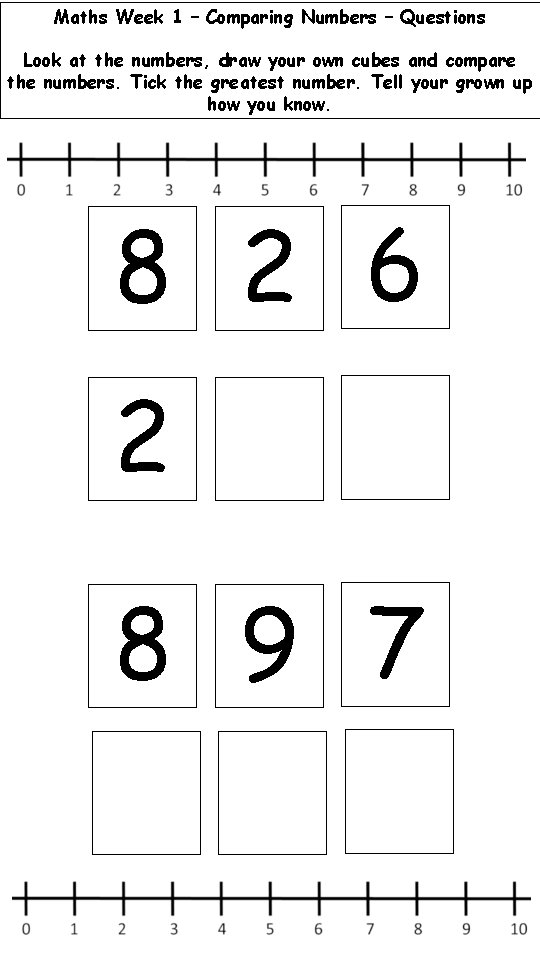
Maths Week 1 – Comparing Numbers – Questions Look at the numbers, draw your own cubes and compare the numbers. Tick the greatest number. Tell your grown up how you know. 8 2 6 2 8 9 7
- Slides: 21