
Maths in Reception Early Learning Goal expectation at

- Slides: 26
Maths in Reception
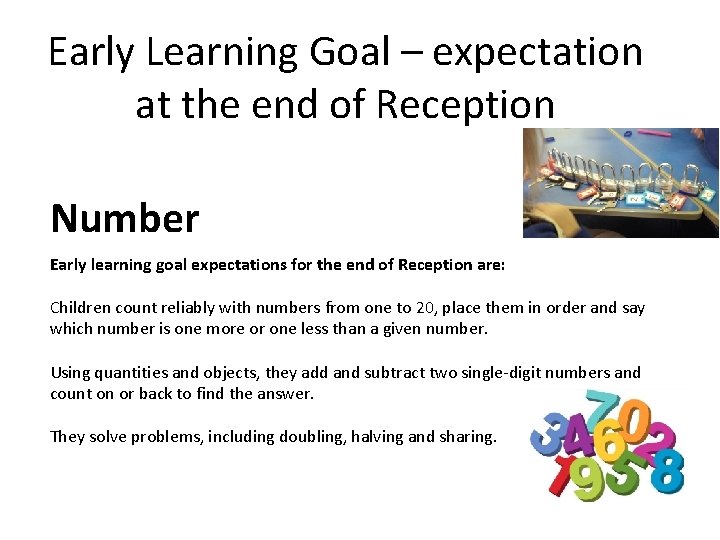
Early Learning Goal – expectation at the end of Reception Number Early learning goal expectations for the end of Reception are: Children count reliably with numbers from one to 20, place them in order and say which number is one more or one less than a given number. Using quantities and objects, they add and subtract two single-digit numbers and count on or back to find the answer. They solve problems, including doubling, halving and sharing.
Early Learning Goal - expectation at the end of Reception Shape, Space and Measures Early learning goal expectations for the end of Reception are: - Children use everyday language to talk about size, weight, capacity, position, distance, time and money to compare quantities and objects and to solve problems. - They recognise, create and describe patterns. - They explore characteristics of everyday objects and shapes and use mathematical language to describe them.
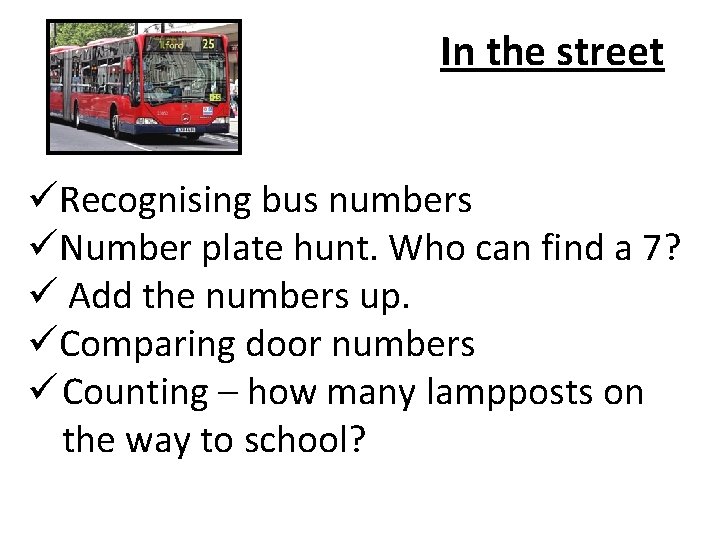
In the street üRecognising bus numbers üNumber plate hunt. Who can find a 7? ü Add the numbers up. üComparing door numbers ü Counting – how many lampposts on the way to school?
Doing the washing üCounting in 2 s – matching shoes üSorting by colour and size. üMatching/pairing up socks. ü Find four shoes that are different sizes. Can you put them in order.
Time üWhat day is it today? ü Use timers, phones and clocks to measure short periods of time. ü Count down 10/ 20 seconds to get to the table/ into bed etc. ü Recognising numbers on the clock. If you cover a number, what number was missing?
Food ü Can you cut your toast into 4 pieces? Can you cut it into triangles? üSetting the table. Counting the right number of plates etc. How many more do we need? üCan you make shapes/ patterns out of the knives and forks. ü Helping with the cooking by measuring and counting ingredients. üSetting the timer. ü Positional language: on, under, beside, opposite etc
Going Shopping! üReading price tags üCounting items into the basket üFinding and counting coins üComparing weights – which is heavier ü 3 D shapes - packaging
Measuring üAre you taller than a …? üMarking height on the wall. ü Cut hand shapes out of paper. How many hands long is the couch? How long is the table? Which is longer? ü Who has the biggest hands in our family? ü How many steps from the gate to the front door?
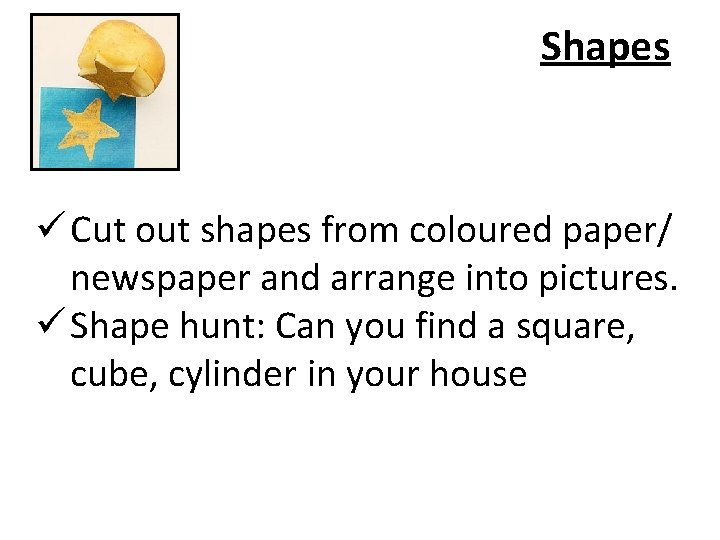
Shapes ü Cut out shapes from coloured paper/ newspaper and arrange into pictures. ü Shape hunt: Can you find a square, cube, cylinder in your house
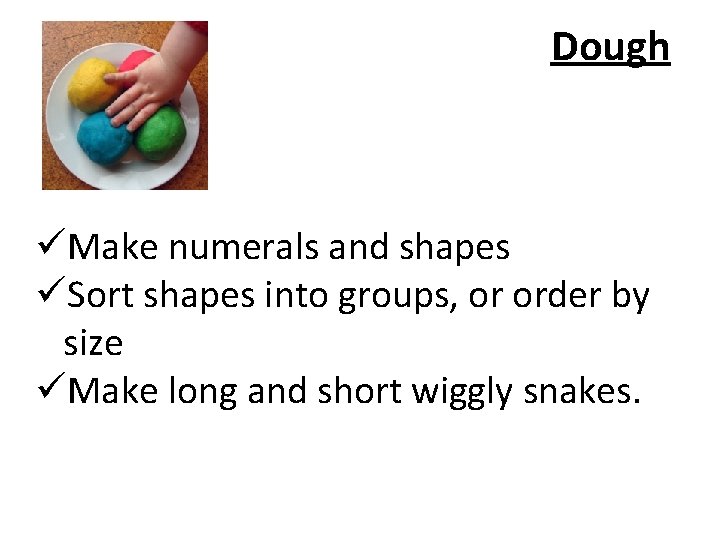
Dough üMake numerals and shapes üSort shapes into groups, or order by size üMake long and short wiggly snakes.
Games üPutting cards into piles ü Jigsaws (you can make your own by cutting up a magazine picture) ü Snap (matching pairs) or Happy Families (collect 4 of a kind) üSnakes and ladders or other simple dice games. üAdding numbers on two dice. üBingo, with numbers or shapes üHopscotch
Rhymes and songs E. g. : 5 little monkeys jumping on the bed One fell off and bumped his head Mummy called the doctor and the doctor said “No more monkeys jumping on the bed!” 4 little monkeys jumping on the bed … etc to 0 Your child can teach you more rhymes or try this website which has the words and sings it for you: http: //www. nurseryrhymes 4 u. com/NURSERY_RHYMES/CO UNTING. html
Internet maths games: www. mathszone. co. uk http: //www. bbc. co. uk/bitesize/ks 1/maths/ http: //www. familylearning. org. uk/online_math_gam es. html www. sesamestreet. org www. topmarks. co. uk
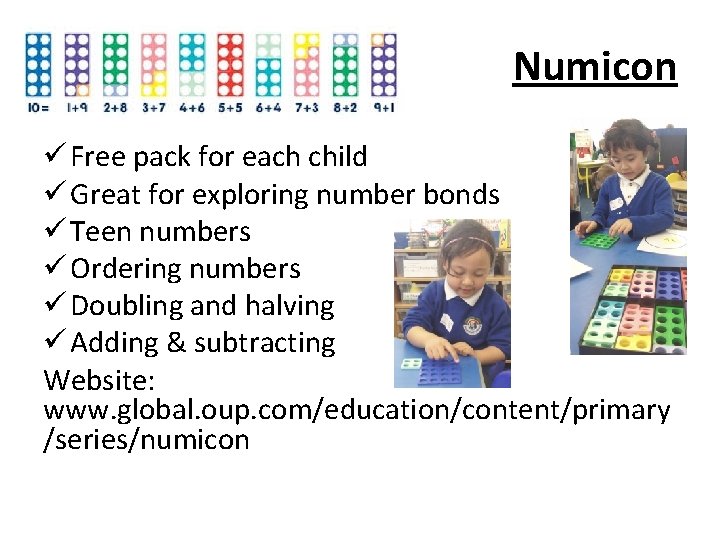
Numicon ü Free pack for each child ü Great for exploring number bonds ü Teen numbers ü Ordering numbers ü Doubling and halving ü Adding & subtracting Website: www. global. oup. com/education/content/primary /series/numicon
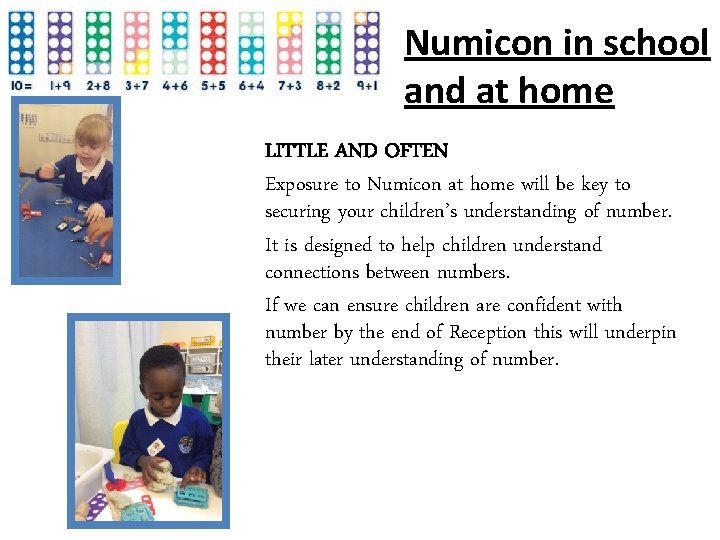
Numicon in school and at home LITTLE AND OFTEN Exposure to Numicon at home will be key to securing your children’s understanding of number. It is designed to help children understand connections between numbers. If we can ensure children are confident with number by the end of Reception this will underpin their later understanding of number.
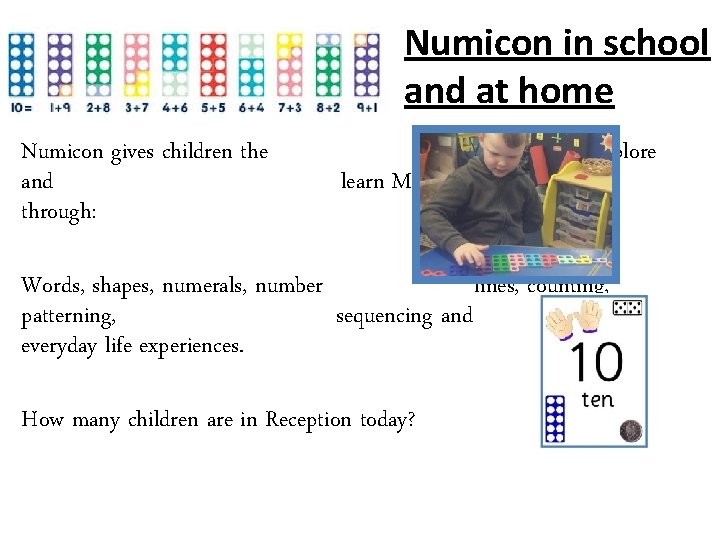
Numicon in school and at home Numicon gives children the and through: opportunity to explore learn Mathematics Words, shapes, numerals, number lines, counting, patterning, sequencing and everyday life experiences. How many children are in Reception today?
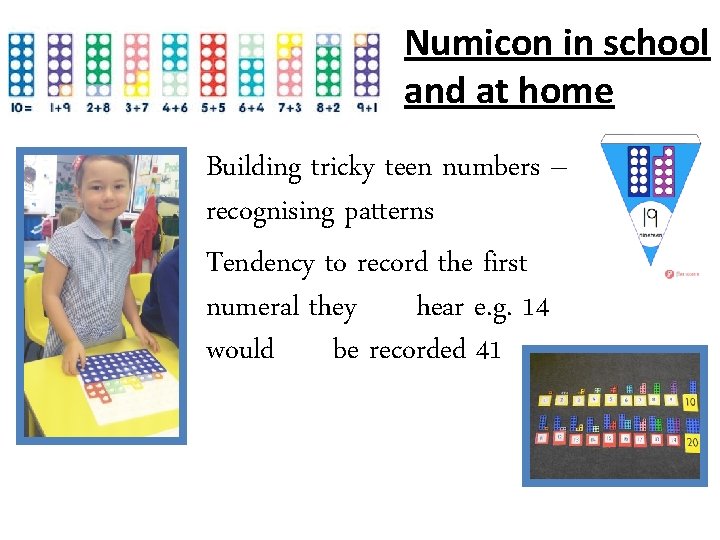
Numicon in school and at home Building tricky teen numbers – recognising patterns Tendency to record the first numeral they hear e. g. 14 would be recorded 41
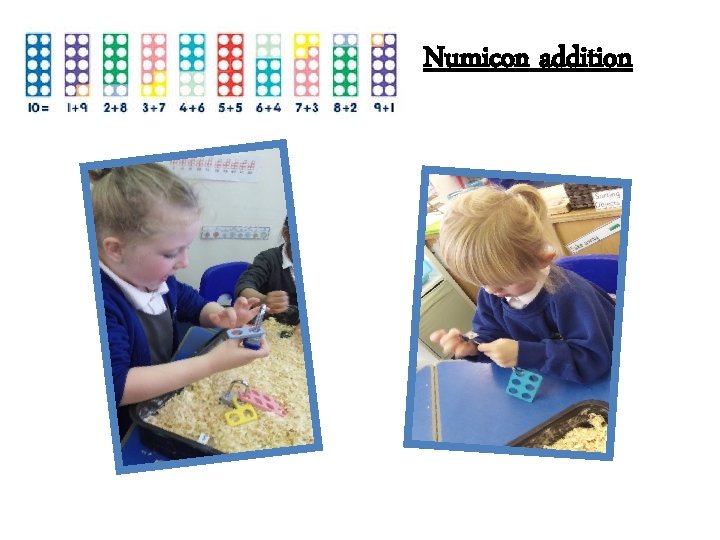
Numicon addition
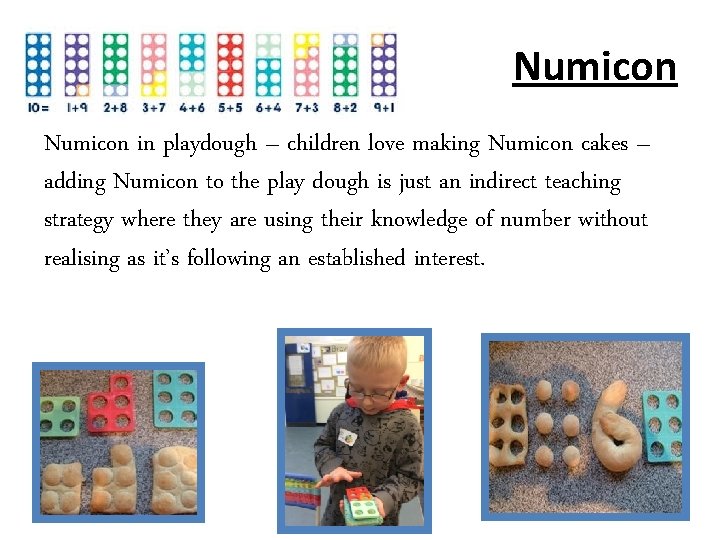
Numicon in playdough – children love making Numicon cakes – adding Numicon to the play dough is just an indirect teaching strategy where they are using their knowledge of number without realising as it’s following an established interest.
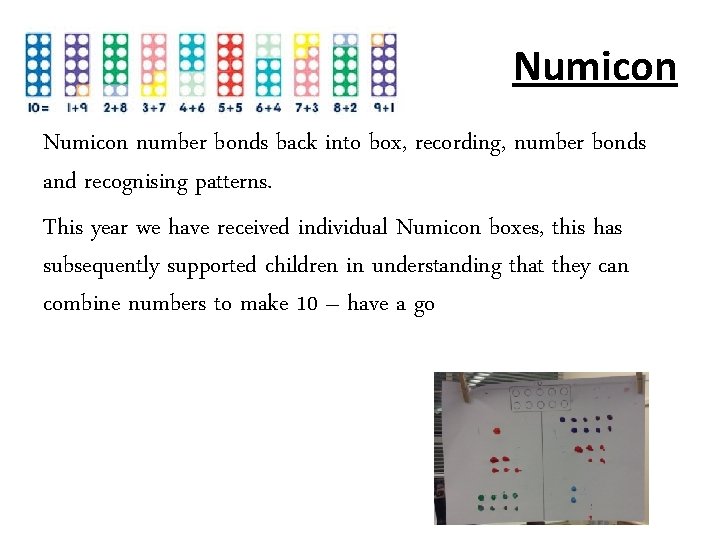
Numicon number bonds back into box, recording, number bonds and recognising patterns. This year we have received individual Numicon boxes, this has subsequently supported children in understanding that they can combine numbers to make 10 – have a go
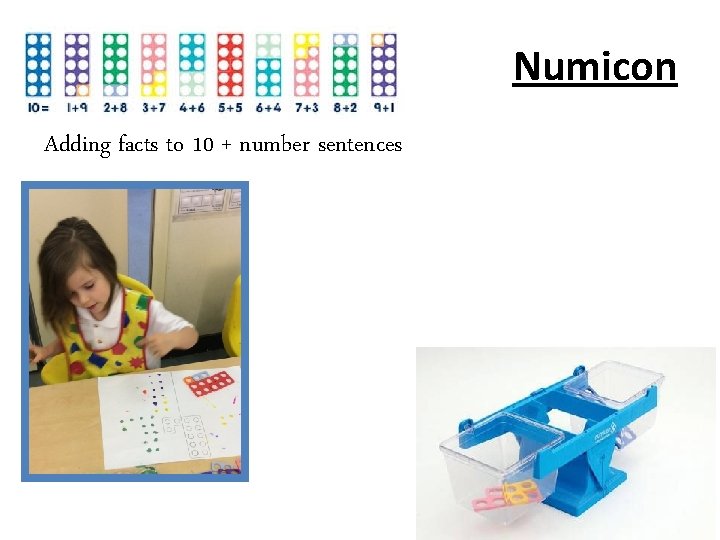
Numicon Adding facts to 10 + number sentences
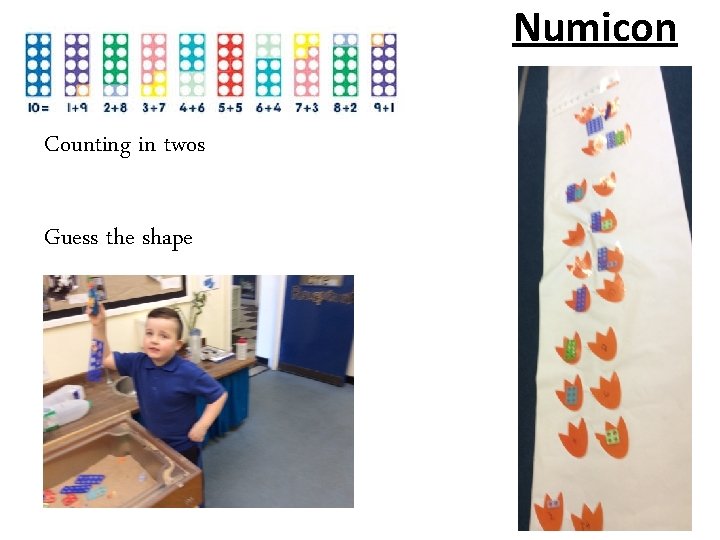
Numicon Counting in twos Guess the shape
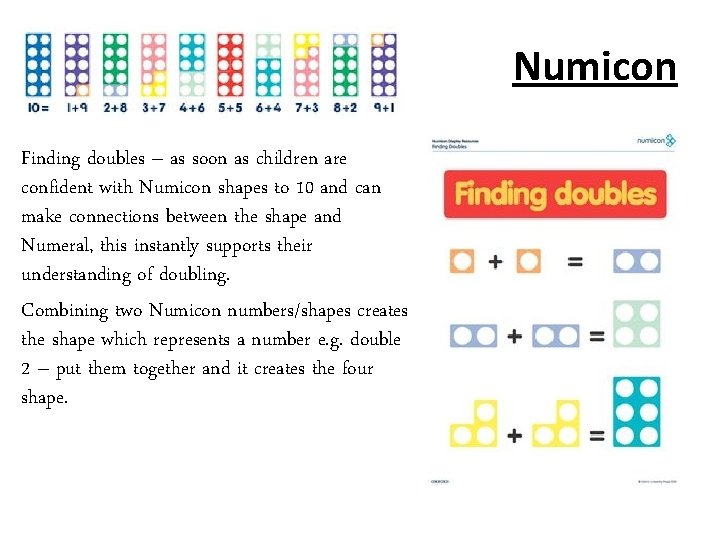
Numicon Finding doubles – as soon as children are confident with Numicon shapes to 10 and can make connections between the shape and Numeral, this instantly supports their understanding of doubling. Combining two Numicon numbers/shapes creates the shape which represents a number e. g. double 2 – put them together and it creates the four shape.
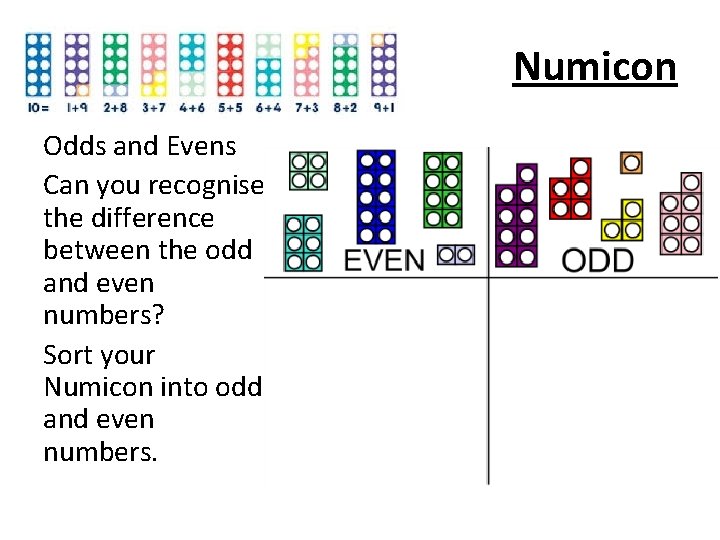
Numicon Odds and Evens Can you recognise the difference between the odd and even numbers? Sort your Numicon into odd and even numbers.
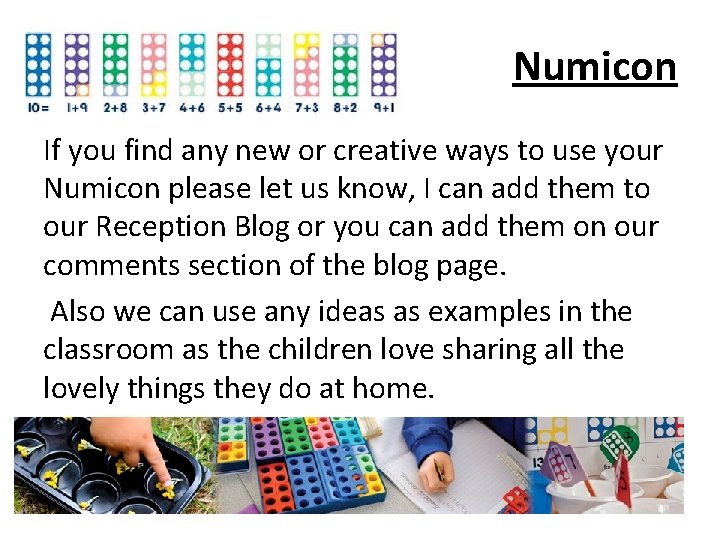
Numicon If you find any new or creative ways to use your Numicon please let us know, I can add them to our Reception Blog or you can add them on our comments section of the blog page. Also we can use any ideas as examples in the classroom as the children love sharing all the lovely things they do at home.