
Maths at Little Gaddesden in Class 2 Thinking


- Slides: 23
Maths at Little Gaddesden in Class 2
Thinking is at the heart of Mathematics and therefore should be at the heart of Mathematical teaching and learning. We believe that all children can do Maths (and do it well).
Aims • To get an insight into how Maths is taught in Class 2. • Understand what is meant by mastery in mathematics. • Identify how fluency impacts upon achieving mastery. • To take part in a variety of Maths activities. • To take away some ideas to support your children at home.
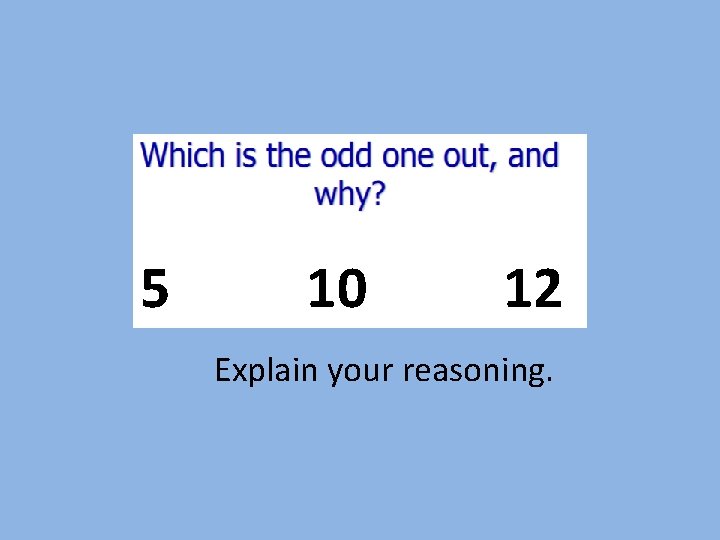
5 10 12 Explain your reasoning.
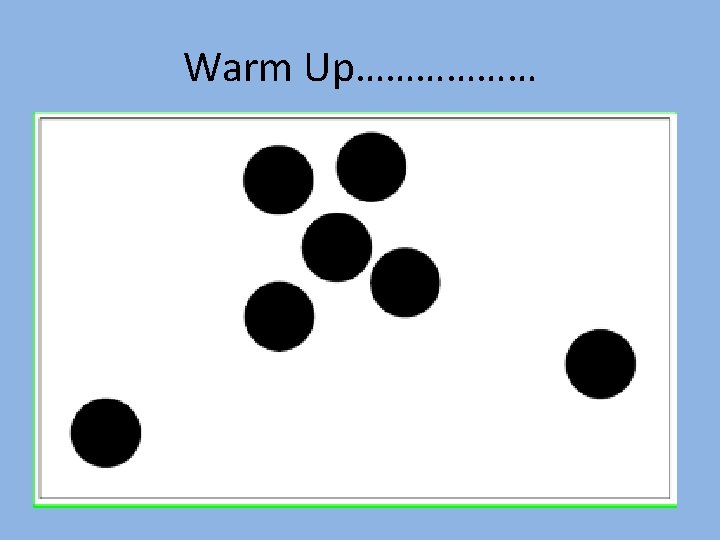
How many ways can you make 12?
Teaching for Mastery • • • Using spoken and written language with confidence and clarity to explain and justify mathematical reasoning. Having a deep conceptual understanding of mathematical concepts and skills. Developing mathematical thinking, including generalising, classifying and comparing and modifying.
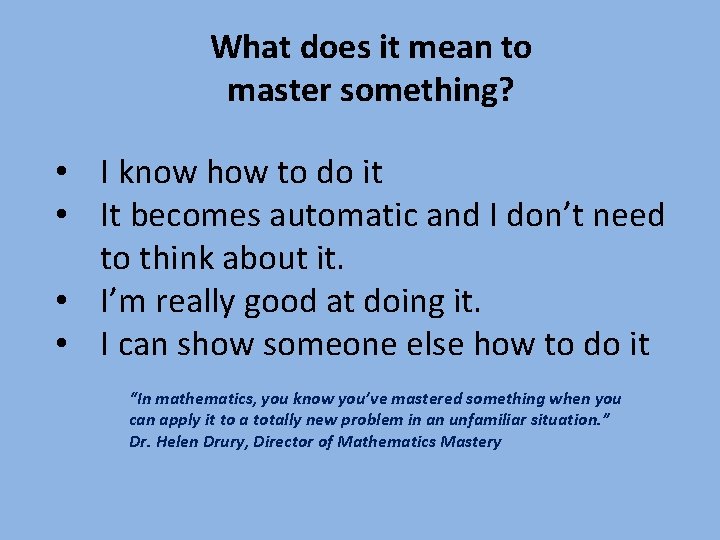
What does it mean to master something? • I know how to do it • It becomes automatic and I don’t need to think about it. • I’m really good at doing it. • I can show someone else how to do it “In mathematics, you know you’ve mastered something when you can apply it to a totally new problem in an unfamiliar situation. ” Dr. Helen Drury, Director of Mathematics Mastery
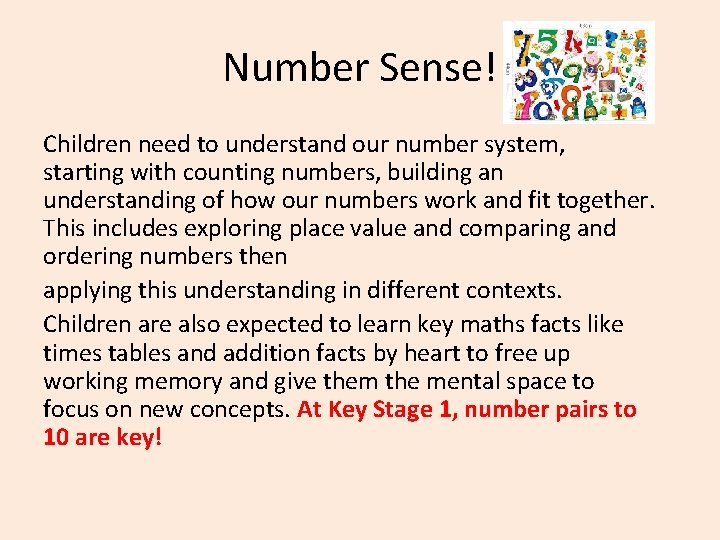
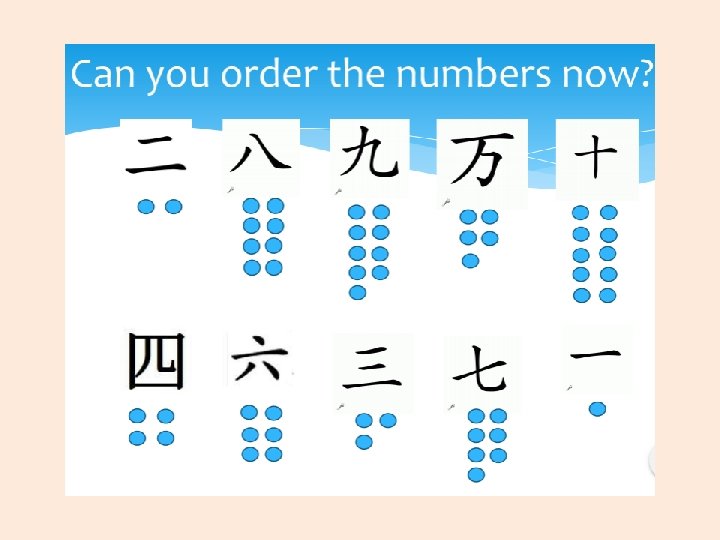
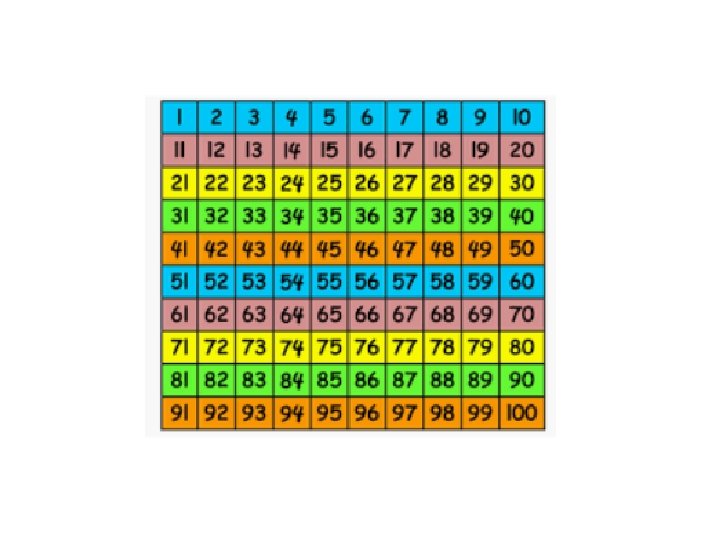
Number Sense! Children need to understand our number system, starting with counting numbers, building an understanding of how our numbers work and fit together. This includes exploring place value and comparing and ordering numbers then applying this understanding in different contexts. Children are also expected to learn key maths facts like times tables and addition facts by heart to free up working memory and give them the mental space to focus on new concepts. At Key Stage 1, number pairs to 10 are key!
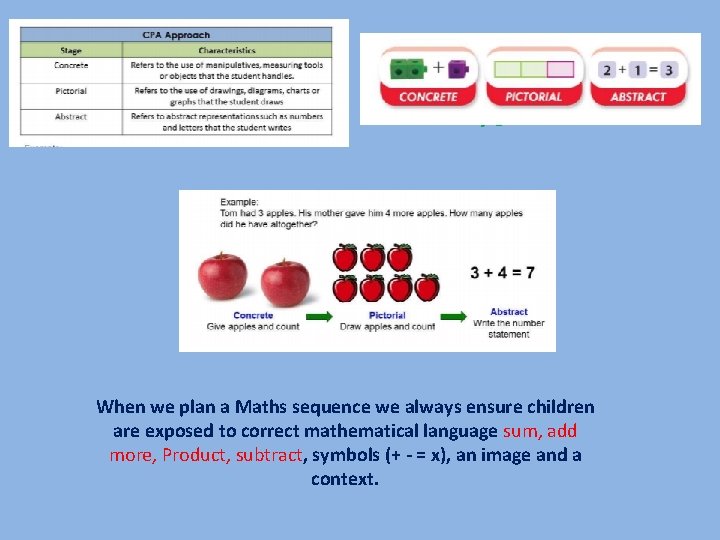
= + x % When we plan a Maths sequence we always ensure children are exposed to correct mathematical language sum, add more, Product, subtract, symbols (+ - = x), an image and a context.
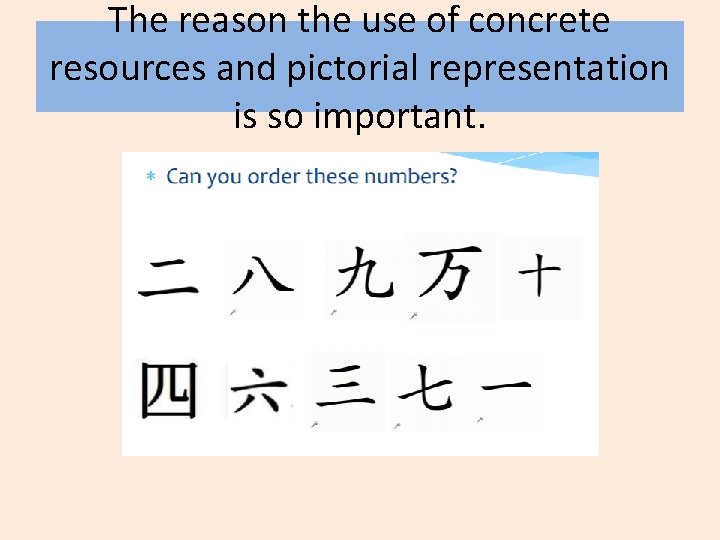
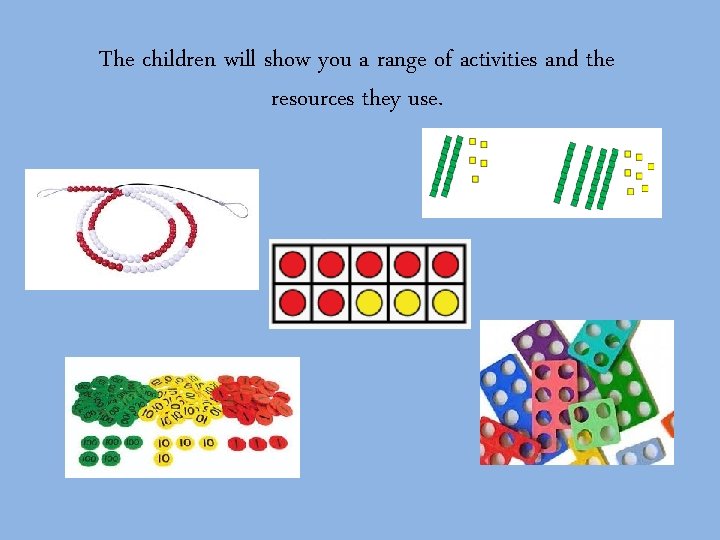
The reason the use of concrete resources and pictorial representation is so important.
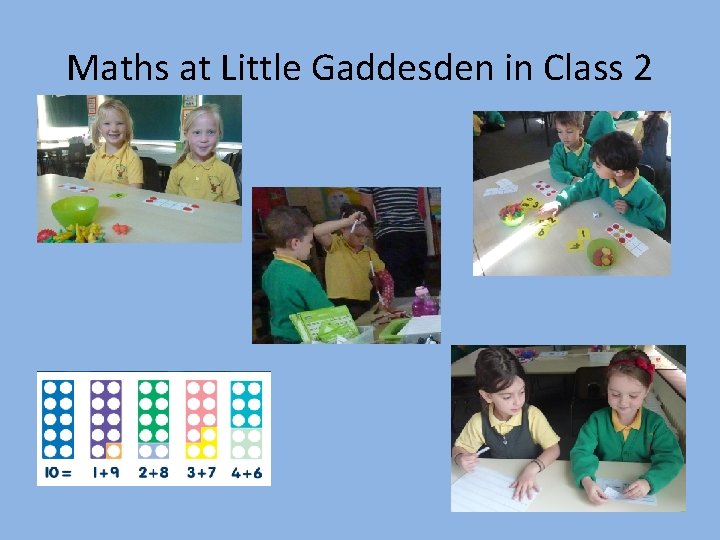
The children will show you a range of activities and the resources they use.
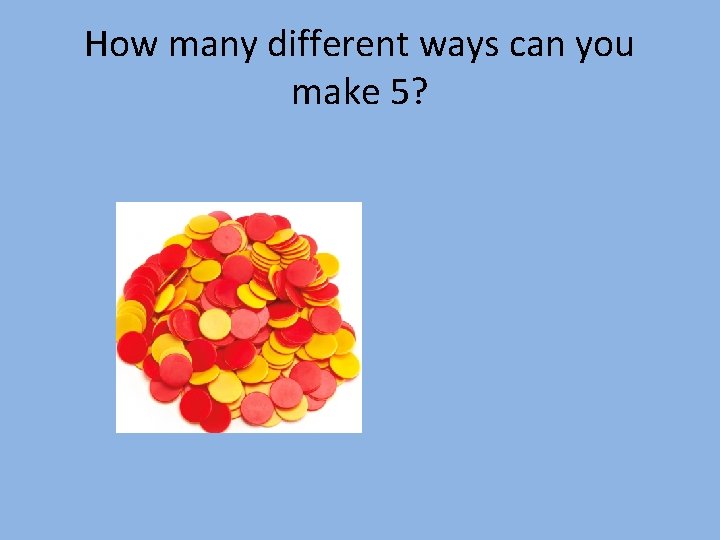
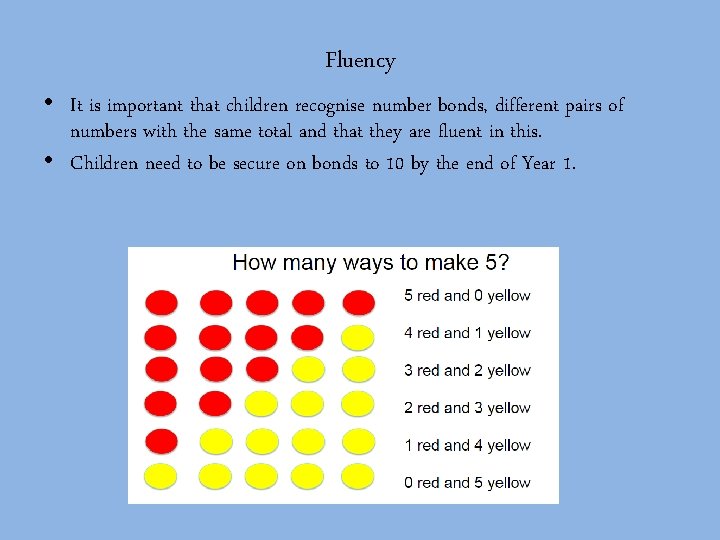
How many different ways can you make 5?
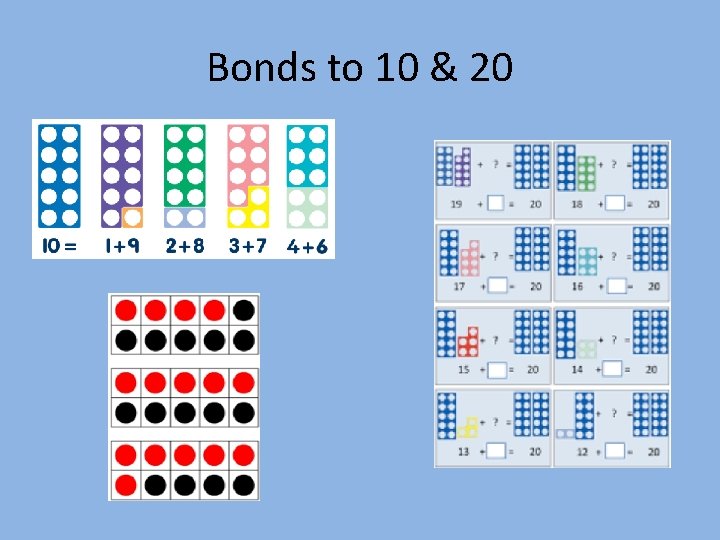
Fluency • It is important that children recognise number bonds, different pairs of numbers with the same total and that they are fluent in this. • Children need to be secure on bonds to 10 by the end of Year 1.
Bonds to 10 & 20
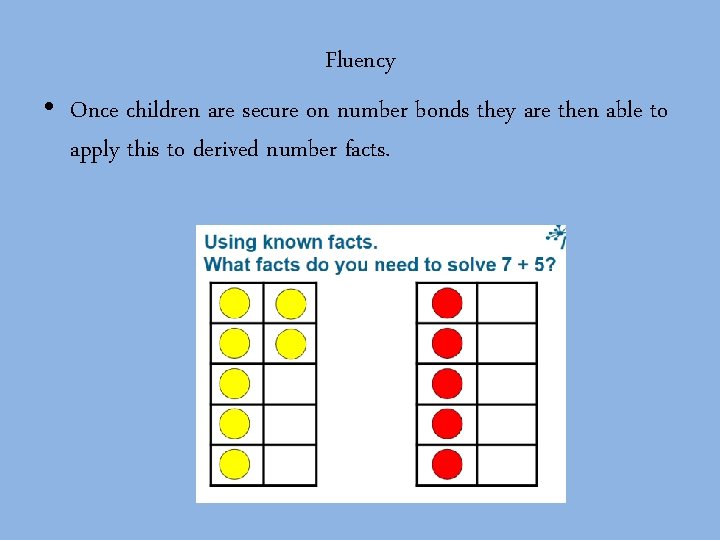
Fluency • Once children are secure on number bonds they are then able to apply this to derived number facts.
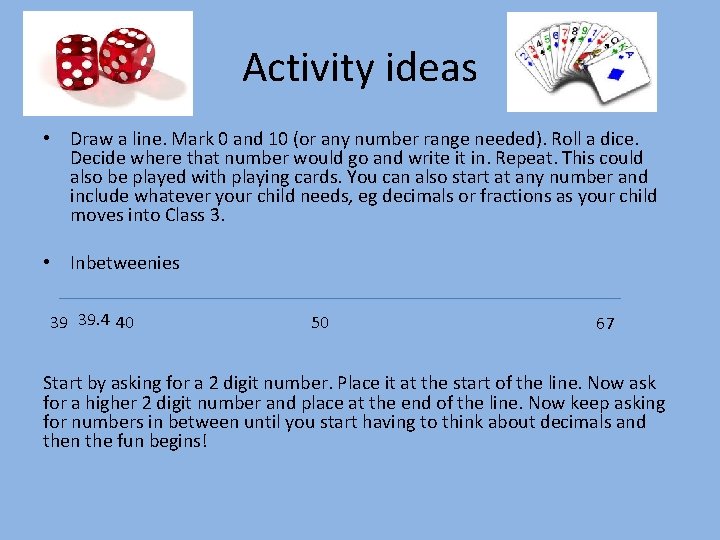
Activity ideas • Draw a line. Mark 0 and 10 (or any number range needed). Roll a dice. Decide where that number would go and write it in. Repeat. This could also be played with playing cards. You can also start at any number and include whatever your child needs, eg decimals or fractions as your child moves into Class 3. • Inbetweenies 39 39. 4 40 50 67 Start by asking for a 2 digit number. Place it at the start of the line. Now ask for a higher 2 digit number and place at the end of the line. Now keep asking for numbers in between until you start having to think about decimals and then the fun begins!
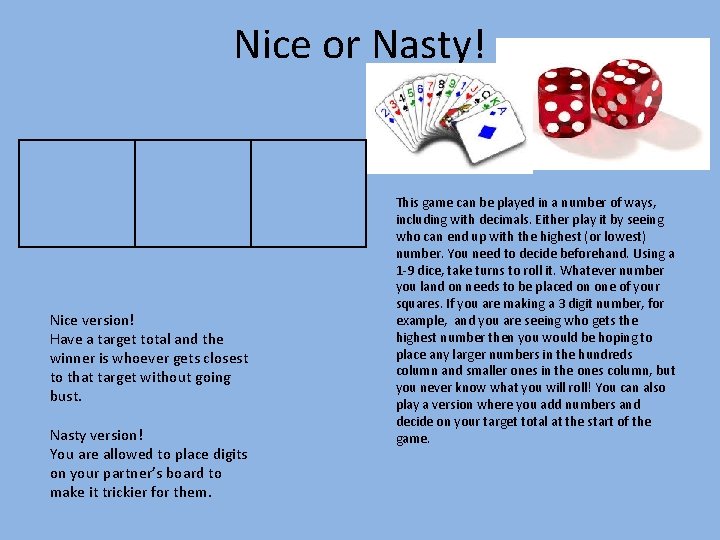
Nice or Nasty! Nice version! Have a target total and the winner is whoever gets closest to that target without going bust. Nasty version! You are allowed to place digits on your partner’s board to make it trickier for them. This game can be played in a number of ways, including with decimals. Either play it by seeing who can end up with the highest (or lowest) number. You need to decide beforehand. Using a 1 -9 dice, take turns to roll it. Whatever number you land on needs to be placed on one of your squares. If you are making a 3 digit number, for example, and you are seeing who gets the highest number then you would be hoping to place any larger numbers in the hundreds column and smaller ones in the ones column, but you never know what you will roll! You can also play a version where you add numbers and decide on your target total at the start of the game.