
Mathematics and Science Chapter 2 Section 2 The

- Slides: 18
Mathematics and Science Chapter 2 Section 2
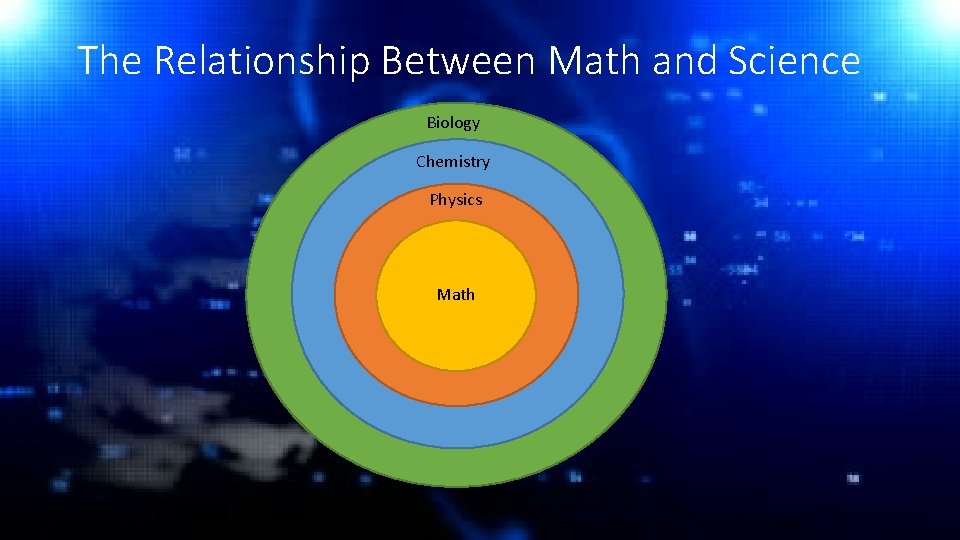
The Relationship Between Math and Science Biology Chemistry Physics Math
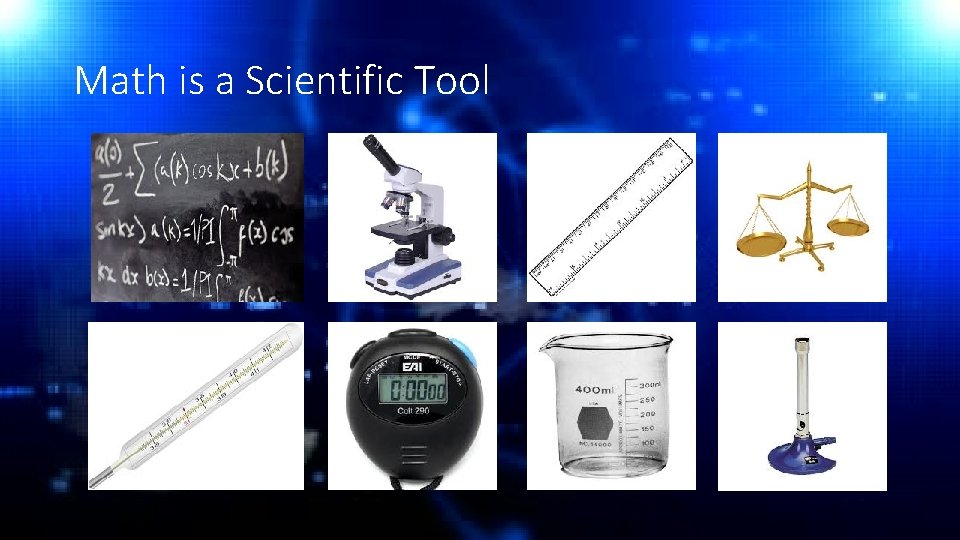
Math is a Scientific Tool
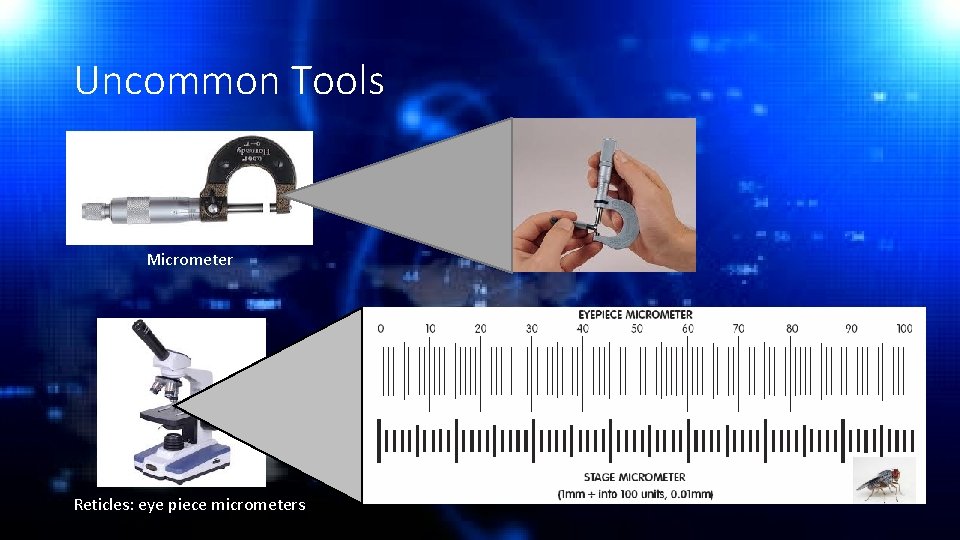
Uncommon Tools Micrometer Reticles: eye piece micrometers
Estimation • An estimation is an approximation of a number based on a reasonable assumption • It is not the same as a guess because it is based on known information. • When scientists cannot obtain exact numbers they must rely on estimations.
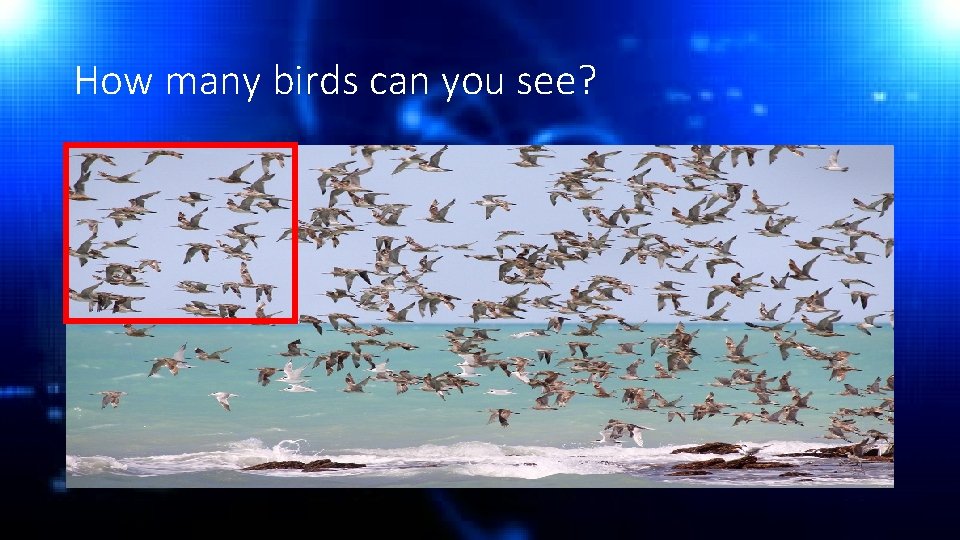
How many birds can you see?
Accuracy and Precision • Accuracy refers to how close a measurement is to the true or accepted value. • Precision refers to how close a group of measurements are to each other. • If I said there are 684 people in this room that is precise but not accurate. If I said there are 15 -30 people in this room it is more accurate but not precise.
Accuracy and Precision in Measurement • If I measured myself 4 times and I found out I was 100 cm tall, 200 cm tall, 178 cm tall, and 150 cm tall, have I been accurate or precise? • I am 178 cm tall. As I got different heights each time I have not been precise (getting the same measurement several times). • I have also been fairly inaccurate as I only got the right answer once.
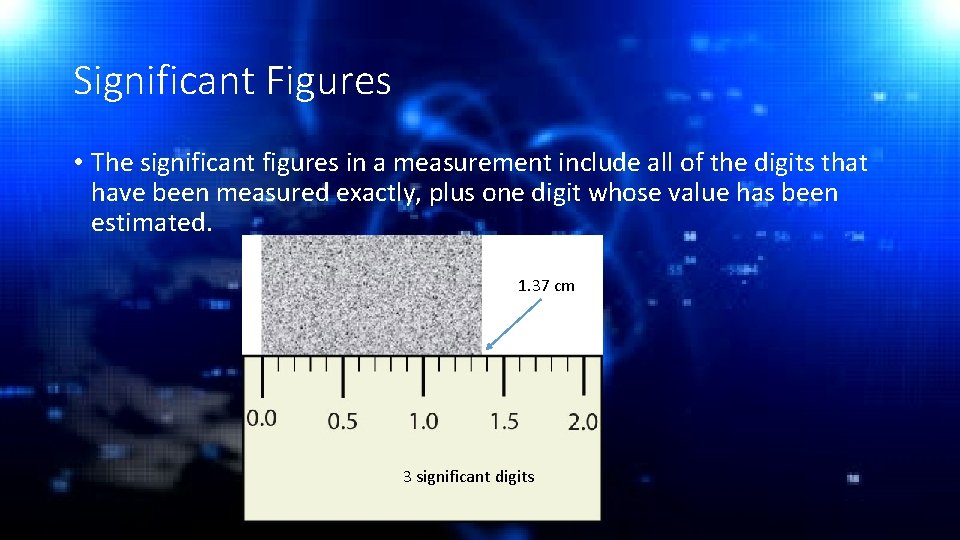
Significant Figures • The significant figures in a measurement include all of the digits that have been measured exactly, plus one digit whose value has been estimated. 1. 37 cm 3 significant digits
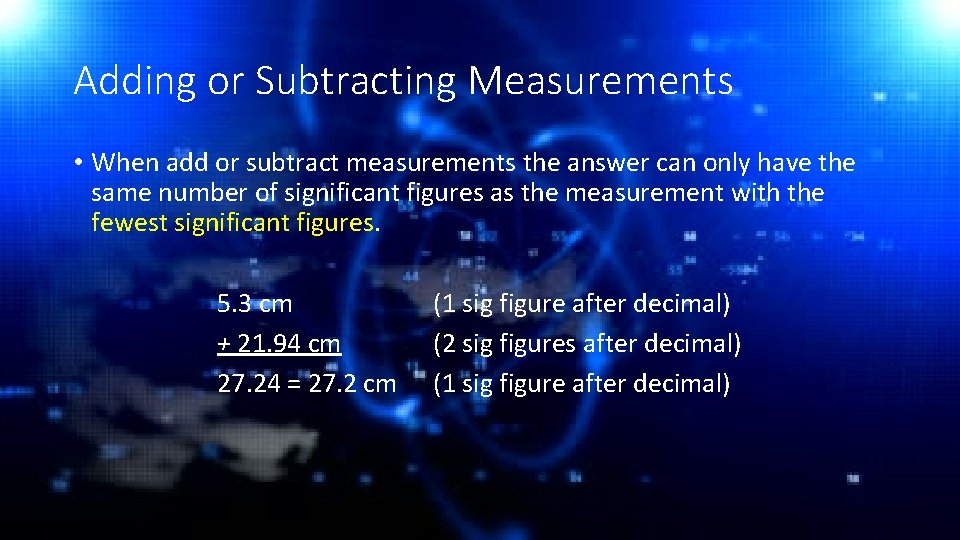
Adding or Subtracting Measurements • When add or subtract measurements the answer can only have the same number of significant figures as the measurement with the fewest significant figures. 5. 3 cm + 21. 94 cm 27. 24 = 27. 2 cm (1 sig figure after decimal) (2 sig figures after decimal) (1 sig figure after decimal)
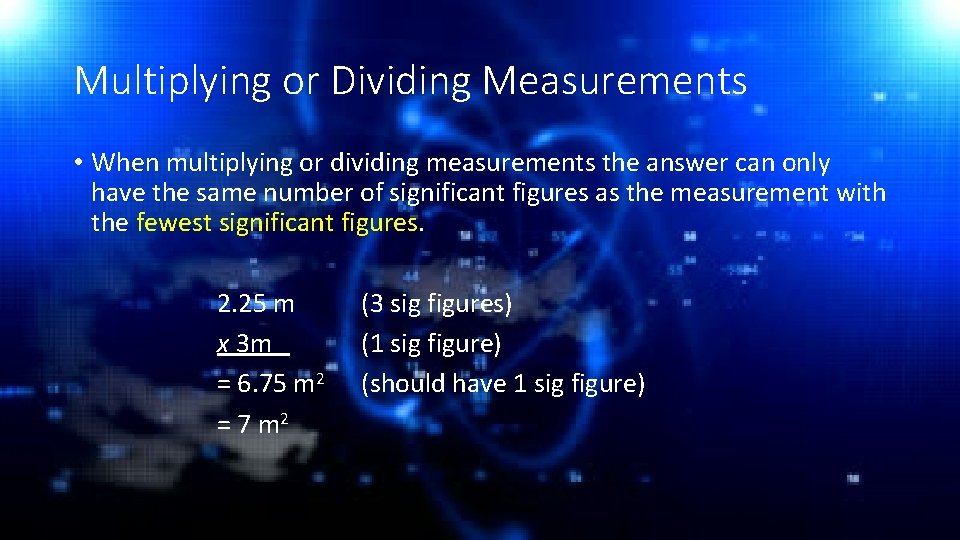
Multiplying or Dividing Measurements • When multiplying or dividing measurements the answer can only have the same number of significant figures as the measurement with the fewest significant figures. 2. 25 m x 3 m = 6. 75 m 2 = 7 m 2 (3 sig figures) (1 sig figure) (should have 1 sig figure)
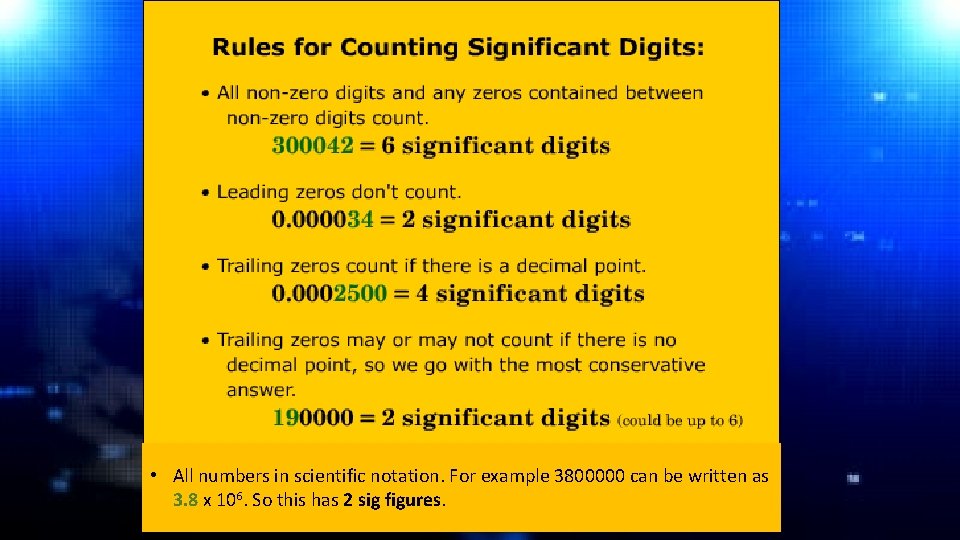
• All numbers in scientific notation. For example 3800000 can be written as 3. 8 x 10⁶. So this has 2 sig figures.
http: //www. bozemanscience. com/scientific-method
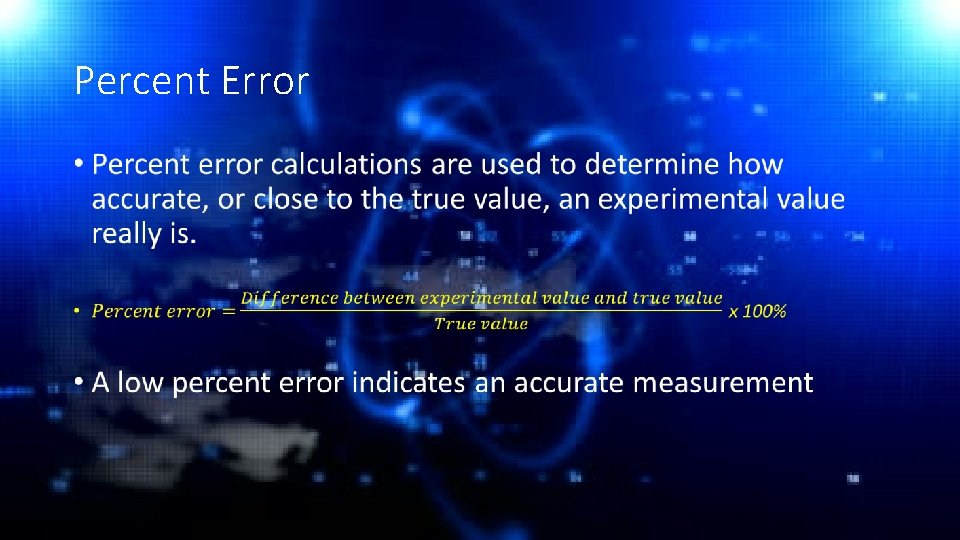
Percent Error •
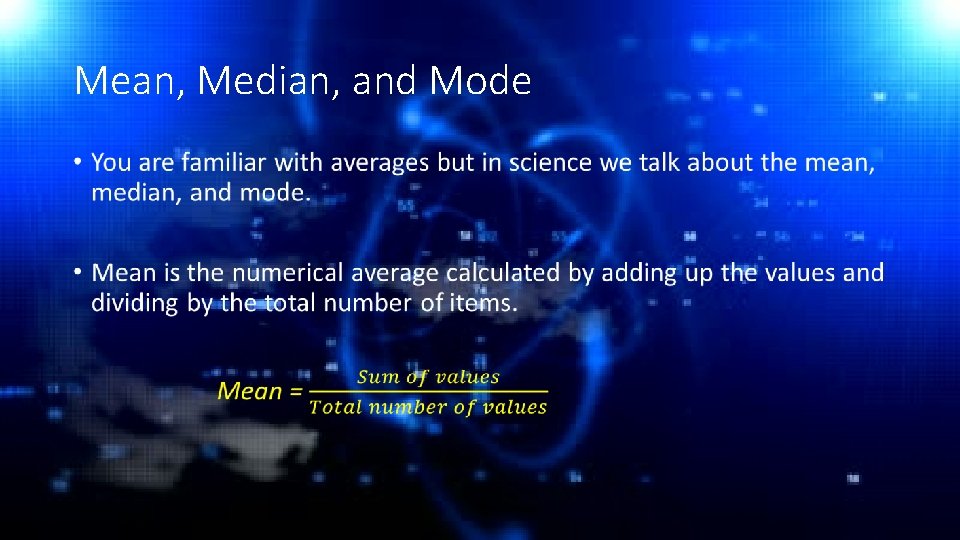
Mean, Median, and Mode •
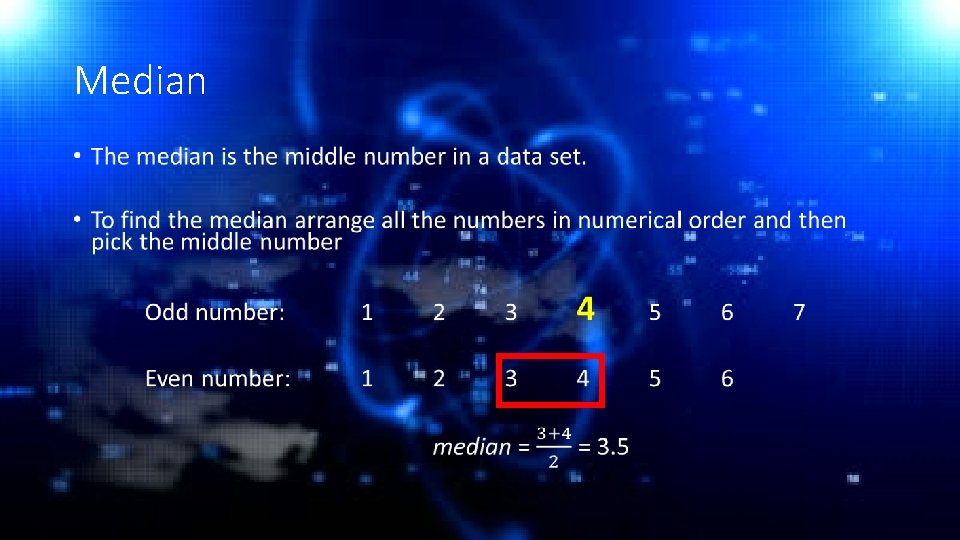
Median •
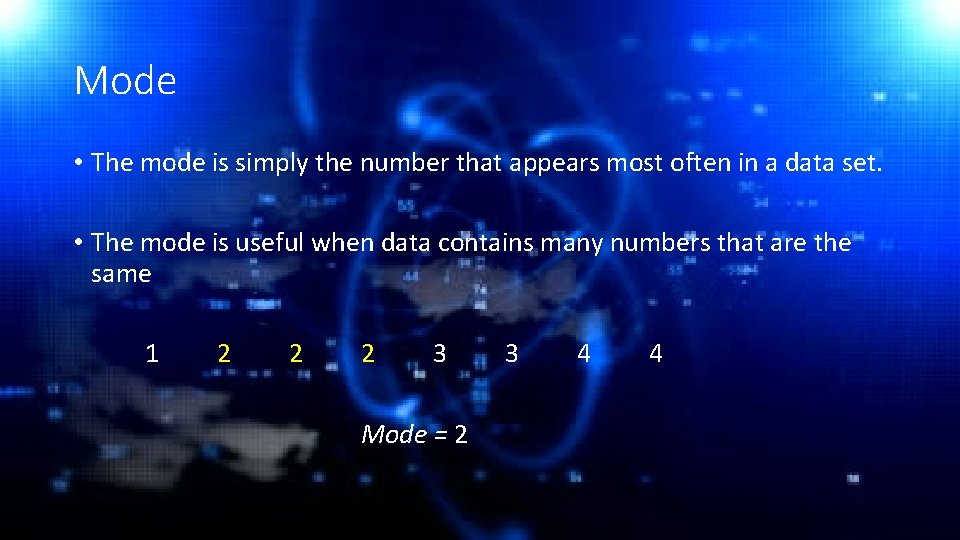
Mode • The mode is simply the number that appears most often in a data set. • The mode is useful when data contains many numbers that are the same 1 2 2 2 3 Mode = 2 3 4 4
Learning Standards • Recognize that the measurement of volume requires understanding of the sensitivity of measurement tools. • You need to be aware of the appropriate use of significant digits.