
Mathematical Representation of System Dynamics Models Vedat Diker
- Slides: 19
Mathematical Representation of System Dynamics Models Vedat Diker George Richardson Luis Luna
Our Today’s Objectives n n Translate a system dynamics model to a system of differential equations Build a system dynamics model from a system of differential equations
Introduction n Many phenomena can be expressed by equations which involve the rates of change of quantities (position, population, principal, quality…) that describe the state of the phenomena.
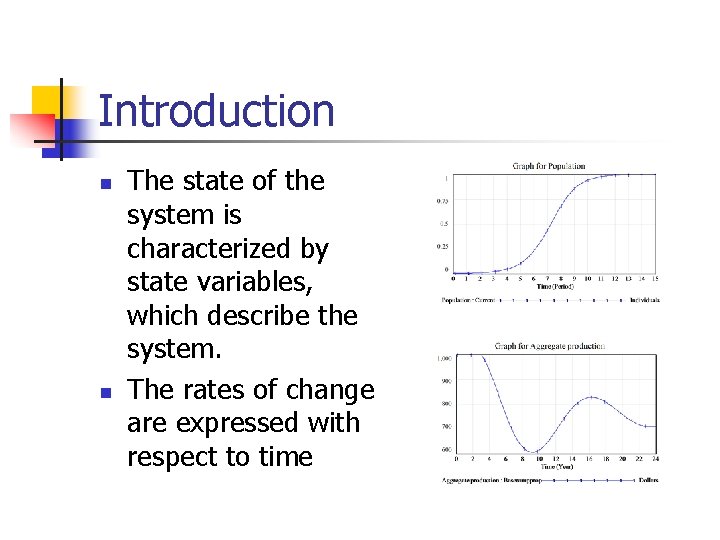
Introduction n n The state of the system is characterized by state variables, which describe the system. The rates of change are expressed with respect to time
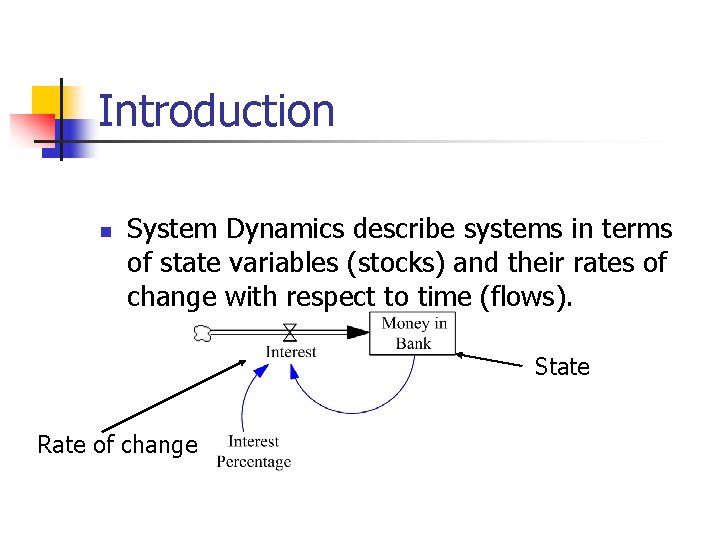
Introduction n System Dynamics describe systems in terms of state variables (stocks) and their rates of change with respect to time (flows). State Rate of change
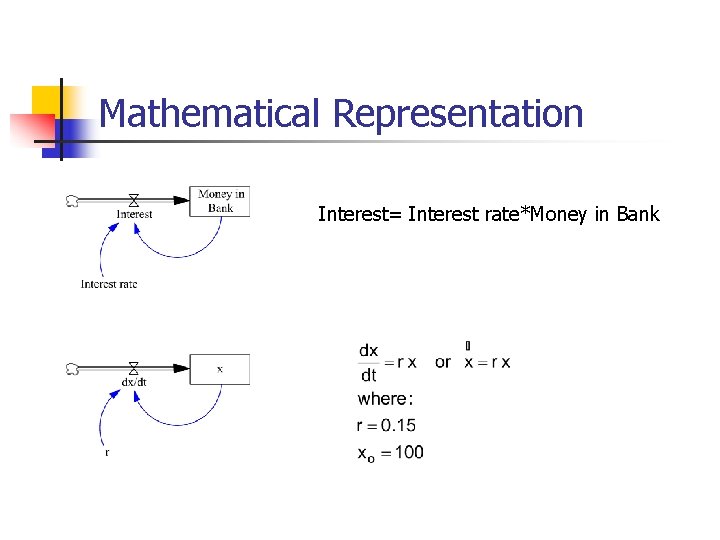
Mathematical Representation Interest= Interest rate*Money in Bank
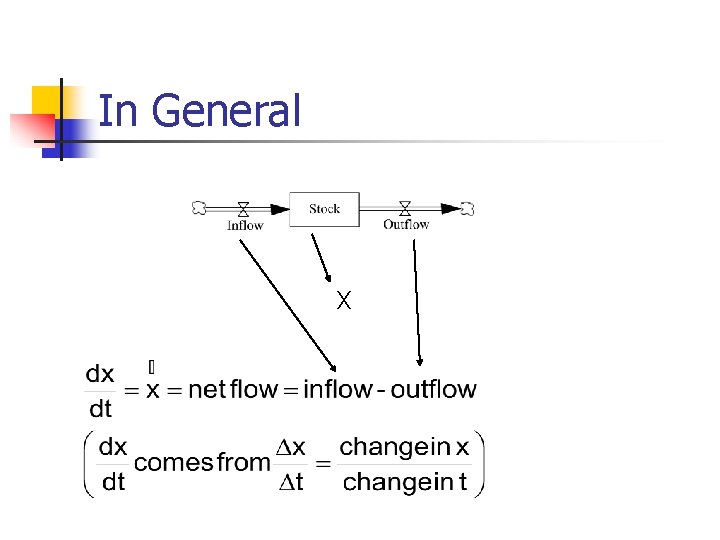
In General X
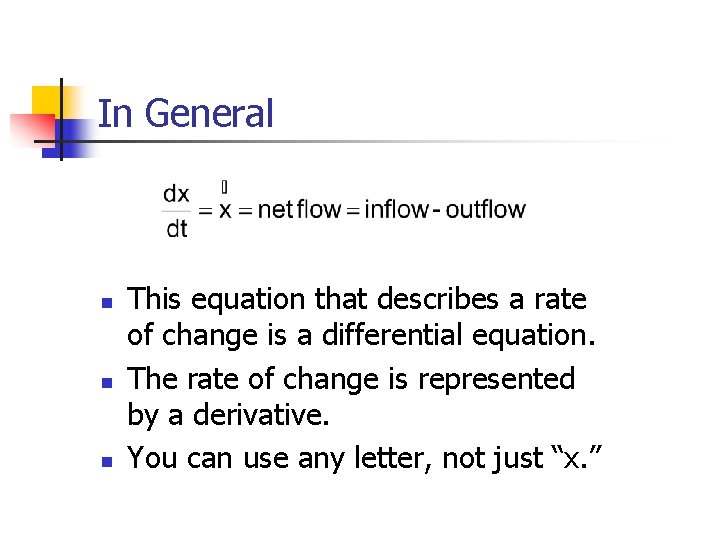
In General n n n This equation that describes a rate of change is a differential equation. The rate of change is represented by a derivative. You can use any letter, not just “x. ”
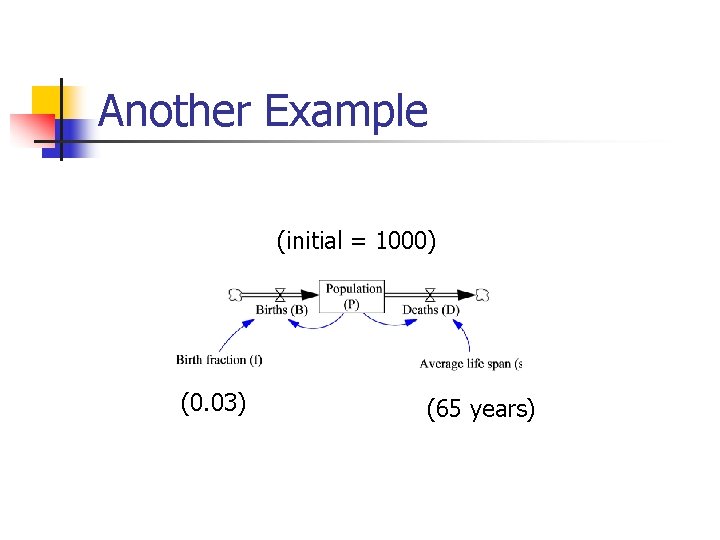
Another Example (initial = 1000) (0. 03) (65 years)
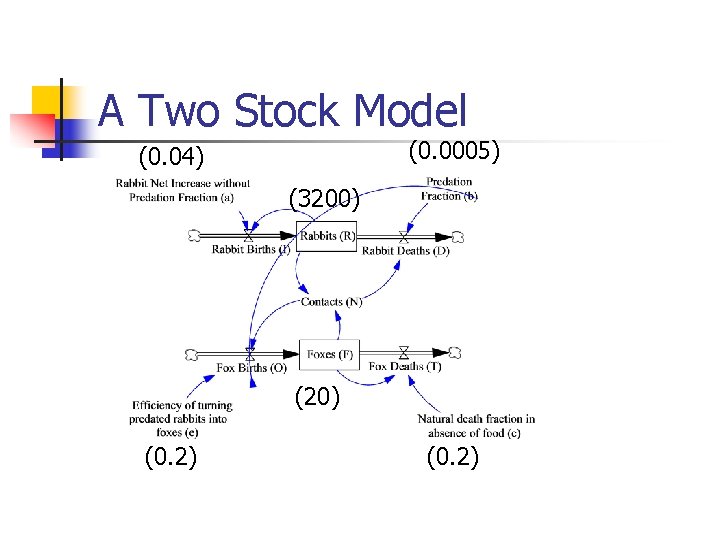
A Two Stock Model (0. 0005) (0. 04) (3200) (20) (0. 2)
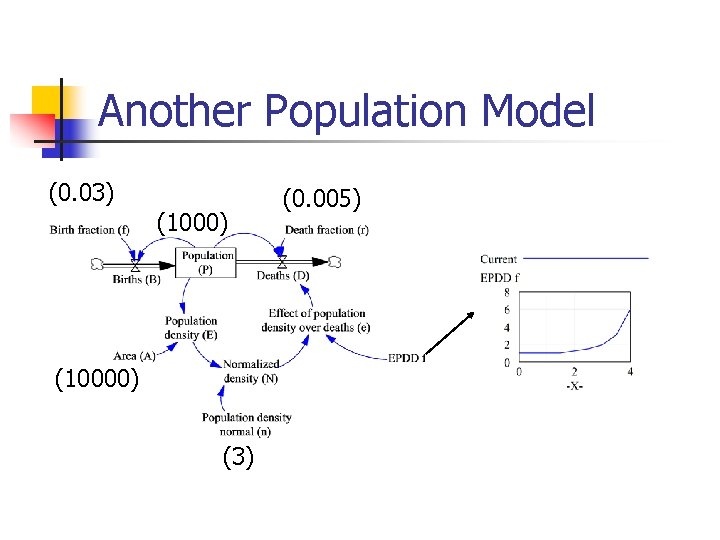
Another Population Model (0. 03) (10000) (3) (0. 005)
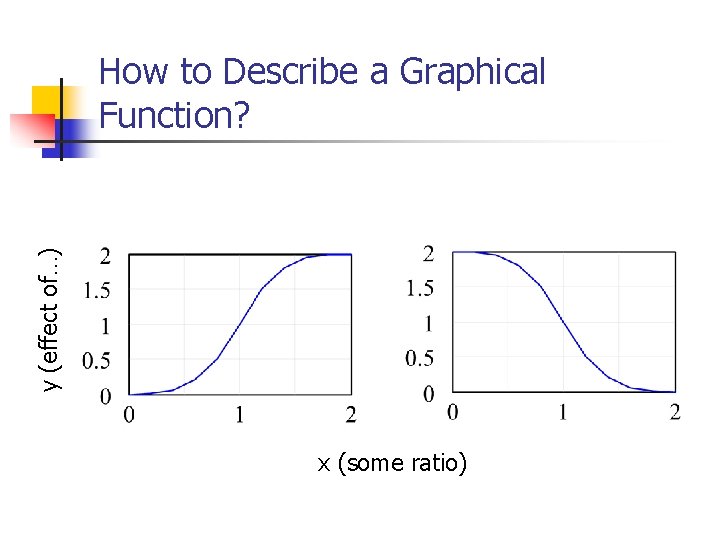
y (effect of…) How to Describe a Graphical Function? x (some ratio)
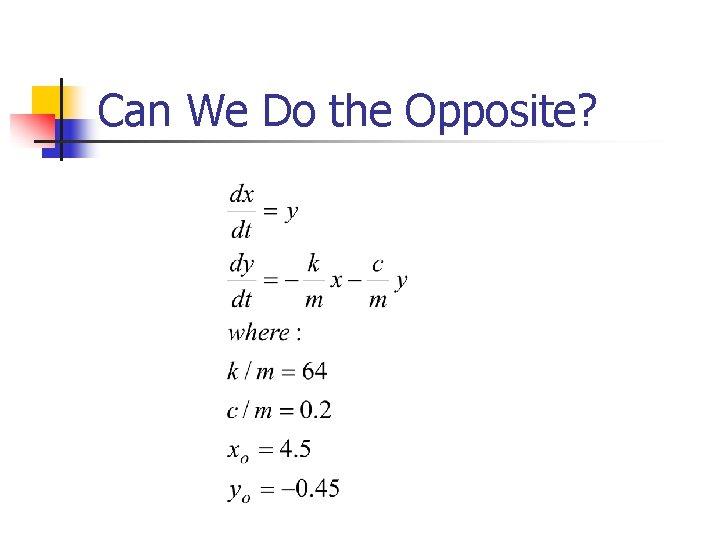
Can We Do the Opposite?
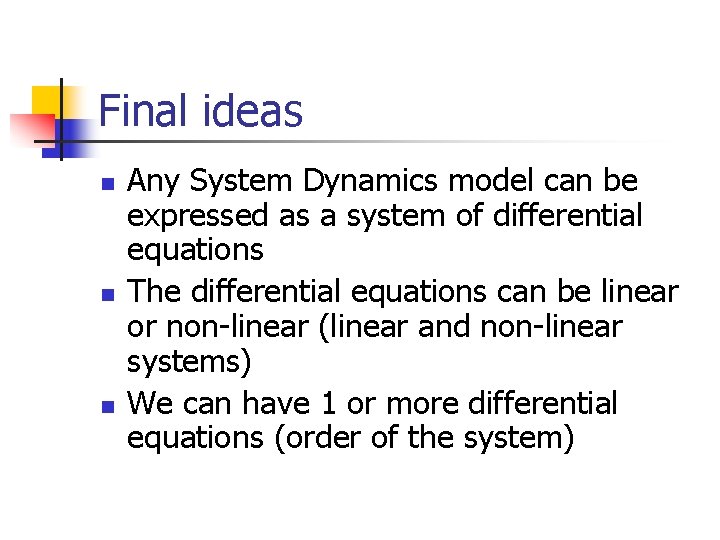
Final ideas n n n Any System Dynamics model can be expressed as a system of differential equations The differential equations can be linear or non-linear (linear and non-linear systems) We can have 1 or more differential equations (order of the system)
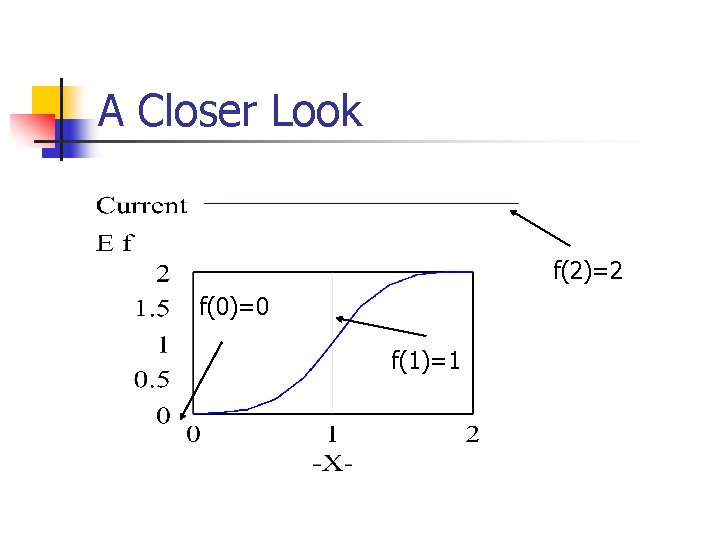
A Closer Look f(2)=2 f(0)=0 f(1)=1
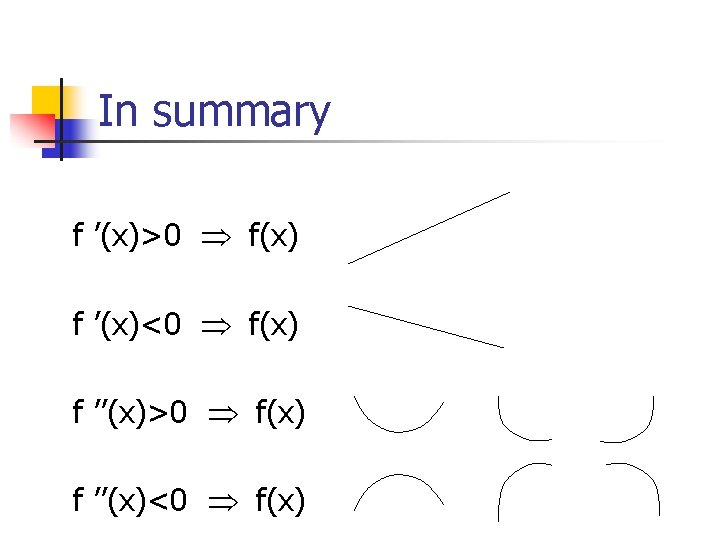
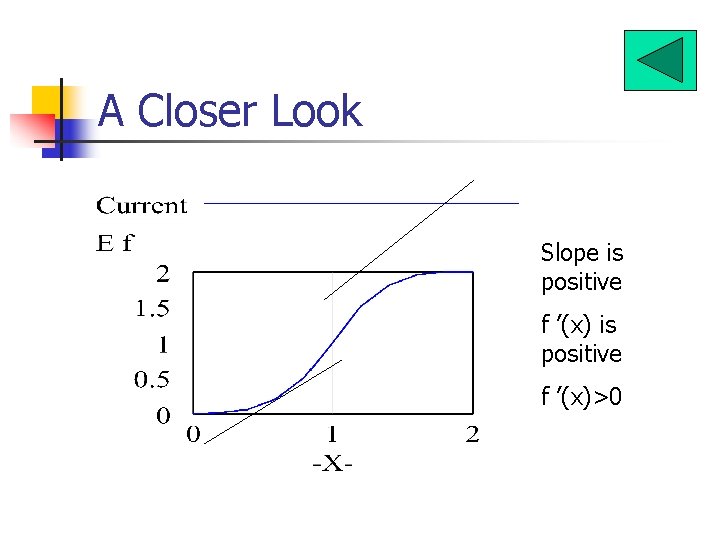
A Closer Look Slope is positive f ’(x)>0
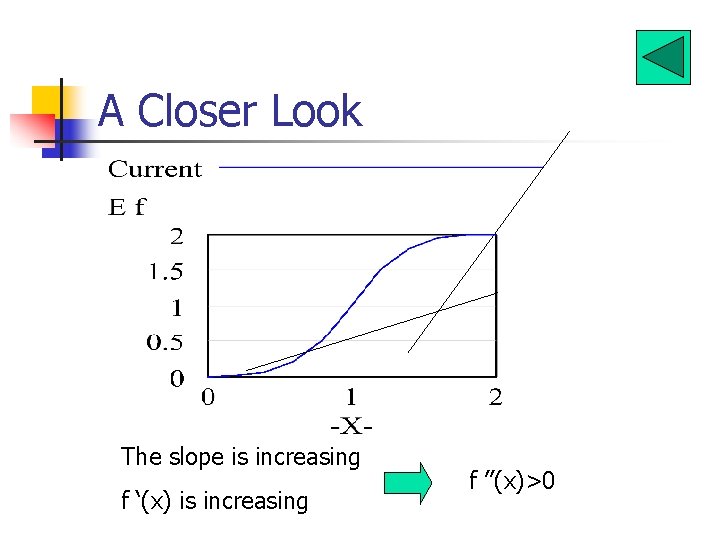
A Closer Look The slope is increasing f ‘(x) is increasing f ’’(x)>0
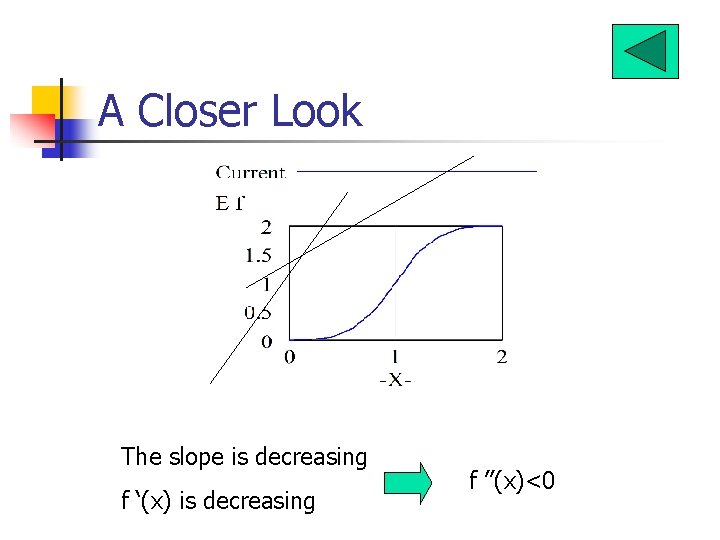
A Closer Look The slope is decreasing f ‘(x) is decreasing f ’’(x)<0