
Mathematical Modeling of Bird Flu Propagation Urmi GhoshDastidar
Mathematical Modeling of Bird Flu Propagation Urmi Ghosh-Dastidar New York City College of Technology City University of New York December 1, 2007
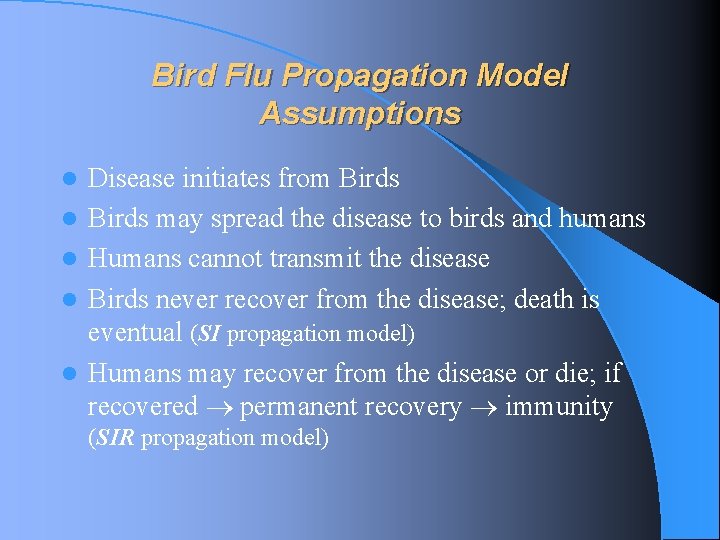
Bird Flu Propagation Model Assumptions l l l Disease initiates from Birds may spread the disease to birds and humans Humans cannot transmit the disease Birds never recover from the disease; death is eventual (SI propagation model) Humans may recover from the disease or die; if recovered permanent recovery immunity (SIR propagation model)
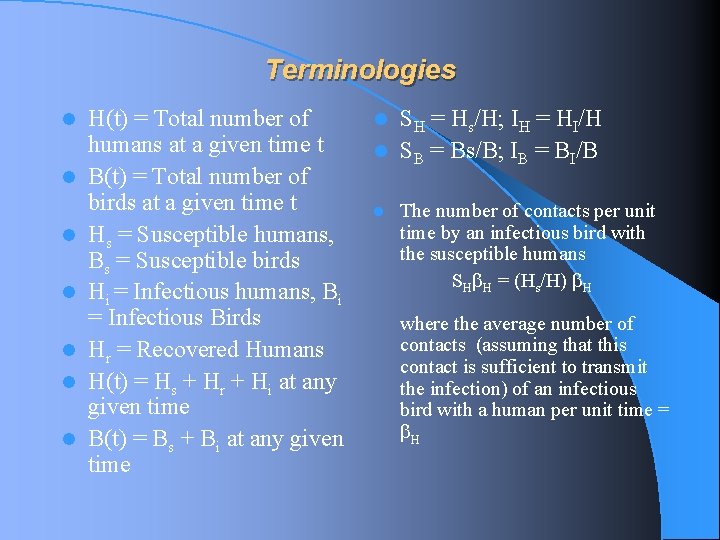
Terminologies l l l l H(t) = Total number of humans at a given time t B(t) = Total number of birds at a given time t Hs = Susceptible humans, Bs = Susceptible birds Hi = Infectious humans, Bi = Infectious Birds Hr = Recovered Humans H(t) = Hs + Hr + Hi at any given time B(t) = Bs + Bi at any given time SH = Hs/H; IH = HI/H l SB = Bs/B; IB = BI/B l l The number of contacts per unit time by an infectious bird with the susceptible humans SH H = (Hs/H) H where the average number of contacts (assuming that this contact is sufficient to transmit the infection) of an infectious bird with a human per unit time = H
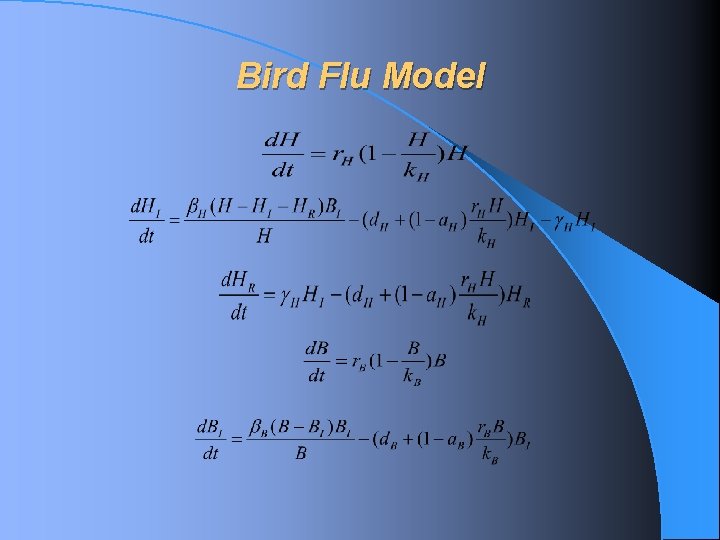
Bird Flu Model
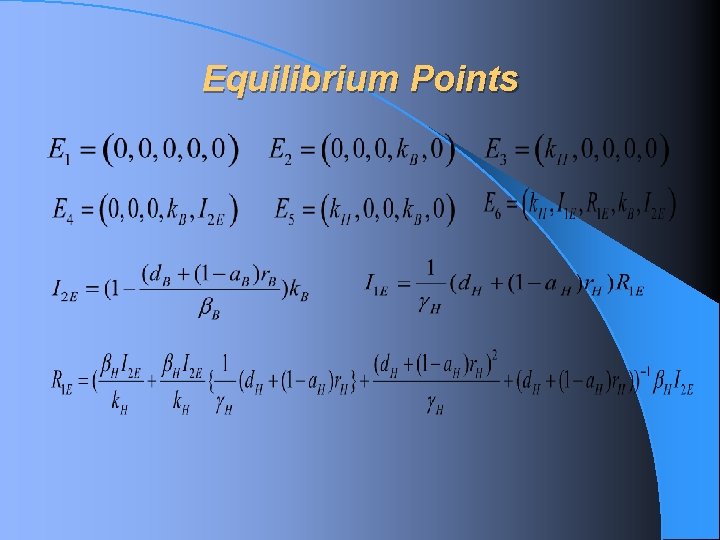
Equilibrium Points
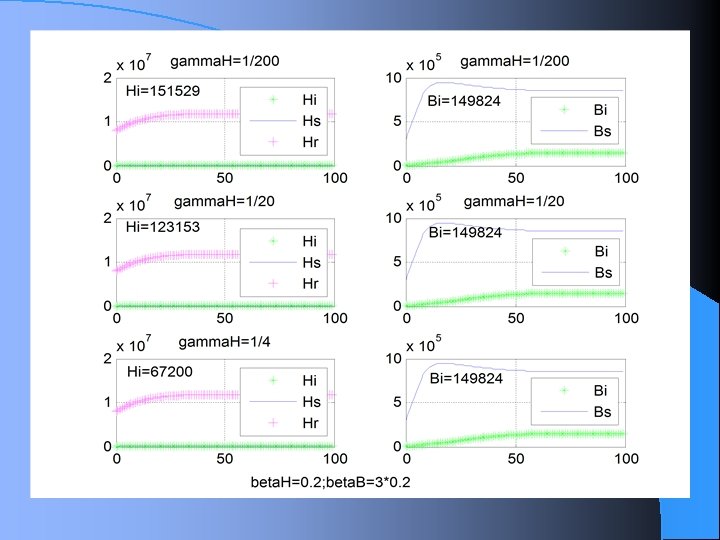
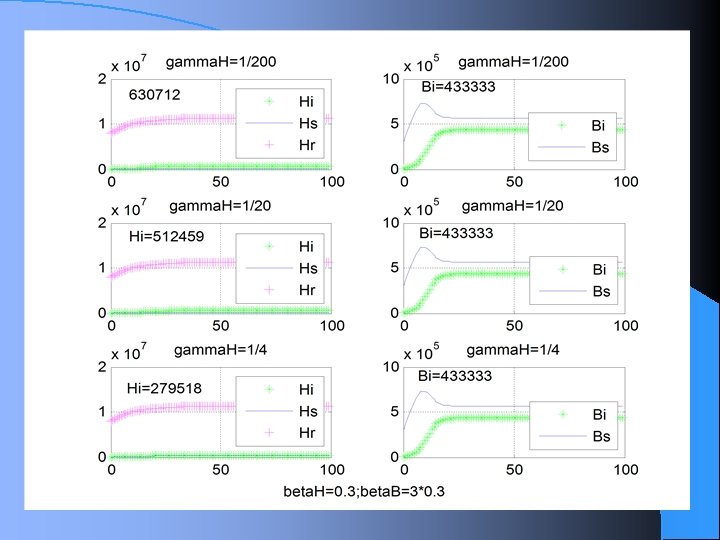
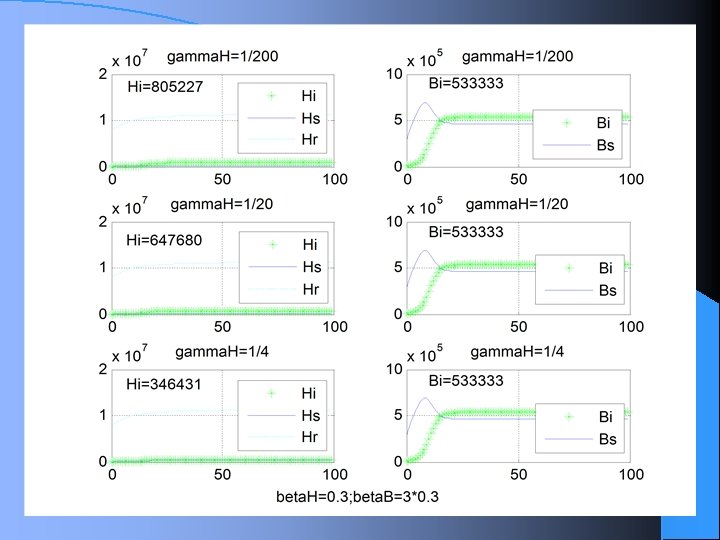
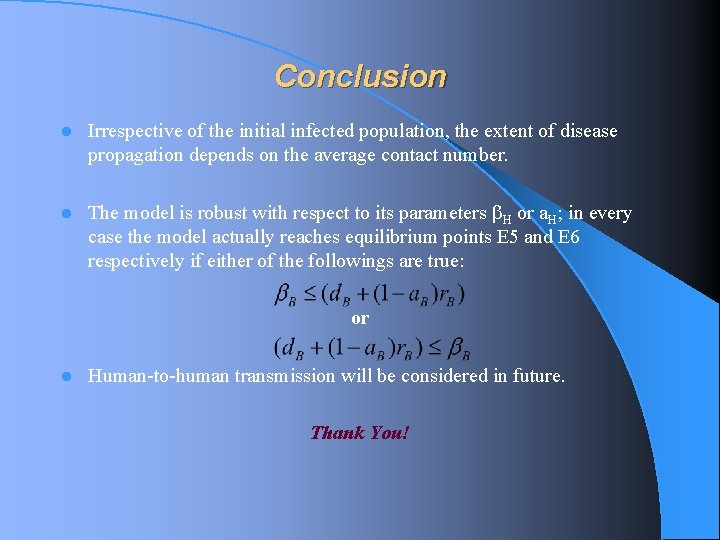
Conclusion l Irrespective of the initial infected population, the extent of disease propagation depends on the average contact number. l The model is robust with respect to its parameters H or a. H; in every case the model actually reaches equilibrium points E 5 and E 6 respectively if either of the followings are true: or l Human-to-human transmission will be considered in future. Thank You!
- Slides: 9