
Mathematical Modeling at the Secondary Level Something to
- Slides: 17
Mathematical Modeling at the Secondary Level: Something to Talk About Math in Action 2019 Jason Gauthier www. whatsupwithmath. com @jgauthier 13
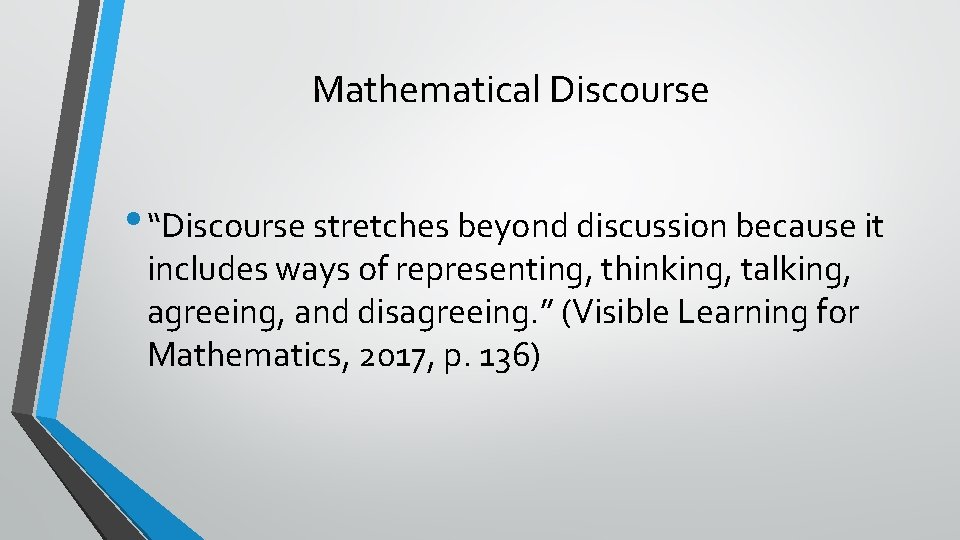
Mathematical Discourse • “Discourse stretches beyond discussion because it includes ways of representing, thinking, talking, agreeing, and disagreeing. ” (Visible Learning for Mathematics, 2017, p. 136)
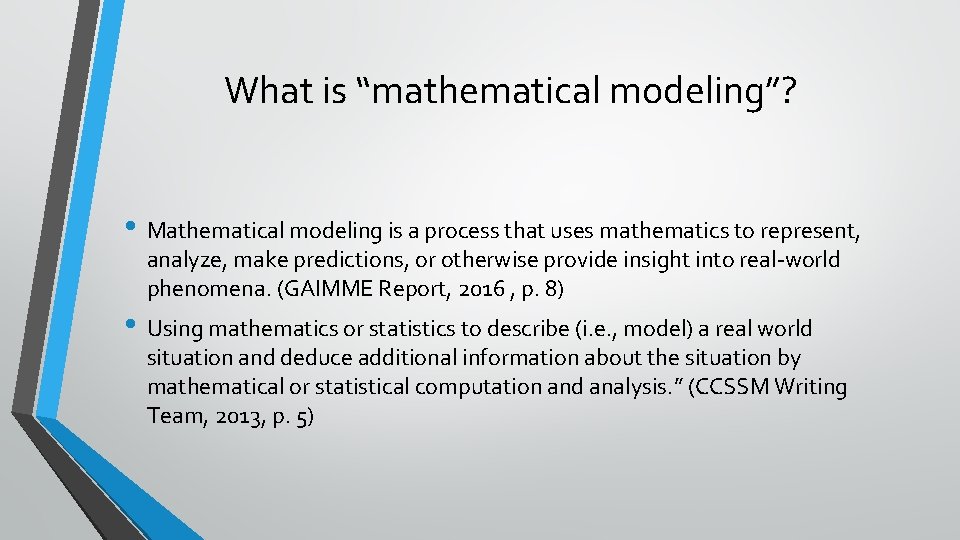
What is “mathematical modeling”? • Mathematical modeling is a process that uses mathematics to represent, analyze, make predictions, or otherwise provide insight into real-world phenomena. (GAIMME Report, 2016 , p. 8) • Using mathematics or statistics to describe (i. e. , model) a real world situation and deduce additional information about the situation by mathematical or statistical computation and analysis. ” (CCSSM Writing Team, 2013, p. 5)
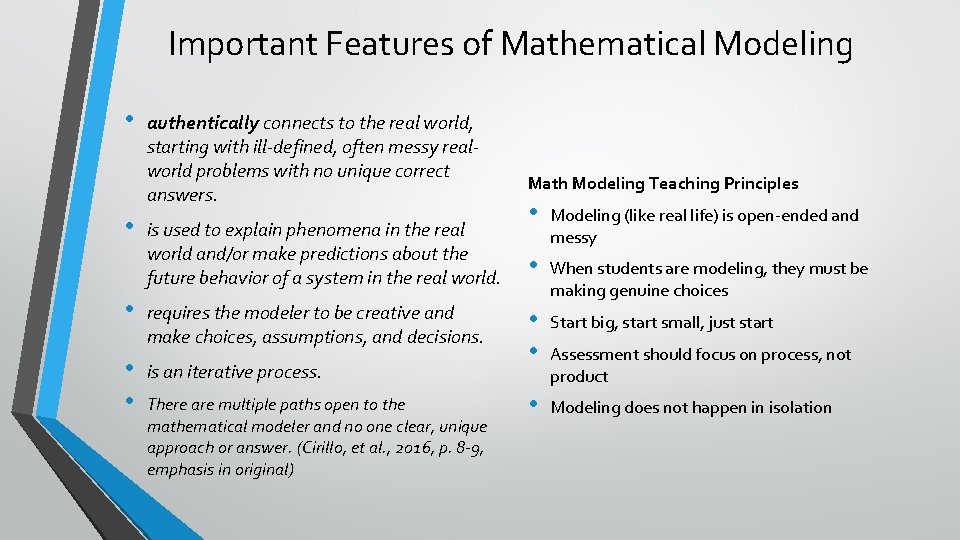
Important Features of Mathematical Modeling • • • authentically connects to the real world, starting with ill-defined, often messy realworld problems with no unique correct answers. is used to explain phenomena in the real world and/or make predictions about the future behavior of a system in the real world. requires the modeler to be creative and make choices, assumptions, and decisions. • is an iterative process. • There are multiple paths open to the mathematical modeler and no one clear, unique approach or answer. (Cirillo, et al. , 2016, p. 8 -9, emphasis in original) Math Modeling Teaching Principles • Modeling (like real life) is open-ended and messy • When students are modeling, they must be making genuine choices • • Start big, start small, just start • Modeling does not happen in isolation Assessment sh 0 uld focus on process, not product
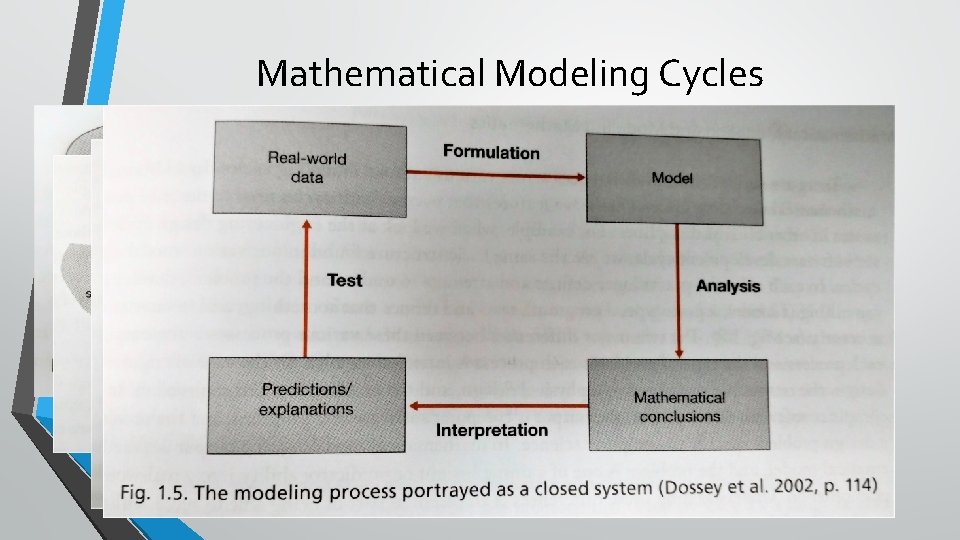
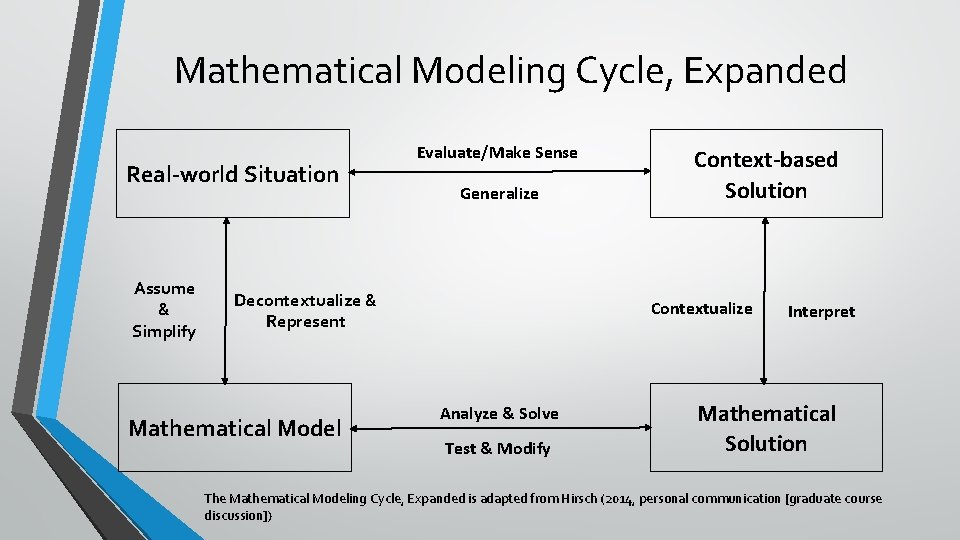
Mathematical Modeling Cycles
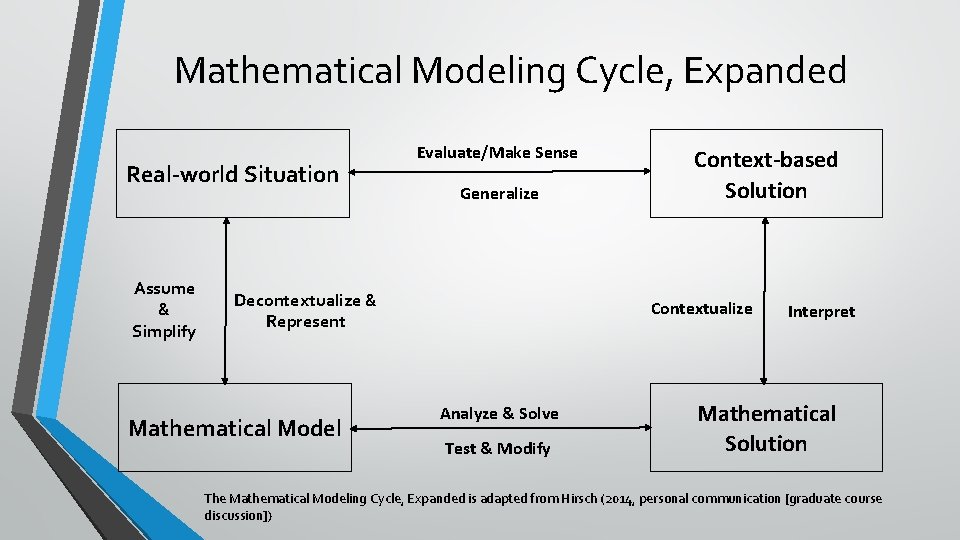
Mathematical Modeling Cycle, Expanded Real-world Situation Assume & Simplify Evaluate/Make Sense Generalize Decontextualize & Represent Mathematical Model Context-based Solution Contextualize Analyze & Solve Test & Modify Interpret Mathematical Solution The Mathematical Modeling Cycle, Expanded is adapted from Hirsch (2014, personal communication [graduate course discussion])
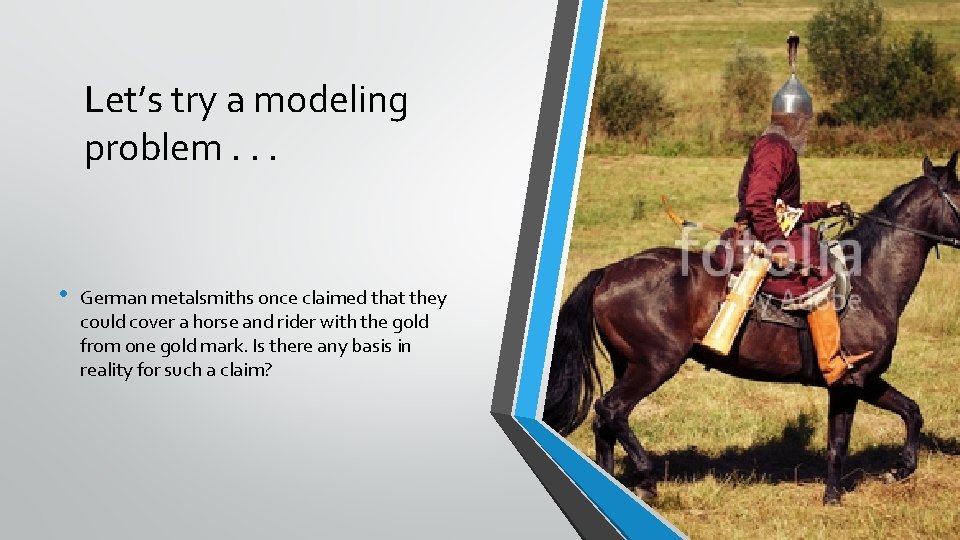
Let’s try a modeling problem. . . • German metalsmiths once claimed that they could cover a horse and rider with the gold from one gold mark. Is there any basis in reality for such a claim?
Estimation and Assumption • What might you need to know to figure this out? • Where might you find such information?
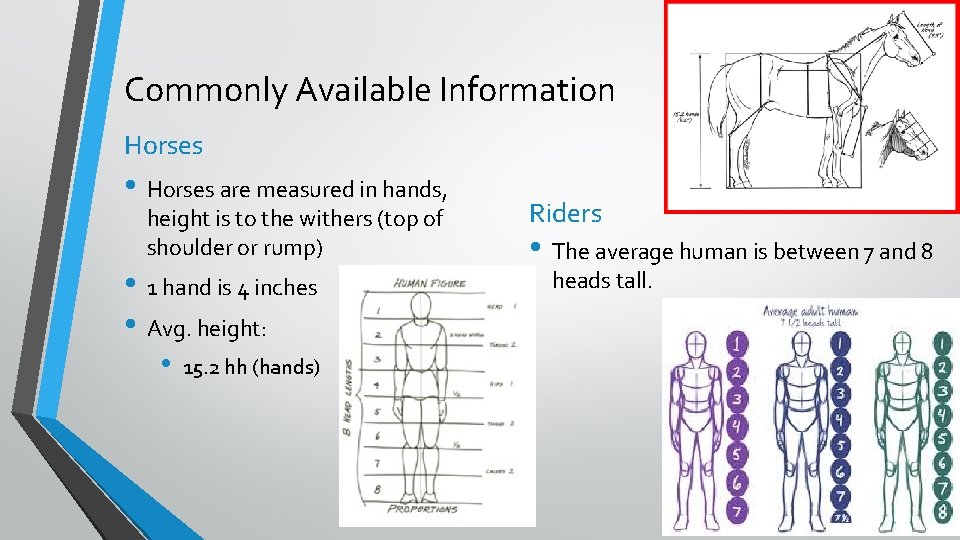
Commonly Available Information Horses • Horses are measured in hands, height is to the withers (top of shoulder or rump) • 1 hand is 4 inches • Avg. height: • 15. 2 hh (hands) Riders • The average human is between 7 and 8 heads tall.
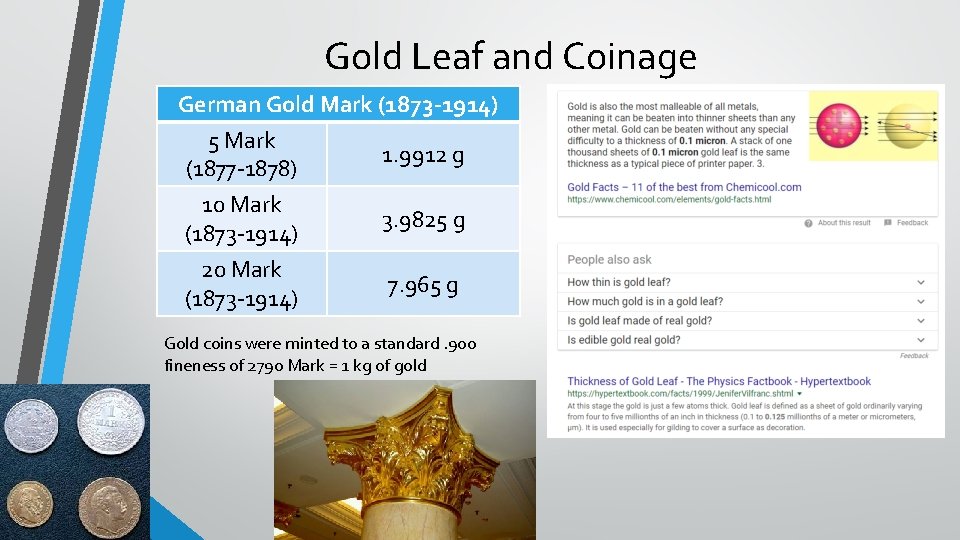
Gold Leaf and Coinage German Gold Mark (1873 -1914) 5 Mark 1. 9912 g (1877 -1878) 10 Mark 3. 9825 g (1873 -1914) 20 Mark (1873 -1914) 7. 965 g Gold coins were minted to a standard. 900 fineness of 2790 Mark = 1 kg of gold
Model, Explain, Examine, Revise • After you’ve found your answer. . . • Write your group’s solution on poster paper • Include your assumptions and the information used • Gallery Walk • As you move around the room, compare solutions with other groups • Be sure to examine assumptions • Plan for Revision • Based on what you saw, how would you change your model? • Why would you make those changes?
Generalize Your Model • How might you generalize your model? • What are the variables in your model(s)? • Could you write a function that describes the process of hauling the mountain away? What kind of function would it be? How do you know?
Mathematical Modeling Cycle, Expanded Real-world Situation Assume & Simplify Evaluate/Make Sense Generalize Decontextualize & Represent Mathematical Model Context-based Solution Contextualize Analyze & Solve Test & Modify Interpret Mathematical Solution The Mathematical Modeling Cycle, Expanded is adapted from Hirsch (2014, personal communication [graduate course discussion])
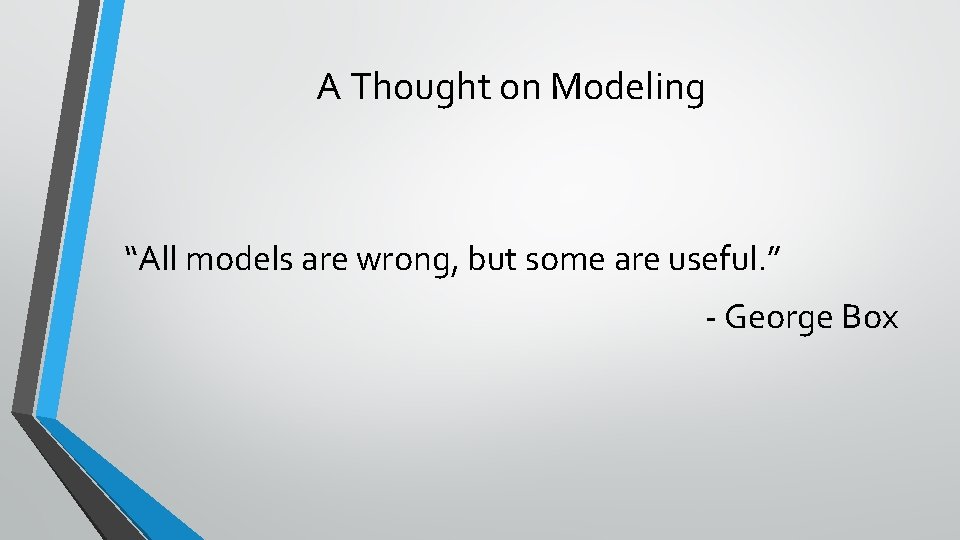
A Thought on Modeling “All models are wrong, but some are useful. ” - George Box
Discourse in Mathematical Modeling • Reflect on the following question: • What role did discourse play in your mathematical modeling activity today?
Sources Cirillo, M. , Pelesko, J. A. , Felton-Koestler, M. D. , & Rubel, L. Perspectives on modeling in school mathematics. In C. R. Hirsch & M. Montgomery (Eds. ). Annual Perspectives in Mathematics Education 2016: Mathematical Modeling and Modeling Mathematics. Reston, VA: NCTM, 3 -16. Common Core Standards Writing Team. (2013). Progressions for the Common Core State Standards in Mathematics (draft) high school, modeling. Tucson, AZ: Institute for Mathematics and Education, University of Arizona. Garfunkel, S. & Montgomery, M. (Eds. ). (2016). Guidelines for Assessment and Instruction in Mathematical Modeling Education. Bedford, MA: Consortium for Mathematics and its Applications [COMAP] and Society for Industrial and Applied Mathematics [SIAM]. Hirsch, C. R. (2014). Personal communication [graduate course discussion]. Hirsch, C. R. & Mc. Duffie, A. R. (Eds. ). (2016). Annual Perspectives in Mathematics Education 2016: Mathematical Modeling and Modeling Mathematics. Reston, VA: NCTM. Paulos, J. A. (1988). Innumeracy: Mathematical Illiteracy and Its Consequences. New York, NY: Hill and Wang.
Thank You! jgauthier@alleganaesa. org www. whatsupwithmath. com @jgauthier 13