
MATHEMATICAL LITERACY GRADE 10 CAPS TOPIC 3 Measurement
- Slides: 37
MATHEMATICAL LITERACY GRADE 10 CAPS TOPIC 3: Measurement Section 3. 1: Conversion of units
Measurement The following sections will be covered: 3. 1 Conversions 3. 2 Measuring length and distance 3. 3 Measuring weight 3. 4 Measuring temperature 3. 5 Calculating perimeter and area 2
Conversions In section 3. 1, learners will be able to convert units and carry out calculations with the following units of measurement and time: �Units of length �Units of capacity �Units of mass �Units of time 3
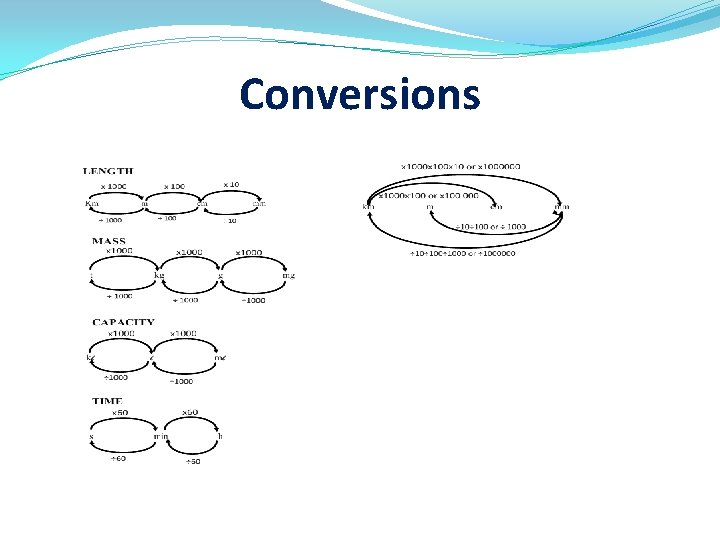
Conversions Conversion within the metric system �Units of length: mm - cm - km �Capacity: ml – l �Mass: g – kg – ton �Time: sec – min – hr – day �Conversion of the units of measurement using given factors. �Cooking conversions: -spoon – ml - cup - ml
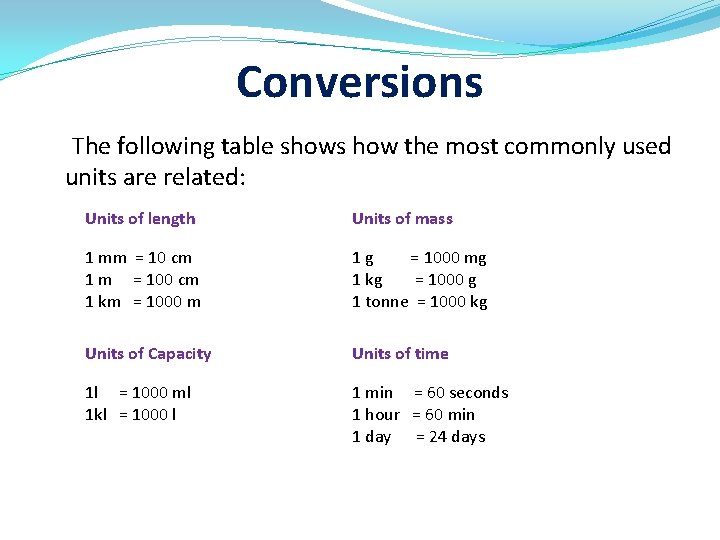
Conversions The following table shows how the most commonly used units are related: Units of length Units of mass 1 mm = 10 cm 1 m = 100 cm 1 km = 1000 m 1 g = 1000 mg 1 kg = 1000 g 1 tonne = 1000 kg Units of Capacity Units of time 1 l = 1000 ml 1 kl = 1000 l 1 min = 60 seconds 1 hour = 60 min 1 day = 24 days
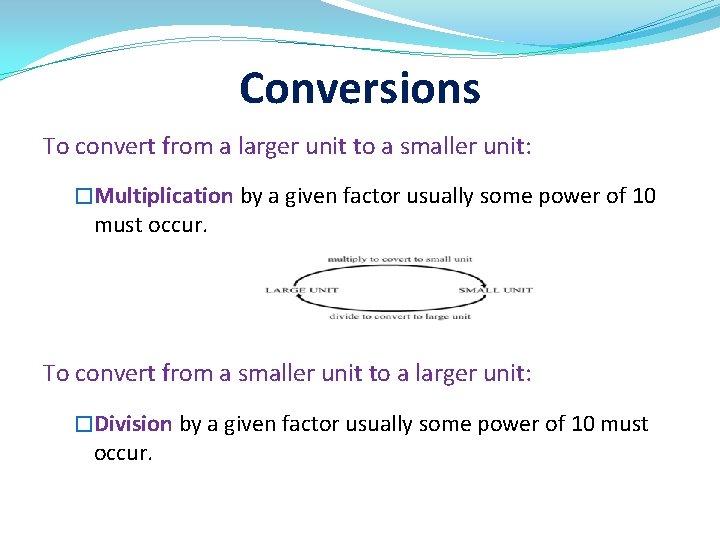
Conversions To convert from a larger unit to a smaller unit: �Multiplication by a given factor usually some power of 10 must occur. To convert from a smaller unit to a larger unit: �Division by a given factor usually some power of 10 must occur.
Conversions
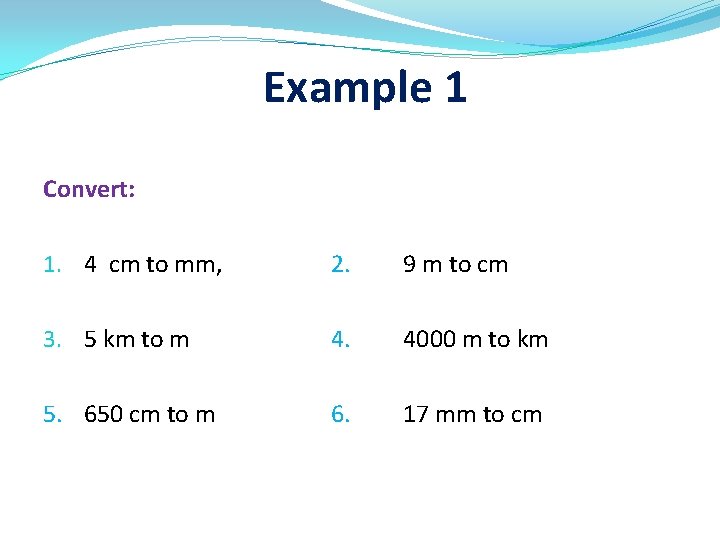
Example 1 Convert: 1. 4 cm to mm, 2. 9 m to cm 3. 5 km to m 4. 4000 m to km 5. 650 cm to m 6. 17 mm to cm
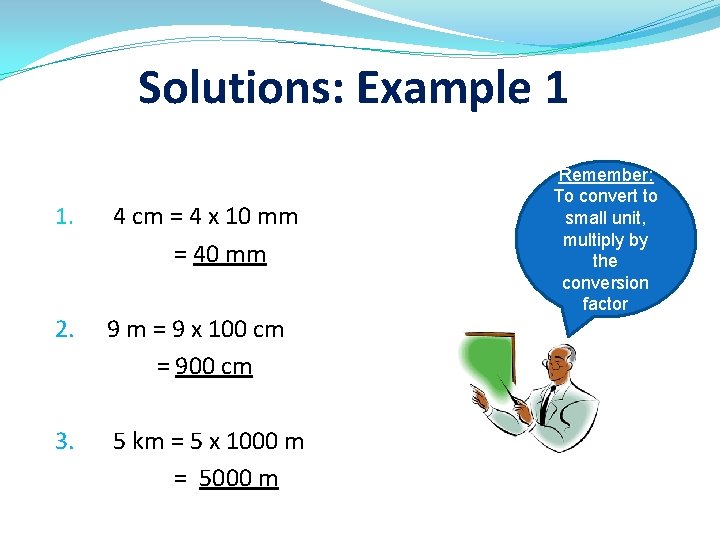
Solutions: Example 1 1. 4 cm = 4 x 10 mm = 40 mm 2. 9 m = 9 x 100 cm = 900 cm 3. 5 km = 5 x 1000 m = 5000 m Remember: To convert to small unit, multiply by the conversion factor
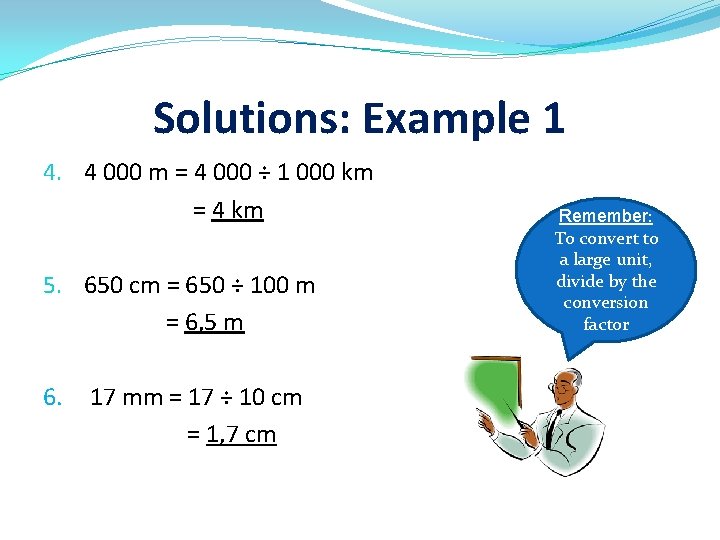
Solutions: Example 1 4. 4 000 m = 4 000 ÷ 1 000 km = 4 km 5. 650 cm = 650 ÷ 100 m = 6, 5 m 6. 17 mm = 17 ÷ 10 cm = 1, 7 cm Remember: To convert to a large unit, divide by the conversion factor
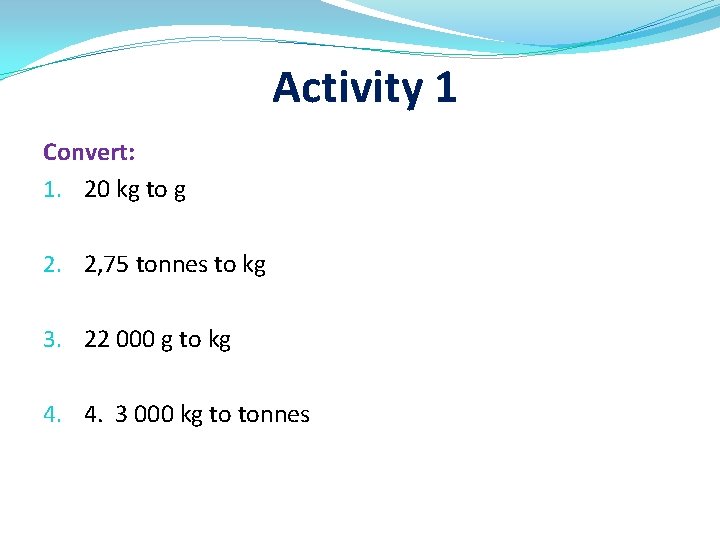
Activity 1 Convert: 1. 20 kg to g 2. 2, 75 tonnes to kg 3. 22 000 g to kg 4. 4. 3 000 kg to tonnes
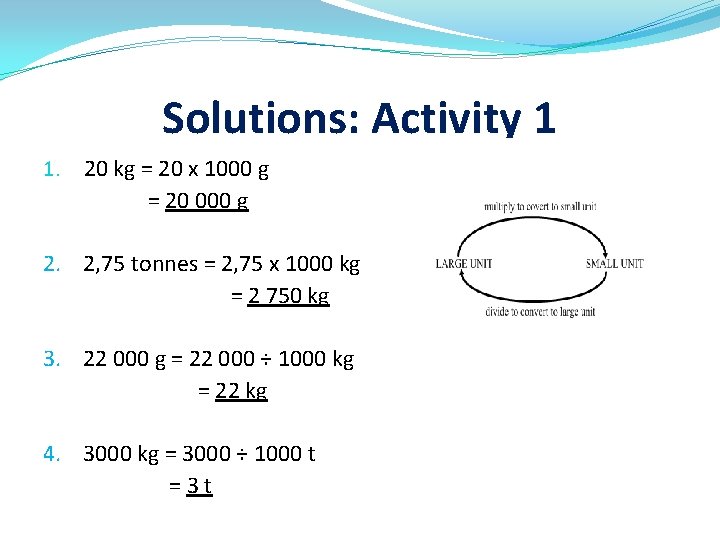
Solutions: Activity 1 1. 20 kg = 20 x 1000 g = 20 000 g 2. 2, 75 tonnes = 2, 75 x 1000 kg = 2 750 kg 3. 22 000 g = 22 000 ÷ 1000 kg = 22 kg 4. 3000 kg = 3000 ÷ 1000 t =3 t
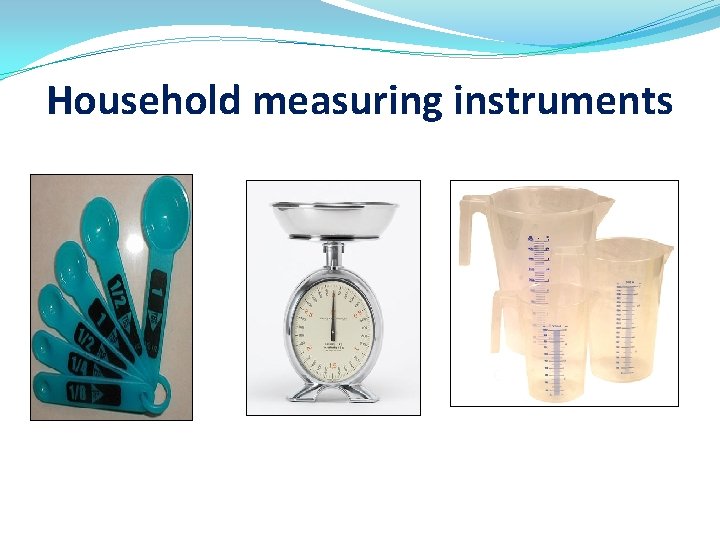
Household measuring instruments
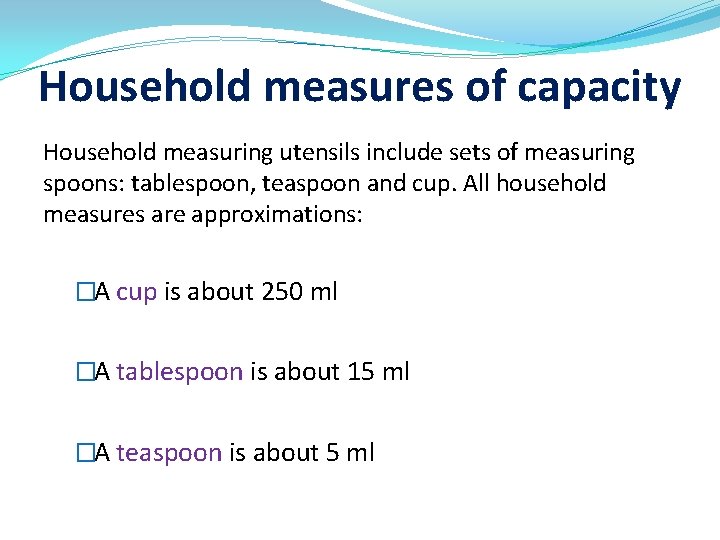
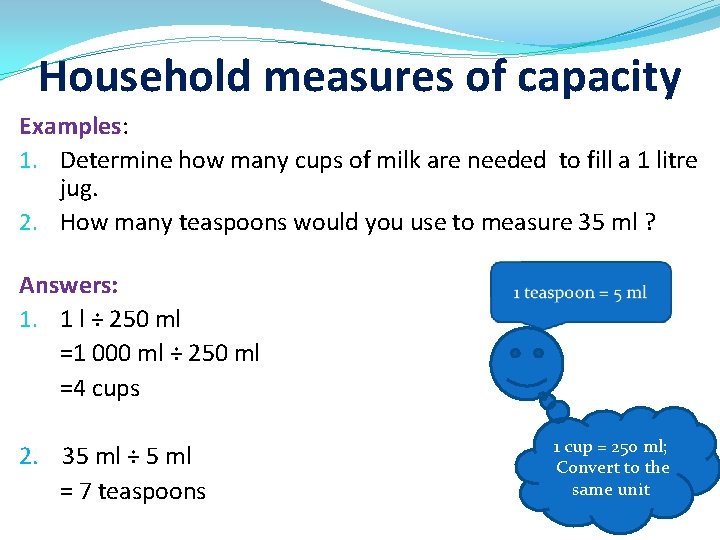
Household measures of capacity Household measuring utensils include sets of measuring spoons: tablespoon, teaspoon and cup. All household measures are approximations: �A cup is about 250 ml �A tablespoon is about 15 ml �A teaspoon is about 5 ml
Household measures of capacity Examples: 1. Determine how many cups of milk are needed to fill a 1 litre jug. 2. How many teaspoons would you use to measure 35 ml ? Answers: 1. 1 l ÷ 250 ml =1 000 ml ÷ 250 ml =4 cups 2. 35 ml ÷ 5 ml = 7 teaspoons 1 cup = 250 ml; Convert to the same unit
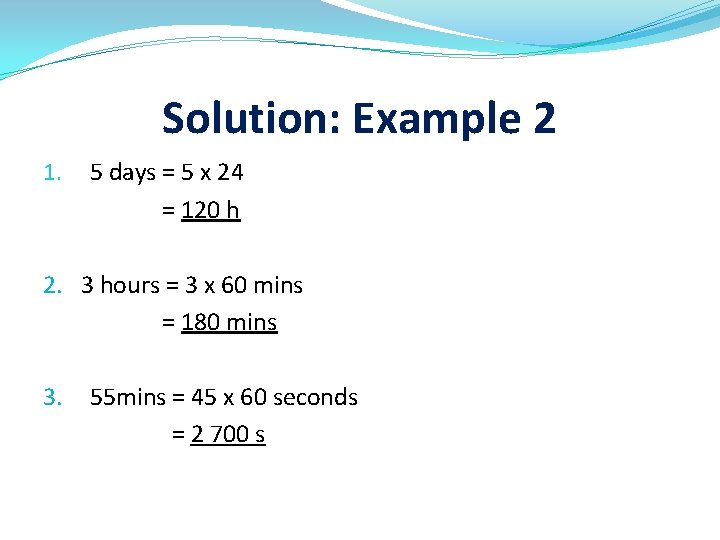
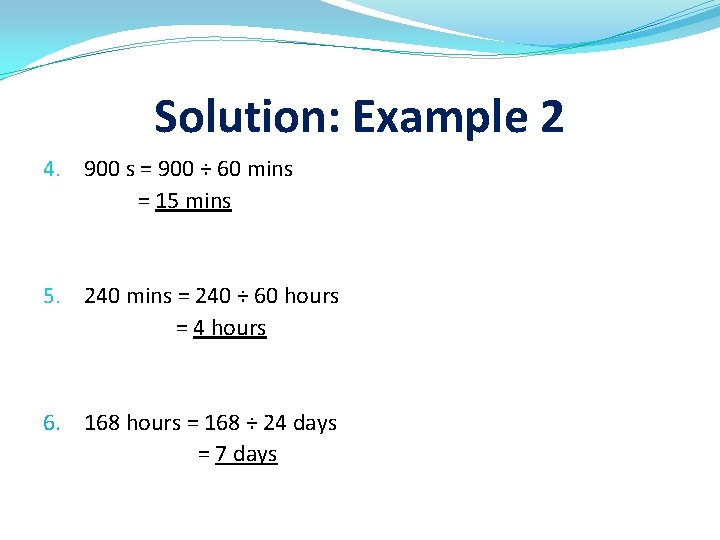
Example 2 Convert: 1. 5 days to hours. 2. 3 hours to minutes 3. 45 minutes to seconds. 4. 900 seconds to minutes 5. 240 minutes to hours 6. 168 hours to days
Solution: Example 2 1. 5 days = 5 x 24 = 120 h 2. 3 hours = 3 x 60 mins = 180 mins 3. 55 mins = 45 x 60 seconds = 2 700 s
Solution: Example 2 4. 900 s = 900 ÷ 60 mins = 15 mins 5. 240 mins = 240 ÷ 60 hours = 4 hours 6. 168 hours = 168 ÷ 24 days = 7 days
Time We use two systems to show time: �The 12 -hour clock and �The 24 -hour clock. In the 12 -hour clock, the day is divided into two 12 -hour time periods: o from midnight to noon, referred to as a. m. o from noon to midnight, referred to as p. m.
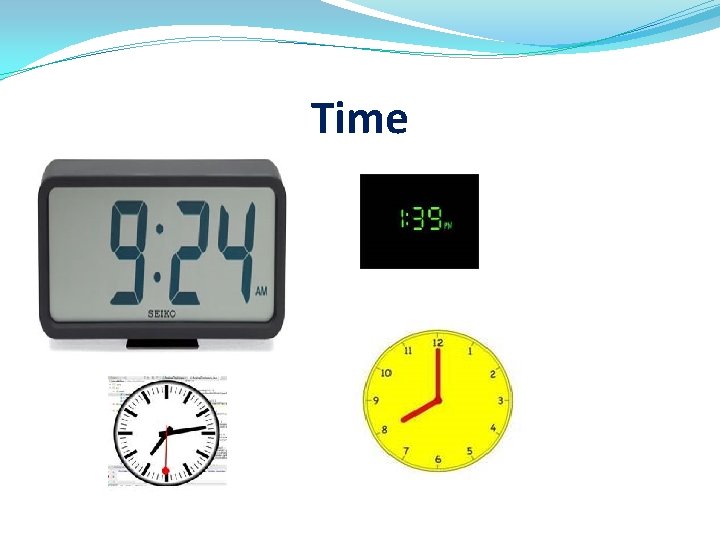
Time
Time In the 24 -hour clock, time is measured in a single 24 -hour period, starting from midnight. READING TIME Time is expressed in ways or formats: o The analogue and o The digital system.
Time Example: Express half past nine in the morning: (a) as analogue time, (b) as digital time. Answers: (a) 9. 30 a. m. (b) 09: 30
Examples (cont. ) Time in words Analogue Time Digital Time midnight 12. a. m. 00: 00 noon 12. p. m. 12: 00 hr Twenty five past midnight 12. 25 a. m. 00: 25 hr Twenty five past midday 12. 25 p. m. 12: 25 hr 6 o’clock in the morning 6. a. m. 06: 00 hr 6 o’clock in the evening 6. p. m. 18: 00 hr 10 o’ clock in the morning 10. a. m. 10: 00 hr
Elapsed Time �Watches and clocks are accurate for determining duration of time for long journeys or TV programmes. �For the duration of 100 m race, a stop watch will be more accurate. �Athletes need to be more accurate and often have to determine time elapsed in hours, minutes, seconds and also parts of a second.
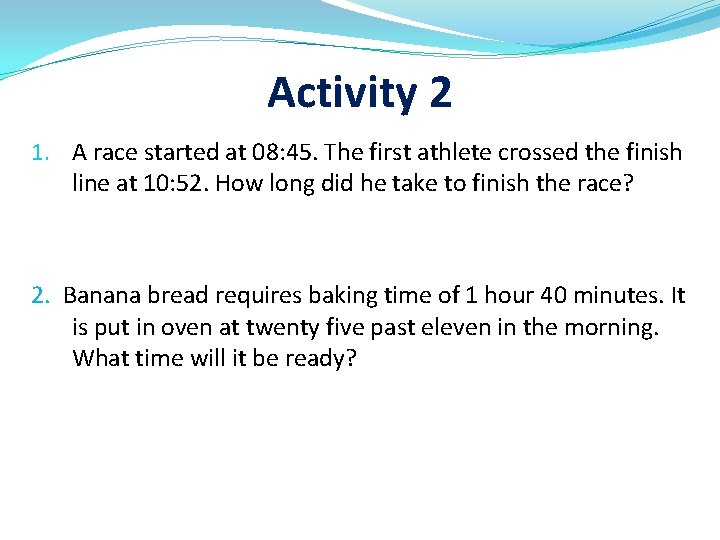
Activity 2 1. A race started at 08: 45. The first athlete crossed the finish line at 10: 52. How long did he take to finish the race? 2. Banana bread requires baking time of 1 hour 40 minutes. It is put in oven at twenty five past eleven in the morning. What time will it be ready?
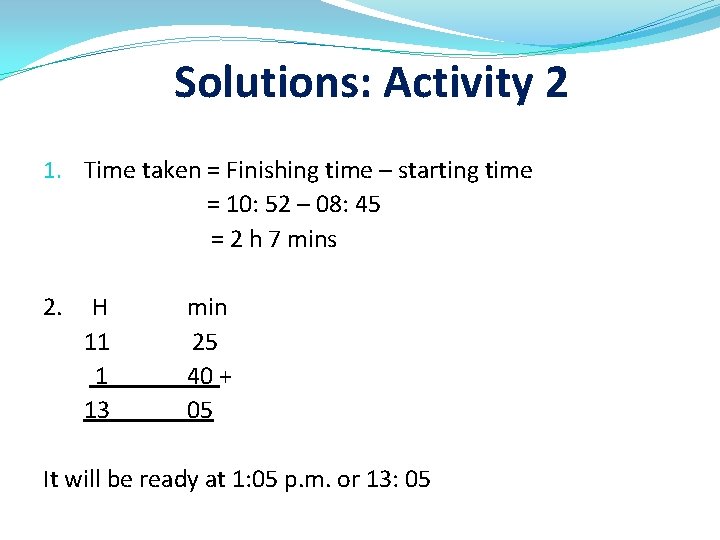
Solutions: Activity 2 1. Time taken = Finishing time – starting time = 10: 52 – 08: 45 = 2 h 7 mins 2. H 11 1 13 min 25 40 + 05 It will be ready at 1: 05 p. m. or 13: 05
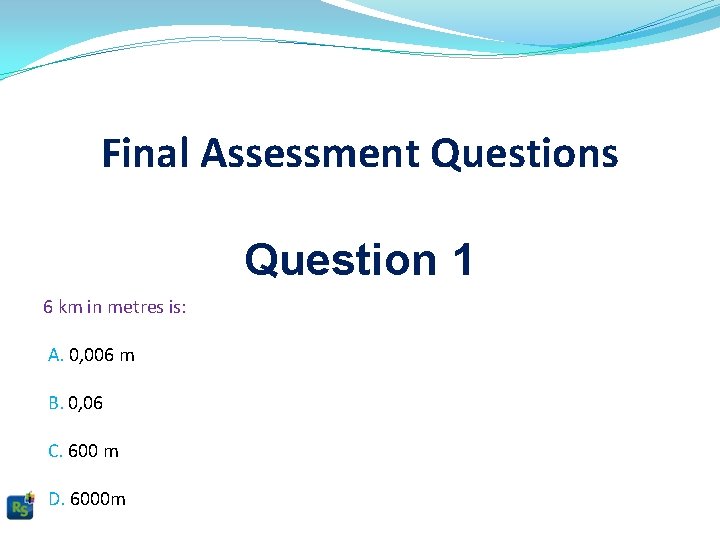
Final Assessment Questions Question 1 6 km in metres is: A. 0, 006 m B. 0, 06 C. 600 m D. 6000 m
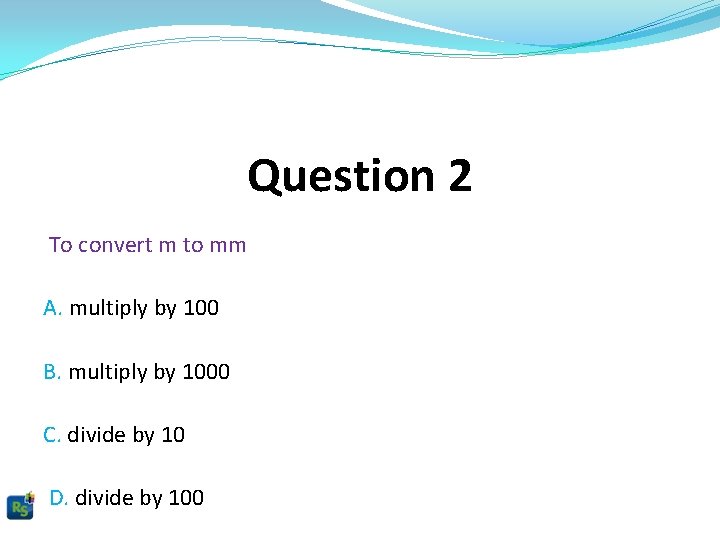
Question 2 To convert m to mm A. multiply by 100 B. multiply by 1000 C. divide by 10 D. divide by 100
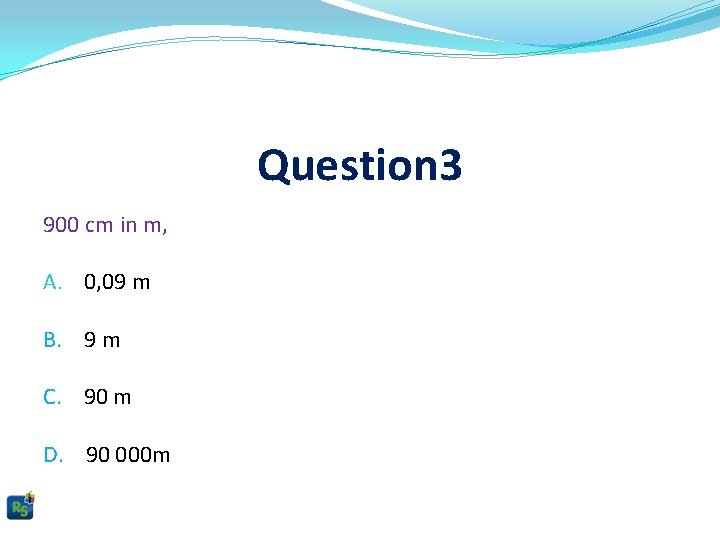
Question 3 900 cm in m, A. 0, 09 m B. 9 m C. 90 m D. 90 000 m
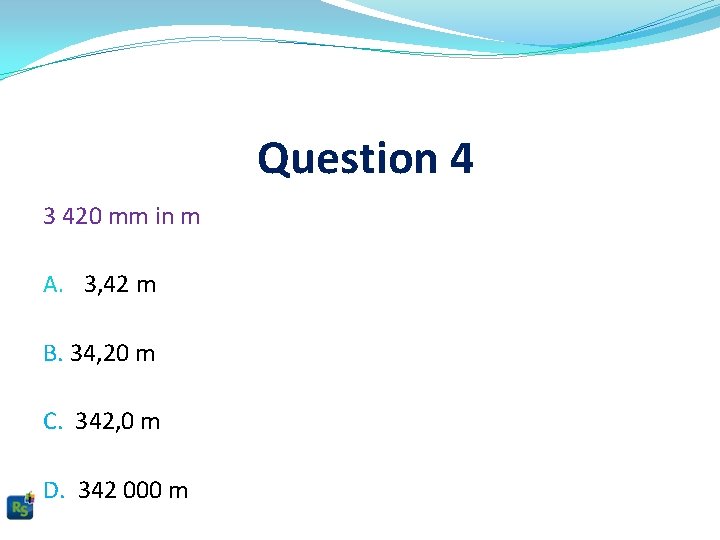
Question 4 3 420 mm in m A. 3, 42 m B. 34, 20 m C. 342, 0 m D. 342 000 m
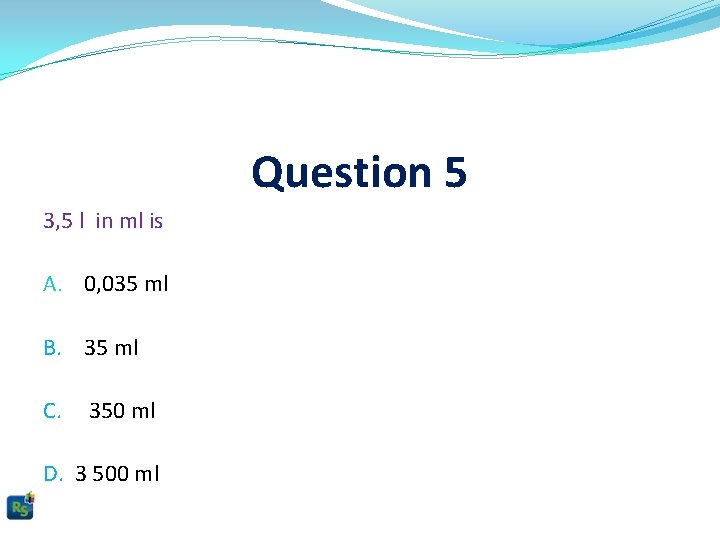
Question 5 3, 5 l in ml is A. 0, 035 ml B. 35 ml C. 350 ml D. 3 500 ml
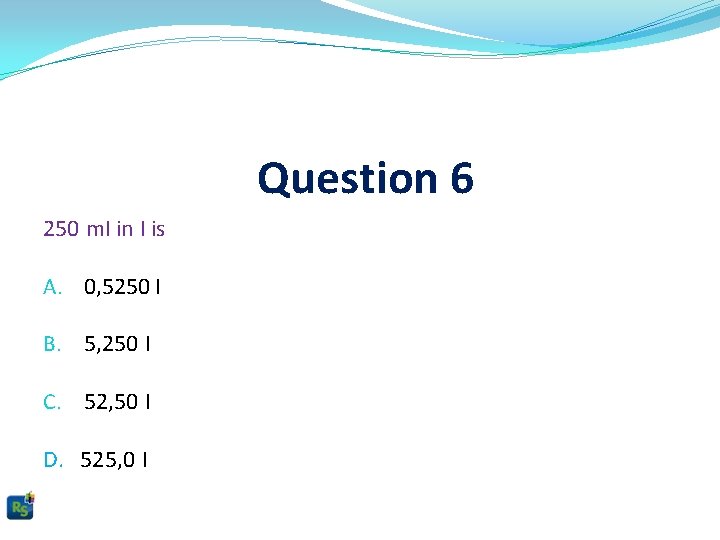
Question 6 250 ml in l is A. 0, 5250 l B. 5, 250 l C. 52, 50 l D. 525, 0 l
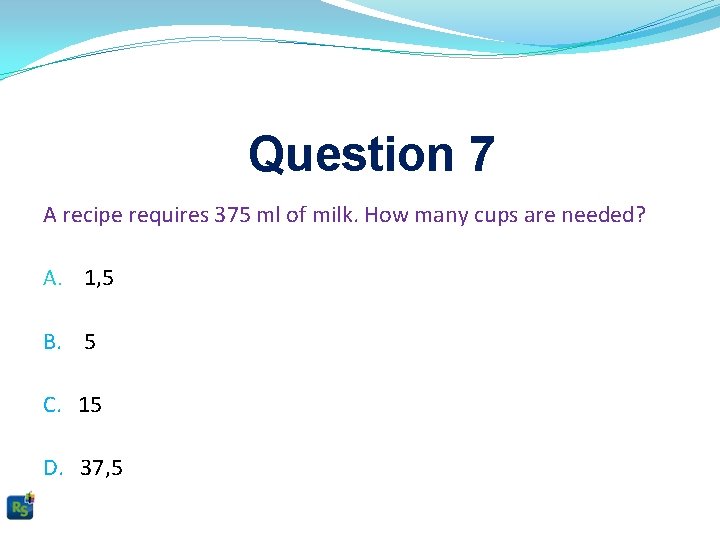
Question 7 A recipe requires 375 ml of milk. How many cups are needed? A. 1, 5 B. 5 C. 15 D. 37, 5
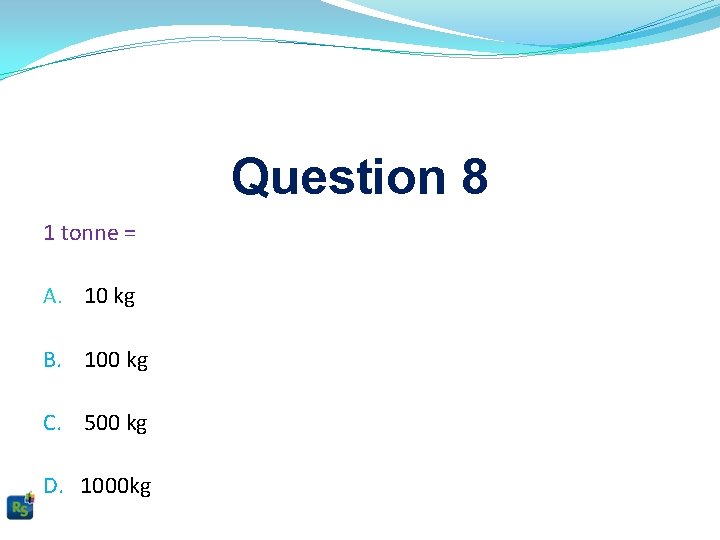
Question 8 1 tonne = A. 10 kg B. 100 kg C. 500 kg D. 1000 kg
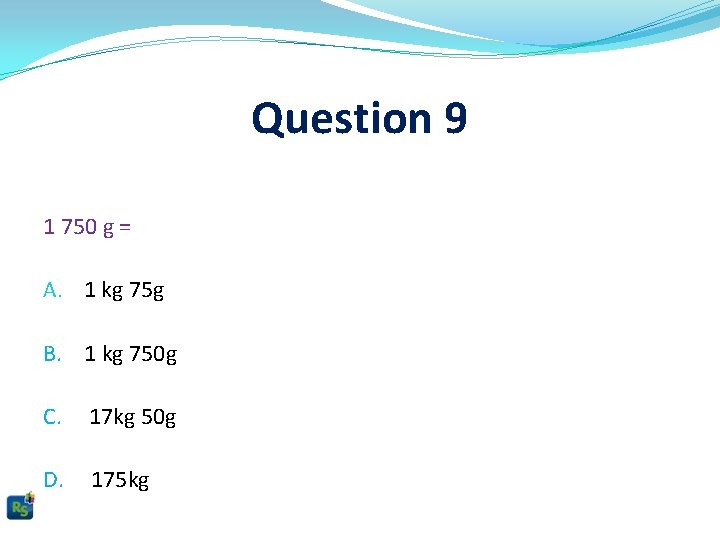
Question 9 1 750 g = A. 1 kg 75 g B. 1 kg 750 g C. 17 kg 50 g D. 175 kg
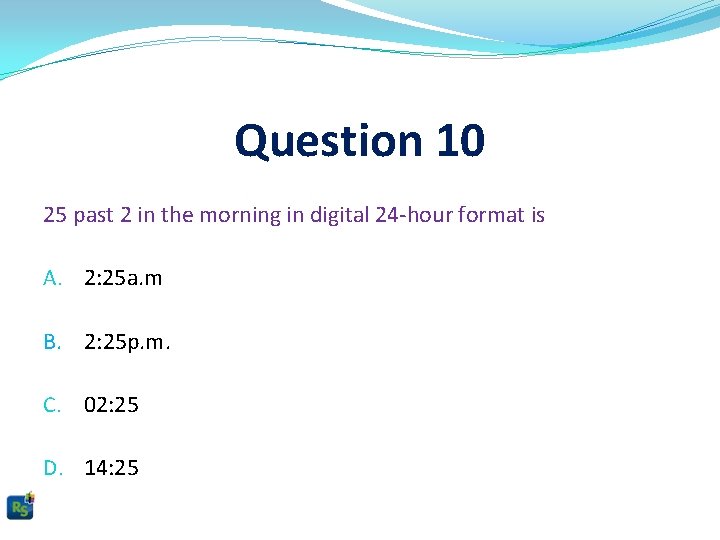
Question 10 25 past 2 in the morning in digital 24 -hour format is A. 2: 25 a. m B. 2: 25 p. m. C. 02: 25 D. 14: 25
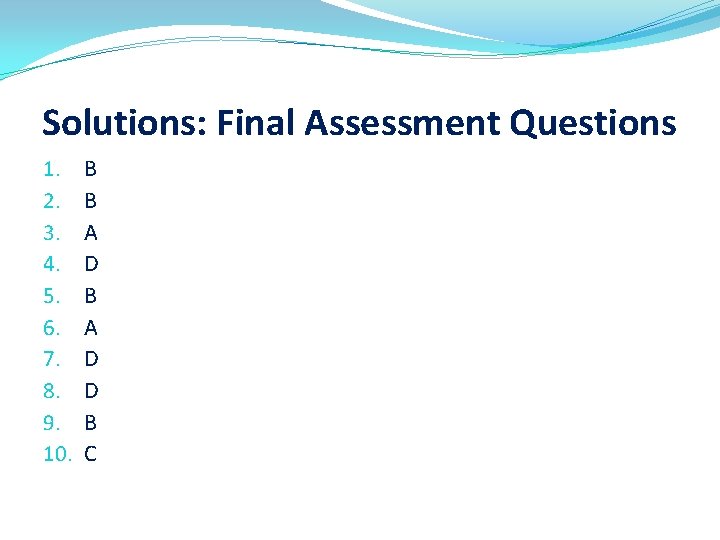
Solutions: Final Assessment Questions 1. 2. 3. 4. 5. 6. 7. 8. 9. 10. B B A D D B C