
Mathematical Induction ICS 6 D Sandy Irani Induction
- Slides: 23
Mathematical Induction ICS 6 D Sandy Irani
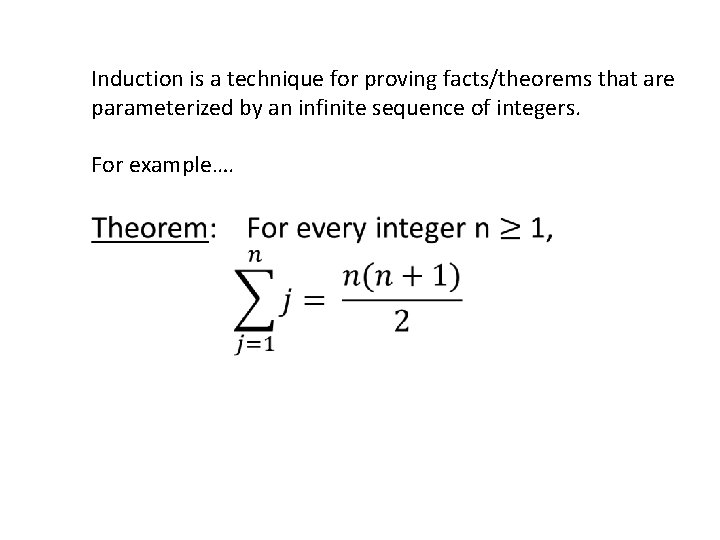
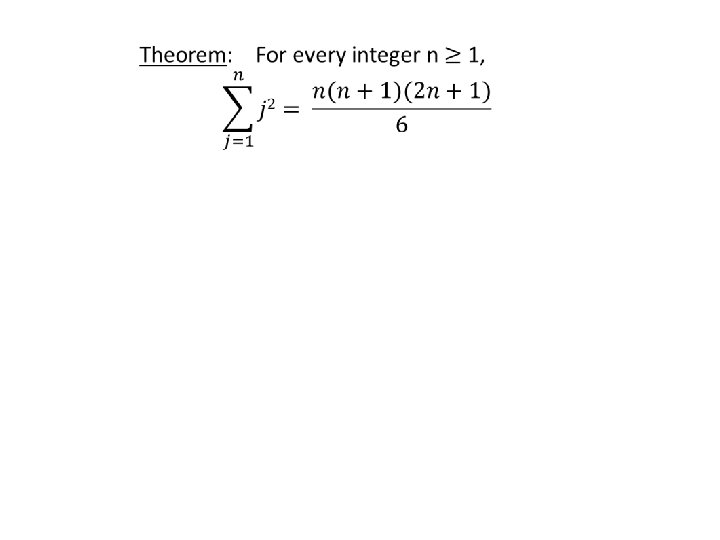
Induction is a technique for proving facts/theorems that are parameterized by an infinite sequence of integers. For example….
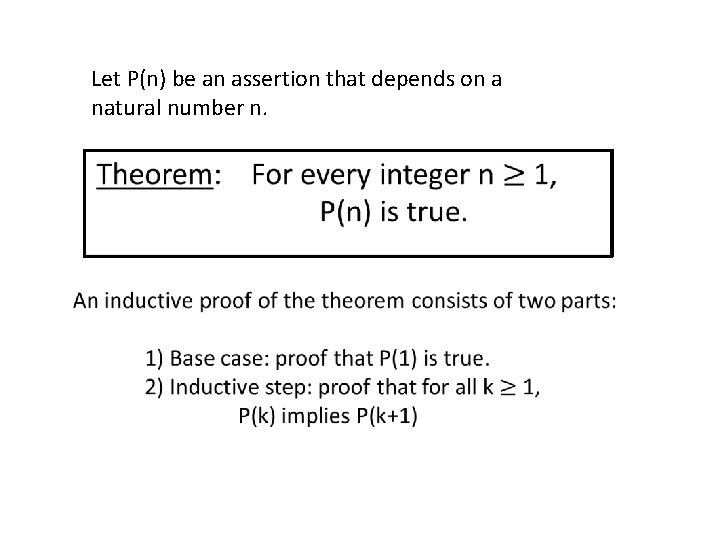
Let P(n) be an assertion that depends on a natural number n.
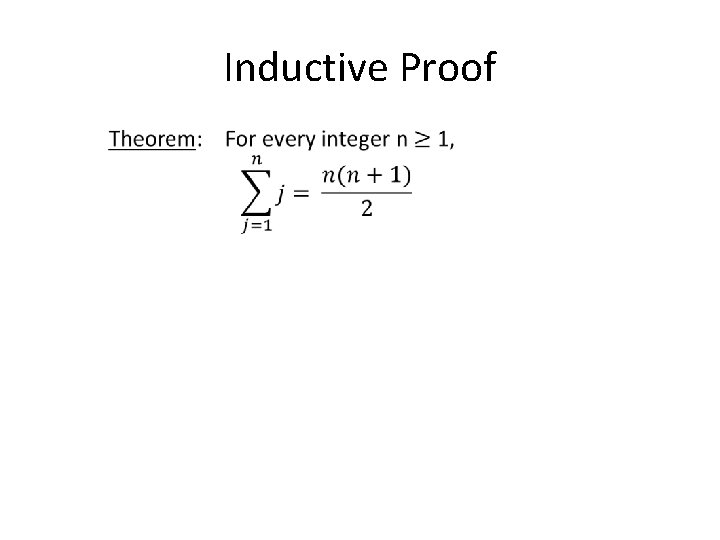
Inductive Proof
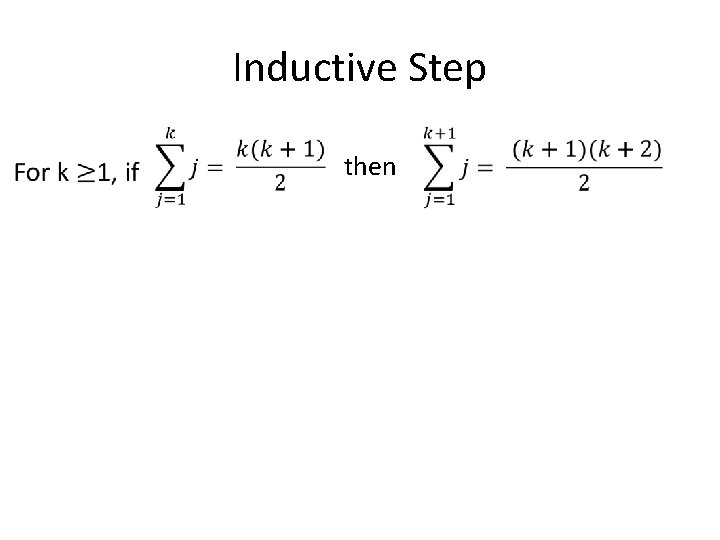
Inductive Step then
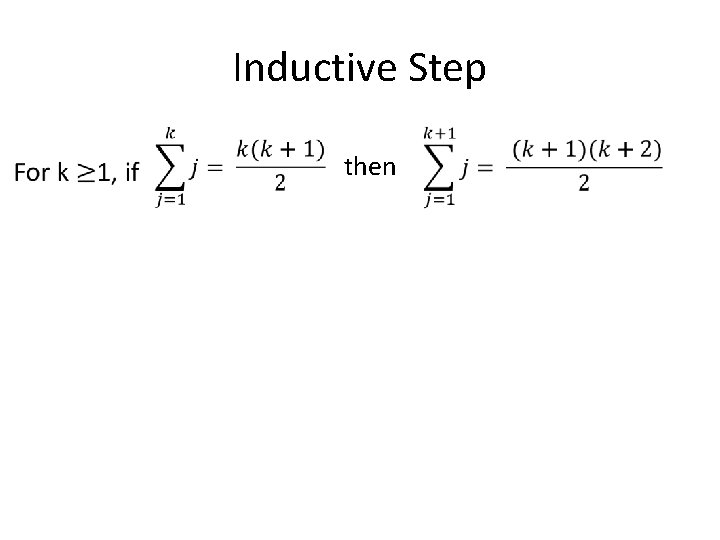
Inductive Step then
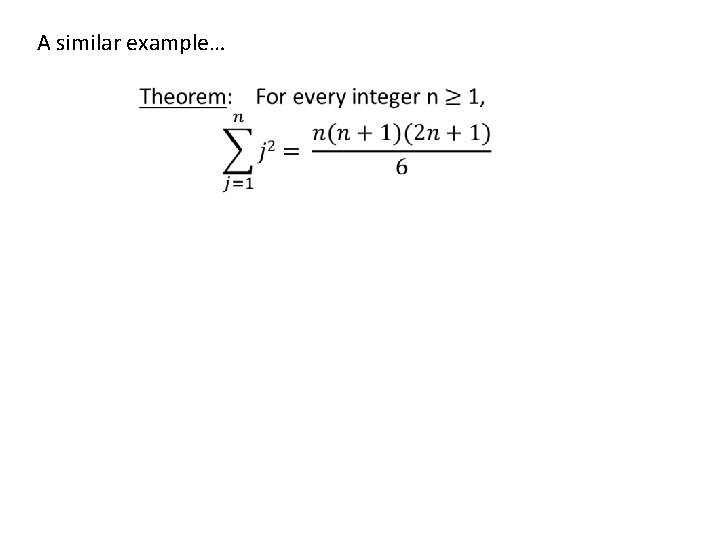
A similar example…
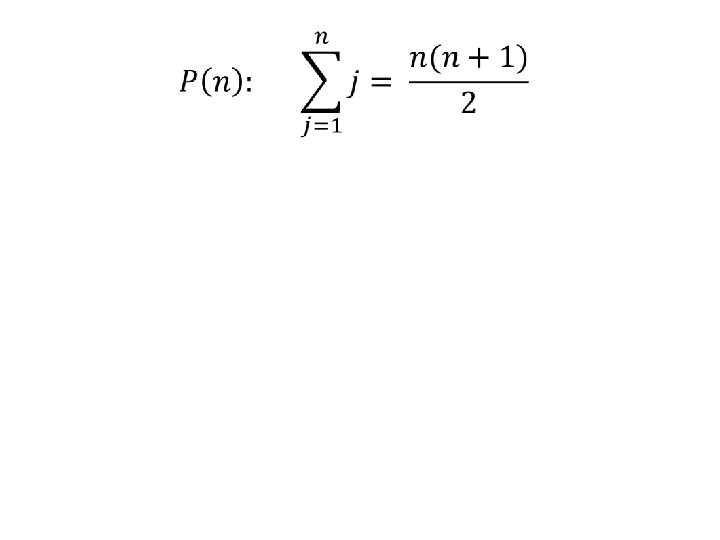
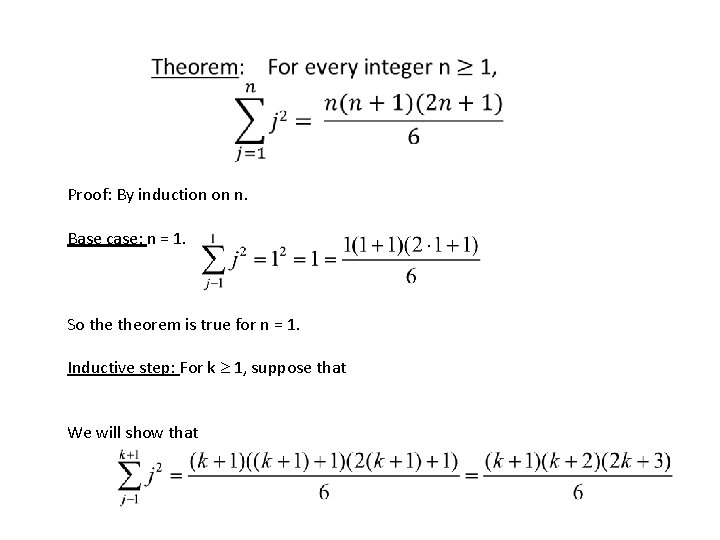
Proof: By induction on n. Base case: n = 1. So theorem is true for n = 1. Inductive step: For k 1, suppose that We will show that
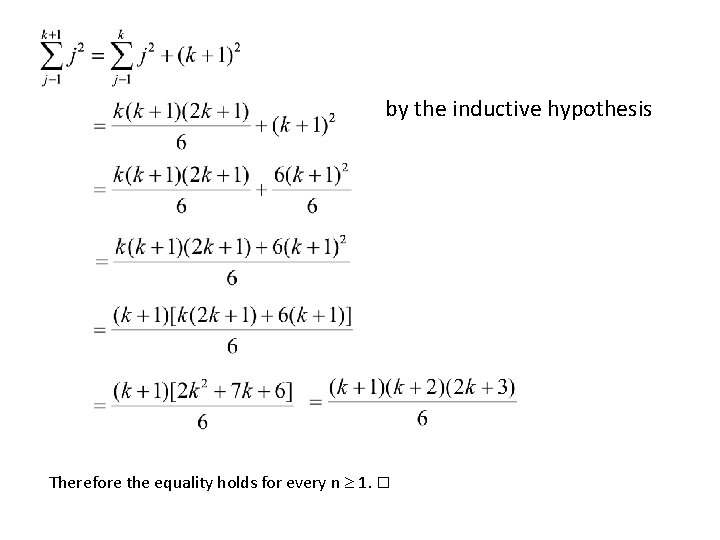
by the inductive hypothesis Therefore the equality holds for every n 1. □
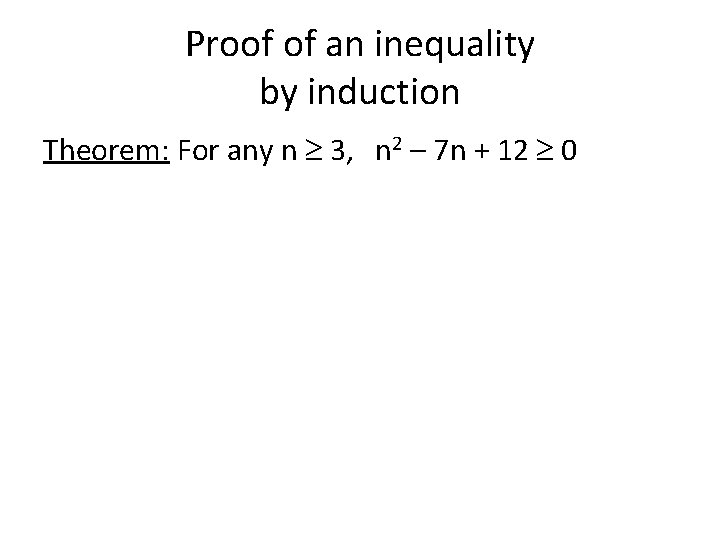
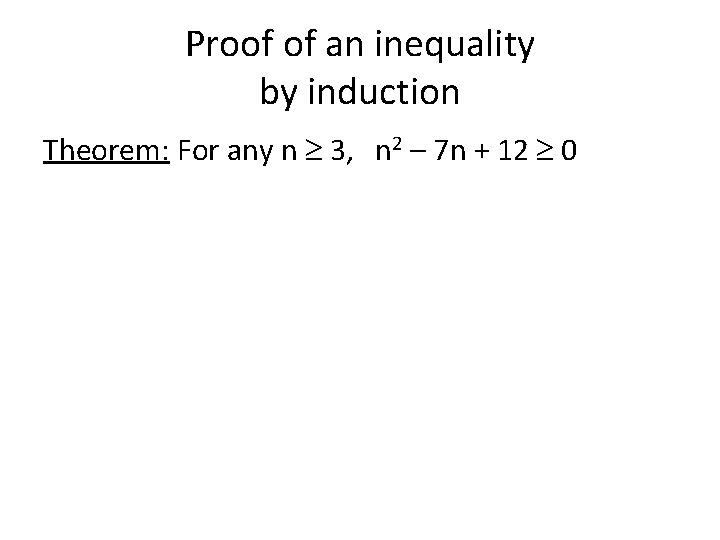
Proof of an inequality by induction Theorem: For any n 3, n 2 – 7 n + 12 0
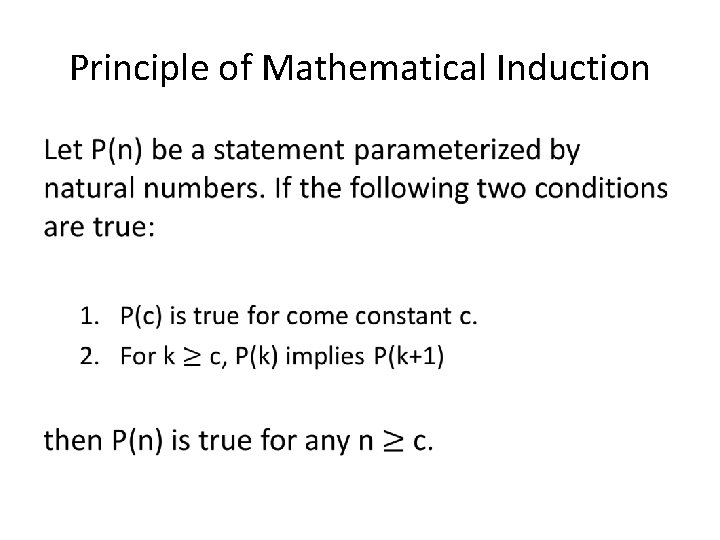
Principle of Mathematical Induction •
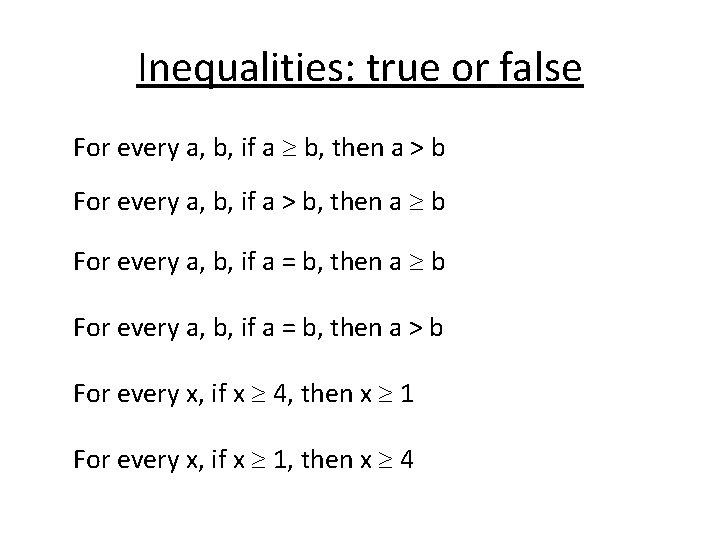
Inequalities: true or false For every a, b, if a b, then a > b For every a, b, if a > b, then a b For every a, b, if a = b, then a > b For every x, if x 4, then x 1 For every x, if x 1, then x 4
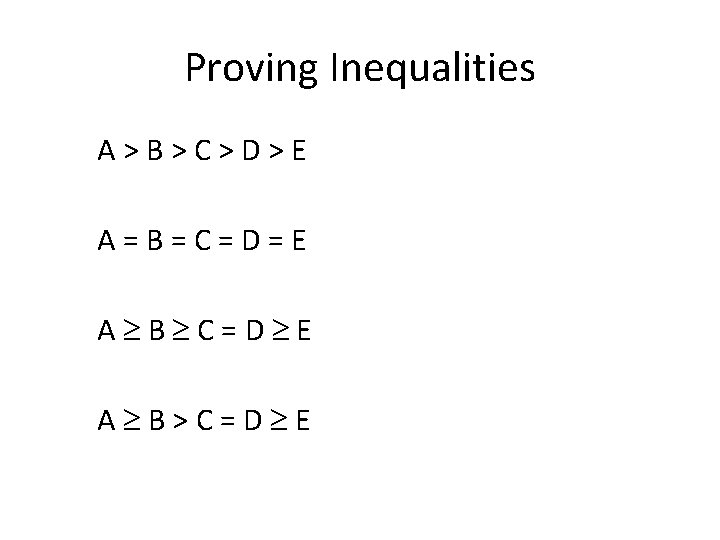
Proving Inequalities A>B>C>D>E A=B=C=D=E A B C=D E A B>C=D E
Proof of an inequality by induction Theorem: For any n 3, n 2 – 7 n + 12 0
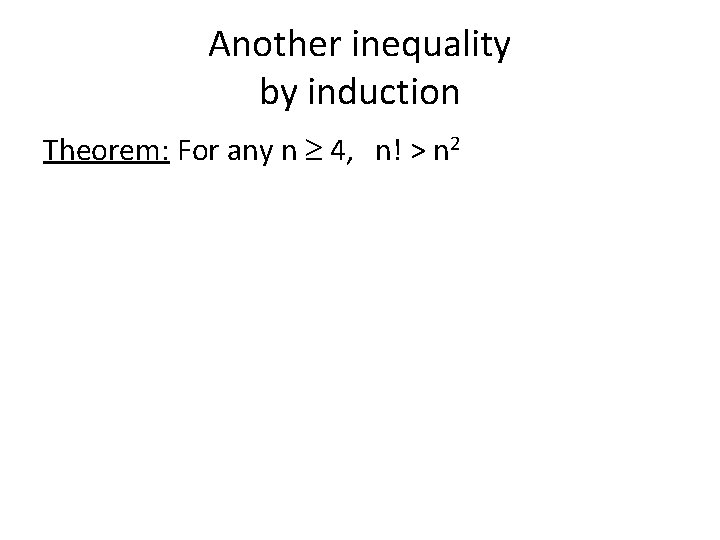
Another inequality by induction Theorem: For any n 4, n! > n 2
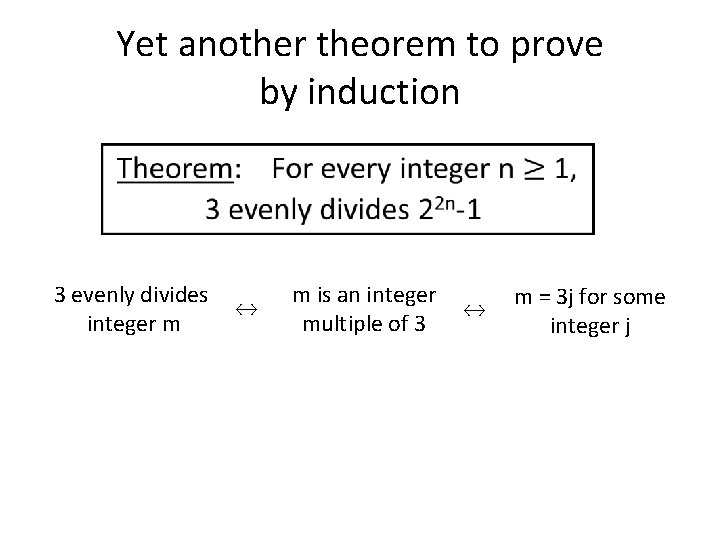
Yet another theorem to prove by induction 3 evenly divides integer m ↔ m is an integer multiple of 3 ↔ m = 3 j for some integer j
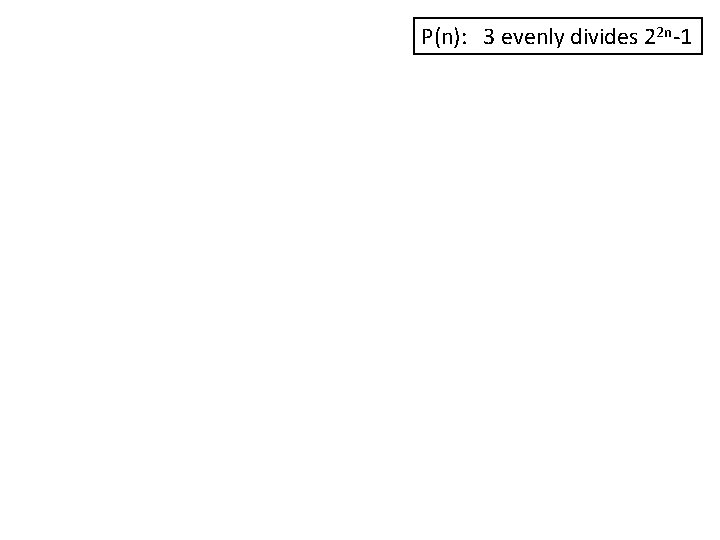
P(n): 3 evenly divides 22 n-1
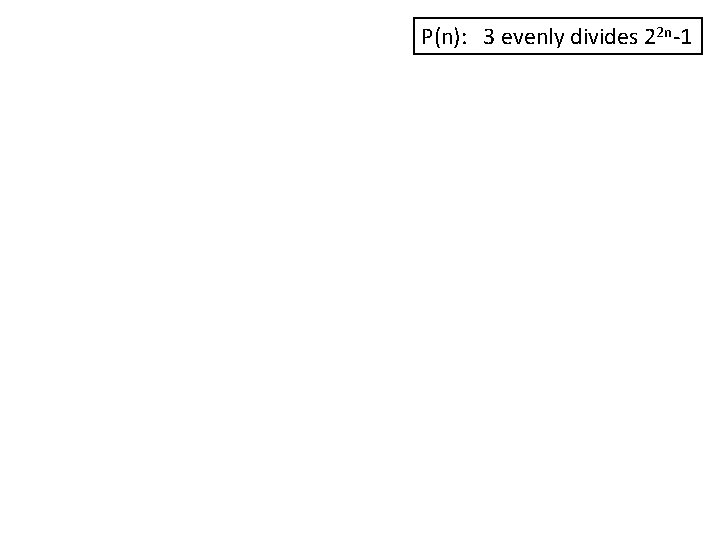
P(n): 3 evenly divides 22 n-1
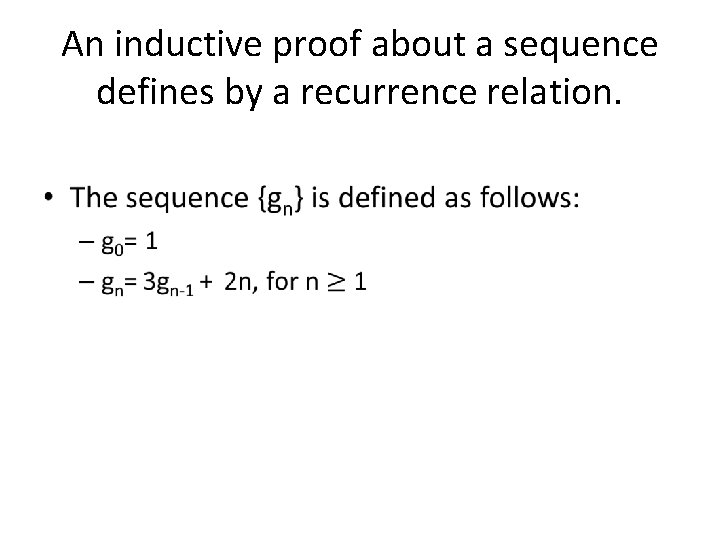
An inductive proof about a sequence defines by a recurrence relation. •
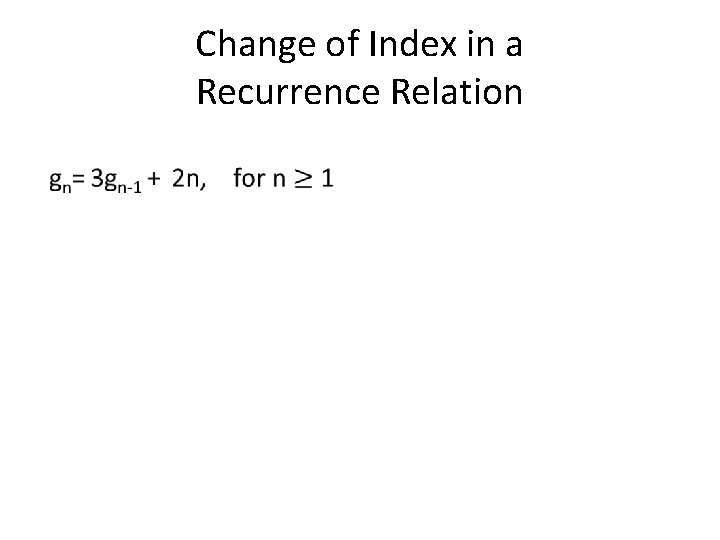
Change of Index in a Recurrence Relation
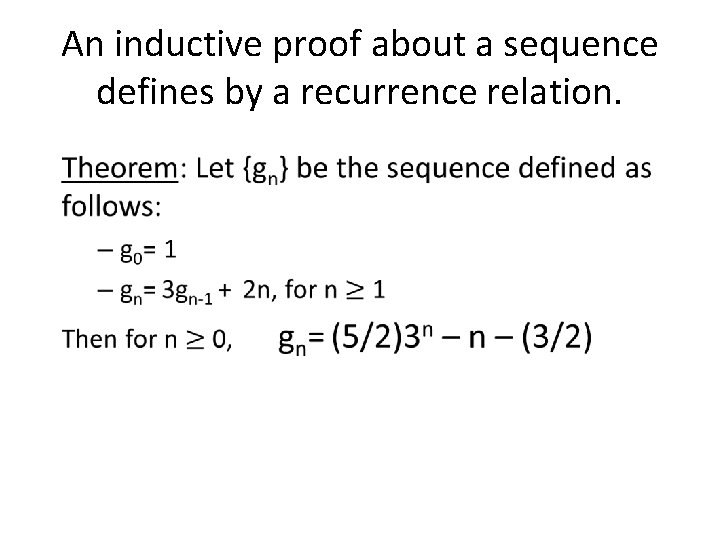
An inductive proof about a sequence defines by a recurrence relation. •