
Math Review Mental Math Problem Solving Conceptual Understanding
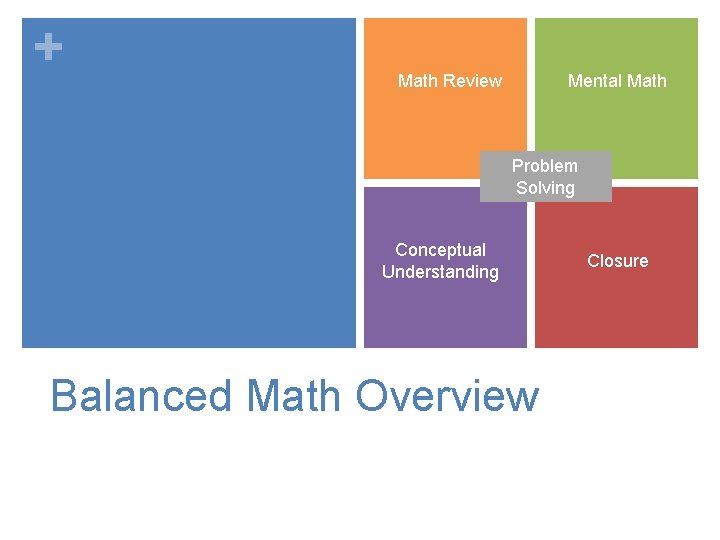
+ Math Review Mental Math Problem Solving Conceptual Understanding Balanced Math Overview Closure
+ Balanced Math Framework n Math Review n Mental Math n Conceptual Understanding n Problem Solving n Closure
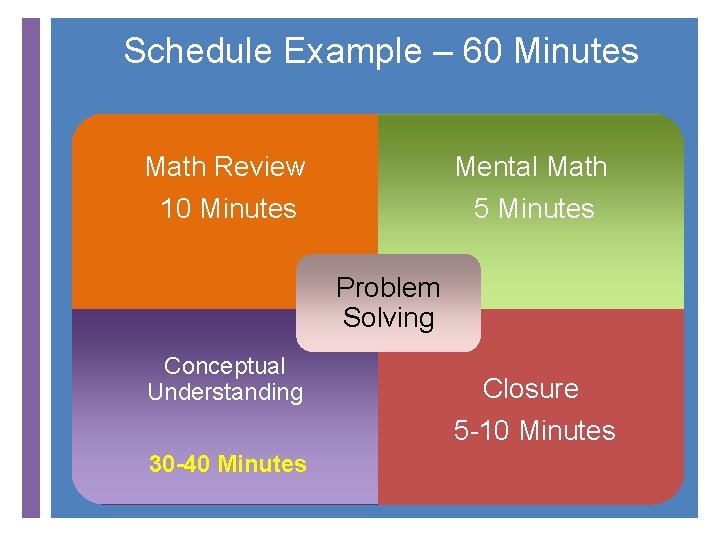
Schedule Example – 60 Minutes Math Review Mental Math 10 Minutes 5 Minutes + Problem – 60 Schedule Examples Solving Minutes Conceptual Understanding Closure 5 -10 Minutes 30 -40 Minutes
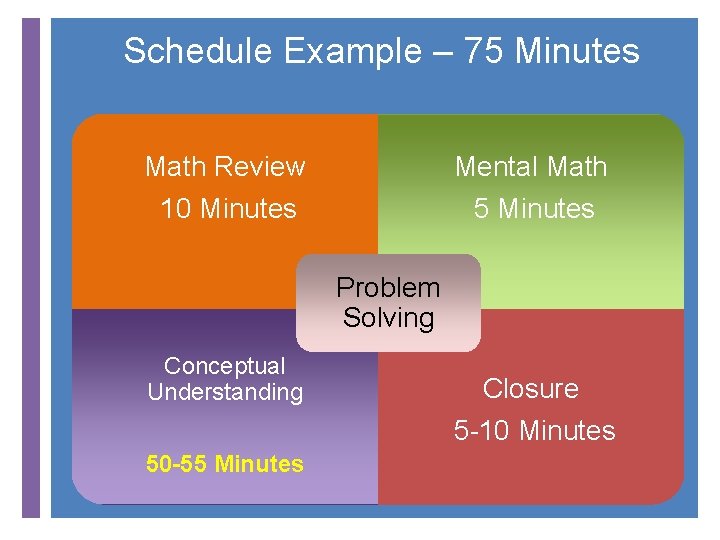
Schedule Example – 75 Minutes Math Review Mental Math 10 Minutes 5 Minutes + Problem – 60 Schedule Examples Solving Minutes Conceptual Understanding Closure 5 -10 Minutes 50 -55 Minutes
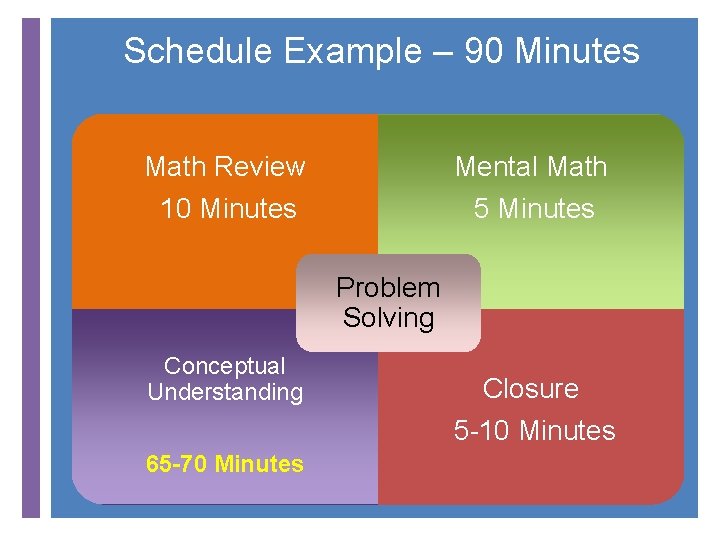
Schedule Example – 90 Minutes Math Review Mental Math 10 Minutes 5 Minutes + Problem – 60 Schedule Examples Solving Minutes Conceptual Understanding Closure 5 -10 Minutes 65 -70 Minutes
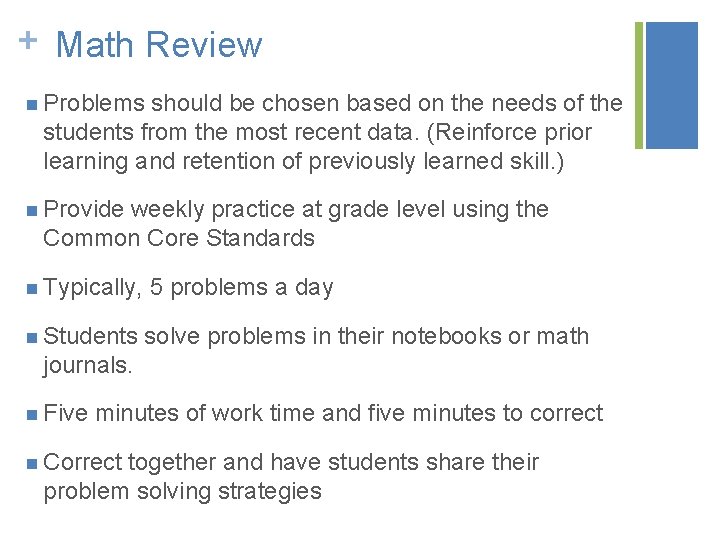
+ Math Review n Problems should be chosen based on the needs of the students from the most recent data. (Reinforce prior learning and retention of previously learned skill. ) n Provide weekly practice at grade level using the Common Core Standards n Typically, 5 problems a day n Students solve problems in their notebooks or math journals. n Five minutes of work time and five minutes to correct n Correct together and have students share their problem solving strategies
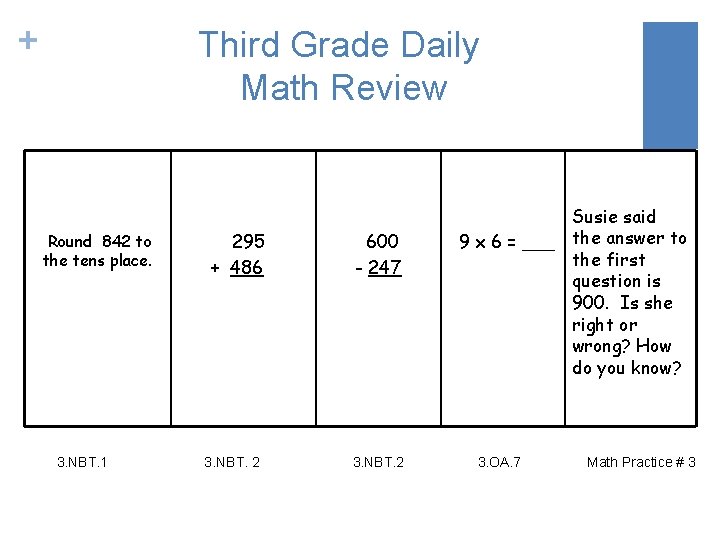
+ Third Grade Daily Math Review Round 842 to the tens place. 3. NBT. 1 295 + 486 3. NBT. 2 600 - 247 3. NBT. 2 Susie said 9 x 6 = ___ the answer to the first question is 900. Is she right or wrong? How do you know? 3. OA. 7 Math Practice # 3
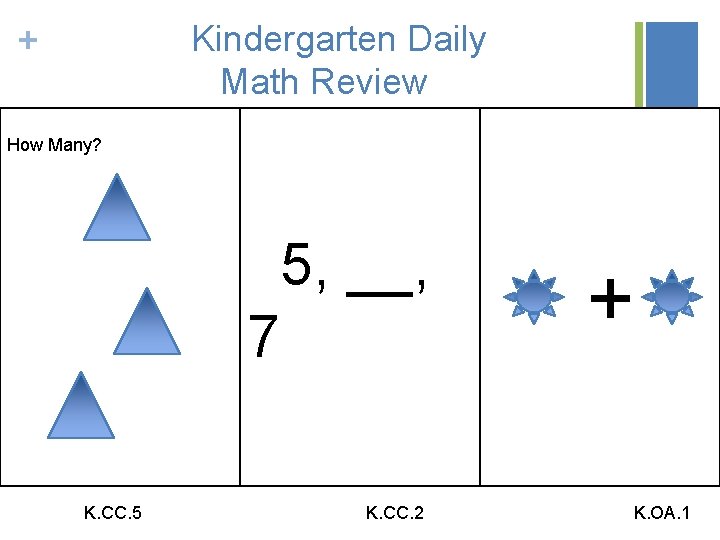
Kindergarten Daily Math Review + How Many? 5, __, 7 K. CC. 5 K. CC. 2 + K. OA. 1
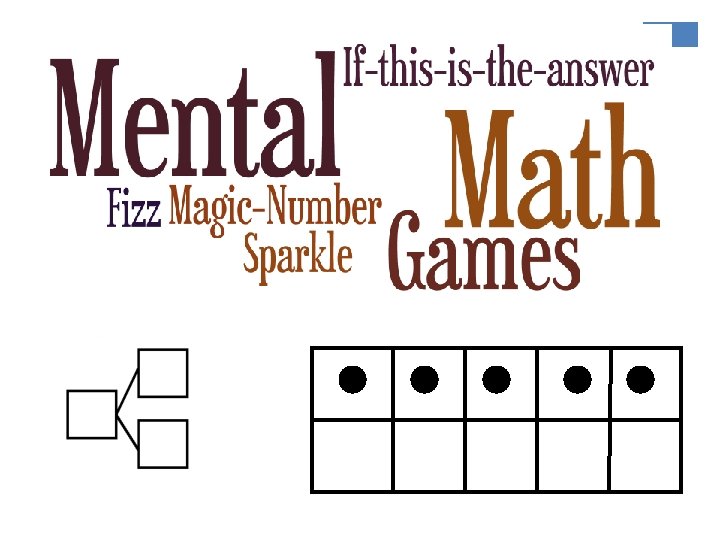
+ Mental Math Works to develop students’ mental mathematical abilities: n Students need daily mental practice to develop and maintain strong number sense and effective computational fluency skills. n Select a theme that represents specific Common Core Standards for that grade level n Students use strategies to solve mental math. n Students are actively engaged in discussion.
+ Concept Lesson & Problem Solving Helps students develop a clear conceptual understanding of mathematics: n Problem-based interactive learning should be the foundation in teaching for understanding. n Provide the focus of the lesson by sharing the purpose of the lesson. n Use multiple methods and strategies. n Incorporate concrete models that support the understanding of mathematical concepts.
+ Concept Lesson & Problem Solving (cont. ) n Provide a variety of instructional opportunities from whole class to partners and small group activities. n Make connections to aid students in the application of the mathematical knowledge. n Provide opportunities for students to discover concepts using hands-on or problem –based learning activities.
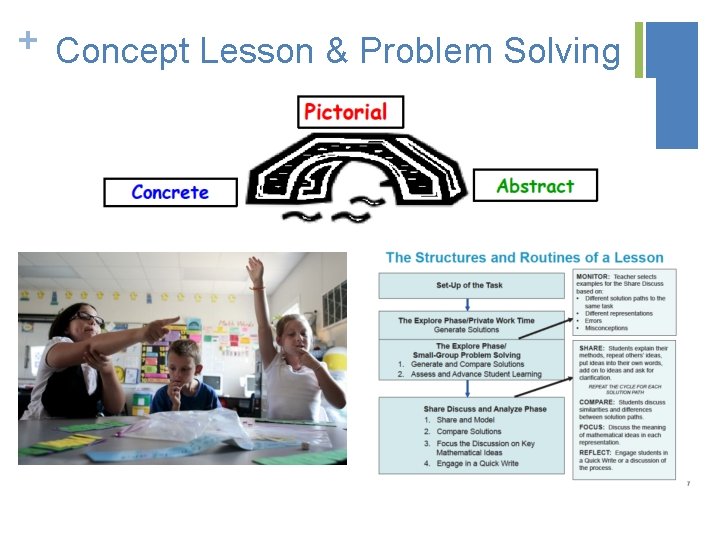
+ Concept Lesson & Problem Solving
+ Problem Solving n Problem solving tasks should: Promote application of mathematical ideas currently being studied Be relevant, accessible and engaging to all students Stretch student thinking Align to Common Core Standards Have more than one solution Include Advancing and Assessing Questions
+ Closure Provides a way to check student understanding: n Provide time for students to reflect on new learning and make connections. n Students articulate their thinking (this can be done verbally or in writing, including pictures and words). n Use formative assessment as a post-assessment or performance task to check for understanding. n Closure communicates the progression toward mastery of the learning target.
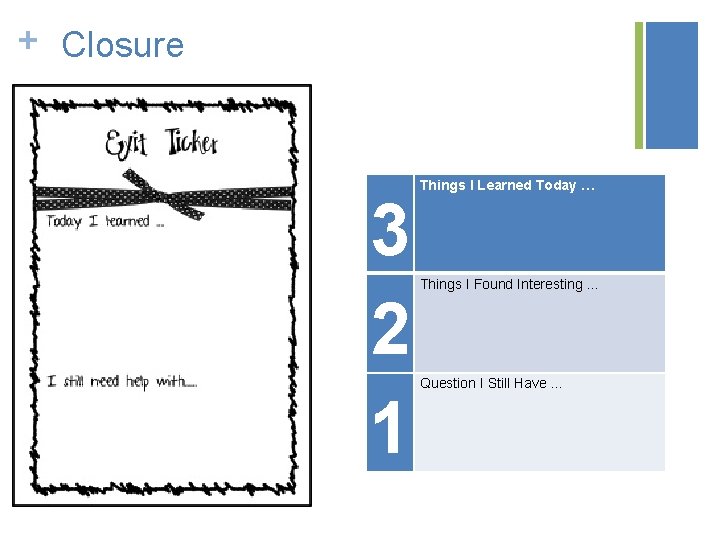
+ Closure 3 2 1 Things I Learned Today … Things I Found Interesting … Question I Still Have …

+ Math Review Conceptual Understanding & Problem Solving Balanced Math Overview Mental Math Closure
- Slides: 17