
Math Reality vs Math Myth A Partnership for

- Slides: 36
Math Reality vs. Math Myth: A Partnership for Student Success Dianne Siegfreid, Concurrent Enrollment, Weber State University, Utah Dixilee Blackinton, Developmental Math, Weber State University, Utah Lisa Jasumback, K-12 Math Supervisor, Davis School District, Utah
The Salt Lake Tribune August 18, 2004 Utah up on ACT scores Overall results make educators happy, but math still a struggle
Fewer then half of collegebound grads from 2004 will do well in college math courses. “…math remains the toughest of the ACT exams, reinforcing revelations from another measure: the Utah Basic Skills Competency Test…”
Weber State University Demographics • Primarily an undergraduate 4 -year institution • Open Enrollment • Approximately 18, 000 students • Commuter Campus
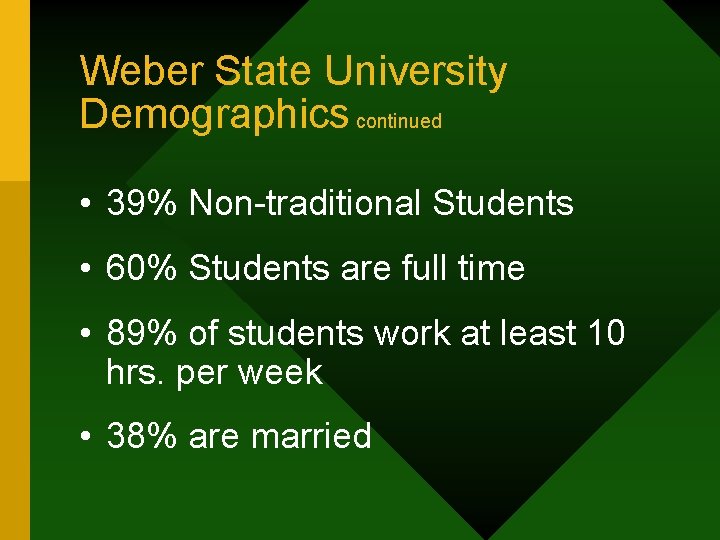
Weber State University Demographics continued • 39% Non-traditional Students • 60% Students are full time • 89% of students work at least 10 hrs. per week • 38% are married
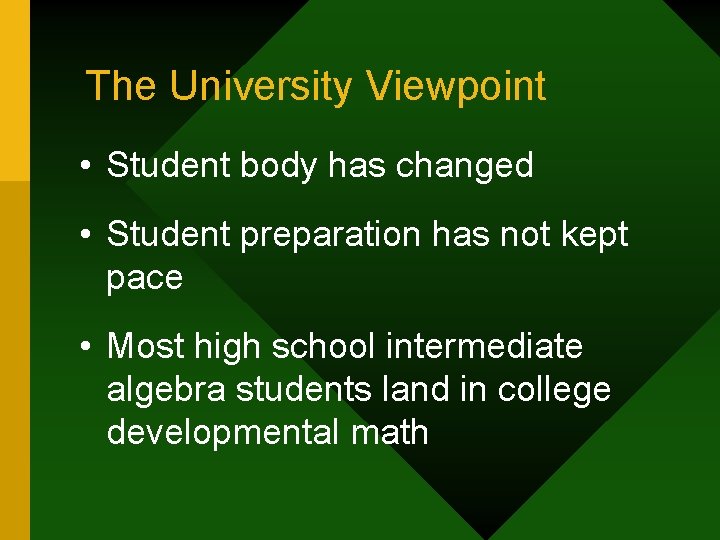
The University Viewpoint • Student body has changed • Student preparation has not kept pace • Most high school intermediate algebra students land in college developmental math
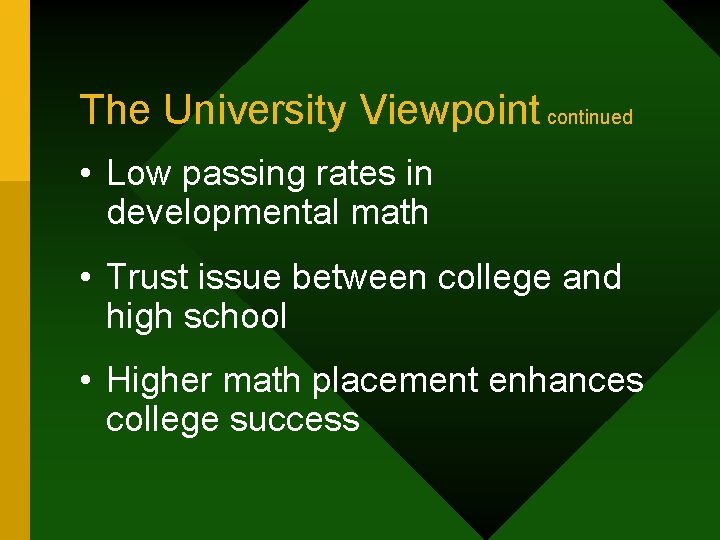
The University Viewpoint continued • Low passing rates in developmental math • Trust issue between college and high school • Higher math placement enhances college success
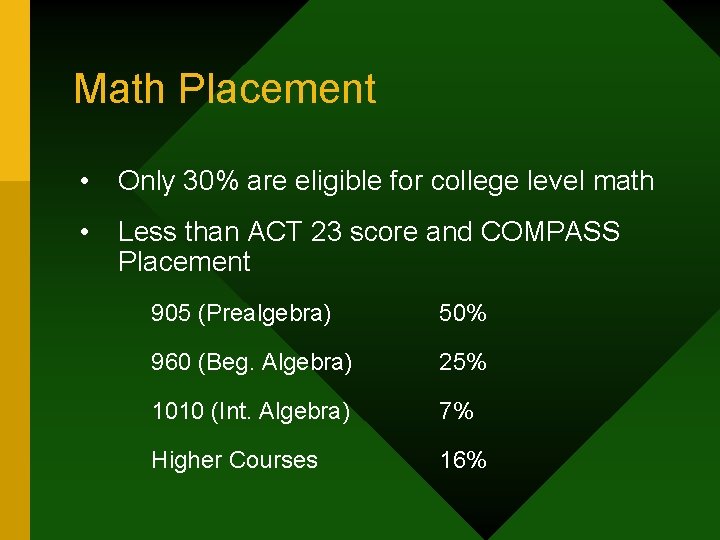
Math Placement • Only 30% are eligible for college level math • Less than ACT 23 score and COMPASS Placement 905 (Prealgebra) 50% 960 (Beg. Algebra) 25% 1010 (Int. Algebra) 7% Higher Courses 16%
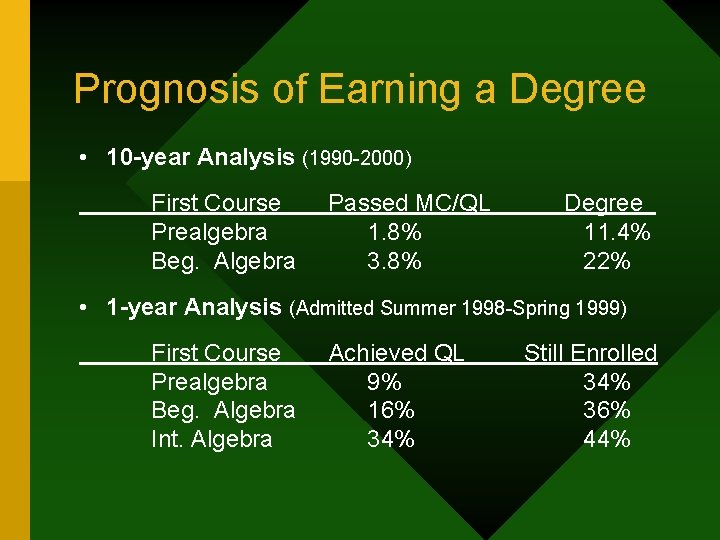
Prognosis of Earning a Degree • 10 -year Analysis (1990 -2000) First Course Prealgebra Beg. Algebra Passed MC/QL 1. 8% 3. 8% Degree 11. 4% 22% • 1 -year Analysis (Admitted Summer 1998 -Spring 1999) First Course Prealgebra Beg. Algebra Int. Algebra Achieved QL 9% 16% 34% Still Enrolled 34% 36% 44%
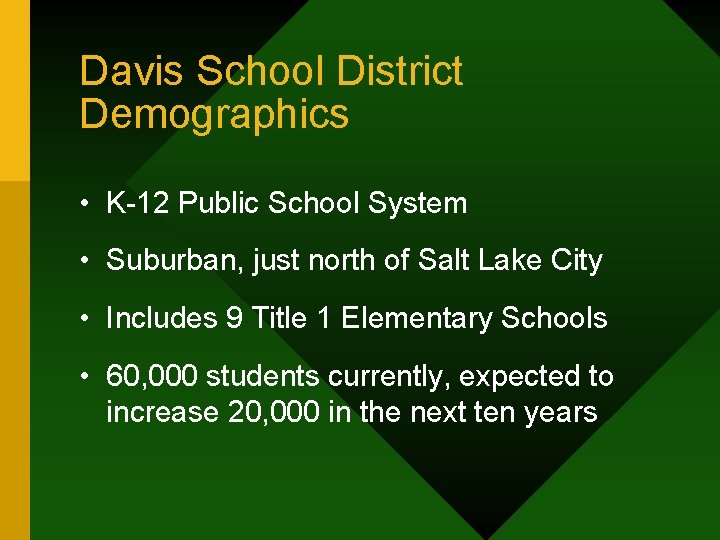
Davis School District Demographics • K-12 Public School System • Suburban, just north of Salt Lake City • Includes 9 Title 1 Elementary Schools • 60, 000 students currently, expected to increase 20, 000 in the next ten years
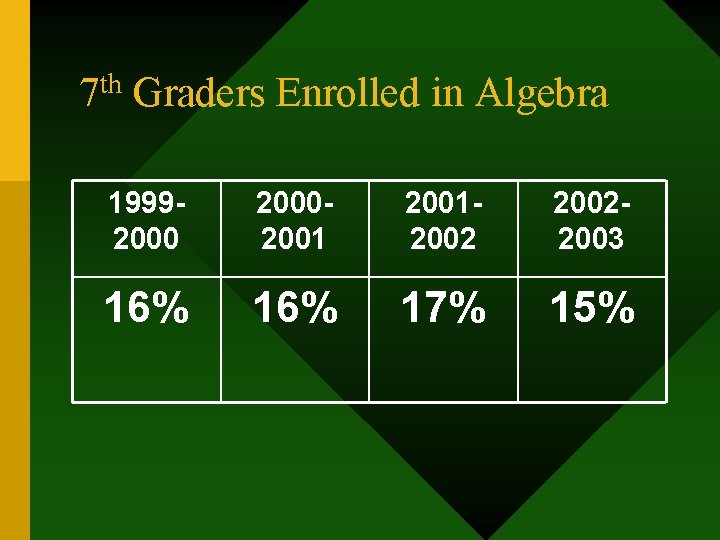
7 th Graders Enrolled in Algebra 19992000200120022003 16% 17% 15%
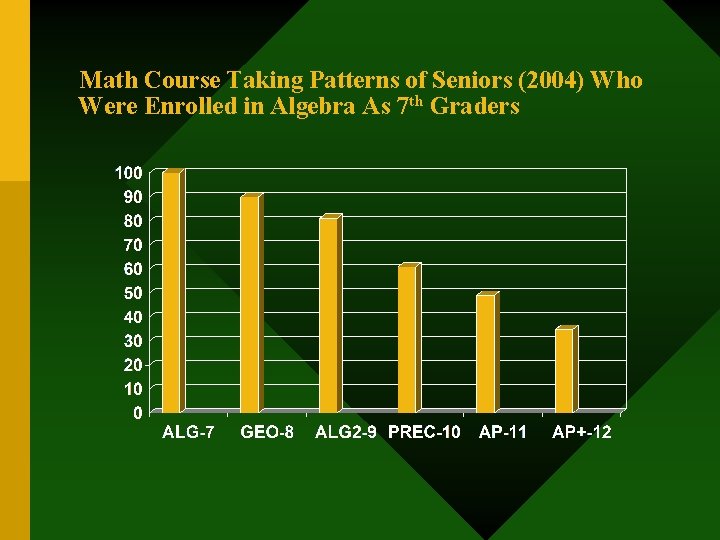
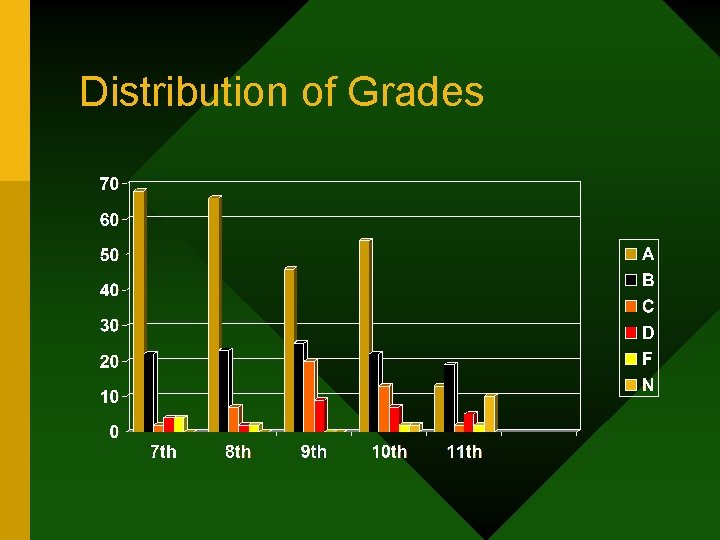
Math Course Taking Patterns of Seniors (2004) Who Were Enrolled in Algebra As 7 th Graders
Distribution of Grades
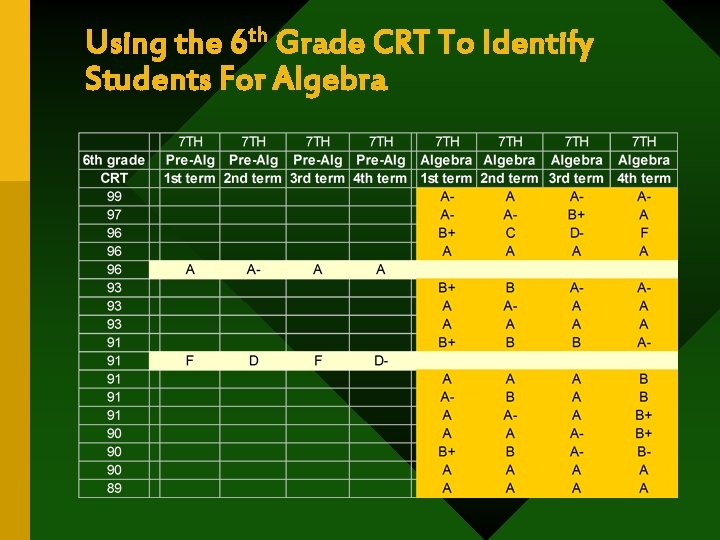
Using the 6 th Grade CRT To Identify Students For Algebra
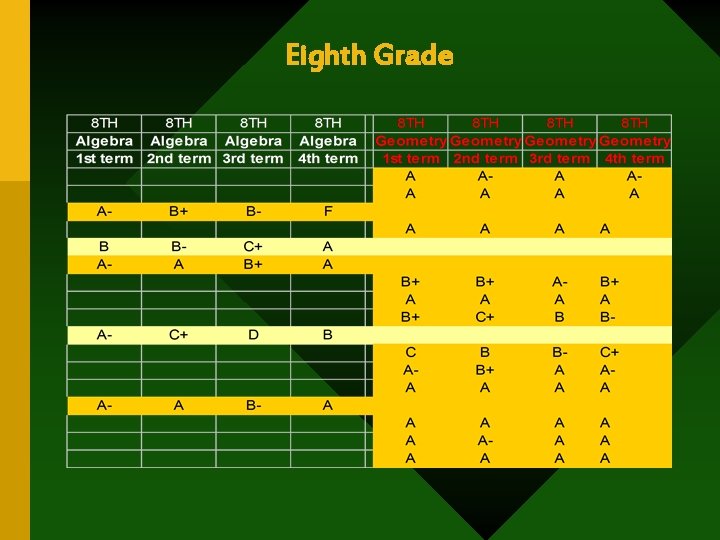
Eighth Grade
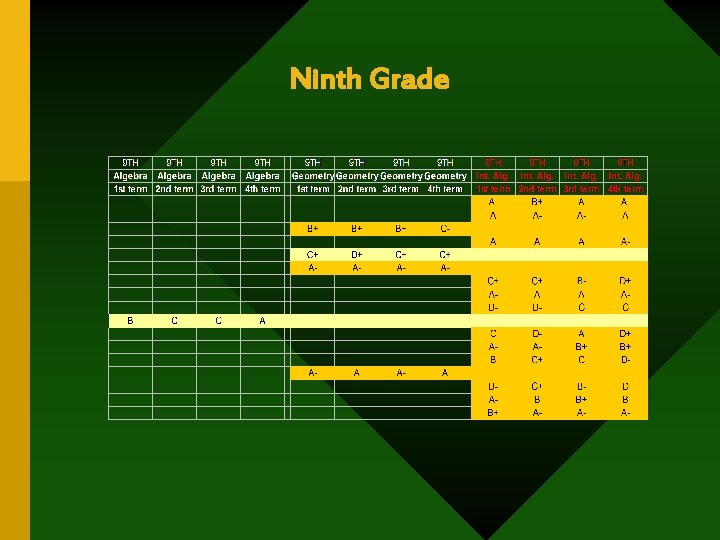
Ninth Grade
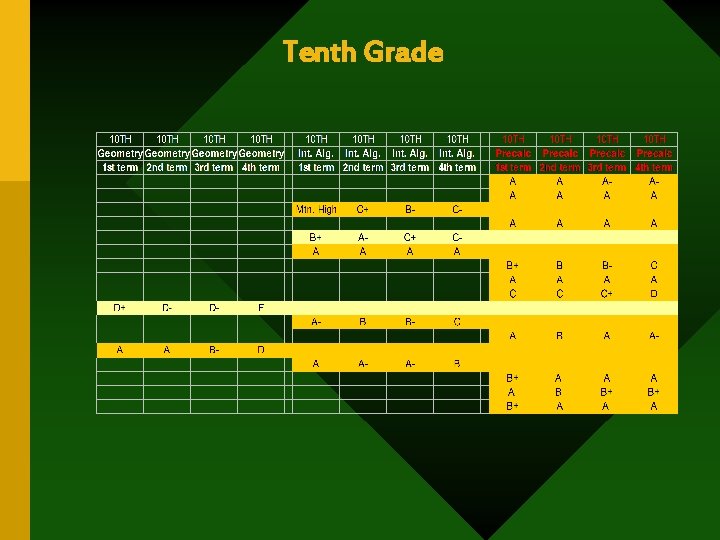
Tenth Grade
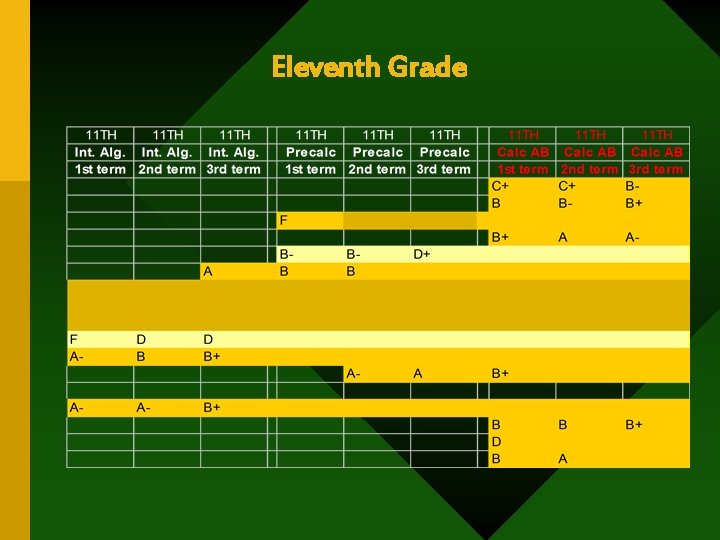
Eleventh Grade
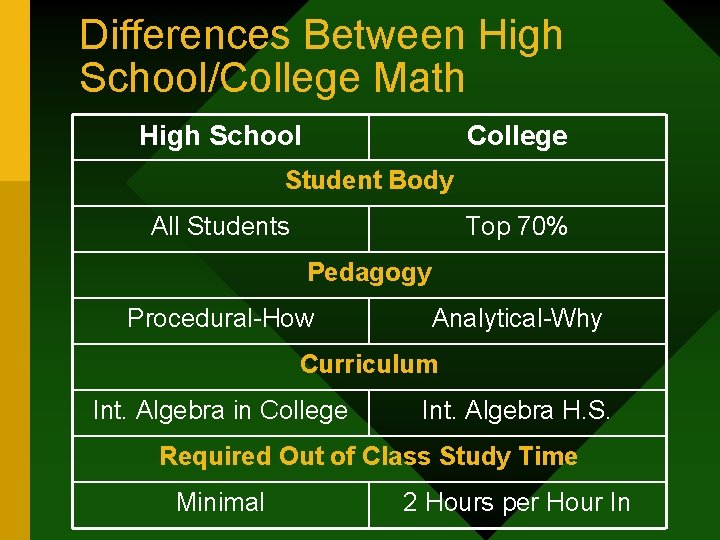
Differences Between High School/College Math High School College Student Body All Students Top 70% Pedagogy Procedural-How Analytical-Why Curriculum Int. Algebra in College Int. Algebra H. S. Required Out of Class Study Time Minimal 2 Hours per Hour In
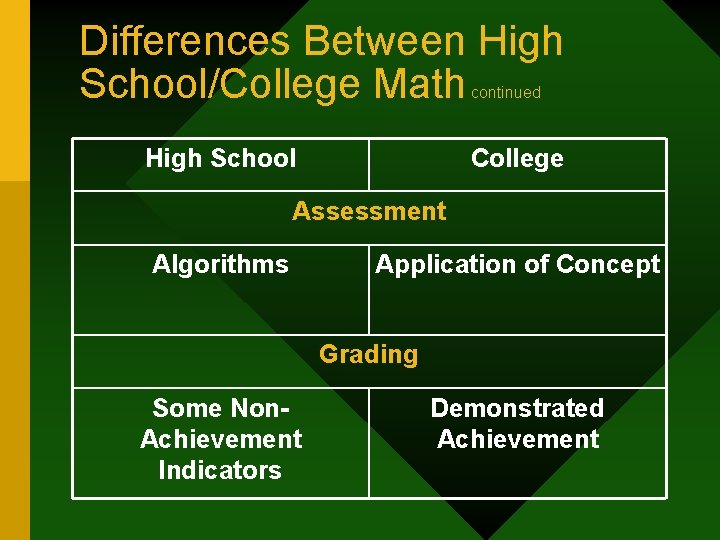
Differences Between High School/College Math continued High School College Assessment Algorithms Application of Concept Grading Some Non. Achievement Indicators Demonstrated Achievement
Typical Barrier to Concurrent Math • Lack of Trust • Trust: collaborate on professional development for teachers to enhance student math readiness
Typical Barrier to Concurrent Math • Need for High Standards • Standards: require content, exams, assignments and grading scale to match college
Concurrent Math Additional Effort by College Faculty Additional Effort: train teachers to use collegiate grading scale and require a grading portfolio review
Solutions continued • Limited contact with students • Limited contact: sponsor visits by collegiate faculty to concurrent classes to meet and work with students
WSU-DSD Collegiate Math Success Pilot Program
2004 -05 • Identify course proficiencies for collegiate math readiness and best instructional techniques • District and college collaborate to provide appropriate professional development on how to teach for collegiate math success • Select concurrent adjunct faculty
2004 -05 continued • Identify entry level collegiate math classes for concurrent credit • Provide information sessions with parents and students regarding collegiate math success factors • Assess participant perception of efforts and teachers’ knowledge and skills
2005 -06 • Reconsider K-12 course content and sequencing of classes • Incorporate collegiate developmental math proficiencies into high school classes • Continue information sessions with students and parents
2005 -06 continued • Implement Pilot Concurrent Math 1050 • Assess student performance and compare with previous data • Assess continuation of program and implement accordingly
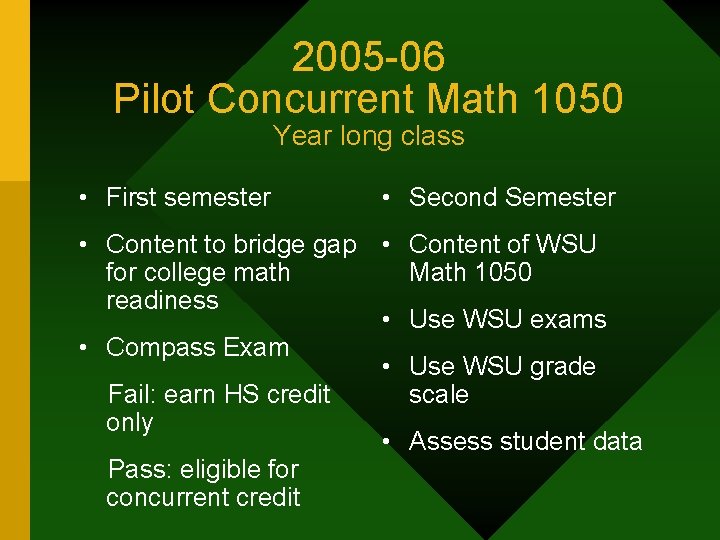
2005 -06 Pilot Concurrent Math 1050 Year long class • First semester • Second Semester • Content to bridge gap • Content of WSU for college math Math 1050 readiness • Use WSU exams • Compass Exam • Use WSU grade Fail: earn HS credit scale only • Assess student data Pass: eligible for concurrent credit
2006 -07 • Conduct longitudinal studies on concurrent students when sequencing to higher level math or entry into WSU or other post-secondary schools • Continue implementation of program and select additional sites • Continue program assessment
WSU Concurrent Enrollment Program and DSD will provide funds and in-kind services to provide for the implementation of the professional development, program assessments and program informational publications.
Lessons Learned • Never assume nor blame your program partners, instead, converse and collaborate • Be willing to challenge the status quo • Clarify with your partners the math expectations for proficiency to better assure student readiness
Lessons Learned continued • Improve the match between secondary and post-secondary pedagogy and math rigor to better meet the students’ needs • Stop the Student Rush: Let students have the time they need to really learn their math basics
Lessons Learned continued • Persistence, Persistence • Finding the right people for partners
Best of Luck to You Thanks for the opportunity to share