
Math Projects to Build Connections Across Subjects Grades
Math Projects to Build Connections Across Subjects Grades 6 -8 Lurline Sweet @sweetmath. rocks https: //sweetmath. rocks
What? Project Based Learning with authentic audience. Integrations: art, architecture, history, contemporary world statistics. How often? Three times a year.
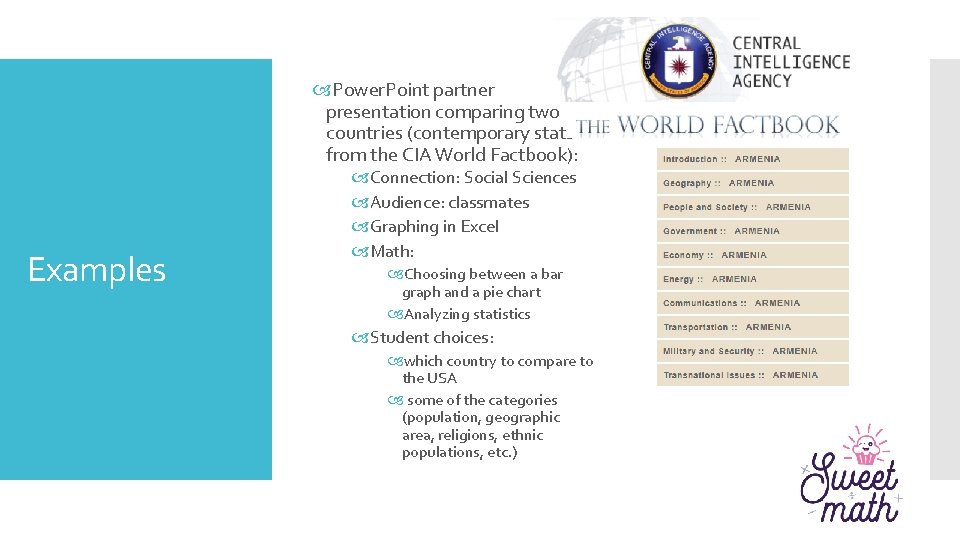
Power. Point partner presentation comparing two countries (contemporary stats from the CIA World Factbook): Examples Connection: Social Sciences Audience: classmates Graphing in Excel Math: Choosing between a bar graph and a pie chart Analyzing statistics Student choices: which country to compare to the USA some of the categories (population, geographic area, religions, ethnic populations, etc. )
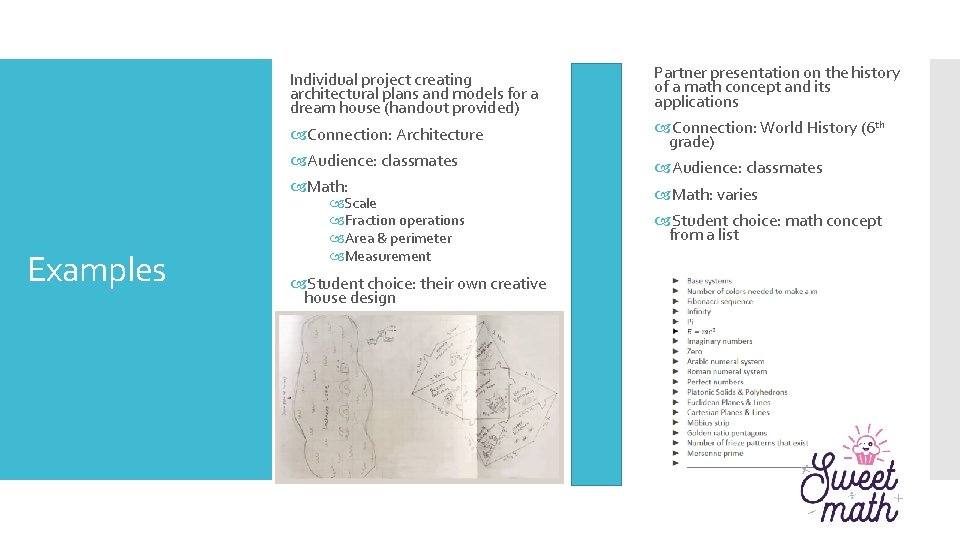
Individual project creating architectural plans and models for a dream house (handout provided) Connection: Architecture Audience: classmates Math: Examples Scale Fraction operations Area & perimeter Measurement Student choice: their own creative house design Partner presentation on the history of a math concept and its applications Connection: World History (6 th grade) Audience: classmates Math: varies Student choice: math concept from a list
Go ahead to the process of creating a project? (Small group work time. ) Audience vote Or Keep looking at example projects?
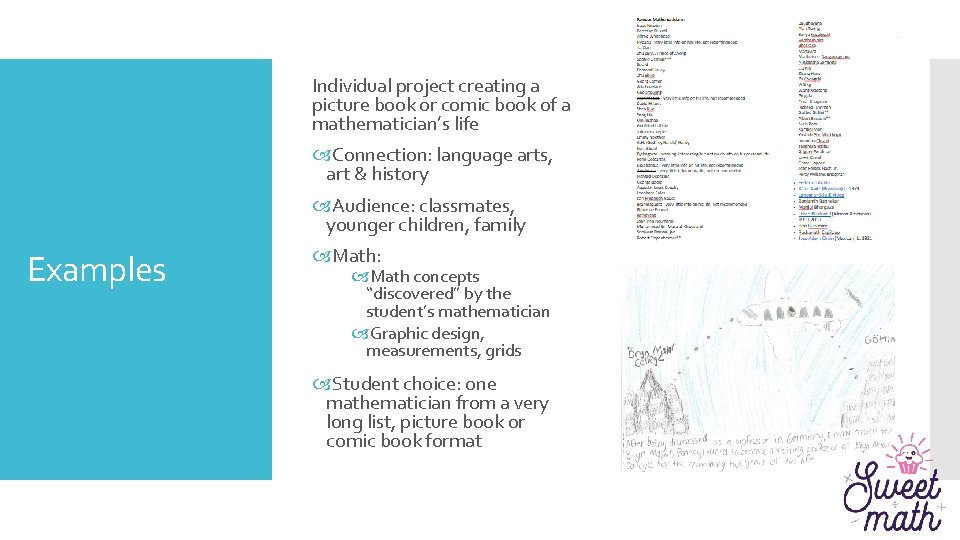
Individual project creating a picture book or comic book of a mathematician’s life Connection: language arts, art & history Audience: classmates, younger children, family Examples Math: Math concepts “discovered” by the student’s mathematician Graphic design, measurements, grids Student choice: one mathematician from a very long list, picture book or comic book format
Small group discussion time Or if you’d rather, group brainstorm. We will walk through the process.
Process One: Connection Tip #1: Ask colleagues at lunch. Unrelated Tip #2: Trimester course for the win. Two: Audience Younger students Classmates Parents Visiting expert in the field Letter to someone (gov’t? )
Three: The Math Process Which skills? How to integrate? Yoga. Four: End Product Once you have an idea, think about an end product you could create for a real audience.
Process Five: Student Choices How will students feel agency? What decisions will they make?
Recommendation: Make the product yourself. Six: Scaffolding & Support Process What do students need? How many lessons? As you make the product: Write down the questions you are asking yourself. What are the phases of the project? Write these down for students on the master assignment. How long does each phase take you (and then adjust for a student)? Write this into your lesson plans. What do you do to structure your own work? Take those structures and make them into graphic organizers.
Process Seven: Feedback Think about feedback during student’s work time, not after the project is over.
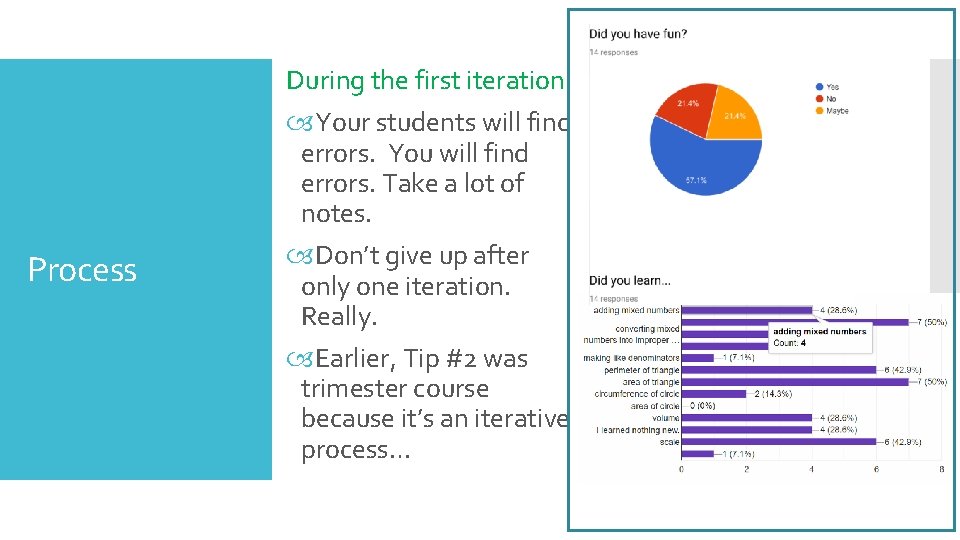
During the first iteration: Process Your students will find errors. You will find errors. Take a lot of notes. Don’t give up after only one iteration. Really. Earlier, Tip #2 was trimester course because it’s an iterative process…
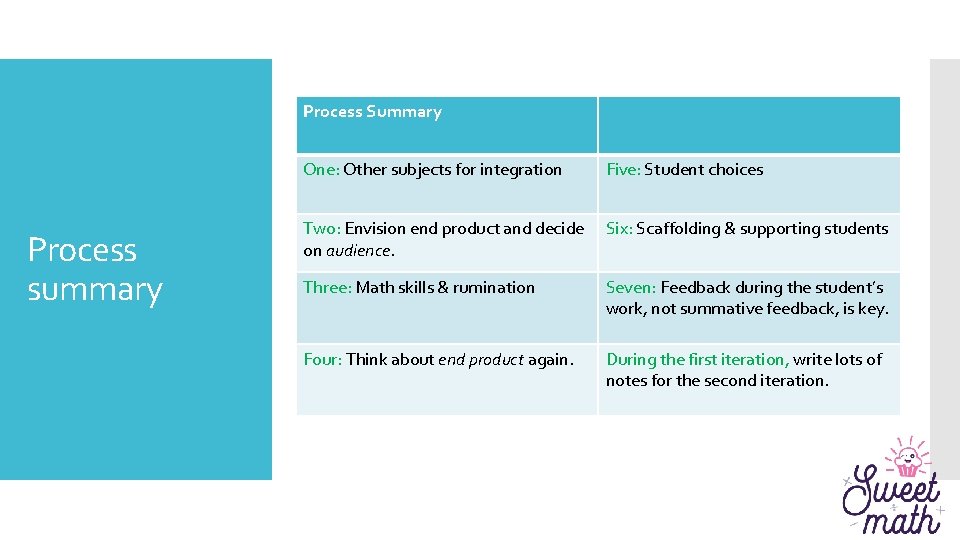
Process Summary Process summary One: Other subjects for integration Five: Student choices Two: Envision end product and decide on audience. Six: Scaffolding & supporting students Three: Math skills & rumination Seven: Feedback during the student’s work, not summative feedback, is key. Four: Think about end product again. During the first iteration, write lots of notes for the second iteration.
• “Not Just White Dude Mathematicians” by Annie Perkins at arbitrarilyclose. com (presented at NCTM Chicago 2017 ) Additional Resources • Educative Assessment: Designing Assessments to Inform and Improve Student Performance by Grant Wiggins • Understanding by Design by Grant Wiggins and Jay Mc. Tighe
Join our mailing list at https: //sweetmath. rocks and get a free sampler of our “Dream House Project. ” Thank you! Follow us @sweetmath. rocks Sweet Math
- Slides: 16