
Math Presentation 101 Angle Relationships Table of contents
Math Presentation 101 Angle Relationships
Table of contents pt 1 ● ● ● ● Vocab (5 -8) Angle(9) Side(10) Congruent Angles(11) Acute Angles(12) Adjacent Angles(13) Angles Bisector(14)
Table of contents pt 2 ● ● ● ● Corresponding Angles(15) Complementary Angles(16) Obtuse Angles(17) Right Angles(18) Straight Angles(19) Supplementary Angles(20) Vertical Angles(21)
Table of Contents pt 3 ● ● Alternate Exterior Angles(22 -23) Interior angles of a triangle(24) similar triangle(25) Angle relationships example (26
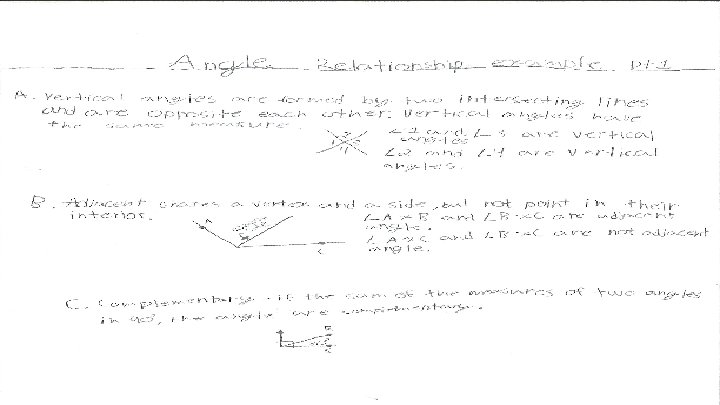
Vocab pt 1 ● angles-an angle is a figure formed by two rays with common end point. ● side- see angle and polygon. ● congruent angles- congruent are angles that has the same measure ● acute angles- an angle with a measure ● adjacent angles- two angles that share a vertex and a side but no point in their interior
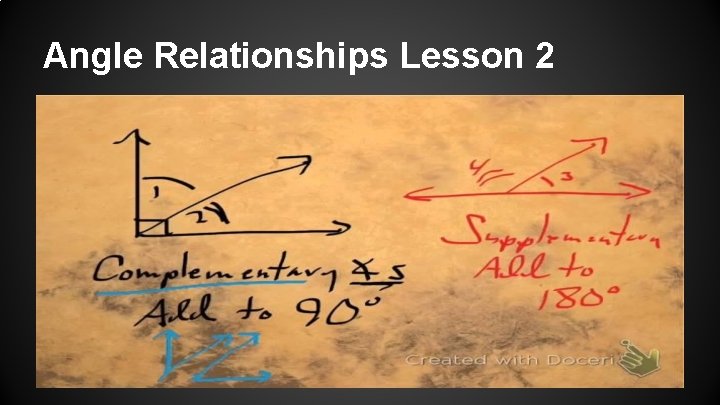
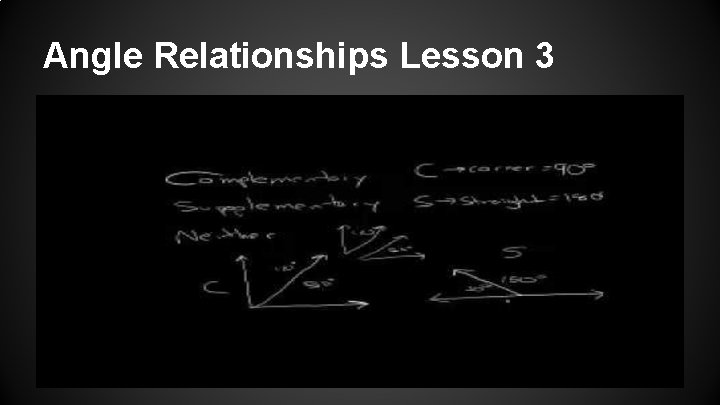
Vocab pt 2 ● Angle bisector- an angle bisector is a ray that divides a given angle into two congruent angles, each half the size of the given angle. ● complementary angles- complementary angles are two angles whose measures add to 90 degrees. ● corresponding angles- are pairs of non-adjacent angles that lie on the same side of a transversal of two lines and in corresponding angles.
Vocab pt 3 ● Obtuse Angles-An Obtuse angle in an angel with a measure greater than 90 degree angles less than 180. ● right angles- A right angle with a measure of 90 degrees. ● Straight angles- is an angle with a measure of 180 degrees.
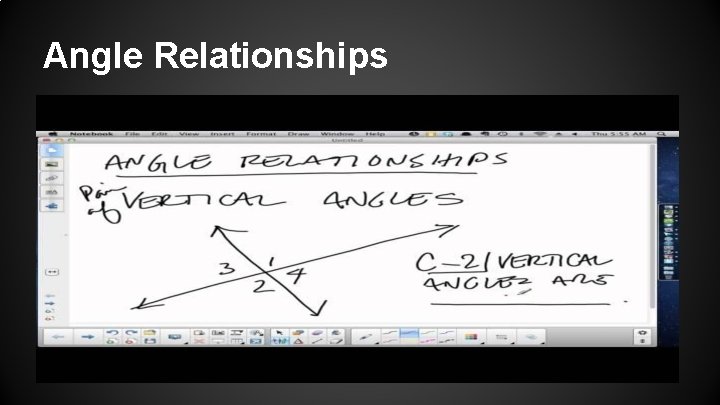
Vocab pt 4 ● Supplementary angles-are two angles whose measure add to 180. ● Vertical angles-are angles formed by two intersecting lines and are opposite each other. vertical angles are congruent
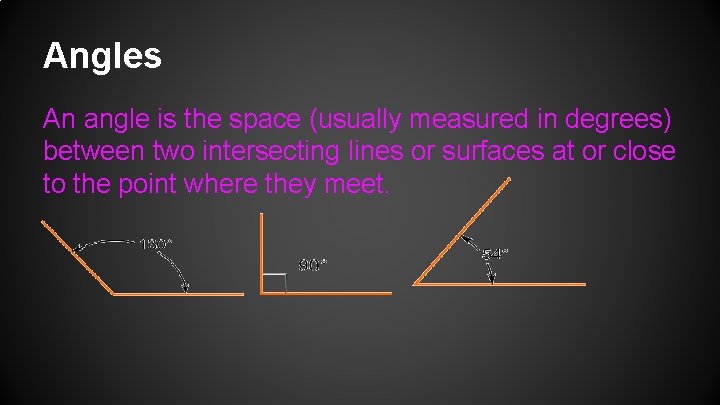
Angles An angle is the space (usually measured in degrees) between two intersecting lines or surfaces at or close to the point where they meet.
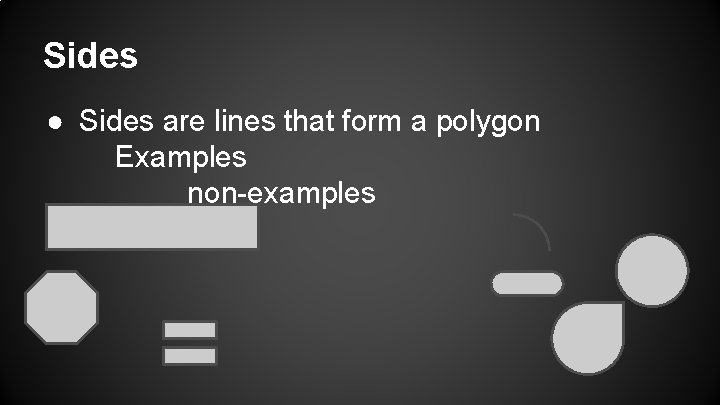
Sides ● Sides are lines that form a polygon Examples non-examples
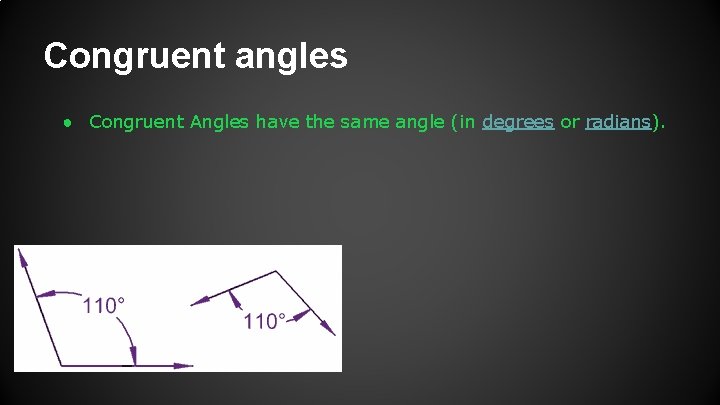
Congruent angles ● Congruent Angles have the same angle (in degrees or radians).
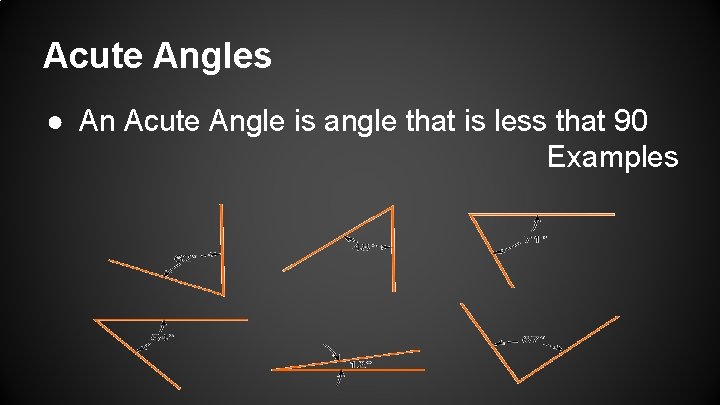
Acute Angles ● An Acute Angle is angle that is less that 90 Examples
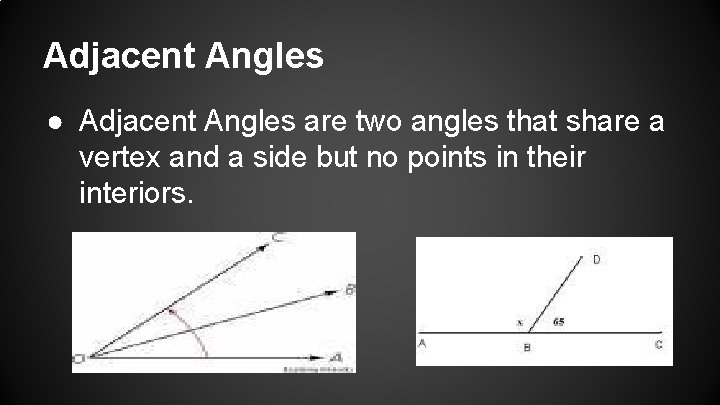
Adjacent Angles ● Adjacent Angles are two angles that share a vertex and a side but no points in their interiors.
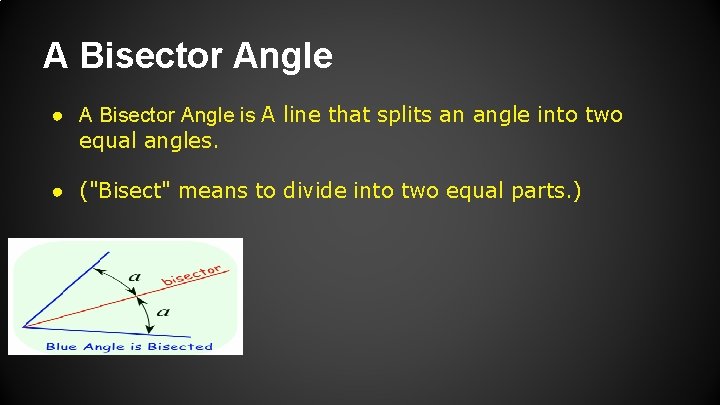
A Bisector Angle ● A Bisector Angle is A line that splits an angle into two equal angles. ● ("Bisect" means to divide into two equal parts. )
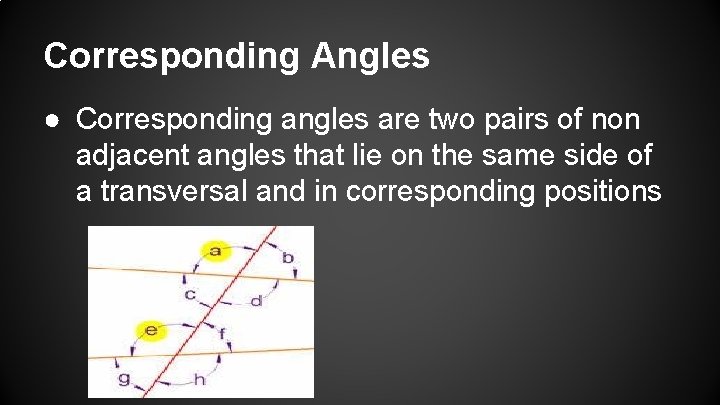
Corresponding Angles ● Corresponding angles are two pairs of non adjacent angles that lie on the same side of a transversal and in corresponding positions
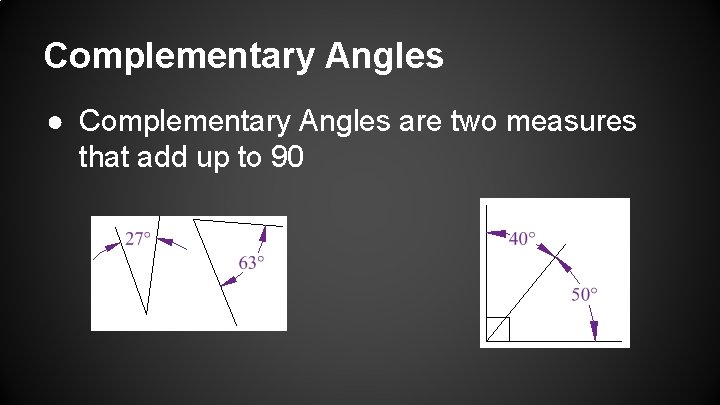
Complementary Angles ● Complementary Angles are two measures that add up to 90
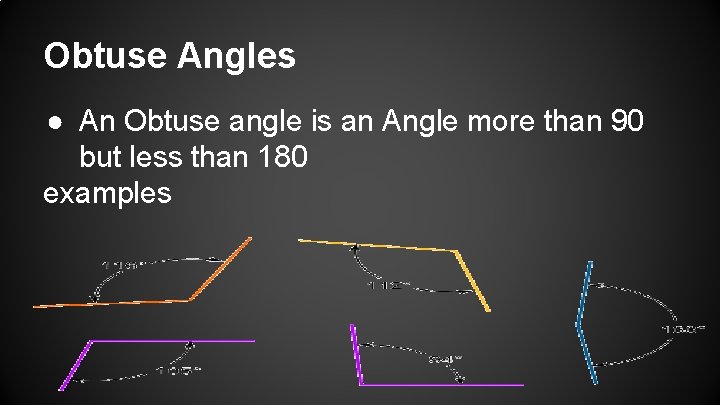
Obtuse Angles ● An Obtuse angle is an Angle more than 90 but less than 180 examples
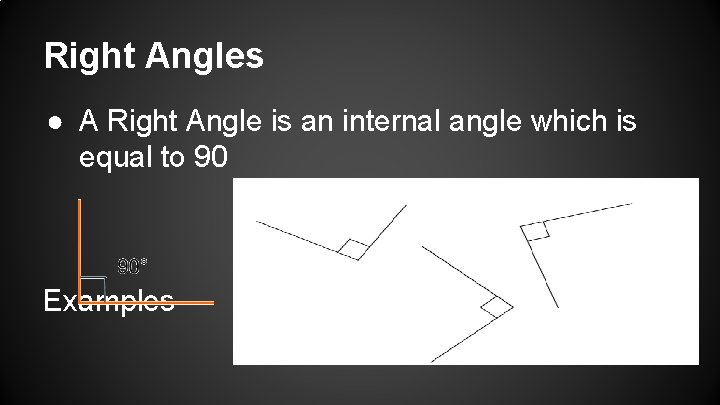
Right Angles ● A Right Angle is an internal angle which is equal to 90 Examples
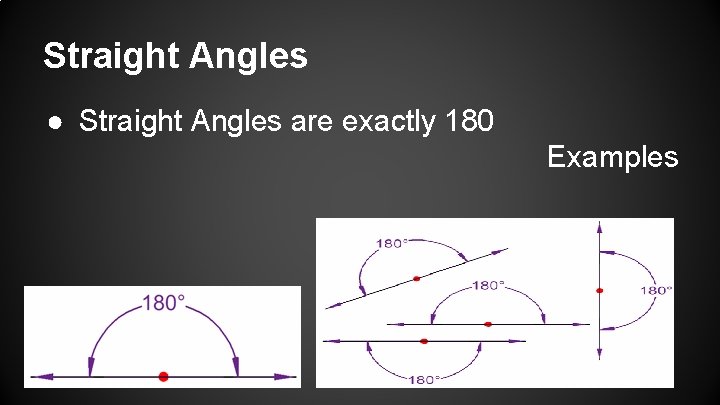
Straight Angles ● Straight Angles are exactly 180 Examples
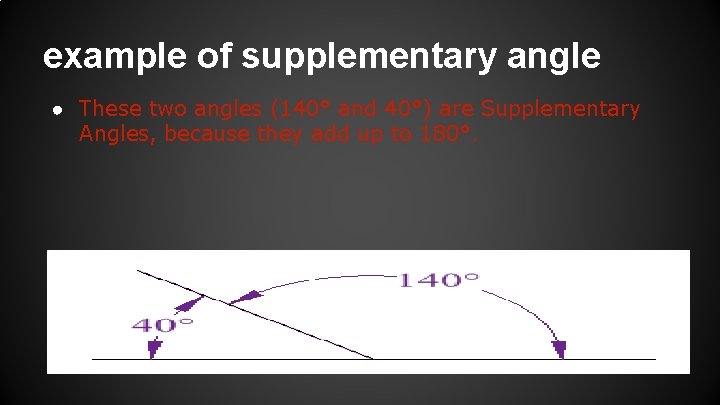
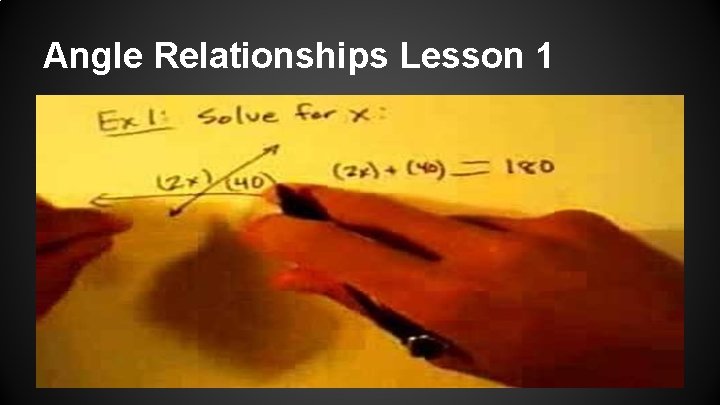
example of supplementary angle ● These two angles (140° and 40°) are Supplementary Angles, because they add up to 180°.
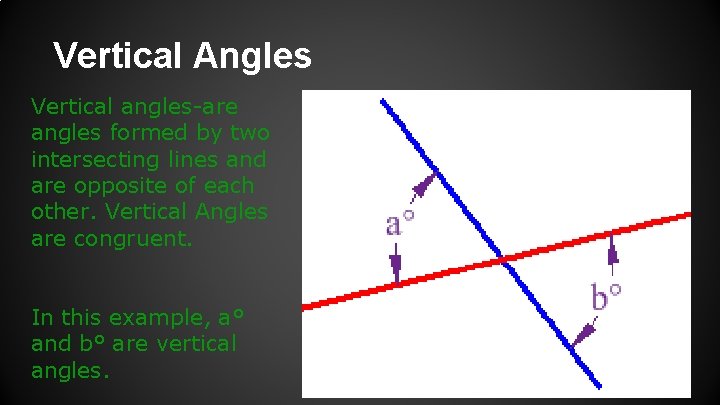
Vertical Angles Vertical angles-are angles formed by two intersecting lines and are opposite of each other. Vertical Angles are congruent. In this example, a° and b° are vertical angles.
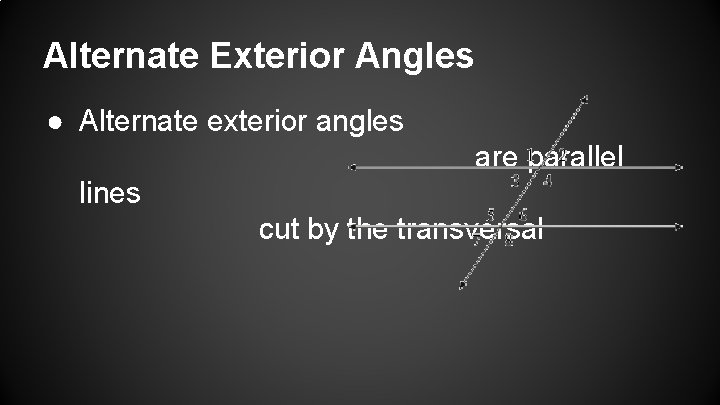
Alternate Exterior Angles ● Alternate exterior angles are parallel lines cut by the transversal
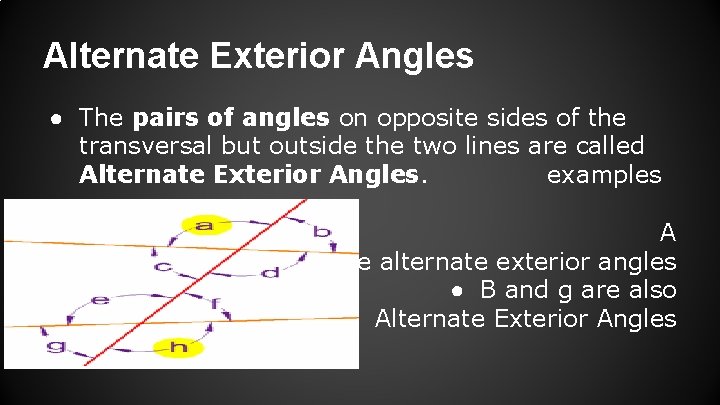
Alternate Exterior Angles ● The pairs of angles on opposite sides of the transversal but outside the two lines are called Alternate Exterior Angles. examples A and H are alternate exterior angles ● B and g are also Alternate Exterior Angles
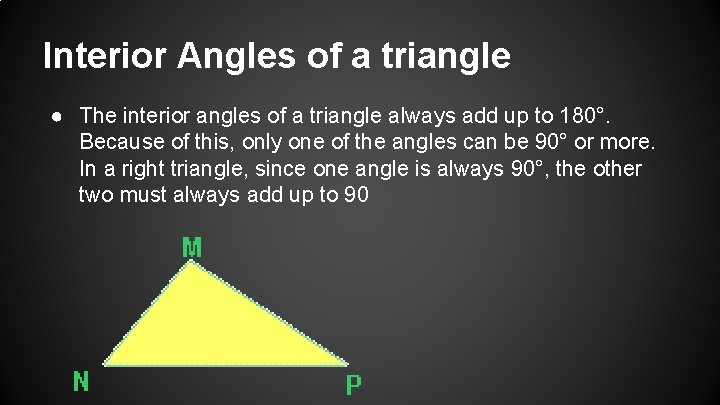
Interior Angles of a triangle ● The interior angles of a triangle always add up to 180°. Because of this, only one of the angles can be 90° or more. In a right triangle, since one angle is always 90°, the other two must always add up to 90
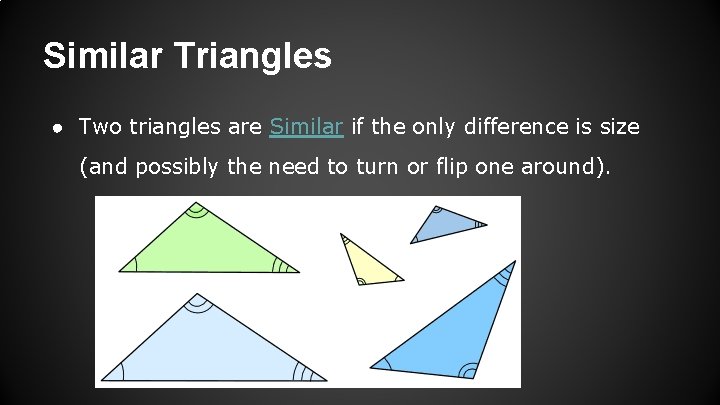
Similar Triangles ● Two triangles are Similar if the only difference is size (and possibly the need to turn or flip one around).
Angle Relationships
Angle Relationships Lesson 1
Angle Relationships Lesson 2
Angle Relationships Lesson 3
- Slides: 30