
Math in Video Games Competitive rankings and Balancing

Math in Video Games Competitive rankings and Balancing
Outline How math can be used in video games Two Specific Examples: Competitive Ranking in Overwatch Game Balancing in Breath of the Wild

Overwatch “Overwatch is a team-based multiplayer first-person shooter developed and published by Blizzard Entertainment” “Team-based” – games are 6 v. 6 “Multiplayer” – every other opponent is another player online “first-person” – the perspective of the game Blizzard – the company behind Overwatch There are currently 32 characters thought there are new characters added around once or twice a year

Competitive Play in Overwatch Part of Overwatch’s success has been in it’s highly successful competitive play This is where math comes into play Split into “Seasons” 10 placement matches at the start of each season Ranking system based on skill/win percentage

Best known for it’s use in professional chess The Elo Ranking System Developed for by the Hungarian. American physicist Arpad Elo Players are assigned a rating that is a numerical value Player with higher ranking is expected to win over player with lower rank Expected Score: the difference between the rankings of two players We will consider this the likelihood of winning Ranks adjusted after game Doesn’t directly measure a players skill

Math behind the Elo System Expected Score = Probability of winning + ½ (Probability of Drawing) Drawing = the game is a tie Player A has ranking R_a and Player B has ranking R_b then Player A’s expected score (E_a) is as follows: Which happens to look very similar to the Logistic Function:
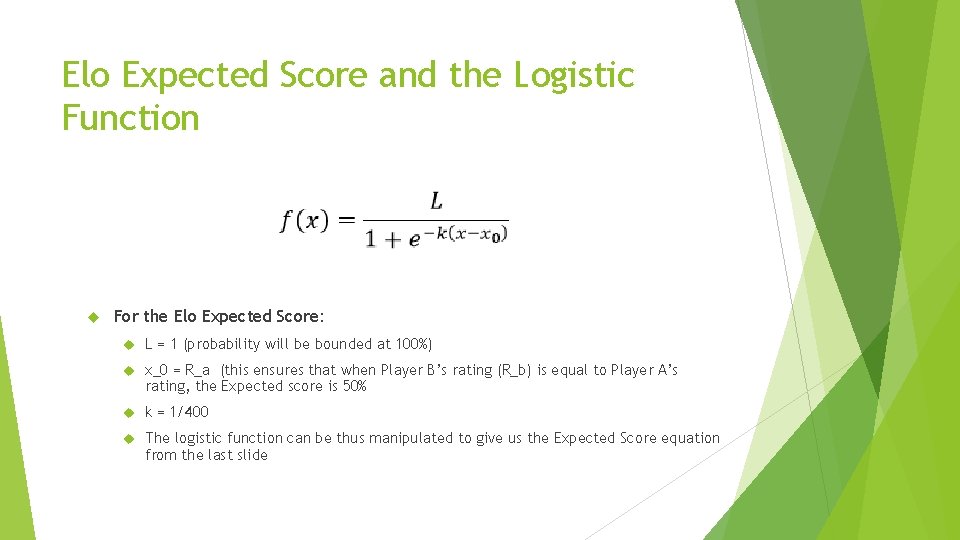
Elo Expected Score and the Logistic Function For the Elo Expected Score: L = 1 (probability will be bounded at 100%) x_0 = R_a (this ensures that when Player B’s rating (R_b) is equal to Player A’s rating, the Expected score is 50% k = 1/400 The logistic function can be thus manipulated to give us the Expected Score equation from the last slide
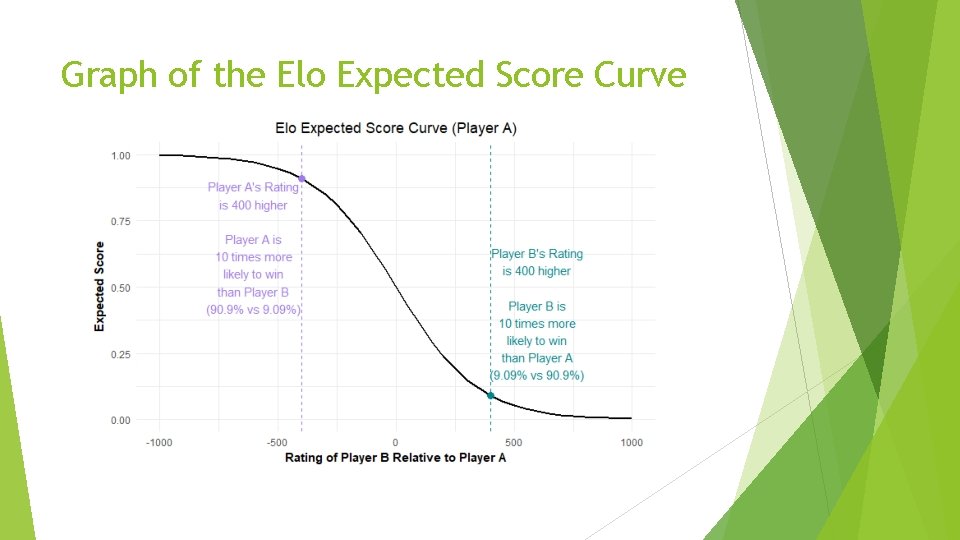
Graph of the Elo Expected Score Curve
Broadly, Competitive Overwatch functions as below: Back to Overwatch Each player plays 10 games at the beginning of the Season called Placement Matches After these games, they are assigned a numerical rating from 0 to 5000 This number is called a player’s SR or Skill Rating The higher the SR – the better the player A ranked match begins once two suitable teams are formed After the game is finished, the system adjusts the SR of players up or down depending on the outcome of the game – no change for a tie
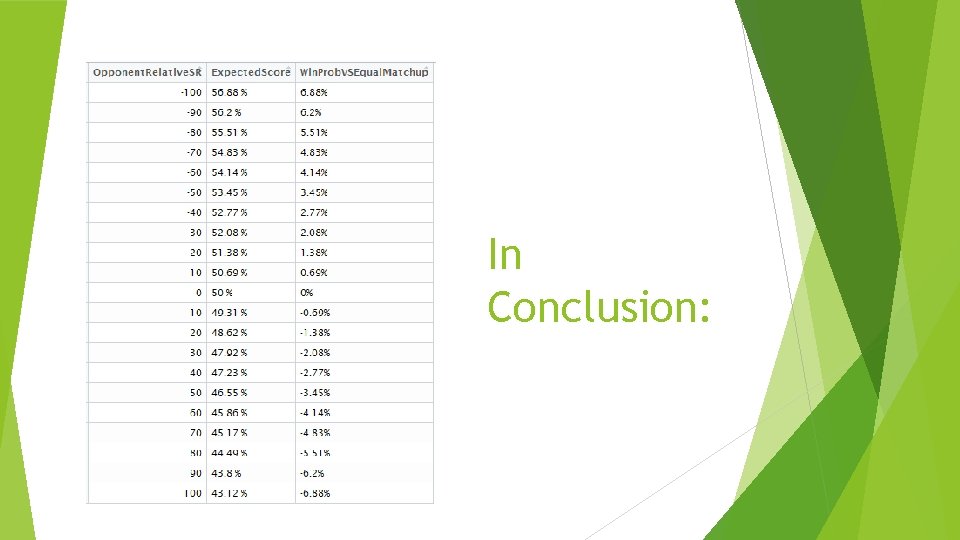
In Conclusion:

Breath of the Wild Single Player, Open-world style action-adventure game Newest installment of the Legend of Zelda franchise
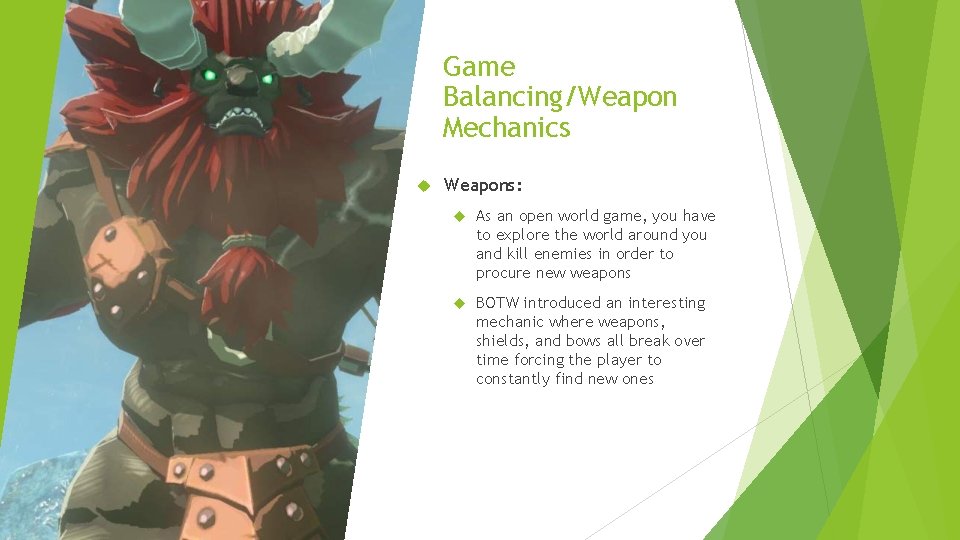
Game Balancing/Weapon Mechanics Weapons: As an open world game, you have to explore the world around you and kill enemies in order to procure new weapons BOTW introduced an interesting mechanic where weapons, shields, and bows all break over time forcing the player to constantly find new ones
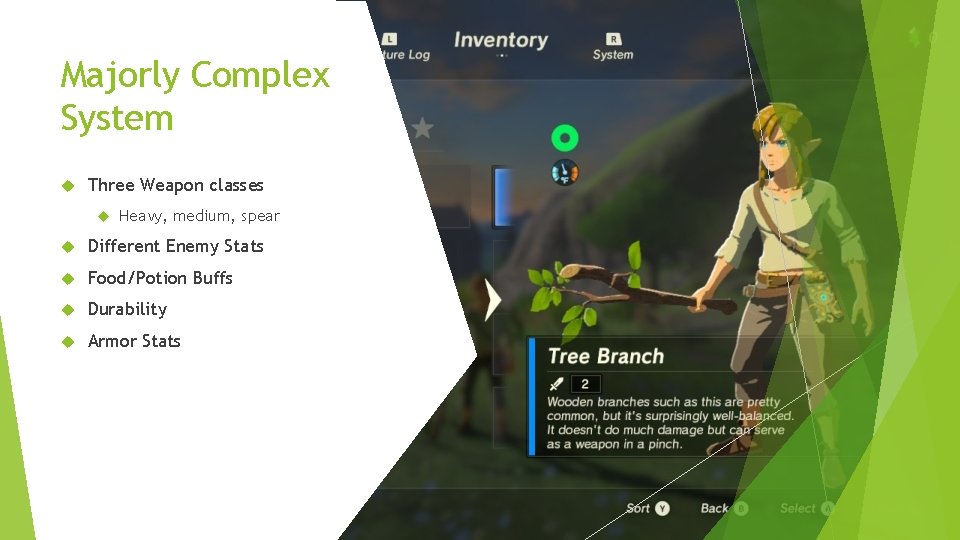
Majorly Complex System Three Weapon classes Heavy, medium, spear Different Enemy Stats Food/Potion Buffs Durability Armor Stats
Small Example with Shield Durability A: enemy + weapon attack stats G: shield guard stat D: shield durability stat P: durability points taken away from the shield per hit H: number of hits to the shield Rule 1: If A <= G + 10, then the shield breaks when H = D Rule 2: If A > G + 10, then the shield breaks when H >= D/P. Then the following table can determine P
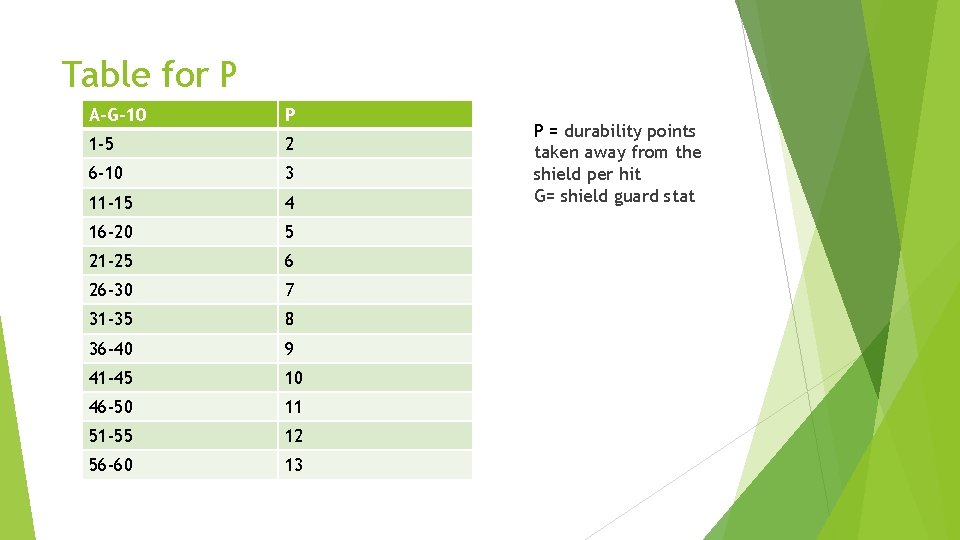
Table for P A-G-10 P 1 -5 2 6 -10 3 11 -15 4 16 -20 5 21 -25 6 26 -30 7 31 -35 8 36 -40 9 41 -45 10 46 -50 11 51 -55 12 56 -60 13 P = durability points taken away from the shield per hit G= shield guard stat


Sources https: //www. pcgamesn. com/overwatch/ranks-explained-how-to-get-ranked https: //towardsdatascience. com/the-math-behind-your-competitive-overwatchmatch-a 5184 fc 5 a 50 f? gi=877 e 68 fb 1895 https: //gamefaqs. gamespot. com/switch/189707 -the-legend-of-zelda-breath-ofthe-wild/faqs/75488 https: //zelda. gamepedia. com/Weapon https: //www. forbes. com/sites/quora/2016/10/21/this-is-the-math-behind-supermario/#45 cc 691 c 2154
- Slides: 17