
Math Education in the US Still Crazy After









- Slides: 62
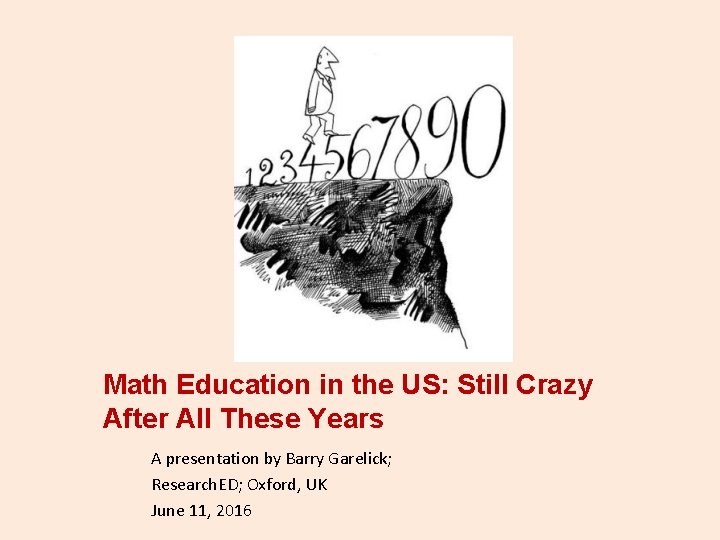
Math Education in the US: Still Crazy After All These Years A presentation by Barry Garelick; Research. ED; Oxford, UK June 11, 2016
Barry Garelick: • Currently on a second career as a math teacher, having recently retired from the federal government. • Majored in math at University of Michigan • Fully certified to teach math in California. • For the last 4 years has been teaching math • Researched math education during a 6 month assignment to a US Senator in Washington DC • Over the past 10 years, has written several books, and articles about math education focusing on the evidence behind effective math instruction, which have appeared in the Atlantic, Education Next, and AMS Notices.
• Math topics from day to day aren’t dependent on kids mastering a previous lesson
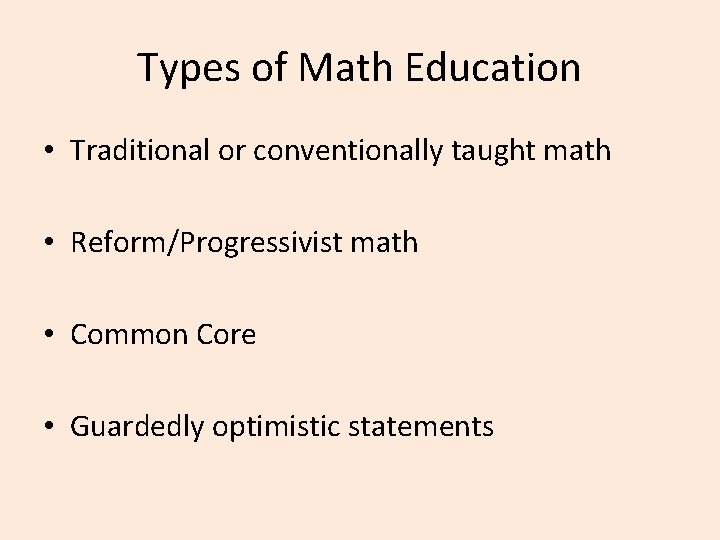
Types of Math Education • Traditional or conventionally taught math • Reform/Progressivist math • Common Core • Guardedly optimistic statements
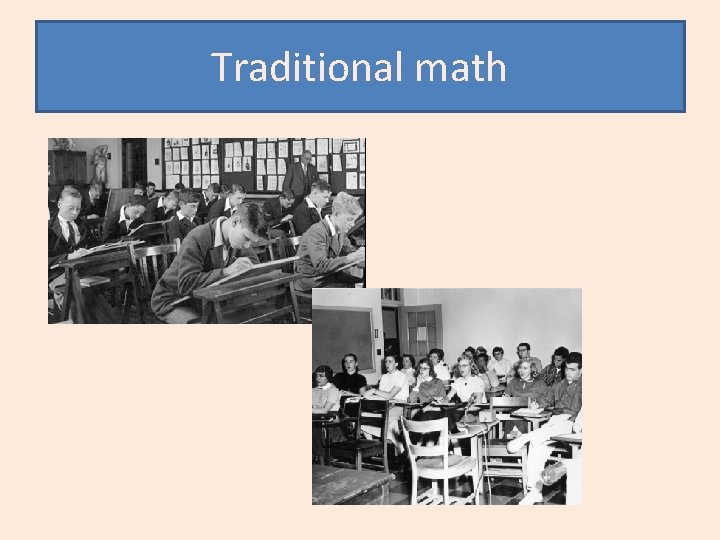
Traditional math
General features of traditionally taught math • Logical sequence • Memorization • Mastery • Explicit/direct instruction • “I do, we do, you do” approach
How people describe traditional math • Rote memorization; no understanding • Teacher lectures/does all the talking. • Students can do math, but do not know math. • Does not teach students critical thinking • Does not meet the demands of the 21 st century.
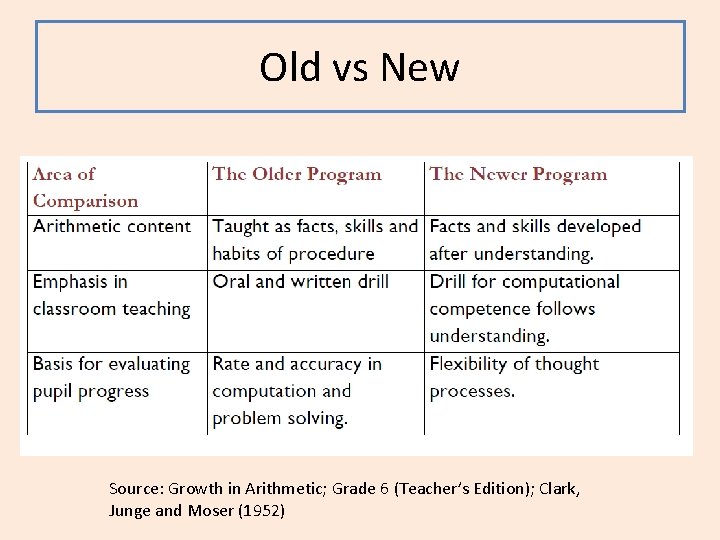
Old vs New Source: Growth in Arithmetic; Grade 6 (Teacher’s Edition); Clark, Junge and Moser (1952)
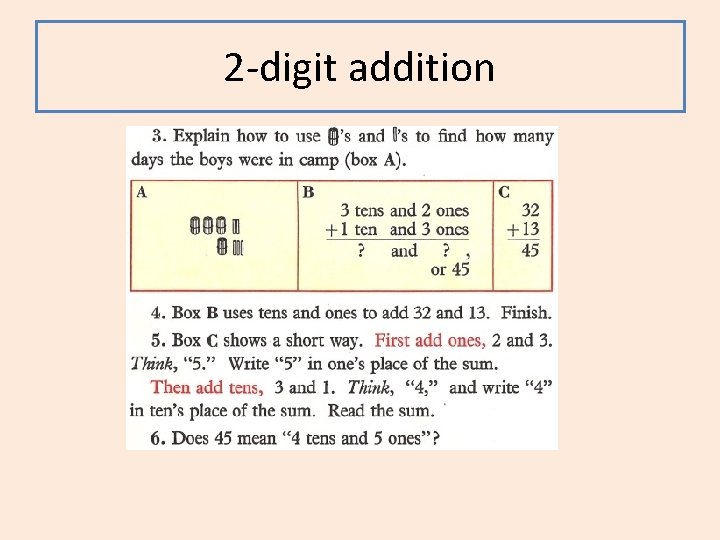
2 -digit addition
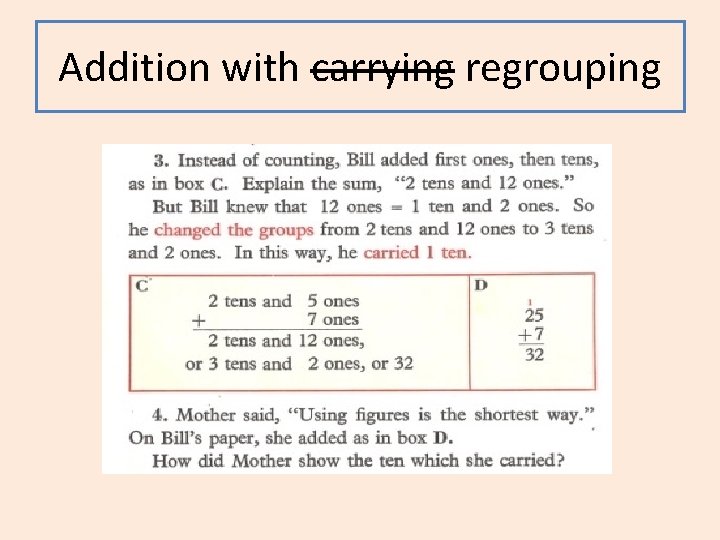
Addition with carrying regrouping
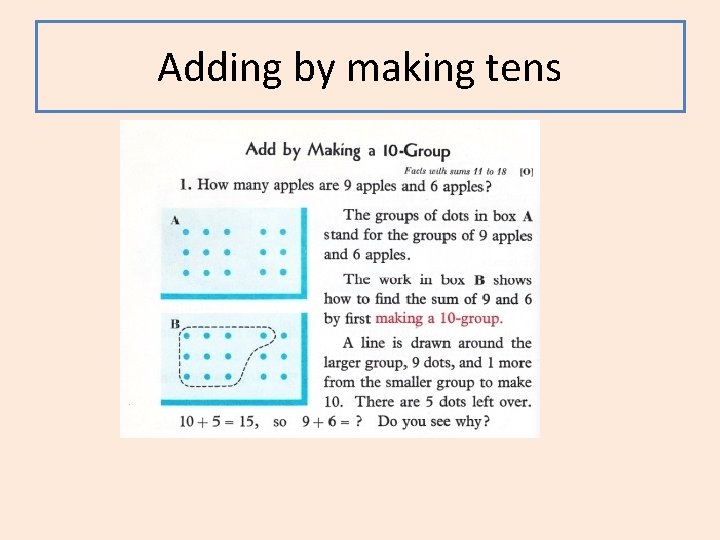
Adding by making tens
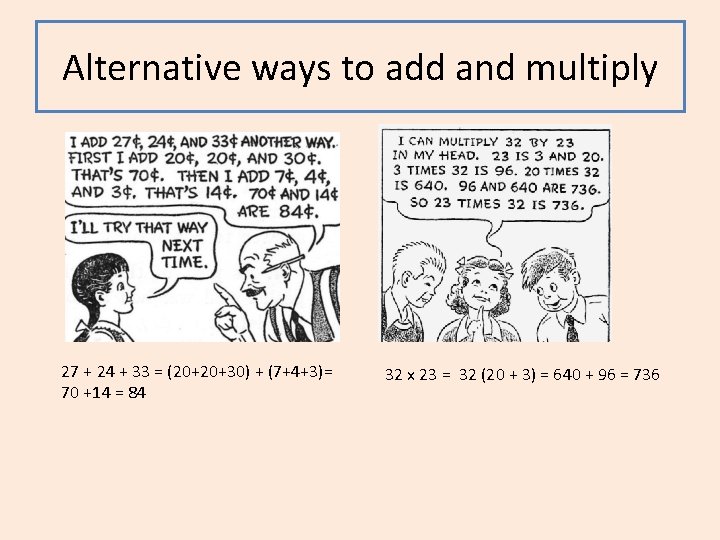
Alternative ways to add and multiply 27 + 24 + 33 = (20+20+30) + (7+4+3)= 70 +14 = 84 32 x 23 = 32 (20 + 3) = 640 + 96 = 736
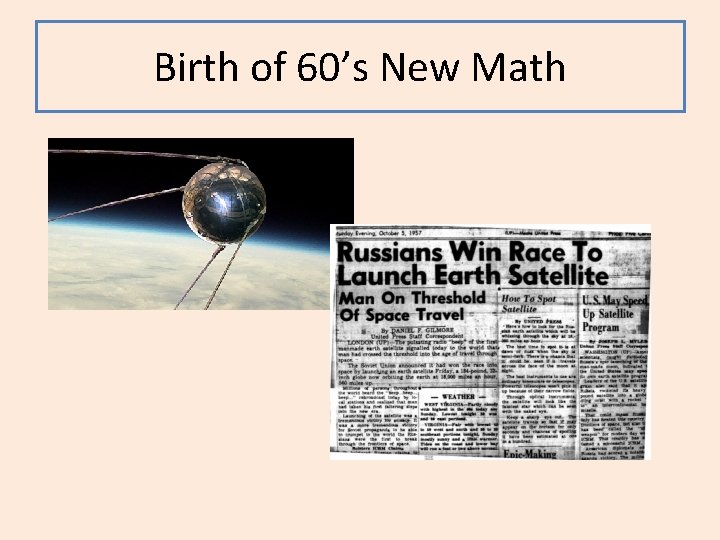
Birth of 60’s New Math
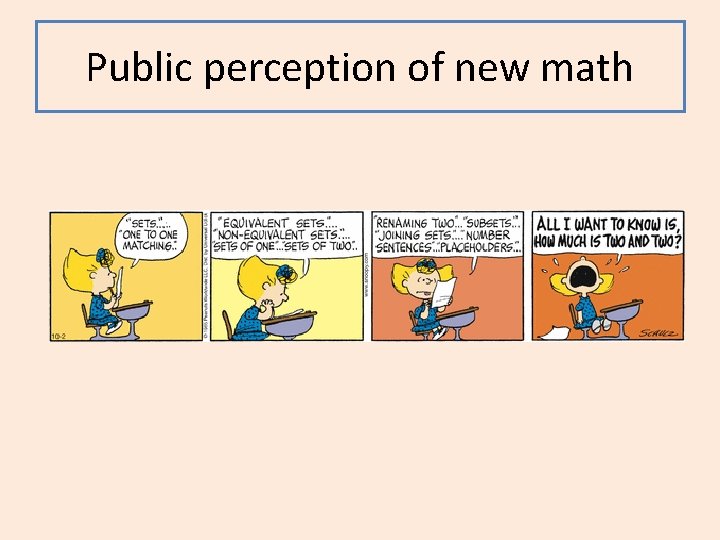
Public perception of new math
“A whole new way to teach math. ”
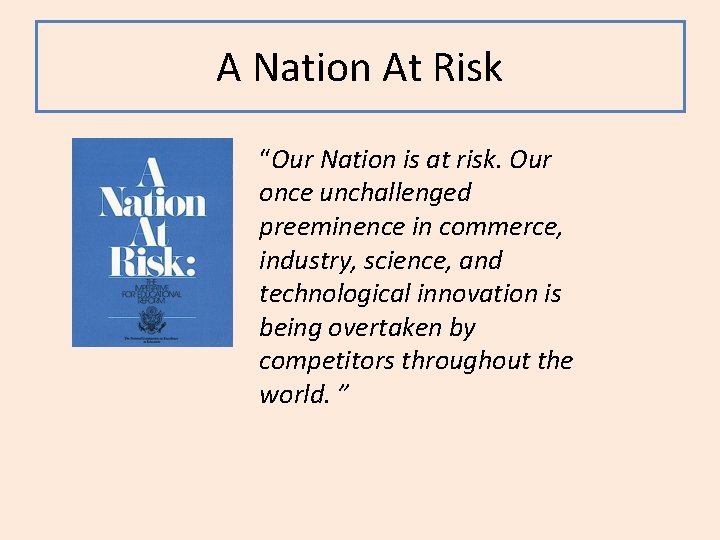
A Nation At Risk “Our Nation is at risk. Our once unchallenged preeminence in commerce, industry, science, and technological innovation is being overtaken by competitors throughout the world. ”
Reform/Progressive Math
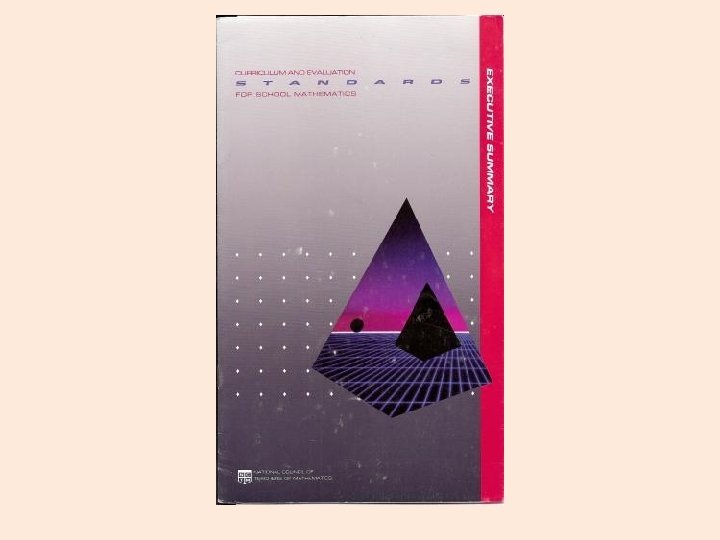
Key provisions of NCTM’s standards • Emphasized the use of calculators in all grades. • Decreased attention to: – “complex paper-and-pencil computations, ” – “long division, ” – “paper-and-pencil fraction computation, ” – “rote memorization of rules, ” – “direct instruction/whole class teaching”
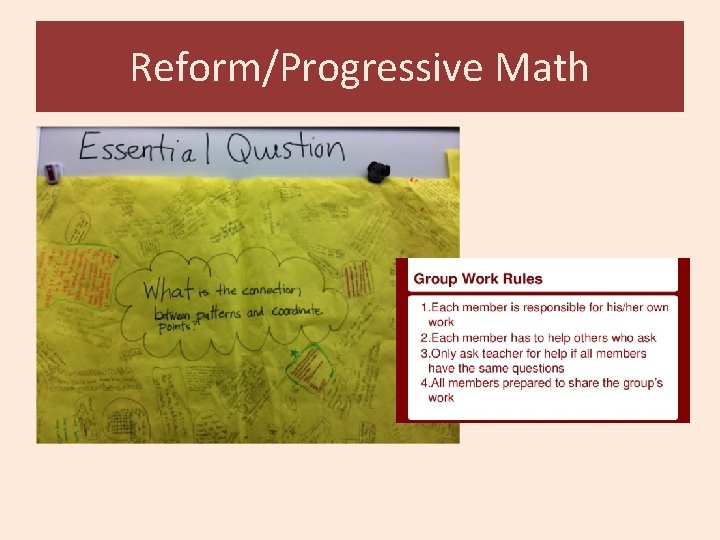
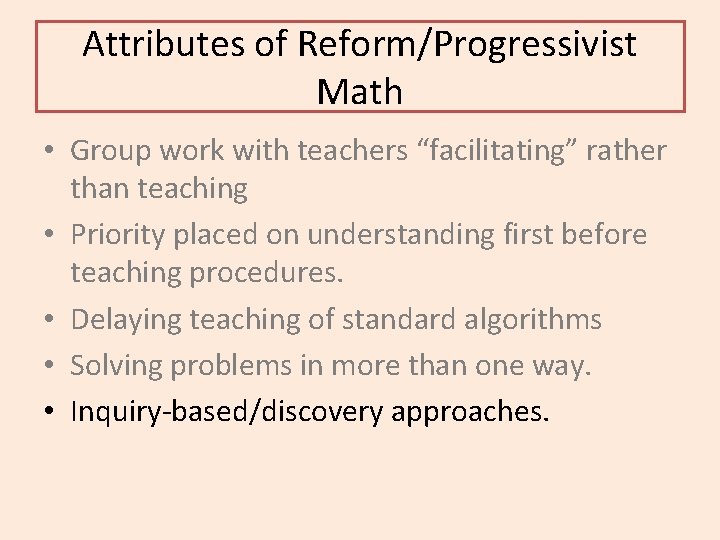
Attributes of Reform/Progressivist Math • Group work with teachers “facilitating” rather than teaching
Attributes of Reform/Progressivist Math • Group work with teachers “facilitating” rather than teaching • Priority placed on understanding first before teaching procedures.
Attributes of Reform/Progressivist Math • Group work with teachers “facilitating” rather than teaching • Priority placed on understanding first before teaching procedures. • Delaying teaching of standard algorithms
Attributes of Reform/Progressivist Math • Group work with teachers “facilitating” rather than teaching • Priority placed on understanding first before teaching procedures. • Delaying teaching of standard algorithms • Solving problems in more than one way.
Attributes of Reform/Progressivist Math • Group work with teachers “facilitating” rather than teaching • Priority placed on understanding first before teaching procedures. • Delaying teaching of standard algorithms • Solving problems in more than one way. • Inquiry-based/discovery approaches.
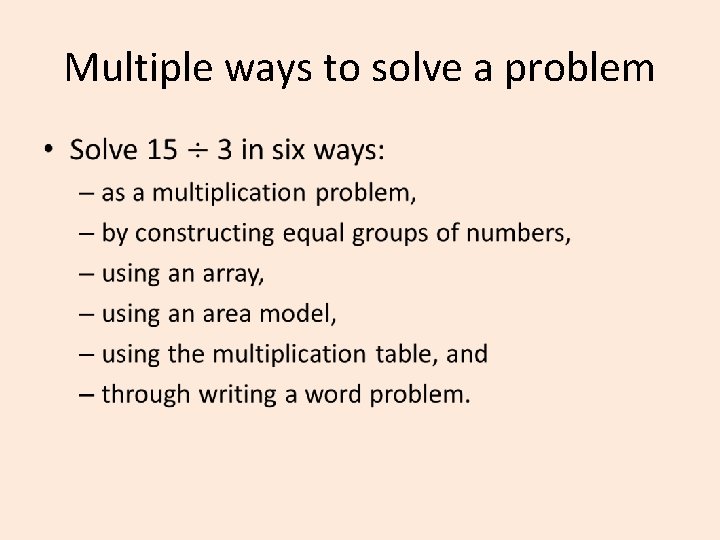
Multiple ways to solve a problem •
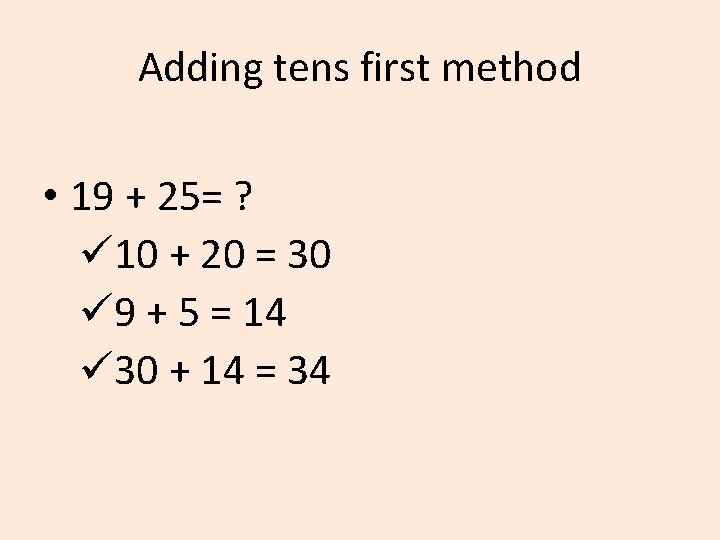
Adding tens first method • 19 + 25= ? ü 10 + 20 = 30 ü 9 + 5 = 14 ü 30 + 14 = 34
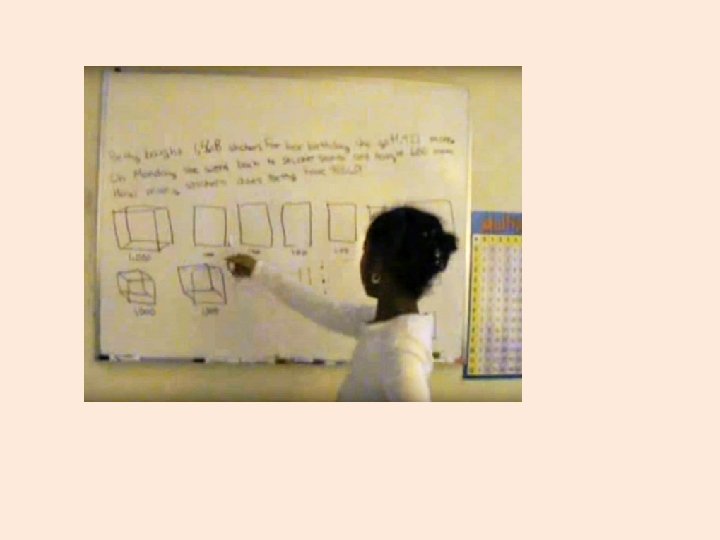
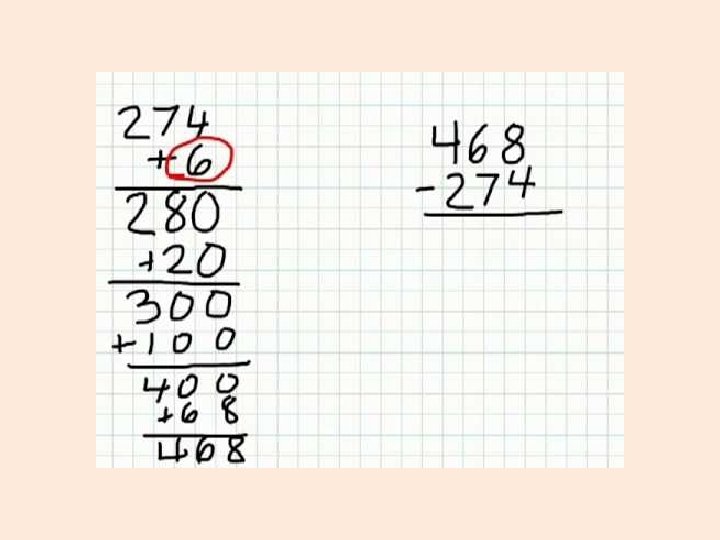
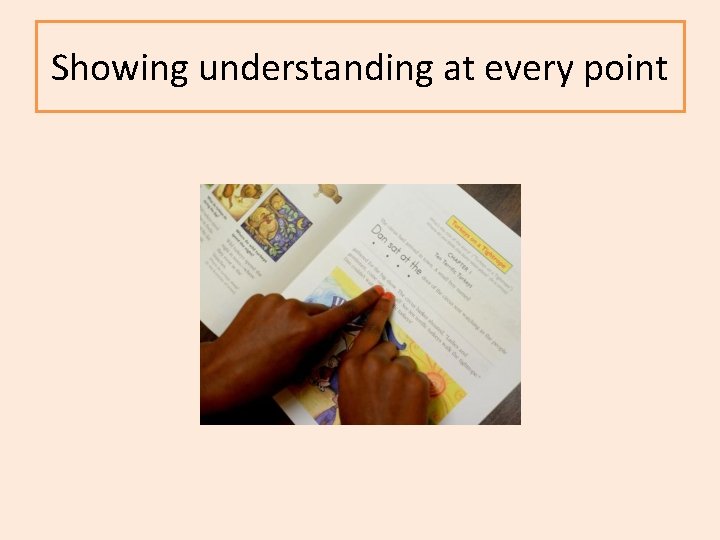
Showing understanding at every point
The Holy Grail of “Problem Solving” • Exercises vs Problems
The Holy Grail of “Problem Solving” • Exercises vs Problems • Worked initial examples held in disdain
The Holy Grail of “Problem Solving” • Exercises vs Problems • Worked initial examples held in disdain • Approached as top-down process
The Holy Grail of “Problem Solving” • Exercises vs Problems • Worked initial examples held in disdain • Approached as top-down process • Just-in-time basis to problem solving
Common core
“These Standards do not dictate curriculum or teaching methods. ”
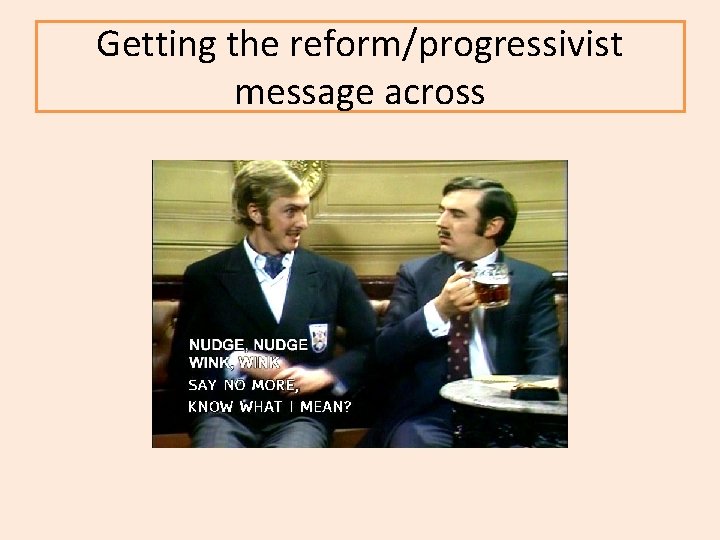
Getting the reform/progressivist message across
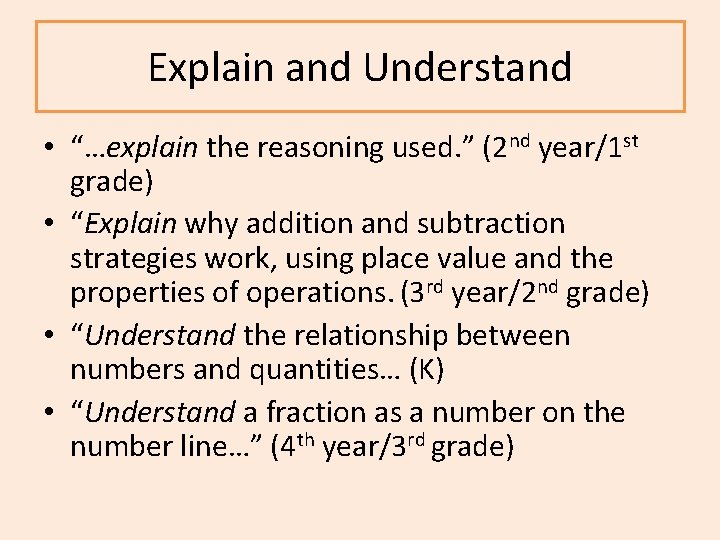
Explain and Understand • “…explain the reasoning used. ” (2 nd year/1 st grade) • “Explain why addition and subtraction strategies work, using place value and the properties of operations. (3 rd year/2 nd grade) • “Understand the relationship between numbers and quantities… (K) • “Understand a fraction as a number on the number line…” (4 th year/3 rd grade)
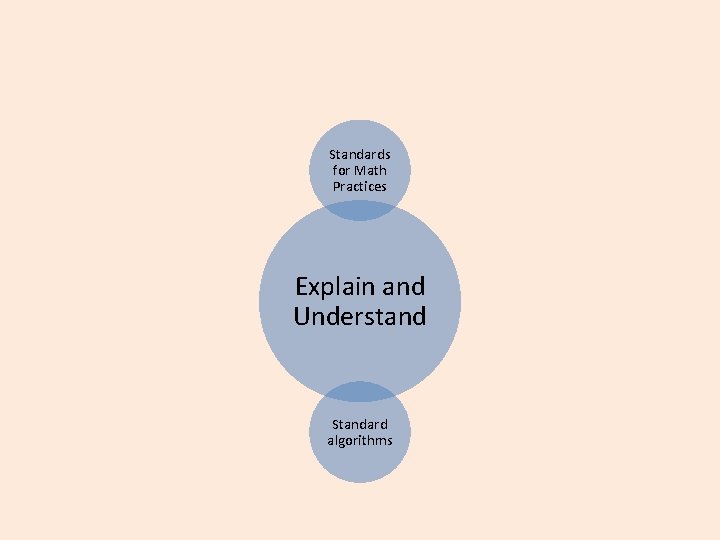
Standards for Math Practices Explain and Understand Standard algorithms
What are the Standards for Math Practice? • Eight practices that – 1) supposedly embody the work habits and general mode of thought of mathematicians, and – 2) were defined largely by non-mathematicians.
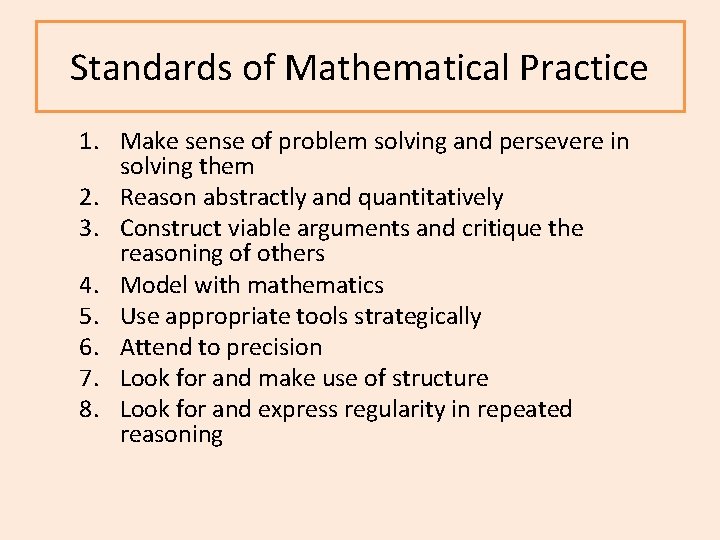
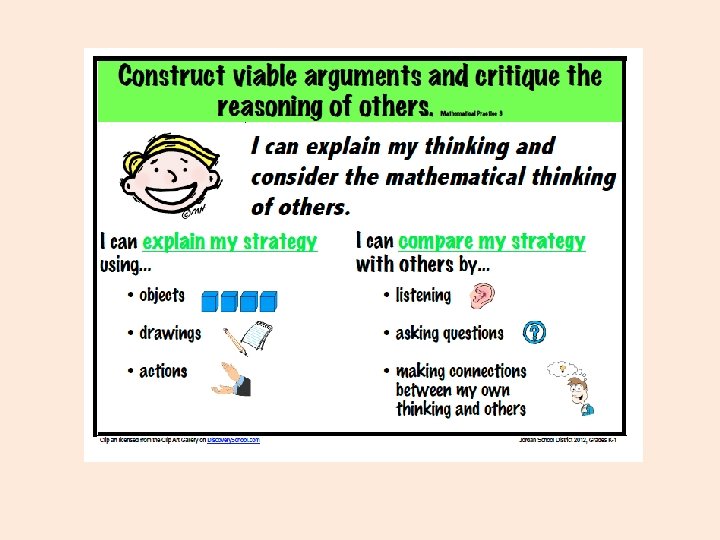
Standards of Mathematical Practice 1. Make sense of problem solving and persevere in solving them 2. Reason abstractly and quantitatively 3. Construct viable arguments and critique the reasoning of others 4. Model with mathematics 5. Use appropriate tools strategically 6. Attend to precision 7. Look for and make use of structure 8. Look for and express regularity in repeated reasoning
Standard algorithms—after alternatives • Grade 4 (Yr 5) : “Fluently add and subtract multi-digit whole numbers using the standard algorithm. ” • Grade 1 (Yr 2) grade: “Add within 100…using concrete models or drawings and strategies based on place value” • Grade 2/3 (Yr 3/4): “Fluently add and subtract within 100/1000 using strategies based on place value”
“The Common Core requires the standard algorithm; additional algorithms aren’t named, and they aren’t required. ” Jason Zimba—lead writer of the Common Core Math Standards
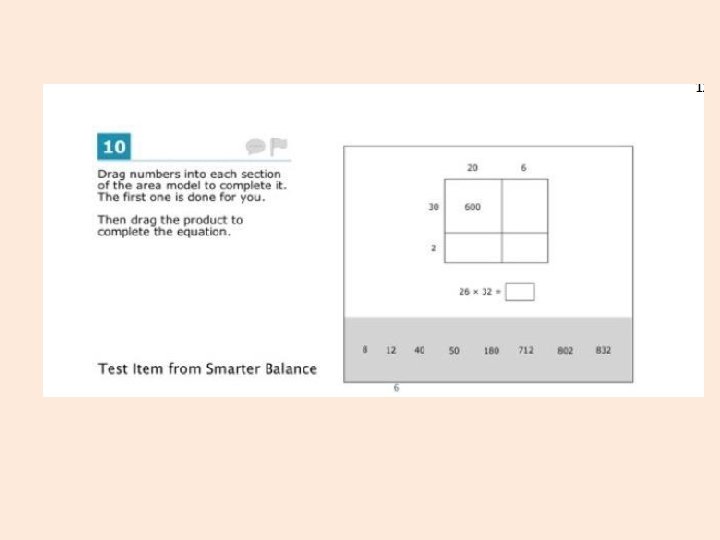
Warnings in notes from teachers to parents • “Do not teach your child the “standard algorithm” for computations until he or she has learned it in school. ” • “Instead of the standard algorithm, we use the area and partial products strategy for multiplication. ”
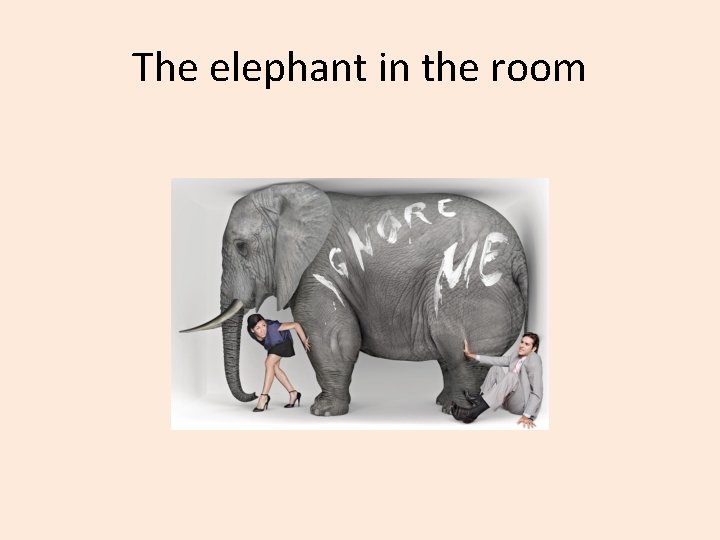
The elephant in the room
The next “Whole New Way to Teach Math” ? • Whether understanding or procedure comes first ought to be driven by subject matter and student need — not by educational ideology
The next “Whole New Way to Teach Math” ? • Whether understanding or procedure comes first ought to be driven by subject matter and student need — not by educational ideology • Prior learning and knowledge is the greatest determinant of what children can learn, regardless of their physical age.
The next “Whole New Way to Teach Math” ? • Whether understanding or procedure comes first ought to be driven by subject matter and student need — not by educational ideology • Prior learning and knowledge is the greatest determinant of what children can learn, regardless of their physical age. • Curricula should be both mathematically coherent and logically sequenced for learning from novice to expert.
The next “Whole New Way to Teach Math” ? • Whether understanding or procedure comes first ought to be driven by subject matter and student need — not by educational ideology • Prior learning and knowledge is the greatest determinant of what children can learn, regardless of their physical age. • Curricula should be both mathematically coherent and logically sequenced for learning from novice to expert. • "Discovery" should not be conflated with "teaching understanding" as if they are one and the same
The next “Whole New Way to Teach Math” ? • Whether understanding or procedure comes first ought to be driven by subject matter and student need — not by educational ideology • Prior learning and knowledge is the greatest determinant of what children can learn, regardless of their physical age. • Curricula should be both mathematically coherent and logically sequenced for learning from novice to expert. • "Discovery" should not be conflated with "teaching understanding" as if they are one and the same • Mistakes should not be clung to just because of the time spent making them.
QUESTIONS Barry Garelick Email: barryg 99@yahoo. com