
Math 2999 presentation Singular Value Decomposition and its






- Slides: 105
Math 2999 presentation Singular Value Decomposition and its applications Yip Ka Wa (2009137234)
1. Mathematics foundation
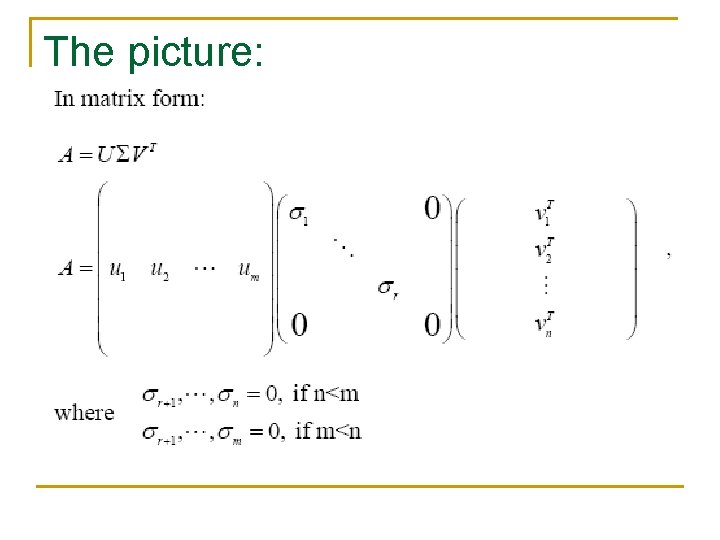
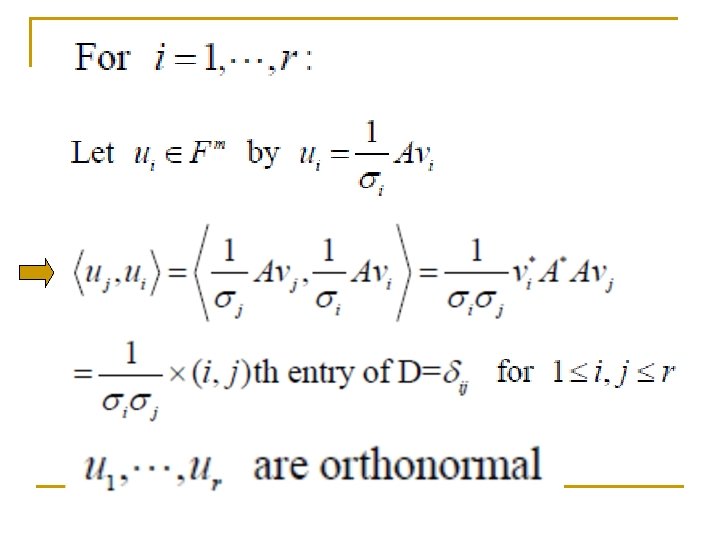
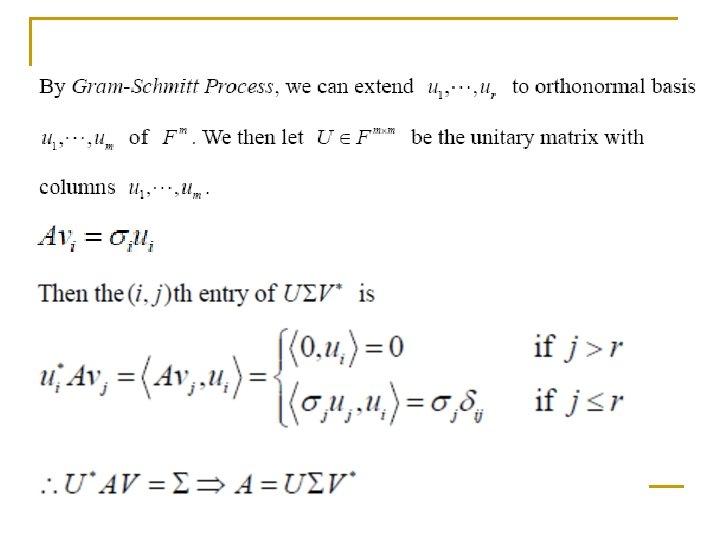
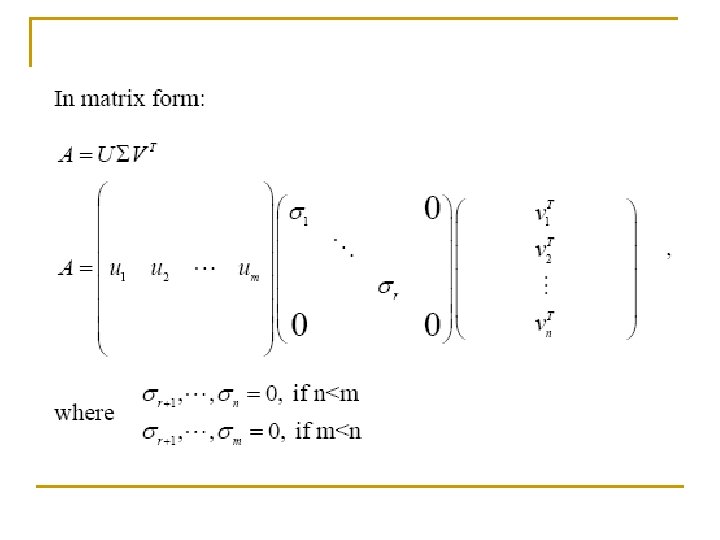
Singular Value Decomposition n Suppose that we are given a matrix, it is not known that whether it has any special properties like diagonal or normal, but we can always decompose it into a product of 3 matrices. This is called the singular value decomposition:
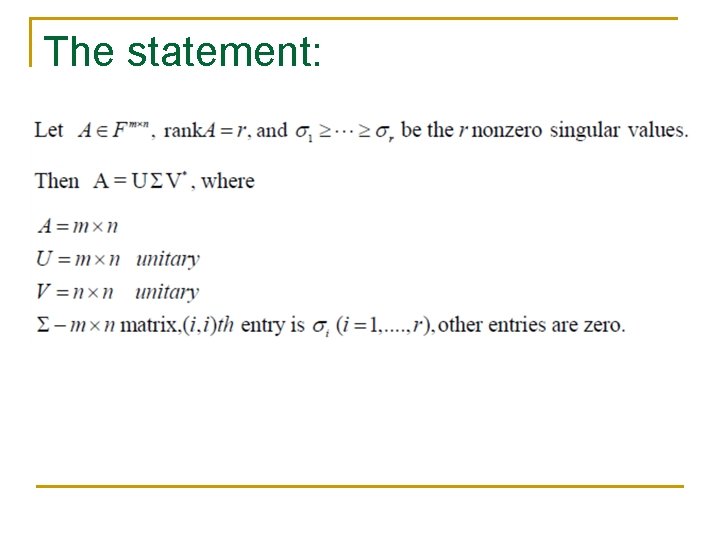
The statement:
The picture:
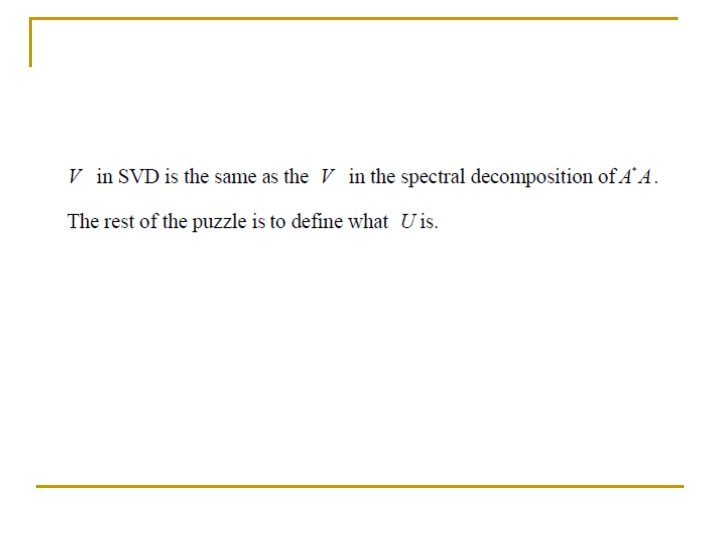
General idea of construction (proof omitted)
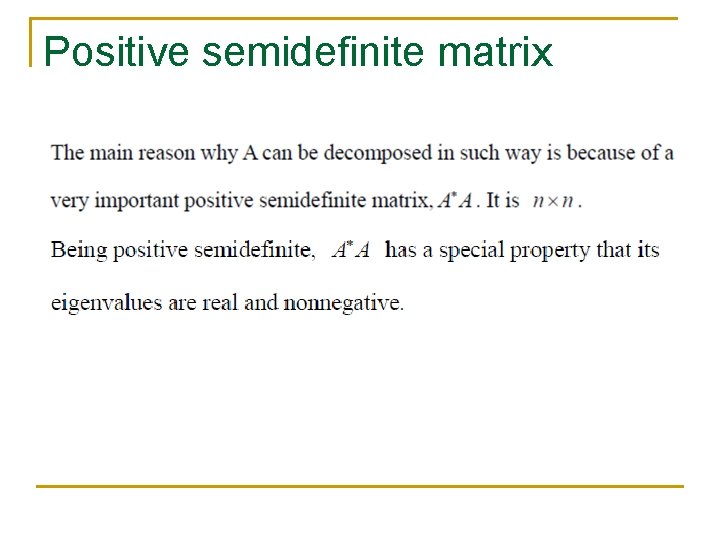
Positive semidefinite matrix
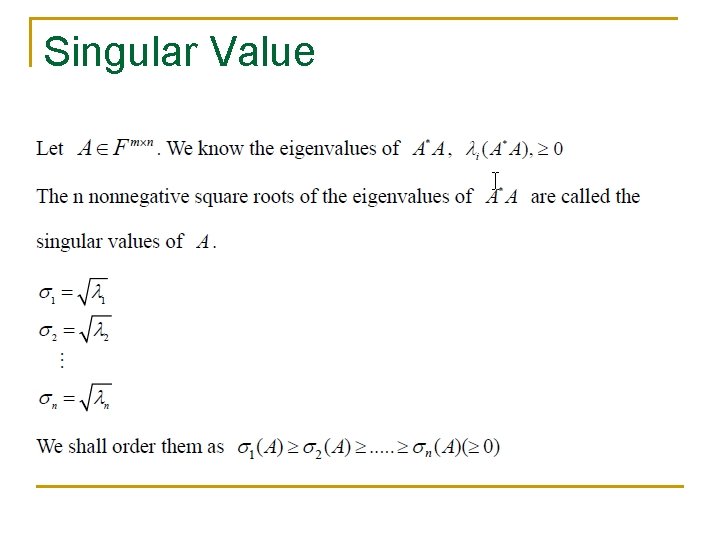
Singular Value
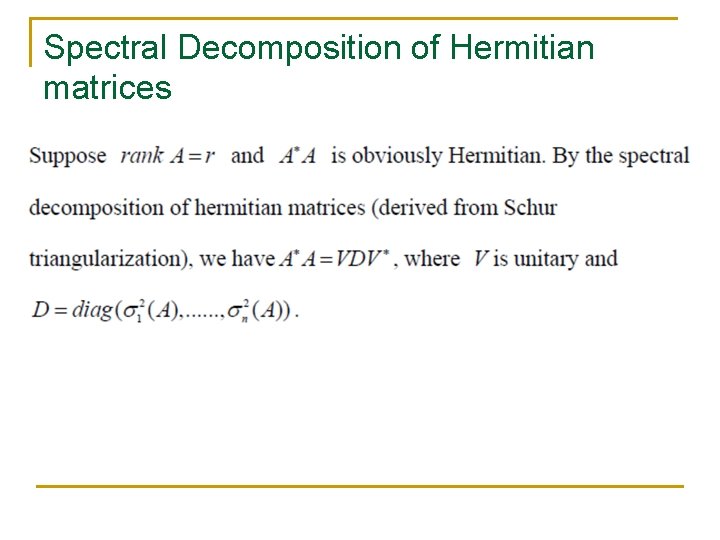
Spectral Decomposition of Hermitian matrices
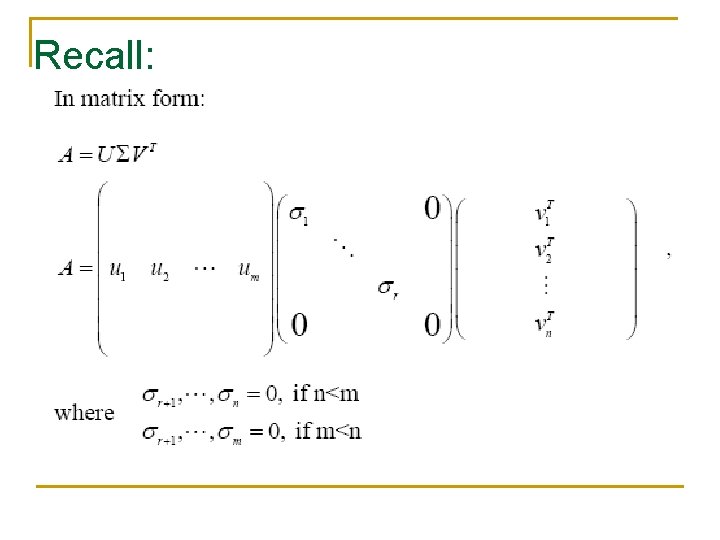
Recall:
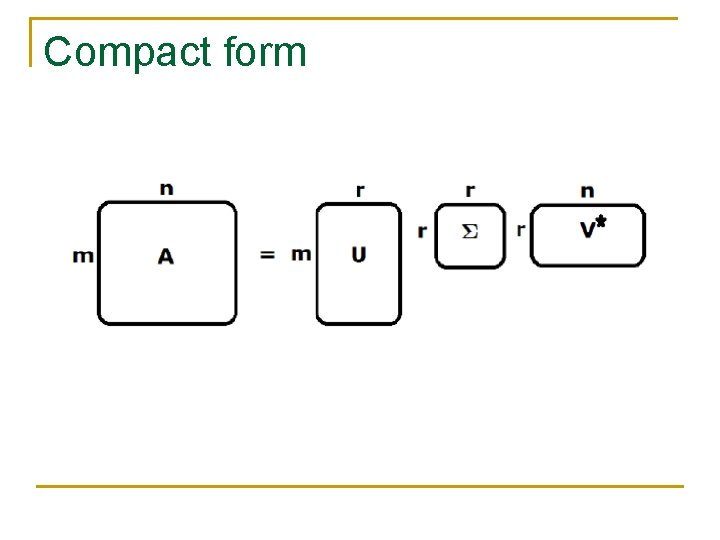
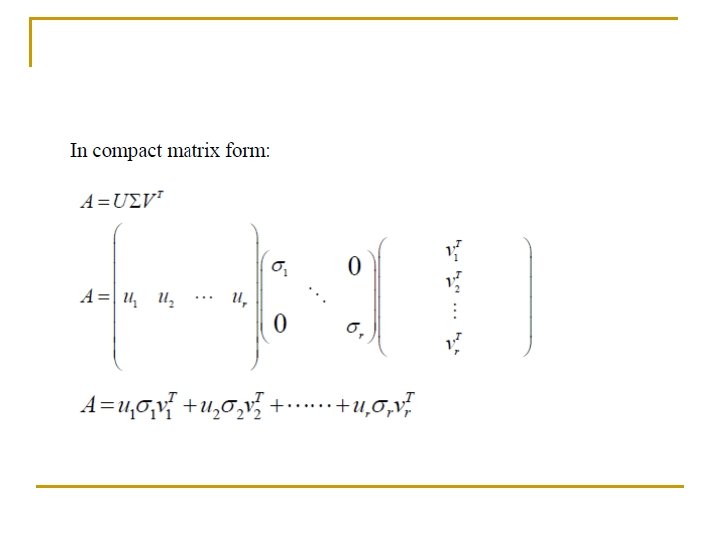
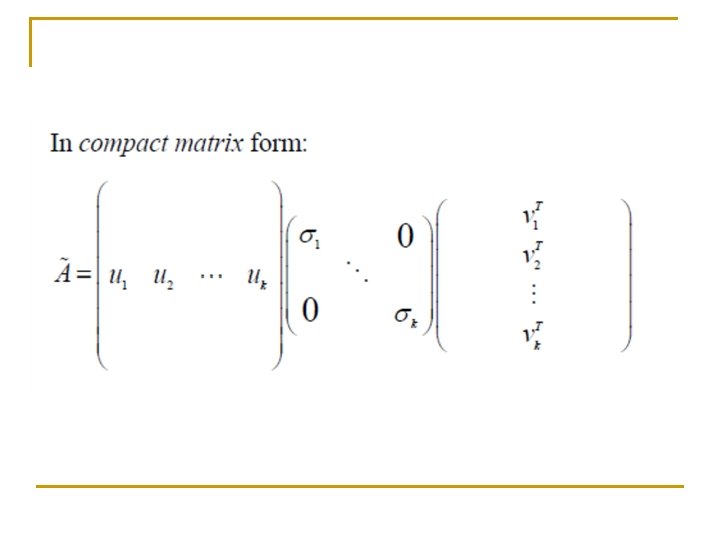
Compact form
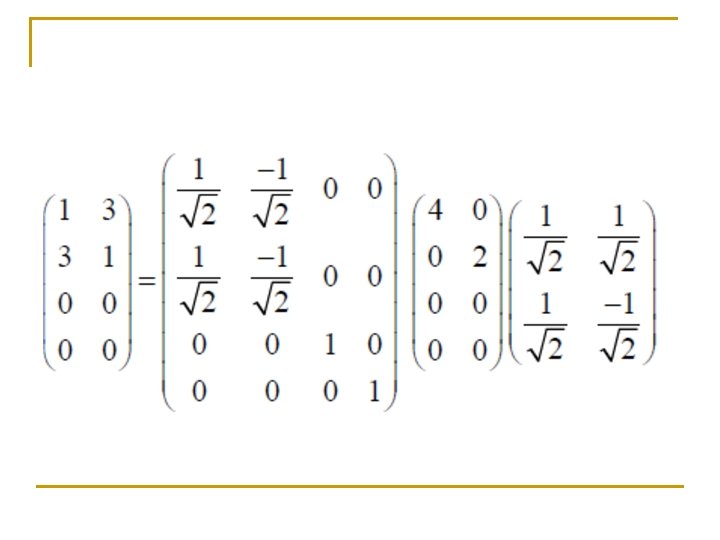
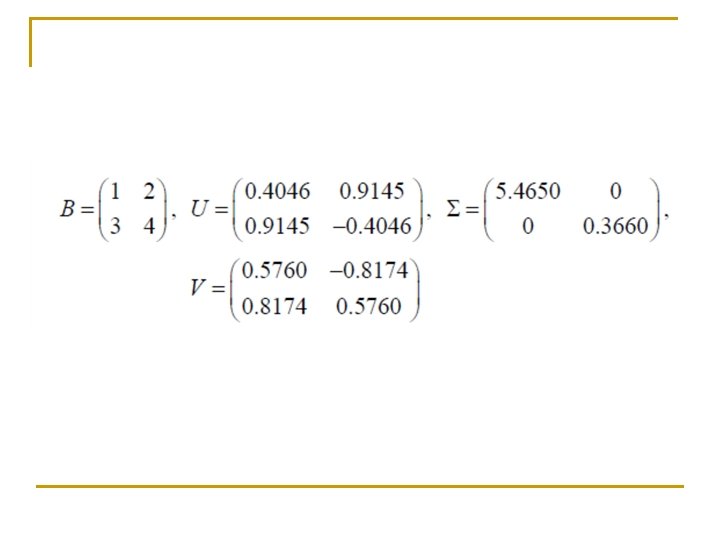
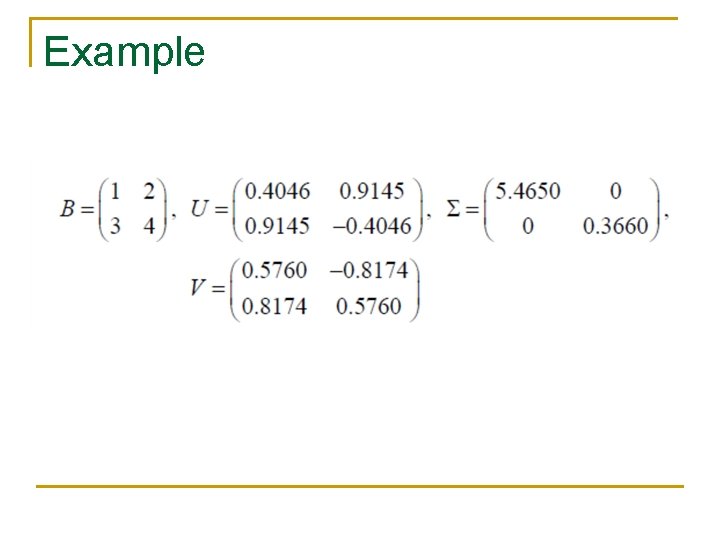
Example
2. Image compression
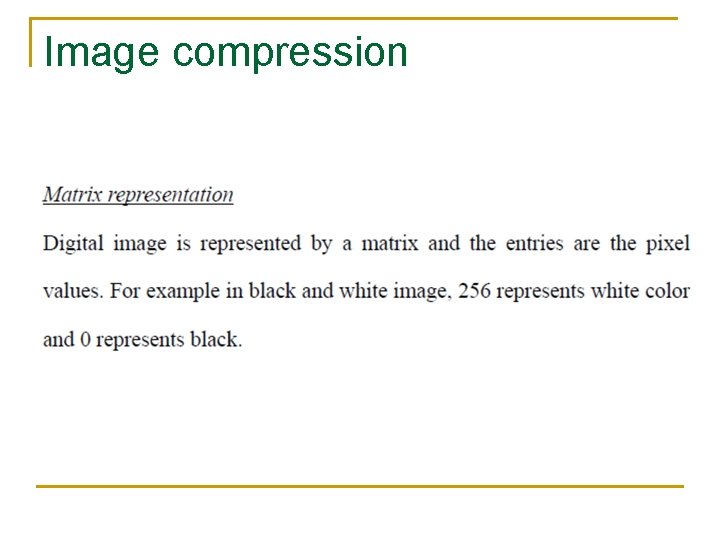
Image compression
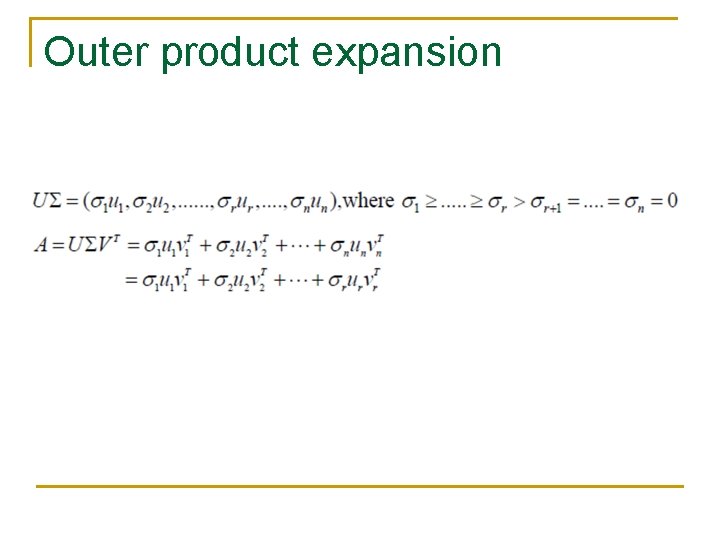
Outer product expansion
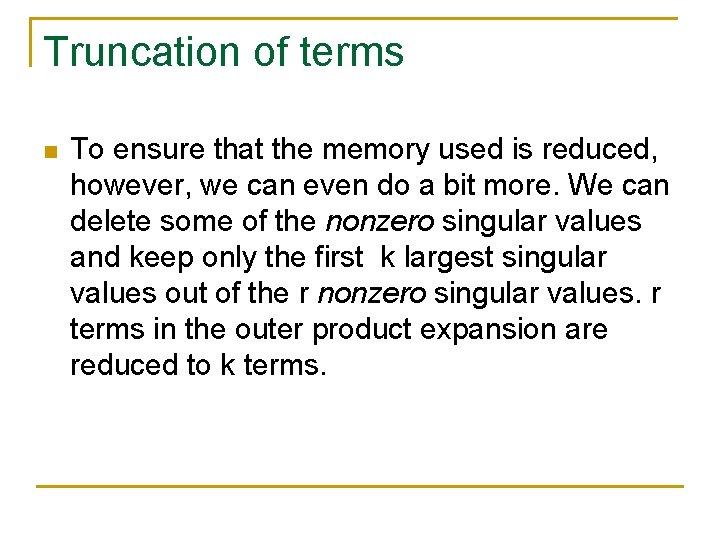
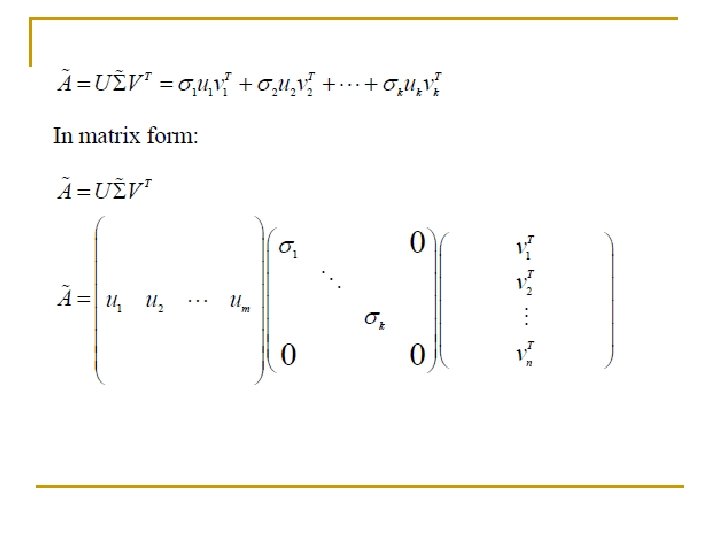
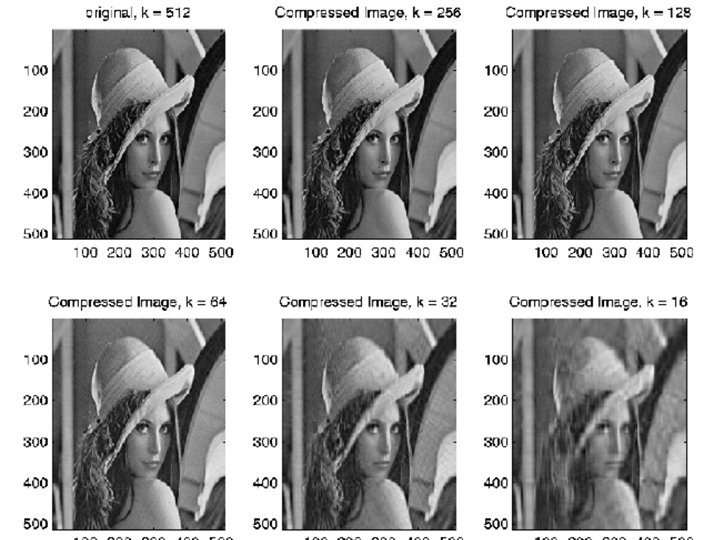
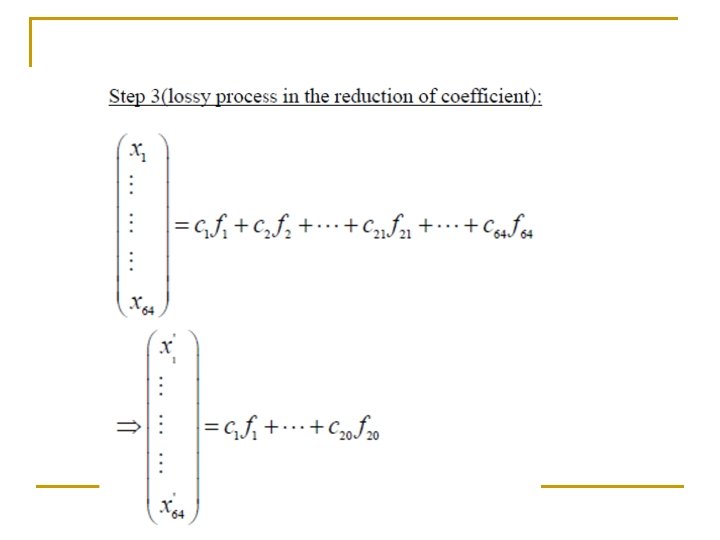
Truncation of terms n To ensure that the memory used is reduced, however, we can even do a bit more. We can delete some of the nonzero singular values and keep only the first k largest singular values out of the r nonzero singular values. r terms in the outer product expansion are reduced to k terms.
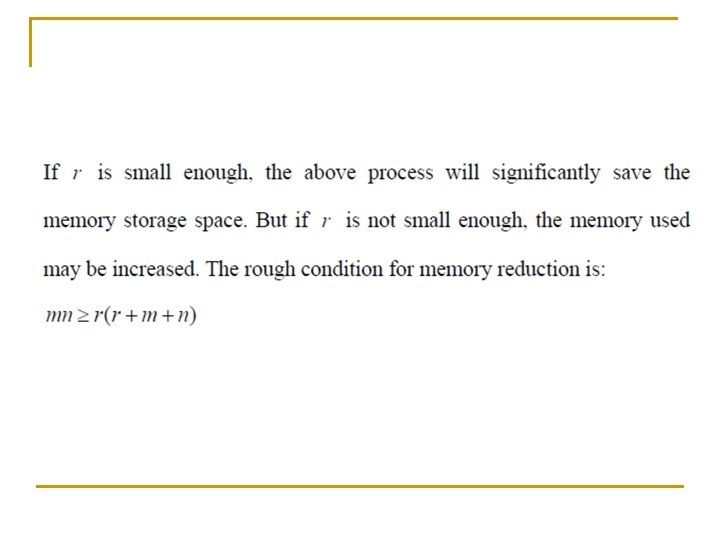
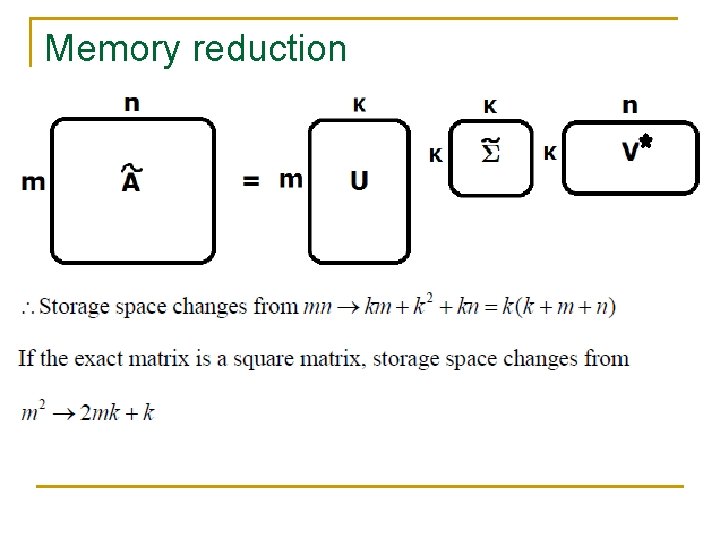
Memory reduction
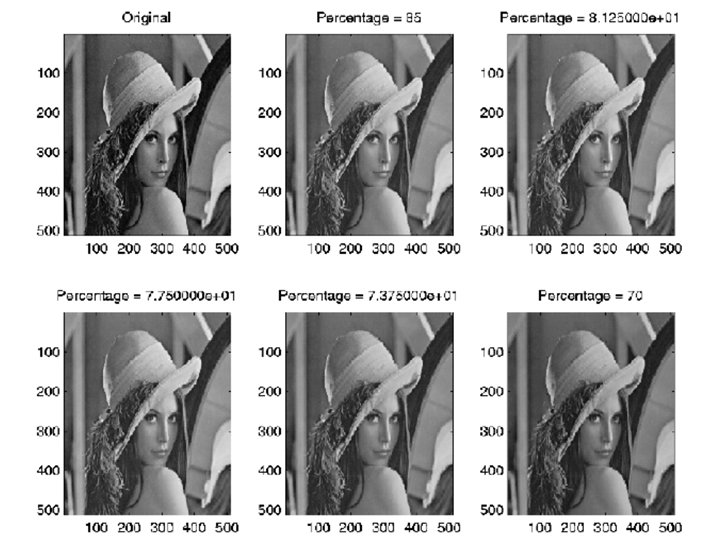
Block-based SVD n Divide the image matrix into blocks and apply SVD compression to blocks.
Result without block-based
Special topic Investigation of the kind of images for which low rank SVD approximations can give very good results
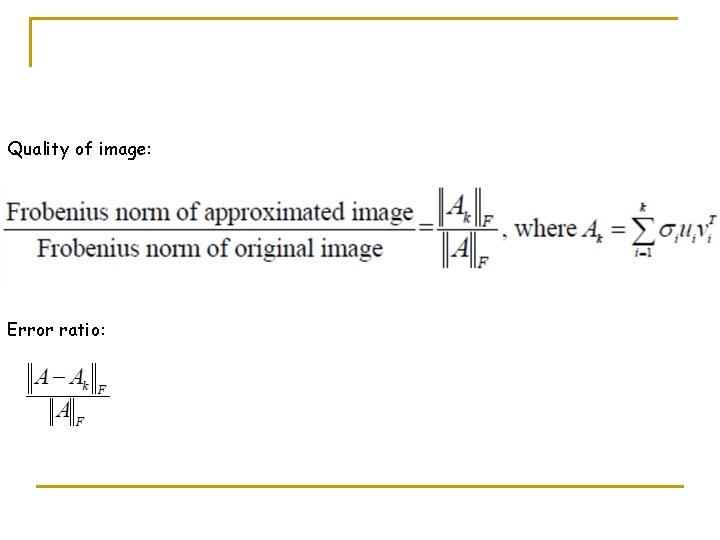
Quality of image: Error ratio:
n n n Complex? Simple? How do I know whether I can delete some of the singular values and still preserve quality?
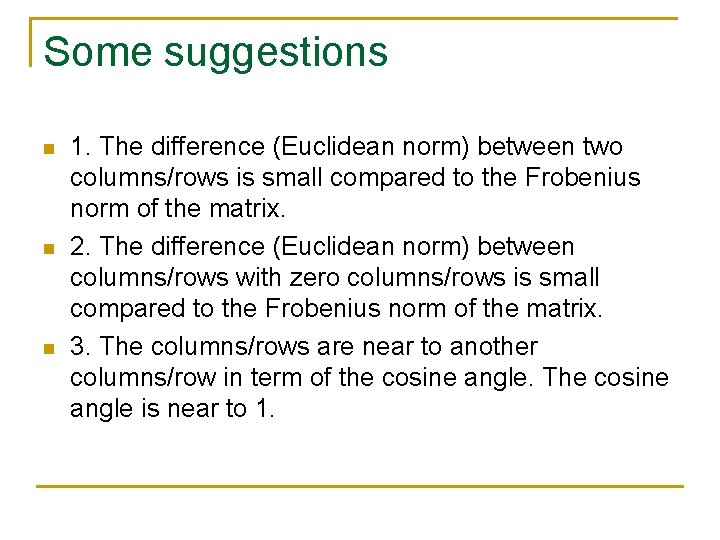
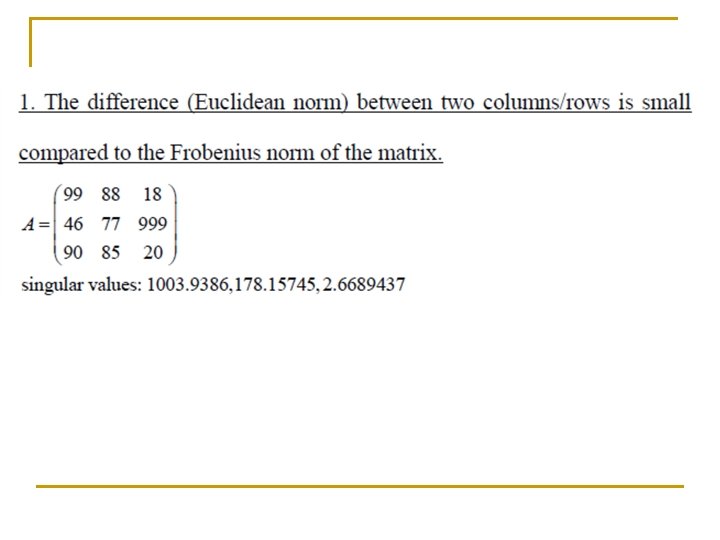
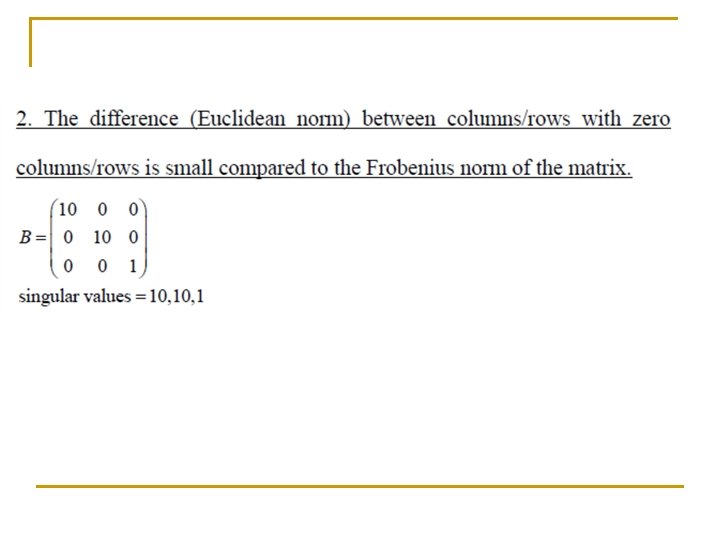
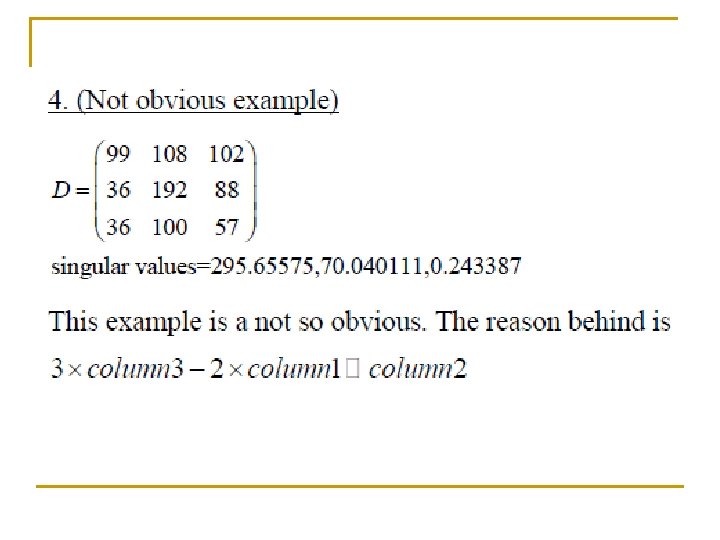
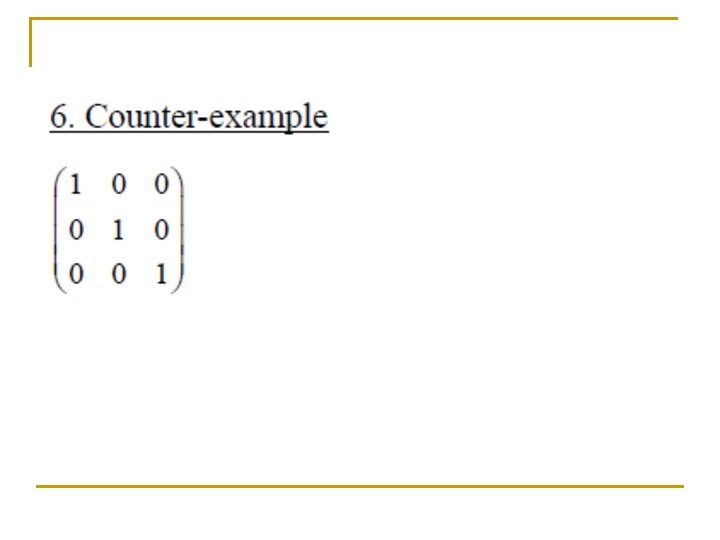
Some suggestions n n n 1. The difference (Euclidean norm) between two columns/rows is small compared to the Frobenius norm of the matrix. 2. The difference (Euclidean norm) between columns/rows with zero columns/rows is small compared to the Frobenius norm of the matrix. 3. The columns/rows are near to another columns/row in term of the cosine angle. The cosine angle is near to 1.
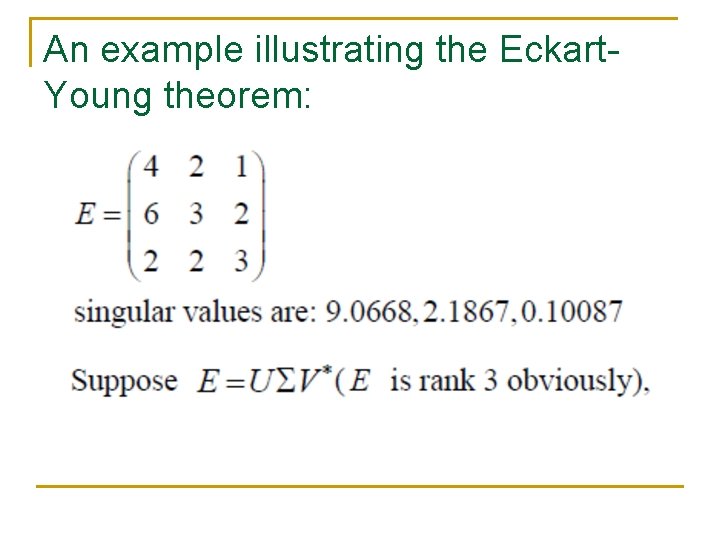
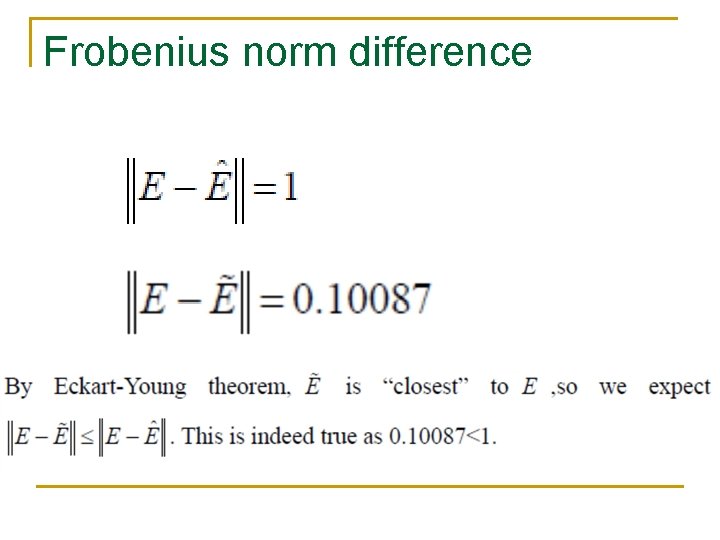
An example illustrating the Eckart. Young theorem:
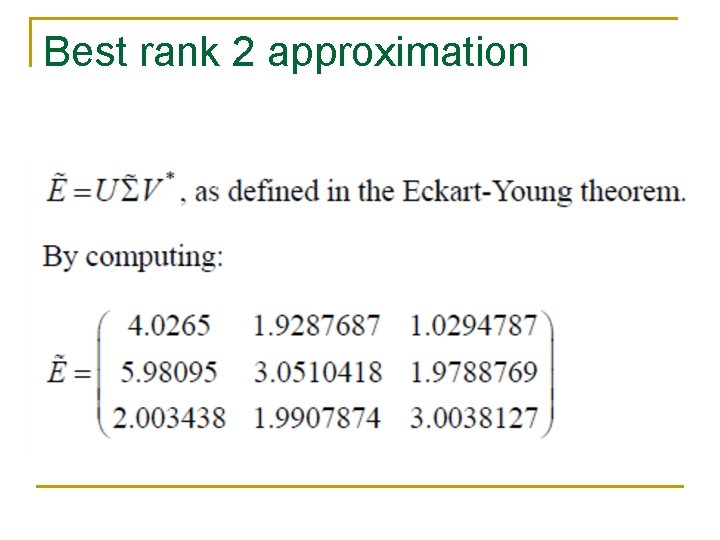
Best rank 2 approximation
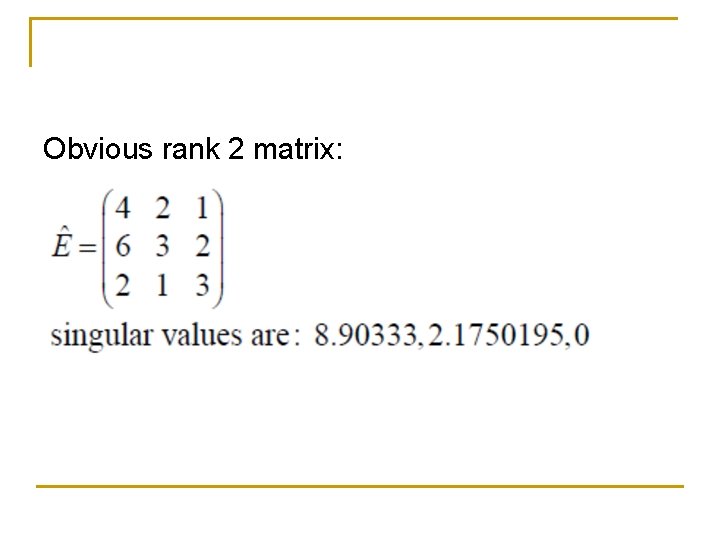
Obvious rank 2 matrix:
Frobenius norm difference
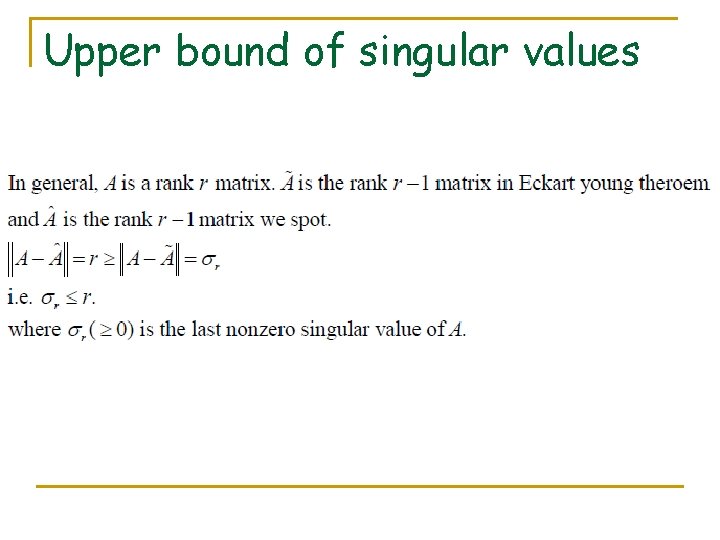
Upper bound of singular values
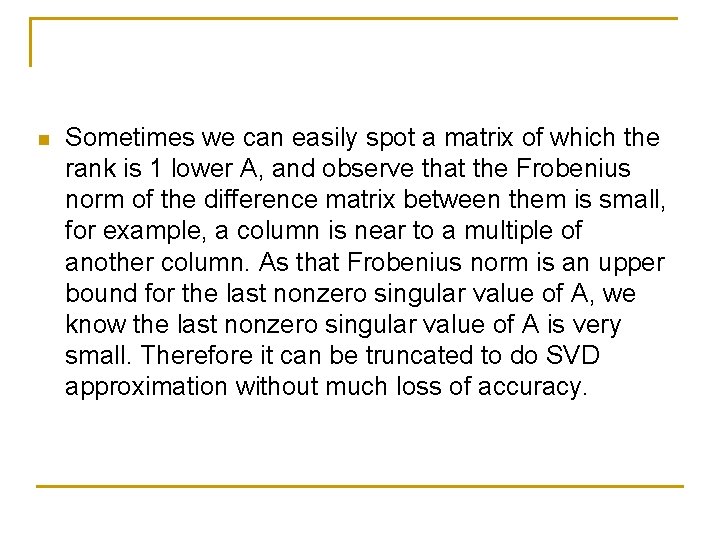
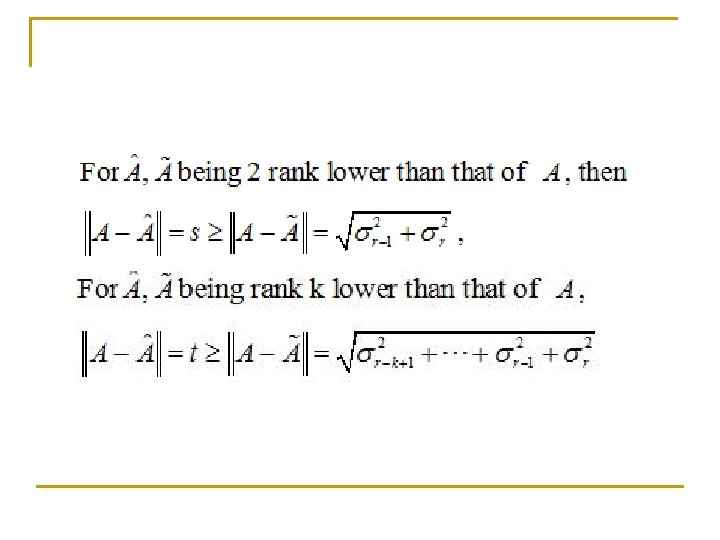
n Sometimes we can easily spot a matrix of which the rank is 1 lower A, and observe that the Frobenius norm of the difference matrix between them is small, for example, a column is near to a multiple of another column. As that Frobenius norm is an upper bound for the last nonzero singular value of A, we know the last nonzero singular value of A is very small. Therefore it can be truncated to do SVD approximation without much loss of accuracy.
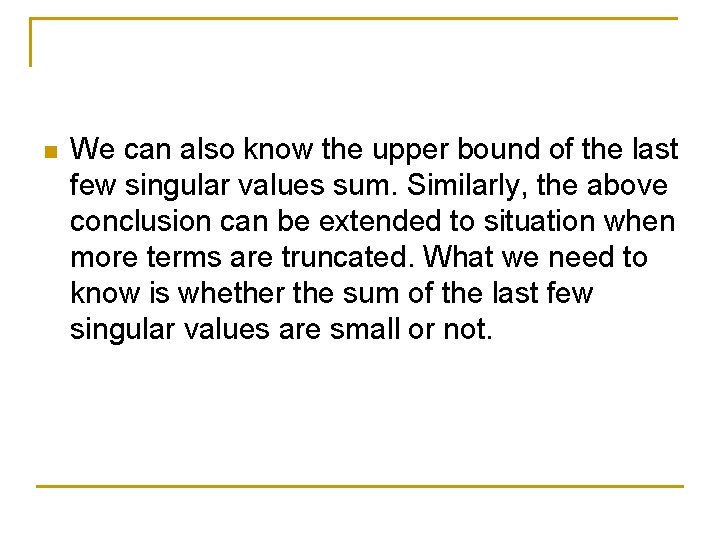
n We can also know the upper bound of the last few singular values sum. Similarly, the above conclusion can be extended to situation when more terms are truncated. What we need to know is whether the sum of the last few singular values are small or not.
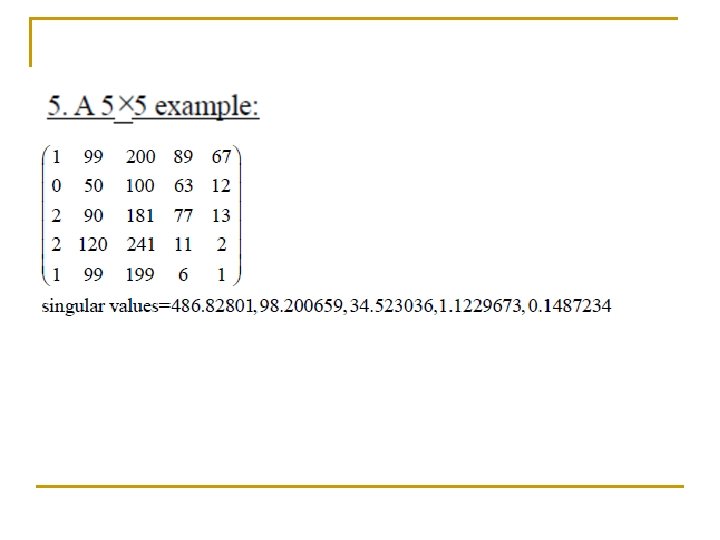
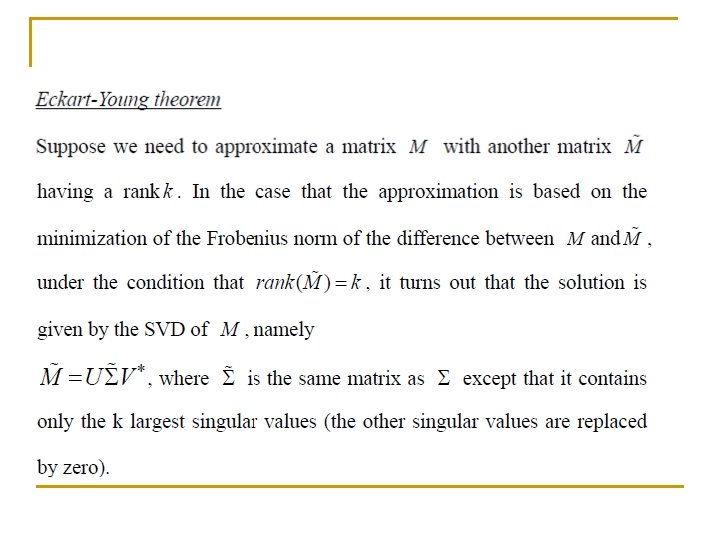
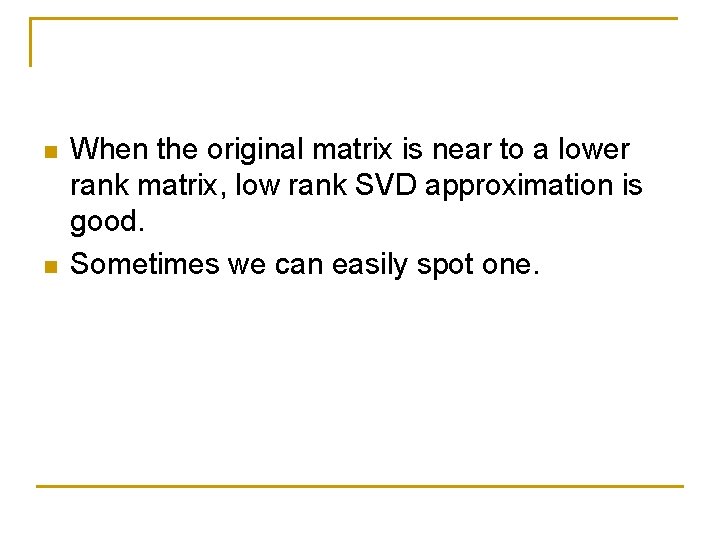
n n When the original matrix is near to a lower rank matrix, low rank SVD approximation is good. Sometimes we can easily spot one.
3. Comparison of different image compression method
Comparison of image compression method Fourier transform vs Wavelet transform vs SVD
Fourier Transform
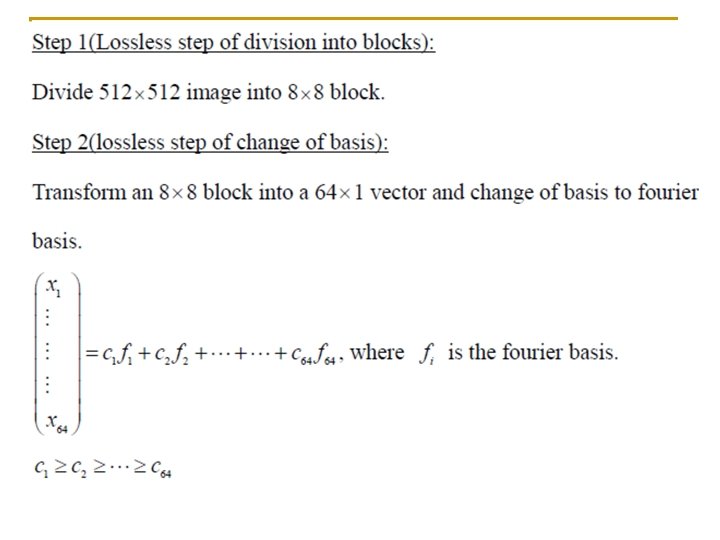
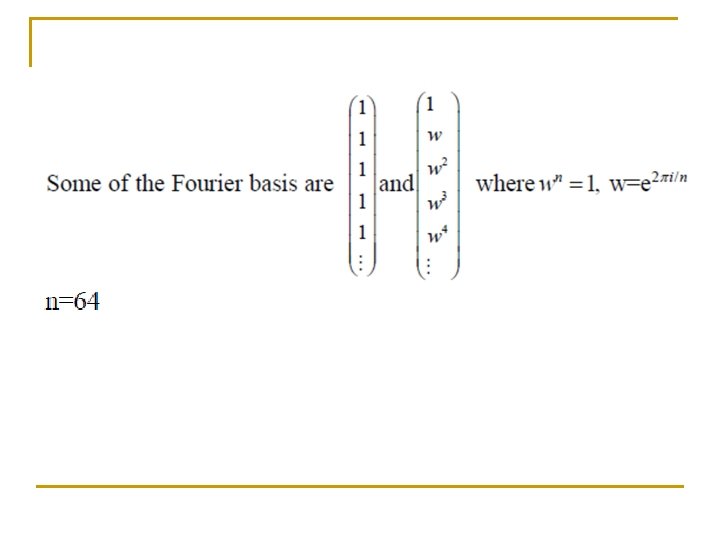
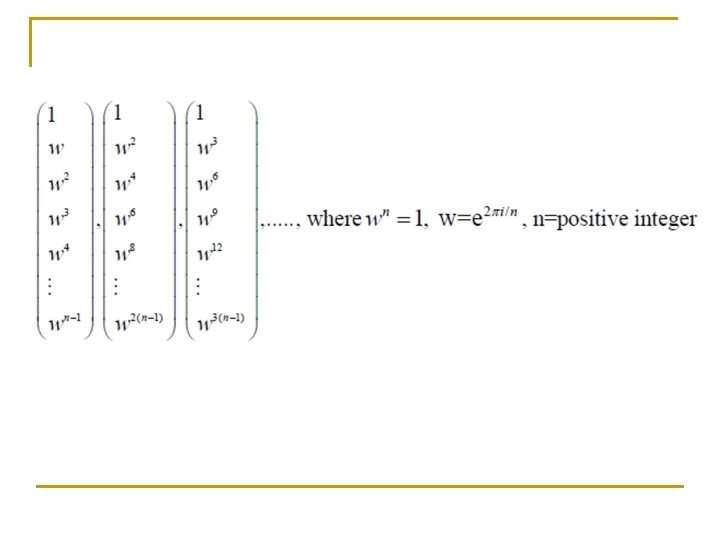
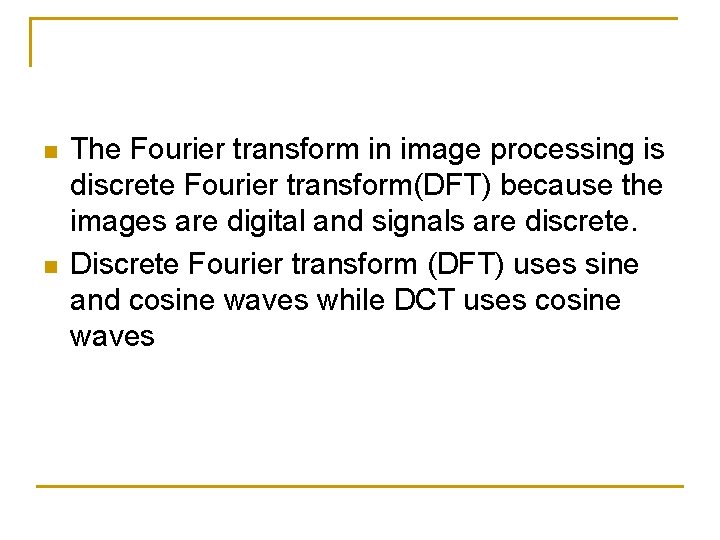
n n The Fourier transform in image processing is discrete Fourier transform(DFT) because the images are digital and signals are discrete. Discrete Fourier transform (DFT) uses sine and cosine waves while DCT uses cosine waves
Wavelet Transform
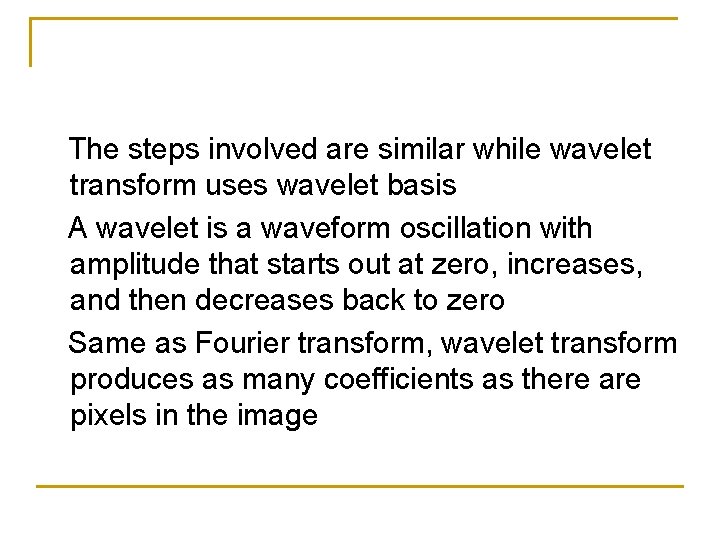
The steps involved are similar while wavelet transform uses wavelet basis A wavelet is a waveform oscillation with amplitude that starts out at zero, increases, and then decreases back to zero Same as Fourier transform, wavelet transform produces as many coefficients as there are pixels in the image
n Continuous wavelet transform, discrete wavelet transform, multiresolution discrete wavelet transform, haar wavelet, Daubechies wavelets.
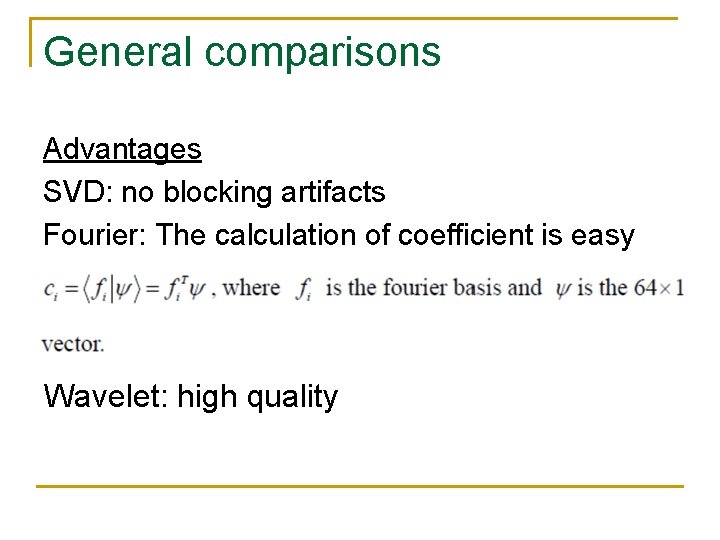
General comparisons Advantages SVD: no blocking artifacts Fourier: The calculation of coefficient is easy Wavelet: high quality
Disadvantages SVD: U and V will have to stored together with the singular values Fourier: Blocking artifacts
Wavelet (shared with Fourier): Ringing artifacts
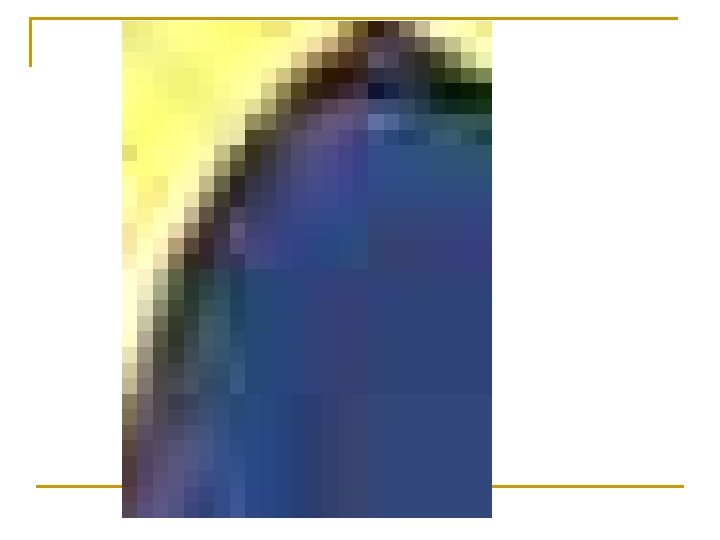
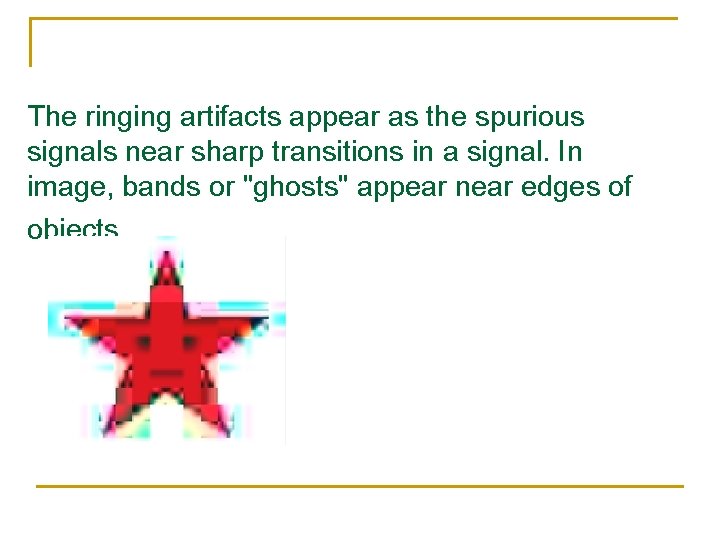
The ringing artifacts appear as the spurious signals near sharp transitions in a signal. In image, bands or "ghosts" appear near edges of objects
Comparison from report n Chan and Duan report: “Computational aspects of mathematical models in image compression”
Report details: 7 images are compared in different quality level. Image with different compression ratios: about 80%, 90% and 98. 5% is chosen, and according to these compressions choose the singular value of SVD.
Color image treatment For pictures with color, first divide the picture into three layers: red, green and blue. Then we process the three layers respectively as the method used for gray pictures. After obtaining 3 compressed layers, combine them back into a single color picture
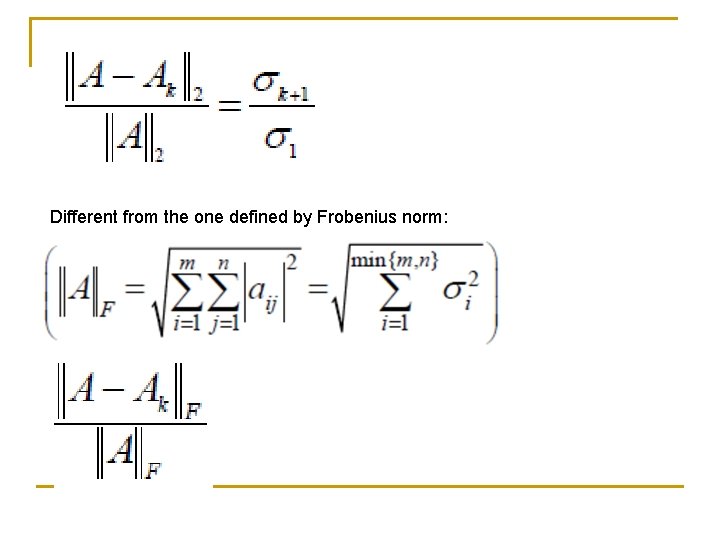
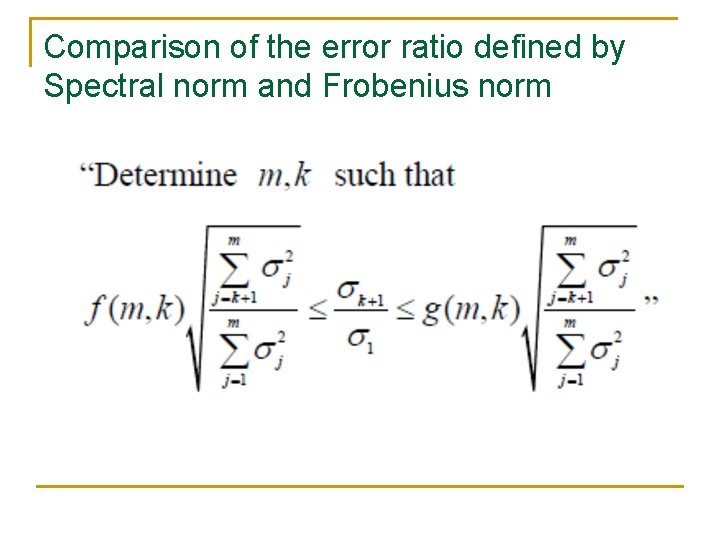
Error ratio n The procedure to obtain the error ratio of image compression is as follows: First calculate the difference matrix between the original image and the compressed image by subtraction. Then calculate the L 2 -norm of the difference matrix and normalize it with the L 2 -norm of the original image. The result is the error rate of the image compression
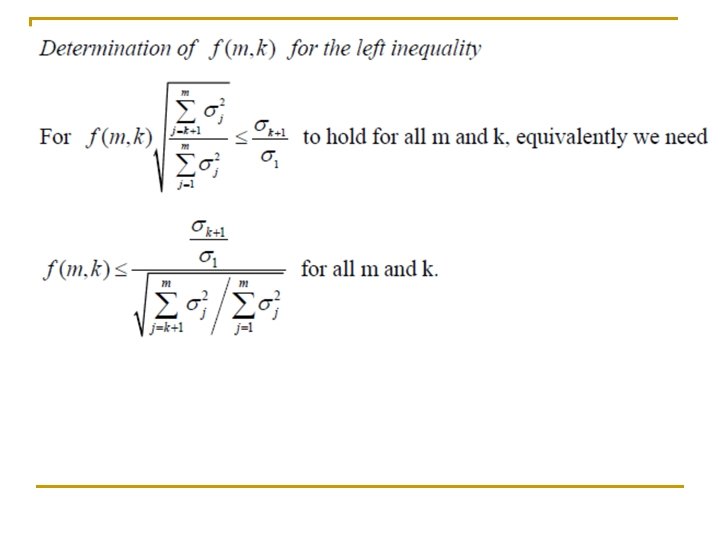
Different from the one defined by Frobenius norm:
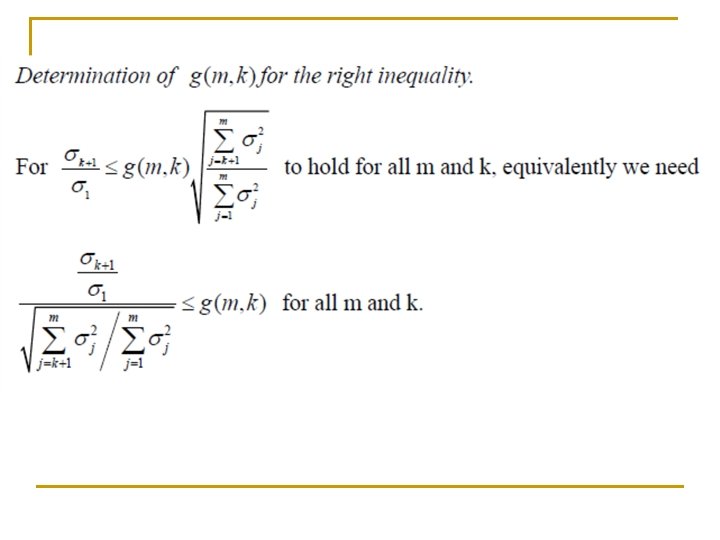
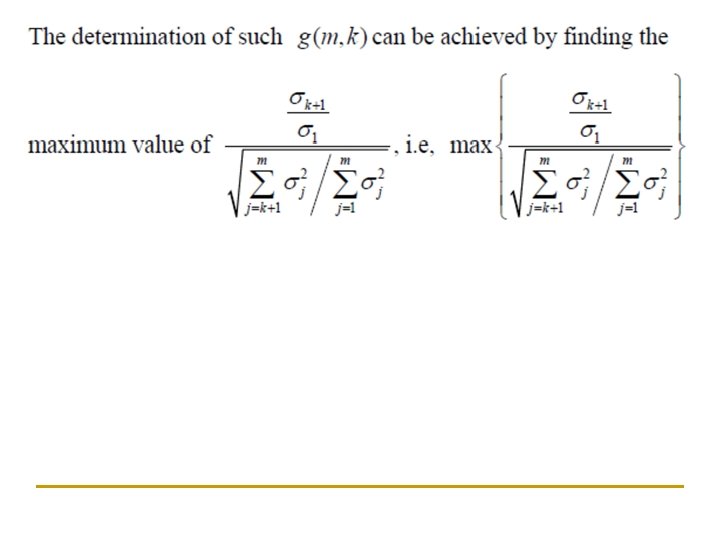
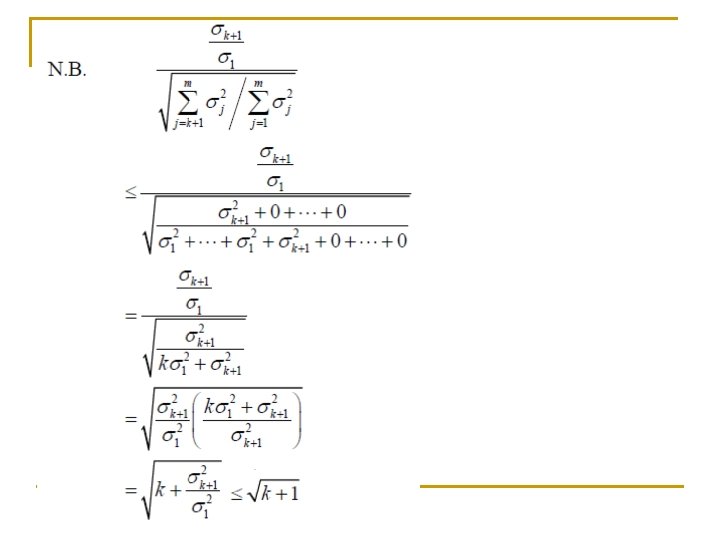
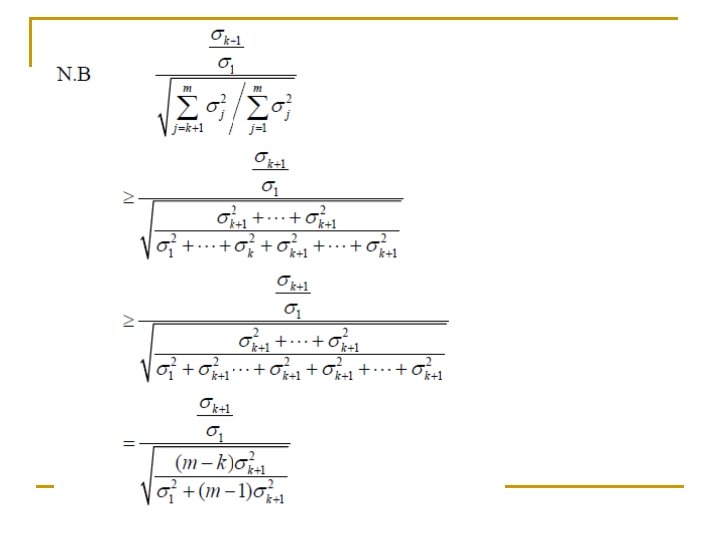
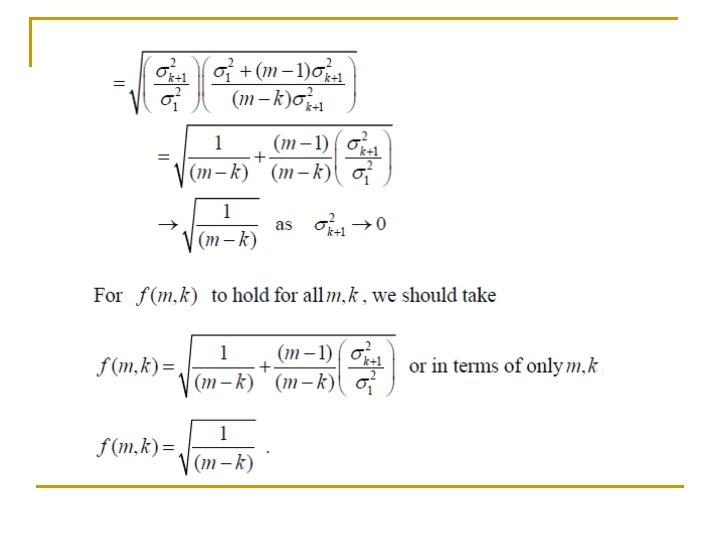
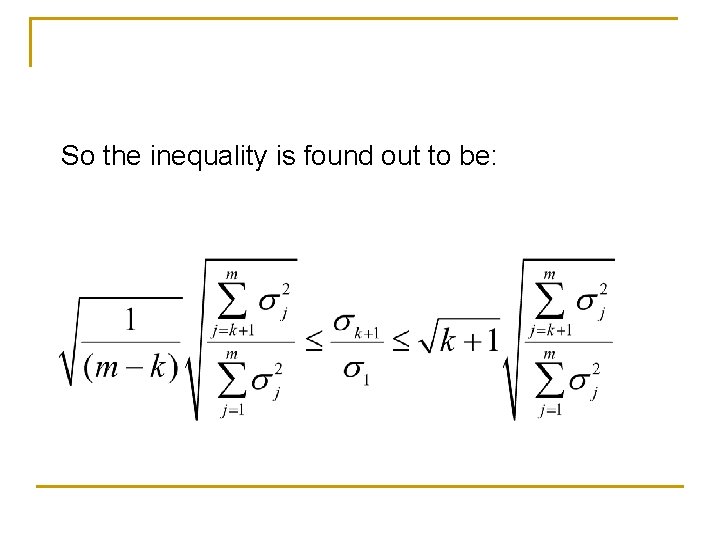
Comparison of the error ratio defined by Spectral norm and Frobenius norm
So the inequality is found out to be:
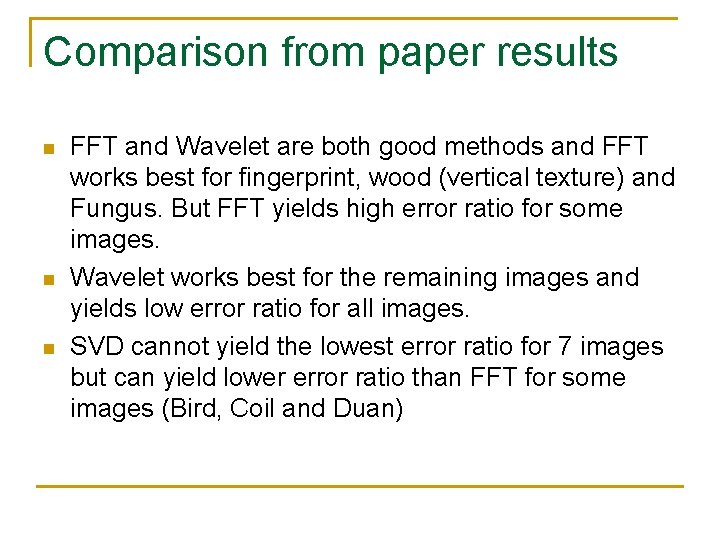
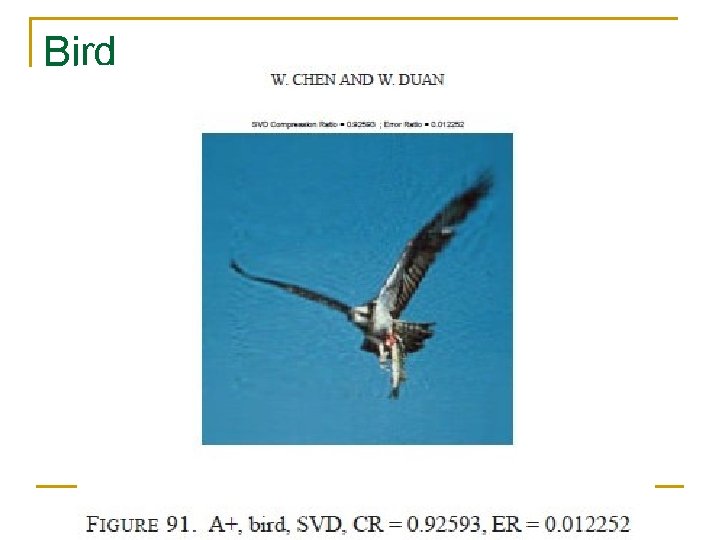
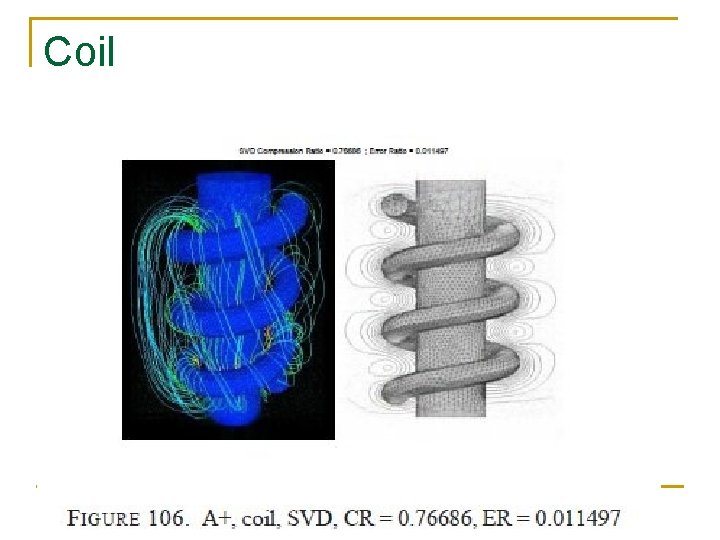
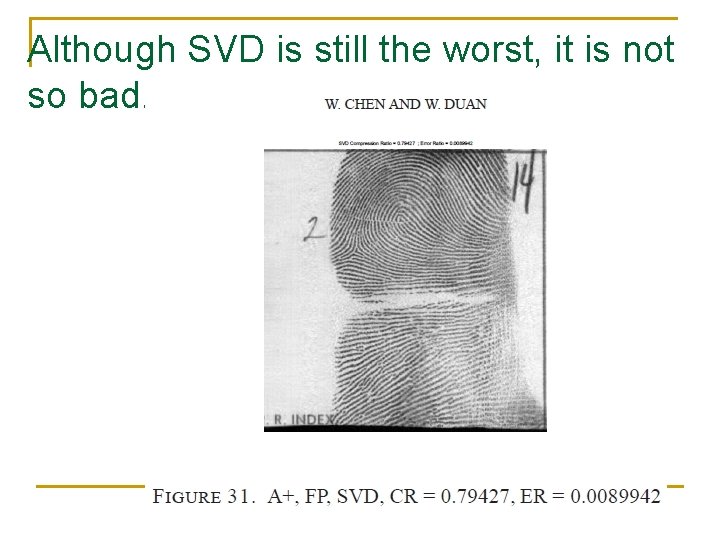
Comparison from paper results n n n FFT and Wavelet are both good methods and FFT works best for fingerprint, wood (vertical texture) and Fungus. But FFT yields high error ratio for some images. Wavelet works best for the remaining images and yields low error ratio for all images. SVD cannot yield the lowest error ratio for 7 images but can yield lower error ratio than FFT for some images (Bird, Coil and Duan)
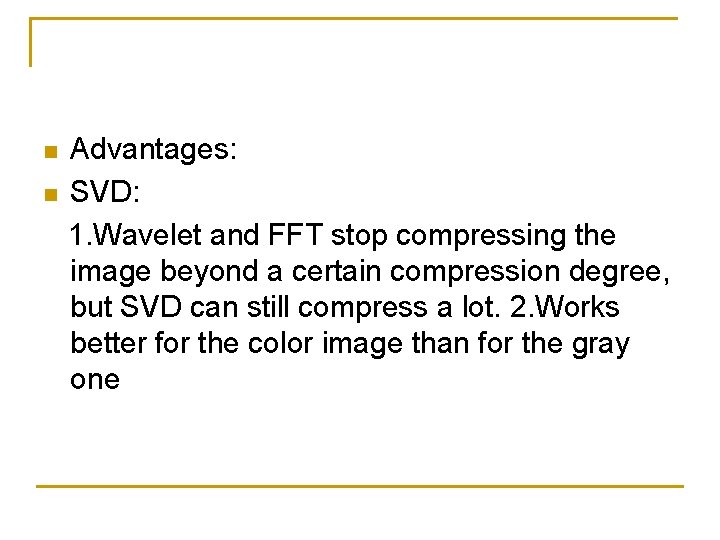
Advantages: n SVD: 1. Wavelet and FFT stop compressing the image beyond a certain compression degree, but SVD can still compress a lot. 2. Works better for the color image than for the gray one n
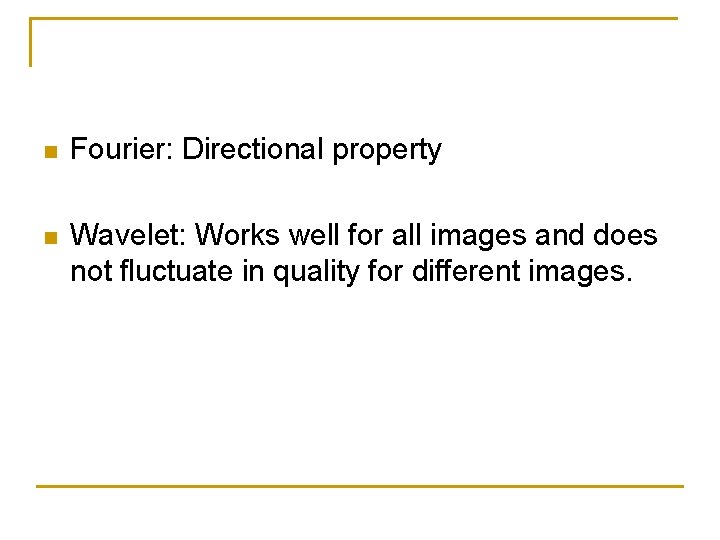
n Fourier: Directional property n Wavelet: Works well for all images and does not fluctuate in quality for different images.
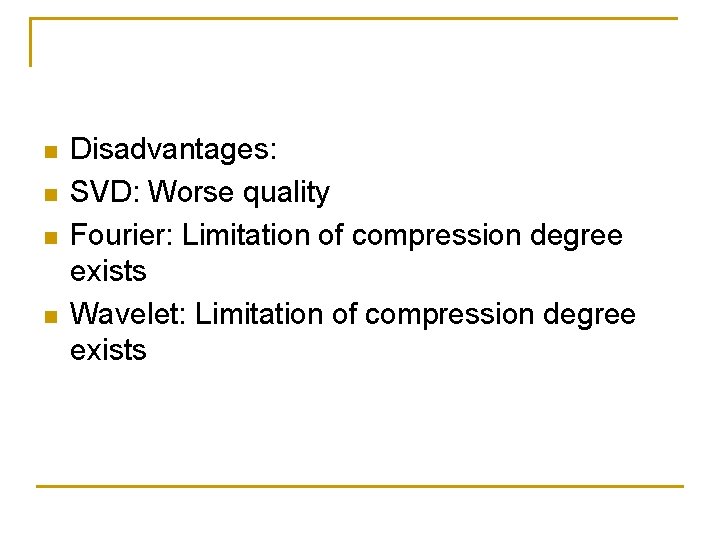
n n Disadvantages: SVD: Worse quality Fourier: Limitation of compression degree exists Wavelet: Limitation of compression degree exists
Conclusion: When SVD will be more efficient n n n When ringing artifacts or blocking artifacts need to be avoided. When only general shape is needed to save memory, SVD can compress to contour with high compression ratio. Image that is near to a lower rank matrix (image)
Bird
Coil
Although SVD is still the worst, it is not so bad.
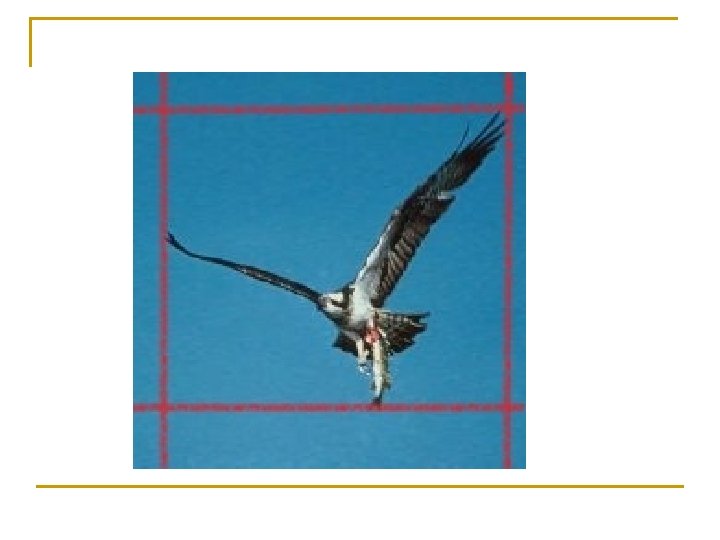
Note n n It would be a mistake if linear dependence is considered from image, instead of from the matrix entries values. Definition of norm in error ratio
Thank you
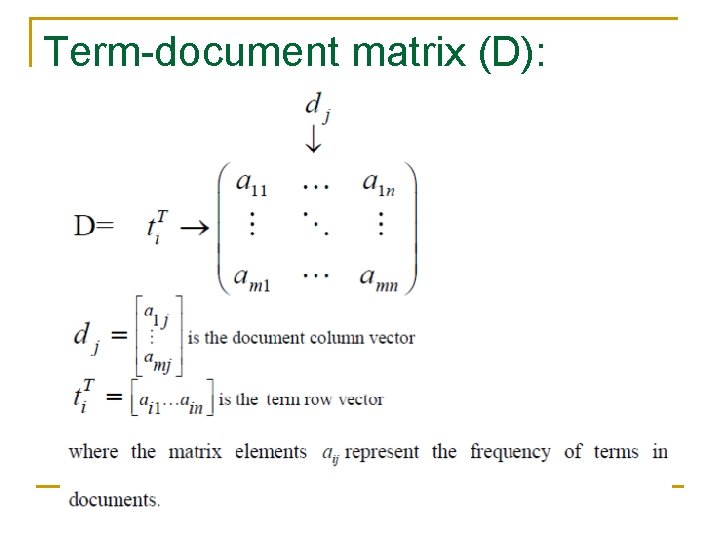
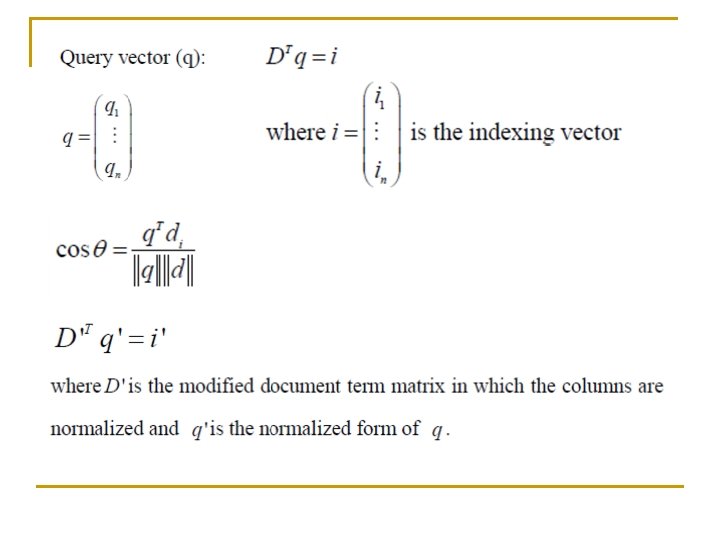
Traditional search Term-document matrix A term-document matrix is used in the traditional search technique.
Term-document matrix (D):
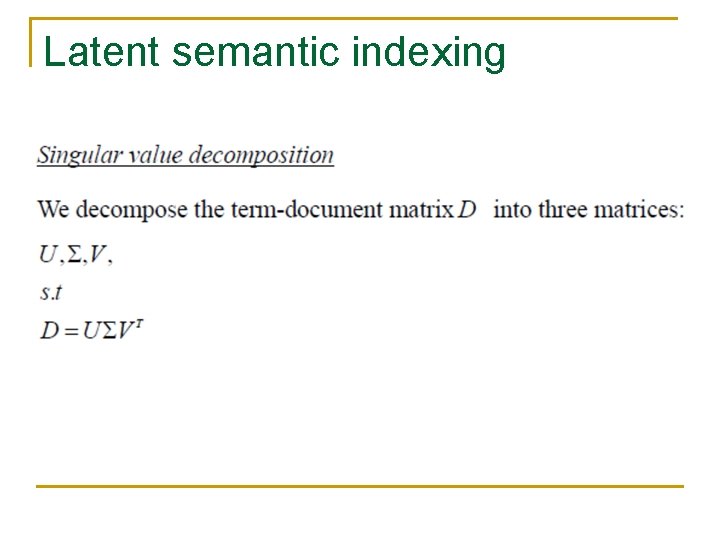
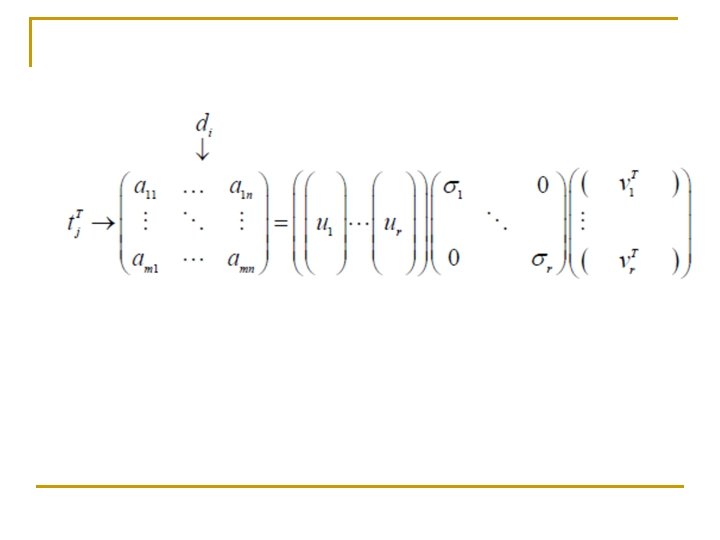
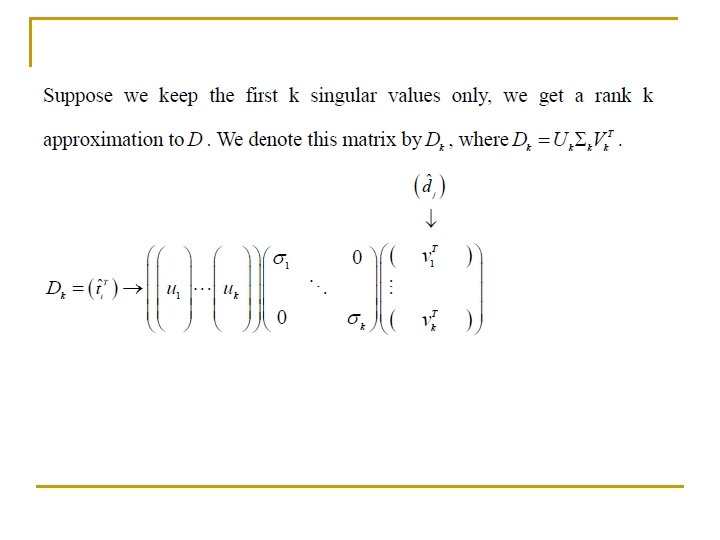
Latent semantic indexing
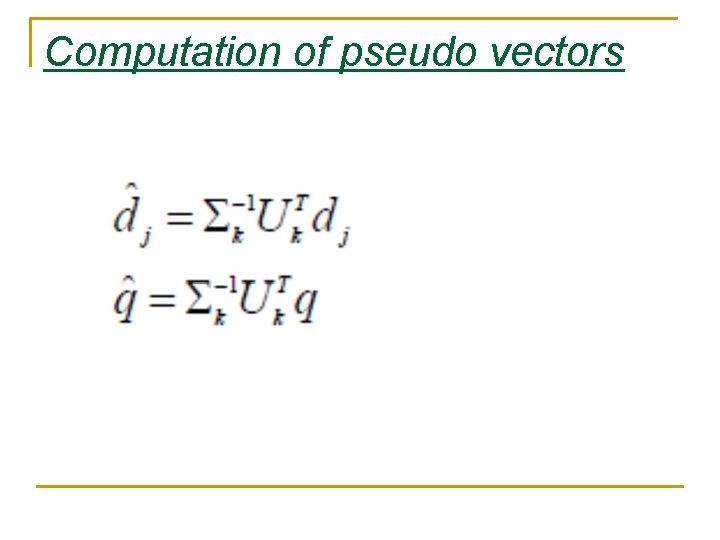
Computation of pseudo vectors
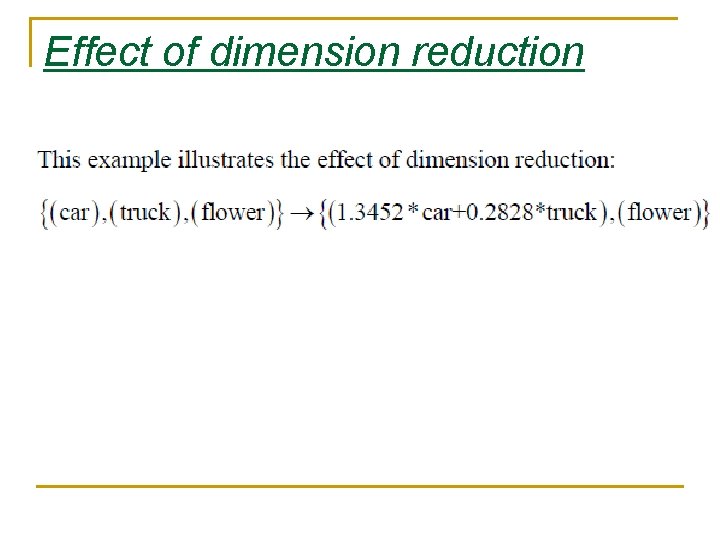
Effect of dimension reduction