
Maternal and Child Health Prevention Guidelines Learning Objectives
Maternal and Child Health Prevention Guidelines

Learning Objectives ■ Students will be able to: – Identify the types of organizations that create preventative guidelines – Describe the process for developing guidelines for preventive and clinical services – Classify U. S. Preventive Services Task Force Recommendations based on the assigned letter grade – Illustrate the need for evidence-based public health practices when establishing preventative guidelines – Discuss the role of health literacy in disseminating and implementing preventative guidelines
What is a prevention guideline? ■ Write down what you think it is. ■ “End the Confusion: Breast Cancer Screening Whiteboard” https: //www. youtube. com/watch ? v=tt. OI 2 un 0 Pc. U
Who decides prevention guidelines? ■ – – – U. S. Preventive Services Task Force Created in 1984 Independent group of healthcare experts Members are volunteers appointed by the Agency for Healthcare Research and Quality
Who decides prevention guidelines? ■ The American College of Obstetricians and Gynecologists ■ The American Academy of Pediatrics ■ The American Cancer Society

Introduction to U. S. Preventive Services Task Force

Overview of Guideline Process ■ Convened by the Agency for Healthcare Research and Quality ■ Solicit input from the public and any stakeholders ■ Examine evidence-based research ■ Consult healthcare experts throughout process

Steps for Developing Recommendations ■ Step 1 – Topic Nomination and Prioritization
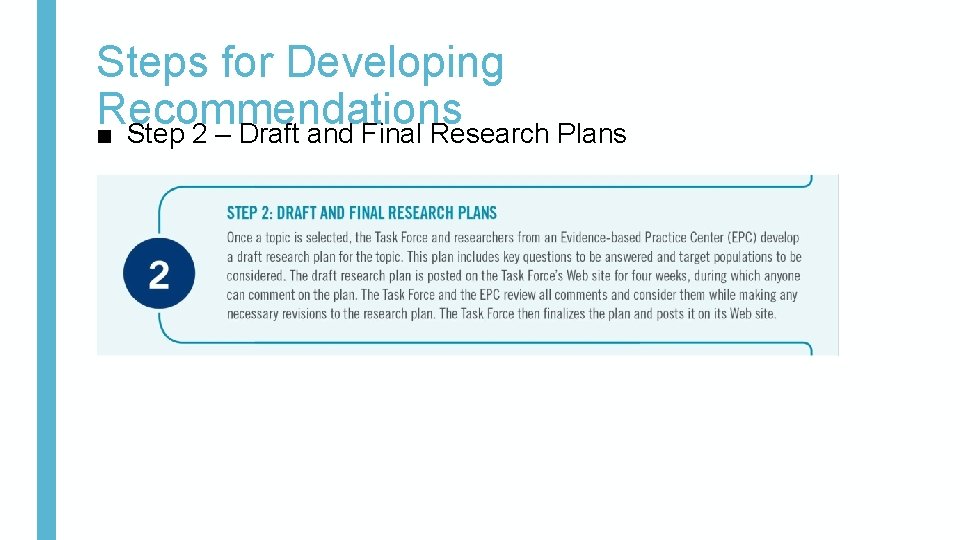
Steps for Developing Recommendations ■ Step 2 – Draft and Final Research Plans
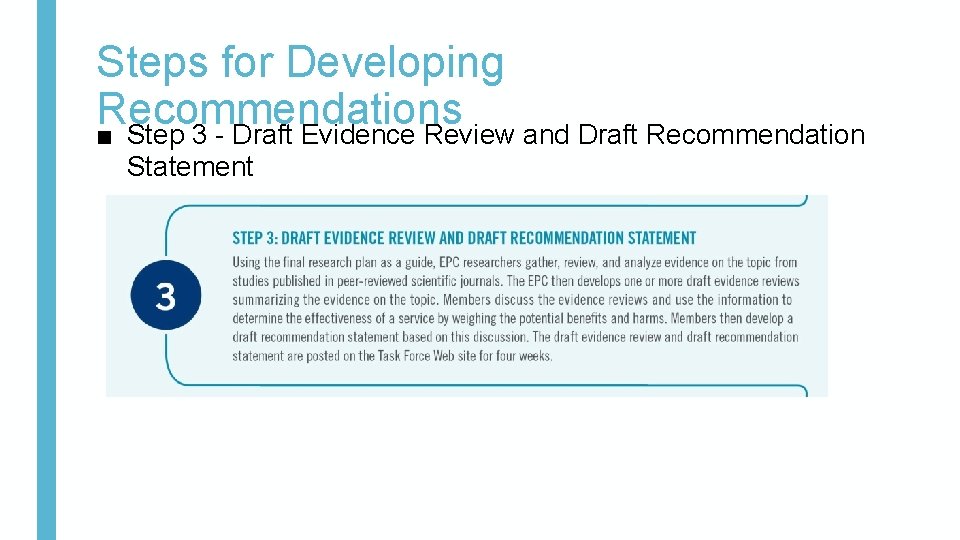
Steps for Developing Recommendations ■ Step 3 - Draft Evidence Review and Draft Recommendation Statement
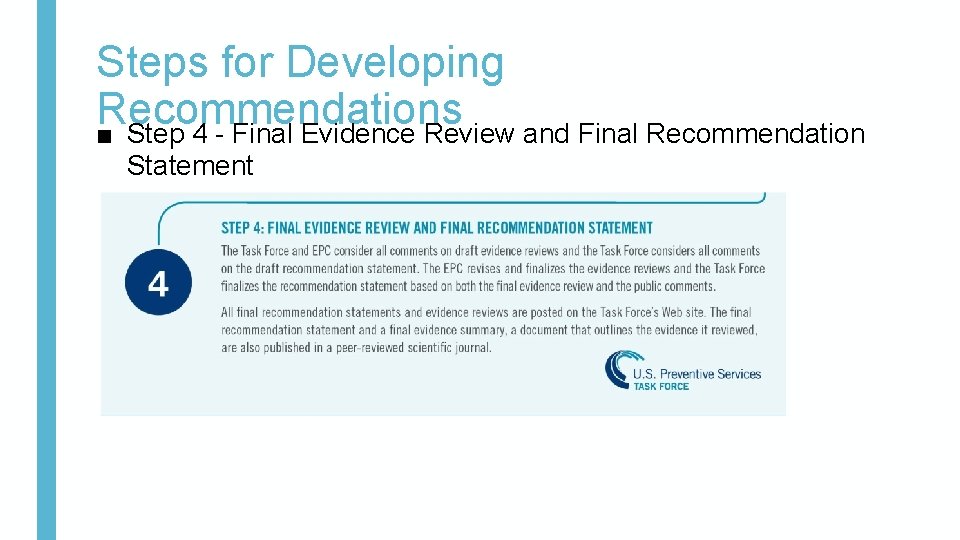
Steps for Developing Recommendations ■ Step 4 - Final Evidence Review and Final Recommendation Statement

Recommendation Grades

Examples of Recommended Guidelines ■ Cervical Cancer Screening – “The U. S. Preventive Services Task Force recommends screening for cervical cancer in women age 21 to 65 years with cytology (Pap smear) every 3 years…” – Grade A – “The U. S. Preventive Services Task Force does not recommend screening for cervical cancer in women younger than age 21 years. ” – Grade D
Examples of Recommended Guidelines ■ Breast Cancer Screening – “The U. S. Preventive Services Task Force recommends biennial screening mammography for women aged 50 to 74 years. ” – Grade B
Why Have Recommended Guidelines for Health Services? ■ Prevent death and disease ■ Assures practices are evidence-based ■ To maximize effectiveness and efficiency of practice ■ Reduce health disparities
Evidenced-Based Public Health “…the development, implementation, and evaluation of effective programs and policies in public health through application of principles of scientific reasoning, including systematic uses of data and information systems, and appropriate use of behavioral science theory and program planning models. ” (Brownson, Baker, Leet, and Gillespie,
What’s the problem with this? ■ Dissemination and implementation of guidelines – Difficult to understand changes – Communicating the rationale for changes ■ Lack of consistent messages for guidelines – Guidelines differ among organizations (e. g. , Breast Cancer Screening) ■ ”How to navigate differing breast cancer screening guidelines” https: //www. youtube. com/watch? v=9 ndm. LX 1 u-bs
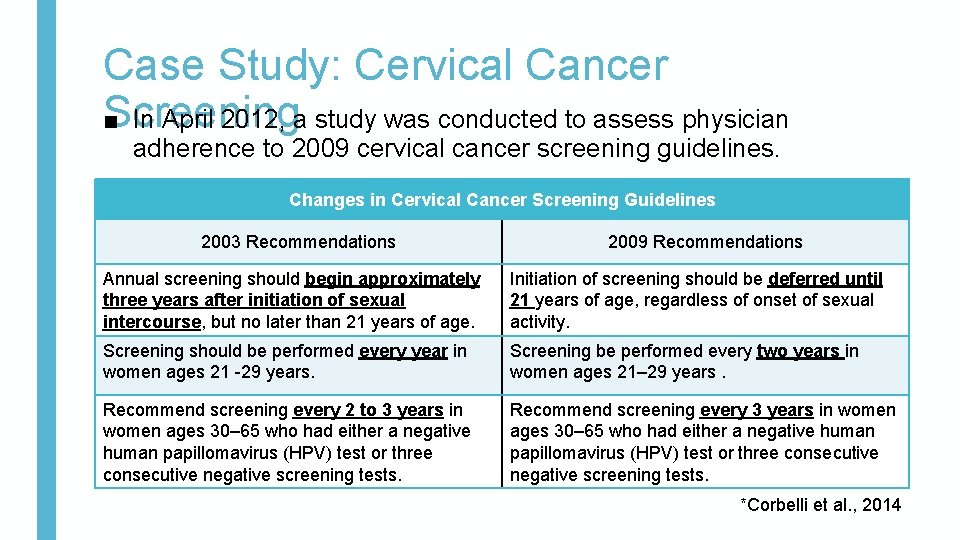
Case Study: Cervical Cancer Screening ■ In April 2012, a study was conducted to assess physician adherence to 2009 cervical cancer screening guidelines. Changes in Cervical Cancer Screening Guidelines 2003 Recommendations 2009 Recommendations Annual screening should begin approximately three years after initiation of sexual intercourse, but no later than 21 years of age. Initiation of screening should be deferred until 21 years of age, regardless of onset of sexual activity. Screening should be performed every year in women ages 21 -29 years. Screening be performed every two years in women ages 21– 29 years. Recommend screening every 2 to 3 years in women ages 30– 65 who had either a negative human papillomavirus (HPV) test or three consecutive negative screening tests. Recommend screening every 3 years in women ages 30– 65 who had either a negative human papillomavirus (HPV) test or three consecutive negative screening tests. *Corbelli et al. , 2014
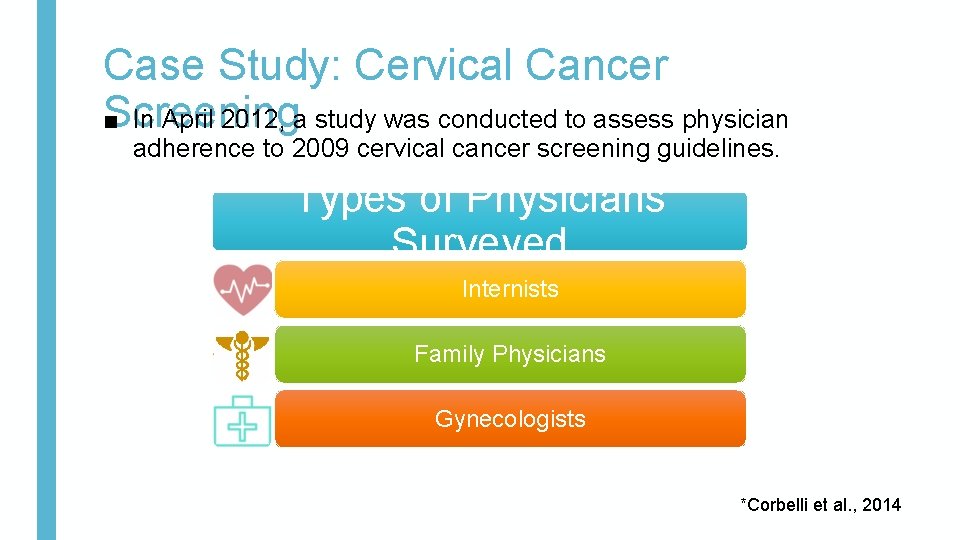
Case Study: Cervical Cancer Screening ■ In April 2012, a study was conducted to assess physician adherence to 2009 cervical cancer screening guidelines. Types of Physicians Surveyed Internists Family Physicians Gynecologists *Corbelli et al. , 2014
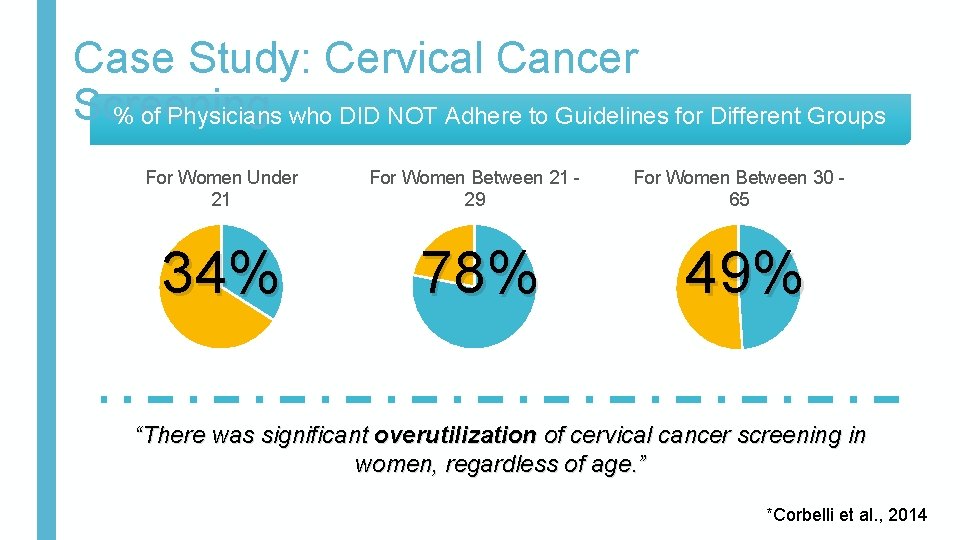
Case Study: Cervical Cancer Screening % of Physicians who DID NOT Adhere to Guidelines for Different Groups For Women Under 21 34% For Women Between 21 29 78% For Women Between 30 65 49% “There was significant overutilization of cervical cancer screening in women, regardless of age. ” *Corbelli et al. , 2014
HOW CAN WE IMPROVE GUIDELINE DISSEMINATION AND IMPLEMENTATION?
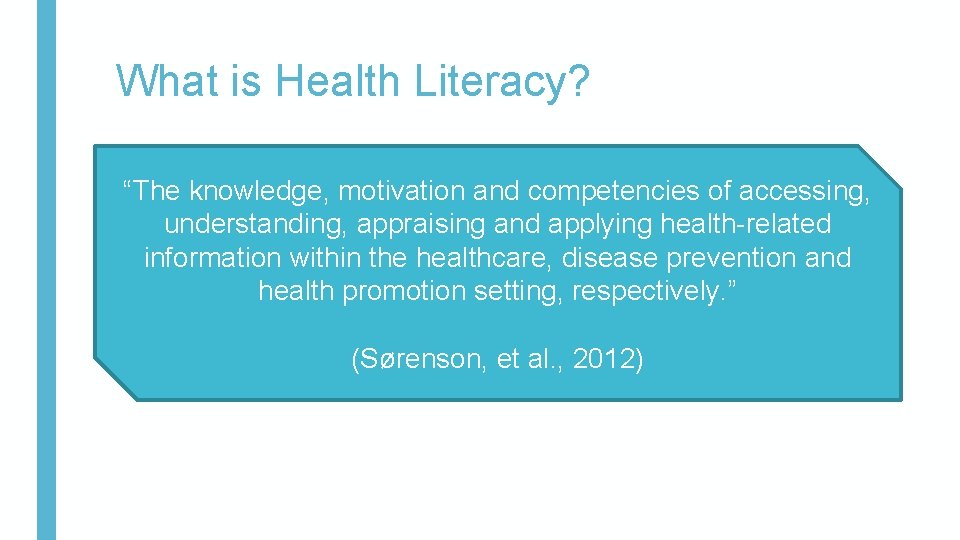
What is Health Literacy? “The knowledge, motivation and competencies of accessing, understanding, appraising and applying health-related information within the healthcare, disease prevention and health promotion setting, respectively. ” (Sørenson, et al. , 2012)
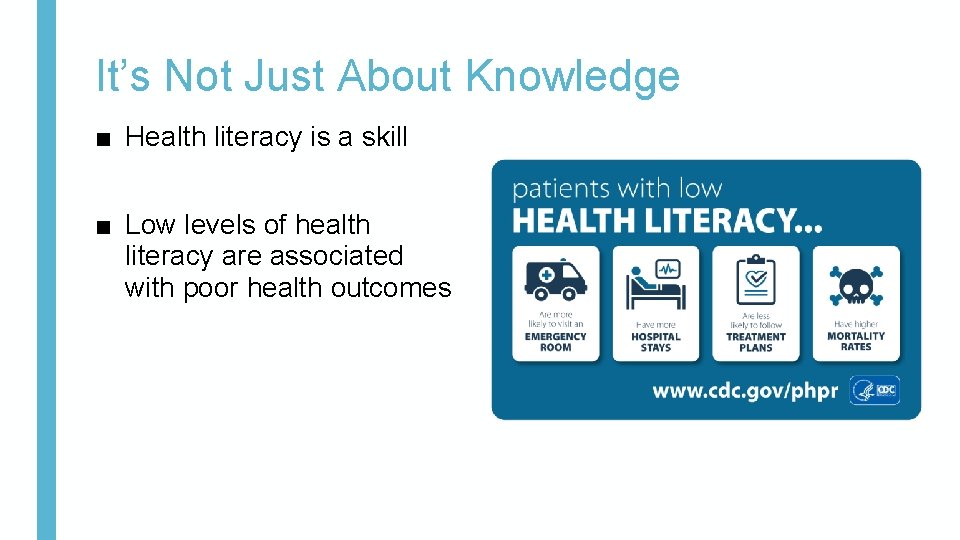
It’s Not Just About Knowledge ■ Health literacy is a skill ■ Low levels of health literacy are associated with poor health outcomes
What can be done? For Patients For Providers – Improve health literacy skills – Guideline tools (e. g. , Myhealthfinder) – Increase dissemination of guideline changes (e. g. , educational meetings) – Reminder notifications on electronic health records ?
The Women’s Preventive Services Initiative – Who are they? ■ Collaboration of health societies and consumer organizations ■ Formed by the American College of Obstetricians and Gynecologists ■ Includes federal partners
The Women’s Preventive Services Initiative – How are they different? ■ ■ Develop uniform women's health prevention guidelines Members include patient and consumer representatives Actively disseminate recommendations Increase awareness of the need for preventive healthcare
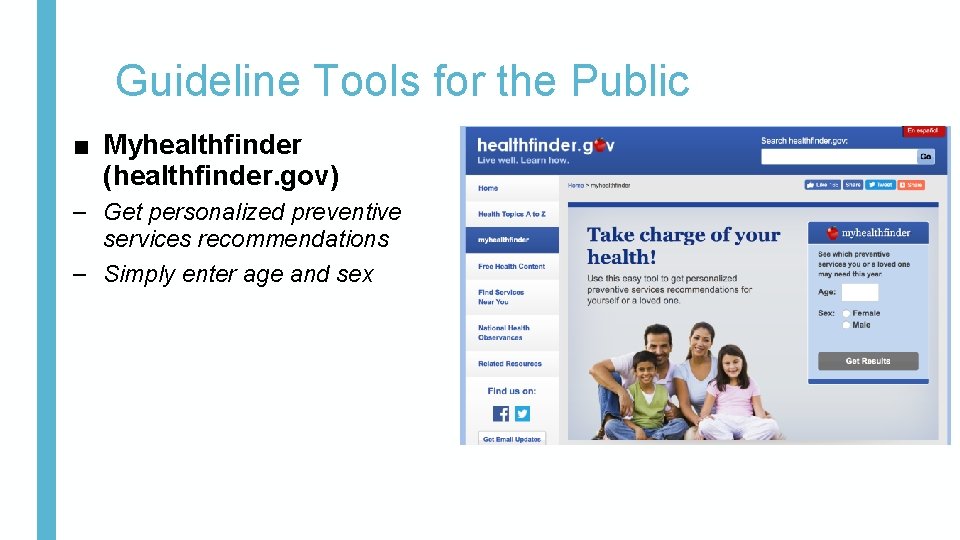
Guideline Tools for the Public ■ Myhealthfinder (healthfinder. gov) – Get personalized preventive services recommendations – Simply enter age and sex
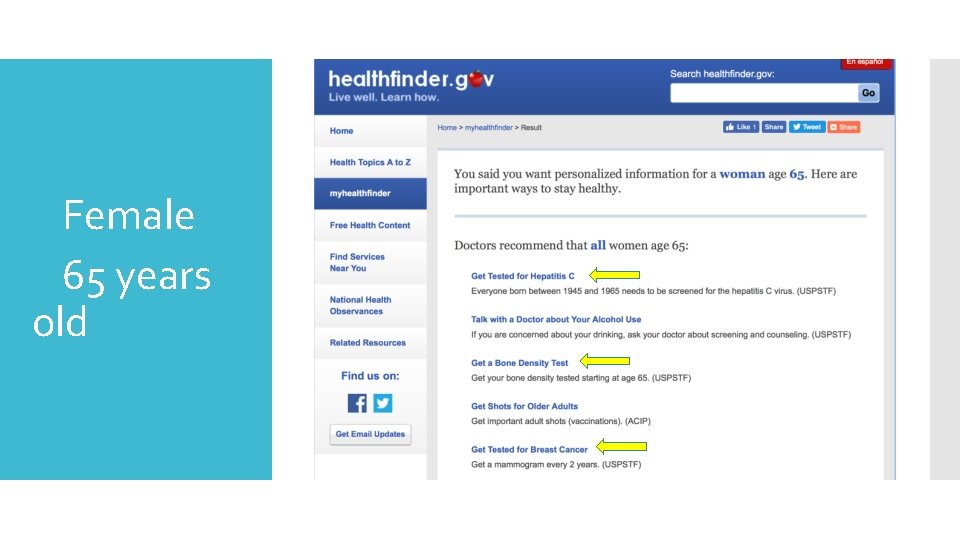
Female 65 years old
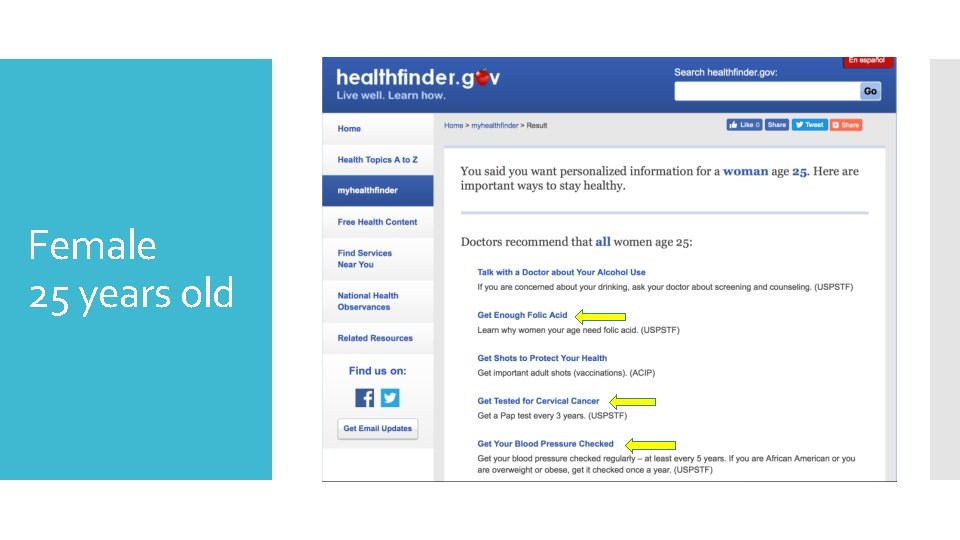
Female 25 years old
Guidelines Assessment Assignment
Overview of Assignment ■ Assess the public’s health literacy of a recent women’s health guideline change ■ MCH Leadership Competencies – Self: Ethics and Professionalism, Critical Thinking – Others: Communication, Cultural Competency, Interdisciplinary Team Building – Wider Community: Policy and Advocacy
Overview of Assignment ■ Step One: Select a Women’s Health Guideline – Select one women’s health guideline that has recently changed ■ Step Two: Plan the Interviews – Draft an interview guide ■ Step Three: Conduct the Interviews – Prepare a brief introduction and closing – Be respectful and professional – Follow-up with a thank you email or letter
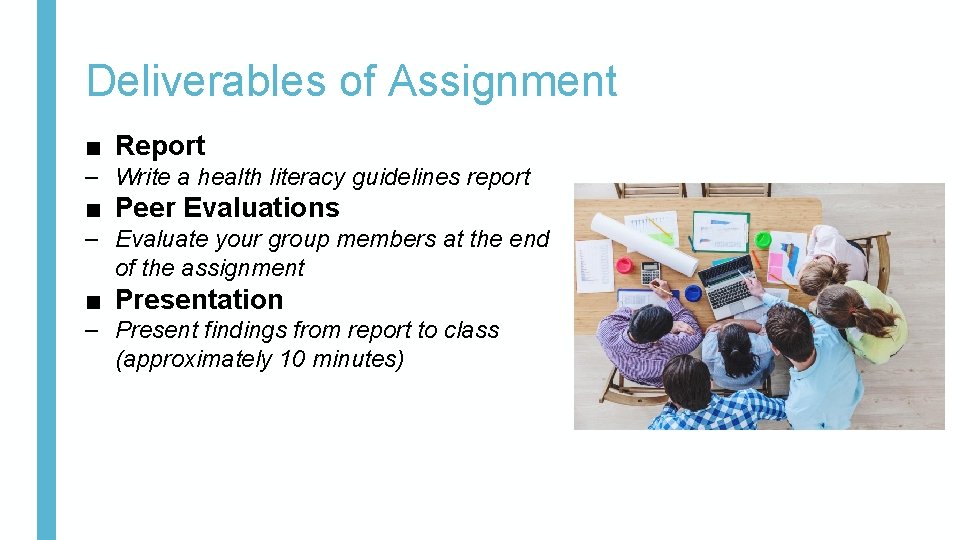
Deliverables of Assignment ■ Report – Write a health literacy guidelines report ■ Peer Evaluations – Evaluate your group members at the end of the assignment ■ Presentation – Present findings from report to class (approximately 10 minutes)
- Slides: 33