
Materials Technology Joining Processes Overview Joining Materials OPTION
- Slides: 30
Materials Technology Joining Processes
Overview – Joining Materials OPTION The student will learn about… The methods by which materials are joined – permanent and semi-permanent techniques The student will be able to… • Demonstrate a knowledge of the main methods of joining materials – metallurgical processes, mechanical joining and adhesive/chemical bonding
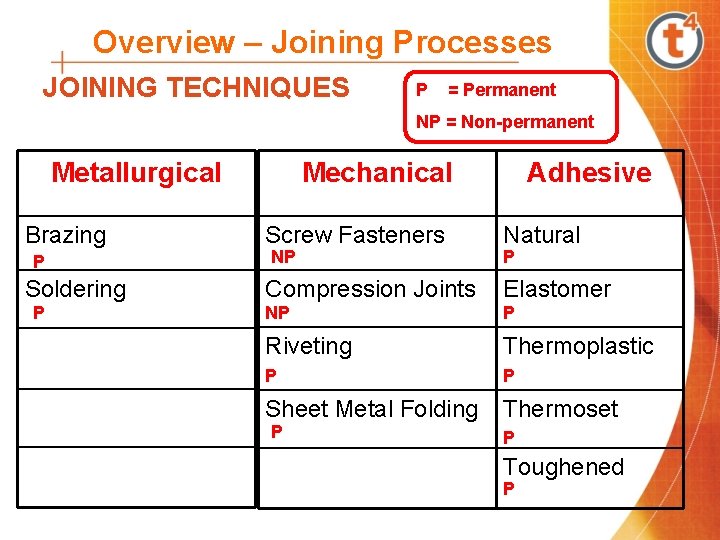
Overview – Joining Processes JOINING TECHNIQUES P = Permanent NP = Non-permanent Metallurgical Brazing P Soldering P Mechanical Adhesive Screw Fasteners Natural Compression Joints Elastomer NP P Riveting Thermoplastic P P Sheet Metal Folding Thermoset NP P Toughened P
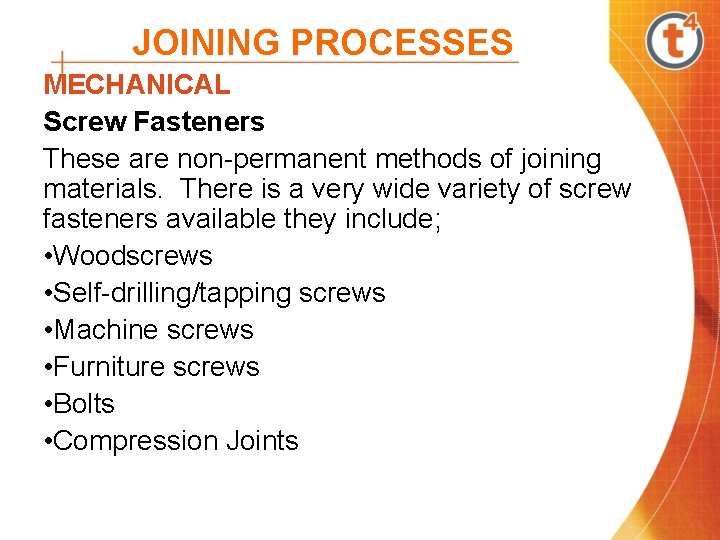
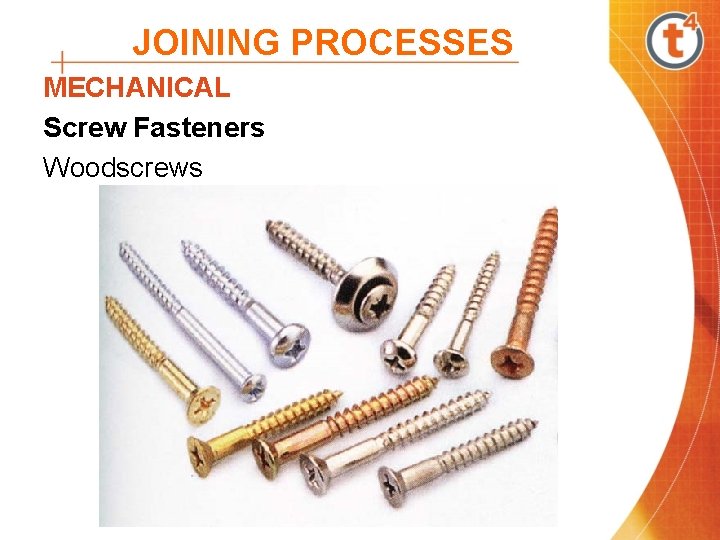
JOINING PROCESSES MECHANICAL Screw Fasteners These are non-permanent methods of joining materials. There is a very wide variety of screw fasteners available they include; • Woodscrews • Self-drilling/tapping screws • Machine screws • Furniture screws • Bolts • Compression Joints
JOINING PROCESSES MECHANICAL Screw Fasteners Woodscrews
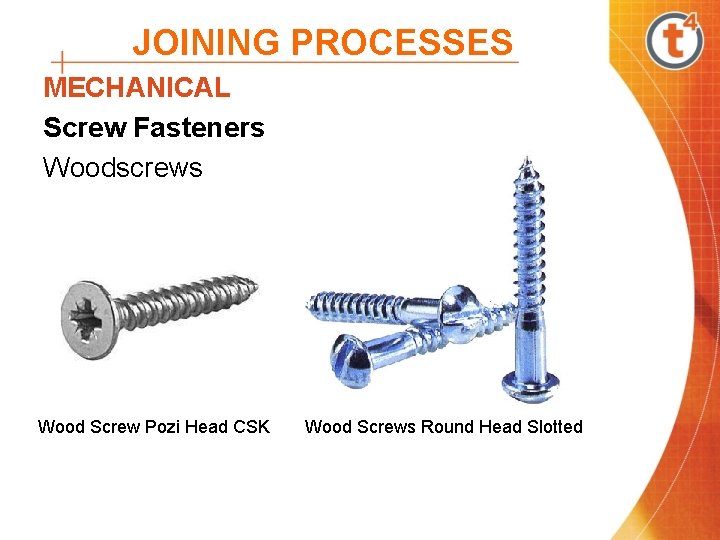
JOINING PROCESSES MECHANICAL Screw Fasteners Woodscrews Wood Screw Pozi Head CSK Wood Screws Round Head Slotted
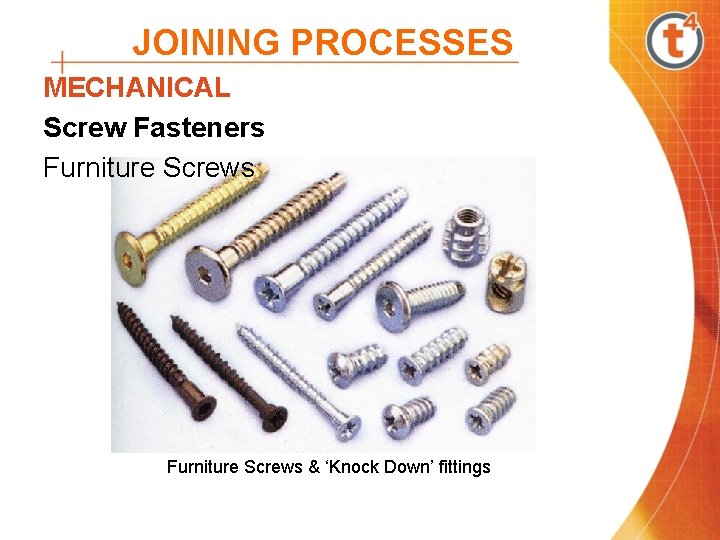
JOINING PROCESSES MECHANICAL Screw Fasteners Furniture Screws & ‘Knock Down’ fittings
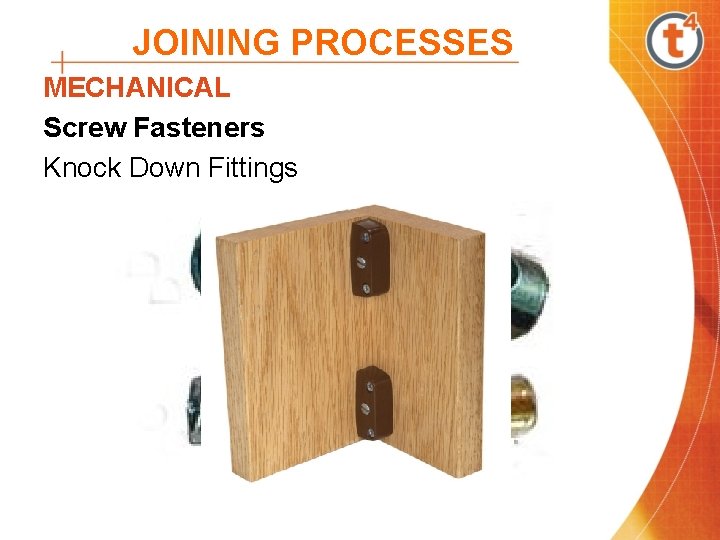
JOINING PROCESSES MECHANICAL Screw Fasteners Knock Down Fittings
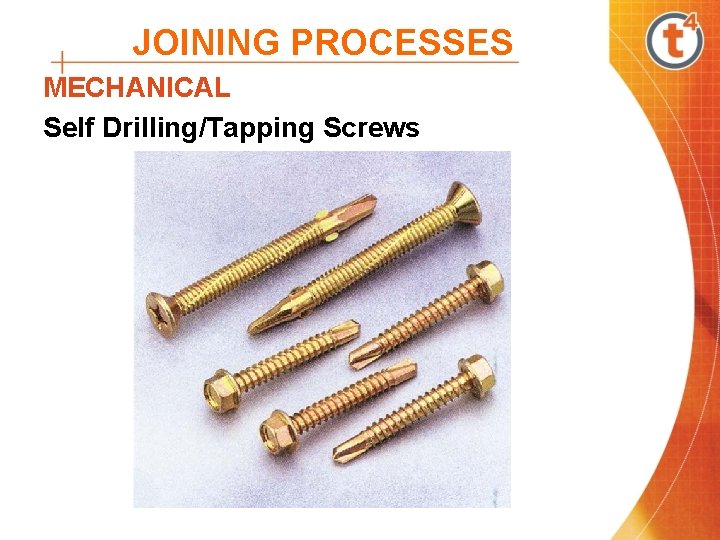
JOINING PROCESSES MECHANICAL Self Drilling/Tapping Screws
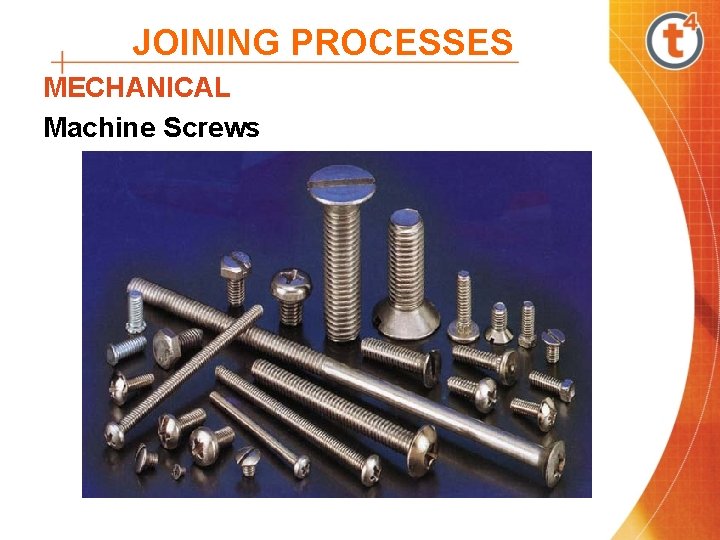
JOINING PROCESSES MECHANICAL Machine Screws
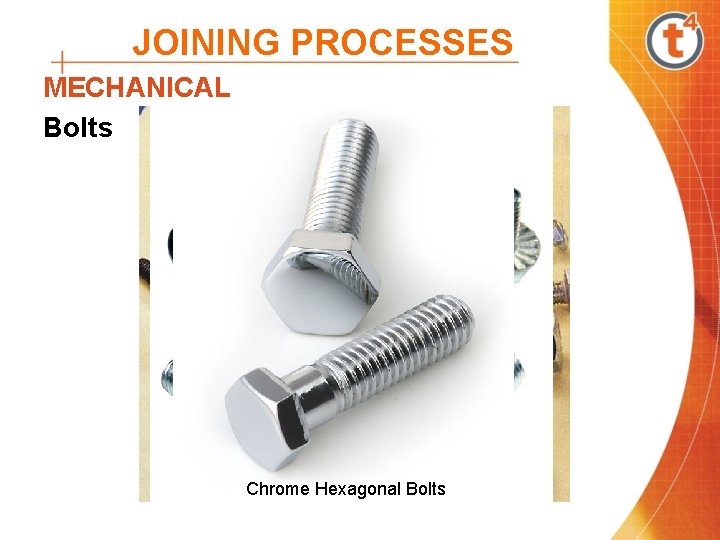
JOINING PROCESSES MECHANICAL Bolts Hexagon Flange Bolts Chrome Hexagonal Bolts Hexagon Socket Head
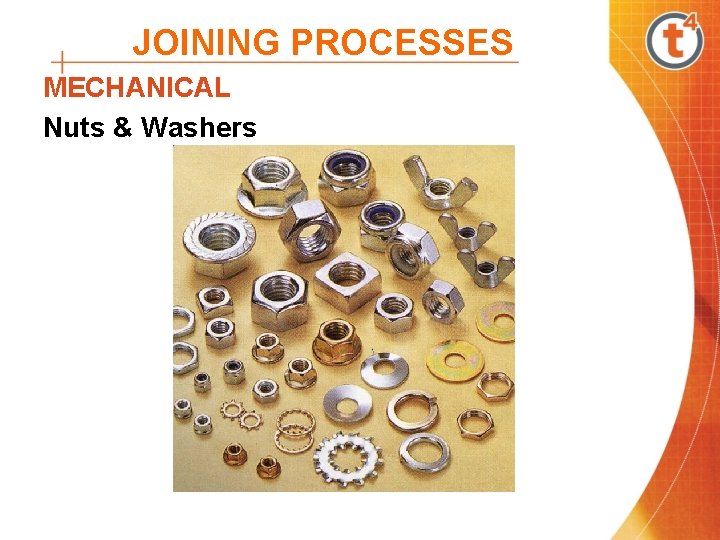
JOINING PROCESSES MECHANICAL Nuts & Washers
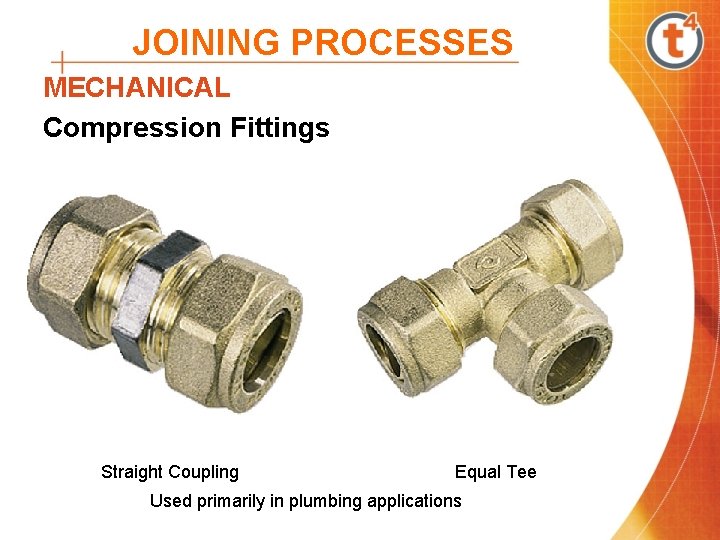
JOINING PROCESSES MECHANICAL Compression Fittings Straight Coupling Equal Tee Used primarily in plumbing applications
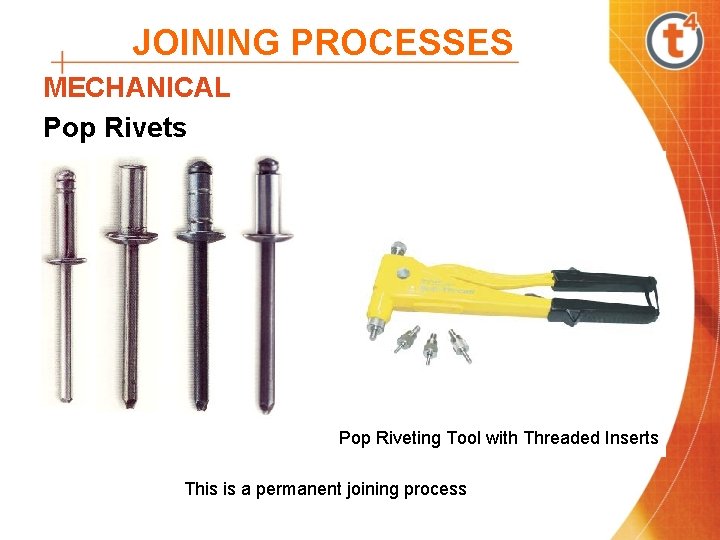
JOINING PROCESSES MECHANICAL Pop Rivets Pop Riveting Tool with Threaded Inserts This is a permanent joining process
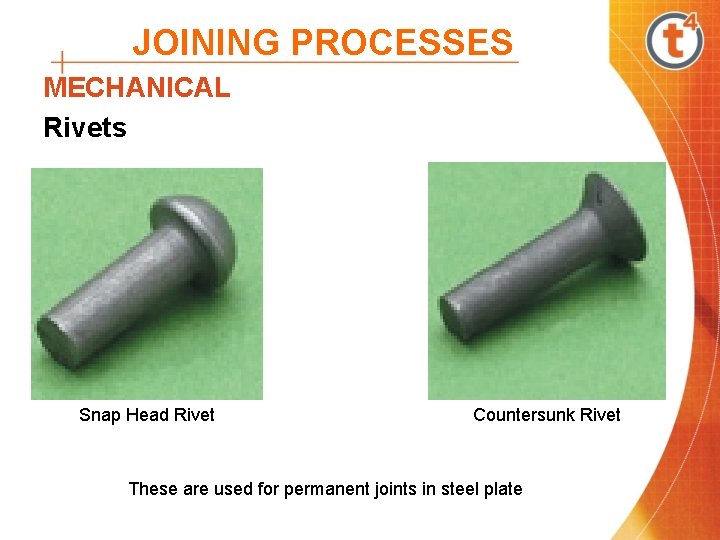
JOINING PROCESSES MECHANICAL Rivets Snap Head Rivet Countersunk Rivet These are used for permanent joints in steel plate
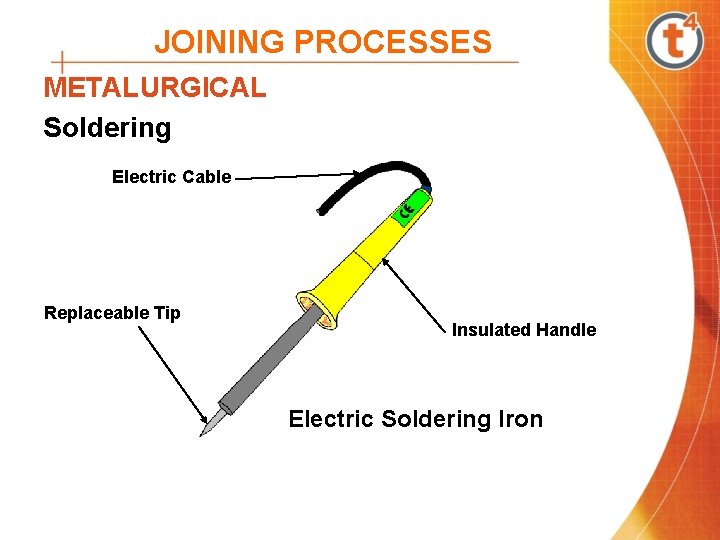
JOINING PROCESSES METALURGICAL Soldering Electric Cable Replaceable Tip Insulated Handle Electric Soldering Iron
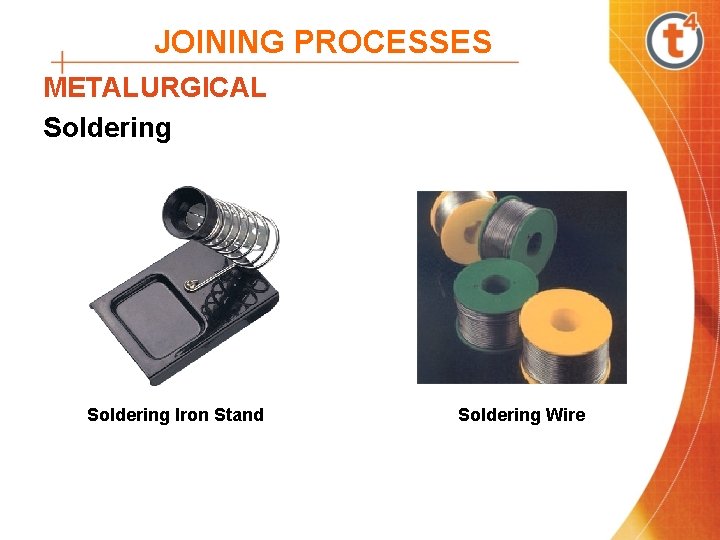
JOINING PROCESSES METALURGICAL Soldering Iron Stand Soldering Wire
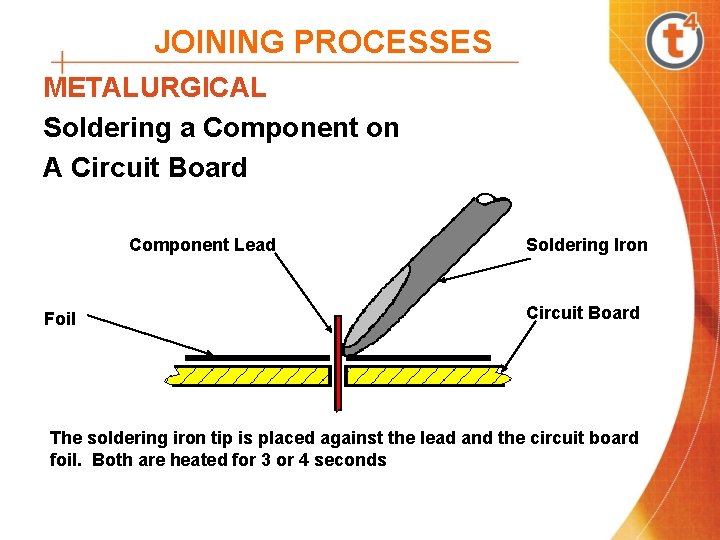
JOINING PROCESSES METALURGICAL Soldering a Component on A Circuit Board Component Lead Foil Soldering Iron Circuit Board The soldering iron tip is placed against the lead and the circuit board foil. Both are heated for 3 or 4 seconds
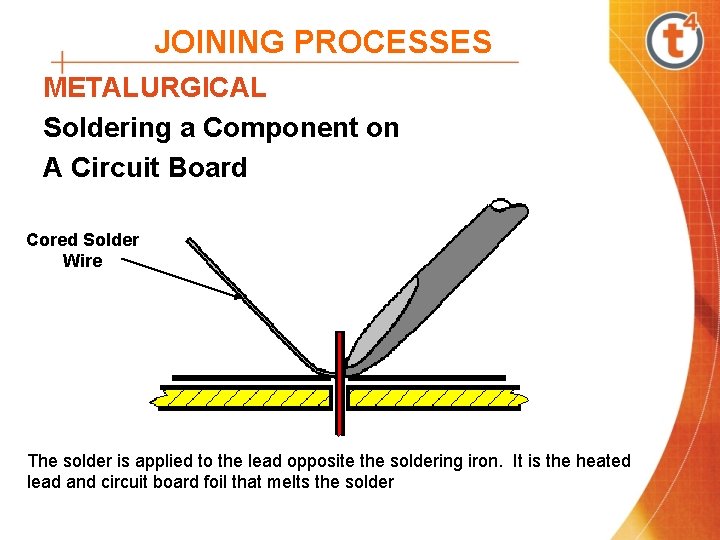
JOINING PROCESSES METALURGICAL Soldering a Component on A Circuit Board Cored Solder Wire The solder is applied to the lead opposite the soldering iron. It is the heated lead and circuit board foil that melts the solder
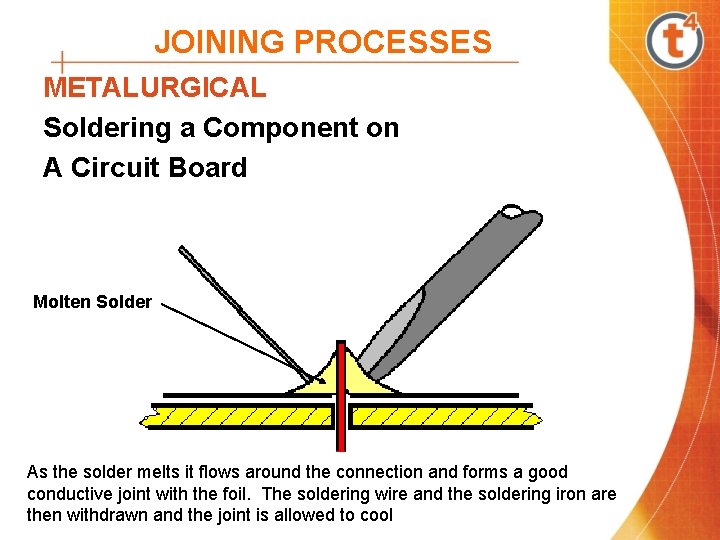
JOINING PROCESSES METALURGICAL Soldering a Component on A Circuit Board Molten Solder As the solder melts it flows around the connection and forms a good conductive joint with the foil. The soldering wire and the soldering iron are then withdrawn and the joint is allowed to cool
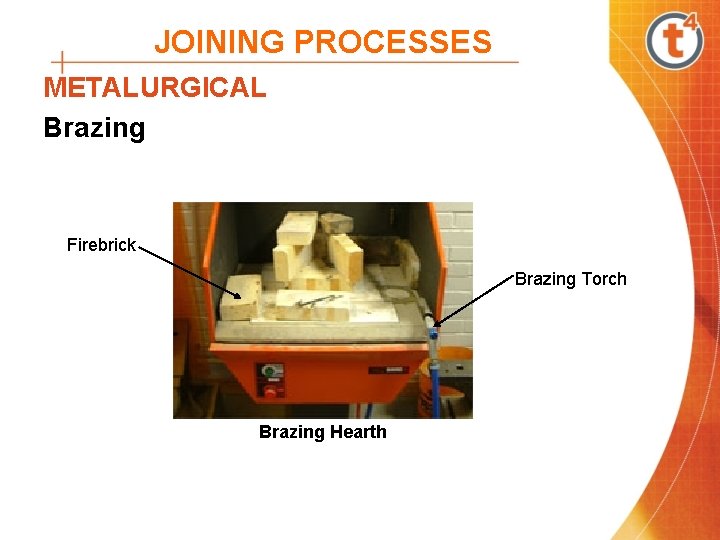
JOINING PROCESSES METALURGICAL Brazing Firebrick Brazing Torch Brazing Hearth
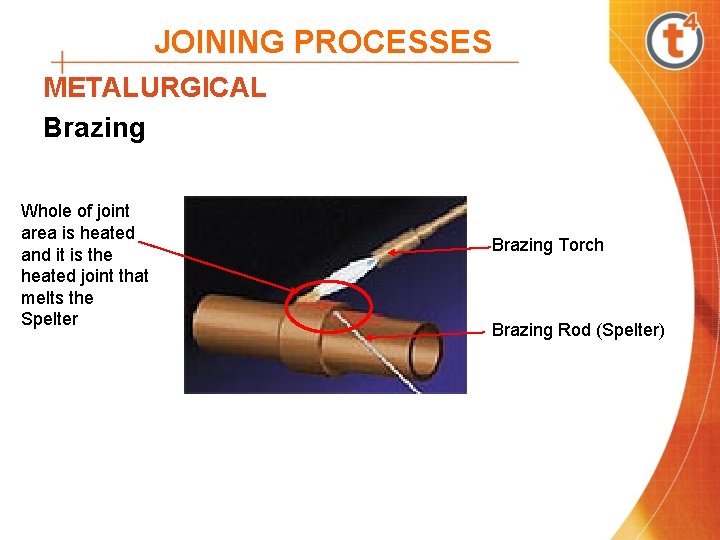
JOINING PROCESSES METALURGICAL Brazing Whole of joint area is heated and it is the heated joint that melts the Spelter Brazing Torch Brazing Rod (Spelter)
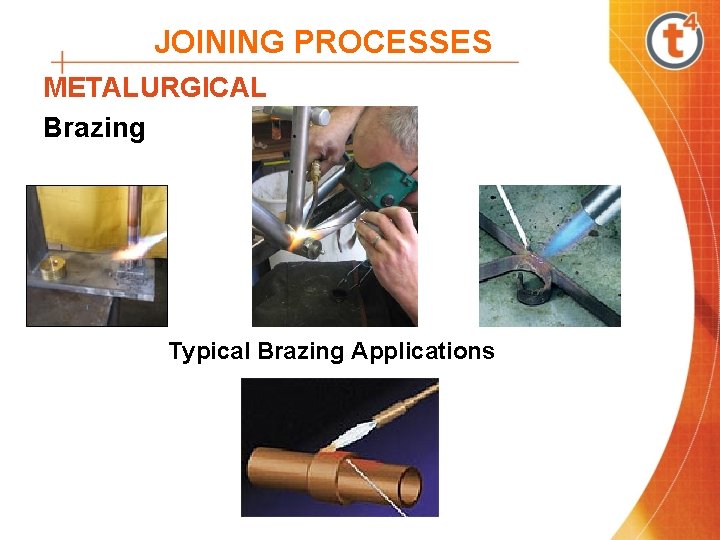
JOINING PROCESSES METALURGICAL Brazing Typical Brazing Applications
JOINING PROCESSES Adhesives Natural Adhesives These are made from natural ingredients rather than being fabricated synthetically from chemicals. Sources • Animal based • Fish based • Vegetable based
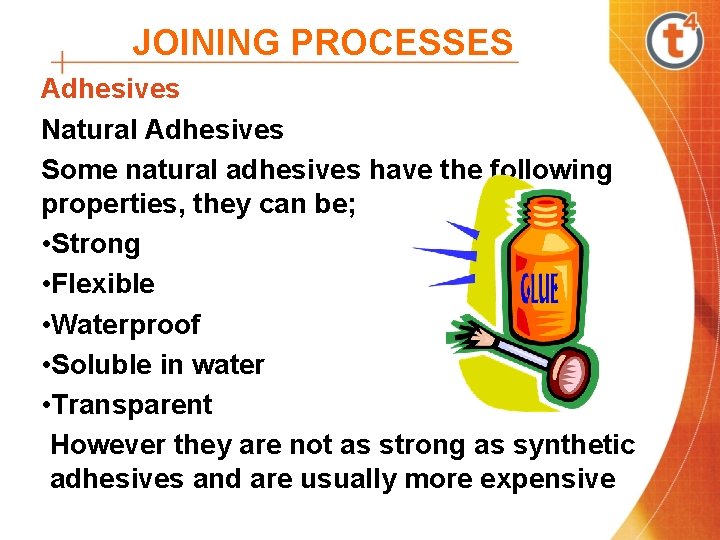
JOINING PROCESSES Adhesives Natural Adhesives Some natural adhesives have the following properties, they can be; • Strong • Flexible • Waterproof • Soluble in water • Transparent However they are not as strong as synthetic adhesives and are usually more expensive
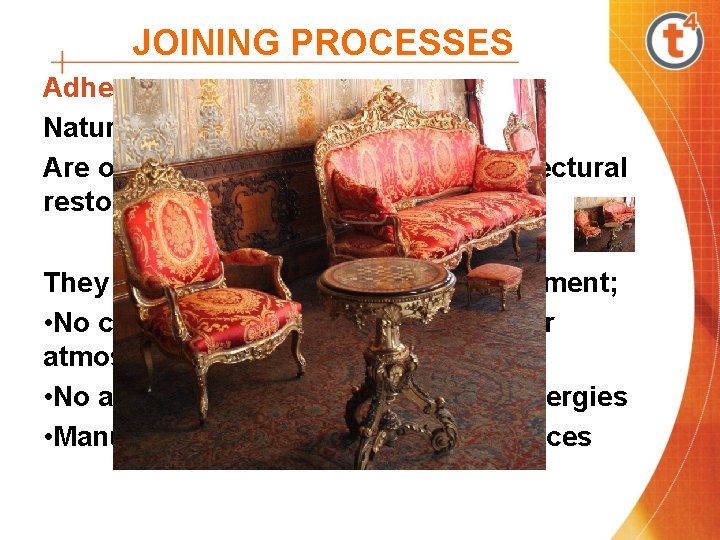
JOINING PROCESSES Adhesives Natural Adhesives Are often used in furniture and architectural restoration projects They are also friendlier to the environment; • No chemicals released into the soil or atmosphere in production or use • No aggravation of chemical based allergies • Manufactured from renewable resources
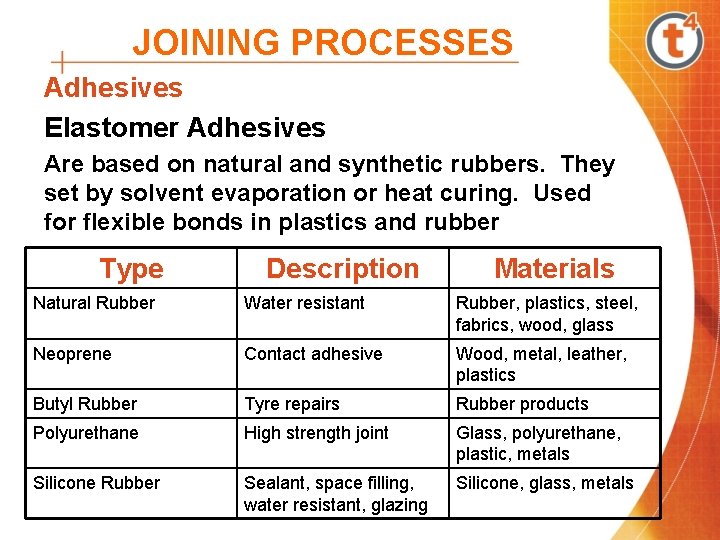
JOINING PROCESSES Adhesives Elastomer Adhesives Are based on natural and synthetic rubbers. They set by solvent evaporation or heat curing. Used for flexible bonds in plastics and rubber Type Description Materials Natural Rubber Water resistant Rubber, plastics, steel, fabrics, wood, glass Neoprene Contact adhesive Wood, metal, leather, plastics Butyl Rubber Tyre repairs Rubber products Polyurethane High strength joint Glass, polyurethane, plastic, metals Silicone Rubber Sealant, space filling, water resistant, glazing Silicone, glass, metals
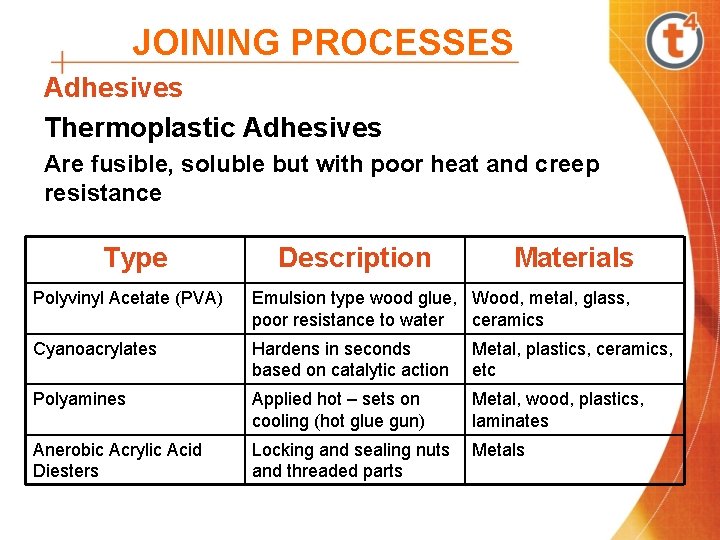
JOINING PROCESSES Adhesives Thermoplastic Adhesives Are fusible, soluble but with poor heat and creep resistance Type Description Materials Polyvinyl Acetate (PVA) Emulsion type wood glue, Wood, metal, glass, poor resistance to water ceramics Cyanoacrylates Hardens in seconds based on catalytic action Metal, plastics, ceramics, etc Polyamines Applied hot – sets on cooling (hot glue gun) Metal, wood, plastics, laminates Anerobic Acrylic Acid Diesters Locking and sealing nuts and threaded parts Metals
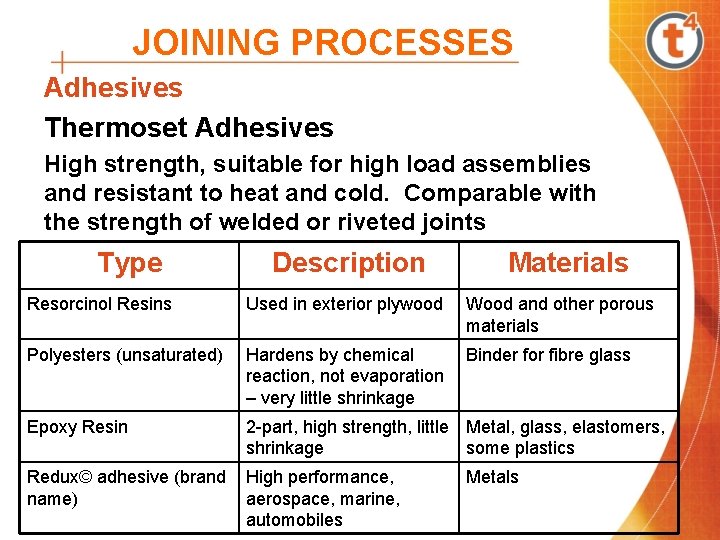
JOINING PROCESSES Adhesives Thermoset Adhesives High strength, suitable for high load assemblies and resistant to heat and cold. Comparable with the strength of welded or riveted joints Type Description Materials Resorcinol Resins Used in exterior plywood Wood and other porous materials Polyesters (unsaturated) Hardens by chemical reaction, not evaporation – very little shrinkage Binder for fibre glass Epoxy Resin 2 -part, high strength, little Metal, glass, elastomers, shrinkage some plastics Redux© adhesive (brand name) High performance, aerospace, marine, automobiles Metals
JOINING PROCESSES Adhesives Toughened Adhesives Research has led to the development of high strength, toughened adhesives. They have small rubber-like particles dispersed throughout the glassy matrix. This gives the adhesive a high resistance to crack formation