
Materials and their Uses Plastic GCSE Resistant Materials



- Slides: 21
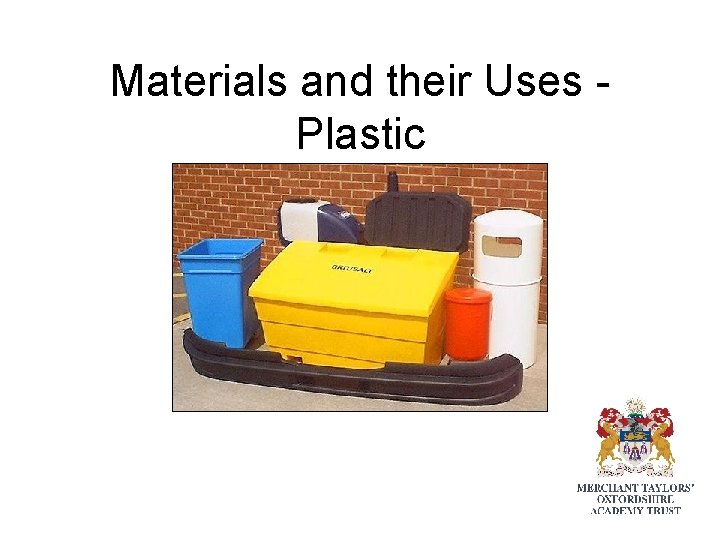
Materials and their Uses Plastic GCSE Resistant Materials
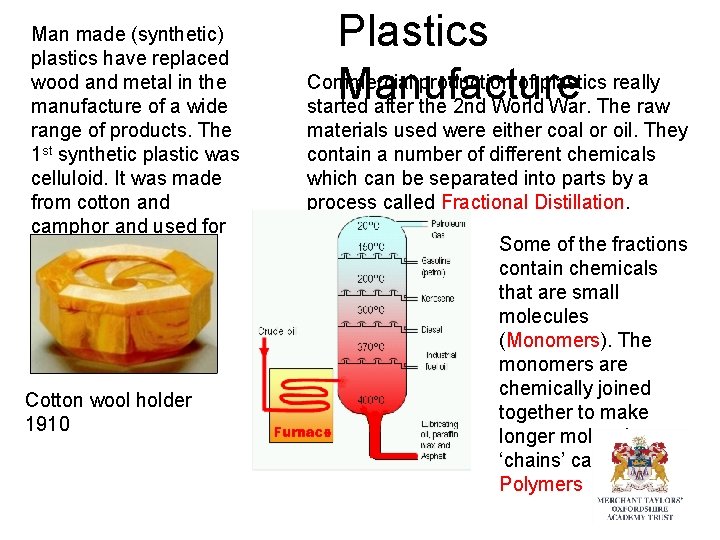
Man made (synthetic) plastics have replaced wood and metal in the manufacture of a wide range of products. The 1 st synthetic plastic was celluloid. It was made from cotton and camphor and used for table tennis balls and film. Cotton wool holder 1910 GCSE Resistant Materials Plastics Commercial production of plastics really Manufacture started after the 2 nd World War. The raw materials used were either coal or oil. They contain a number of different chemicals which can be separated into parts by a process called Fractional Distillation. Some of the fractions contain chemicals that are small molecules (Monomers). The monomers are chemically joined together to make longer moleculer ‘chains’ called Polymers
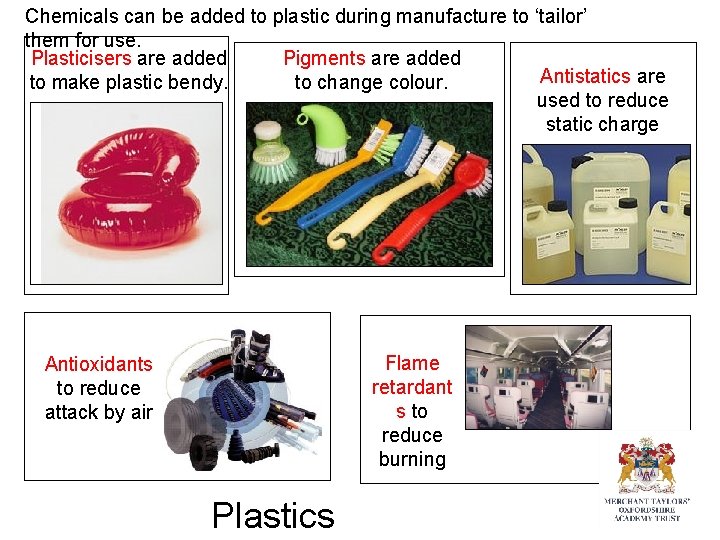
Chemicals can be added to plastic during manufacture to ‘tailor’ them for use. Plasticisers are added Pigments are added Antistatics are to make plastic bendy. to change colour. used to reduce static charge Flame retardant s to reduce burning Antioxidants to reduce attack by air GCSE Resistant Materials Plastics
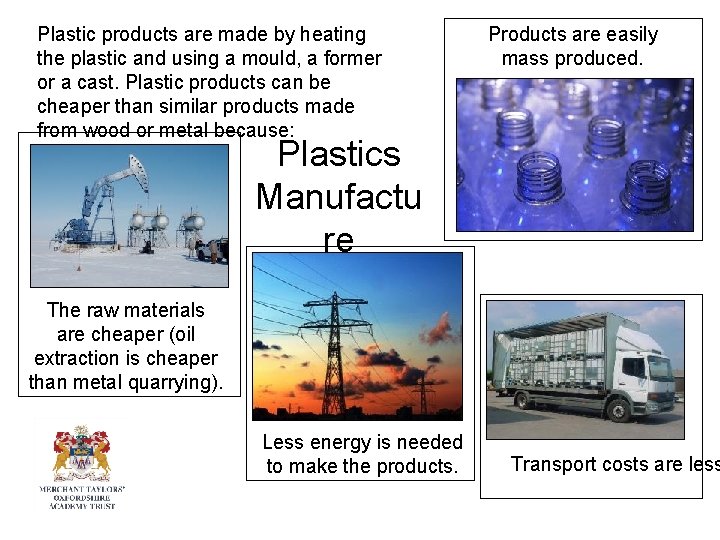
Plastic products are made by heating the plastic and using a mould, a former or a cast. Plastic products can be cheaper than similar products made from wood or metal because: Products are easily mass produced. Plastics Manufactu re The raw materials are cheaper (oil extraction is cheaper than metal quarrying). Less energy is needed to make the products. GCSE Resistant Materials Transport costs are less
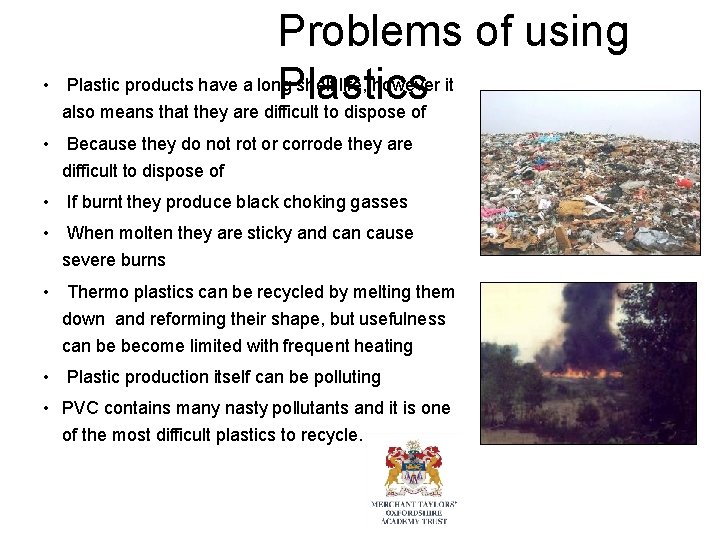
Problems of using • Plastic products have a long shelf life, however it Plastics also means that they are difficult to dispose of • Because they do not rot or corrode they are difficult to dispose of • If burnt they produce black choking gasses • When molten they are sticky and can cause severe burns • Thermo plastics can be recycled by melting them down and reforming their shape, but usefulness can be become limited with frequent heating • Plastic production itself can be polluting • PVC contains many nasty pollutants and it is one of the most difficult plastics to recycle. GCSE Resistant Materials
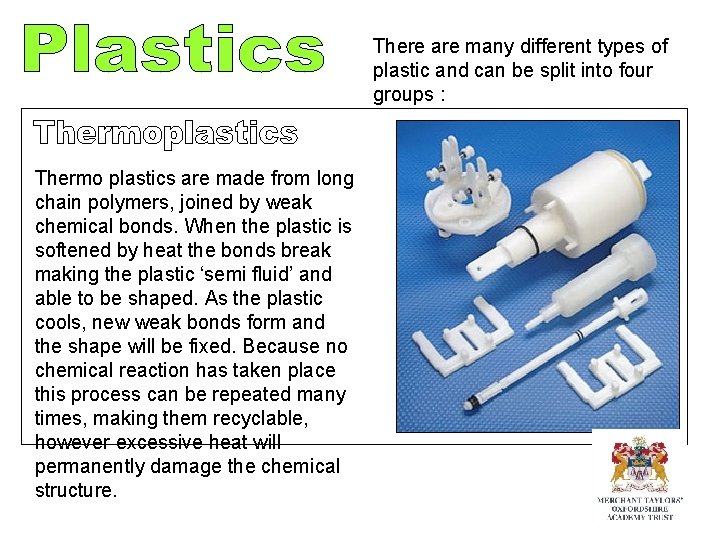
There are many different types of plastic and can be split into four groups : Thermo plastics are made from long chain polymers, joined by weak chemical bonds. When the plastic is softened by heat the bonds break making the plastic ‘semi fluid’ and able to be shaped. As the plastic cools, new weak bonds form and the shape will be fixed. Because no chemical reaction has taken place this process can be repeated many times, making them recyclable, however excessive heat will permanently damage the chemical structure. GCSE Resistant Materials
Thermosets or thermosetting plastics are plastics which are converted into their final form by heat. Once set, they cannot be softened by further heating as they undergo a chemical change. They have strong chemical bonds that hold the long chains together. These make thermosets heat resistant but not recyclable. It is difficult to make products by extrusion or injection moulding as they harden as soon as heated. Manufacturing methods include GCSE Resistant Materials casting, moulding and laminating.
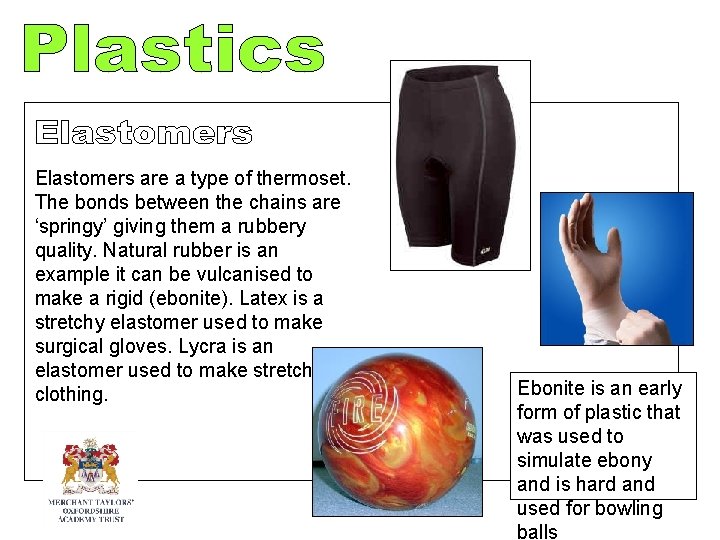
Elastomers are a type of thermoset. The bonds between the chains are ‘springy’ giving them a rubbery quality. Natural rubber is an example it can be vulcanised to make a rigid (ebonite). Latex is a stretchy elastomer used to make surgical gloves. Lycra is an elastomer used to make stretchy clothing. GCSE Resistant Materials Ebonite is an early form of plastic that was used to simulate ebony and is hard and used for bowling balls
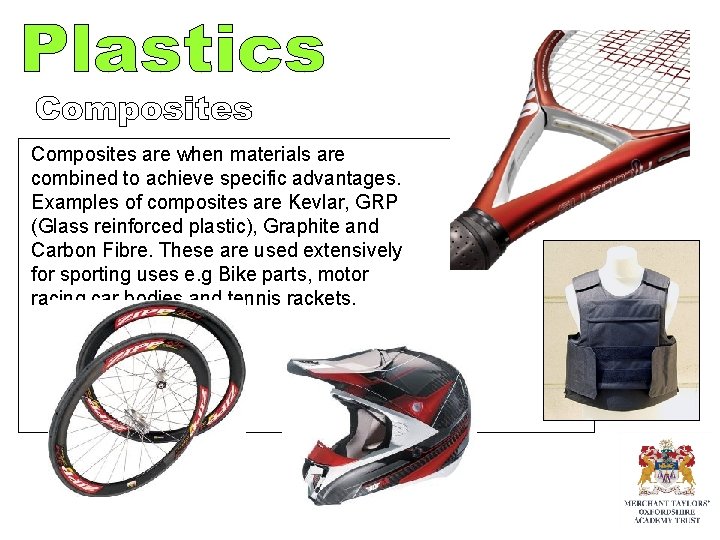
Composites are when materials are combined to achieve specific advantages. Examples of composites are Kevlar, GRP (Glass reinforced plastic), Graphite and Carbon Fibre. These are used extensively for sporting uses e. g Bike parts, motor racing car bodies and tennis rackets. GCSE Resistant Materials
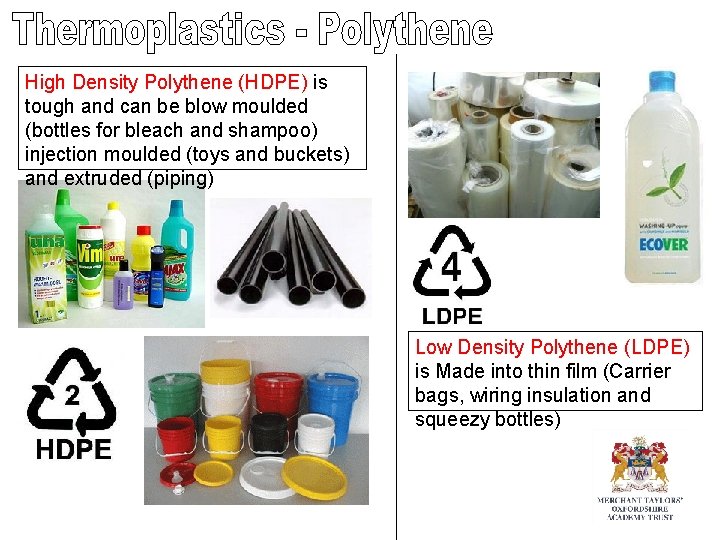
High Density Polythene (HDPE) is tough and can be blow moulded (bottles for bleach and shampoo) injection moulded (toys and buckets) and extruded (piping) Low Density Polythene (LDPE) is Made into thin film (Carrier bags, wiring insulation and squeezy bottles) GCSE Resistant Materials
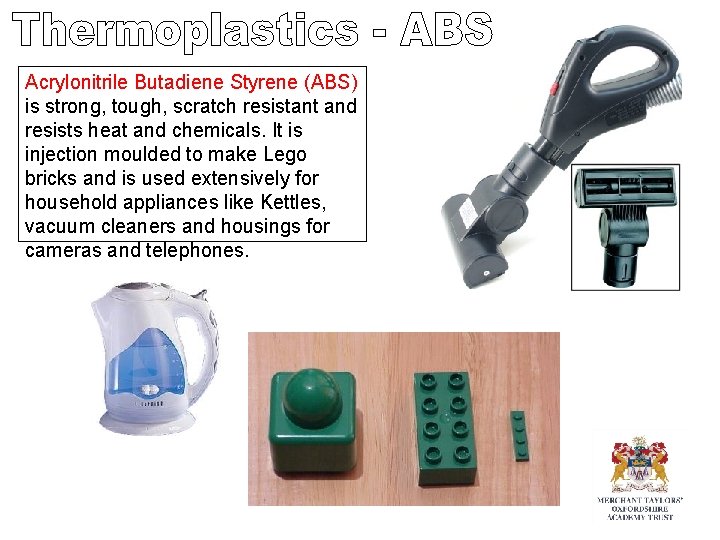
Acrylonitrile Butadiene Styrene (ABS) is strong, tough, scratch resistant and resists heat and chemicals. It is injection moulded to make Lego bricks and is used extensively for household appliances like Kettles, vacuum cleaners and housings for cameras and telephones. GCSE Resistant Materials
Polychloroethene / Polyvinyl chloride (PVC) can be plasticised by different amounts to make a wide range of products (window frames, gutters, disposable pens, razor handles and credit cards) It is strong, stiff and chemical and weather resistant. GCSE Resistant Materials
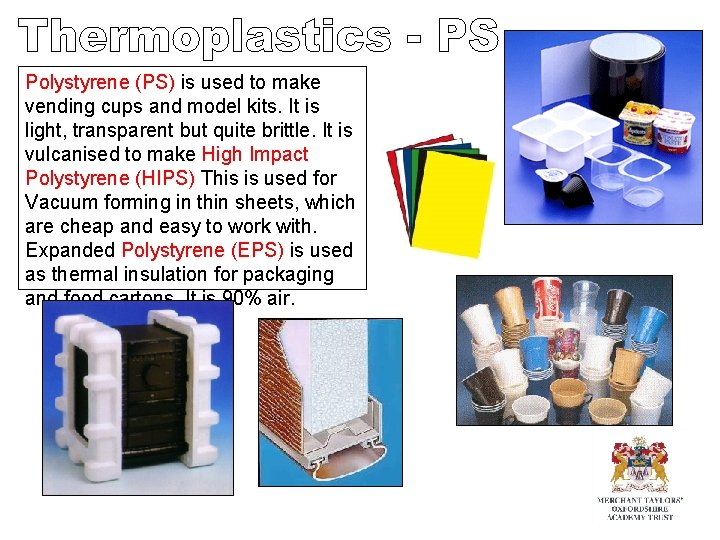
Polystyrene (PS) is used to make vending cups and model kits. It is light, transparent but quite brittle. It is vulcanised to make High Impact Polystyrene (HIPS) This is used for Vacuum forming in thin sheets, which are cheap and easy to work with. Expanded Polystyrene (EPS) is used as thermal insulation for packaging and food cartons. It is 90% air. GCSE Resistant Materials
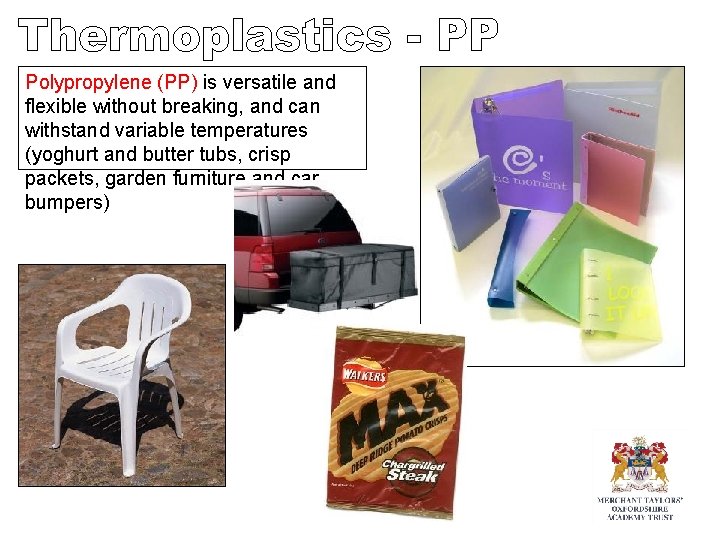
Polypropylene (PP) is versatile and flexible without breaking, and can withstand variable temperatures (yoghurt and butter tubs, crisp packets, garden furniture and car bumpers) GCSE Resistant Materials
Polymides (Nylon) are hard, tough and resist wear, however are hard to join (used in fabrics and combs) GCSE Resistant Materials
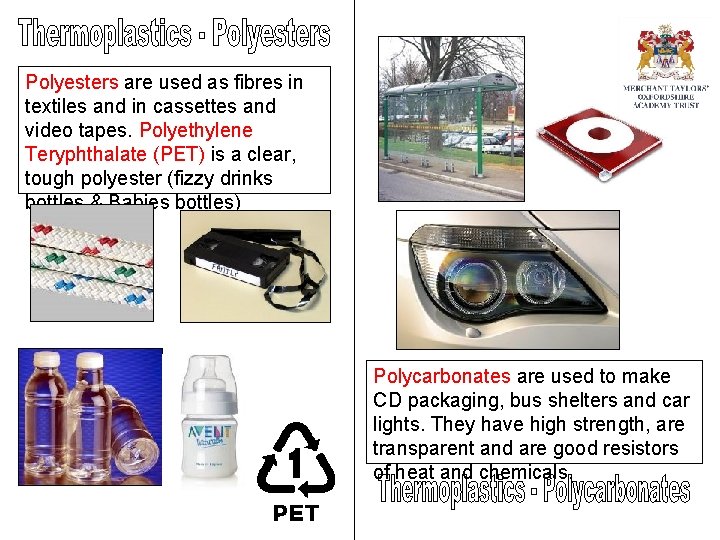
Polyesters are used as fibres in textiles and in cassettes and video tapes. Polyethylene Teryphthalate (PET) is a clear, tough polyester (fizzy drinks bottles & Babies bottles) Polycarbonates are used to make CD packaging, bus shelters and car lights. They have high strength, are transparent and are good resistors of heat and chemicals. GCSE Resistant Materials
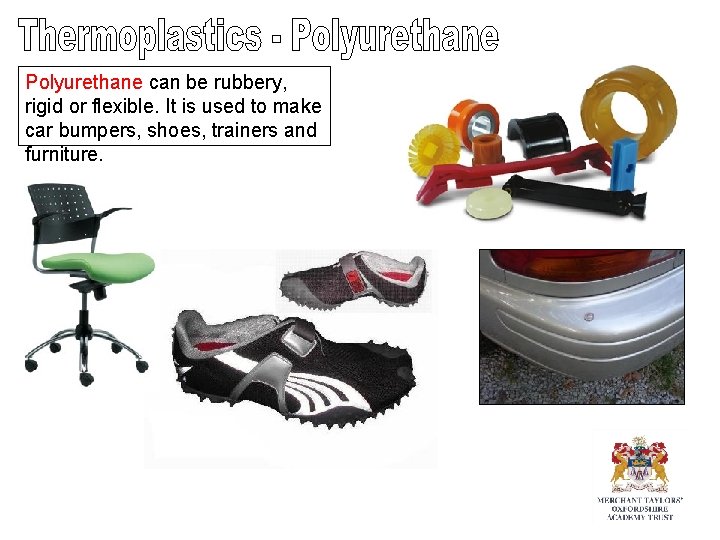
Polyurethane can be rubbery, rigid or flexible. It is used to make car bumpers, shoes, trainers and furniture. GCSE Resistant Materials
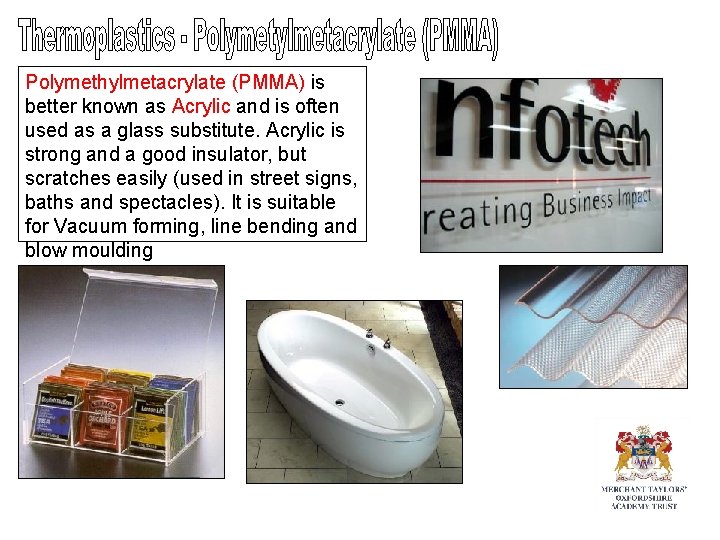
Polymethylmetacrylate (PMMA) is better known as Acrylic and is often used as a glass substitute. Acrylic is strong and a good insulator, but scratches easily (used in street signs, baths and spectacles). It is suitable for Vacuum forming, line bending and blow moulding GCSE Resistant Materials
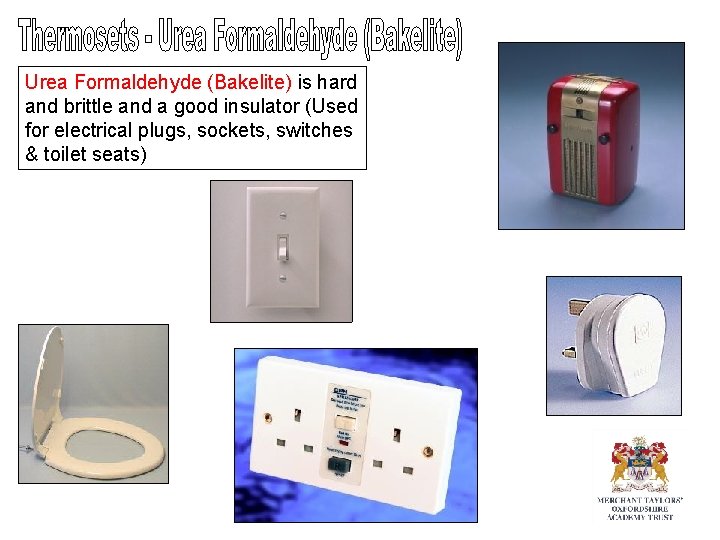
Urea Formaldehyde (Bakelite) is hard and brittle and a good insulator (Used for electrical plugs, sockets, switches & toilet seats) GCSE Resistant Materials
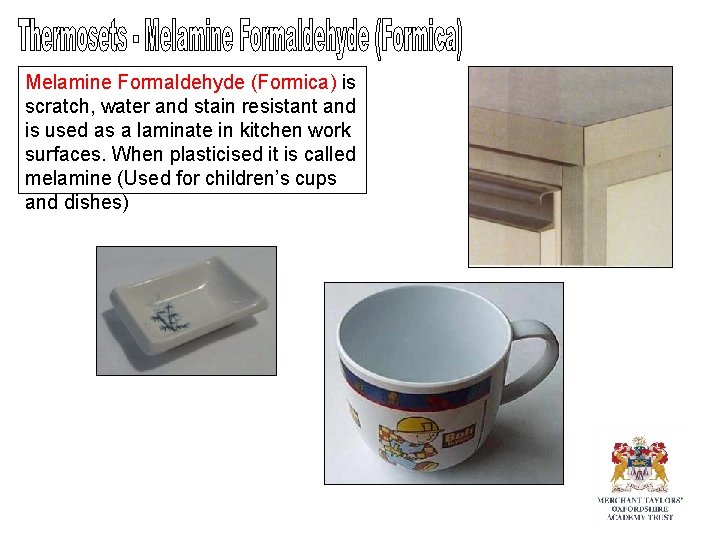
Melamine Formaldehyde (Formica) is scratch, water and stain resistant and is used as a laminate in kitchen work surfaces. When plasticised it is called melamine (Used for children’s cups and dishes) GCSE Resistant Materials
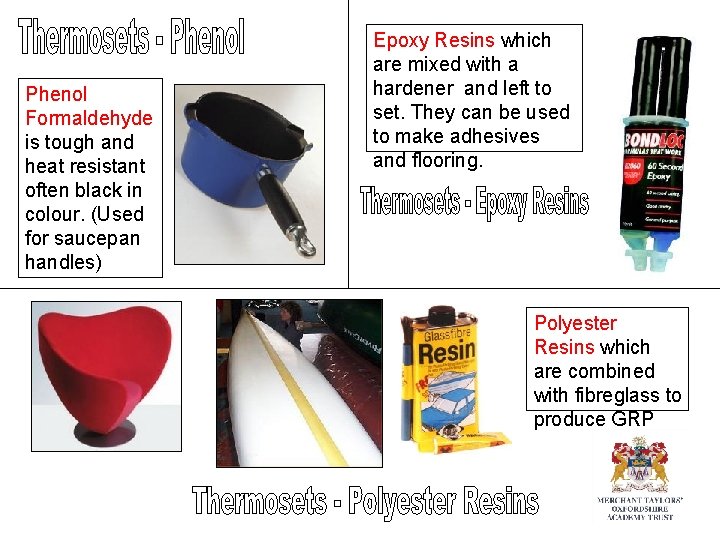
Phenol Formaldehyde is tough and heat resistant often black in colour. (Used for saucepan handles) Epoxy Resins which are mixed with a hardener and left to set. They can be used to make adhesives and flooring. Polyester Resins which are combined with fibreglass to produce GRP GCSE Resistant Materials