
Materials and Properties IV Outgassing Paolo Chiggiato Gas

![Interpretation: single desorption energy T=296 K Po=1 Torr P[Torr] Pressure decrease for different adsorption](https://slidetodoc.com/presentation_image_h/8809117ac3ec85aba82e9133d2e2ec0e/image-13.jpg "Interpretation: single desorption energy T=296 K Po=1 Torr P[Torr] Pressure decrease for different adsorption")
![Outgassing of polymers Example: PEEK [O O O C ] Water solubility: n 0.](https://slidetodoc.com/presentation_image_h/8809117ac3ec85aba82e9133d2e2ec0e/image-16.jpg "Outgassing of polymers Example: PEEK [O O O C ] Water solubility: n 0.")

- Slides: 47
Materials and Properties IV Outgassing Paolo Chiggiato - Gas source and main features. - Order of magnitude. - Outgassing of water vapour from metals - Outgassing of water vapour from polymers - Outgassing of H 2 from metals Outline CERN Accelerator School (CAS) on Vacuum for Particle Accelerators June 18 th 2017
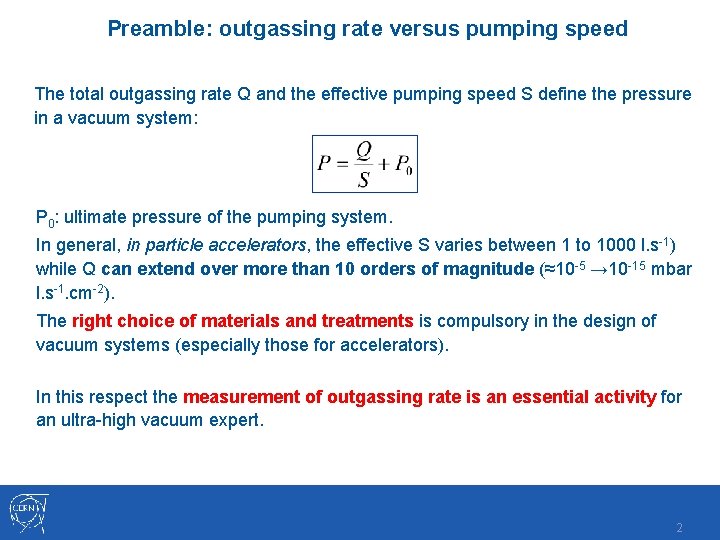
Preamble: outgassing rate versus pumping speed The total outgassing rate Q and the effective pumping speed S define the pressure in a vacuum system: P 0: ultimate pressure of the pumping system. In general, in particle accelerators, the effective S varies between 1 to 1000 l. s-1) while Q can extend over more than 10 orders of magnitude (≈10 -5 → 10 -15 mbar l. s-1. cm-2). The right choice of materials and treatments is compulsory in the design of vacuum systems (especially those for accelerators). In this respect the measurement of outgassing rate is an essential activity for an ultra-high vacuum expert. 2
Reminder: Terminology • Outgassing is the spontaneous evolution of gas from solid or liquid. • Degassing is the deliberate removal of gas from a solid or a liquid. • Desorption is the release of adsorbed chemical species from the surface of a solid or liquid. 3
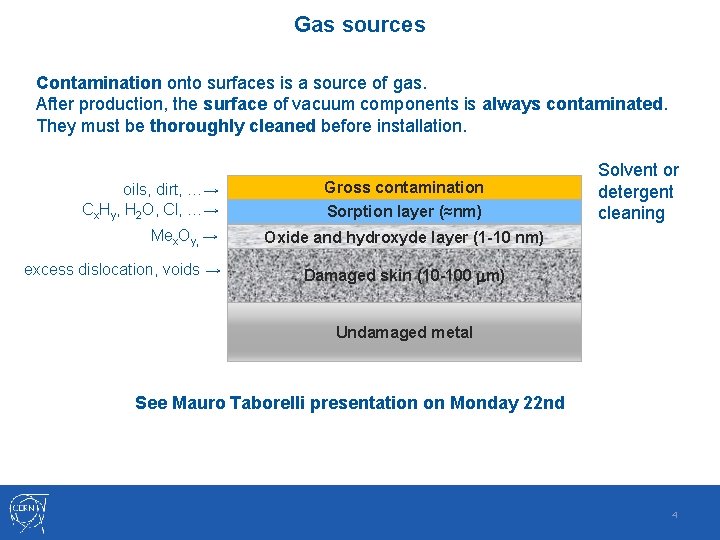
Gas sources Contamination onto surfaces is a source of gas. After production, the surface of vacuum components is always contaminated. They must be thoroughly cleaned before installation. oils, dirt, …→ Cx. Hy, H 2 O, Cl, …→ Mex. Oy, → excess dislocation, voids → Gross contamination Sorption layer (≈nm) Solvent or detergent cleaning Oxide and hydroxyde layer (1 -10 nm) Damaged skin (10 -100 mm) Undamaged metal See Mauro Taborelli presentation on Monday 22 nd 4
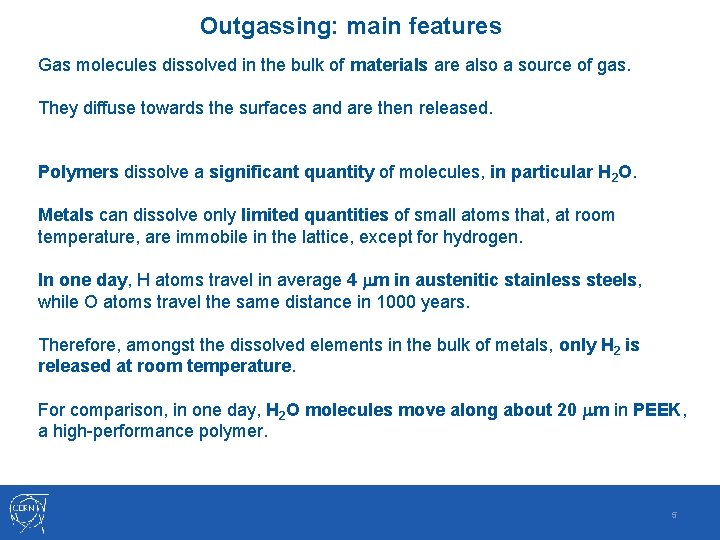
Outgassing: main features Gas molecules dissolved in the bulk of materials are also a source of gas. They diffuse towards the surfaces and are then released. Polymers dissolve a significant quantity of molecules, in particular H 2 O. Metals can dissolve only limited quantities of small atoms that, at room temperature, are immobile in the lattice, except for hydrogen. In one day, H atoms travel in average 4 mm in austenitic stainless steels, while O atoms travel the same distance in 1000 years. Therefore, amongst the dissolved elements in the bulk of metals, only H 2 is released at room temperature. For comparison, in one day, H 2 O molecules move along about 20 mm in PEEK, a high-performance polymer. 5
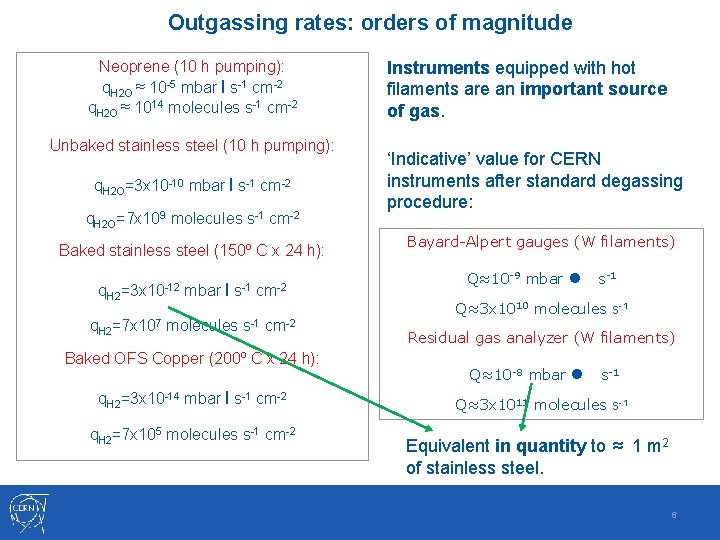
Outgassing rates: orders of magnitude Neoprene (10 h pumping): q. H 2 O ≈ 10 -5 mbar l s-1 cm-2 q. H 2 O ≈ 1014 molecules s-1 cm-2 Unbaked stainless steel (10 h pumping): q. H 2 O=3 x 10 -10 mbar l s-1 cm-2 q. H 2 O=7 x 10⁹ molecules s-1 cm-2 Baked stainless steel (150º C x 24 h): q. H 2=3 x 10 -12 mbar l s-1 cm-2 q. H 2=7 x 10⁷ molecules s-1 cm-2 Baked OFS Copper (200º C x 24 h): q. H 2=3 x 10 -14 mbar l s-1 cm-2 q. H 2=7 x 10⁵ molecules s-1 cm-2 Instruments equipped with hot filaments are an important source of gas. ‘Indicative’ value for CERN instruments after standard degassing procedure: Bayard-Alpert gauges (W filaments) Q≈10 -9 mbar l s-1 Q≈3 x 10¹⁰ molecules s-1 Residual gas analyzer (W filaments) Q≈10 -8 mbar l s-1 Q≈3 x 10¹¹ molecules s-1 Equivalent in quantity to ≈ 1 m 2 of stainless steel. 6
Outgassing of water vapour from unbaked metallic alloys 7
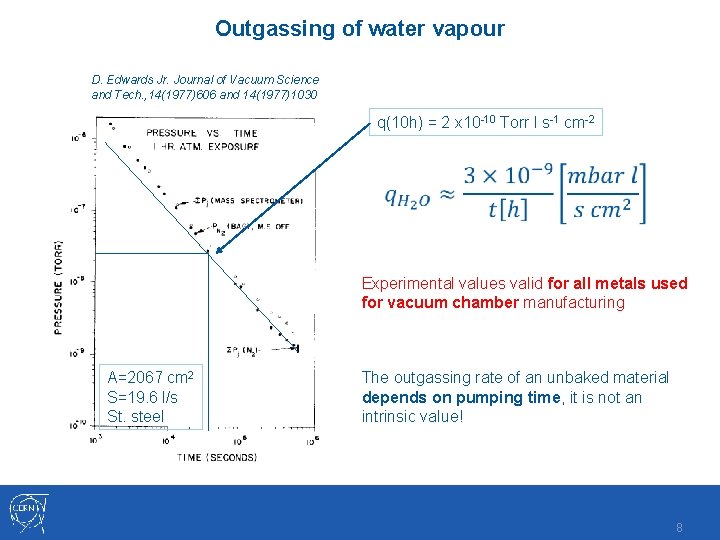
Outgassing of water vapour D. Edwards Jr. Journal of Vacuum Science and Tech. , 14(1977)606 and 14(1977)1030 q(10 h) = 2 x 10 -10 Torr l s-1 cm-2 Experimental values valid for all metals used for vacuum chamber manufacturing A=2067 cm 2 S=19. 6 l/s St. steel The outgassing rate of an unbaked material depends on pumping time, it is not an intrinsic value! 8
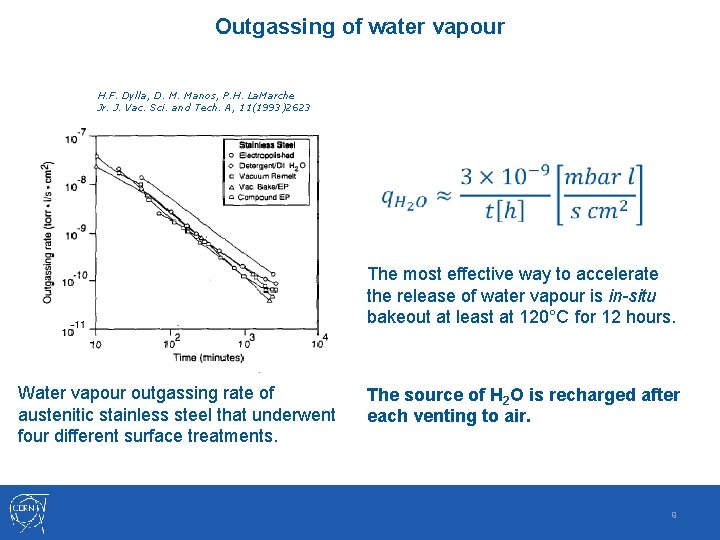
Outgassing of water vapour H. F. Dylla, D. M. Manos, P. H. La. Marche Jr. J. Vac. Sci. and Tech. A, 11(1993)2623 The most effective way to accelerate the release of water vapour is in-situ bakeout at least at 120°C for 12 hours. Water vapour outgassing rate of austenitic stainless steel that underwent four different surface treatments. The source of H 2 O is recharged after each venting to air. 9
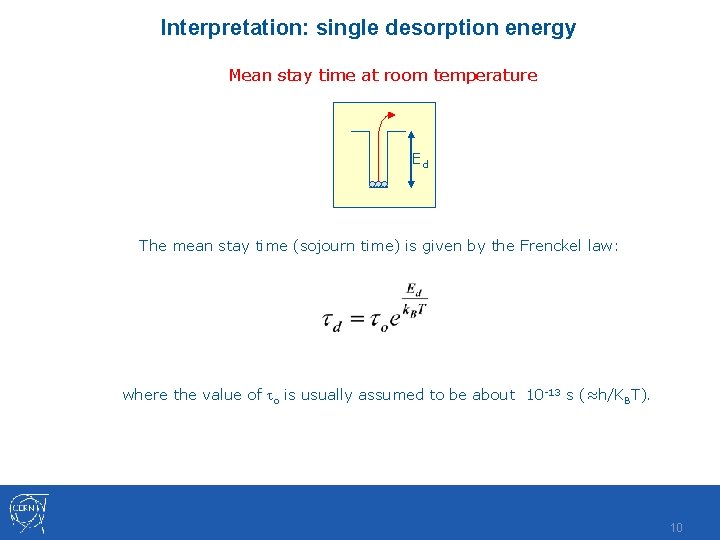
Interpretation: single desorption energy Mean stay time at room temperature Ed The mean stay time (sojourn time) is given by the Frenckel law: where the value of to is usually assumed to be about 10 -13 s (≈h/KBT). 10
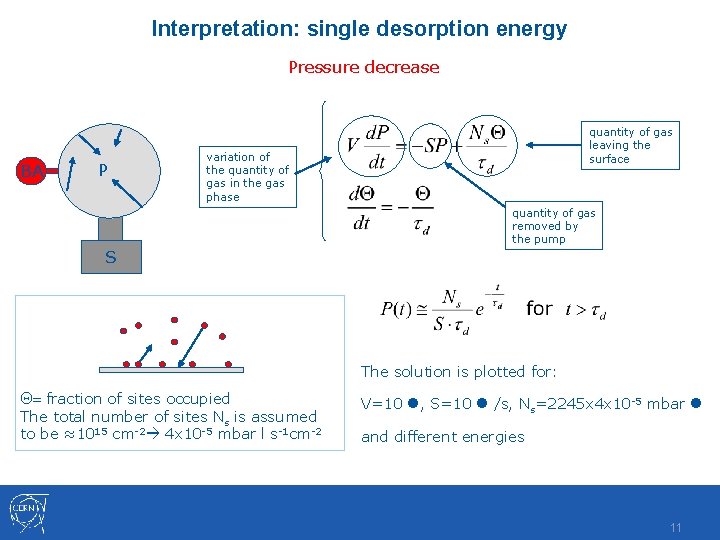
Interpretation: single desorption energy Pressure decrease BA P quantity of gas leaving the surface variation of the quantity of gas in the gas phase quantity of gas removed by the pump S The solution is plotted for: Q= fraction of sites occupied The total number of sites Ns is assumed to be ≈1015 cm-2 4 x 10 -5 mbar l s-1 cm-2 V=10 l, S=10 l /s, Ns=2245 x 4 x 10 -5 mbar l and different energies 11
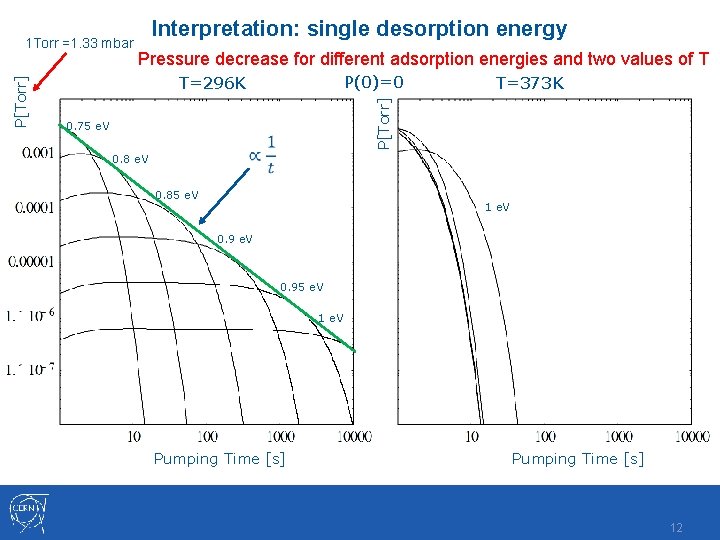
Interpretation: single desorption energy Pressure decrease for different adsorption energies and two values of T P(0)=0 T=296 K 0. 75 e. V 0. 8 e. V T=373 K P[Torr] 1 Torr =1. 33 mbar 0. 85 e. V 1 e. V 0. 95 e. V 1 e. V Pumping Time [s] 12
Interpretation: single desorption energy T=296 K Po=1 Torr P[Torr] Pressure decrease for different adsorption energies 0. 75 e. V 0. 85 e. V Effect of the molecules already in the gas phase at t=0 0. 9 e. V 0. 95 e. V 1 e. V Pumping Time [s] 13
Water vapour outgassing from polymers 14
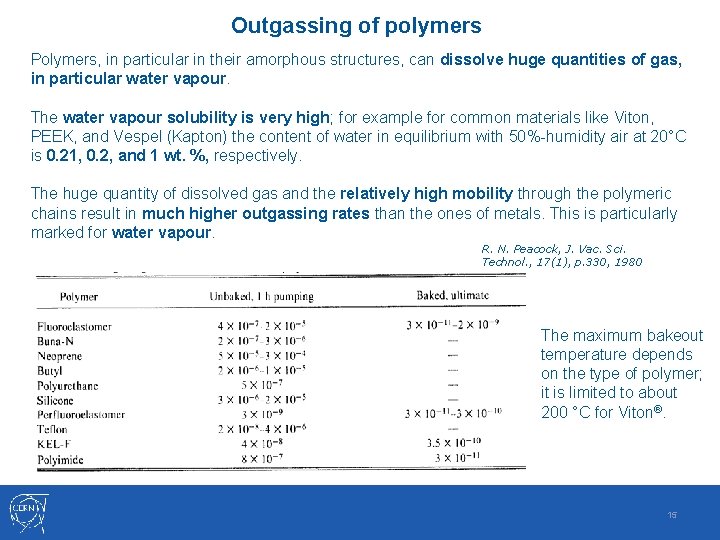
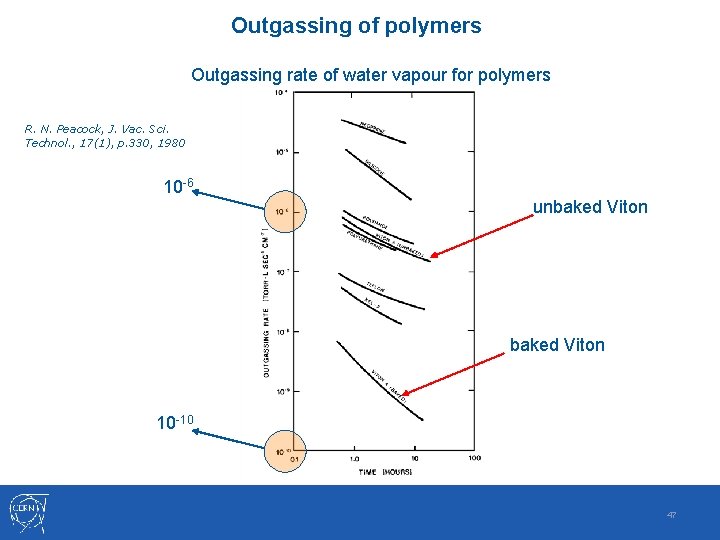
Outgassing of polymers Polymers, in particular in their amorphous structures, can dissolve huge quantities of gas, in particular water vapour. The water vapour solubility is very high; for example for common materials like Viton, PEEK, and Vespel (Kapton) the content of water in equilibrium with 50%-humidity air at 20°C is 0. 21, 0. 2, and 1 wt. %, respectively. The huge quantity of dissolved gas and the relatively high mobility through the polymeric chains result in much higher outgassing rates than the ones of metals. This is particularly marked for water vapour. R. N. Peacock, J. Vac. Sci. Technol. , 17(1), p. 330, 1980 The maximum bakeout temperature depends on the type of polymer; it is limited to about 200 °C for Viton®. 15
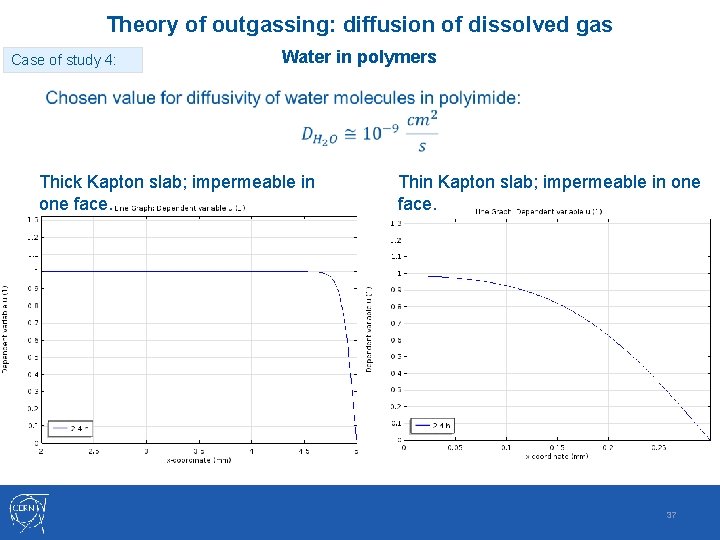
Outgassing of polymers Example: PEEK [O O O C ] Water solubility: n 0. 1 to 0. 5 wt. % (4. 4 to 22 x 1019 molecules/cm 3) 10 to 50 times larger than the H total content in as produced austenitic stainless steel Water diffusivity at RT: 5 x 10 -9 cm 2 s-1 2000 times larger than that reported for H in austenitic stainless steel. * After G. Mensitieri et al. , J. Appl. Polym. Sci. , 37, 381, (1989) 16
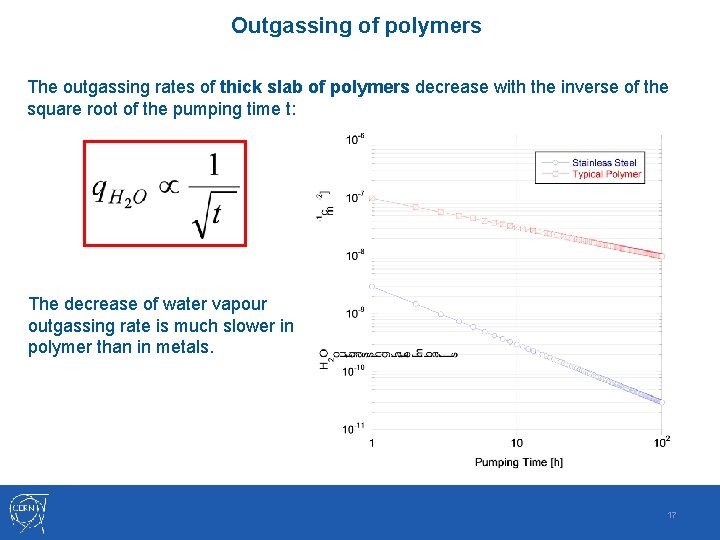
Outgassing of polymers The outgassing rates of thick slab of polymers decrease with the inverse of the square root of the pumping time t: The decrease of water vapour outgassing rate is much slower in polymer than in metals. 17
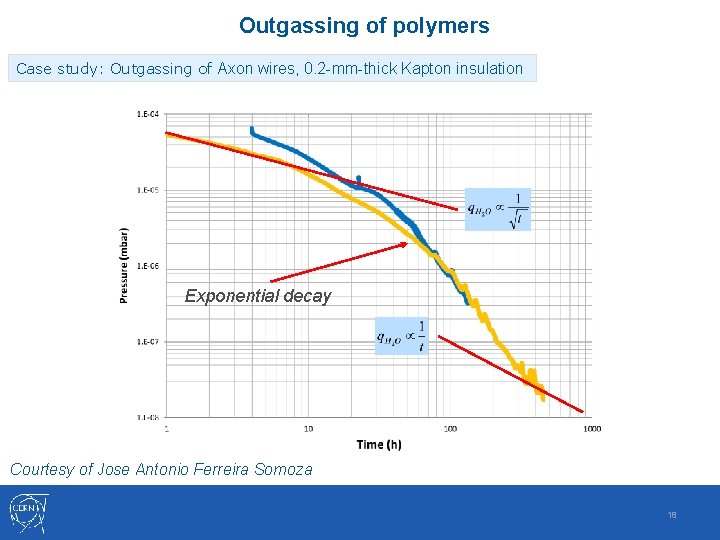
Outgassing of polymers Case study: Outgassing of Axon wires, 0. 2 -mm-thick Kapton insulation Exponential decay Courtesy of Jose Antonio Ferreira Somoza 18
Outgassing of polymers • Another important limitation of polymers used as seals is the high gas permeability. • Gas penetrates into the material and diffuses towards the vacuum system. The permeation flow may limit the ultimate water vapour pressure in vacuum systems and affect the sensitivity of helium leak-detection. • The permeation flow of atmospheric water vapour through a Viton O-ring, 5 mm cross section diameter, 6 cm torus diameter is ≈ 10 -7 Torr l s-1. The stationary condition (ultimate permeation) will be attained after about two condition months 19
Outgassing of H 2 from metals used in vacuum systems for particle accelerators. 20
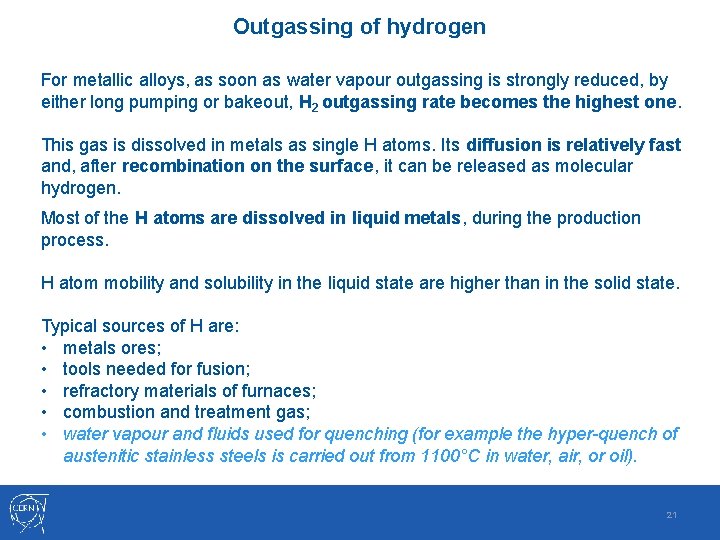
Outgassing of hydrogen For metallic alloys, as soon as water vapour outgassing is strongly reduced, by either long pumping or bakeout, H 2 outgassing rate becomes the highest one. This gas is dissolved in metals as single H atoms. Its diffusion is relatively fast and, after recombination on the surface, it can be released as molecular hydrogen. Most of the H atoms are dissolved in liquid metals, during the production process. H atom mobility and solubility in the liquid state are higher than in the solid state. Typical sources of H are: • metals ores; • tools needed for fusion; • refractory materials of furnaces; • combustion and treatment gas; • water vapour and fluids used for quenching (for example the hyper-quench of austenitic stainless steels is carried out from 1100°C in water, air, or oil). 21
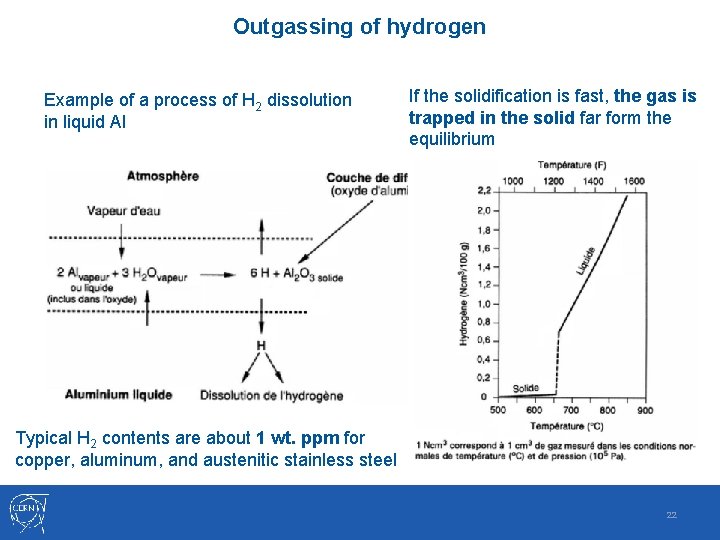
Outgassing of hydrogen Example of a process of H 2 dissolution in liquid Al If the solidification is fast, the gas is trapped in the solid far form the equilibrium Typical H 2 contents are about 1 wt. ppm for copper, aluminum, and austenitic stainless steel 22
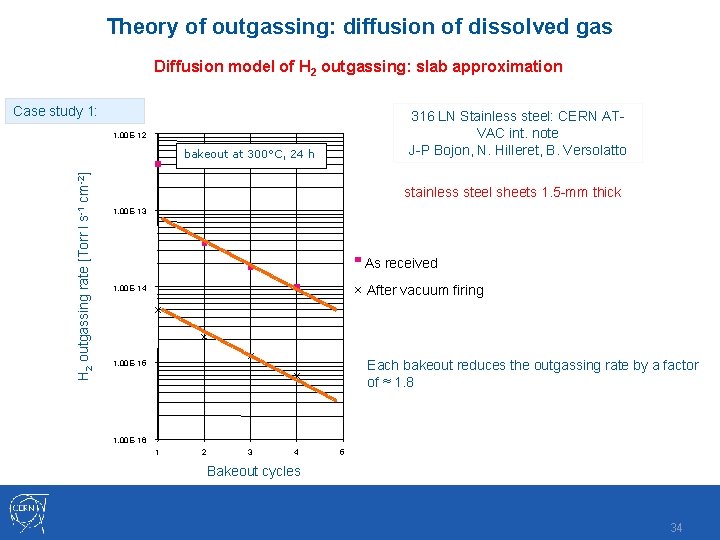
Outgassing of hydrogen As for water vapour, hydrogen-outgassing rate is reduced by heating. The high temperatures increase the H atoms mobility and, as a result, accelerate the depletion of the residual hydrogen content. However, there is a crucial difference between water vapour and hydrogen. Each time the vacuum system is exposed to air, water molecules re-adsorb on the surface, while hydrogen is not recharged in the bulk of the metal. For most of the materials used for the manufacturing of vacuum chambers, the H solubility is very low in the solid state. For example, to recharge 1 wt. ppm of hydrogen at room temperature in stainless steel, the material has to be in equilibrium with the gas at 7 bar. The hydrogen pressure in air is roughly 10 -4 mbar, which gives a maximum recharging of about 2. 10 -4 wt. ppm. 23
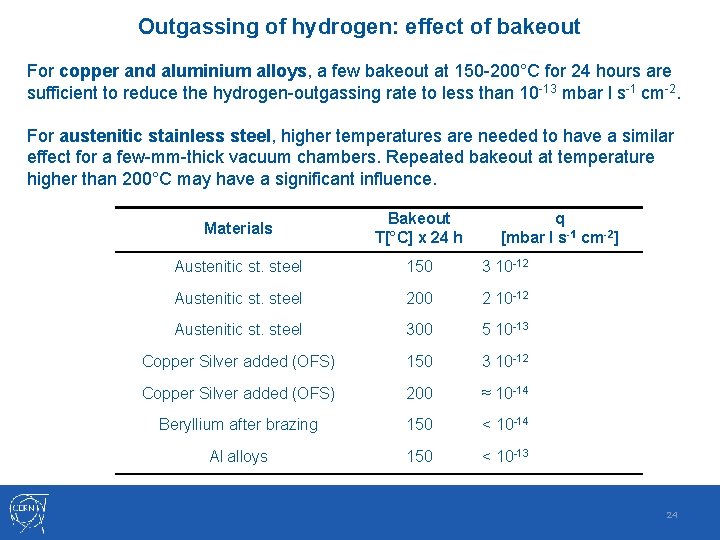
Outgassing of hydrogen: effect of bakeout For copper and aluminium alloys, a few bakeout at 150 -200°C for 24 hours are sufficient to reduce the hydrogen-outgassing rate to less than 10 -13 mbar l s-1 cm-2. For austenitic stainless steel, higher temperatures are needed to have a similar effect for a few-mm-thick vacuum chambers. Repeated bakeout at temperature higher than 200°C may have a significant influence. Materials Bakeout T[°C] x 24 h q [mbar l s-1 cm-2] Austenitic st. steel 150 3 10 -12 Austenitic st. steel 200 2 10 -12 Austenitic st. steel 300 5 10 -13 Copper Silver added (OFS) 150 3 10 -12 Copper Silver added (OFS) 200 ≈ 10 -14 Beryllium after brazing 150 < 10 -14 Al alloys 150 < 10 -13 24
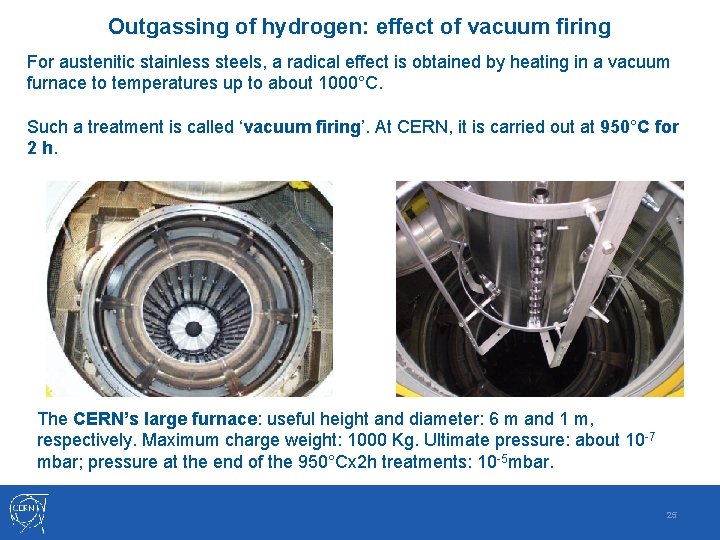
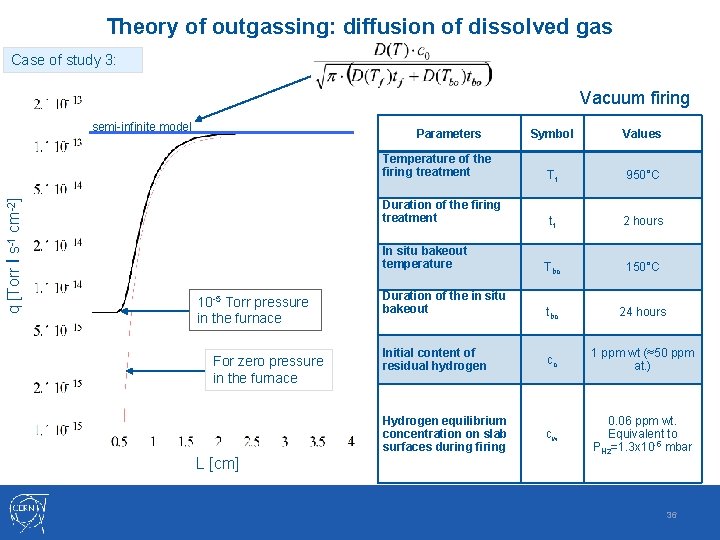
Outgassing of hydrogen: effect of vacuum firing For austenitic stainless steels, a radical effect is obtained by heating in a vacuum furnace to temperatures up to about 1000°C. Such a treatment is called ‘vacuum firing’. At CERN, it is carried out at 950°C for 2 h. The CERN’s large furnace: useful height and diameter: 6 m and 1 m, respectively. Maximum charge weight: 1000 Kg. Ultimate pressure: about 10 -7 mbar; pressure at the end of the 950°Cx 2 h treatments: 10 -5 mbar. 25
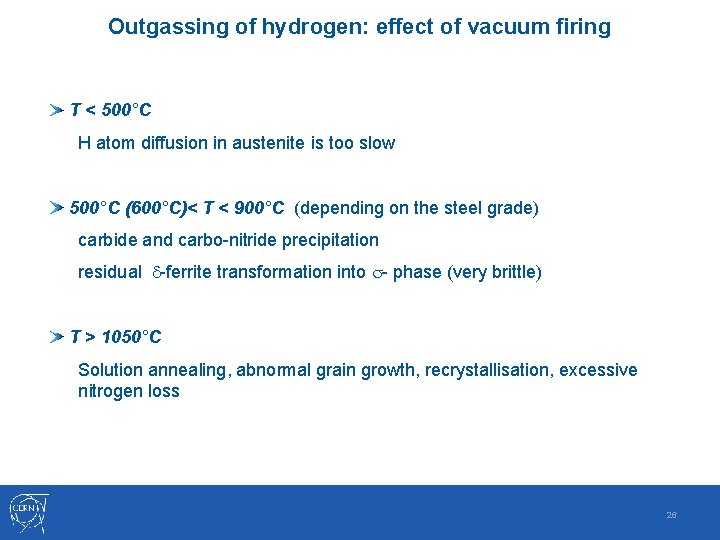
Outgassing of hydrogen: effect of vacuum firing T < 500°C H atom diffusion in austenite is too slow 500°C (600°C)< T < 900°C (depending on the steel grade) carbide and carbo-nitride precipitation residual d-ferrite transformation into s- phase (very brittle) T > 1050°C Solution annealing, abnormal grain growth, recrystallisation, excessive nitrogen loss 26
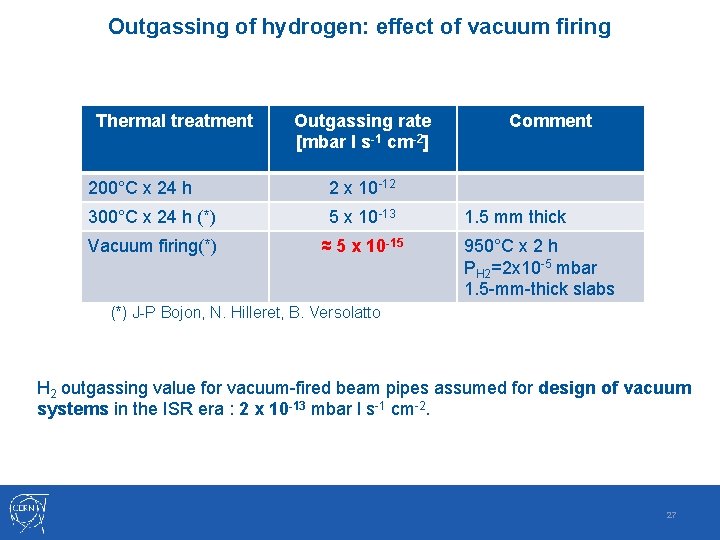
Outgassing of hydrogen: effect of vacuum firing Thermal treatment Outgassing rate [mbar l s-1 cm-2] 200°C x 24 h 2 x 10 -12 300°C x 24 h (*) 5 x 10 -13 Vacuum firing(*) ≈ 5 x 10 -15 Comment 1. 5 mm thick 950°C x 2 h PH 2=2 x 10 -5 mbar 1. 5 -mm-thick slabs (*) J-P Bojon, N. Hilleret, B. Versolatto H 2 outgassing value for vacuum-fired beam pipes assumed for design of vacuum systems in the ISR era : 2 x 10 -13 mbar l s-1 cm-2. 27
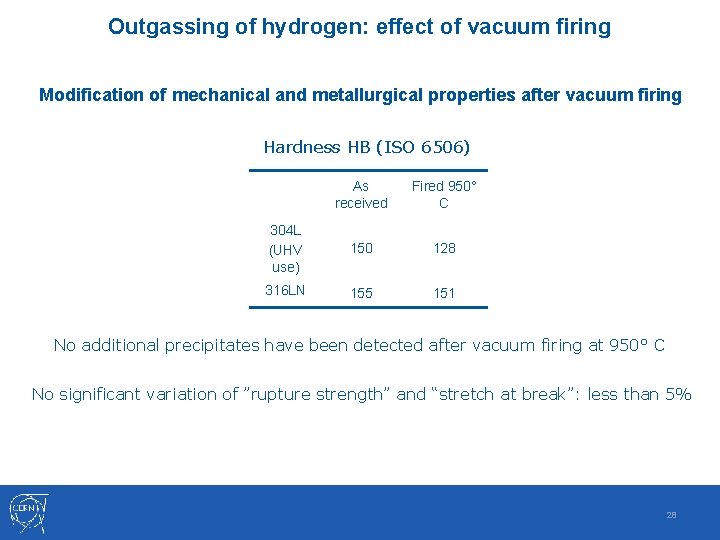
Outgassing of hydrogen: effect of vacuum firing Decreasing the concentration: Vacuum firing Modification of mechanical and metallurgical properties after vacuum firing Hardness HB (ISO 6506) As received Fired 950° C 304 L (UHV use) 150 128 316 LN 155 151 No additional precipitates have been detected after vacuum firing at 950° C No significant variation of ”rupture strength” and “stretch at break”: less than 5% 28
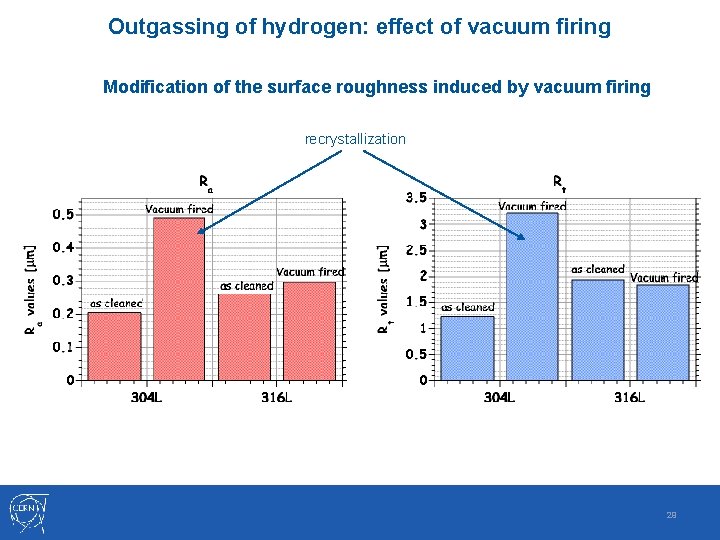
Outgassing of hydrogen: effect of vacuum firing Decreasing the concentration: Vacuum firing Modification of the surface roughness induced by vacuum firing recrystallization 29
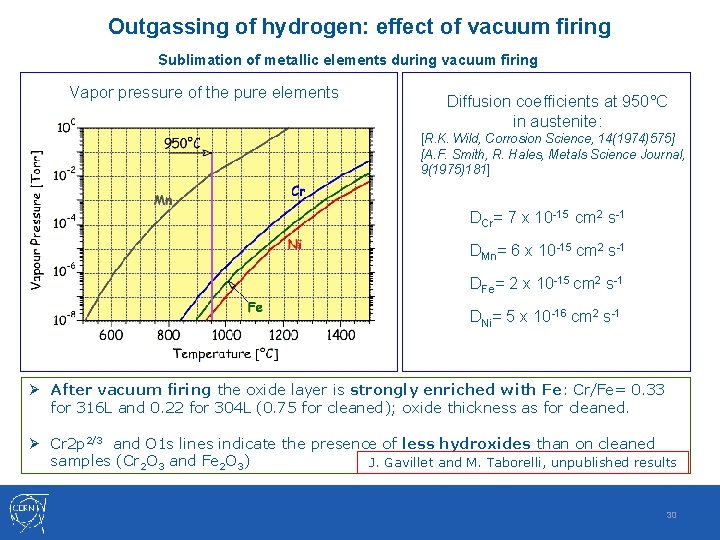
Outgassing of hydrogen: effect of vacuum firing Sublimation of metallic elements during vacuum firing Vapor pressure of the pure elements Diffusion coefficients at 950°C in austenite: [R. K. Wild, Corrosion Science, 14(1974)575] [A. F. Smith, R. Hales, Metals Science Journal, 9(1975)181] DCr= 7 x 10 -15 cm 2 s-1 DMn= 6 x 10 -15 cm 2 s-1 DFe= 2 x 10 -15 cm 2 s-1 DNi= 5 x 10 -16 cm 2 s-1 Ø After vacuum firing the oxide layer is strongly enriched with Fe: Cr/Fe= 0. 33 for 316 L and 0. 22 for 304 L (0. 75 for cleaned); oxide thickness as for cleaned. Ø Cr 2 p 2/3 and O 1 s lines indicate the presence of less hydroxides than on cleaned samples (Cr 2 O 3 and Fe 2 O 3) J. Gavillet and M. Taborelli, unpublished results 30
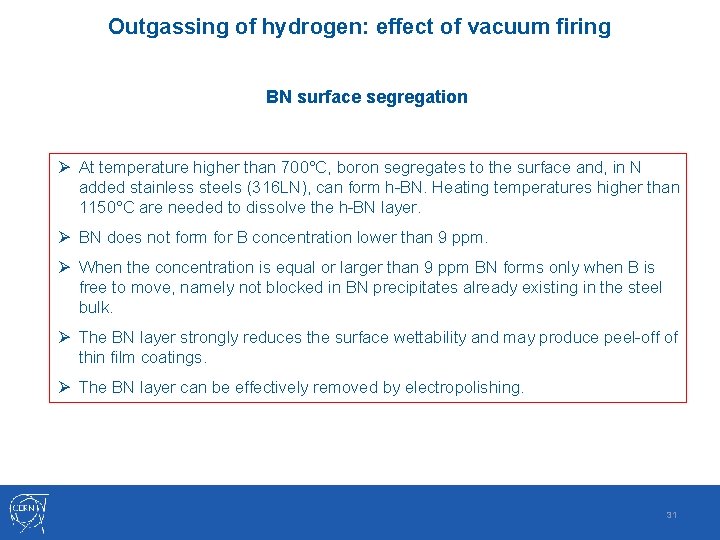
Outgassing of hydrogen: effect of vacuum firing Decreasing the concentration: Vacuum firing BN surface segregation Ø At temperature higher than 700°C, boron segregates to the surface and, in N added stainless steels (316 LN), can form h-BN. Heating temperatures higher than 1150°C are needed to dissolve the h-BN layer. Ø BN does not form for B concentration lower than 9 ppm. Ø When the concentration is equal or larger than 9 ppm BN forms only when B is free to move, namely not blocked in BN precipitates already existing in the steel bulk. Ø The BN layer strongly reduces the surface wettability and may produce peel-off of thin film coatings. Ø The BN layer can be effectively removed by electropolishing. 31
Theory of hydrogen outgassing: two models 32
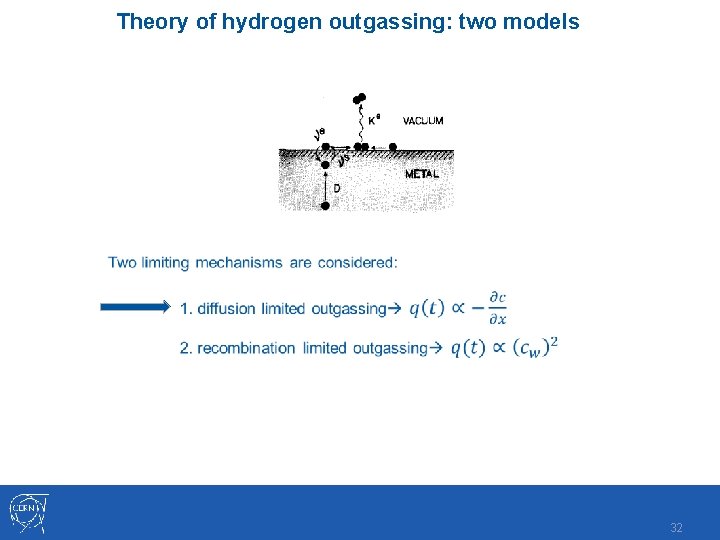
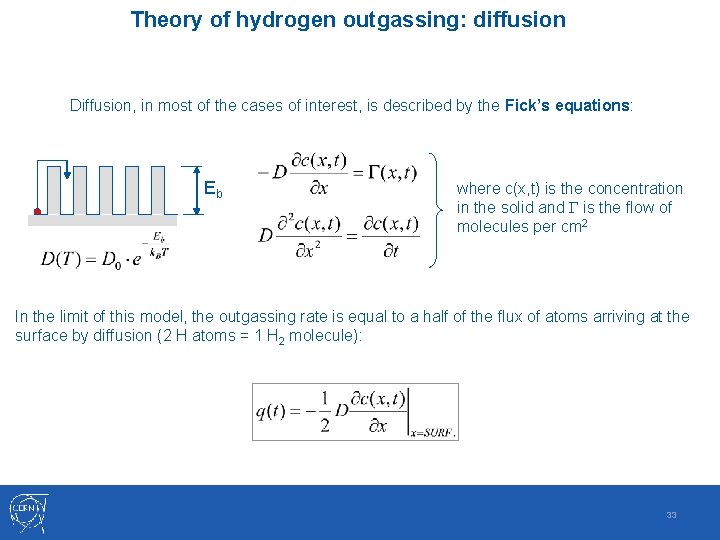
Theory of hydrogen outgassing: diffusion Diffusion, in most of the cases of interest, is described by the Fick’s equations: Eb where c(x, t) is the concentration in the solid and G is the flow of molecules per cm 2 In the limit of this model, the outgassing rate is equal to a half of the flux of atoms arriving at the surface by diffusion (2 H atoms = 1 H 2 molecule): 33
Theory of outgassing: diffusion of dissolved gas Diffusion model of H 2 outgassing: slab approximation Case study 1: 316 LN Stainless steel: CERN ATVAC int. note J-P Bojon, N. Hilleret, B. Versolatto 1. 00 E-12 H 2 outgassing rate [Torr l s-1 cm-2] bakeout at 300°C, 24 h stainless steel sheets 1. 5 -mm thick 1. 00 E-13 As received 1. 00 E-14 After vacuum firing 1. 00 E-15 Each bakeout reduces the outgassing rate by a factor of ≈ 1. 8 1. 00 E-16 1 2 3 4 5 Bakeout cycles 34
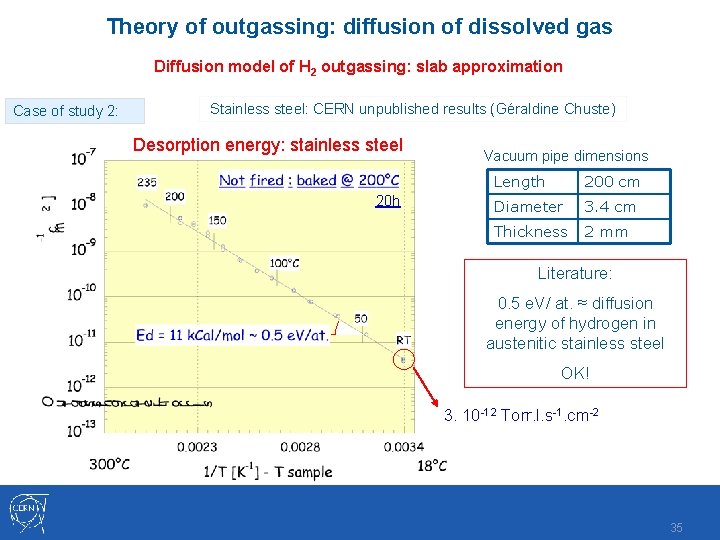
Theory of outgassing: diffusion of dissolved gas Diffusion model of H 2 outgassing: slab approximation Case of study 2: Stainless steel: CERN unpublished results (Géraldine Chuste) Desorption energy: stainless steel 20 h Vacuum pipe dimensions Length 200 cm Diameter 3. 4 cm Thickness 2 mm Literature: 0. 5 e. V/ at. ≈ diffusion energy of hydrogen in austenitic stainless steel OK! 3. 10 -12 Torr. l. s-1. cm-2 35
Theory of outgassing: diffusion of dissolved gas Case of study 3: Vacuum firing q [Torr l s-1 cm-2] semi-infinite model Parameters 10 -5 Torr pressure in the furnace For zero pressure in the furnace L [cm] Symbol Values Temperature of the firing treatment Tf 950°C Duration of the firing treatment tf 2 hours In situ bakeout temperature Tbo 150°C Duration of the in situ bakeout tbo 24 hours Initial content of residual hydrogen co 1 ppm wt (≈50 ppm at. ) Hydrogen equilibrium concentration on slab surfaces during firing cw 0. 06 ppm wt. Equivalent to PH 2=1. 3 x 10 -5 mbar 36
Theory of outgassing: diffusion of dissolved gas Case of study 4: Water in polymers Thick Kapton slab; impermeable in one face. Thin Kapton slab; impermeable in one face. 37
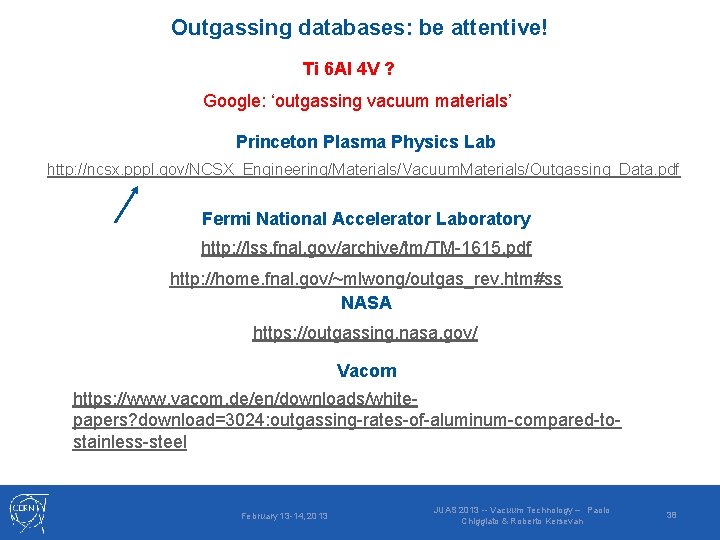
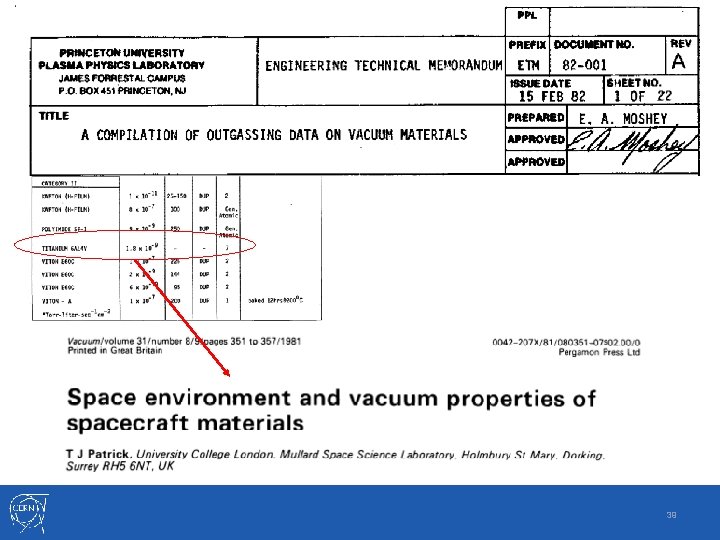
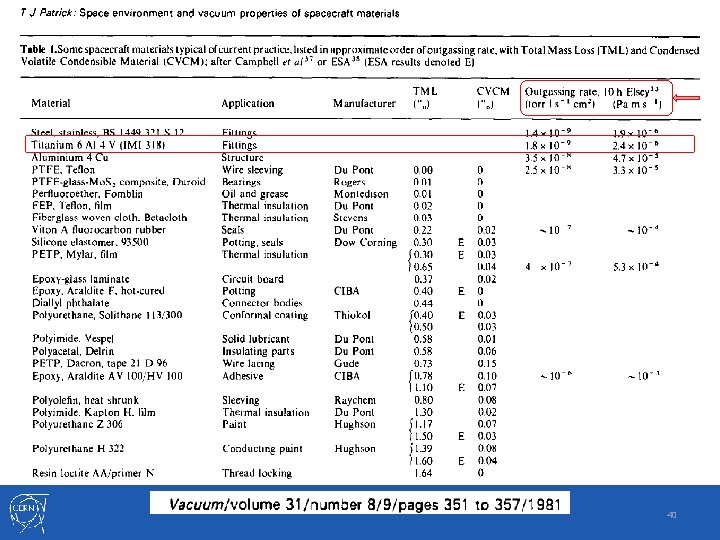
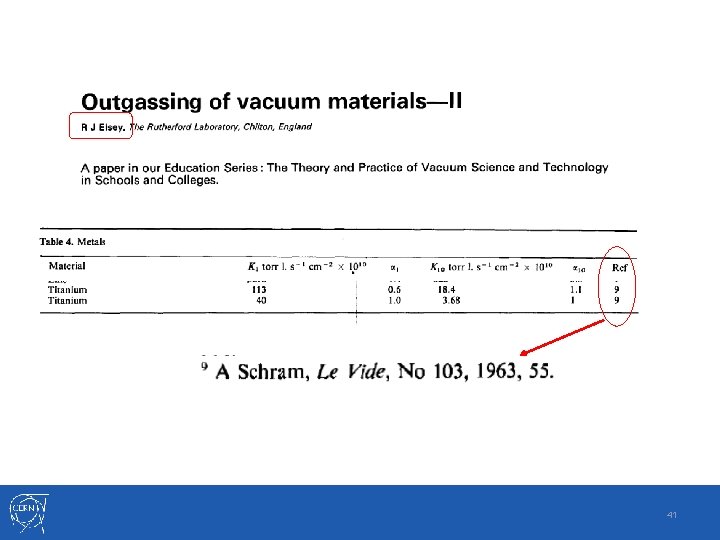
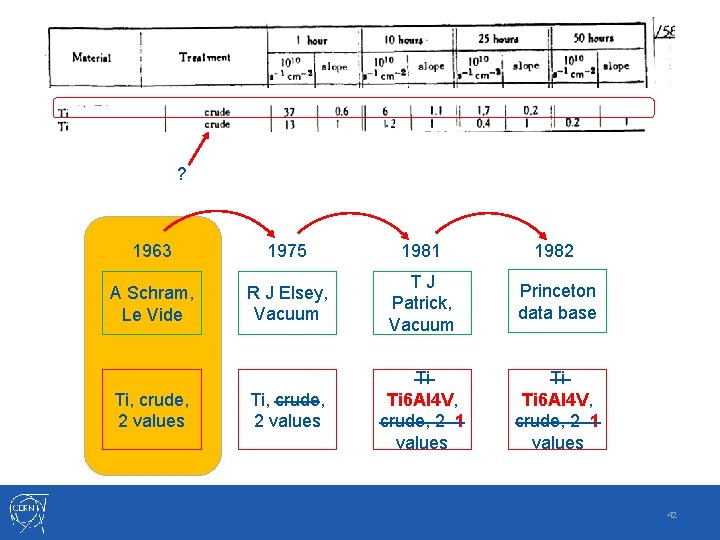
Outgassing databases: be attentive! Ti 6 Al 4 V ? Google: ‘outgassing vacuum materials’ Princeton Plasma Physics Lab http: //ncsx. pppl. gov/NCSX_Engineering/Materials/Vacuum. Materials/Outgassing_Data. pdf Fermi National Accelerator Laboratory http: //lss. fnal. gov/archive/tm/TM-1615. pdf http: //home. fnal. gov/~mlwong/outgas_rev. htm#ss NASA https: //outgassing. nasa. gov/ Vacom https: //www. vacom. de/en/downloads/whitepapers? download=3024: outgassing-rates-of-aluminum-compared-tostainless-steel February 13 -14, 2013 JUAS 2013 -- Vacuum Technology – Paolo Chiggiato & Roberto Kersevan 38
39
40
41
. ? 1963 1975 1981 1982 A Schram, Le Vide R J Elsey, Vacuum T J Patrick, Vacuum Princeton data base Ti, crude, 2 values Ti Ti 6 Al 4 V, crude, 2 1 values Ti, crude, 2 values 42
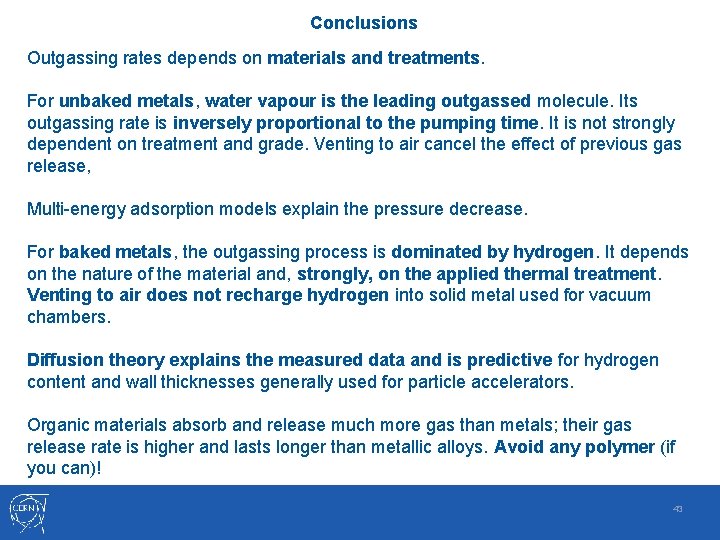
Conclusions Outgassing rates depends on materials and treatments. For unbaked metals, water vapour is the leading outgassed molecule. Its outgassing rate is inversely proportional to the pumping time. It is not strongly dependent on treatment and grade. Venting to air cancel the effect of previous gas release, Multi-energy adsorption models explain the pressure decrease. For baked metals, the outgassing process is dominated by hydrogen. It depends on the nature of the material and, strongly, on the applied thermal treatment. Venting to air does not recharge hydrogen into solid metal used for vacuum chambers. Diffusion theory explains the measured data and is predictive for hydrogen content and wall thicknesses generally used for particle accelerators. Organic materials absorb and release much more gas than metals; their gas release rate is higher and lasts longer than metallic alloys. Avoid any polymer (if you can)! 43
Thanks for your attention 44
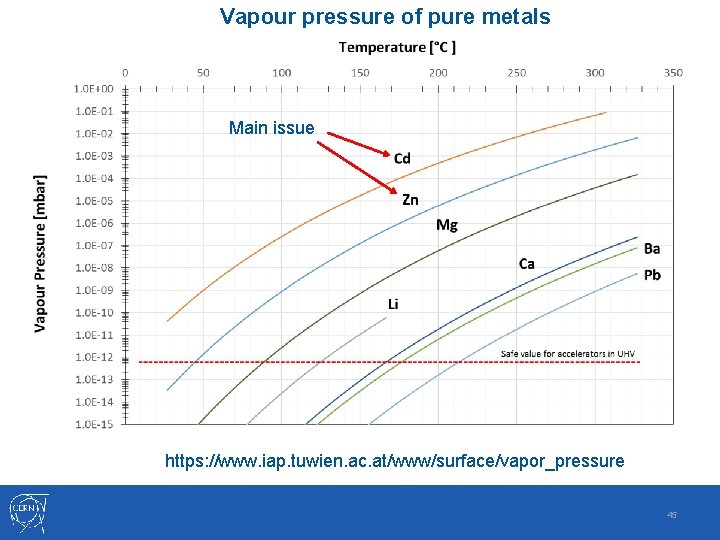
Vapour pressure of pure metals Main issue https: //www. iap. tuwien. ac. at/www/surface/vapor_pressure 45
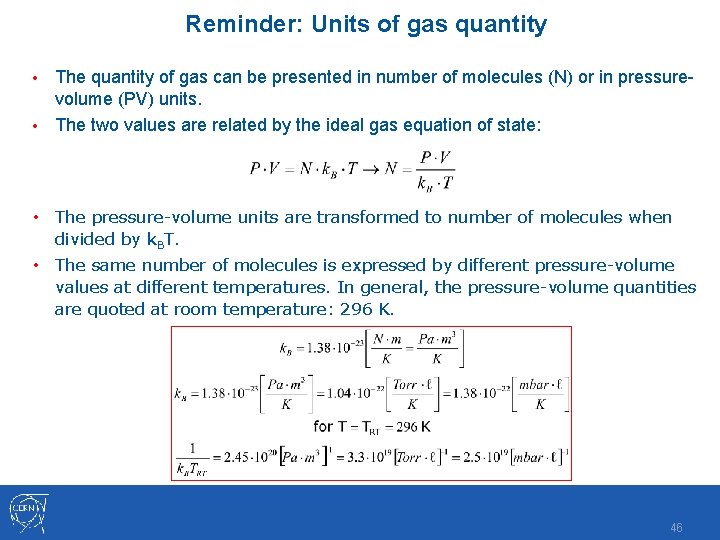
Reminder: Units of gas quantity The quantity of gas can be presented in number of molecules (N) or in pressurevolume (PV) units. • The two values are related by the ideal gas equation of state: • • The pressure-volume units are transformed to number of molecules when divided by k. BT. • The same number of molecules is expressed by different pressure-volume values at different temperatures. In general, the pressure-volume quantities are quoted at room temperature: 296 K. 46
Outgassing of polymers Outgassing rate of water vapour for polymers R. N. Peacock, J. Vac. Sci. Technol. , 17(1), p. 330, 1980 10 -6 unbaked Viton 10 -10 47