
Materials and Manufacture MM 1 STANDARD COMPONENTS In

- Slides: 27
Materials and Manufacture (MM) 1. STANDARD COMPONENTS In this section you will learn about LI: - the term Standard Components. - identifying a standard component. - adv/disadv of standard components - knock down fittings - rapid prototyping and production methods
Introduce the term standard component. The competitive nature of the manufacturing industry means that companies are constantly looking for ways to increase the speed at which they produce products. Three of the most important ways companies can achieve this are by using; • standard components. • Knock down fittings • different production methods. A standard component is usually an individual part or component, manufactured in thousands or millions, to the same specification (such as size, weight, material etc. . . ). A good example is a steel bolt. Bolts are available in a vast range of standard sizes. However, each size is manufactured to an internationally accepted standard. For example, a M 20 bolt. A typical steel M 20 bolt will be a specific length, diameter, quality of steel, pitch of thread etc.
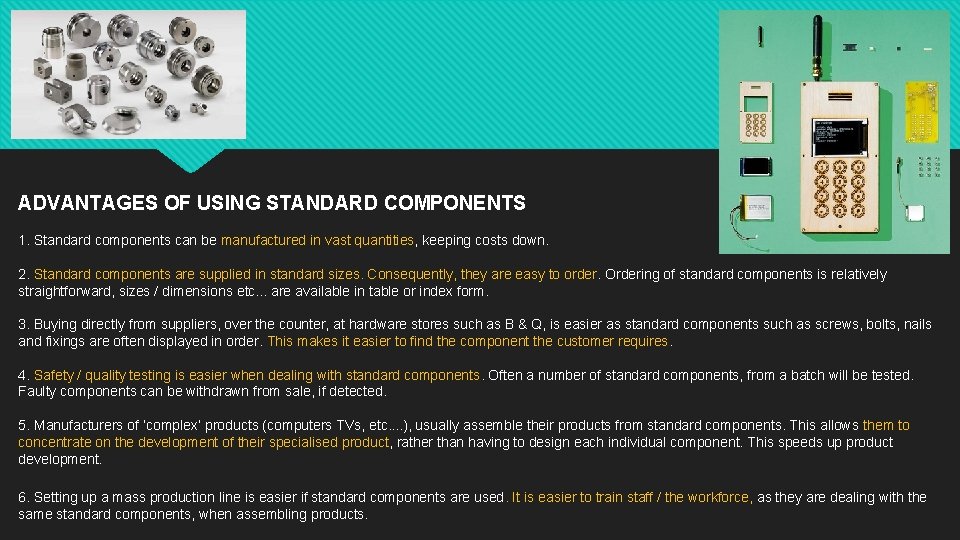
ADVANTAGES OF USING STANDARD COMPONENTS 1. Standard components can be manufactured in vast quantities, keeping costs down. 2. Standard components are supplied in standard sizes. Consequently, they are easy to order. Ordering of standard components is relatively straightforward, sizes / dimensions etc. . . are available in table or index form. 3. Buying directly from suppliers, over the counter, at hardware stores such as B & Q, is easier as standard components such as screws, bolts, nails and fixings are often displayed in order. This makes it easier to find the component the customer requires. 4. Safety / quality testing is easier when dealing with standard components. Often a number of standard components, from a batch will be tested. Faulty components can be withdrawn from sale, if detected. 5. Manufacturers of ‘complex’ products (computers TVs, etc. . ), usually assemble their products from standard components. This allows them to concentrate on the development of their specialised product, rather than having to design each individual component. This speeds up product development. 6. Setting up a mass production line is easier if standard components are used. It is easier to train staff / the workforce, as they are dealing with the same standard components, when assembling products.
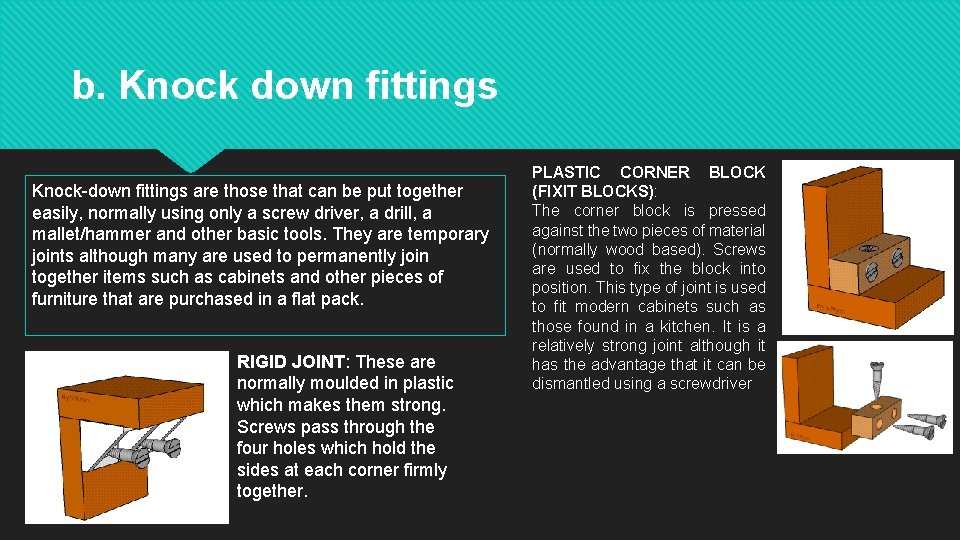
b. Knock down fittings Knock-down fittings are those that can be put together easily, normally using only a screw driver, a drill, a mallet/hammer and other basic tools. They are temporary joints although many are used to permanently join together items such as cabinets and other pieces of furniture that are purchased in a flat pack. RIGID JOINT: These are normally moulded in plastic which makes them strong. Screws pass through the four holes which hold the sides at each corner firmly together. PLASTIC CORNER BLOCK (FIXIT BLOCKS): The corner block is pressed against the two pieces of material (normally wood based). Screws are used to fix the block into position. This type of joint is used to fit modern cabinets such as those found in a kitchen. It is a relatively strong joint although it has the advantage that it can be dismantled using a screwdriver
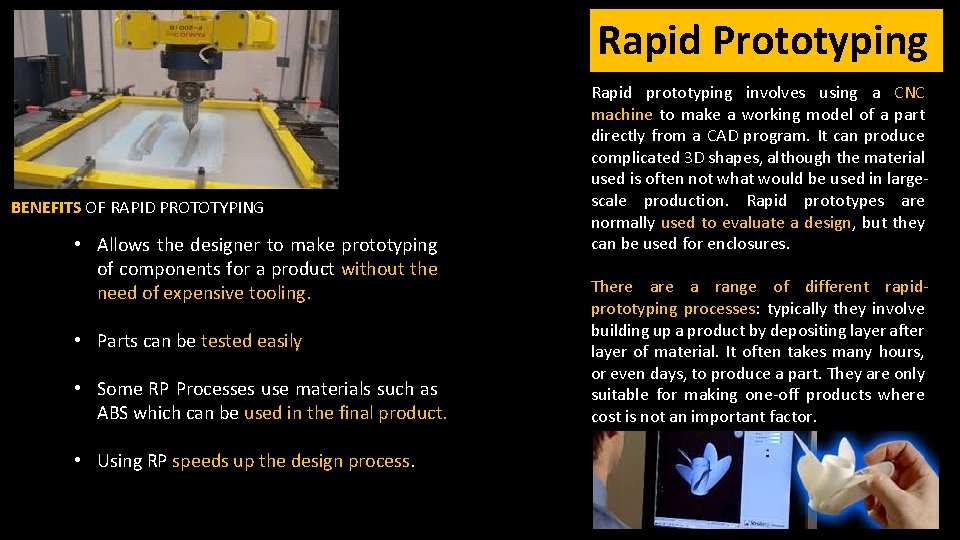
Rapid Prototyping BENEFITS OF RAPID PROTOTYPING • Allows the designer to make prototyping of components for a product without the need of expensive tooling. • Parts can be tested easily • Some RP Processes use materials such as ABS which can be used in the final product. • Using RP speeds up the design process. Rapid prototyping involves using a CNC machine to make a working model of a part directly from a CAD program. It can produce complicated 3 D shapes, although the material used is often not what would be used in largescale production. Rapid prototypes are normally used to evaluate a design, but they can be used for enclosures. There a range of different rapidprototyping processes: typically they involve building up a product by depositing layer after layer of material. It often takes many hours, or even days, to produce a part. They are only suitable for making one-off products where cost is not an important factor.
c. Production methods • Production methods refers to how things are assembled. Manufactured and finished. • Not in terms of the process like injection mould, sand casting etc. that would be the production process. . . dont confuse the two. • There are 4 main production methods used in manufacturing: 1. one-off = one product at a time and each product is unique. This method needs highly skilled workers. This methods needs specialist machinery to create bespoke high demand products. 2. batch = a small number of identical products are made at one time. One batch is manufactured before the next batch is made. Highly skilled workers are required for this method.
Production methods 3. mass production = large volumes of identical products or components are manufactured by this method. The system is highly automated with a small number of workers. Not much skill is required. 4. Continuous flow manufacture = extremely high volumes are produced 24 hours a day – 7 days a week. Highly automated with a small number of workers with very little manufacturing skills.
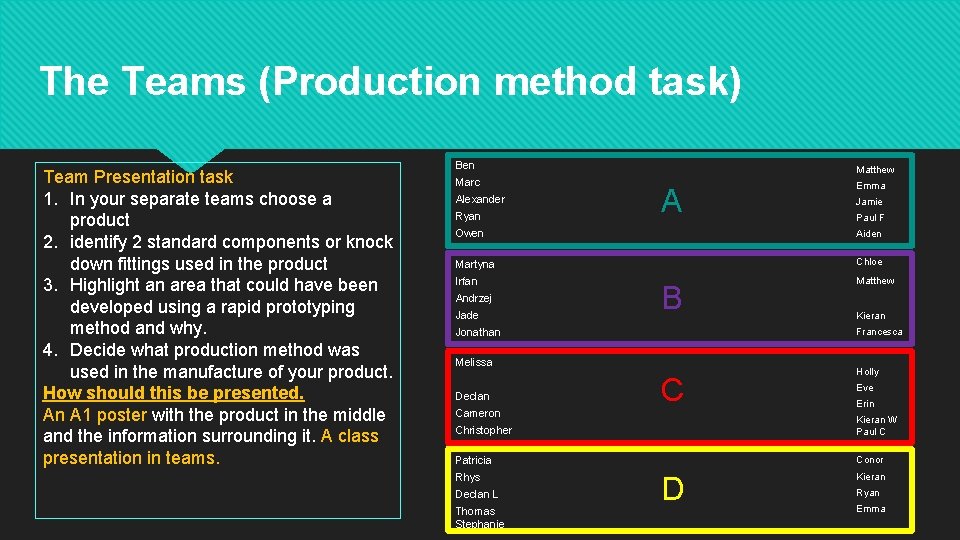
The Teams (Production method task) Team Presentation task 1. In your separate teams choose a product 2. identify 2 standard components or knock down fittings used in the product 3. Highlight an area that could have been developed using a rapid prototyping method and why. 4. Decide what production method was used in the manufacture of your product. How should this be presented. An A 1 poster with the product in the middle and the information surrounding it. A class presentation in teams. Ben Matthew Marc Emma Alexander Ryan A Jamie Paul F Owen Aiden Martyna Chloe Irfan Matthew Andrzej Jade B Jonathan Francesca Melissa Declan Cameron Kieran C Holly Eve Erin Christopher Kieran W Paul C Patricia Conor Rhys Kieran Declan L Thomas Stephanie D Ryan Emma
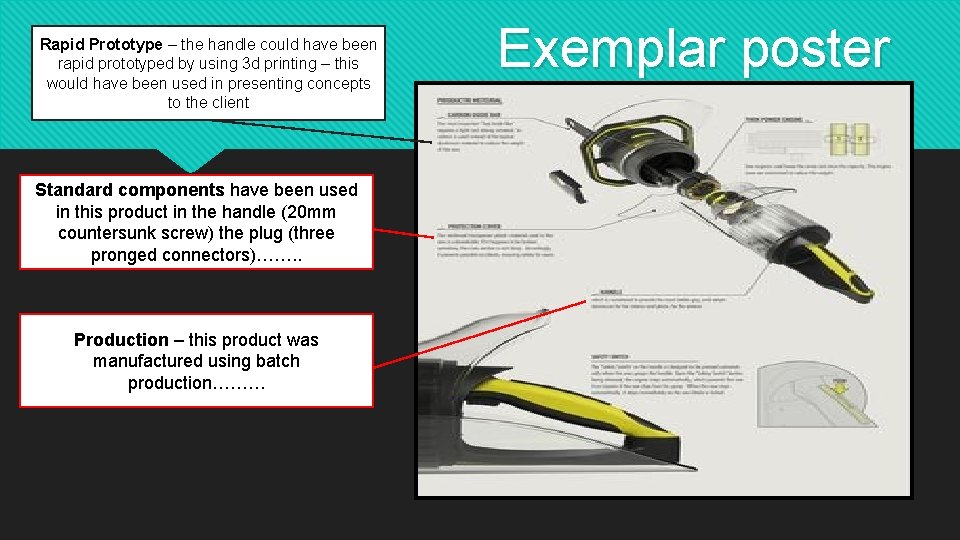
Rapid Prototype – the handle could have been rapid prototyped by using 3 d printing – this would have been used in presenting concepts to the client Standard components have been used in this product in the handle (20 mm countersunk screw) the plug (three pronged connectors)……. . Production – this product was manufactured using batch production……… Exemplar poster
Materials and Manufacture (MM) In this section you will learn about 2. Timbers and metals LI: - hardwoods and softwoods - manufactured woods - properties and joints - finishing techniques - metal – ferrous and non ferrous - metal processes – piercing and blanking, drop forging and forming
T I m b e r s (generic) Timber There are two types of timber, called hardwood and softwood. These names do not refer to the properties of the wood: some softwoods can be hard and some hardwoods can be soft. For example one of the weakest woods around is balsa wood, normally used for modelling…is a hardwood. There is a third type of wood called manufactured wood, which we will cover throughout your lessons. Softwoods come from coniferous trees which are evergreen, needle-leaved, cone-bearing trees, such as cedar, fir and pine. Hardwoods come from broad-leaved, deciduous trees. The main hardwood timbers are ash, beech, birch, cherry, elm, iroko, mahogany, meranti, oak, obeche, sapele and teak.
HARDWOOD BBB Mooaan then • Hardwoods are often referred to as Solid Timbers • The benefits of using solid timbers (hardwoods)are; Birch Beech & Balsa �Quality of finish �Aesthetics �Durability �Strength issues �Recyclability • Typically hardwoods tend to be a lot more expensive, as during the farming process they take a lot longer to grow.
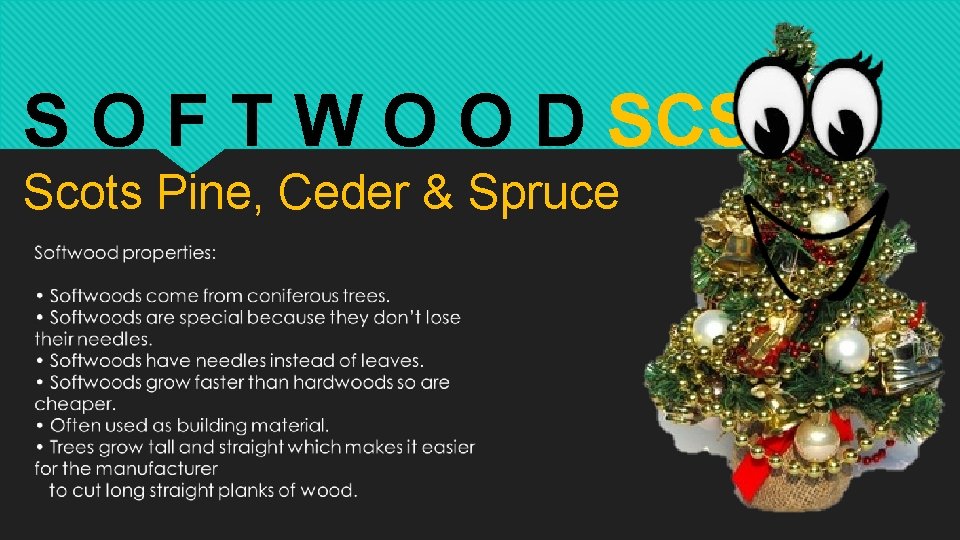
S O F T W O O D SCS Scots Pine, Ceder & Spruce
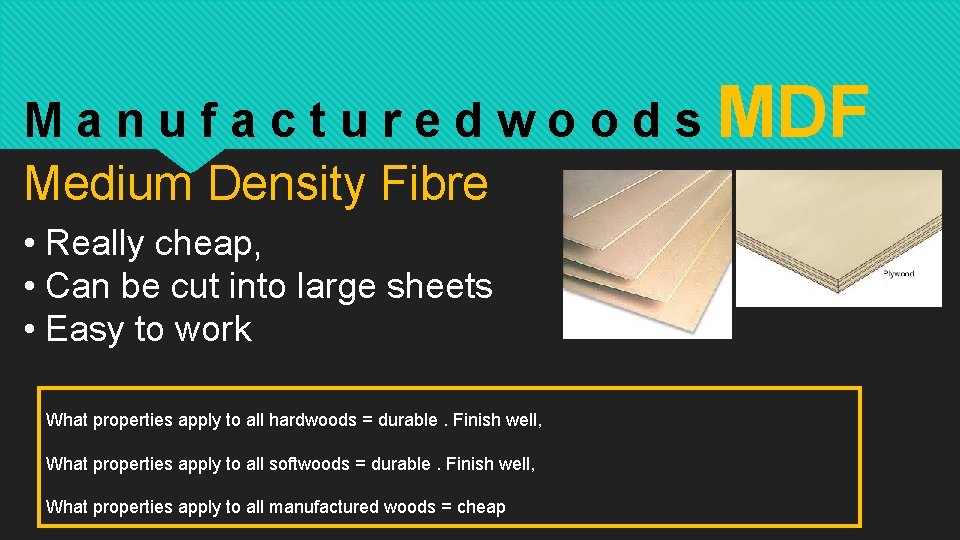
M a n u f a c t u r e d w o o d s MDF Medium Density Fibre • Really cheap, • Can be cut into large sheets • Easy to work What properties apply to all hardwoods = durable. Finish well, What properties apply to all softwoods = durable. Finish well, What properties apply to all manufactured woods = cheap
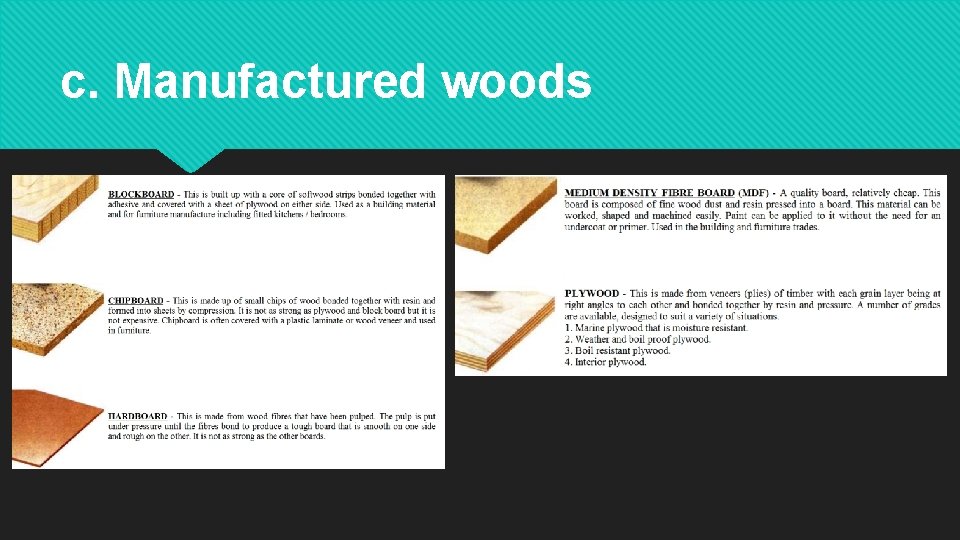
c. Manufactured woods
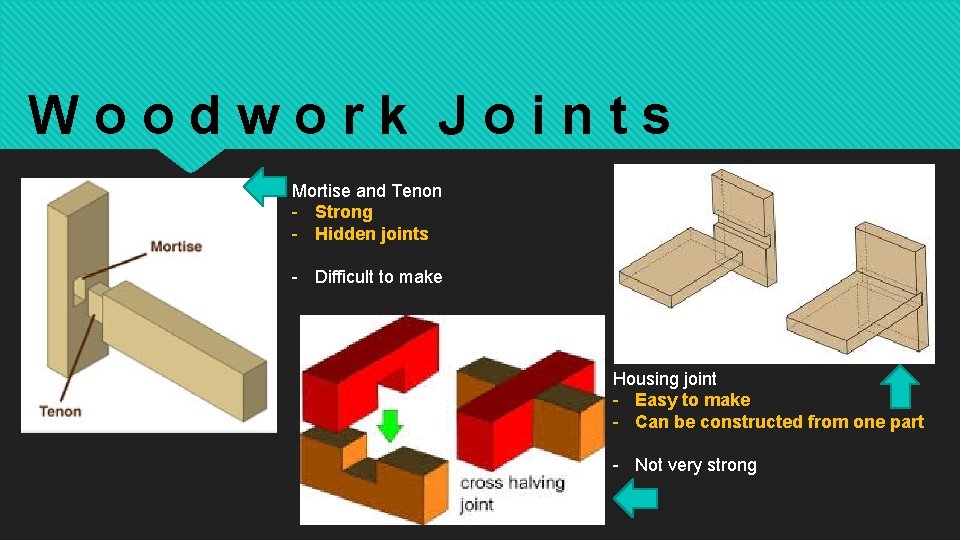
Woodwork Joints Mortise and Tenon - Strong - Hidden joints - Difficult to make Housing joint - Easy to make - Can be constructed from one part - Not very strong
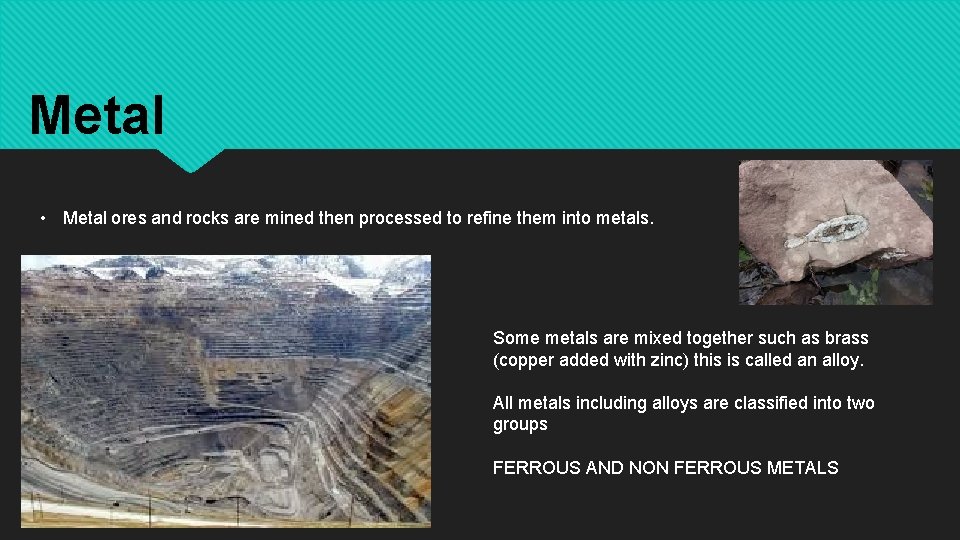
Metal • Metal ores and rocks are mined then processed to refine them into metals. Some metals are mixed together such as brass (copper added with zinc) this is called an alloy. All metals including alloys are classified into two groups FERROUS AND NON FERROUS METALS
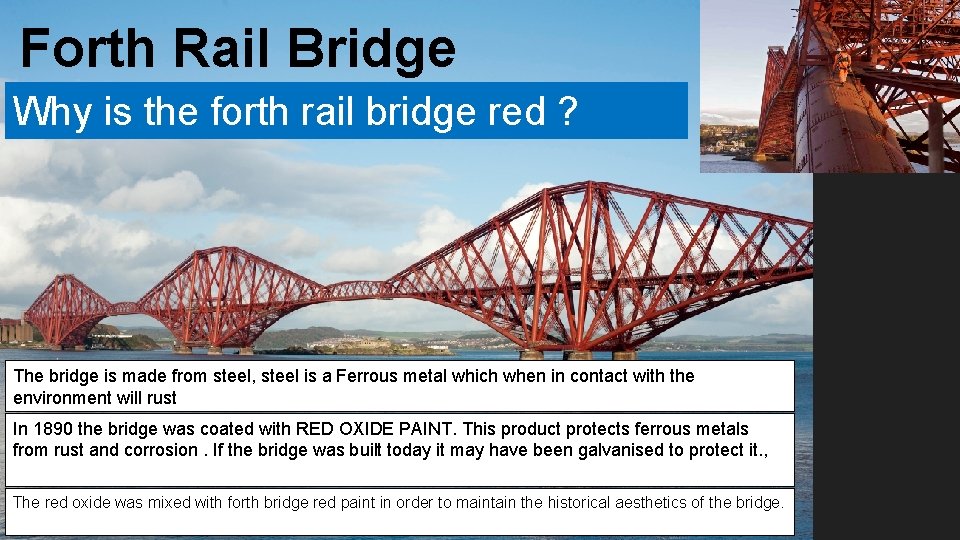
Forth Rail Bridge Why is the forth rail bridge red ? The bridge is made from steel, steel is a Ferrous metal which when in contact with the environment will rust In 1890 the bridge was coated with RED OXIDE PAINT. This product protects ferrous metals from rust and corrosion. If the bridge was built today it may have been galvanised to protect it. , The red oxide was mixed with forth bridge red paint in order to maintain the historical aesthetics of the bridge.
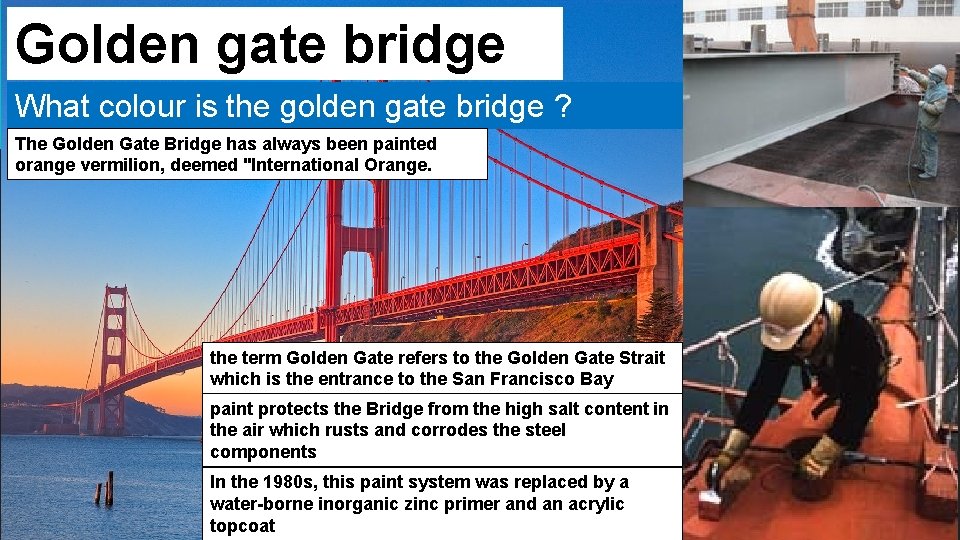
Golden gate bridge What colour is the golden gate bridge ? The Golden Gate Bridge has always been painted orange vermilion, deemed "International Orange. the term Golden Gate refers to the Golden Gate Strait which is the entrance to the San Francisco Bay paint protects the Bridge from the high salt content in the air which rusts and corrodes the steel components In the 1980 s, this paint system was replaced by a water-borne inorganic zinc primer and an acrylic topcoat
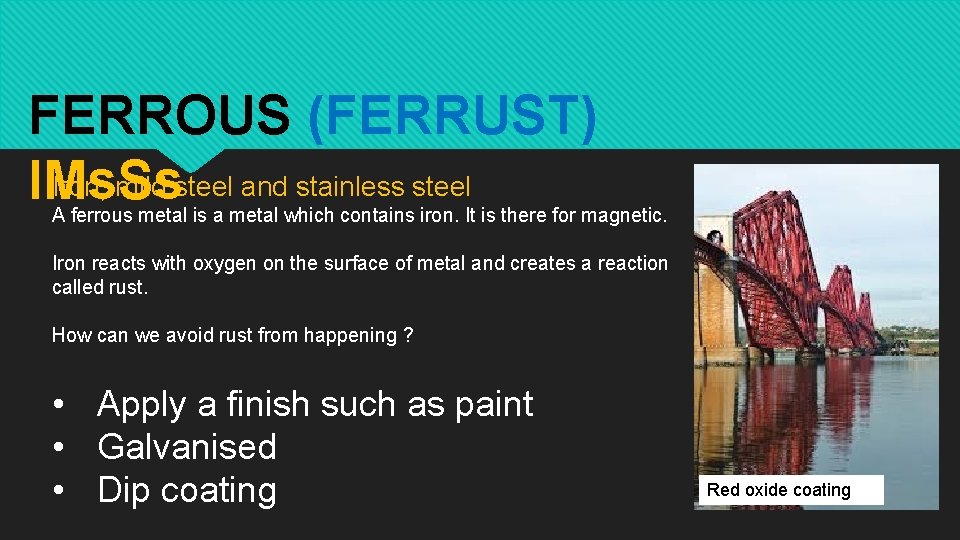
FERROUS (FERRUST) Iron, mild steel and stainless steel IMs. Ss A ferrous metal is a metal which contains iron. It is there for magnetic. Iron reacts with oxygen on the surface of metal and creates a reaction called rust. How can we avoid rust from happening ? • Apply a finish such as paint • Galvanised • Dip coating Red oxide coating
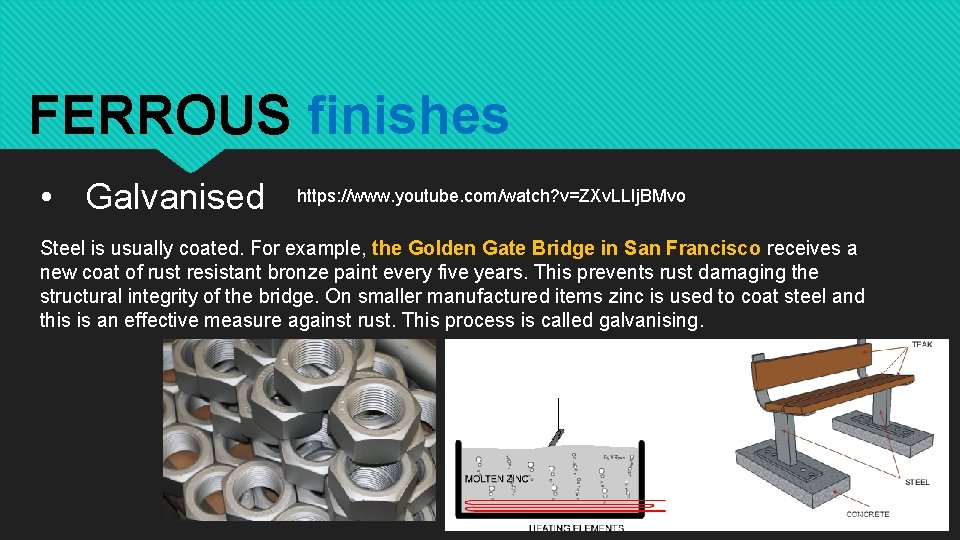
FERROUS finishes • Galvanised https: //www. youtube. com/watch? v=ZXv. LLIj. BMvo Steel is usually coated. For example, the Golden Gate Bridge in San Francisco receives a new coat of rust resistant bronze paint every five years. This prevents rust damaging the structural integrity of the bridge. On smaller manufactured items zinc is used to coat steel and this is an effective measure against rust. This process is called galvanising.
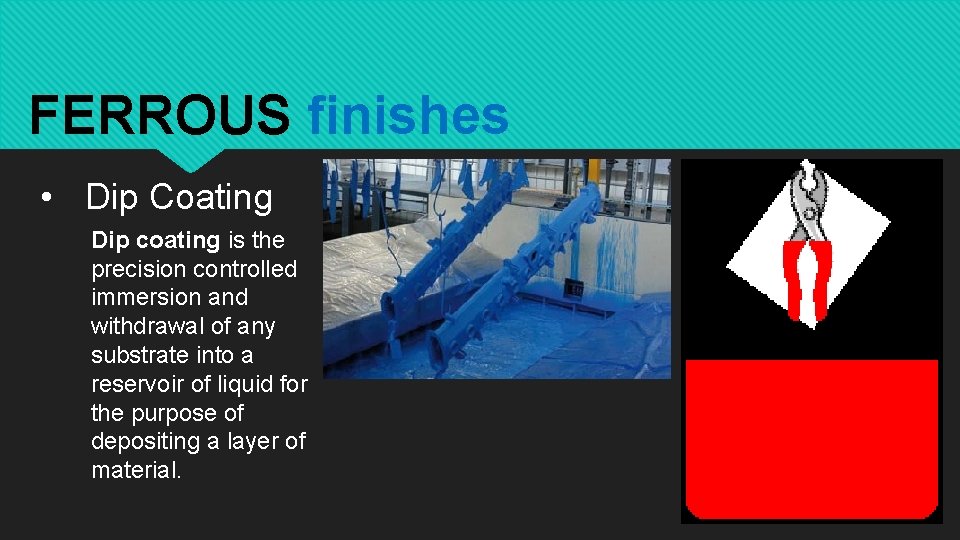
FERROUS finishes • Dip Coating Dip coating is the precision controlled immersion and withdrawal of any substrate into a reservoir of liquid for the purpose of depositing a layer of material.
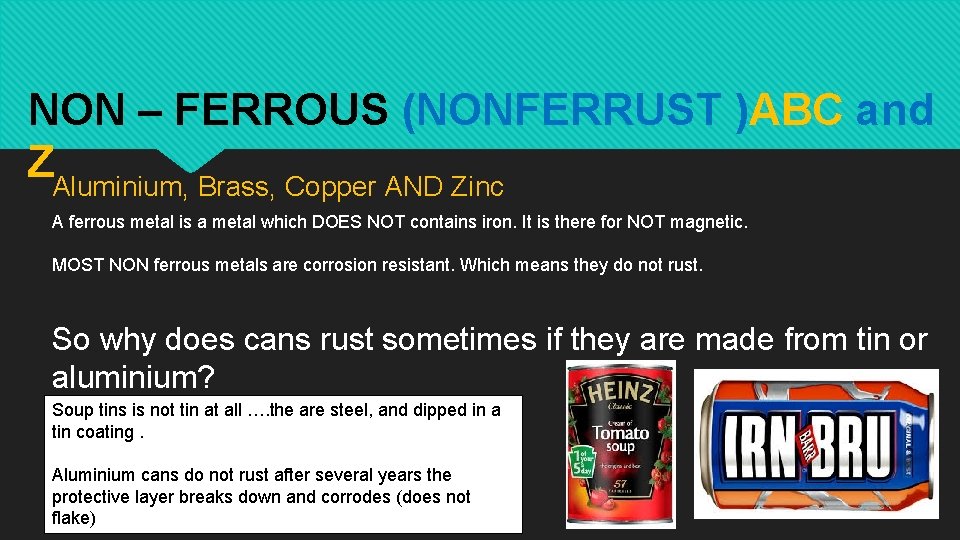
NON – FERROUS (NONFERRUST )ABC and ZAluminium, Brass, Copper AND Zinc A ferrous metal is a metal which DOES NOT contains iron. It is there for NOT magnetic. MOST NON ferrous metals are corrosion resistant. Which means they do not rust. So why does cans rust sometimes if they are made from tin or aluminium? Soup tins is not tin at all …. the are steel, and dipped in a tin coating. Aluminium cans do not rust after several years the protective layer breaks down and corrodes (does not flake)
FERROUS AND NON FERROUS ADVANATGES OF USING METAL • COME IN A RANGE OF COLOURS WITH THE COMBINATION OF PAINTING AND DIP COATING • HAVE A HYGNEIC AND STERILE APPEARANCE • EXCELLENT FOR CONDUCTING HEAT AND ELECTRICITY • SOME HAVE A GOOD STRENGTH TO WEIGHT RATIO (ALUMINIUM) DISADVANTAGES • FERROUS METALS ARE PRONE TO RUST ADDING TIME AND COST TO MANUFACTURING • REQUIRES MAINTAINENECE TO PREVENT RUST • FINITE RESOURCE MEANING THAT ONCE ALL METALS HAVE BEEN MINED FROM THE EARTH THEY CANNOT BE REPLACED. THEREFORE METAL PRODUCTS SHOULD BE DESIGNED TO RECYLCE OR REUSE
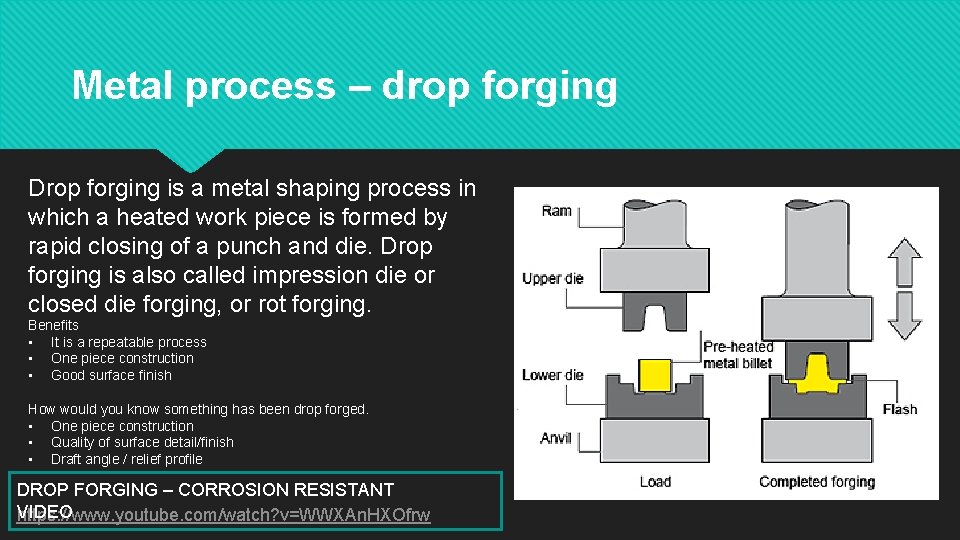
Metal process – drop forging Drop forging is a metal shaping process in which a heated work piece is formed by rapid closing of a punch and die. Drop forging is also called impression die or closed die forging, or rot forging. Benefits • It is a repeatable process • One piece construction • Good surface finish How would you know something has been drop forged. • One piece construction • Quality of surface detail/finish • Draft angle / relief profile DROP FORGING – CORROSION RESISTANT VIDEO https: //www. youtube. com/watch? v=WWXAn. HXOfrw
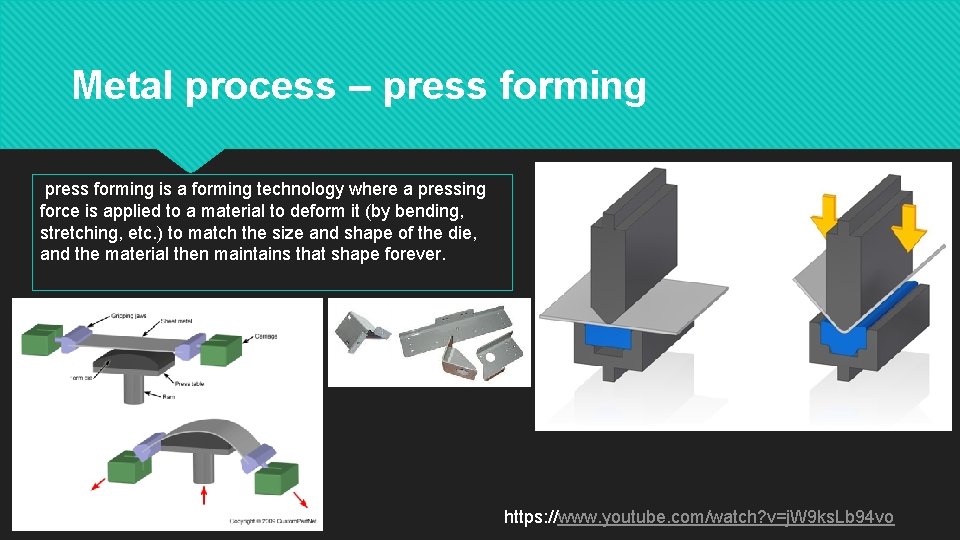
Metal process – press forming is a forming technology where a pressing force is applied to a material to deform it (by bending, stretching, etc. ) to match the size and shape of the die, and the material then maintains that shape forever. https: //www. youtube. com/watch? v=j. W 9 ks. Lb 94 vo
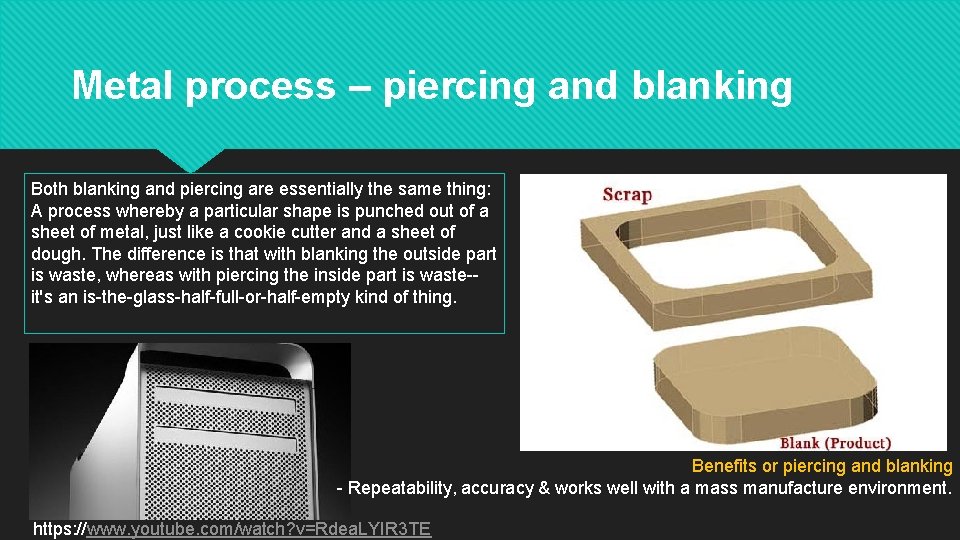
Metal process – piercing and blanking Both blanking and piercing are essentially the same thing: A process whereby a particular shape is punched out of a sheet of metal, just like a cookie cutter and a sheet of dough. The difference is that with blanking the outside part is waste, whereas with piercing the inside part is waste-it's an is-the-glass-half-full-or-half-empty kind of thing. Benefits or piercing and blanking - Repeatability, accuracy & works well with a mass manufacture environment. https: //www. youtube. com/watch? v=Rdea. LYIR 3 TE