
Material Theory of Induction John D Norton Department



- Slides: 25
Material Theory of Induction John D. Norton Department of History and Philosophy of Science University of Pittsburgh 1
Central Claim of the material theory of inductive inference. An inductive inference… … is NOT warranted by conformity with a general schema or general set of rules; … IS warranted by background facts. 2
An Example 3
4
5
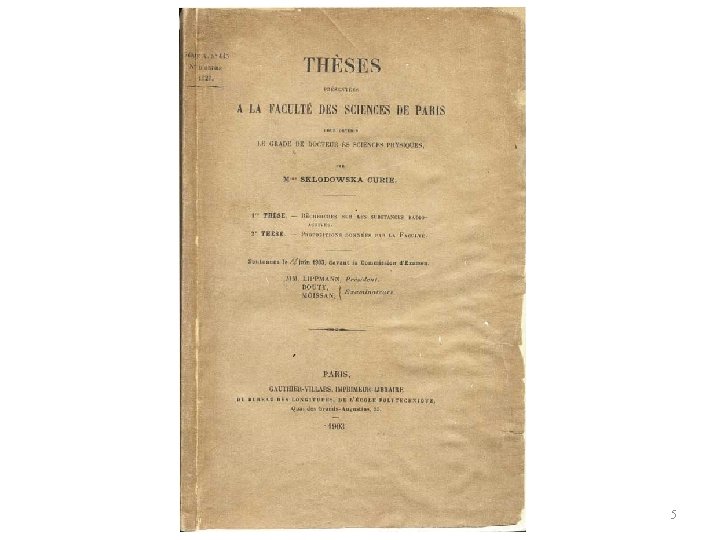
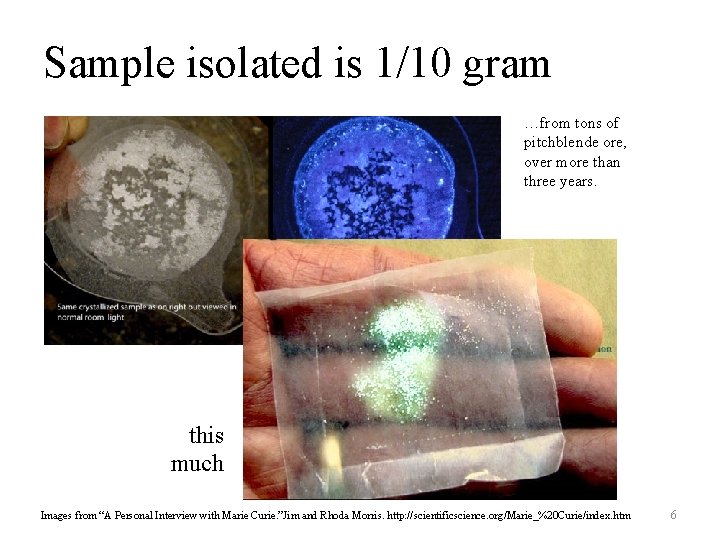
Sample isolated is 1/10 gram …from tons of pitchblende ore, over more than three years. this much Images from “A Personal Interview with Marie Curie. ”Jim and Rhoda Morris. http: //scientificscience. org/Marie_%20 Curie/index. htm 6
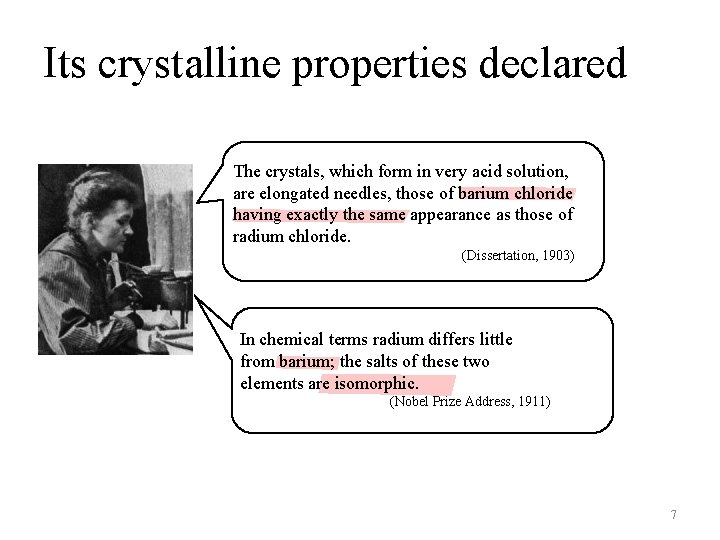
Its crystalline properties declared The crystals, which form in very acid solution, are elongated needles, those of barium chloride having exactly the same appearance as those of radium chloride. (Dissertation, 1903) In chemical terms radium differs little from barium; the salts of these two elements are isomorphic. (Nobel Prize Address, 1911) 7
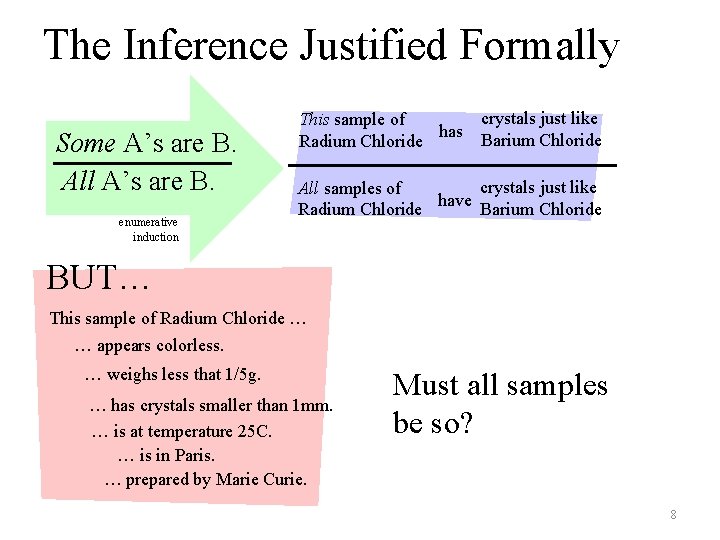
The Inference Justified Formally Some A’s are B. All A’s are B. enumerative induction crystals just like This sample of has Barium Chloride Radium Chloride crystals just like All samples of have Barium Chloride Radium Chloride BUT… This sample of Radium Chloride … … appears colorless. … weighs less that 1/5 g. … has crystals smaller than 1 mm. … is at temperature 25 C. … is in Paris. … prepared by Marie Curie. Must all samples be so? 8
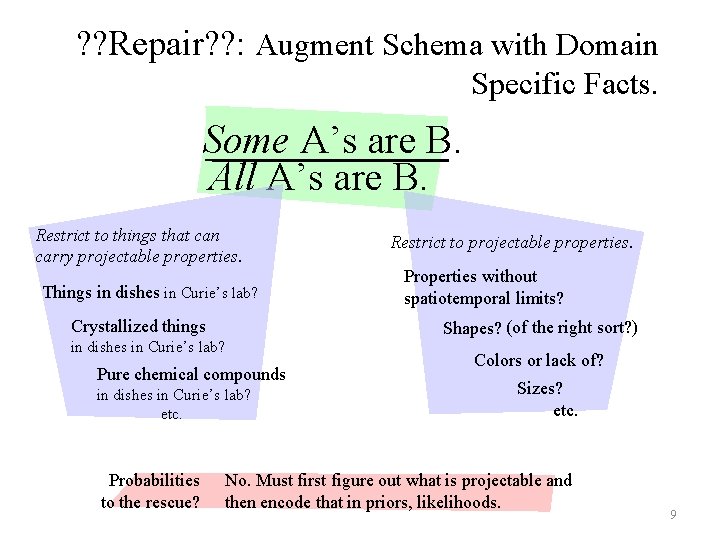
? ? Repair? ? : Augment Schema with Domain Specific Facts. Some A’s are B. All A’s are B. Restrict to things that can carry projectable properties. Things in dishes in Curie’s lab? Crystallized things in dishes in Curie’s lab? Pure chemical compounds in dishes in Curie’s lab? etc. Probabilities to the rescue? Restrict to projectable properties. Properties without spatiotemporal limits? Shapes? (of the right sort? ) Colors or lack of? Sizes? etc. No. Must first figure out what is projectable and then encode that in priors, likelihoods. 9
Add more domain specific facts The induction is more secure. The facts do the work. The formal schema contributes less. 10
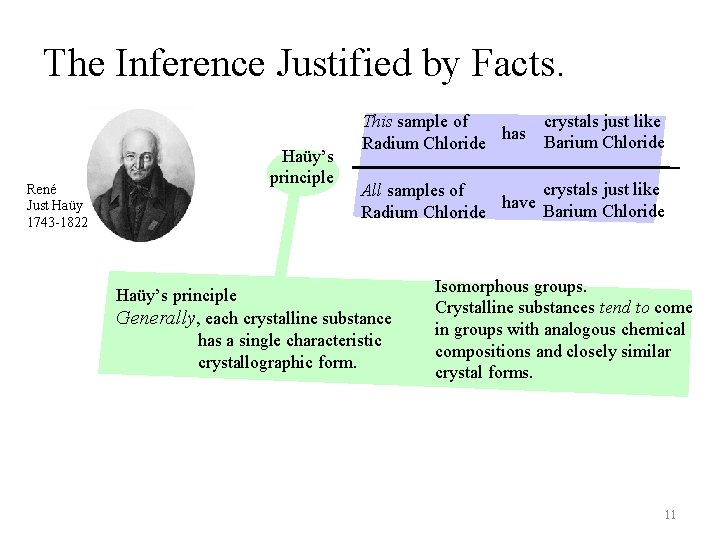
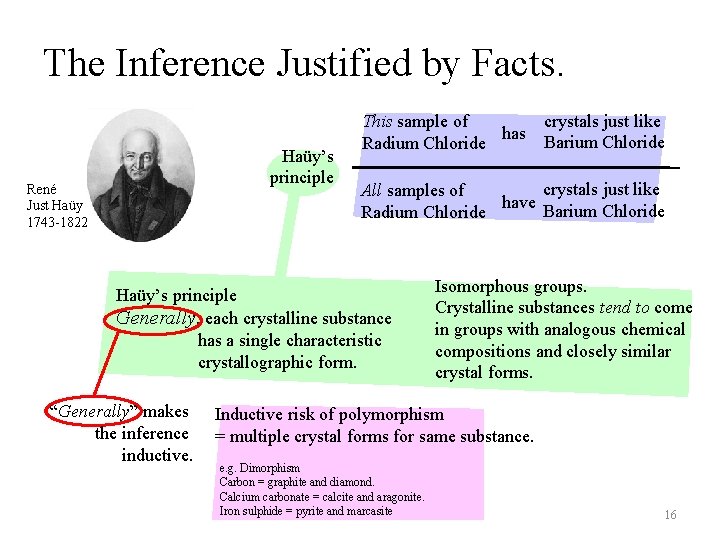
The Inference Justified by Facts. René Just Haüy 1743 -1822 Haüy’s principle crystals just like This sample of has Barium Chloride Radium Chloride crystals just like All samples of have Barium Chloride Radium Chloride Haüy’s principle Generally, each crystalline substance has a single characteristic crystallographic form. Isomorphous groups. Crystalline substances tend to come in groups with analogous chemical compositions and closely similar crystal forms. 11
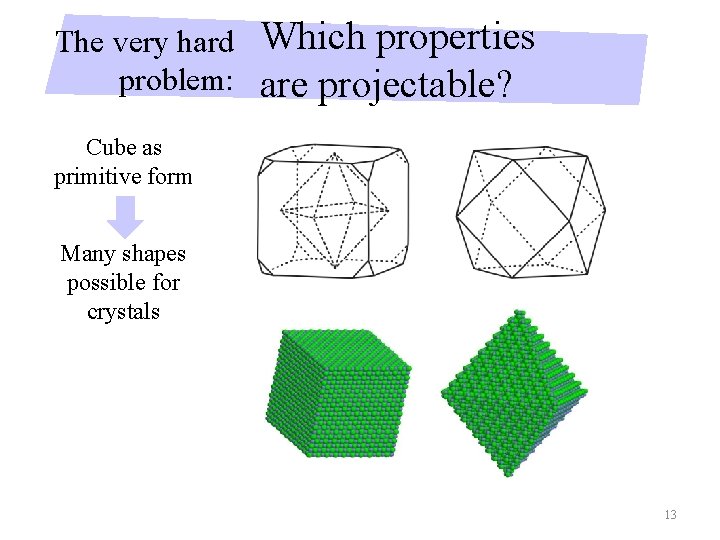
The very hard problem: Which properties are projectable? Common salt Na. Cl belongs to the cubic family Electron micrograph of a single salt crystal. 12
The very hard problem: Which properties are projectable? Cube as primitive form Many shapes possible for crystals 13
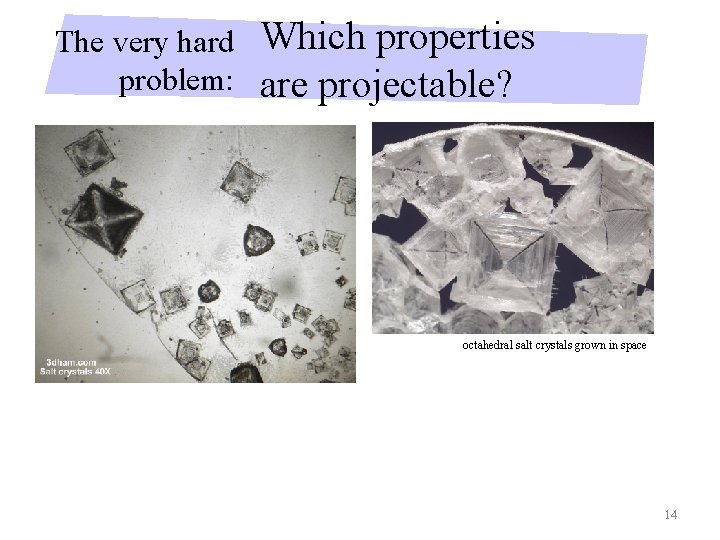
The very hard problem: Which properties are projectable? octahedral salt crystals grown in space 14
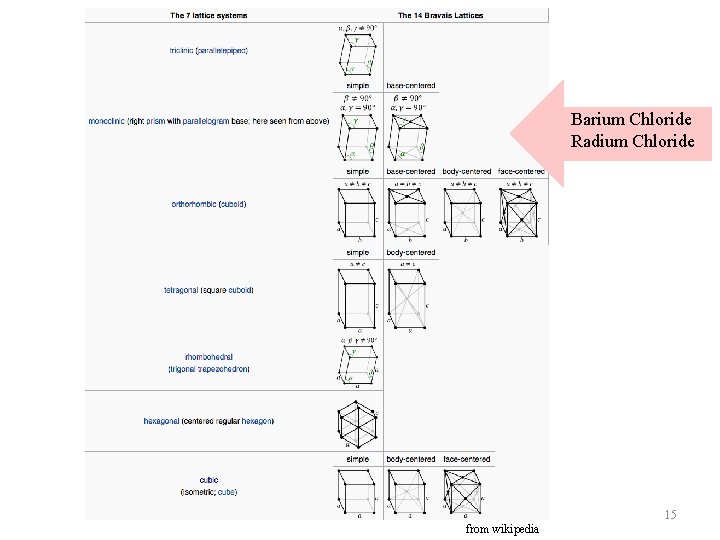
Barium Chloride Radium Chloride 15 from wikipedia
The Inference Justified by Facts. Haüy’s principle René Just Haüy 1743 -1822 crystals just like This sample of has Barium Chloride Radium Chloride crystals just like All samples of have Barium Chloride Radium Chloride Haüy’s principle Generally, each crystalline substance has a single characteristic crystallographic form. “Generally” makes the inference inductive. Isomorphous groups. Crystalline substances tend to come in groups with analogous chemical compositions and closely similar crystal forms. Inductive risk of polymorphism = multiple crystal forms for same substance. e. g. Dimorphism Carbon = graphite and diamond. Calcium carbonate = calcite and aragonite. Iron sulphide = pyrite and marcasite 16
Cascade of Warrants. crystals just like This sample of has Barium Chloride Radium Chloride warrants Some A’s are B. warrants All A’s are B. crystals just like All samples of have Barium Chloride Radium Chloride if A = pure crystalline substance B = one of seven crystallographic forms Haüy’s principle 17
Generalizing 18
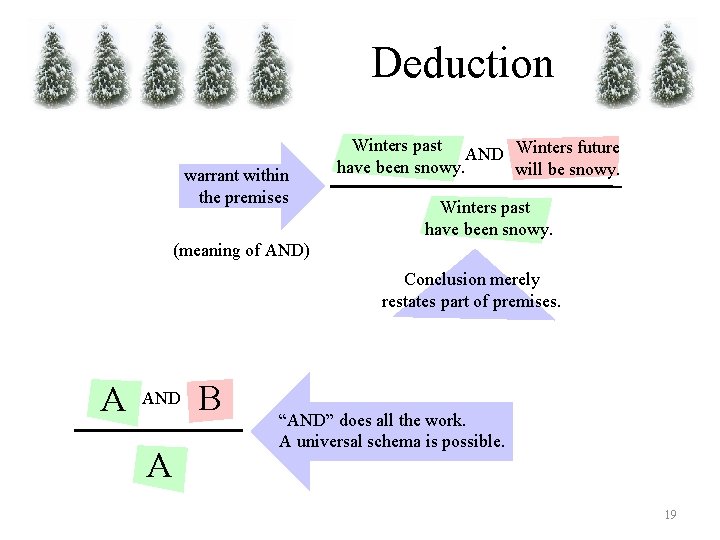
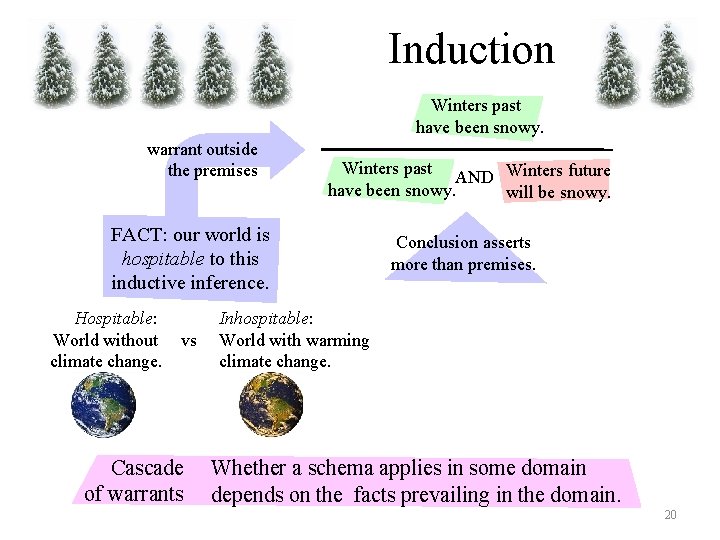
Deduction warrant within the premises Winters past AND Winters future have been snowy. will be snowy. Winters past have been snowy. (meaning of AND) Conclusion merely restates part of premises. A AND A B “AND” does all the work. A universal schema is possible. 19
Induction Winters past have been snowy. warrant outside the premises Winters past AND Winters future have been snowy. will be snowy. FACT: our world is hospitable to this inductive inference. Hospitable: World without climate change. vs Cascade of warrants Conclusion asserts more than premises. Inhospitable: World with warming climate change. Whether a schema applies in some domain depends on the facts prevailing in the domain. 20
General Argument 21
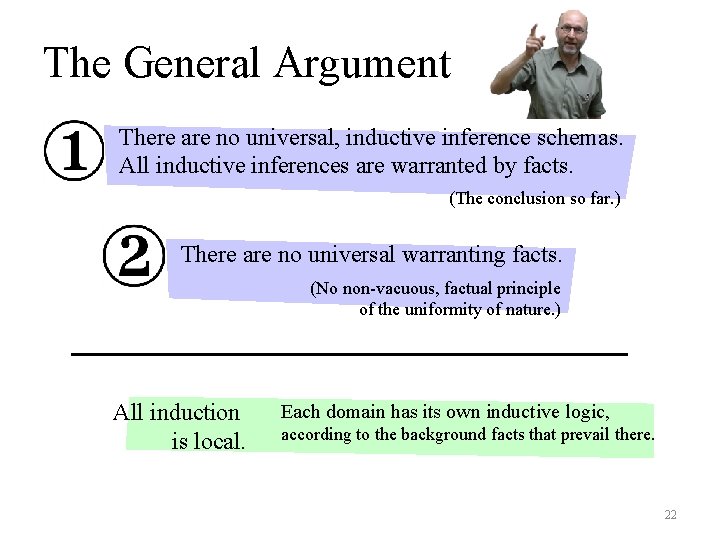
The General Argument There are no universal, inductive inference schemas. All inductive inferences are warranted by facts. (The conclusion so far. ) There are no universal warranting facts. (No non-vacuous, factual principle of the uniformity of nature. ) All induction is local. Each domain has its own inductive logic, according to the background facts that prevail there. 22
Conclusion 23
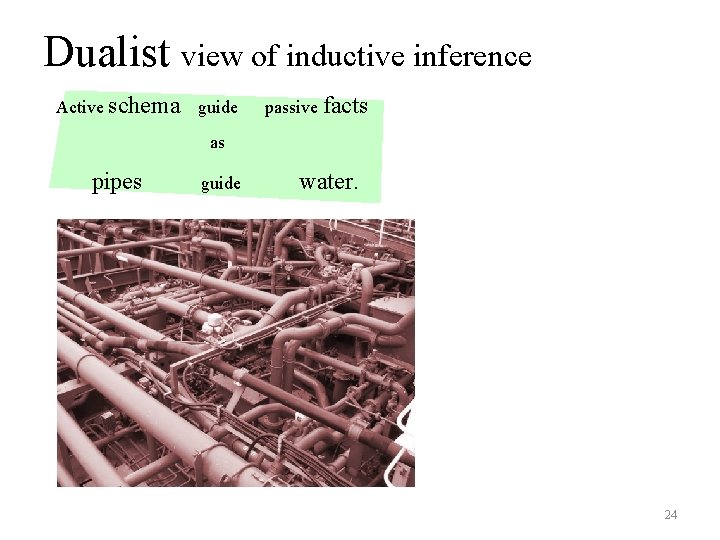
Dualist view of inductive inference Active schema guide passive facts as pipes guide water. 24
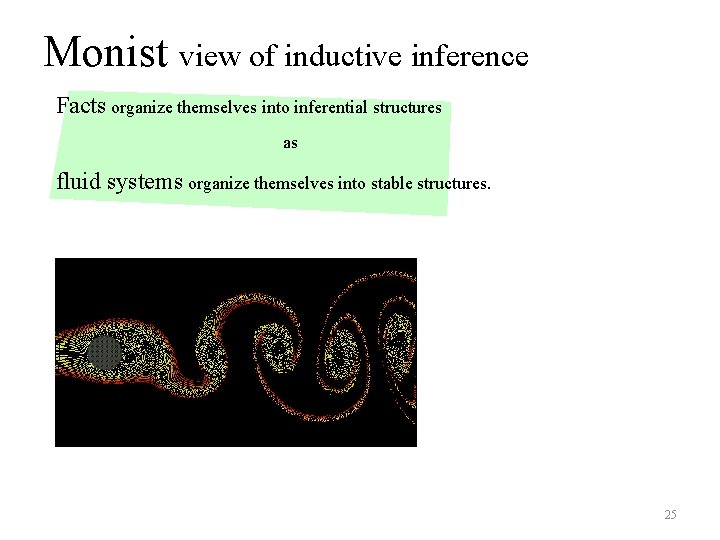
Monist view of inductive inference Facts organize themselves into inferential structures as fluid systems organize themselves into stable structures. 25