
MATERIAL PROPERTIES GCSE Design Technology LESSON 1 Plastics
- Slides: 10
MATERIAL PROPERTIES GCSE Design Technology LESSON 1 Plastics & Polymers Todays learning objectives: - Understand the classifications of plastics & polymers. - Develop familiarity of a range of thermoforming polymers. - Apply taught knowledge to a revision worksheet.
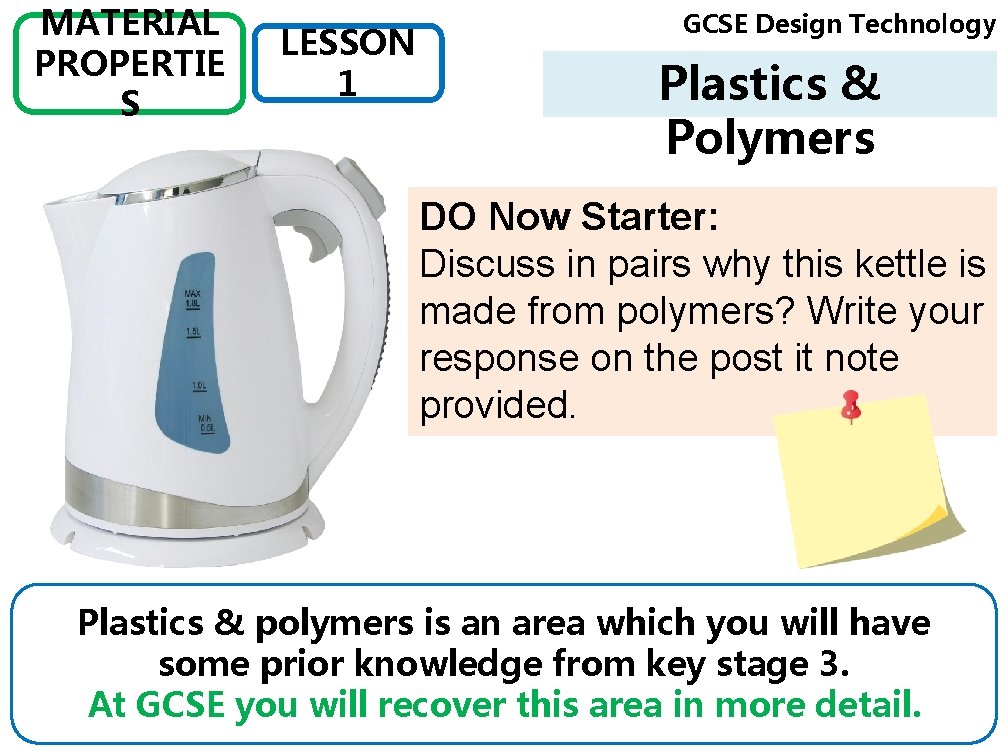
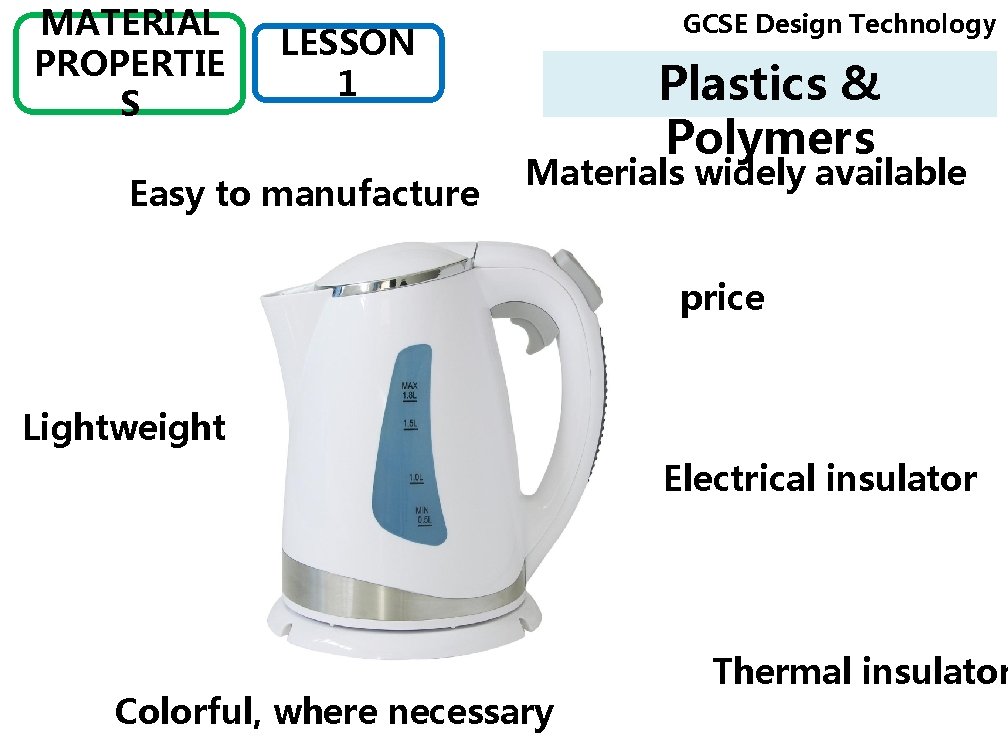
MATERIAL PROPERTIE S LESSON 1 GCSE Design Technology Plastics & Polymers DO Now Starter: Discuss in pairs why this kettle is made from polymers? Write your response on the post it note provided. Plastics & polymers is an area which you will have some prior knowledge from key stage 3. At GCSE you will recover this area in more detail.
MATERIAL PROPERTIE S GCSE Design Technology LESSON 1 Easy to manufacture Plastics & Polymers Materials widely available price Lightweight Electrical insulator Colorful, where necessary Thermal insulator
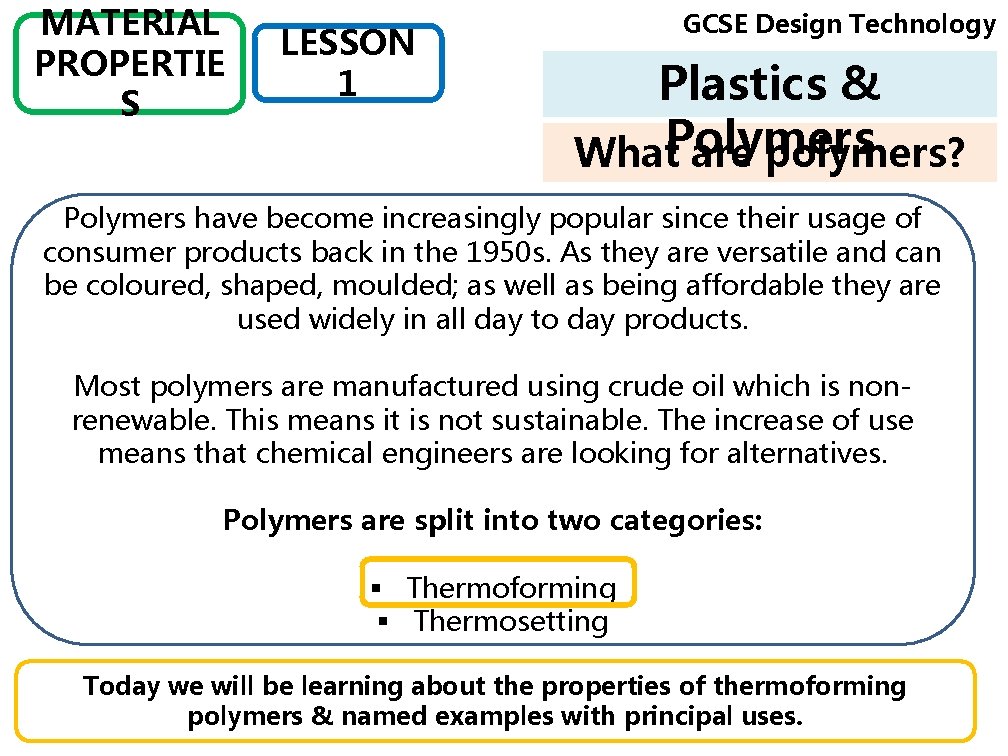
MATERIAL PROPERTIE S LESSON 1 GCSE Design Technology Plastics & What. Polymers are polymers? Polymers have become increasingly popular since their usage of consumer products back in the 1950 s. As they are versatile and can be coloured, shaped, moulded; as well as being affordable they are used widely in all day to day products. Most polymers are manufactured using crude oil which is nonrenewable. This means it is not sustainable. The increase of use means that chemical engineers are looking for alternatives. Polymers are split into two categories: § Thermoforming § Thermosetting Today we will be learning about the properties of thermoforming polymers & named examples with principal uses.
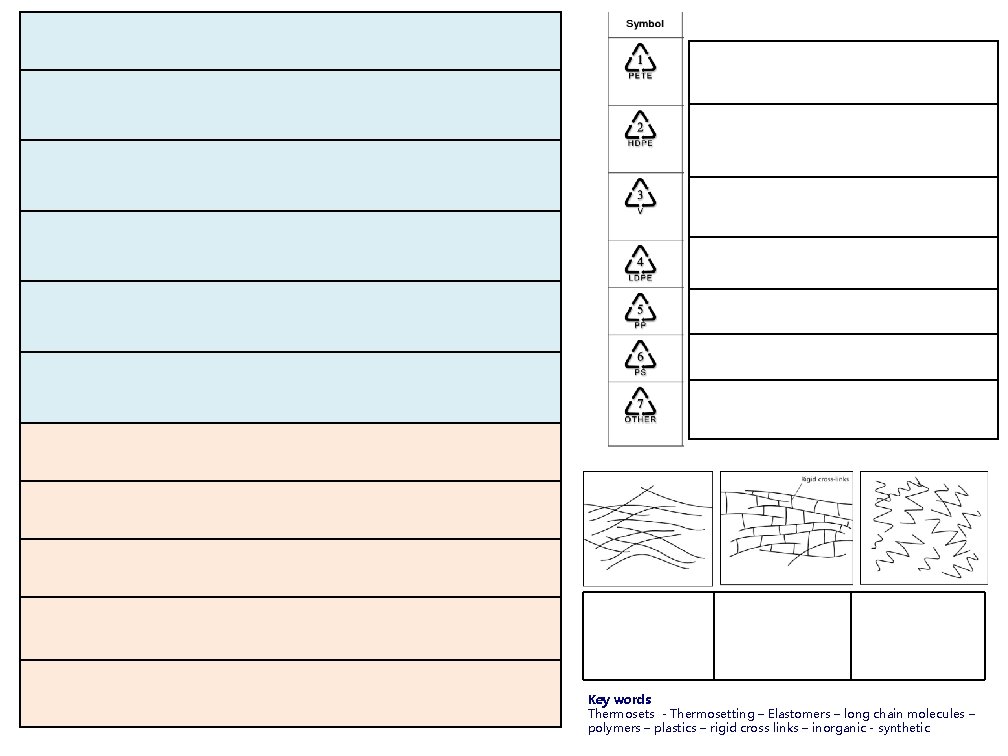
Key words Thermosets - Thermosetting – Elastomers – long chain molecules – polymers – plastics – rigid cross links – inorganic - synthetic
Polymers Note sheet. Write personal notes during the lesson. Purple indicates todays tasks Key words Thermosets - Thermosetting – Elastomers – long chain molecules – polymers – plastics – rigid cross links – inorganic - synthetic
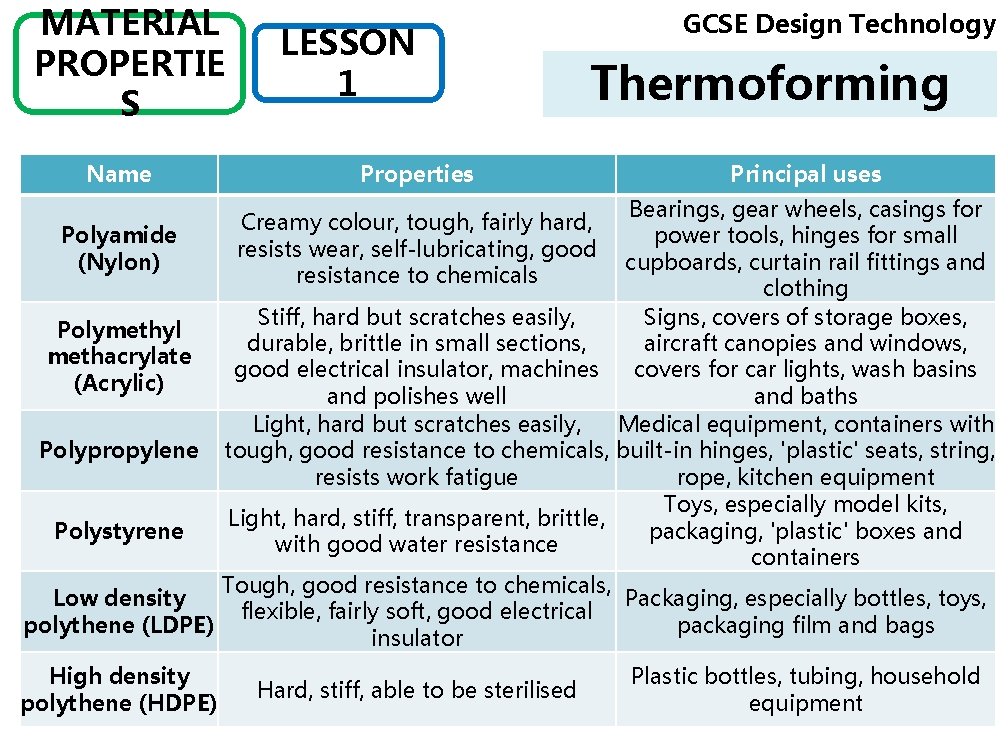
MATERIAL PROPERTIE S Name LESSON 1 GCSE Design Technology Thermoforming polymers Properties Principal uses Bearings, gear wheels, casings for Polyamide power tools, hinges for small (Nylon) cupboards, curtain rail fittings and clothing Stiff, hard but scratches easily, Signs, covers of storage boxes, Polymethyl durable, brittle in small sections, aircraft canopies and windows, methacrylate good electrical insulator, machines covers for car lights, wash basins (Acrylic) and polishes well and baths Light, hard but scratches easily, Medical equipment, containers with Polypropylene tough, good resistance to chemicals, built-in hinges, 'plastic' seats, string, resists work fatigue rope, kitchen equipment Toys, especially model kits, Light, hard, stiff, transparent, brittle, Polystyrene packaging, 'plastic' boxes and with good water resistance containers Tough, good resistance to chemicals, Low density Packaging, especially bottles, toys, flexible, fairly soft, good electrical polythene (LDPE) packaging film and bags insulator Creamy colour, tough, fairly hard, resists wear, self-lubricating, good resistance to chemicals High density polythene (HDPE) Hard, stiff, able to be sterilised Plastic bottles, tubing, household equipment
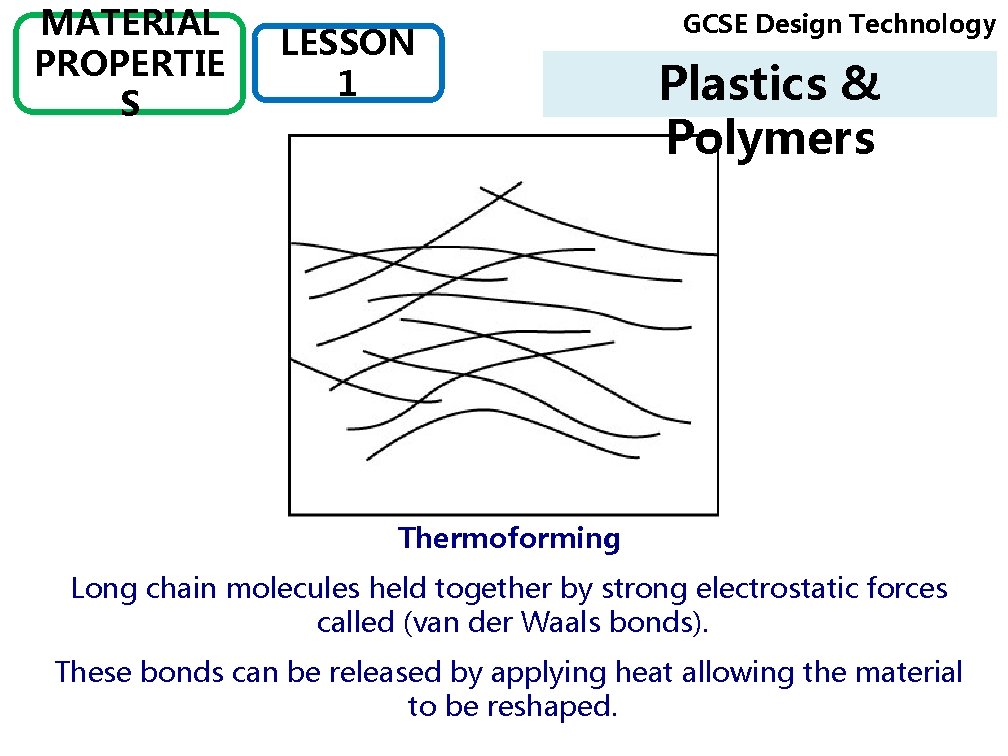
MATERIAL PROPERTIE S LESSON 1 GCSE Design Technology Plastics & Polymers Thermoforming Long chain molecules held together by strong electrostatic forces called (van der Waals bonds). These bonds can be released by applying heat allowing the material to be reshaped.
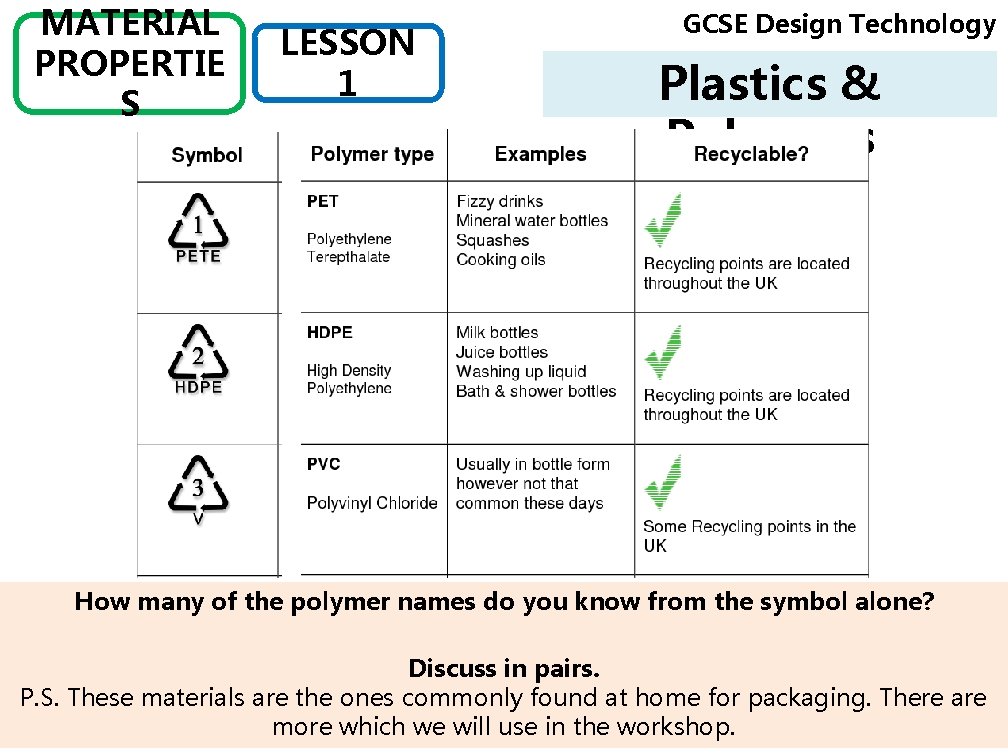
MATERIAL PROPERTIE S LESSON 1 GCSE Design Technology Plastics & Polymers How many of the polymer names do you know from the symbol alone? Discuss in pairs. P. S. These materials are the ones commonly found at home for packaging. There are more which we will use in the workshop.
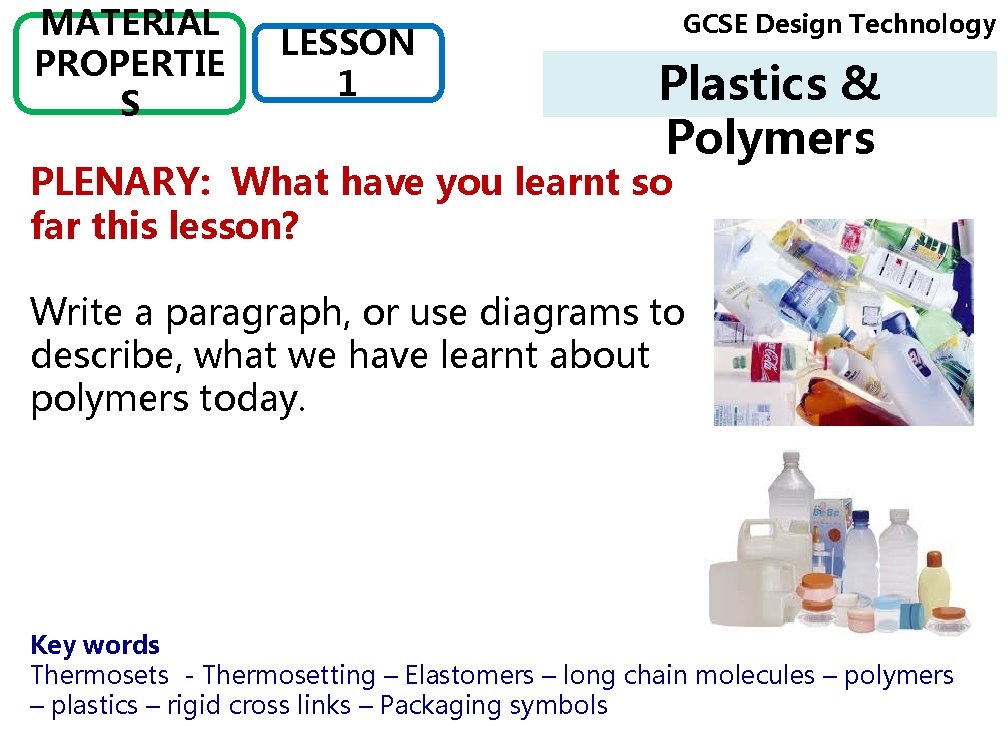
MATERIAL PROPERTIE S LESSON 1 GCSE Design Technology Plastics & Polymers PLENARY: What have you learnt so far this lesson? Write a paragraph, or use diagrams to describe, what we have learnt about polymers today. Key words Thermosets - Thermosetting – Elastomers – long chain molecules – polymers – plastics – rigid cross links – Packaging symbols