
Material from Thursday September 19 th handout covered
Material from Thursday September 19 th handout covered on Tuesday September 24 th
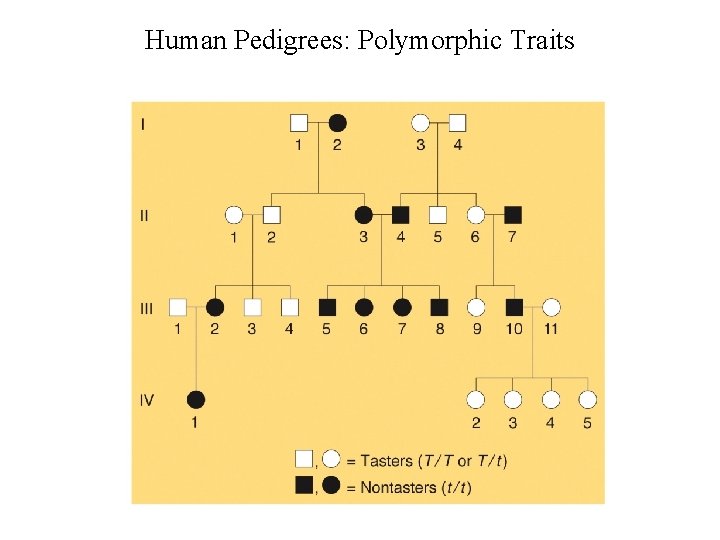
Human Pedigrees: Polymorphic Traits
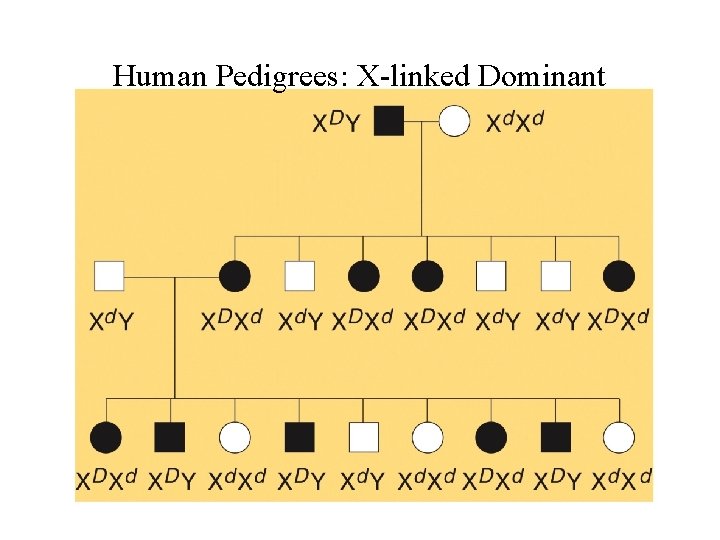
Human Pedigrees: X-linked Dominant
Categories of inheritance • Autosomal recessive – e. g. , PKU, Tay-Sachs, albinism • Autosomal dominant – e. g. , Huntington disease • X-linked recessive – e. g. , color-blindness, hemophilia, DMD • X-linked dominant – e. g. , hypophosphatemia • Y-linked
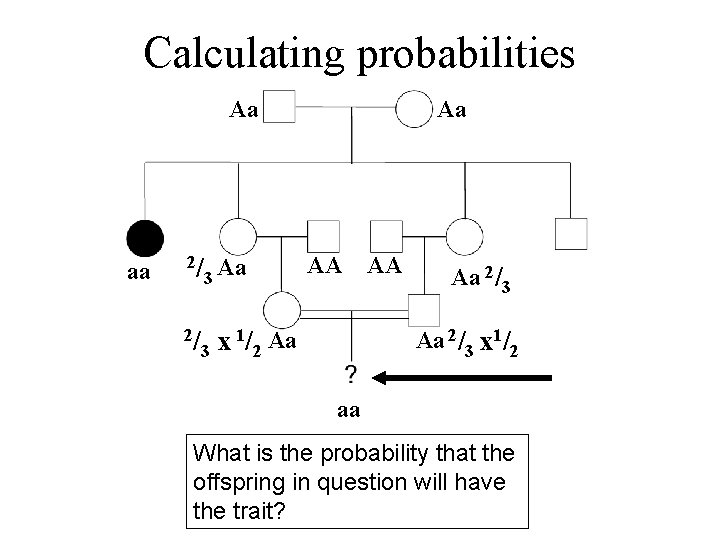
Calculating probabilities Aa aa 2/ 2/ 3 Aa Aa AA 1/ Aa x 3 2 AA Aa 2/3 x 1/2 aa What is the probability that the offspring in question will have the trait?
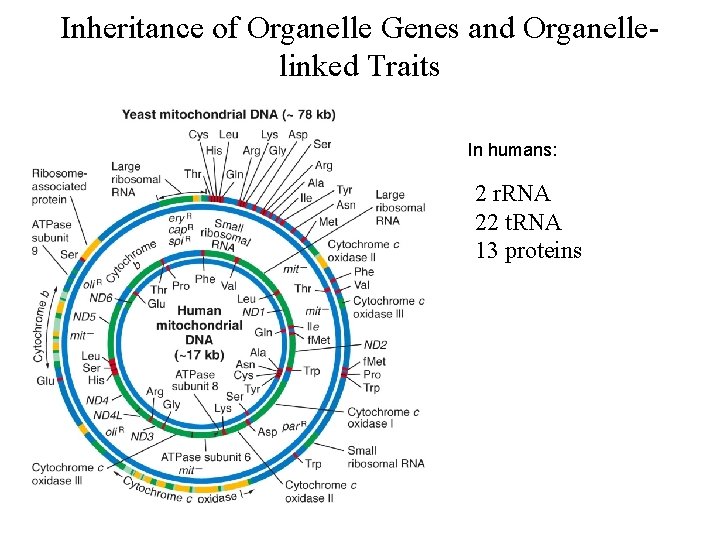
Inheritance of Organelle Genes and Organellelinked Traits In humans: 2 r. RNA 22 t. RNA 13 proteins
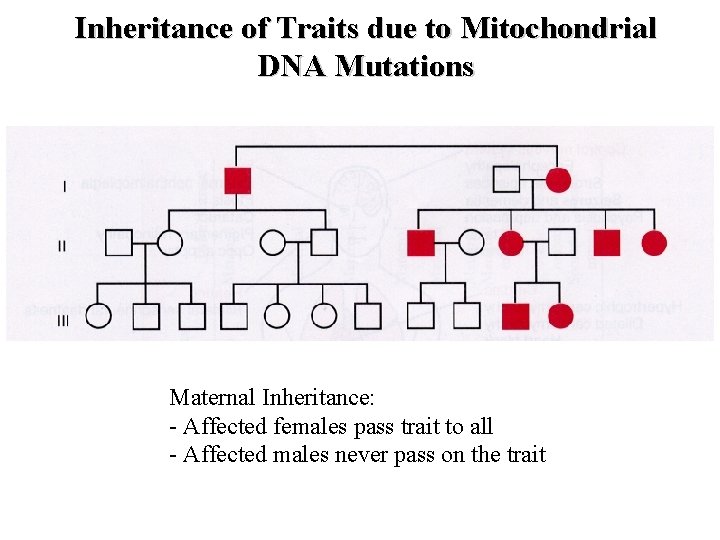
Inheritance of Traits due to Mitochondrial DNA Mutations Maternal Inheritance: - Affected females pass trait to all - Affected males never pass on the trait
Material from Thursday September 24 th’s handout covered Thursday September 24 th
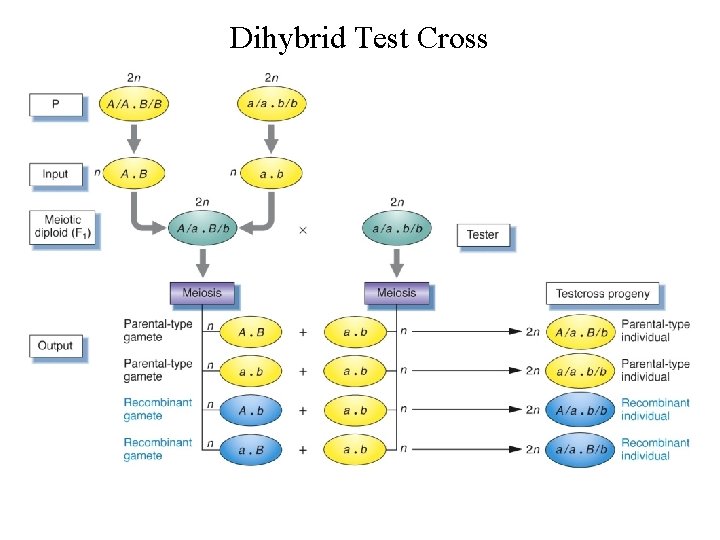
Dihybrid Test Cross
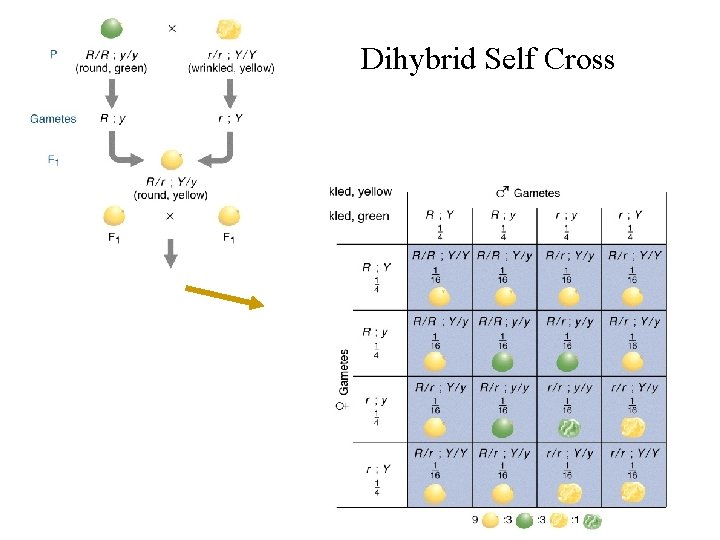
Dihybrid Self Cross
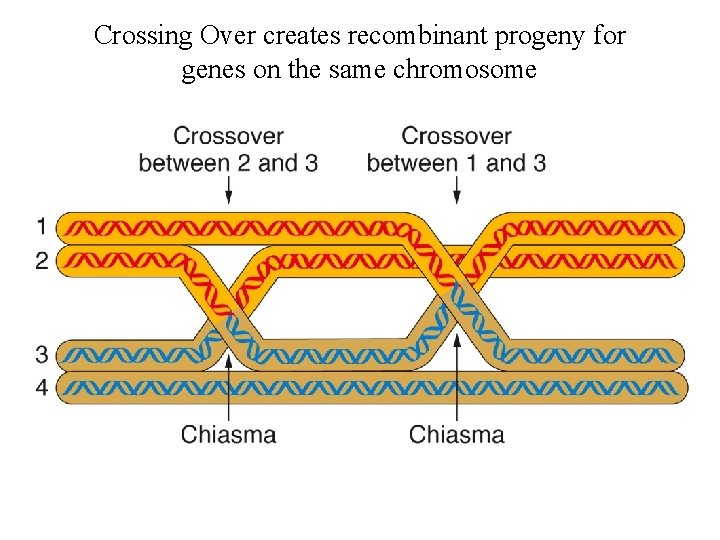
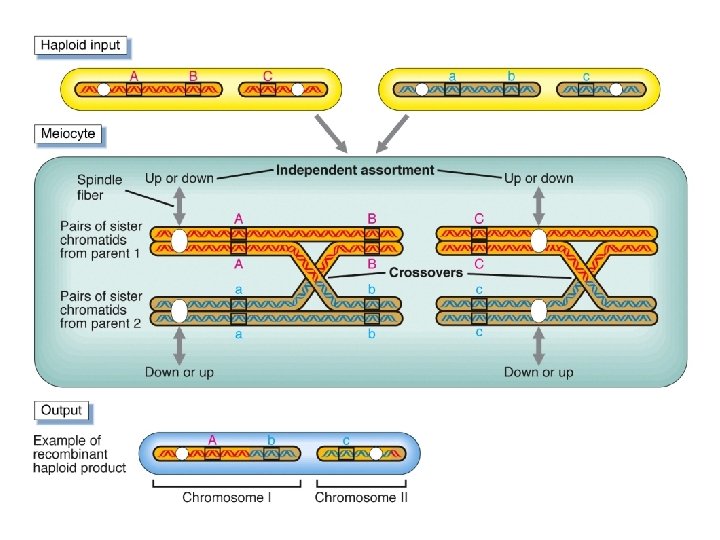
Crossing Over creates recombinant progeny for genes on the same chromosome
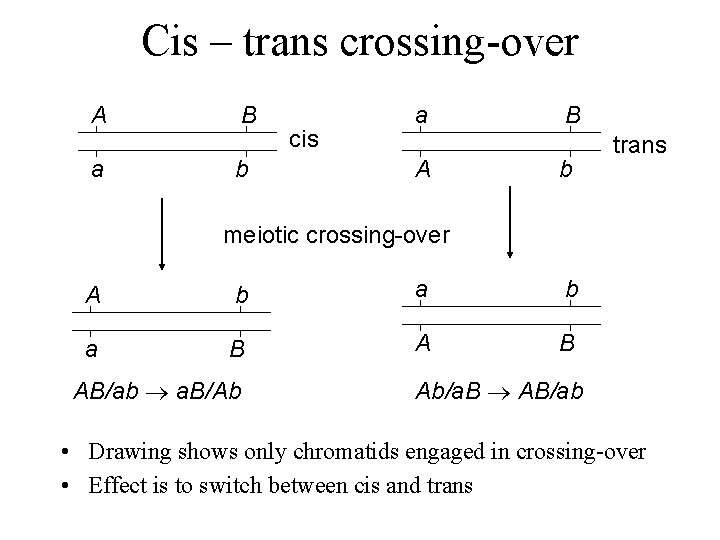
Cis – trans crossing-over A a B b cis a A B b trans meiotic crossing-over A b a B AB/ab a. B/Ab Ab/a. B AB/ab • Drawing shows only chromatids engaged in crossing-over • Effect is to switch between cis and trans

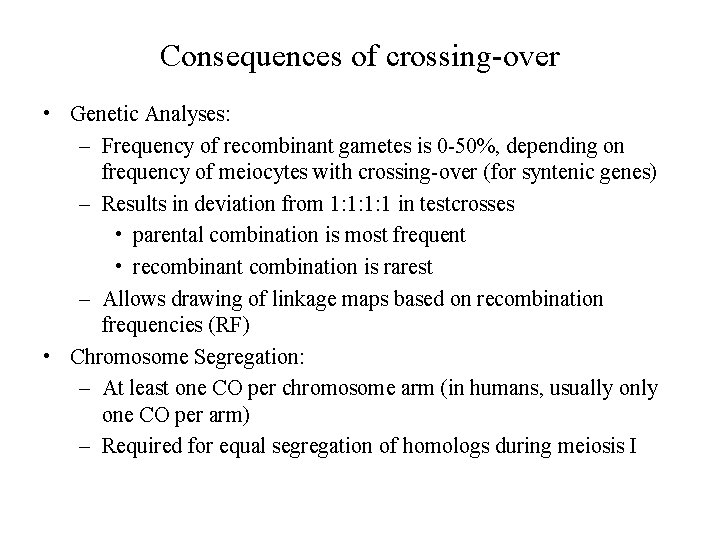
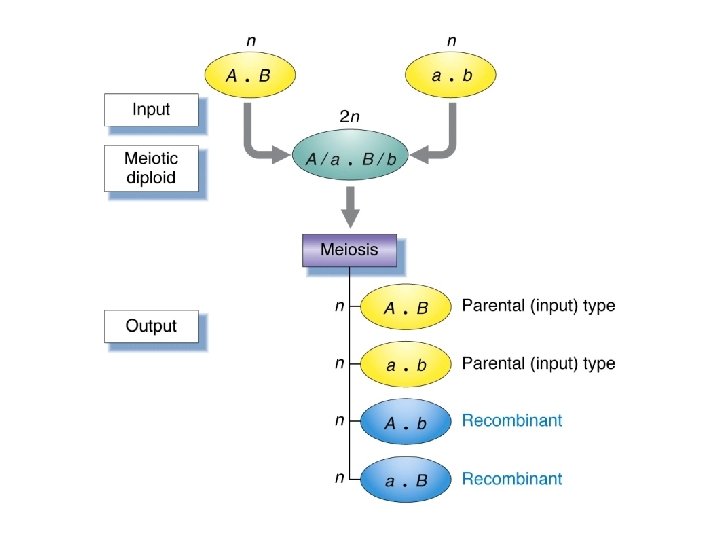
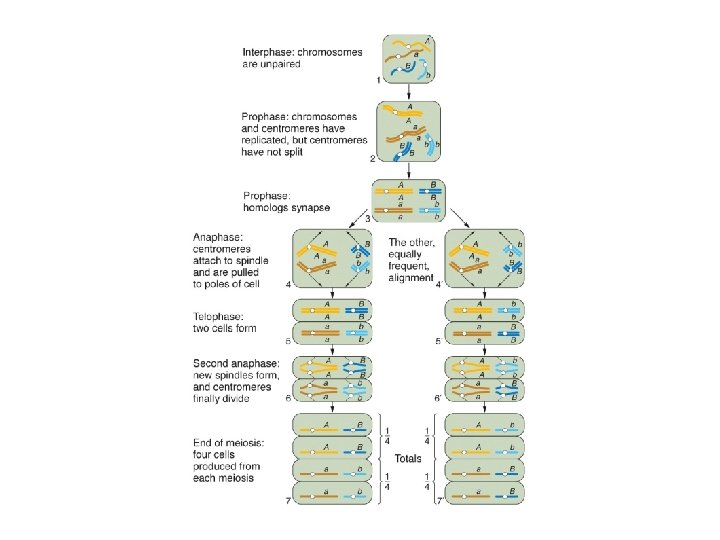
Consequences of crossing-over • Genetic Analyses: – Frequency of recombinant gametes is 0 -50%, depending on frequency of meiocytes with crossing-over (for syntenic genes) – Results in deviation from 1: 1: 1: 1 in testcrosses • parental combination is most frequent • recombinant combination is rarest – Allows drawing of linkage maps based on recombination frequencies (RF) • Chromosome Segregation: – At least one CO per chromosome arm (in humans, usually one CO per arm) – Required for equal segregation of homologs during meiosis I
HW/Study Problems topic 4 material covered through today’s lecture • Solved problems 1, 2 • Basic problems 1, 2, 3, 4, 5, 6, 17, 18, 19, 26,
- Slides: 18