
MasteryBased Rubric Grading A blend of formative and
Mastery-Based Rubric Grading A blend of formative and summative assessment.
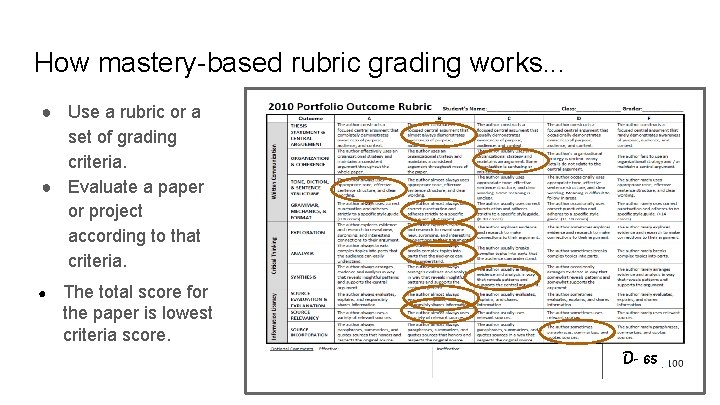
How rubric grading usually works. . . mastery-based rubric grading ● Use a rubric or a set of grading criteria. ● Evaluate a paper or project according to that criteria. Create holistic ●● The totala score for score based on the paper is lowest criteria score. of the average criteria scores. DB- 65 82
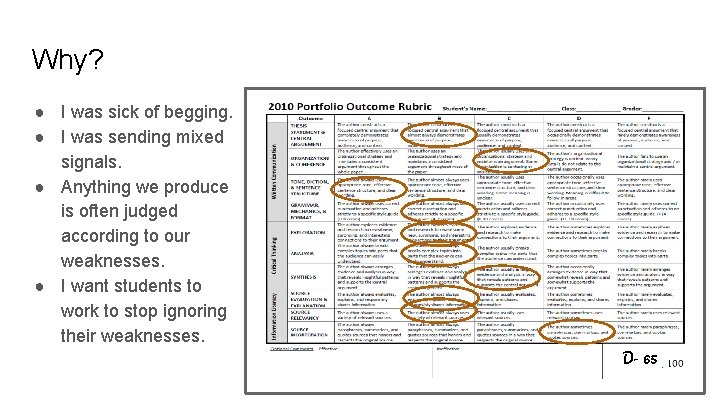
Why? ● I was sick of begging. ● I was sending mixed signals. ● Anything we produce is often judged according to our weaknesses. ● I want students to work to stop ignoring their weaknesses. DB- 65 82
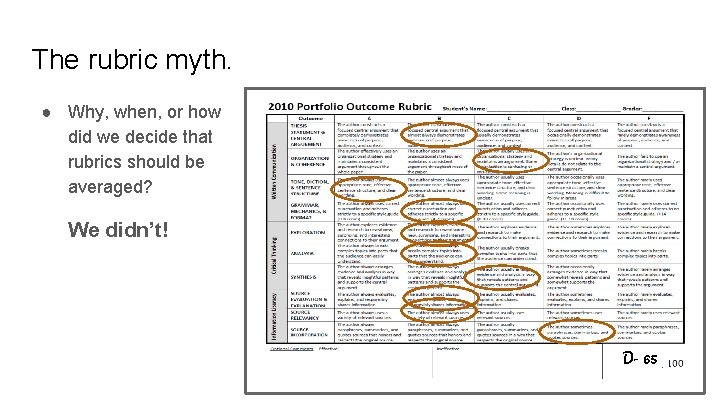
The rubric myth. ● Why, when, or how did we decide that rubrics should be averaged? We didn’t! DB- 65 82
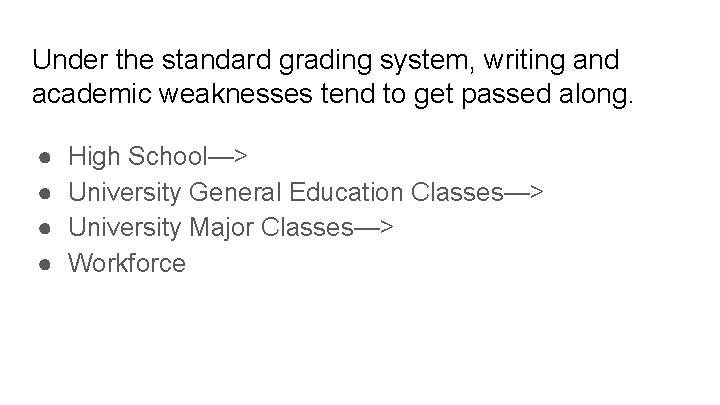
Under the standard grading system, writing and academic weaknesses tend to get passed along. ● ● High School—> University General Education Classes—> University Major Classes—> Workforce
What score would you give the following examples?


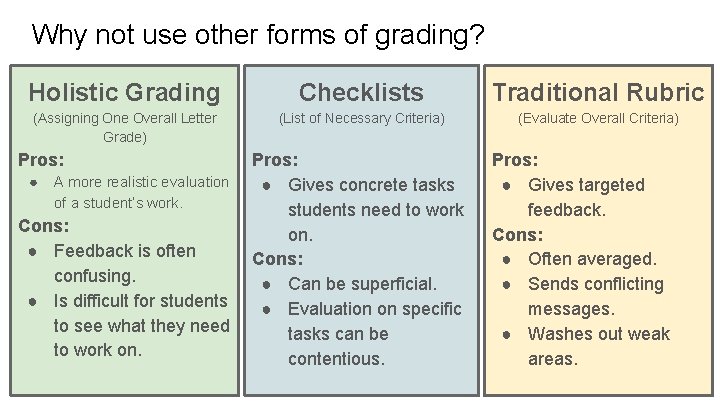
Why not use other forms of grading? Holistic Grading Checklists Traditional Rubric (Assigning One Overall Letter Grade) (List of Necessary Criteria) (Evaluate Overall Criteria) Pros: ● A more realistic evaluation of a student’s work. Cons: ● Feedback is often confusing. ● Is difficult for students to see what they need to work on. Pros: ● Gives concrete tasks students need to work on. Cons: ● Can be superficial. ● Evaluation on specific tasks can be contentious. Pros: ● Gives targeted feedback. Cons: ● Often averaged. ● Sends conflicting messages. ● Washes out weak areas.
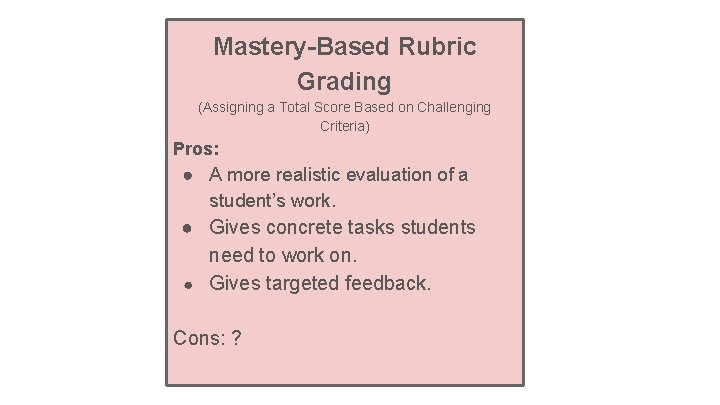
Mastery-Based Rubric Grading (Assigning a Total Score Based on Challenging Criteria) Pros: ● A more realistic evaluation of a student’s work. ● Gives concrete tasks students need to work on. ● Gives targeted feedback. Cons: ?
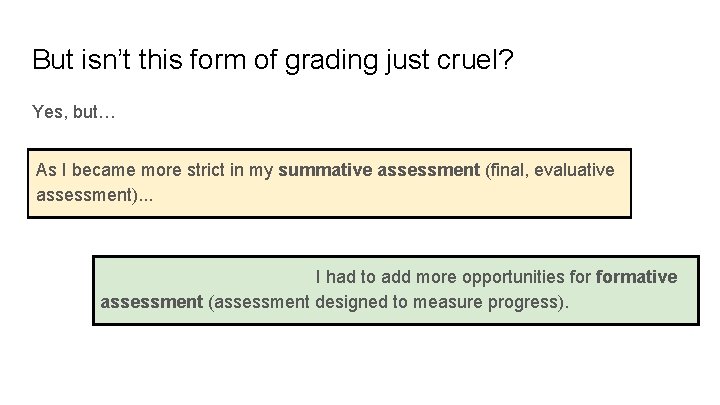
But isn’t this form of grading just cruel? Yes, but… As I became more strict in my summative assessment (final, evaluative assessment). . . I had to add more opportunities formative assessment (assessment designed to measure progress).
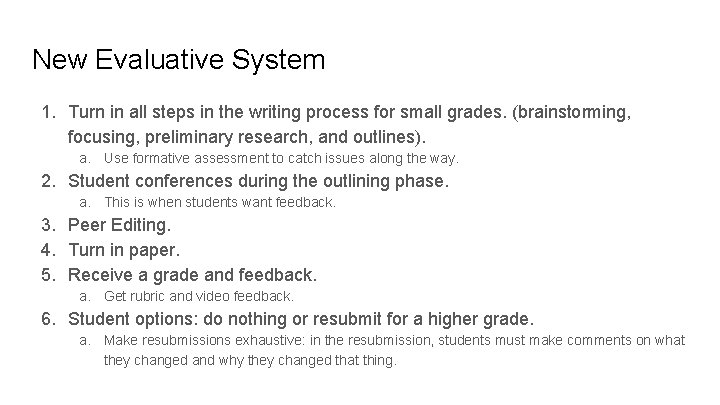
New Evaluative System 1. Turn in all steps in the writing process for small grades. (brainstorming, focusing, preliminary research, and outlines). a. Use formative assessment to catch issues along the way. 2. Student conferences during the outlining phase. a. This is when students want feedback. 3. Peer Editing. 4. Turn in paper. 5. Receive a grade and feedback. a. Get rubric and video feedback. 6. Student options: do nothing or resubmit for a higher grade. a. Make resubmissions exhaustive: in the resubmission, students must make comments on what they changed and why they changed that thing.
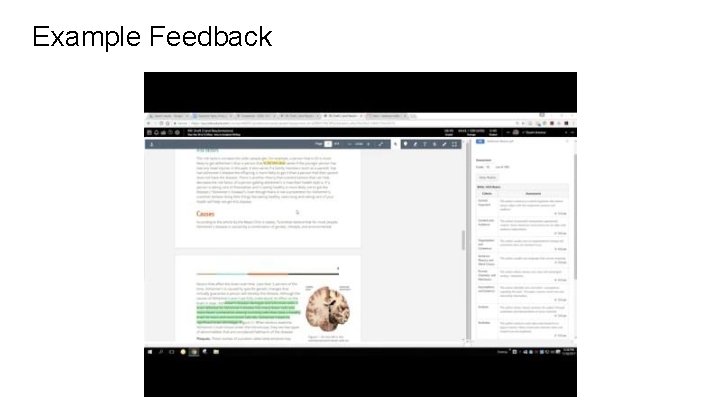
Example Feedback
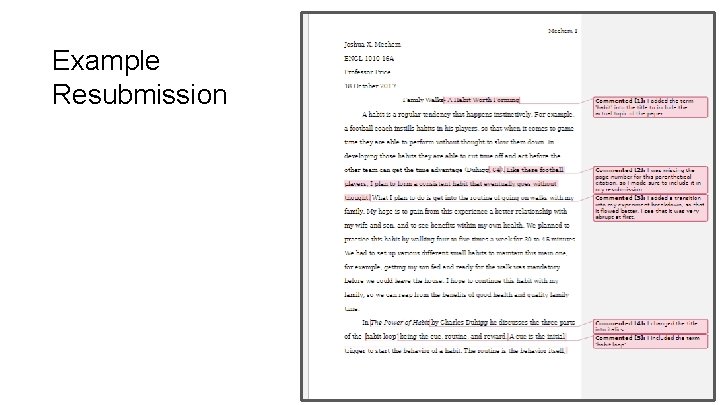
Example Resubmission
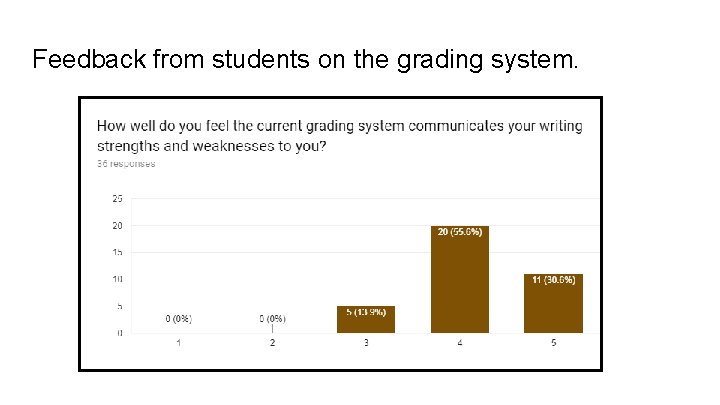
Feedback from students on the grading system.
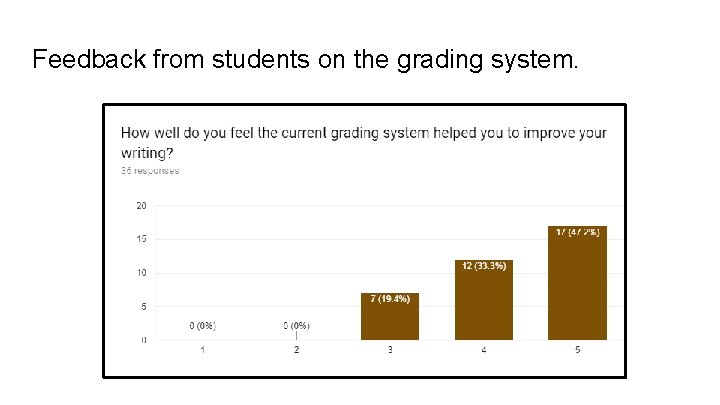
Feedback from students on the grading system.
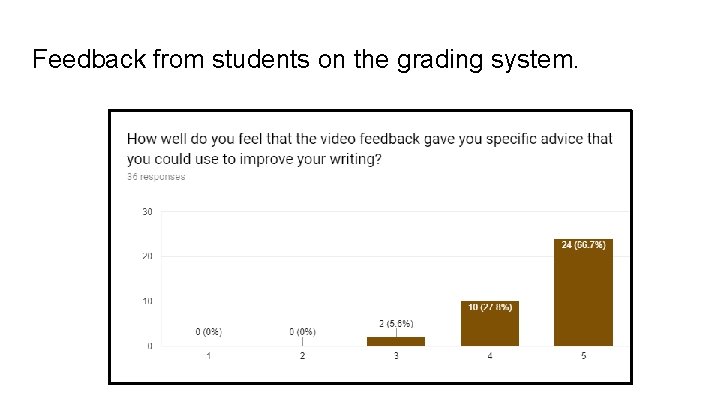
Feedback from students on the grading system.
Feedback from students on the grading system (positive). ● I like the way you grade because it helps us become a better writer. I've seen it in my own scores through out the semester. ● The grading helps to see where I am currently at in my writing. I have improved a lot during the course. ● Really clear showing the grade and where i can improve ● I am really grateful with Professor Price for the video feedback system as it helps to a great level on understanding any problem with our paper. I have my other friend taking English 1010 classes from other professor and they really struggle on recognizing what is wrong with their paper as they do not have the benefit of video feedback and grading system.
Feedback from students on the grading system (negative). ● The video feedback was very helpful. And with the grading system, I don't have many complaints I just feel I did better than graded at times. ● I think my grade is too low, but it makes me to have motivation ● I understand what you are trying to do, but the grading system puts more stress on already stressed out students.
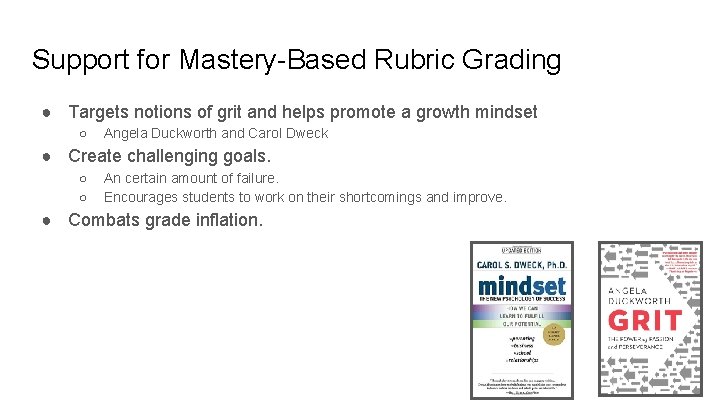
Support for Mastery-Based Rubric Grading ● Targets notions of grit and helps promote a growth mindset ○ Angela Duckworth and Carol Dweck ● Create challenging goals. ○ ○ An certain amount of failure. Encourages students to work on their shortcomings and improve. ● Combats grade inflation.
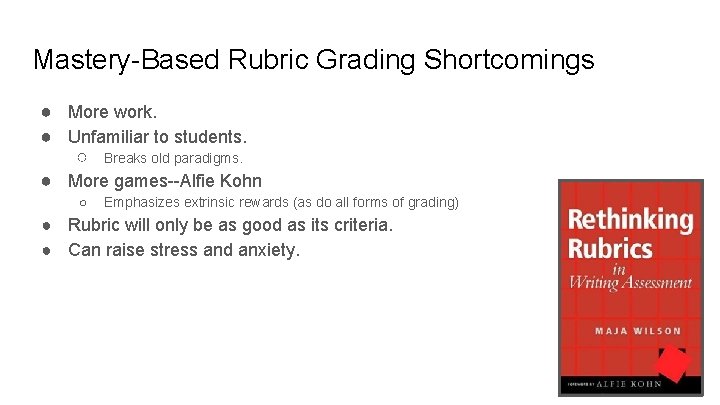
Mastery-Based Rubric Grading Shortcomings ● More work. ● Unfamiliar to students. ○ Breaks old paradigms. ● More games--Alfie Kohn ○ Emphasizes extrinsic rewards (as do all forms of grading) ● Rubric will only be as good as its criteria. ● Can raise stress and anxiety.
Mastery-Based Rubric Grading (Assigning a Total Score Based on Challenging Criteria) Pros: ● A more realistic evaluation of a student’s work. ● Gives concrete tasks students need to work on. ● Gives targeted feedback. Cons: ● More work. ● Unfamiliar to students. ○ Breaks old paradigms. ● More games.

Tips ● Explain the philosophy of this grading system to students. ● Have a rubric that is tied to class outcomes. ● Add many opportunities formative assessment. ○ Help students along the way. ● Need to have opportunities to resubmit. ● Need to make resubmission exhaustive. ○ Put the work on the student.
Will I continue to use this form of grading? Yes. Absolutely. Why? Under this system, I have seen improvements in my student’s writing that I hadn’t seen before.

Contact Information Nathan Price nathanprice@suu. edu
- Slides: 25