
Mastery in Maths Early Years and KS 1
- Slides: 20
Mastery in Maths Early Years and KS 1
Aims: • To know what the Curriculum says about Maths • To look at what Mastery means and what underpins it • To know the CPA approach • To use some manipulatives • To do some maths!
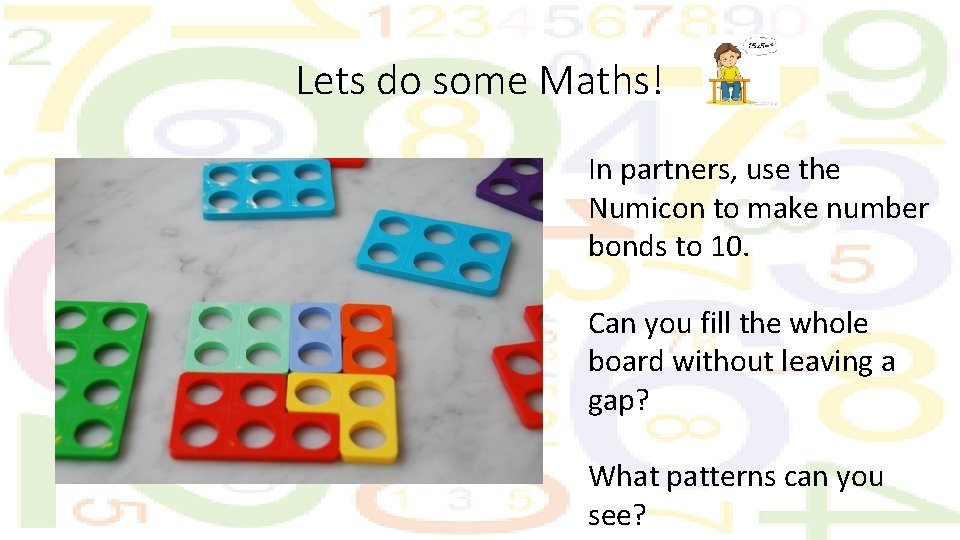
Lets do some Maths! In partners, use the Numicon to make number bonds to 10. Can you fill the whole board without leaving a gap? What patterns can you see?
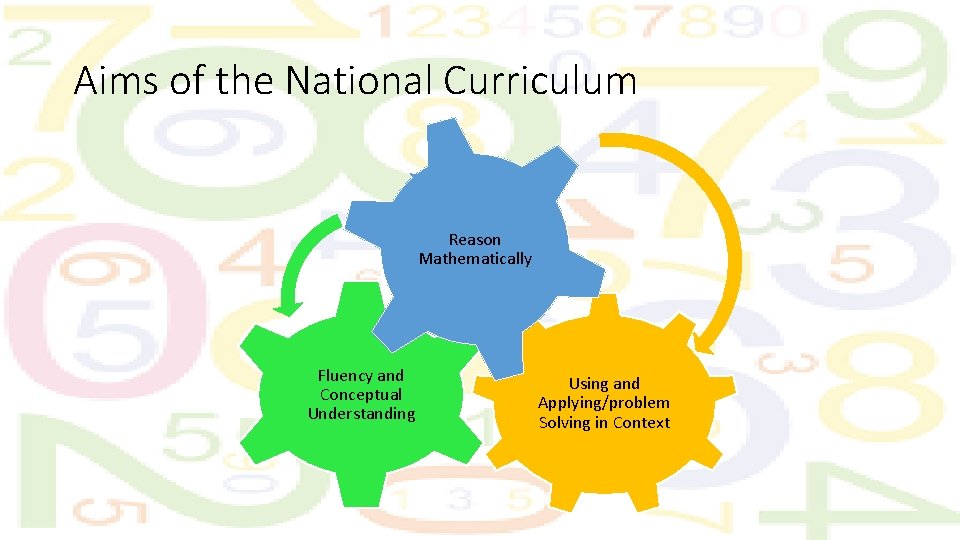
Aims of the National Curriculum Reason Mathematically Fluency and Conceptual Understanding Using and Applying/problem Solving in Context
What the curriculum says • The national curriculum for mathematics aims to ensure that all pupils: • become fluent in the fundamentals of mathematics, including through varied and frequent practice with increasingly complex problems over time, so that pupils develop conceptual understanding and the ability to recall and apply knowledge rapidly and accurately. • reason mathematically by following a line of enquiry, conjecturing relationships and generalisations, and developing an argument, justification or proof using mathematical language • can solve problems by applying their mathematics to a variety of routine and non- routine problems with increasing sophistication, including breaking down problems into a series of simpler steps and persevering in seeking solutions.
What does it mean to master?
Signature Bake - Fluency • I know how to do it (operations and their relationships) • It becomes automatic and I don’t need to think about it – to make a cake I need to add flour, eggs, sugar and butter (mental arithmetic) • I’m really good at doing it (speed) • I can show someone else how to do it (understanding)
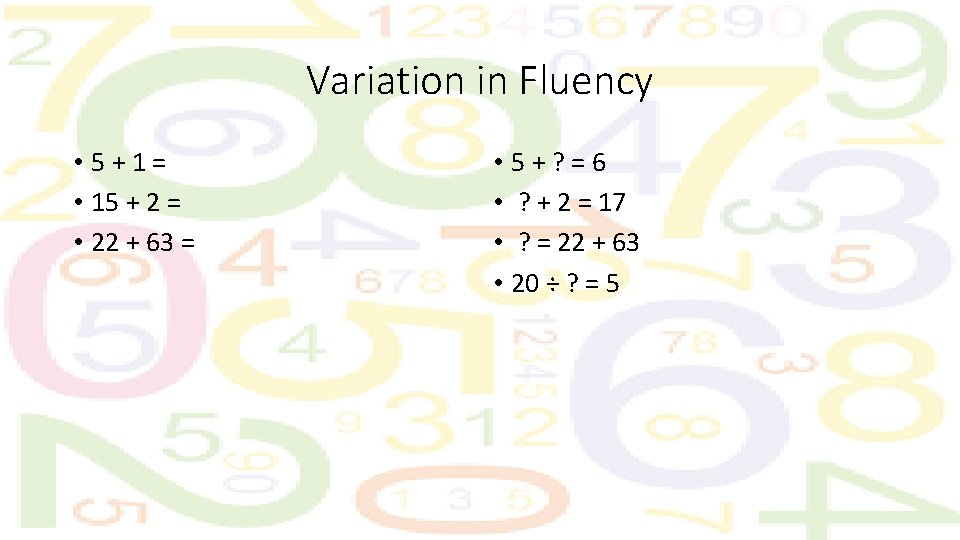
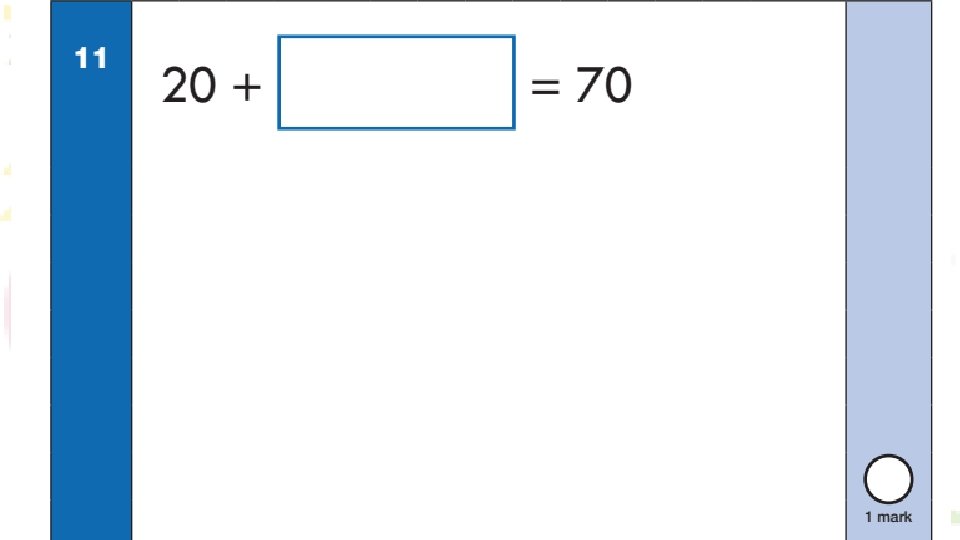
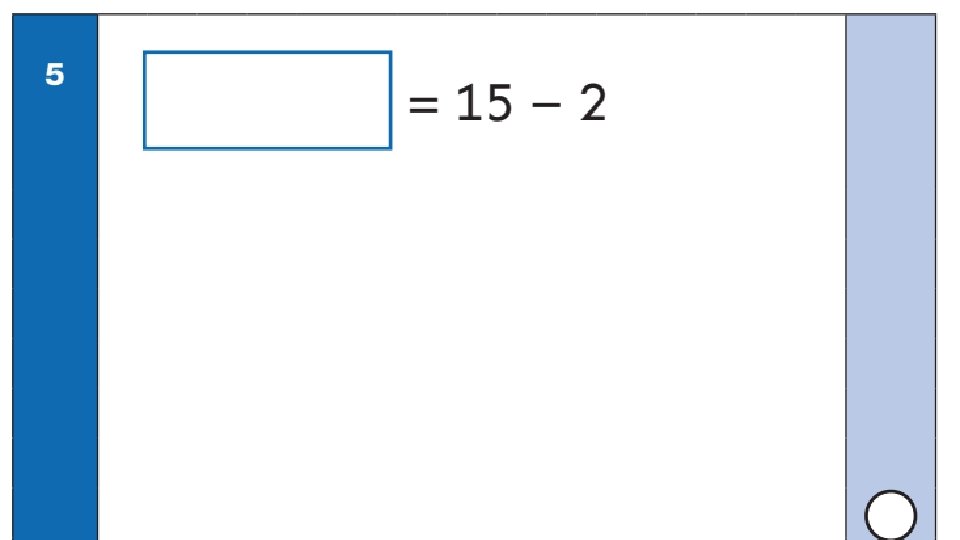
Variation in Fluency • 5 + 1 = • 15 + 2 = • 22 + 63 = • 5 + ? = 6 • ? + 2 = 17 • ? = 22 + 63 • 20 ÷ ? = 5
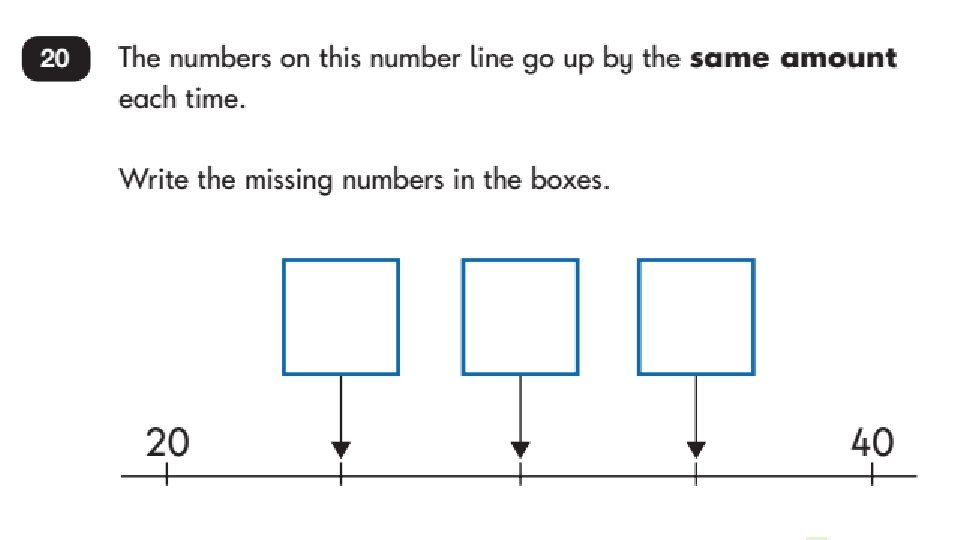
Technical Challenge - Reasoning • Deep and sustainable learning • The ability to build on something that has already been sufficiently mastered • The ability to reason about a concept and make connections • Conceptual understanding (comprehension of mathematical concepts, operations and relations) and procedural fluency (ability to formulate, represent and solve mathematical problems. “Reasoning is the “glue” that helps mathematics make sense. ”
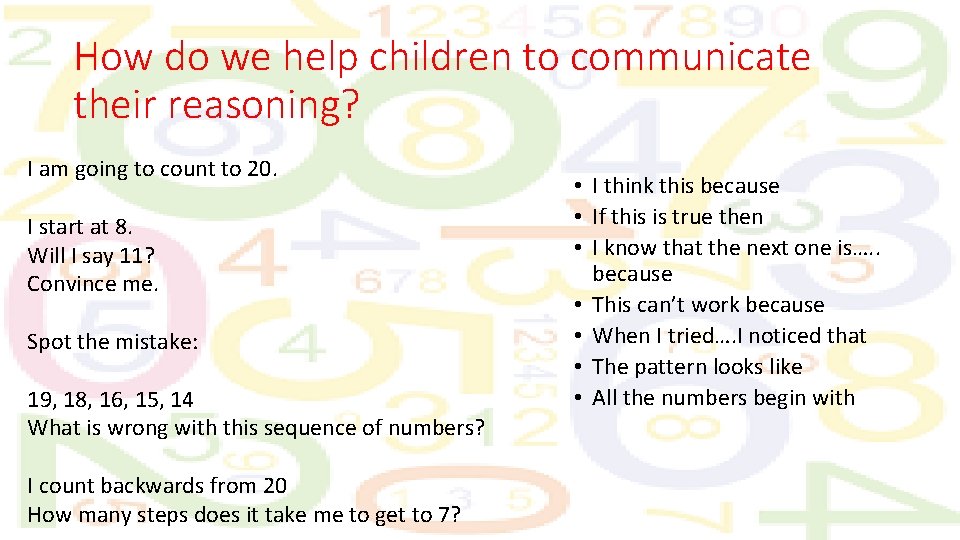
How do we help children to communicate their reasoning? I am going to count to 20. I start at 8. Will I say 11? Convince me. Spot the mistake: 19, 18, 16, 15, 14 What is wrong with this sequence of numbers? I count backwards from 20 How many steps does it take me to get to 7? • I think this because • If this is true then • I know that the next one is…. . because • This can’t work because • When I tried…. I noticed that • The pattern looks like • All the numbers begin with
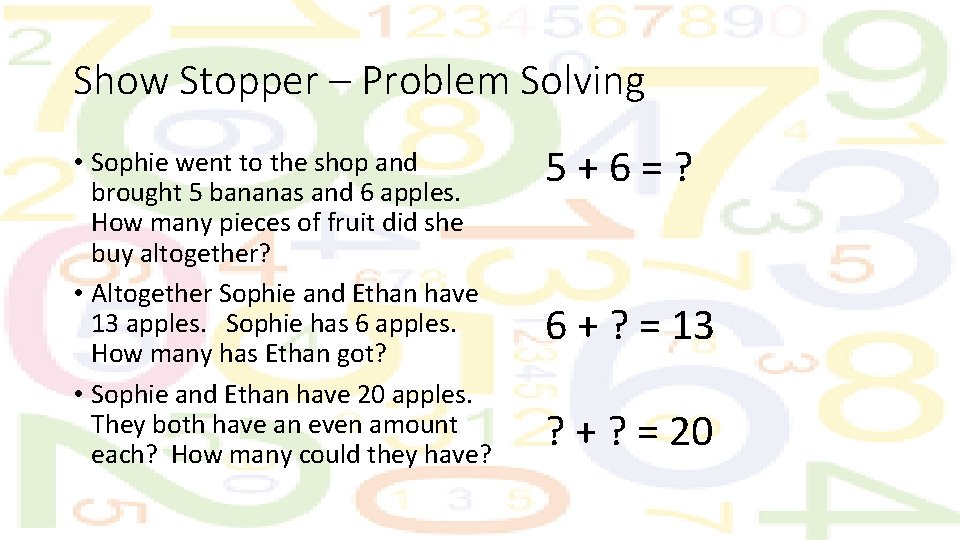
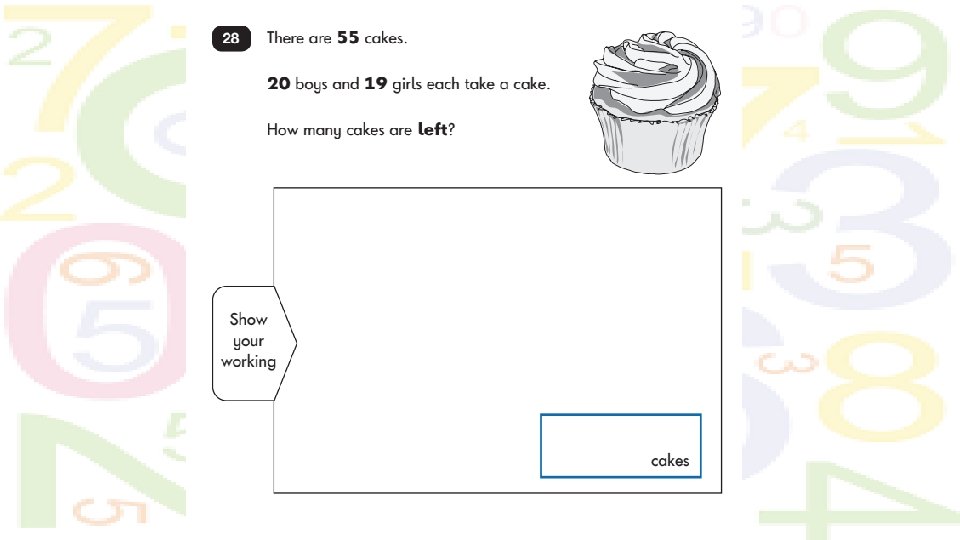
Show Stopper – Problem Solving • Sophie went to the shop and brought 5 bananas and 6 apples. How many pieces of fruit did she buy altogether? • Altogether Sophie and Ethan have 13 apples. Sophie has 6 apples. How many has Ethan got? • Sophie and Ethan have 20 apples. They both have an even amount each? How many could they have? 5 + 6 = ? 6 + ? = 13 ? + ? = 20
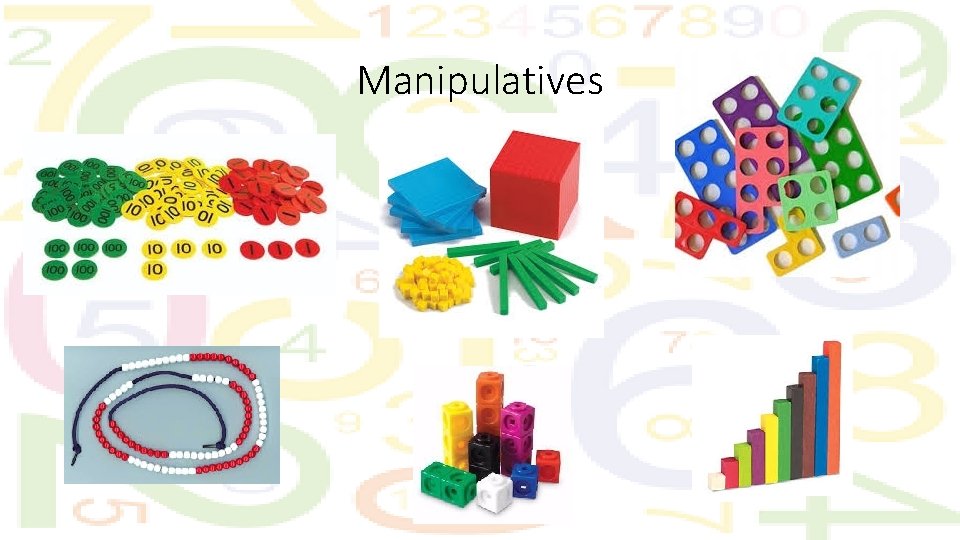
So…what strategies and manipulatives help children achieve mastery?
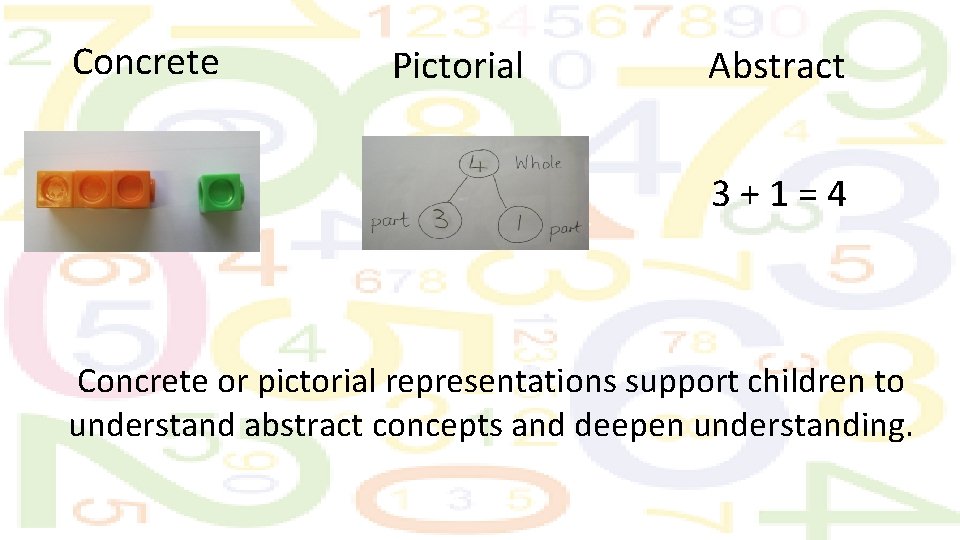
Concrete Pictorial Abstract 3 + 1 = 4 Concrete or pictorial representations support children to understand abstract concepts and deepen understanding.
Manipulatives
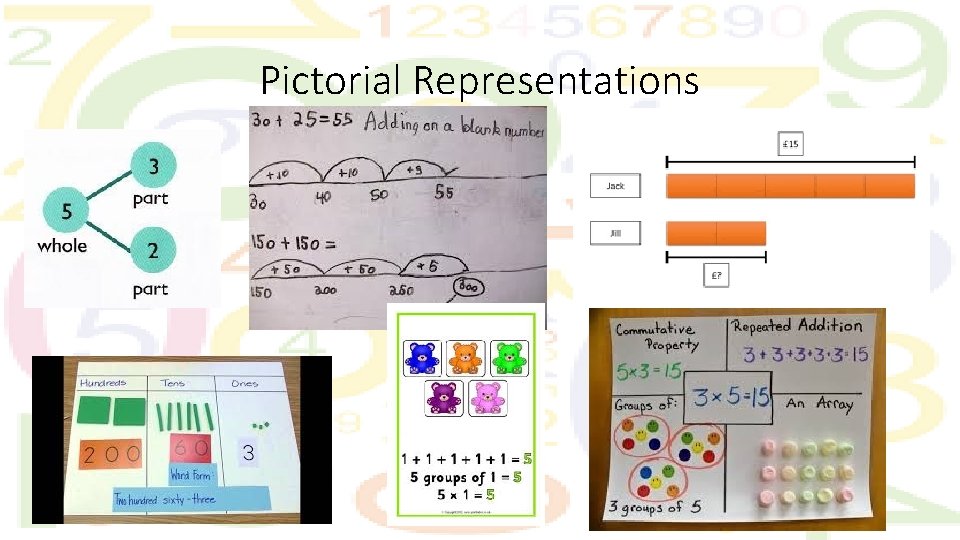
Pictorial Representations
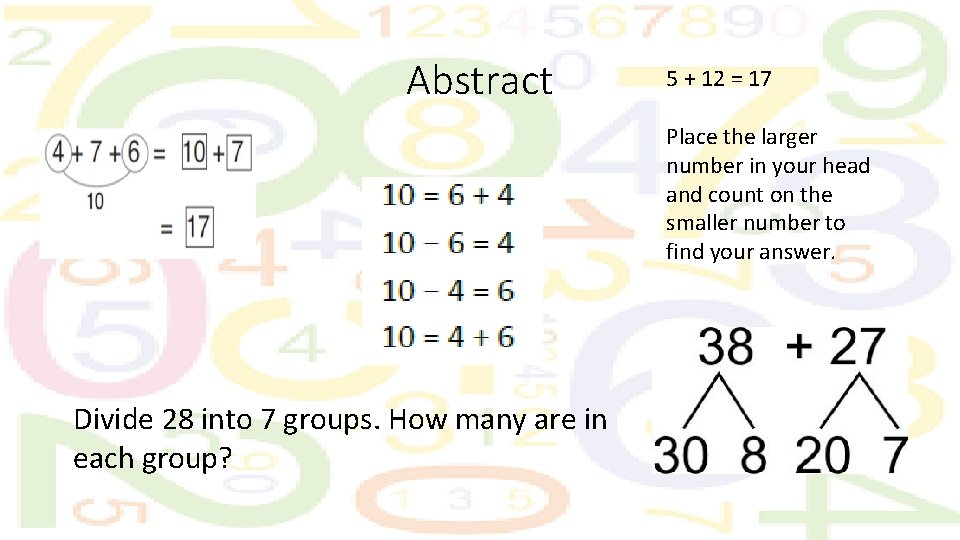
Abstract Divide 28 into 7 groups. How many are in each group? 5 + 12 = 17 Place the larger number in your head and count on the smaller number to find your answer.